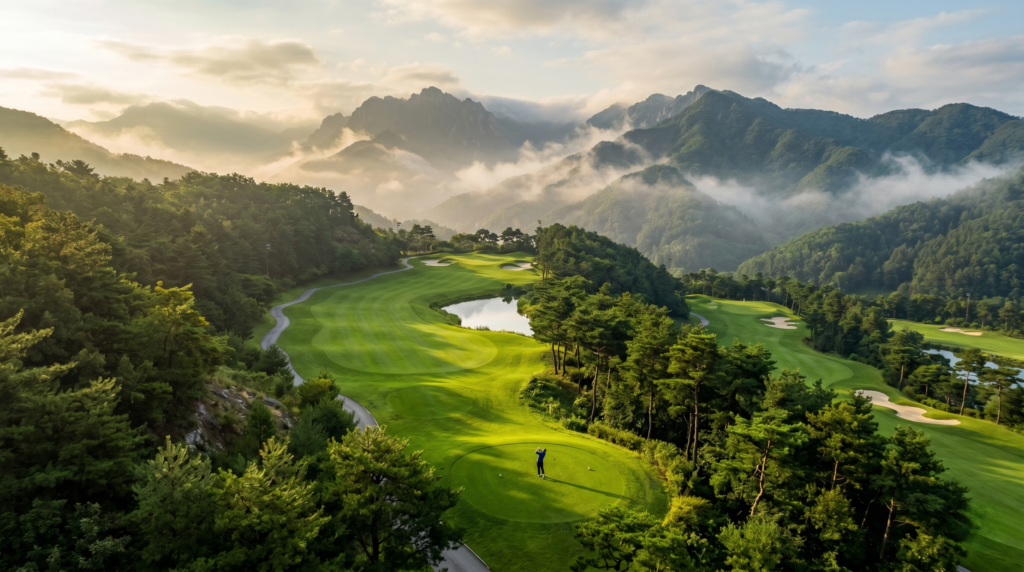
Picture this: you’re standing on a perfectly manicured fairway, morning mist curling around the pine-covered mountains ahead, the crisp Korean air carrying the faint scent of wildflowers — and all you can hear is the satisfying thwack of your club meeting the ball. This is what golf in South Korea feels like. And once you experience it, no ordinary golf trip will ever quite compare.South Korea is home to some of the most breathtaking golf courses in South Korea — a destination that has quietly and confidently risen to become one of Asia’s premier golfing hotspots.
With over 500 golf courses spread across dramatic mountain landscapes, volcanic island terrain, and stunning coastlines, South Korea offers a golfing experience unlike anywhere else in the world. Add to that world-class caddie service, a deeply passionate golf culture, and the chance to combine your round with K-drama filming locations, temple visits, and legendary Korean cuisine — and you have the makings of an unforgettable trip.
Whether you’re a seasoned golfer planning a dedicated golf tour or a Korea traveler curious about fitting in a round or two, this guide covers everything you need to know — from the best courses on Jeju Island to screen golf cafés in Seoul.
Why South Korea Is a World-Class Golf Destination
Korea’s Deep Love Affair With Golf
Golf in South Korea is more than just a sport — it is a cultural institution. Since the late 1980s and early 1990s, when South Korea’s economic rise gave its middle and upper classes access to leisure activities, golf exploded in popularity. Today, South Korea boasts one of the highest golf participation rates in Asia, with an estimated 4 to 5 million active golfers in a country of just 51 million people.
Golf carries a strong social currency in Korean society. Business deals are sealed on fairways, corporate hierarchies are quietly reinforced by who plays where, and prestigious country club memberships are considered genuine status symbols. It is not uncommon for Korean executives to schedule early morning rounds before heading to the office, or for families to spend entire weekends at resort golf clubs.
South Korea’s influence on the global game has also been staggering. Korean players dominate the LPGA Tour, with legends like Se Ri Pak — whose 1998 US Women’s Open victory is credited with inspiring an entire generation of Korean women golfers — blazing the trail. Names like Inbee Park, Ko Jin-young, and Sung Hyun Park are synonymous with golfing excellence worldwide. On the men’s side, players like Im Sung-jae and K.J. Choi have proven that Korean golf is a genuine world force.
What Makes Korean Golf Courses Unique
The first thing that strikes most visiting golfers about South Korea is the sheer visual drama of its courses. Unlike the flat, links-style landscapes of parts of Europe or the manicured desert courses of the United States, Korean golf courses are defined by their terrain. Mountains form the backdrop — and often the obstacle — of nearly every hole. Fairways carve through dense forests of pine and oak, rivers wind through valleys below elevated greens, and on Jeju Island, the dramatic volcanic landscape adds a geological dimension unlike anywhere in the golfing world.
Course maintenance standards in South Korea are extraordinarily high. Korean golf clubs invest heavily in groundskeeping, and the quality of turf, fairway conditions, and greens rival — and often surpass — top courses in Japan, Australia, and the United States. Playing a round in Korea means playing on some of the best-conditioned surfaces in Asia.
Then there is the caddie culture — an institution unique to Korean golf that we will explore in depth later in this guide. Professional caddies, almost exclusively women, accompany every group at virtually every course in South Korea. This is not just a tradition; it is a deeply embedded part of the Korean golf experience that elevates every round.
Golf Tourism Is Booming in South Korea
The Korean Tourism Organization (KTO) has actively promoted South Korea as a golf tourism destination, particularly targeting Chinese, Japanese, Southeast Asian, and Western visitors. Golf travel packages that combine luxury resort stays, curated tee times, and cultural experiences have grown significantly over the past decade.
Jeju Island, in particular, has become a dedicated golf tourism hub. With over 30 golf courses concentrated on a relatively small island, Jeju draws golf travelers from across Asia specifically for multi-round golf holidays. Many visitors structure their entire Korea trip around a Jeju golf itinerary, then add Seoul or Busan for cultural exploration.
Top Golf Courses in South Korea You Must Play
Jeju Island Golf Courses — A Paradise for Golfers

If South Korea is Asia’s hidden golf gem, then Jeju Island is the crown jewel within it. Located off the southern tip of the Korean Peninsula, Jeju is a UNESCO World Heritage Site famous for its volcanic landscapes, pristine beaches, and — for golfers — an astonishing concentration of world-class courses.
Pinx Golf Club is perhaps the most visually stunning course on Jeju and one of the most photographed in all of Asia. Designed by legendary architect Ted Robinson Jr., Pinx sits on the rugged southern coast of the island, where lava rock formations meet lush green fairways and the sea stretches to the horizon. It has been ranked consistently among the top golf courses in Asia by Golf Digest and other major golf publications. The course demands precision and rewards creativity, with elevation changes, ocean winds, and dramatic bunkering that make every hole a genuine challenge.
Nine Bridges Golf Club is widely considered the most prestigious and exclusive golf club in South Korea. Located in the misty highlands of Jeju’s central mountain region, Nine Bridges is a private members club that has hosted The CJ Cup — one of the PGA Tour’s flagship events in Asia. The course was designed by Ron Fream and David Dale, and features 18 holes of meticulous craftsmanship set among Jeju’s distinctive stone-walled terrain. Getting on the course as a visitor requires either a connection with a member or access through select premium travel packages, but for those who manage it, Nine Bridges is a once-in-a-lifetime experience.
Other notable Jeju courses include Jeju Country Club, one of the island’s oldest and most established venues, and Lotte Skyhill Jeju Country Club, which offers spectacular ocean views alongside luxury resort amenities. Tee times on Jeju should be booked well in advance — particularly during spring (April to June) and autumn (September to November), when demand peaks and availability tightens quickly.
Seoul & Gyeonggi-do Golf Courses
For travelers based in Seoul, there is good news: some of South Korea’s finest golf courses are within an hour or two of the capital city, located in the surrounding Gyeonggi-do province.
Nam Seoul Country Club holds a special place in Korean golf history. As one of the country’s oldest and most prestigious clubs, it has hosted numerous national championships and remains a benchmark of Korean golf tradition. Its tree-lined fairways and challenging layout make it a course that rewards experience and course management over raw power.
Woo Jeong Hills Country Club, located in Cheonan (roughly 90 minutes south of Seoul), is one of Korea’s premier tournament venues, having hosted KLPGA events and international competitions. The course features a dramatic combination of rolling hills, water hazards, and tight tree corridors that test every aspect of a golfer’s game.
Perhaps the most internationally recognized course near Seoul is the Jack Nicklaus Golf Club Korea, located in Songdo, Incheon — just a short drive from Incheon International Airport. Designed by Jack Nicklaus himself, the course was the centerpiece of the 2015 Presidents Cup — the first time that prestigious team competition was held in South Korea. The course blends classic Nicklaus design principles with a distinctly Korean natural setting, featuring undulating fairways, strategic water features, and immaculate conditioning throughout.
Busan & South Coast Golf Courses
South Korea’s second city offers a compelling combination of urban energy, coastal scenery, and some genuinely impressive golf venues. Busan’s courses benefit from a mild coastal climate and stunning ocean backdrops that give every round a resort-like atmosphere.
Asiad Country Club is one of the most scenic coastal courses in the country, with several holes offering panoramic views of the Korea Strait. The layout rewards thoughtful shot selection, with ocean winds adding an unpredictable variable that keeps even experienced golfers on their toes.
Further inland from Busan, Oakvalley Golf Club in Gangwon-do offers a mountain golf experience that feels worlds away from city life. Set among dense forests and dramatic ridgelines, Oakvalley is part of a larger resort complex that includes ski slopes and luxury accommodation — making it a popular year-round destination for Korean vacationers.
Hidden Gems & Regional Courses Worth the Drive

Beyond the headline destinations, South Korea’s regional courses offer some of the most rewarding golf experiences in the country — often at a fraction of the cost of premium resort clubs.
Gangwon-do province, home to South Korea’s ski resorts, transforms into a golfer’s paradise in warmer months. Courses here are carved through alpine terrain at elevations that provide cooler temperatures in summer and jaw-dropping scenery year-round.
Gyeongju, South Korea’s ancient capital and a city of profound historical significance, offers several excellent golf courses set against a backdrop of royal tombs, Buddhist temples, and thousand-year-old pagodas. Golfers with an appreciation for history will find that a round in Gyeongju is as culturally enriching as it is sporting.
For budget-conscious travelers, many smaller municipal and regional clubs across Korea offer well-maintained layouts at green fees significantly lower than resort courses. Asking your hotel concierge or a local Korean friend for recommendations often uncovers excellent local clubs that rarely appear in international golf guides.
Understanding Golf Culture in South Korea
The Korean Caddie Experience

One of the most distinctive and memorable aspects of playing golf in South Korea is the caddie system. At virtually every golf course in the country — from premium private clubs to mid-range resort courses — you will be assigned a professional caddie, almost always a woman, who will accompany your group for the entire round.
Korean caddies are not merely bag carriers. They are highly trained golf professionals who know their courses intimately. A good Korean caddie will read your lie, advise on club selection based on wind direction and elevation change, rake bunkers, tend flags, and manage the pace of play for the entire group — all while maintaining a warm and professional demeanor throughout.
Tipping etiquette is important to understand. Caddie fees are typically included in or added to the green fee (usually around 100,000 to 150,000 Korean won per caddie for a foursome), but a personal tip at the end of the round is both expected and appreciated. A tip of 10,000 to 20,000 won per person is considered appropriate for excellent service.
For many visiting golfers, the Korean caddie experience becomes the highlight of the entire trip — a blend of professional expertise, genuine care, and uniquely Korean hospitality that transforms a good round into a great memory.
Dress Codes, Etiquette & Unwritten Rules
Korean golf courses maintain strict dress code standards that visitors must respect. Collared shirts are mandatory for men at virtually all courses, and many clubs prohibit denim, cargo shorts, or athletic wear. Women’s golf attire in Korea tends to be notably fashion-forward — Korean female golfers are known worldwide for their stylish, coordinated golf outfits, and this aesthetic sensibility extends to what is considered appropriate on-course attire.
Pace of play is taken seriously. Korean golf culture generally expects groups to keep up with the group ahead and to play efficiently. While the experience is thoroughly enjoyable, dawdling is frowned upon and will be gently but firmly addressed by your caddie if necessary.
Korean golf also carries its own social etiquette rooted in Confucian values of respect and hierarchy. Greeting fellow players with a slight bow, deferring to senior members of the group in terms of tee order, and maintaining a courteous demeanor throughout — even after a frustrating hole — are all part of what makes the Korean golfing environment uniquely respectful and pleasant.
Indoor Golf Cafés & Screen Golf (Golfzon) Culture

No guide to golf in South Korea would be complete without addressing one of the country’s most beloved and uniquely Korean golf innovations: screen golf, or as it is popularly known, Golfzon.
Screen golf is an indoor golf simulation experience where players step into a private booth, hit real golf balls into a large screen, and play virtual rounds on digitally rendered versions of world-famous courses — including Augusta National, St Andrews, and Pebble Beach. The technology is remarkably sophisticated, with high-speed cameras tracking ball flight, spin, and trajectory, while the virtual course responds with realistic graphics, crowd sounds, and even weather simulation.
Golfzon cafés — known as “golf bang” (방) in Korean — are found throughout South Korea, from high-rise buildings in central Seoul to suburban shopping centers and quiet neighborhood streets. They are open late into the night, making them the perfect option for golfers who want to practice after dark, for groups of friends who want a fun and competitive social activity, or for travelers who want to experience Korean golf culture without committing to a full-day outdoor round.
A session at a Golfzon café typically costs between 20,000 and 40,000 won per hour, making it one of the most affordable golf experiences in the country. For first-time visitors, it is also a wonderful way to meet local Korean golfers in a casual, friendly environment.
Practical Guide — How to Play Golf in South Korea as a Traveler
How to Book Tee Times in South Korea
One of the most common concerns among international travelers planning a golf trip to South Korea is the booking process. The good news is that booking tee times has become significantly more accessible for foreign visitors in recent years — though it still requires some advance planning, particularly during peak seasons.
The most reliable method for international travelers is to book through your hotel concierge, especially if you are staying at a luxury hotel in Seoul, Busan, or a Jeju resort. Korean hotel concierges — particularly at five-star properties — have established relationships with nearby courses and can secure tee times that might otherwise be unavailable to walk-in foreign visitors. This is especially valuable at private or semi-private clubs where direct booking by non-members can be restricted.
For independent travelers, several online platforms and golf travel agencies specialize in Korean golf tourism. KoreaTeeTime, GolfBookingKorea, and international platforms like GolfNow list available tee times at select Korean courses with English-language interfaces. Dedicated golf travel agencies such as Korea Golf Tours offer curated packages that bundle green fees, caddie fees, transportation, and accommodation into a single booking — an excellent option for those visiting Korea primarily for golf.
It is worth noting that many of South Korea’s most prestigious courses operate on a membership or introduction system, meaning that securing a tee time without a Korean member’s introduction can be genuinely difficult. If playing a top-tier private club is on your bucket list, consider reaching out to a specialized golf travel agent several months in advance, as they often have the connections needed to arrange access.
Advance booking of at least two to four weeks is recommended for most resort courses during spring and autumn. During peak cherry blossom season in April, some Jeju and Gyeonggi courses are booked out weeks ahead, so planning early is essential.
Golf Course Fees & What to Expect
Understanding the fee structure at Korean golf courses is important for budgeting your trip. Unlike many Western countries where a single green fee covers your round, Korean golf courses typically have a multi-component fee structure.
Green fees at public and semi-public courses typically range from 100,000 to 200,000 Korean won (approximately $75 to $150 USD) on weekdays, with weekend rates climbing to 180,000 to 280,000 won or more at popular resort courses. Premium private clubs and internationally ranked courses like Pinx or Nine Bridges operate at significantly higher price points, with weekend rates potentially exceeding 300,000 to 400,000 won per person.
Cart fees are almost universally mandatory at Korean courses. Unlike many countries where walking the course is standard or optional, virtually all Korean golf clubs require the use of motorized carts. Cart fees typically add 30,000 to 70,000 won per person to the total cost.
Caddie fees are generally charged per caddie for a group of four, typically ranging from 100,000 to 150,000 won total — meaning each player contributes roughly 25,000 to 40,000 won toward the caddie fee, plus a personal tip at the end of the round.
Altogether, a typical round of golf in South Korea at a mid-to-upper-range resort course — including green fee, cart, caddie fee, and tip — will cost a foreign visitor somewhere between 150,000 and 250,000 won per person on a weekday, or 220,000 to 350,000 won on a weekend. While this is higher than many budget golf destinations in Southeast Asia, the quality, conditioning, and overall experience firmly justify the investment.
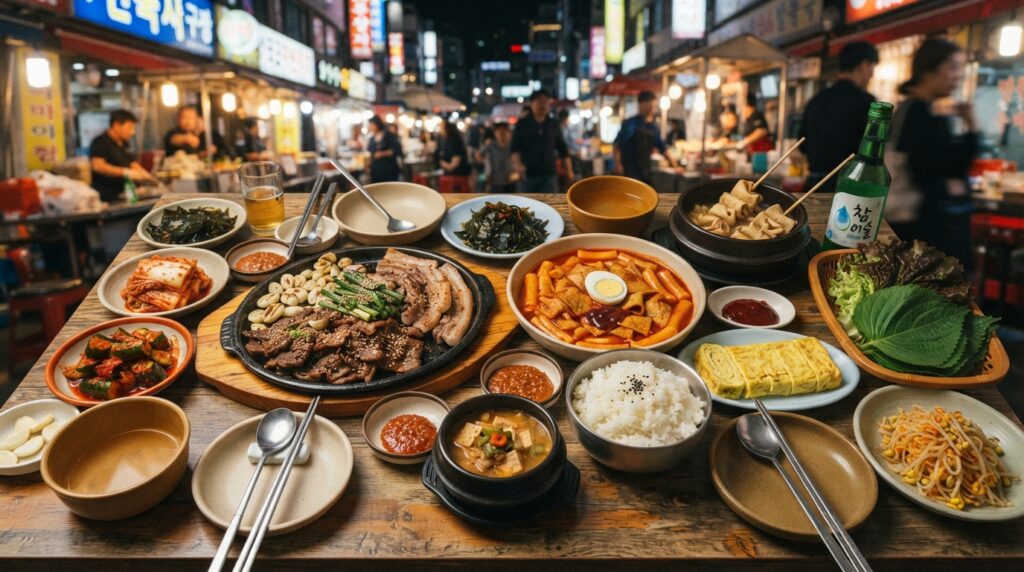
Many courses also offer a hearty meal at their clubhouse restaurant, and it would be a genuine shame to skip it. Clubhouse dining at Korean golf courses ranges from classic Korean dishes like bibimbap and doenjang jjigae to Western-style steak meals — and the quality is almost always exceptional.
Best Time of Year to Golf in South Korea
Fhidde
South Korea experiences four distinct seasons, each bringing a different character to the golfing experience. Choosing the right time to visit can make a significant difference in both course conditions and overall enjoyment.
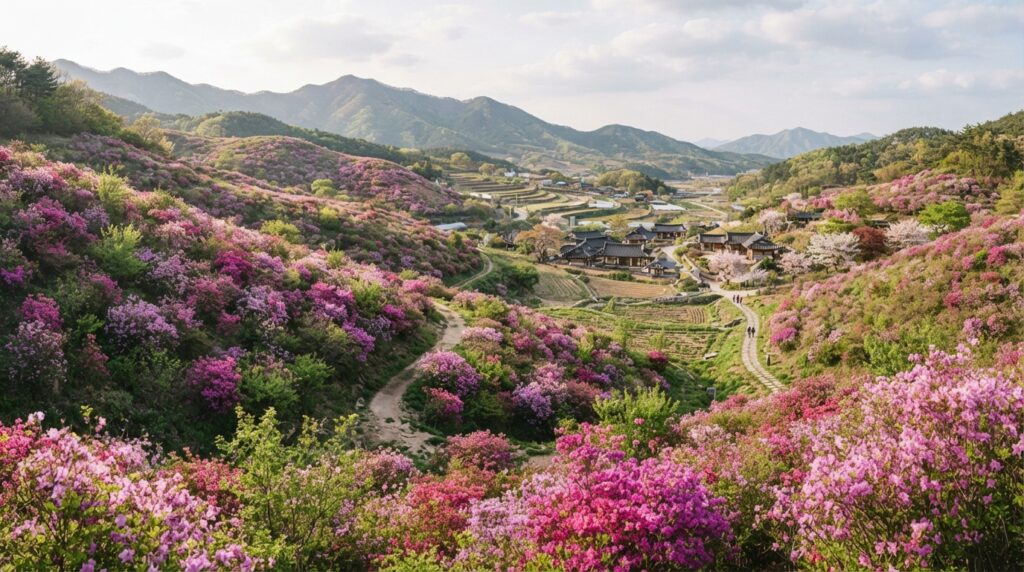
Spring (April to early June) is widely considered the finest time to golf in South Korea. Temperatures are mild and comfortable — typically ranging from 12°C to 22°C — and the landscape transforms into a riot of color as cherry blossoms, azaleas, and forsythia bloom across hillsides and fairway borders. Playing a round in Korea during cherry blossom season is an experience of extraordinary beauty, and it is easy to understand why this period is the most popular among both domestic and international golf travelers. Book well in advance if you plan to visit during April.
Autumn (September to November) runs a very close second as the ideal golf season. The monsoon rains of summer have passed, temperatures are crisp and refreshing, and the mountains erupt in brilliant shades of red, orange, and gold as the autumn foliage peaks — typically in October. Fairways framed by autumn maples and ginkgo trees create a visual drama that rivals anywhere in the golfing world. Conditions are generally excellent, and while courses are busy, the atmosphere is relaxed and celebratory.
Summer (June to August) brings both opportunity and challenge. Temperatures can reach 30°C to 35°C, and the Korean monsoon season (known as jangma) typically runs from late June through late July, bringing heavy rainfall and high humidity. Many Korean golfers embrace early morning rounds to beat the heat, and courses often offer discounted late-afternoon twilight rates. If you golf in summer, bring sun protection, stay well hydrated, and embrace the lush green intensity that the rainy season brings to course landscapes.
Winter (December to February) effectively closes most golf courses on the Korean mainland, as temperatures drop well below freezing and snowfall makes play impossible. However, Jeju Island — blessed by a subtropical microclimate — remains playable for much of the winter, making it the go-to destination for Korean golfers who cannot bear a season away from the game. Winter green fees on Jeju are significantly lower than peak season rates, and while conditions may not be at their finest, the value and relative tranquility of a winter round on the island has its own quiet appeal.
Getting to Golf Courses From Major Cities
Transportation logistics are an important consideration when planning a Korean golf trip, as most of the country’s finest courses are located outside city centers — often in mountainous or coastal areas that require a dedicated journey.
From Seoul, the most convenient option for reaching Gyeonggi-do courses is by taxi or private car hire. Many courses are located 30 to 90 minutes from central Seoul via expressway, and the journey itself — through rolling countryside and past traditional villages — is part of the experience. Some resort courses offer dedicated shuttle services from major Seoul hotels; confirm this when booking your tee time.
For Jeju Island, a short domestic flight from Seoul’s Gimpo Airport or Gimhae Airport in Busan takes approximately one hour. Once on the island, renting a car is the most practical way to access Jeju’s many golf courses, which are spread across the island’s north, south, east, and west regions. Most major international rental companies operate at Jeju International Airport, and driving on the island is straightforward with English-language GPS navigation widely available.
From Busan, many coastal and mountain courses are accessible within 30 to 60 minutes by taxi or rental car. The expressway network in South Korea is modern, well-maintained, and easy to navigate, making road trips between cities and golf destinations genuinely enjoyable.
Golf resort packages — particularly popular on Jeju — typically include airport transfers, accommodation, and pre-booked tee times, eliminating transportation logistics entirely. For first-time visitors to Korean golf, these all-inclusive packages are highly recommended for their convenience and value.
Korean Golf Courses That Hosted International Events
The Presidents Cup 2015 — Jack Nicklaus Golf Club Korea

The 2015 Presidents Cup, held at Jack Nicklaus Golf Club Korea in Incheon, marked a watershed moment in Korean golf history. The biennial team competition — pitting the United States against an international team of non-European players — chose South Korea as its host nation for the first time, shining a global spotlight on the country’s world-class golf infrastructure and passionate golf culture.
The tournament drew enormous domestic audiences and helped cement South Korea’s reputation as a serious player in the global golf tourism landscape. Jack Nicklaus Golf Club Korea rose to international prominence through the event, and the course remains one of the most sought-after tee times near Incheon and Seoul for visiting foreign golfers who want to walk the same fairways as the world’s best.
The CJ Cup — Korea’s PGA Tour Showcase
The CJ Cup, sponsored by Korean conglomerate CJ Group, has been one of the most significant PGA Tour events in Asia in recent years. Originally held at Nine Bridges Golf Club on Jeju Island — drawing the world’s top-ranked players to one of Korea’s most exclusive and beautiful venues — the tournament elevated Jeju’s profile in the international golf world enormously.
The combination of elite professional competition and Jeju’s dramatic natural setting made the CJ Cup a landmark event that demonstrated Korea’s capacity to host and deliver world-class professional golf at the highest level.
KLPGA & LPGA Events in Korea
South Korea’s domestic golf tour — the Korean Ladies Professional Golf Association (KLPGA) — is one of the most competitive women’s golf tours in the world. KLPGA tournaments are held throughout the country from spring to autumn, attracting massive domestic television audiences and enthusiastic on-course galleries.
For golf travelers visiting South Korea during tournament season, attending a KLPGA event is a genuinely thrilling experience. Admission is often free or very affordable, galleries are passionate and knowledgeable, and the opportunity to watch world-class Korean women golfers — many of whom go on to dominate the LPGA Tour — up close is a privilege that few international golf destinations can offer in quite the same way.
Tips for Making the Most of Your Golf Trip to South Korea

South Korea’s beauty as a golf destination is that it never has to exist in isolation. Every round of golf here exists within a broader tapestry of cultural richness, culinary adventure, and natural wonder. Here are the tips that will elevate your Korean golf trip from excellent to truly unforgettable.
Combine Golf With K-Drama Filming Locations. Many of South Korea’s scenic golf regions double as filming locations for beloved Korean dramas. Jeju Island, Gyeongju, and the Gangwon-do mountain region have all served as backdrops for popular K-dramas. A morning round of golf followed by an afternoon visiting a nearby drama filming site makes for a perfectly balanced Korean day.
Recover the Korean Way — Visit a Jjimjilbang. After a full day on the course, there is no better recovery than a visit to a Korean jjimjilbang (찜질방) — a traditional Korean sauna and bathhouse. Many golf resorts include on-site jjimjilbang facilities. The combination of hot and cold baths, infrared sauna rooms, and full-body scrub treatments will have your muscles feeling completely restored for the next day’s round. It is one of the most authentically Korean experiences you can have, and golfers swear by it.
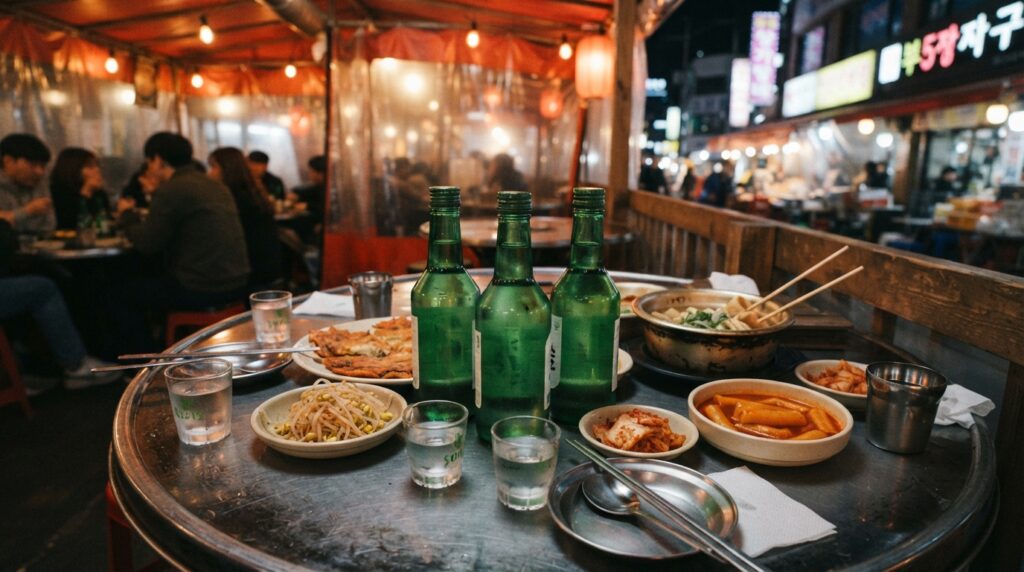
Eat at the Clubhouse. Korean golf clubhouse restaurants are significantly better than their international counterparts. Expect beautifully presented Korean set meals (hanjeongsik), grilled meats (galbi, bulgogi), hearty soups, and locally sourced seasonal ingredients. Many Jeju clubhouses serve dishes made with Jeju black pork — a regional delicacy that should not be missed. Pair your meal with a glass of makgeolli (traditional Korean rice wine) for the full authentic experience.
Buy Korean Golf Gear. South Korea is home to a thriving domestic golf equipment and apparel industry. Korean golf brands like Pearlygates, Anew Golf, and J.Lindeberg Korea editions produce beautifully designed, high-quality golf apparel that makes for exceptional and distinctive souvenirs. Golf specialty stores in Seoul’s Gangnam district and at major golf clubs carry extensive selections of Korean-made and Korean-exclusive equipment, clothing, and accessories.
Learn a Few Korean Golf Phrases. A little Korean goes a long way on the course. Learning basic phrases like “잘 치셨어요” (jal chi-shyeo-sseo-yo — “you played well”) and “감사합니다” (gamsahamnida — “thank you”) will endear you to your caddie and fellow players instantly and enrich the cultural dimension of your round enormously.
Frequently Asked Questions (FAQ)
Is golf expensive in South Korea?
Golf in South Korea is moderately priced compared to top-tier courses in Japan or the United States. Expect to pay between 150,000 and 350,000 won per person for a full round including cart and caddie at a quality resort course. Budget options exist at municipal and regional clubs for significantly less.
Can foreigners book tee times easily in South Korea?
Yes, though it depends on the course. Public and resort courses are accessible to foreign visitors through hotel concierges, golf travel agents, and online platforms. Highly exclusive private clubs may require a member introduction or a specialized travel agent’s assistance.
Do I need to speak Korean to play at Korean golf courses?
Not at all. Your caddie will manage most of the on-course communication, and many resort and premium courses have English-speaking staff at their pro shops and reception desks. Having a translation app handy is always useful but rarely essential at established golf venues.
What is the most famous golf course in South Korea?
Nine Bridges Golf Club on Jeju Island is widely regarded as the most prestigious course in the country, while Pinx Golf Club is the most internationally recognized for its visual drama and world rankings. Jack Nicklaus Golf Club Korea holds fame as the site of the 2015 Presidents Cup.
Is Jeju Island worth visiting just for golf?
Absolutely. Even beyond the exceptional courses, Jeju is one of the most beautiful places in all of East Asia — a UNESCO World Heritage Site with volcanic craters, waterfalls, lava tube caves, coastal cliffs, and a unique local culture distinct from mainland Korea. A golf trip to Jeju is simultaneously a nature and culture trip of the highest order.
What is screen golf and where can I try it?
Screen golf (Golfzon) is an indoor golf simulation experience where you play virtual rounds on famous world courses in a private booth using real clubs and balls. You can find Golfzon cafés in virtually every neighborhood of major Korean cities. Simply search “golf bang” or “Golfzon” on Naver Maps or Google Maps near your location in Seoul, Busan, or any Korean city.
South Korea has earned its place among the world’s great golf destinations — not through marketing alone, but through the genuine excellence of its courses, the warmth of its golf culture, and the extraordinary natural beauty that frames every round. From the volcanic fairways of Jeju Island and the mountain-carved layouts of Gangwon-do to the prestigious tournament courses near Seoul and the unforgettable caddie culture that defines the Korean golfing experience, this is a destination that rewards every golfer who makes the journey.
What makes a golf trip to South Korea truly special, however, is what surrounds the game itself. The cherry blossoms framing your approach shot in April. The jjimjilbang session that eases your muscles after 18 demanding holes. The clubhouse meal of Jeju black pork galbi and cold makgeolli shared with new friends as the sun sets over the mountains. The screen golf café session at midnight in a neon-lit Seoul alley.
Golf in South Korea is never just golf. It is a full immersion in one of the world’s most vibrant, welcoming, and endlessly fascinating cultures — served with a side of some of the best fairways in Asia.
Start planning your tee times. Korea is waiting.
Enjoyed this guide? Explore our related articles on the best things to do in Jeju Island, Korean travel tips for first-time visitors, and the top K-drama filming locations you can actually visit.