
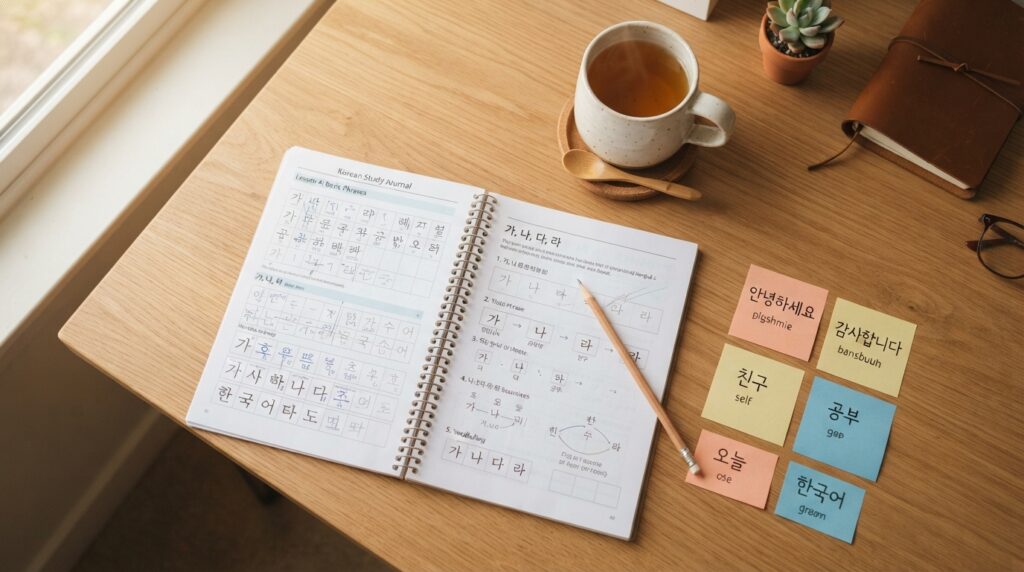
Picture this: You walk into the exam room, heart steady, mind sharp, ready to conquer your Korean language test paper. With every answer, you showcase your fluency, cultural knowledge, and months of strategic preparation, earning a score that opens doors to study abroad, career opportunities, or simply the pride of mastering Korean. In 2025, the global fascination with Korean culture — from K-pop’s infectious beats to K-dramas’ heartfelt stories — has fueled a surge in learners tackling tests like the Test of Proficiency in Korean (TOPIK). Whether you’re aiming for TOPIK Level 1 or a university entrance exam, this guide delivers expert strategies, practical resources, and insider tips to help you excel. As a Korean language educator with years of experience coaching students to TOPIK success, I’ve distilled proven methods to transform your preparation into results. Let’s dive into how you can ace your Korean language test paper and achieve your goals.
Understanding the Korean Language Test Paper
What Is a Korean Language Test Paper?
A Korean language test paper evaluates your proficiency in reading, writing, listening, speaking, and grammar/vocabulary. The most recognized is TOPIK, administered by South Korea’s National Institute for International Education (NIIED). TOPIK I (Levels 1-2) tests beginners, while TOPIK II (Levels 3-6) challenges intermediate to advanced learners. Other tests include university entrance exams or corporate proficiency assessments, each with unique formats. TOPIK I is a single 100-minute session split into a 40-minute listening section and a 60-minute reading section, with no writing component. TOPIK II is a full 3-hour (180-minute) exam split across two sessions with a short break in between: the first session covers listening and writing, and the second covers reading. Understanding this structure is the first step to tailoring your study plan for success.
Why Korean Language Tests Matter in 2025
The demand for Korean proficiency is skyrocketing. TOPIK test-taker numbers have climbed steadily in recent years — from roughly 360,000 in 2022 to 420,000 in 2023 and about 490,000 in 2024 — with 2025 figures already surpassing 550,000, the highest total since the exam launched in 1997. This growth is projected to continue as Korean companies like Samsung and Hyundai expand globally. Proficiency opens doors to jobs in translation, tourism, or diplomacy, and enhances study abroad applications. Beyond practicality, mastering Korean deepens your connection to its vibrant culture — think ordering kimchi jjigae like a local or catching every nuance in Squid Game. A strong test score validates your skills and boosts your confidence in real-world settings.
Common Challenges in Korean Language Test Papers
Linguistic Hurdles
Korean’s unique grammar, like honorifics (존댓말) and sentence endings, trips up many learners. Particles (e.g., 은/는 vs. 이/가) and verb conjugations can feel overwhelming, especially under time pressure. Hanja (Chinese characters) appears in advanced TOPIK levels, adding complexity. Pronunciation nuances, such as distinguishing between tense and aspirated consonants (e.g., ㄱ vs. ㅋ), also pose challenges. Common mistakes include misusing particles or neglecting context-specific politeness levels, which can cost points in writing and speaking sections.
Time Management and Test Anxiety
Timed sections — 100 minutes for TOPIK I’s listening-and-reading combo, or a full 3 hours for TOPIK II — demand quick thinking. Many learners struggle to finish, especially with the short-answer and essay questions in TOPIK II’s writing section. Unfamiliar formats, such as summarizing a passage or crafting a formal letter, heighten anxiety. Without practice, even strong speakers falter under pressure, rushing answers or second-guessing themselves. Addressing these challenges requires strategic preparation and mental resilience, which we’ll cover next.
Proven Strategies to Excel in Your Korean Language Test Paper
Build a Strong Foundation in Korean Grammar and Vocabulary

A solid grasp of grammar and vocabulary is non-negotiable. Start with resources like Yonsei Korean textbooks for structured learning or Talk To Me In Korean (TTMIK) for bite-sized lessons. Create a daily vocabulary log: aim for 20 new words, noting their meanings, part of speech, and example sentences. For grammar, focus on high-impact structures like -고 있다 (ongoing actions) or -아/어 주다 (doing something for someone). A sample 4-week plan for intermediate learners might include:
- Week 1: Master particles (은/는, 이/가, 을/를).
- Week 2: Study verb conjugations (past, present, future).
- Week 3: Tackle sentence endings (e.g., -습니다, -아요).
- Week 4: Practice complex sentences with connectors (e.g., -지만, -때문에).
Master Reading and Comprehension
Reading comprehension tests your ability to extract meaning from texts like news articles or dialogues. Practice skimming for main ideas and circling keywords (e.g., dates, names, or verbs). Use past TOPIK papers (available on the official TOPIK website, topik.go.kr) to familiarize yourself with question types, such as multiple-choice or fill-in-the-blank. For authentic practice, read Korean news on Naver or BBC Korea, starting with short articles. A pro tip: break long passages into chunks — summarize each paragraph in your own words to build understanding.
Ace the Listening Section

Listening sections test your ear for Korean’s rhythm and accents. Exposure to diverse speakers (e.g., Seoul’s standard dialect vs. Busan’s regional tone) is key. Stream K-dramas like Vincenzo or podcasts like TTMIK’s Iyagi without subtitles first, jotting down key phrases. Then, replay with transcripts to check accuracy. TOPIK listening often includes conversations or announcements, so practice with official audio samples. A step-by-step method:
- Listen once, noting main ideas.
- Listen again, focusing on details (e.g., numbers, locations).
- Verify with transcripts and repeat until you catch 80%+ of the content.
Excel in Writing and Speaking

Writing and speaking demand clarity and cultural sensitivity. For TOPIK II’s writing section, use a clear structure: introduction, body (2-3 points), and conclusion. Practice prompts like “Describe a memorable cultural experience” or “Argue for/against studying abroad.” A sample response might start: “지난해 한국 문화를 체험하며 한복을 입어본 것은 잊을 수 없는 추억이다.” For speaking practice (relevant for TOPIK’s separate speaking test or general fluency-building), apps like HelloTalk connect you with native speakers for real-time practice. Record yourself answering mock questions, focusing on pronunciation and politeness levels. A tutor or language partner can provide feedback on fluency and tone.
Time Management Techniques

Mock tests are your secret weapon. Simulate exam conditions with timed TOPIK papers under real time limits — 100 minutes for TOPIK I, or the full multi-session 180 minutes for TOPIK II. Prioritize high-point questions, like essays, and skip tricky ones to revisit later. A sample 4-week study schedule:
- Week 1: Complete one full mock test, review errors.
- Week 2: Focus on weak sections (e.g., listening), practice daily.
- Week 3: Increase speed with timed drills (e.g., 10 reading questions in 15 minutes).
- Week 4: Take two full mock tests, refine pacing.
Leveraging Technology and Resources for 2025
Best Apps and Online Platforms
Technology accelerates learning. Apps like Duolingo and Memrise gamify vocabulary, while Quizlet helps with flashcards. TOPIK One offers practice tests mirroring real exams. For free resources, download past TOPIK papers from topik.go.kr or watch YouTube channels like Korean Unnie for grammar tips. AI tools like Claude can also help you practice conversational Korean, asking questions like “How do I introduce myself formally?” These platforms make studying engaging and accessible.
Joining Korean Language Communities
Community support boosts motivation. Join Reddit’s r/Korean for study tips or local language meetups via Meetup.com. University clubs or online groups on KakaoTalk offer accountability and cultural exchange. A success story: Sarah, a TOPIK Level 3 candidate, joined a Seoul-based study group and improved her score by practicing speaking weekly. Communities provide feedback, encouragement, and real-world insights, making your preparation dynamic and collaborative.
Cultural Insights to Boost Your Performance
Understanding Korean Culture in Test Contexts

Korean language tests, especially TOPIK II, often weave in cultural elements, testing your ability to navigate social nuances. For instance, using appropriate honorifics (e.g., -시- or -습니다) in writing or speaking reflects respect, a cornerstone of Korean culture. Misusing politeness levels can lower your score, as examiners value cultural accuracy. To prepare, immerse yourself in Korean media. Watching K-dramas like Crash Landing on You or Itaewon Class reveals how characters adjust speech based on age or status. For example, a character addressing a senior uses formal endings like -요 or -습니다, while peers use casual forms like -아/어. Practicing these distinctions in your responses shows examiners you understand both language and culture. A practical tip: write a mock essay using formal language, then have a native speaker review it for cultural accuracy.
Incorporating Hanja and Idioms
Hanja, or Chinese characters, appears in TOPIK II’s advanced levels, testing your ability to recognize and use them in context. Korean hanja preserve the traditional (unsimplified) character forms — for example, a reading passage might include hanja like 文化 (culture) or 經濟 (economy, written with the traditional characters rather than the simplified forms used in Japanese). To study, use resources like Hanja for Intermediate Learners or apps like Naver Dictionary, which provide hanja meanings and pronunciations. Aim to learn 10-15 common hanja weekly, focusing on those frequent in news or academic texts. Equally important are Korean idioms (속담), which add depth to your writing and speaking. Here are five must-know idioms for test-takers:
- 고생 끝에 낙이 온다 (After hardship comes happiness) — Use in essays about perseverance.
- 티끌 모아 태산 (Dust gathers to form a mountain) — Ideal for discussing gradual progress.
- 소 잃고 외양간 고친다 (Fix the barn after losing the cow) — Great for problem-solution essays.
- 콩 심은 데 콩 나고, 팥 심은 데 팥 난다 (You reap what you sow) — Perfect for cause-effect prompts.
- 호랑이도 제 말 하면 온다 (Speak of the tiger, and it appears) — Adds humor to conversational answers.
Practice incorporating one idiom per essay to make your writing stand out while showing cultural fluency.
Preparing for Test Day
Practical Tips for the Exam Room
Success on test day hinges on preparation and calm execution. Arrive at least 30 minutes early with required materials: a valid ID, pencils, an eraser, and a watch (no smartphones allowed in most testing centers). Stay hydrated but avoid heavy meals to maintain focus. During the exam, read instructions carefully — TOPIK often includes specific guidelines, like word limits for essays. If you feel anxious, try a quick breathing exercise: inhale for 4 seconds, hold for 4, exhale for 6. This lowers your heart rate and sharpens focus. For multiple-choice sections, eliminate clearly wrong answers first to narrow your choices. If stuck, mark the question and move on, returning later with fresh eyes.
Post-Test Reflection

After the exam, reflect on your performance to improve for future tests. Write down what went well (e.g., nailed the listening section) and what didn’t (e.g., ran out of time on reading). For writing or speaking sections, seek feedback from a tutor or native speaker via platforms like italki. Check your score online once results are released and analyze the section breakdown. This helps pinpoint areas for growth, like vocabulary or essay structure. Even if you don’t pass, view it as a learning opportunity — many learners need multiple attempts to reach higher levels.
Expert Insights and Success Stories
Korean language instructors emphasize consistency over intensity. Ten minutes of targeted vocabulary study daily trumps hours of unfocused review — a principle echoed by TOPIK examiners and experienced tutors alike. Learners who succeed share a common trait: discipline. Take Jin, a 25-year-old student from Canada, who went from TOPIK Level 1 to Level 4 in 12 months. His secret? A structured plan: 30 minutes of grammar, 30 minutes of listening (K-pop and podcasts), and weekly speaking practice with a language partner. Jin’s story shows that persistence, paired with the right strategies, yields results. Another tip from experts: simulate real-world scenarios. For example, write a mock job application in Korean or role-play ordering food to build practical skills that shine in speaking tests.
FAQs About Korean Language Test Papers
What’s the Difference Between TOPIK I and TOPIK II?
TOPIK I (Levels 1-2) is for beginners, testing basic listening (40 minutes) and reading (60 minutes) in a single 100-minute session. TOPIK II (Levels 3-6) targets intermediate to advanced learners, adding a writing section across a full 180-minute, two-session format. Level 3, for instance, requires roughly 1,200-2,000 words of vocabulary, while Level 6 demands fluency approaching that of a native speaker.
How Can I Access Free TOPIK Practice Papers?
Visit topik.go.kr for official past papers and sample questions. Other trusted sources include Talk To Me In Korean’s website and TOPIK Guide, which offer free downloads. YouTube channels like Korean Unnie also provide practice audio and explanations.
How Long Should I Study to Pass TOPIK Level 3?
For intermediate learners with a basic foundation (Level 1-2), 6-12 months of study (2 hours/day) is realistic. Focus on grammar (e.g., -기 때문에, -도록), vocabulary expansion (1,500+ words), and regular mock tests to gauge progress.
Are There Specific Strategies for Non-Native Speakers?
Non-native speakers benefit from immersion: watch K-dramas, listen to K-pop lyrics, or chat with native speakers on HelloTalk. Practice cultural nuances, like using formal language in professional settings, to avoid common errors. Consistent exposure builds intuition for tricky grammar and pronunciation.
Mastering your Korean language test paper in 2025 is within reach with the right approach. By building a strong foundation in grammar and vocabulary, practicing reading and listening with authentic materials, and honing writing and speaking with cultural sensitivity, you’ll tackle exams like TOPIK with confidence. Leverage technology, join language communities, and embrace Korean culture to elevate your skills. Start today: download a TOPIK practice paper, join a study group, or try a mock essay. Your journey to fluency starts now — 화이팅 (fighting)!