Imagine binge-watching your favorite K-Drama like ‘Crash Landing on You’ and noticing the sleek smartphones and stunning TVs that seem almost as integral to the plot as the characters themselves. What if I told you that South Korean electronics companies are not just background props but key players in evolving the global phenomenon of K-Drama culture? From powering emotional confessions via high-tech gadgets to enhancing immersive viewing experiences, these tech giants have woven themselves into the fabric of Korean entertainment, influencing everything from storytelling to fan engagement.
As a Korean culture expert with over a decade of experience analyzing Hallyu trends and collaborations between tech and entertainment, I’ve witnessed firsthand how South Korean electronics companies like Samsung and LG have propelled the Korean Wave forward. This in-depth exploration delves into the top South Korean electronics companies, their histories, innovations, and profound influence on K-Drama storytelling, production, and fan engagement—equipping you with insights to appreciate your next drama marathon on a deeper level.
In 2025, South Korea’s electronics sector continues to dominate globally, with exports reaching record highs—cumulative figures for January-November hitting $640.1 billion, including a significant portion from electrical and electronic equipment valued at $212.91 billion in 2024, projected to grow further. This economic powerhouse not only fuels national growth but also amplifies Hallyu, the Korean Wave, by integrating cutting-edge technology into popular media. Whether you’re a die-hard K-Drama fan curious about the gadgets in ‘Descendants of the Sun’ or a tech enthusiast exploring how semiconductors enable high-definition streaming, this guide addresses your need for a comprehensive understanding of this symbiotic relationship. We’ll cover historical contexts, company profiles, cultural impacts, iconic moments, and future trends, making this the ultimate resource for bridging tech and entertainment.
By the end, you’ll see how these companies solve real-world problems for viewers—like seamless connectivity in romantic plots or ultra-realistic visuals in action sequences—while driving global trends in consumer electronics. Let’s dive in.
The Rise of South Korean Electronics Companies: A Historical Overview
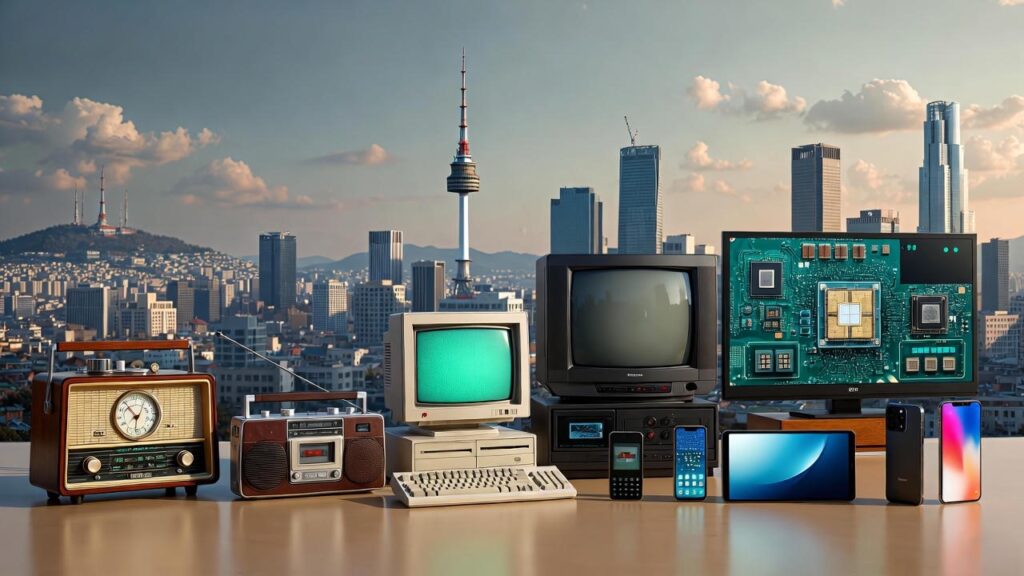
South Korea’s transformation from a war-torn nation to a global tech leader is nothing short of remarkable. The electronics industry, a cornerstone of this miracle on the Han River, has evolved through strategic government policies, innovative chaebols (conglomerates), and relentless R&D investment. Understanding this history is crucial for appreciating how these companies shape K-Drama culture today, as their innovations provide the tools for production and the props that enhance narrative authenticity.
From Post-War Rebuilding to Global Dominance
The roots of South Korea’s electronics industry trace back to the late 1950s, during the early years (1959-1965) of post-Korean War reconstruction. Initially focused on basic assembly of radios and televisions, the sector gained momentum in the formative years (1966-1979) under President Park Chung-hee’s export-oriented policies. The chaebol system—family-controlled business groups—emerged as a driving force, with companies like Samsung and LG (then GoldStar) pivoting to electronics.
By the 1980s, the industry had matured into rapid growth (1980-1989), emphasizing semiconductors and consumer appliances. Key milestones include the 1988 Seoul Olympics, which showcased Korean tech to the world, boosting exports and international recognition. Government support, such as the Heavy and Chemical Industry Drive in the 1970s, funneled resources into R&D, leading to breakthroughs in integrated circuits and DRAM chips. In the 1990s and 2000s, liberalization and globalization propelled Korea to the forefront, with electronics becoming the nation’s top export earner.
Today, in 2025, South Korea’s electronics exports are forecasted to continue their upward trajectory, with semiconductors alone driving significant growth amid AI demands. The industry’s export value for electronic components is projected to reach around $200 billion, underscoring its economic clout. This dominance directly ties into Hallyu, as tech exports amplify cultural exports like K-Dramas, creating a virtuous cycle where gadgets in shows boost brand visibility and sales worldwide.
- Timeline of Major Events:
- 1959: First electronics firm established, focusing on radios.
- 1969: Samsung Electronics founded, starting with black-and-white TVs.
- 1970s: Heavy investment in semiconductors; Hyundai Electronics (precursor to SK Hynix) enters the fray.
- 1988: Seoul Olympics highlights Korean TVs and appliances.
- 1990s: Shift to digital tech; LG rebrands from GoldStar.
- 2000s: Rise of smartphones and displays; global market leadership.
- 2025: AI and metaverse integrations push new boundaries.
This historical foundation not only built economic resilience but also positioned South Korean electronics as enablers of cultural storytelling in K-Dramas.
Key Innovations Driving the Industry
South Korea’s electronics prowess stems from pioneering advancements in semiconductors, displays, and smart devices—technologies that directly enhance K-Drama production and consumption. For instance, innovations in OLED and QLED displays have revolutionized viewing, making scenes in dramas like ‘Reply 1988’ feel lifelike.
Semiconductors, led by companies like SK Hynix, form the backbone. As early as the 1980s, heavy investments in DRAM and NAND flash memory positioned Korea as a leader. By 2025, SK Hynix’s high-bandwidth memory (HBM) is crucial for AI applications, indirectly supporting high-res streaming platforms for K-Dramas.
Display tech, another hallmark, includes LG’s OLED panels and Samsung’s QLED, which offer vibrant colors and deep blacks ideal for dramatic lighting in shows. Consumer gadgets like smartphones and smart home devices integrate AI, enabling interactive fan experiences—think apps that sync with drama episodes.
Expert Insight: As noted by industry analysts, “Korea’s electronics industry success lies in its ability to blend hardware innovation with content creation,” quoting from historical reviews on chaebol strategies. These innovations solve practical needs for K-Drama fans, such as affordable high-quality devices for binge-watching, while fostering cultural export.
Top South Korean Electronics Companies: Profiles and Contributions
Diving into the key players, we’ll profile the top South Korean electronics companies based on 2025 rankings, focusing on their contributions to K-Drama. These giants—Samsung, LG, SK Hynix, and others—dominate with market shares in semiconductors, displays, and consumer tech, often collaborating with entertainment for mutual growth.
Samsung Electronics – The Undisputed Leader
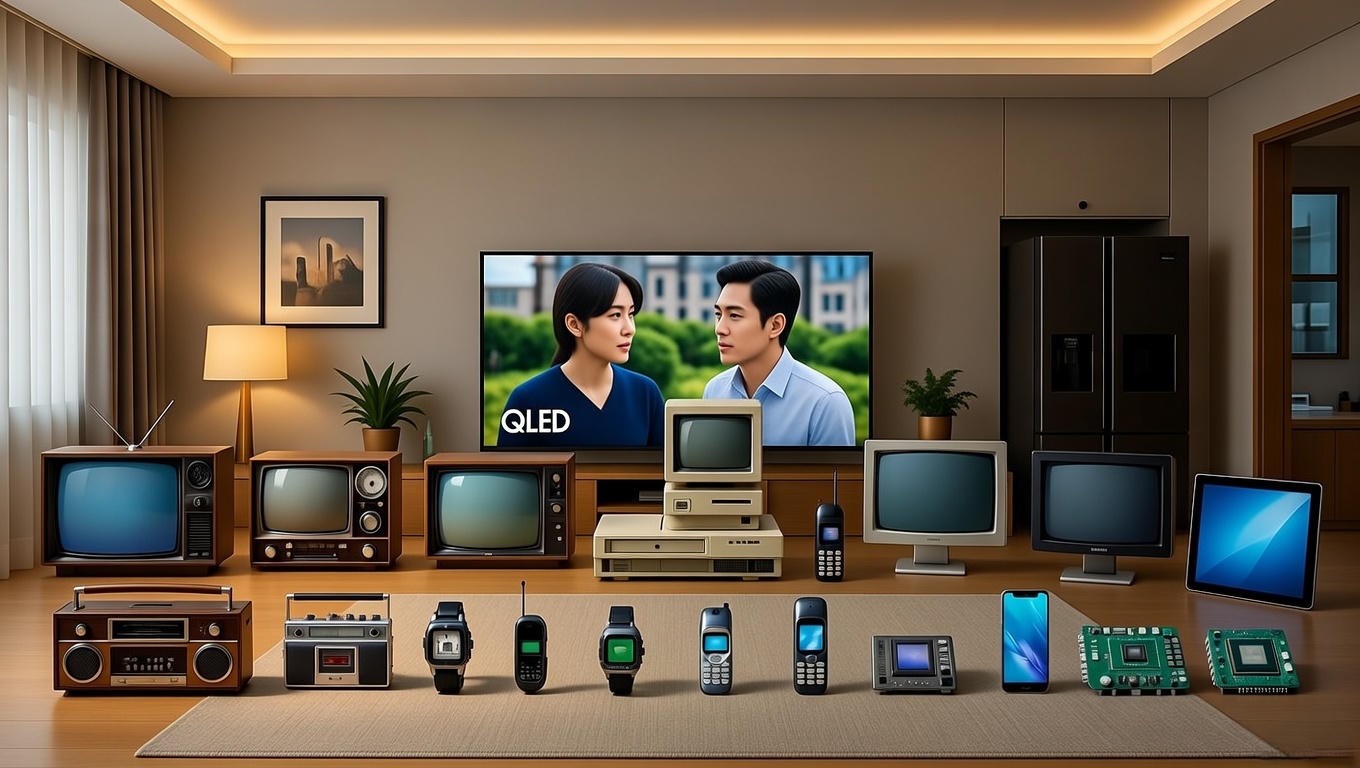
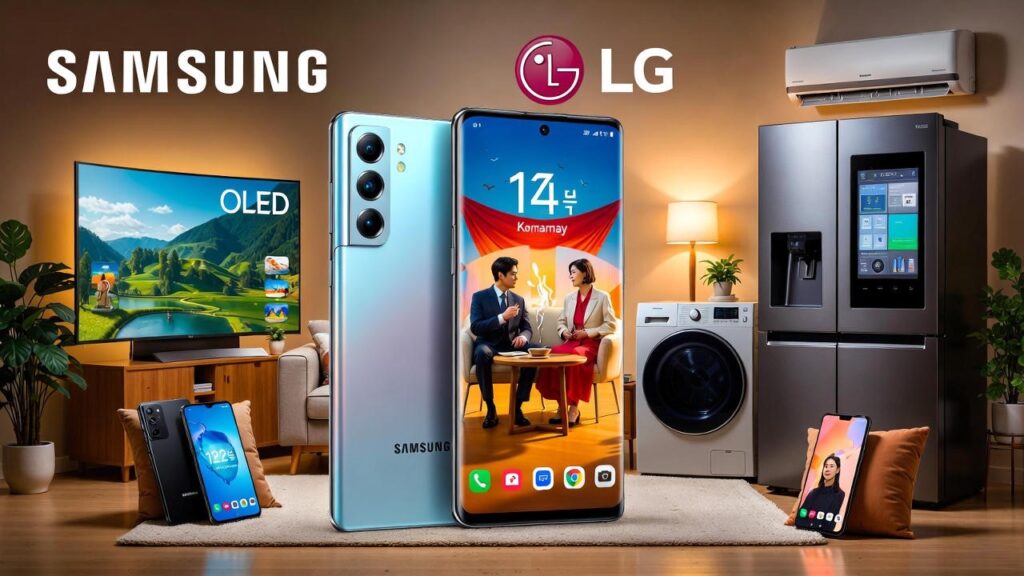
Founded in 1938 as a trading company, Samsung pivoted to electronics in 1969, starting with black-and-white TVs. By 2025, it’s the world’s largest tech firm by revenue, with products spanning smartphones (Galaxy series), TVs (QLED and Neo QLED), appliances, and semiconductors. Recent innovations include AI-powered Vision AI for personalized screens and the Galaxy S25 Ultra, emphasizing foldables and AI integration.
In K-Drama, Samsung’s role is pivotal through product placement (PPL), funding productions for brand exposure. Iconic examples include Galaxy phones in ‘Descendants of the Sun,’ where they symbolize connectivity in romance, boosting sales post-airing. In ‘Itaewon Class,’ Samsung TVs feature in key scenes, enhancing realism and influencing viewer purchases. Sponsorships extend to series like ‘Vincenzo,’ where gadgets drive plot twists, such as surveillance via smart devices.
Samsung’s impact: With 2025 revenue projections high amid AI booms, its tech elevates K-Drama production quality, solving needs for high-res filming and global streaming.
LG Electronics – Innovators in Display and Home Tech
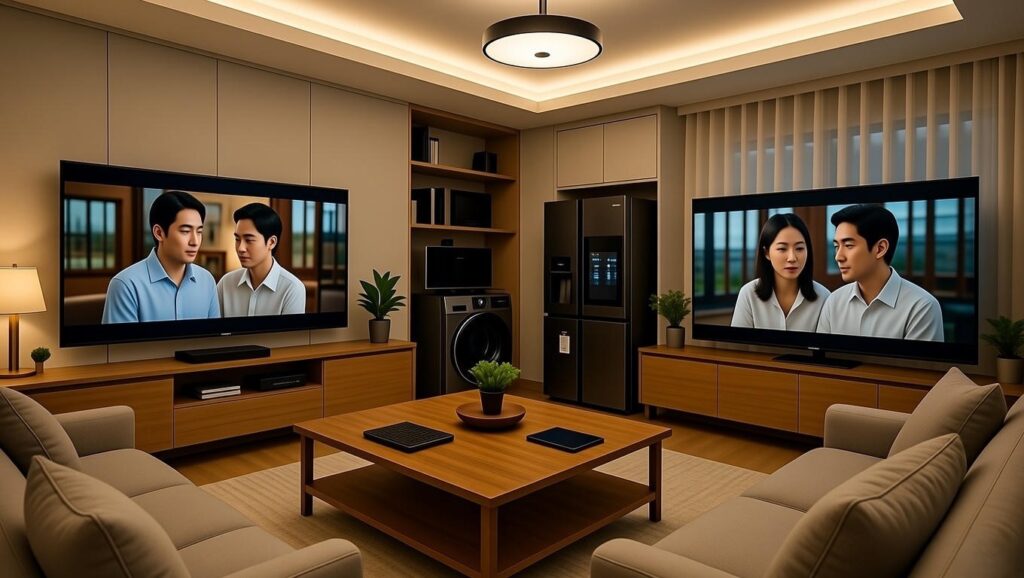
Established in 1958 as GoldStar, LG rebranded in 1995 and has since become a leader in displays and home appliances. Key products in 2025 include OLED TVs (e.g., the award-winning 83-inch evo G5), smart home devices with ThinQ AI, and refrigerators. Innovations like transparent OLED signage and ProBake Convection highlight its focus on user-centric tech.
LG’s K-Drama influence shines in family-oriented shows. In ‘Reply 1988,’ LG TVs capture nostalgic moments, while ‘Sky Castle’ features high-end appliances symbolizing status. The webOS platform enhances streaming, making K-Dramas accessible on smart TVs. Collaborations include AI integrations for immersive viewing, as seen in ‘Guardian: The Lonely and Great God.’
Tips for fans: Look for LG’s subtle PPL in rom-coms; it often ties into themes of modern living, addressing audience desires for tech that blends with lifestyle.
Other Notable Players: SK Hynix, Hyundai Electronics, and Emerging Brands
SK Hynix, founded in 1983 as Hyundai Electronics (later acquired by SK Group in 2012), specializes in memory chips like DRAM and NAND. In 2025, it’s set to overtake Samsung in DRAM revenue at $49.6 billion, fueled by AI demands for HBM. While less visible in PPL, its semiconductors power filming equipment and streaming servers for K-Dramas, enabling 4K/8K production.
Emerging brands like Hanwha Techwin (security tech), IRIVER (consumer electronics), and Cuckoo Holdings (appliances) add diversity. For instance, Cuckoo rice cookers appear in domestic scenes, reinforcing cultural authenticity.
Comparison Table:
| Company | Market Share (2025 Est.) | Key Products | K-Drama Role |
|---|---|---|---|
| Samsung | ~30% (Global Smartphones) | Galaxy Phones, QLED TVs | Direct PPL in romances like ‘Crash Landing on You’ |
| LG | ~25% (OLED Displays) | OLED TVs, ThinQ Appliances | Family dramas e.g., ‘Reply 1988’ |
| SK Hynix | ~35% (DRAM) | Memory Chips | Behind-the-scenes tech support |
| Others (e.g., Cuckoo) | Niche Markets | Appliances | Subtle integrations in daily life scenes |
How South Korean Electronics Companies Shape K-Drama Culture
Beyond mere products, South Korean electronics companies profoundly influence K-Drama through strategic funding, cutting-edge technological advancements, and deep cultural synergies. These elements address the growing demand among global fans for immersive, tech-savvy entertainment experiences that blend seamless storytelling with real-world innovation. As pillars of the Korean Wave (Hallyu), firms like Samsung, LG, and SK Hynix not only provide the hardware that powers production but also embed their brands into narratives, fostering a symbiotic relationship that enhances viewer engagement and drives economic growth. This section explores how these electronics giants mold K-Drama culture, offering practical insights for fans, creators, and industry observers alike.
Product Placement and Storytelling Integration
Product placement, often abbreviated as PPL in the Korean entertainment industry, represents a multi-billion-dollar strategy where South Korean electronics companies fund significant portions of K-Drama production costs. According to industry analyses, PPL can cover up to 30% of a drama’s budget, allowing producers to offset expenses while integrating brands organically into plots. This approach has evolved since the relaxation of PPL regulations in 2010, which previously restricted such integrations but now permits them under guidelines limiting exposure to ensure narrative integrity. Companies like Samsung and LG excel at this, seamlessly weaving their gadgets into storylines to enhance authenticity and emotional resonance.
For instance, in the tech-centric drama ‘Start-Up’ (2020), Samsung devices such as smartphones and laptops drive the narrative around aspiring entrepreneurs, symbolizing innovation and connectivity in a competitive startup ecosystem. This integration not only advances the plot but also mirrors real-life tech culture in South Korea, where electronics are ubiquitous. The benefits extend beyond the screen: PPL boosts realism, making characters’ lives feel relatable, and sparks global trends. A notable example is the fantasy romance ‘Goblin’ (also known as ‘Guardian: The Lonely and Great God,’ 2016-2017), where Samsung products like the Galaxy S7 smartphone appeared prominently. Post-airing, Samsung reported a surge in sales, particularly in international markets like Southeast Asia and the Philippines, as fans sought to emulate the show’s aesthetic. Research on Filipino audiences highlights how such placements influence purchasing behavior, with surveys showing increased brand affinity after exposure to K-Dramas.
Other classic examples include the iconic flip phones in ‘Boys Over Flowers’ (2009), a teen romance that featured Samsung’s early mobile models as status symbols among the elite F4 group. These devices weren’t just props; they facilitated key plot points like dramatic calls and messages, contributing to the show’s enduring popularity. In modern rom-coms, LG’s smart fridges and appliances often appear, adding humor or convenience to domestic scenes—think characters interacting with voice-activated features that tie into themes of modern family life. This strategy has proven effective, with 92% of companies involved in Hallyu marketing reporting export increases due to PPL. For creators, the key is subtlety: Overly forced placements can disrupt immersion, but when done right, they enrich the cultural tapestry of K-Dramas.
Technological Advancements Enhancing Production and Viewing
South Korean electronics companies are at the forefront of technological advancements that elevate K-Drama production and viewing experiences. Innovations in 4K and 8K resolution, AI-driven editing tools, and emerging VR/AR technologies from firms like Samsung and LG have transformed how dramas are created and consumed, solving challenges like high production costs and global accessibility.
High-definition displays, such as LG’s OLED panels and Samsung’s QLED TVs, enable crystal-clear visuals that bring intricate sets and emotional nuances to life. For production, AI tools streamline processes: MBC and CJ ENM have adopted generative AI for scripting and virtual sets, reducing location shoots by up to 50% while maintaining quality. Samsung’s recent AI upscaling has even restored classic 2000s dramas to 4K, preserving cultural heritage for new audiences. Looking ahead, VR and AR—powered by SK Hynix’s advanced memory chips—promise interactive K-Dramas where viewers can enter virtual worlds, like exploring the fantasy realms of ‘Alchemy of Souls’ in immersive 360-degree environments. Facilities like CJ ENM’s Virtual Production Stage use LED walls and AI to simulate scenes, as seen in ‘Queen of Tears’ (2024), where technology rescued complex shots.
These advancements address fan needs for enhanced engagement, such as personalized viewing via Samsung’s Vision AI or LG’s ThinQ platforms, which recommend episodes based on preferences. For creators, AI editing cuts post-production time, allowing more focus on storytelling. As South Korea leads in virtual production, with world-class facilities integrating LED tech, the future holds metaverse-integrated dramas by 2030, blending AI with cultural content for global audiences.
Cultural and Economic Impacts on Hallyu
The interplay between South Korean electronics and K-Dramas has amplified Hallyu, creating profound cultural and economic impacts. Electronics exports, valued at over $200 billion annually, synergize with cultural exports, boosting brands in markets like the US, Southeast Asia, and India. K-Dramas serve as soft power tools, enhancing South Korea’s global image and driving tourism—fans flock to filming sites featuring iconic gadgets.
Economically, Hallyu contributes billions to GDP, with creative industries adding $12.3 billion in 2021 and growing steadily. Government investments in culture, including PPL collaborations, have led to export surges, as seen with Samsung’s post-drama sales boosts. Culturally, this fusion promotes Korean innovation, but challenges like over-commercialization arise—critics argue excessive PPL dilutes artistry, yet data shows positive fan responses, with 15% annual growth in PPL revenue.
Tips for creators: Leverage AI tools for efficient editing to maintain creative freedom; for fans, join tech-themed tours in Seoul, visiting Samsung Innovation Museum or LG’s display centers to experience Hallyu firsthand.
Iconic K-Drama Moments Powered by South Korean Electronics
To truly appreciate the narrative power of tech in K-Dramas, let’s engage with these memorable scenes where South Korean electronics take center stage, blending innovation with emotional depth.
Memorable Scenes and Gadgets
- ‘Crash Landing on You’ (2019-2020): Samsung smartphones facilitate heart-wrenching cross-border calls between the leads, symbolizing forbidden love and connectivity amid division.
- ‘Descendants of the Sun’ (2016): LG TVs in military barracks provide moments of respite, showcasing news clips that advance the plot in this romance-action hybrid.
- ‘Goblin’ (2016-2017): Samsung integrations, like the Galaxy S7 in fantasy sequences, highlight immortality and modern life contrasts, boosting brand visibility.
- ‘Boys Over Flowers’ (2009): Flip phones from Samsung serve as pivotal communication tools in teen drama antics, becoming symbols of wealth and intrigue.
- ‘Reply 1988’ (2015-2016): Vintage LG appliances evoke 1980s nostalgia, grounding family stories in everyday tech evolution.
- ‘Itaewon Class’ (2020): Smart devices, including Samsung tablets, empower business revenge plots, emphasizing tech’s role in empowerment.
- ‘Vincenzo’ (2021): Surveillance via Korean tech gadgets adds thriller tension, with LG cameras capturing key evidence.
- ‘Start-Up’ (2020): AI gadgets from Samsung drive innovation-themed narratives, inspiring viewers with entrepreneurial spirit.
- ‘Sky Castle’ (2018-2019): High-end LG home tech represents elite status, critiquing societal pressures through appliance integrations.
- ‘The King: Eternal Monarch’ (2020): Futuristic electronics, like parallel-world Samsung devices, enhance sci-fi elements in this multiverse tale.
These moments illustrate how electronics amplify drama, making tech an unspoken character.
Fan Perspectives and Community Insights
Fans often recreate these scenes on social media, boosting engagement and community bonds—think TikTok challenges mimicking ‘Boys Over Flowers’ phone flips. Critics, including academics, note tech’s role in deepening emotional layers, as in ‘Goblin’ where gadgets bridge supernatural and human worlds. Forums like Reddit discuss PPL’s humor and impact, fostering global dialogues on Hallyu.
Future Outlook: Evolving Synergies Between Tech and K-Drama
Looking ahead, synergies between South Korean electronics and K-Dramas will deepen with AI, metaverse, and sustainable tech, projecting transformative growth by 2030.
Emerging Technologies and Trends
By 2030, AI infrastructure and VR/AR will revolutionize K-Dramas, with global spending on Korean content doubling to $143 billion. Samsung’s Vision AI and LG’s ThinQ will enable personalized viewing, while metaverse platforms—projected at $51.4 billion in South Korea—allow interactive experiences. AI-generated content, like virtual idols, will expand narratives, with the virtual-human market hitting $527 billion globally.
Opportunities for Fans and Industry
Fans can engage via AI apps for customized drama recommendations; industry pros should focus on sustainable tech to address environmental concerns. Forecasts include the FAST market reaching $48 million in South Korea by 2030, with more global collaborations amplifying Hallyu.
FAQs
- What are the top South Korean electronics companies involved in K-Drama? Samsung, LG, and SK Hynix lead, with Samsung dominating PPL in romances, LG in home tech for family dramas, and SK Hynix powering backend production—detailed in profiles above.
- How does Samsung influence K-Drama production? Through PPL and funding, as in ‘Descendants of the Sun,’ where devices enhance realism and boost sales post-airing.
- Are there ethical concerns with product placement in K-Dramas? Some critique over-commercialization for potentially diluting stories, but it funds high-quality content, with regulations capping exposure at 30% to maintain balance.
- What future tech from Korean companies might change K-Drama viewing? AI for personalization, VR/AR for immersion—see future outlook for 2030 projections.
- How has the electronics industry boosted Hallyu? By amplifying exports and cultural integrations, contributing billions to GDP and enhancing global soft power.
- Which K-Dramas feature LG products prominently? ‘Reply 1988’ with nostalgic appliances and ‘Sky Castle’ with high-end home tech, symbolizing societal themes.
- What’s SK Hynix’s indirect role in entertainment? Providing memory chips that power filming equipment, AI tools, and streaming servers for seamless production.
- How can fans spot PPL? Look for branded gadgets in key scenes, like Samsung phones in emotional calls or LG TVs in living rooms—often tied to plot progression for authenticity.
As we wrap up this comprehensive journey into the world of South Korean electronics companies and their indelible role in shaping K-Drama culture, it’s clear that this intersection represents far more than mere product placements or sponsorships—it’s a powerful symbiosis driving innovation, cultural export, and global connectivity. From the post-war foundations that transformed South Korea into an electronics superpower to the cutting-edge advancements fueling today’s immersive storytelling, companies like Samsung, LG, and SK Hynix have become silent co-stars in the Hallyu phenomenon, enhancing narratives while amplifying Korea’s soft power worldwide.
In 2025, South Korea’s electronics sector continues to break records, with annual exports on track to surpass $700 billion for the first time, propelled by a semiconductor boom where chips alone reached $152.6 billion through November—accounting for nearly 28% of total exports. This AI-driven surge, with November semiconductor sales hitting a monthly record of $17.26 billion, not only underscores economic resilience amid global challenges like U.S. tariffs but also provides the technological backbone for K-Drama production and consumption. High-bandwidth memory from SK Hynix powers data centers streaming hits worldwide, while Samsung’s Galaxy devices and LG’s OLED displays bring emotional scenes to life in stunning clarity, making distant stories feel intimately real for global audiences.
This synergy has profoundly elevated K-Drama’s status as a cornerstone of Hallyu. As we’ve explored through iconic moments—from cross-border Samsung calls in Crash Landing on You to nostalgic LG appliances in Reply 1988—these integrations add layers of authenticity and aspiration, often driving real-world consumer trends. Product placement, funding up to 30% of budgets, has evolved into sophisticated storytelling tools, boosting brand sales (as seen post-Goblin) while enriching plots. The result? K-Dramas dominating global OTT charts in 2025, with titles like When Life Gives You Tangerines and CJ ENM productions charting in Netflix’s Top 10 for weeks, reflecting sustained popularity across demographics—from Gen Z to viewers over 35.
Looking ahead to 2030, the future promises even deeper convergence. AI personalization via Samsung Vision AI and LG ThinQ, VR/AR immersive experiences powered by Korean semiconductors, and metaverse integrations will redefine viewing, potentially doubling global spending on Korean content. As digital transformation accelerates—with South Korea’s market projected to grow from $61.17 billion in 2025 to $184.52 billion by 2030 at a 24.71% CAGR—this tech-entertainment fusion will continue solving viewer needs for more engaging, personalized escapes while propelling economic growth through cultural exports.
For K-Drama enthusiasts, this means richer worlds to dive into; for the industry, sustainable innovation; and for South Korea, enduring global influence. The next time you spot a sleek Galaxy phone facilitating a heartfelt confession or an OLED screen capturing a family’s quiet moment, remember: it’s not just a prop—it’s a thread in the vibrant tapestry of modern Korean culture.
What’s your favorite tech moment from a K-Drama that stayed with you? Share in the comments below, explore our related articles on Hallyu trends, or recommend your must-watch series—we’d love to hear from you!