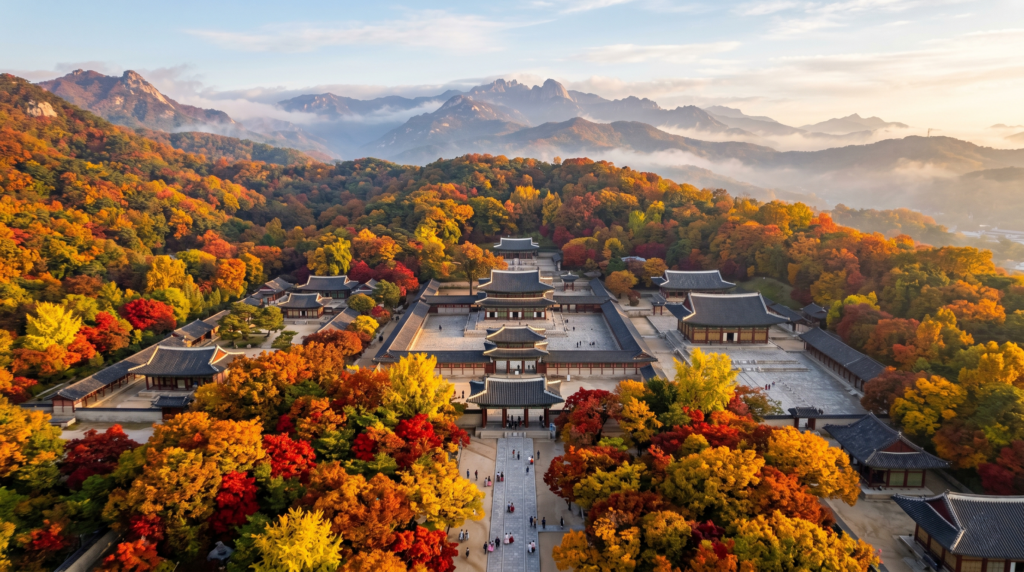
Imagine standing beneath a canopy of crimson and gold, the scent of roasted chestnuts drifting through cool, crisp air, while a centuries-old palace glows in the amber light of a Korean autumn afternoon. This is not a scene from a K-drama — this is real life in Korea during fall. The fall season in Korea is, without question, one of the most breathtaking natural and cultural spectacles in all of Asia, and yet it remains underestimated by many international travelers who flock to Japan for cherry blossoms or autumn foliage without realizing that Korea offers something equally — if not more — spectacular.
Whether you are a devoted K-drama fan who has spent hours watching characters confess their feelings beneath falling maple leaves, a seasoned traveler looking for your next destination, or someone planning their very first trip to East Asia, this guide was written for you. In the sections that follow, you will find everything you need to experience the Korean autumn season at its fullest: the best foliage destinations, the most meaningful cultural festivals, the iconic filming locations that look like living dramas, the seasonal foods that warm your soul, and the practical travel tips that will make your trip seamless and unforgettable.
Why the Fall Season in Korea Is Unlike Any Other in the World
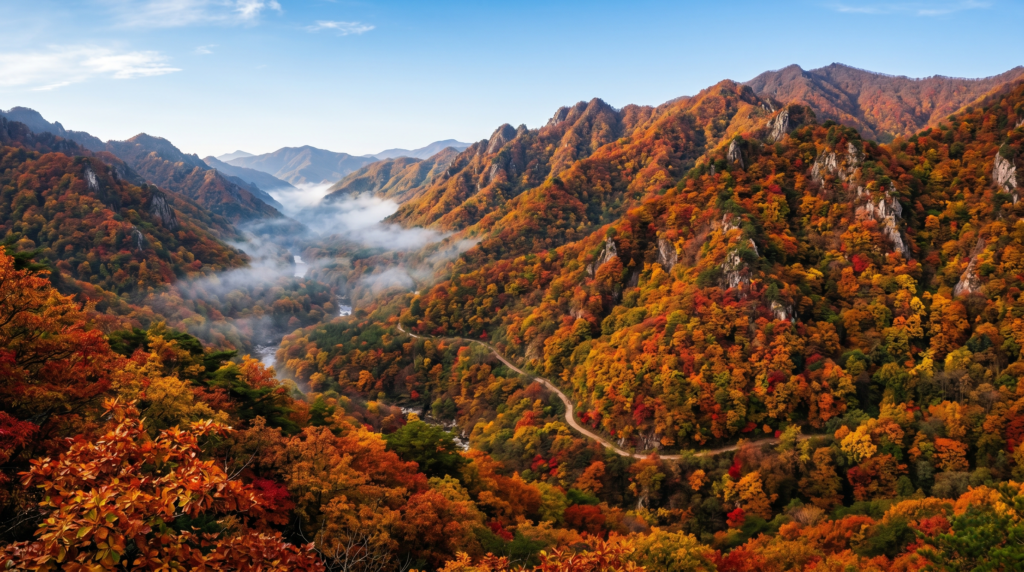
Korea does not simply change colors in autumn — it transforms. From the jagged granite peaks of Seoraksan in the northeast to the ancient temple courtyards of Gyeongju in the south, the entire peninsula undergoes a breathtaking seasonal metamorphosis that has captivated poets, painters, and photographers for centuries.
The Science Behind Korea’s Stunning Autumn Colors
Korea’s autumn foliage is so vivid, so saturated, that first-time visitors often mistake photographs of it for digital enhancements. The science behind this brilliance lies in the country’s unique geography and climate. Korea sits in a temperate zone where autumn brings a sharp but gradual drop in temperature combined with relatively low humidity — the precise conditions that cause trees to produce maximum amounts of anthocyanin, the pigment responsible for red and purple tones in maple leaves.
Korean maple species, particularly the Acer palmatum variety found across the peninsula’s mountain ranges, produce some of the most deeply saturated crimson and burgundy tones found anywhere in the temperate world. Combine this with the bright yellow of ginkgo trees lining Seoul’s boulevards and the orange hues of zelkova trees in rural valleys, and you have a color palette that feels almost artificially perfect.
Peak foliage typically begins in the northern mountains around early-to-mid October, sweeping southward and reaching lowland urban areas by late October and into November. This means that with smart itinerary planning, travelers can chase peak color across multiple regions over a two-to-three week window.
How Korean Culture Comes Alive in Autumn
Autumn in Korea is not merely a visual event — it is a deeply cultural one. The season is anchored by Chuseok (추석), Korea’s most important traditional holiday, often called Korean Thanksgiving. Falling on the 15th day of the eighth lunar month (usually in September or early October), Chuseok is a time when Korean families gather, visit ancestral graves, and share food that has been prepared from the season’s first harvest. The atmosphere across the country during Chuseok is one of warmth, gratitude, and quiet reverence.
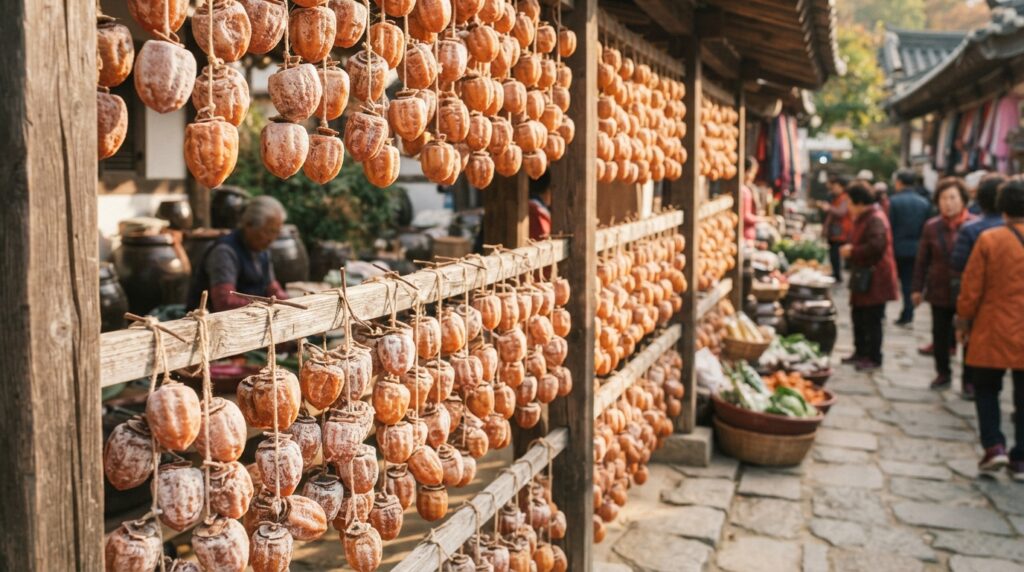
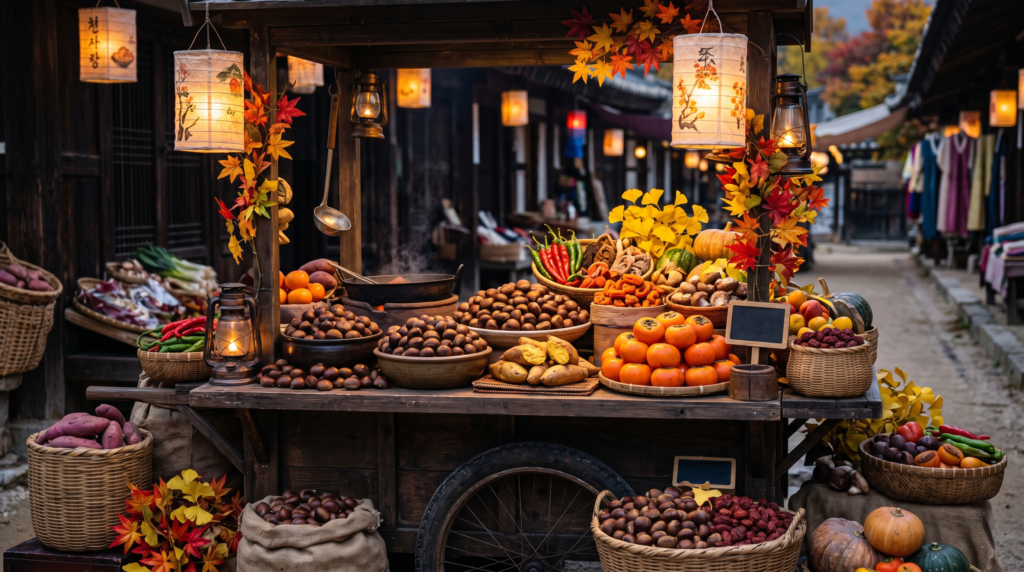
Beyond Chuseok, autumn marks the harvest of some of Korea’s most beloved ingredients — persimmons, chestnuts, sweet potatoes, pine nuts, and pumpkins — all of which appear prominently in seasonal menus at markets, restaurants, and homes across the country. The entire culinary landscape shifts, and for food lovers, this seasonal rotation is reason enough to visit.
Expert Insight: According to the Korea Tourism Organization, autumn consistently ranks as the number one season for inbound tourism. The combination of ideal weather, vibrant natural scenery, and rich cultural programming makes October and November the peak months for international visitors — which also means advance planning is essential.
Best Places to See Fall Foliage in Korea
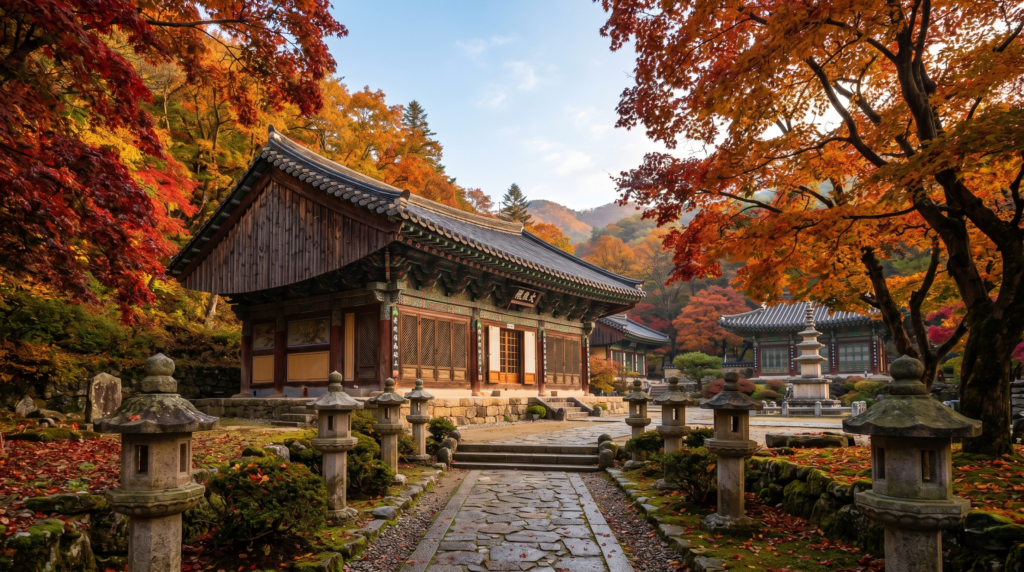
Naejangsan National Park — Korea’s Autumn Crown Jewel
If you ask any Korean where to go for the most spectacular autumn foliage, the answer is almost universally Naejangsan National Park in North Jeolla Province. Dubbed the “autumn mountain” by locals, Naejangsan is home to dense forests of Korean maple, oak, and sweetgum trees that transform into a breathtaking palette of red, orange, and gold each October.
The park’s most popular trail loops around the valley floor, offering close-up views of the foliage reflected in the crystal-clear stream that runs through the gorge. For more dramatic panoramas, the ridge trail ascending toward Seoraebong Peak rewards hikers with sweeping views of the entire forested bowl below.
Practical Tips:
- Peak foliage at Naejangsan typically occurs in late October to early November
- Arrive early (before 9 AM) on weekends to avoid massive crowds — this is the most visited autumn destination in Korea
- The nearest major city is Jeonju, accessible by KTX from Seoul in approximately two hours
Seoraksan National Park — Dramatic Peaks and Color
Located in Gangwon Province near the east coast, Seoraksan National Park is the first major location to reach peak color each autumn, typically in mid-October. Its granite peaks and deep forested valleys create a dramatic backdrop that feels equal parts majestic and intimate.
The park’s cable car ascends to Gwongeumseong Fortress, offering panoramic views of the surrounding mountains draped in autumn color. Down below, Sinheungsa Temple — one of Korea’s oldest Buddhist temples — sits quietly amid towering trees, its stone lanterns and wooden halls framed by crimson maple and the pale grey of ancient rock.
Photography Tip: The best light for foliage photography at Seoraksan is in the early morning, when mist often lingers in the valleys and the low-angle sunlight creates a golden glow across the treetops.
Gyeongju — Foliage Meets 1,000 Years of History
No other city in Korea merges autumn scenery with historical depth quite like Gyeongju, the ancient capital of the Silla Kingdom and a UNESCO World Heritage Site. Walking through Gyeongju in autumn feels like stepping inside a living history book, its royal tumuli (burial mounds), lotus ponds, and wooden temple halls all framed by golden ginkgo trees and crimson maples.
Bulguksa Temple, one of Korea’s most iconic landmarks, is particularly stunning in fall. The approach through the forested hillside, the sound of wooden prayer beads and temple bells carried on cool air, and the sight of the stone pagodas rising against a canvas of orange and red — it is the kind of experience that stays with a traveler for years.
A full day in Gyeongju covers the Tumuli Park tumulus complex, Bulguksa Temple and the nearby Seokguram Grotto, and the shores of Anapji Pond, which reflect the surrounding autumn colors at dusk with remarkable clarity.
Seoul’s Hidden Autumn Gems
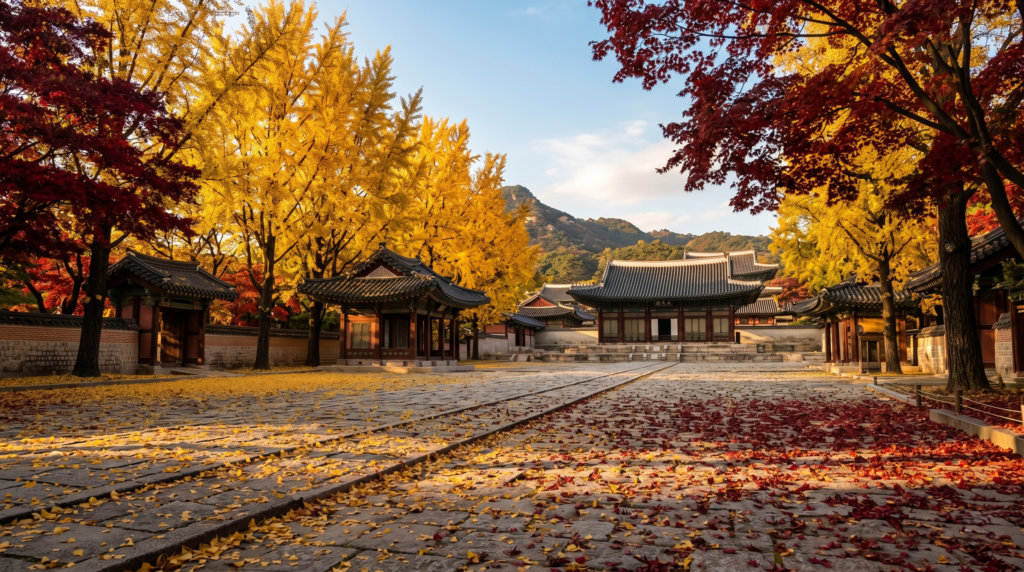
Korea’s capital city transforms quietly but unmistakably during autumn. While millions of visitors head to the national parks, Seoul offers its own collection of autumnal experiences — some world-famous, others known mainly to locals.
Changdeokgung Palace Secret Garden is arguably the most beautiful autumn experience available within Seoul. Access to the huvon (rear garden) is ticketed and limited to guided tours, which helps preserve its atmosphere of serene tranquility. The garden’s pavilions, lotus ponds, and ancient trees — some over 300 years old — create a scene that feels detached from the surrounding city entirely.
Bukhansan National Park, accessible directly from the city by subway, offers proper mountain hiking with superb autumn color. The trails to Baegundae Peak and Dobongsan Ridge are both rewarding, particularly in mid-to-late October when the foliage reaches its peak.
For a more relaxed urban experience, Namsan Park and the walking paths surrounding N Seoul Tower offer some of the best city-and-foliage combinations in Korea. The tree-lined paths of Yangjae Citizens’ Forest in southern Seoul are a favorite among locals who want a quiet autumn walk without the crowds of more famous destinations.
Damyang and Jirisan — The Underrated Picks
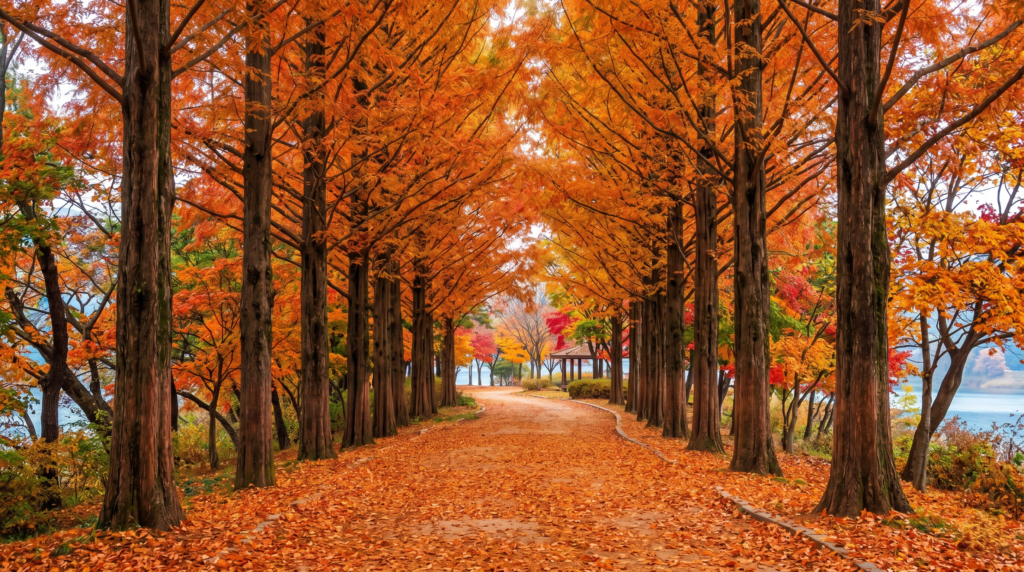
Rising steadily on the radar of more discerning autumn travelers, Damyang in South Jeolla Province offers a quieter, more atmospheric foliage experience centered on its famous bamboo grove, Juknokwon, which takes on a particularly ethereal quality in autumn light. The nearby Metasequoia Road — a tree-lined avenue of tall dawn redwood trees turning gold — is a photographer’s dream.
Jirisan National Park, Korea’s largest national park and one of its most wild and pristine, offers a more rugged autumn experience. Its vast ridgelines and remote valleys see far fewer visitors than Naejangsan or Seoraksan, making it ideal for those seeking solitude amid spectacular color.
Quick-Reference Foliage Guide by Region:
Region Peak Foliage Window Best For Seoraksan (Gangwon) Early–Mid October Mountain scenery, early foliage Seoul Mid–Late October City + foliage, palaces Naejangsan (Jeolla) Late October–Early November Most vivid foliage, crowds Gyeongju (Gyeongbuk) Late October History + foliage Jirisan (South) Late October–November Wilderness, solitude
Fall Festivals in Korea You Shouldn’t Miss
Naejangsan Autumn Festival
Held annually in October in conjunction with peak foliage season, the Naejangsan Autumn Festival celebrates the mountain’s legendary color with folk performances, traditional music, photography contests, and hiking programs. The festival atmosphere adds a joyful layer to what is already one of Korea’s most beautiful natural events.
Cheonjeyeon Waterfall Festival (Jeju Island)
Jeju Island in autumn is one of Korea’s best-kept travel secrets. The summer crowds have departed, the temperatures are pleasant, and the island’s volcanic landscapes take on warm hues of gold and rust. The Cheonjeyeon Waterfall area hosts seasonal cultural programming that showcases Jeju’s unique folk traditions and performing arts.
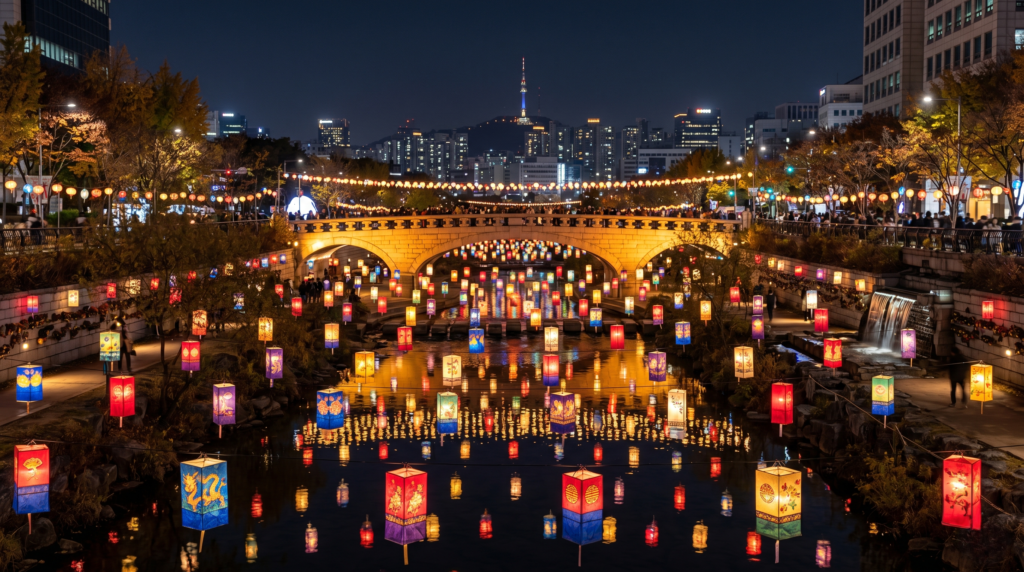
Seoul Lantern Festival (Cheonggyecheon Stream)
Typically held in November along the restored Cheonggyecheon Stream in central Seoul, the Seoul Lantern Festival (Seoul Deung Chukje) is one of the city’s most beloved annual events. Thousands of intricately designed lanterns illuminate the stream for two weeks, celebrating Korean heritage, seasonal change, and the creative spirit of the city. The combination of lantern light reflected in the flowing water, surrounded by late-autumn foliage, is something genuinely magical.
Hwangnyongsa Cultural Festival (Gyeongju)
Held in the historic city of Gyeongju, this festival brings the ancient Silla Kingdom to life through elaborate historical reenactments, traditional dance performances, archery competitions, and cultural exhibitions. It is an especially enriching experience for visitors who want to understand Korea’s pre-Joseon history and the grandeur of what was once one of Asia’s great imperial capitals.
Pro Tip: Accommodations near popular festival venues and national parks fill up weeks in advance during peak autumn season. Book your lodging at least six to eight weeks ahead, especially for weekends in October. Korean domestic tourists travel extensively during this period, and competition for rooms near Naejangsan, Seoraksan, and Gyeongju is fierce.
K-Drama Filming Locations That Look Most Magical in Fall
Why Korean Drama Directors Choose Autumn as Their Backdrop
Anyone who has watched more than a handful of K-dramas will have noticed that autumn occupies a special place in the visual language of Korean storytelling. The season appears again and again as the backdrop for pivotal emotional moments — confessions, reunions, farewells, and first meetings conducted beneath trees in full color.
This is not accidental. Korean drama directors and cinematographers actively seek out autumn settings because the season’s visual qualities — warm tones, soft diffused light, falling leaves — communicate emotional weight and poetic transience in ways that resonate deeply with Korean cultural sensibilities. The Buddhist and Confucian traditions that have shaped Korean aesthetics both contain strong themes of impermanence and seasonal change, making autumn a natural visual shorthand for longing, love, and the passage of time.
Iconic K-Drama Autumn Filming Spots You Can Actually Visit
Nami Island (Namiseom) is perhaps the single most famous K-drama autumn filming location in Korea. Made internationally famous by the landmark 2002 drama Winter Sonata, Nami Island’s tree-lined pathways — particularly the metasequoia and Italian poplar lanes — are nothing short of extraordinary in full autumn color. The island, located about an hour and a half from Seoul on the Gyeongchun Line, is easily accessible and well set up for visitors.
Petite France in Gapyeong, near Nami Island, is a whimsical European-style cultural village that appeared in My Love from the Star and several other popular dramas. In autumn, its colorful buildings are framed by the surrounding mountain foliage in a way that feels almost surreal — a slice of Provence transplanted into a Korean valley.
Heyri Art Village in Paju, near the DMZ, is a community of artists, architects, and cultural spaces that has served as a filming location for numerous independent Korean dramas. Its low-slung gallery buildings and open spaces look particularly atmospheric when surrounded by autumn color.
Gyeongbokgung Palace in central Seoul — the largest of the Joseon Dynasty’s five grand palaces — has served as the backdrop for countless historical dramas (sageuks). In autumn, its vast courtyards, stone-paved walkways, and traditional dancheong-painted buildings create a setting that is simultaneously ancient and cinematic.
Jeonju Hanok Village, a beautifully preserved district of traditional Korean wooden houses, has appeared in numerous dramas and films. In fall, the curved tile rooftops and traditional architecture are framed by maple and ginkgo trees in a way that feels like walking through a painting.
How to Plan a K-Drama Autumn Location Tour
A well-planned two-day itinerary from Seoul covers the most iconic drama filming spots while making the most of autumn scenery:
Day 1: Seoul → Gapyeong (Nami Island + Petite France). Take the ITX Cheongchun train from Yongsan Station to Gapyeong Station. Ferry across to Nami Island in the morning, then visit Petite France in the afternoon. Stay overnight in Gapyeong or return to Seoul.
Day 2: Seoul Palaces + Bukhansan. Morning visit to Changdeokgung Secret Garden (book tickets in advance). Afternoon hike in Bukhansan or stroll through Bukchon Hanok Village.
For the full K-drama location experience, Naver Maps is indispensable — it covers rural locations and walking paths that Google Maps sometimes misses. Several tour operators in Seoul also offer dedicated K-drama location tours that combine transportation, a guide, and themed photo opportunities.
Fan Insight: Devoted fans of Goblin (도깨비, 2016) often visit Nami Island and other scenic spots featured in the drama. What many don’t realize is that the production team specifically scheduled several pivotal outdoor scenes to coincide with peak autumn foliage — the visual storytelling and the seasonal setting were intentionally intertwined.
What to Eat During the Fall Season in Korea
Seasonal Street Foods You Must Try
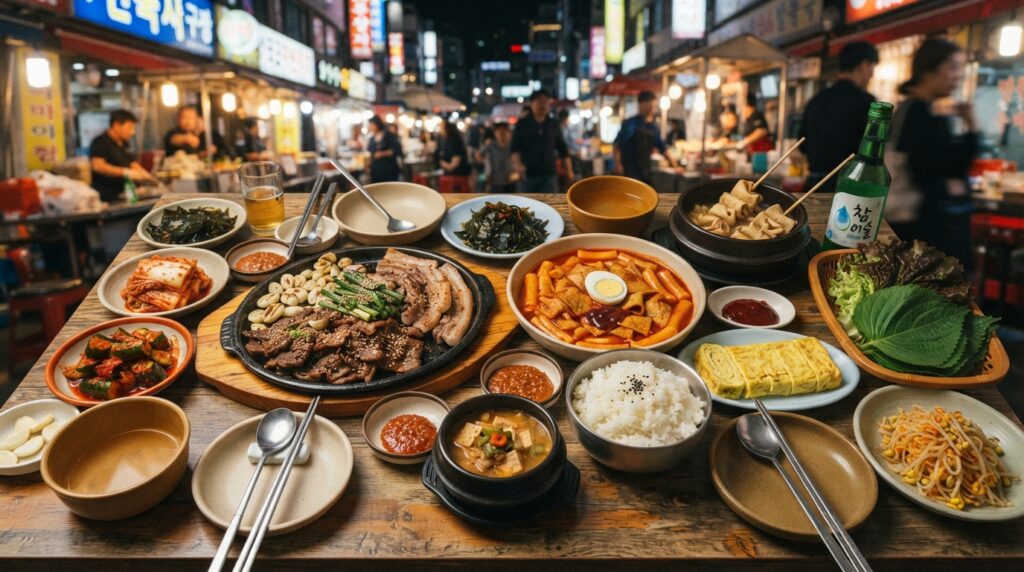
Korean street food reaches a kind of peak in autumn, when the cooling temperatures make standing at a pojangmacha (street food stall) with something warm in your hands one of life’s simple pleasures.
Gunbam (군밤, roasted chestnuts) is the unofficial snack of Korean autumn. Vendors roast chestnuts in large iron drums on street corners across the country from late September onward, and the smell alone is enough to evoke the season. They are sweet, starchy, and deeply satisfying.
Hotteok (호떡), sweet syrup-filled pancakes cooked on a flat iron griddle, are a cold-weather comfort food that appears at street stalls the moment temperatures drop. The filling — a mixture of brown sugar, honey, cinnamon, and chopped nuts — caramelizes inside the dough as it cooks, creating a warm, gooey interior.
Jeon (전), savory Korean pancakes made from a batter of vegetables, seafood, or kimchi, are traditionally associated with rainy and cool weather in Korean culture. There is even a folk saying that the sound of rain reminds Koreans of the sizzle of jeon in a pan.
Traditional Autumn Dishes Rooted in Korean Heritage
Hobakjuk (호박죽), a smooth and gently sweet pumpkin porridge, is one of Korea’s most comforting autumn and winter dishes. Made from aged pumpkin blended with glutinous rice flour and sweetened lightly, it is warming, nourishing, and deeply connected to the harvest season.
Sinseollo (신선로), a royal hot pot dish that dates to the Joseon Dynasty court, traditionally appears on special occasion menus in autumn. Its complex broth and arrangement of meats, vegetables, and egg garnish make it one of the most elaborate — and rewarding — dishes in the Korean culinary canon.
Best Food Markets to Visit in Fall
Gwangjang Market in central Seoul is the city’s oldest and most atmospheric traditional market, and in autumn it hums with seasonal energy. Bindaetteok (mung bean pancakes), mayak gimbap (bite-sized sesame gimbap), and various jeon varieties fill the air with irresistible aromas.
Jagalchi Market in Busan, Korea’s largest seafood market, is at its best in autumn when the waters yield some of the year’s finest catches. Eating raw fish (hoe) at one of the upstairs restaurants while looking out over the harbor is a quintessential Busan experience.
Jeonju Central Market, in the city renowned as Korea’s food capital, offers the country’s finest array of regional street food — from kongnamul gukbap (soybean sprout soup with rice) to freshly made jeon of every variety.
Practical Travel Tips for Visiting Korea in Fall
When Exactly Is Fall in Korea? Month-by-Month Breakdown
| Month | Weather | What’s Happening |
|---|---|---|
| September | Warm days (18–25°C), cool evenings | Early fall feel, Chuseok holiday, Jeju still green |
| October | Perfect (10–20°C), crisp and clear | Peak foliage season, major festivals, ideal for hiking |
| November | Cool to cold (3–15°C) | Late foliage in cities, Seoul Lantern Festival, first cold snaps |
October is, by virtually every measure, the ideal month to visit Korea in autumn. The weather is reliably clear and comfortable, the foliage is at or near peak across most of the country, and the festival calendar is at its fullest.
What to Pack for Korean Autumn
Korea’s autumn weather involves significant temperature swings between day and night — a warm afternoon at 20°C can become a genuinely cold evening at 8°C. Layering is essential.
Recommended packing includes: a mid-weight insulating layer (fleece or down vest), a windproof outer shell, comfortable walking shoes suitable for both city streets and mountain trails, and a light packable daypack for hiking days. If you plan to visit mountain parks, trekking poles are worth bringing for the steeper trails.
For photography enthusiasts, a polarizing filter dramatically enhances foliage color in bright midday light, and a small tripod is invaluable for the dawn and dusk golden hours.
Getting Around Korea in Fall
Korea’s transportation infrastructure is excellent, and navigating the country independently is straightforward even for first-time visitors.
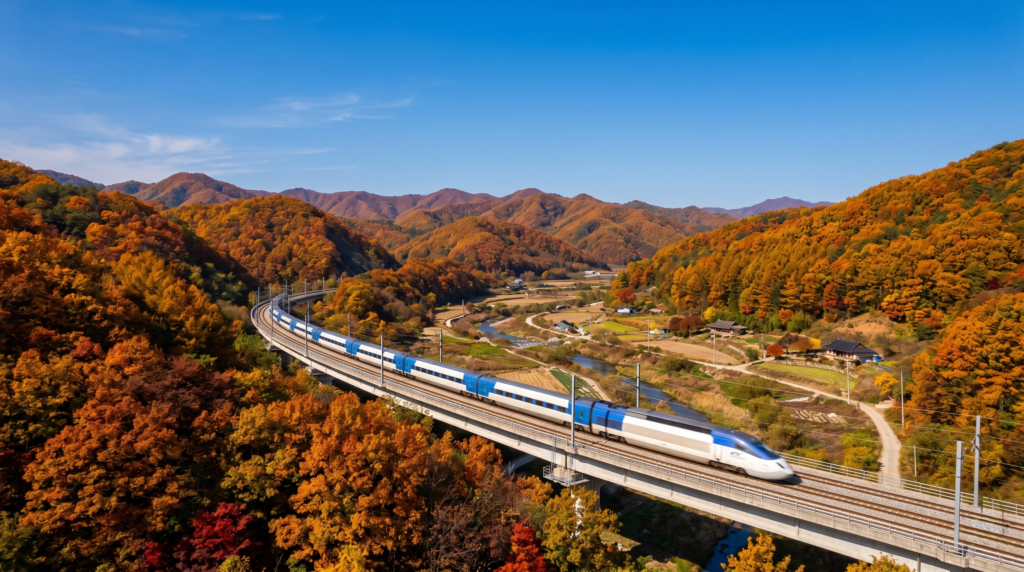
The KTX high-speed rail network connects Seoul to Gyeongju (approximately 2 hours), Busan (2.5 hours), and the Jeolla Province gateway cities of Jeonju and Gwangju efficiently and comfortably. For reaching Seoraksan and Nami Island, the ITX Cheongchun line from Seoul is the most convenient option.
Within cities, the T-money card — a rechargeable transit card — works on virtually all subways, city buses, and many intercity buses across the country. The KORAIL Pass offers foreign visitors unlimited rail travel for set periods and can represent significant savings for those planning to visit multiple regions.
For visiting the more remote foliage destinations — rural routes in Jirisan, the back roads of Damyang, or off-the-beaten-path temples — renting a car is the most flexible option. International driving licenses are recognized in Korea, and road signage in English is increasingly common throughout the country.
Budget Guide — How Much Does a Fall Korea Trip Cost?
Korea’s autumn popularity means that prices are at their seasonal peak, particularly for accommodation. A realistic daily budget breakdown:
Budget traveler: 60,000–90,000 KRW (~$45–$68 USD) per day, staying in well-run guesthouses or hostels, eating at local restaurants and market stalls, and using public transportation exclusively.
Mid-range traveler: 150,000–250,000 KRW (~$115–$190 USD) per day, with comfortable hotel accommodation, restaurant meals, and occasional private transportation.
Luxury traveler: 400,000 KRW+ per day ($300+ USD), with boutique hotels or traditional hanok guesthouses, premium restaurant experiences, and private guided tours.
Cost-saving strategies: Travel mid-week to avoid domestic weekend crowds and associated price premiums. Look for free entry days at national palaces (offered periodically by the Cultural Heritage Administration). Purchase the KORAIL pass well in advance for rail savings.
Fall Season in Korea Through the Lens of K-Drama Culture
To understand why the fall season in Korea resonates so deeply with K-drama fans worldwide, it helps to understand the role of seasonal symbolism in Korean storytelling.
In Korean literary and visual tradition, autumn — called gaeul (가을) — carries associations of beauty tinged with melancholy, of things reaching their most vivid expression precisely as they prepare to end. The word 단풍 (danpung), which refers specifically to the phenomenon of autumn foliage, occupies a place in Korean culture somewhat analogous to the Japanese concept of mono no aware — an appreciation of beauty that is heightened by its transience.
This cultural sensibility permeates K-drama storytelling. Autumn scenes in Korean dramas are almost never merely decorative. They function as emotional amplifiers, externally expressing the internal states of characters — falling in love, saying goodbye, reuniting after separation, or coming to terms with loss. When a K-drama couple stands beneath a maple tree as leaves drift down around them, viewers are invited not just to see the beauty of the moment but to feel its impermanence.
For fans planning to visit Korea in autumn, watching or rewatching dramas that prominently feature autumn settings can serve as a meaningful cultural preparation. Productions like Goblin (2016), Reply 1988 (2015), My Love from the Star (2013), and Autumn in My Heart (2000) — the drama that arguably defined the global image of Korean autumn — offer both visual orientation and emotional context for what you will experience on the ground.
Real Koreans, too, participate in this cultural appreciation actively. Autumn weekends see massive domestic travel to foliage destinations, university festival seasons peak in October, and the tradition of 단풍 구경 (danpung gugyeong, foliage-viewing excursions) brings families and friends together in parks and mountains across the country.
Frequently Asked Questions
When is the best time to see fall foliage in Korea? The optimal window is mid-October through early November, with peak timing varying by region. Northern mountain areas like Seoraksan typically peak in early-to-mid October, while southern and urban areas such as Gyeongju and Seoul reach their most vivid color in late October. Naejangsan National Park, considered the finest foliage destination in Korea, peaks in late October to early November.
Is Korea crowded during fall? Yes — autumn is Korea’s busiest domestic travel season. National parks and famous foliage destinations are particularly busy on weekends in October. To avoid the worst crowds, plan major hiking days for weekdays, arrive at popular sites before 9 AM, and consider slightly less famous alternatives (Jirisan over Naejangsan, for example) if solitude matters to you.
What is danpung in Korean culture? Danpung (단풍) is the Korean word for autumn foliage, but it carries cultural weight beyond its literal meaning. The practice of danpung gugyeong — going out specifically to view and appreciate autumn leaves — is a beloved national tradition that brings Koreans of all ages outdoors during the fall season. It reflects a deep cultural appreciation for seasonal beauty and natural change.
Can I visit K-drama filming locations in autumn on my own? Absolutely. Most major filming locations are publicly accessible, and Naver Maps reliably covers even rural filming spots. Dedicated K-drama location maps are available through the Korea Tourism Organization website and numerous fan-created resources online. Seoul-based tour operators also offer guided K-drama location tours that are well worth considering for fans who want thematic depth alongside the visits.
What is the weather like in Korea during fall? September is warm and pleasant with occasional lingering summer humidity. October is the finest month: clear, dry, and comfortably cool with daytime temperatures between 10–20°C. November brings noticeably cooler temperatures, dropping to 3–12°C, with the first cold fronts from Siberia arriving by month’s end. Layers are essential throughout the season.
Is fall in Korea good for solo female travelers? Korea is consistently ranked among the safest countries in the world for solo female travelers. The country’s excellent public transportation, well-lit urban environments, and active social culture make independent travel very comfortable. Standard awareness practices apply as anywhere, but solo female travelers routinely report feeling exceptionally safe and welcomed throughout Korea.
Final Thoughts — Why Fall Is the Best Season to Discover Korea
There is a reason the fall season in Korea has captured the imagination of millions of travelers, drama fans, and photographers around the world. It is a season in which everything — the landscape, the culture, the food, the light itself — conspires to create an experience of exceptional beauty and depth.
Whether you come for the flaming ridge of Naejangsan at peak color, for a quiet morning walk through the Secret Garden of Changdeokgung, for a pilgrimage to the tree-lined lanes of Nami Island where a beloved drama was filmed, or simply to stand at a street corner in Seoul with a bag of roasted chestnuts while golden ginkgo leaves drift past — you will find that Korea’s autumn delivers on every level.
Plan around what matters most to you: if foliage is the priority, build your itinerary around Seoraksan in early October and Naejangsan in late October. If festivals and cultural programming draw you, center your trip on the first two weeks of October when Gyeongju and Seoul’s cultural calendars are at their richest. If K-drama locations are the main attraction, combine Nami Island and Petite France with Seoul’s palace circuit for a trip that moves between cinematic fantasy and historical reality.
Whatever brings you to Korea this autumn, one thing is certain: the season will exceed your expectations. Save this guide, share it with your travel companion, and start planning. Korea’s most beautiful season is waiting.