If you’ve searched for Daesan, South Korea and found nothing but shipping schedules, petrochemical plant announcements, and vessel-tracking data, you’re not alone — and you’re only getting half the story. Tucked along the Yellow Sea coast in Chungcheongnam-do, Daesan is one of Korea’s most important industrial hubs, home to a massive petrochemical complex that quietly powers much of the country’s economy. But beneath the refineries and cargo terminals lies a coastal town with genuine character: dramatic sunsets over the West Sea, fresh seafood pulled straight from local waters, and easy access to some of Chungcheongnam-do’s most underrated cultural sites.
This guide goes beyond the industrial headlines to answer the question travelers are actually asking: what is Daesan really like, and is it worth a visit? Whether you’re a curious road-tripper exploring Korea’s west coast, a photography enthusiast drawn to industrial landscapes, or someone simply trying to understand this lesser-known corner of South Korea, this guide covers everything — geography, history, things to do, food, transportation, and honest, practical advice you won’t find in a generic listicle.
Where Is Daesan, South Korea? (Geography & Overview)
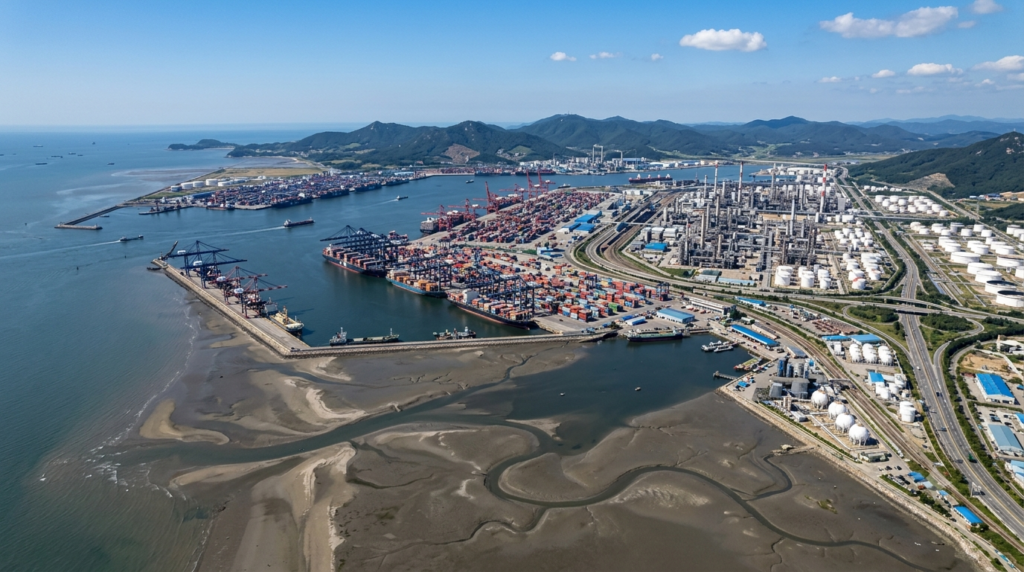
Daesan is a coastal district located within Seosan, a city in Chungcheongnam-do (South Chungcheong Province), on Korea’s west coast. It sits along the Yellow Sea — often referred to locally as the West Sea — roughly 339 kilometers from Longkou Port in China, positioning it as a key logistics link between Korea and mainland Asia.
Daesan’s Place in Korea’s “Golden Triangle” of Petrochemical Hubs
Daesan is frequently mentioned alongside Yeosu and Ulsan as one of the three pillars of South Korea’s petrochemical industry — sometimes referred to as the country’s industrial “golden triangle.” Together, these three port towns anchor much of Korea’s refining and chemical manufacturing output, but each has developed a distinct identity. Yeosu and Ulsan have both invested in tourism infrastructure around their industrial cores; Daesan, by comparison, remains far more low-key and undiscovered.
Coastal Geography, Tidal Flats, and Port Layout
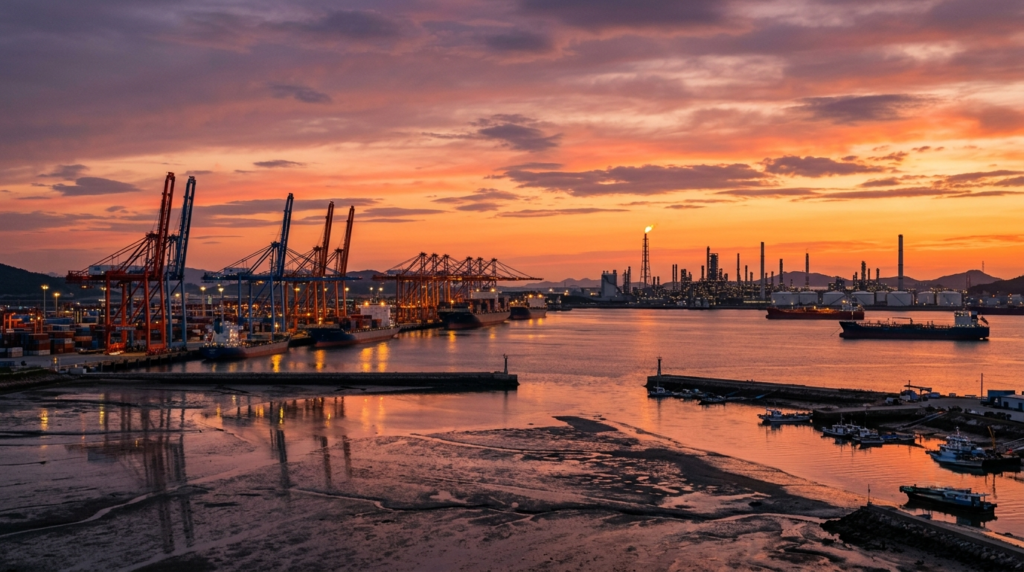
The Daesan coastline is shaped by the natural rhythms of the Yellow Sea — wide tidal flats, a working port facility, and small fishing communities that predate the area’s industrial transformation. The port itself ranks sixth among Korea’s 31 major ports by cargo volume, a scale that might surprise visitors expecting a sleepy fishing village. Understanding this geography matters for trip planning: Daesan isn’t a self-contained tourist zone, but rather a launching point for exploring the wider Seosan coastline and Chungcheongnam-do region.
A Brief History of Daesan — From Fishing Village to Industrial Powerhouse
Pre-Industrial Roots as a Coastal Fishing Community
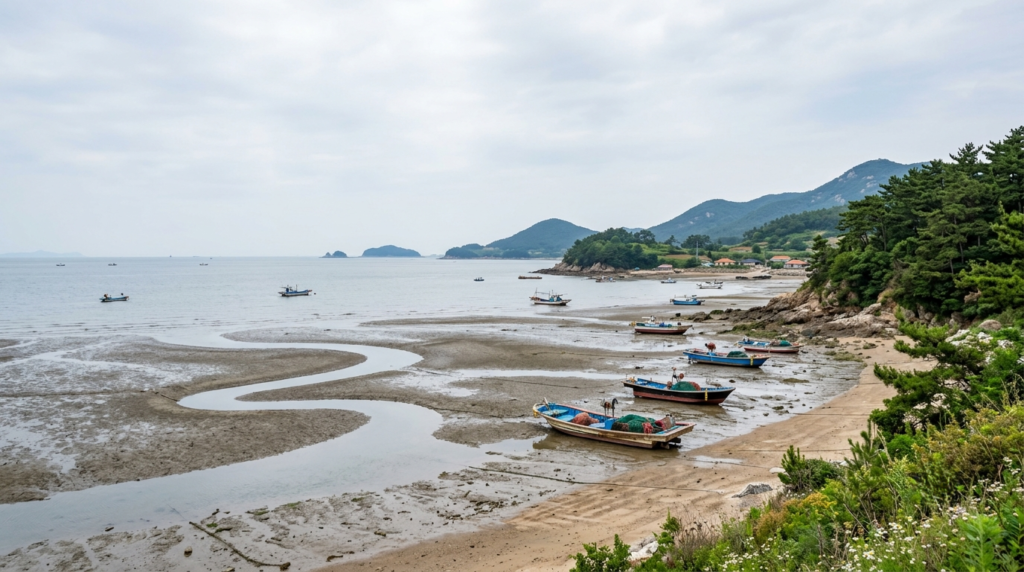
Long before Daesan became synonymous with refineries and chemical plants, it was a modest fishing village like countless others along Korea’s west coast. Local households relied on the Yellow Sea’s shallow, nutrient-rich waters for their livelihoods, harvesting shellfish, flatfish, and crab from the tidal flats that still ring much of the coastline today. Small-scale aquaculture and near-shore fishing shaped daily life here for generations, and the rhythms of the tides — rather than industrial schedules — once dictated the pace of the town. Some of these fishing traditions persist in smaller pockets around Daesan even now, offering a quiet contrast to the industrial skyline that dominates the area’s modern identity.
The Rise of the Daesan Industrial Complex
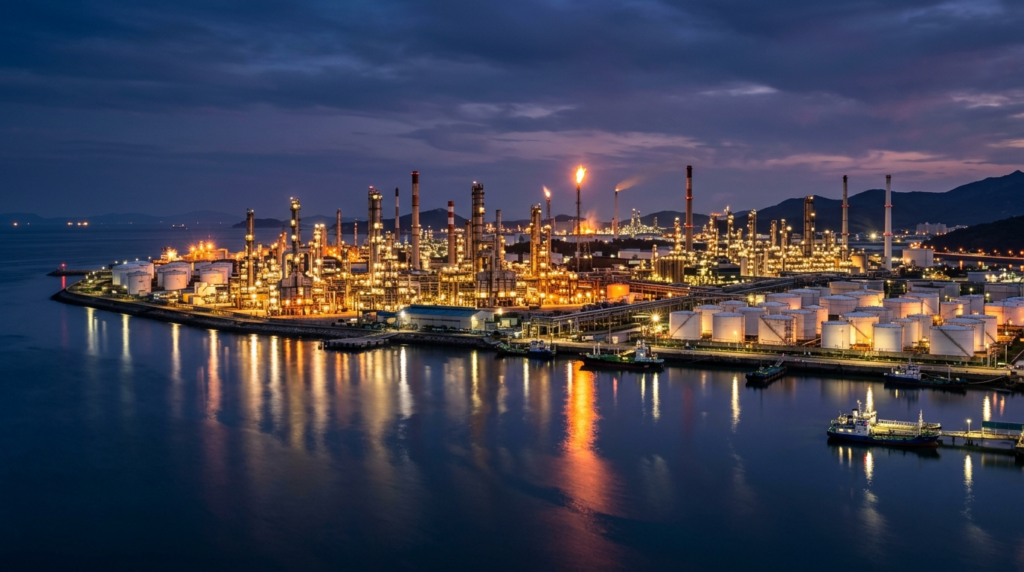
Daesan’s transformation began in earnest in the late 20th century, as South Korea invested heavily in expanding its refining and petrochemical capacity to fuel rapid industrialization and reduce reliance on imported finished chemical products. The government and private industry identified Daesan’s deep-water access and coastal geography as ideal for large-scale port and refinery development, and construction of what would become the Daesan Industrial Complex accelerated through the 1990s and 2000s. Major energy and chemical companies established operations in the area during this period, drawn by the combination of port access, available land, and proximity to both domestic and export markets across the Yellow Sea. Over the following decades, the complex expanded repeatedly — including a nearly $2 billion upgrade completed in the mid-2010s that doubled production capacity, followed by additional multi-hundred-million-dollar investments that further increased ethylene and polypropylene output. Today, the Daesan Industrial Complex spans approximately 430 hectares, making it one of the largest facilities of its kind in the country.
Why Daesan Matters to Korea’s Economy Today
Today, Daesan accounts for a substantial share of South Korea’s petrochemical production — commonly cited at around 40% of national output. The complex includes major players such as the Hanwha TotalEnergies Petrochemical joint venture, Hyundai Oilbank, and facilities tied to the Korea National Oil Corporation (KNOC). These operations manufacture everything from kerosene, diesel, and gasoline to polypropylene, polyethylene, styrene, paraxylene, and ethylene-vinyl acetate copolymer — materials that feed into countless everyday products, from packaging and textiles to automotive parts and construction materials. In recent years, the area has also seen major infrastructure investment, including one of South Korea’s first large-scale desalination plants, built specifically to supply the industrial zone with the enormous water volumes refining and chemical production require. For travelers, this economic backdrop is worth understanding: Daesan isn’t simply an industrial curiosity, but a genuinely strategic asset in Korea’s manufacturing economy, which explains both its scale and its relatively undeveloped tourism infrastructure — the town has grown around its industrial function rather than around visitors.
Is Daesan Worth Visiting? What Travelers Should Actually Expect
This is the question most searchers are really asking, and it deserves an honest answer.
Setting Realistic Expectations
Daesan is not a polished tourist destination in the way that Jeju Island or Busan’s coastal districts are. There are no major theme parks, boardwalks, or curated attractions built for international visitors. What Daesan offers instead is something more raw and specific: a working port town where industrial scale meets coastal quiet, and where a handful of genuinely worthwhile detours are within easy reach.
Who Daesan Appeals To
Daesan tends to attract a specific kind of traveler:
- Road-trippers exploring Chungcheongnam-do’s coastline who want to break up a longer itinerary
- Photography enthusiasts drawn to the visual contrast of industrial infrastructure against open sea and sky, especially at sunset
- Transit travelers passing through Seosan on their way to nearby coastal or cultural sites
- Maritime and industry-curious visitors interested in seeing one of Korea’s major ports firsthand
Honest Limitations
To manage expectations clearly: English signage is limited throughout Daesan and much of surrounding Seosan, and travelers who don’t speak Korean should plan to rely on translation apps for restaurant menus, bus schedules, and directions. Public tourist infrastructure — visitor centers, English-language tours, curated attractions — is minimal to nonexistent, since the town’s economy and civic planning are oriented around industry and local residents rather than tourism. There are also relatively few accommodation options directly in Daesan itself; most visitors base themselves in central Seosan, which offers a wider range of hotels and motels within a short drive. Finally, because much of the coastline near the port is occupied by working industrial facilities, direct beach access in the immediate Daesan area is more limited than in nearby Taean, so travelers prioritizing beach time should treat Daesan as a stop along the way rather than a home base. None of this makes Daesan not worth visiting — it simply means visitors get the most value by treating it as one deliberate stop within a broader Seosan or Chungcheongnam-do itinerary, rather than a standalone destination.
Top Things to Do in and Around Daesan
Daesan Port — Observation and Photography
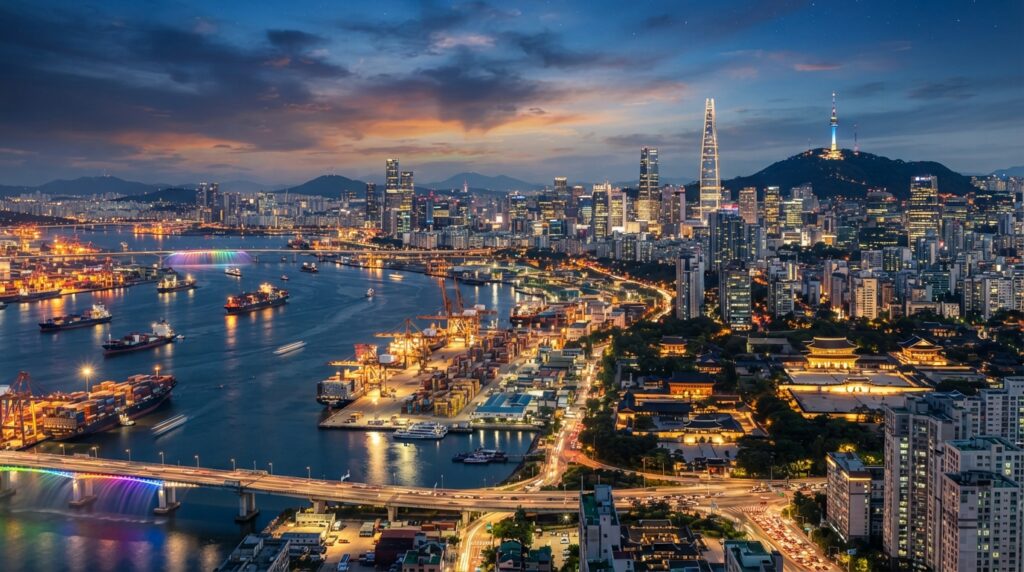
For visitors interested in Korea’s maritime industry, Daesan Port offers a striking look at large-scale logistics in action — tankers, cargo vessels, and terminal operations set against the open Yellow Sea. It’s a compelling subject for photographers interested in industrial landscapes, particularly during golden hour when the port’s silhouettes contrast against the sky.
Coastal Walking Paths and Sunset Views
Away from the port facilities, stretches of the Yellow Sea coastline near Daesan offer quiet walking paths and open water views. Sunsets over the West Sea are a genuine highlight of this region of Korea, and the relative lack of crowds compared to more famous coastal spots is part of the appeal.
Day Trips From Daesan
The real value of a Daesan visit often comes from what’s nearby:
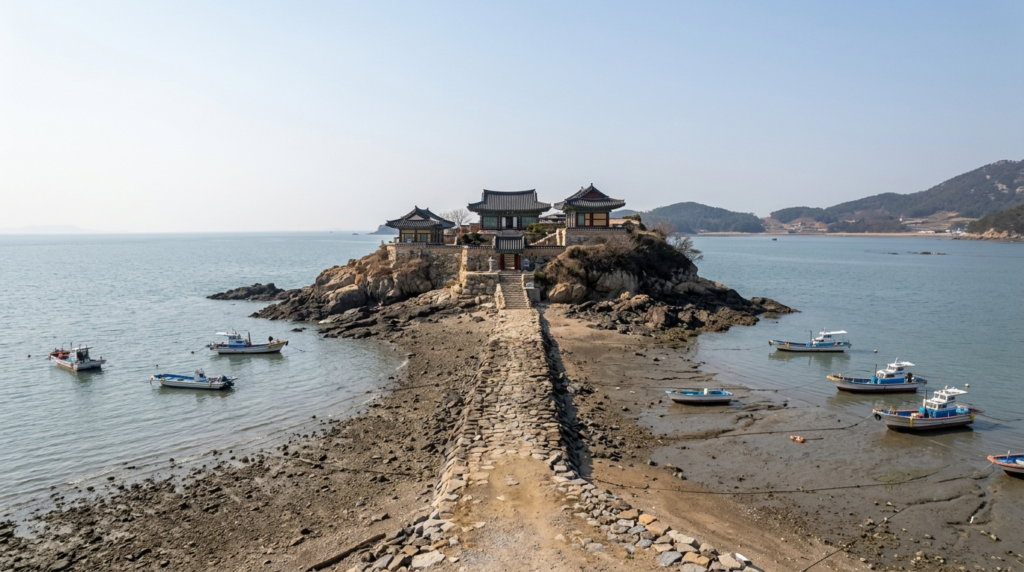
- Seosan City Center — home to Haemieupseong Fortress, a well-preserved Joseon-era fortress town, and Ganworam Hermitage, a small but picturesque temple built on a tidal island connected to the mainland only at low tide.
- Taean Haean National Park — a short drive away, offering some of Chungcheongnam-do’s most attractive beaches and coastal scenery.
- Seosan Yonghyeon-ri Rock-Carved Buddha Triad (Seosan Maaebul) — one of Korea’s most celebrated Buddhist heritage sites, often called the “Baekje Smile” for the serene expressions carved into the rock nearly 1,400 years ago. This is a must for travelers interested in Korea’s Buddhist and cultural history.
These nearby sites transform a visit to Daesan from a niche industrial curiosity into a well-rounded regional itinerary.
Best Time to Visit Daesan, South Korea
Spring and Autumn for Ideal Weather
Like much of coastal Korea, spring (April–May) and autumn (September–October) offer the most comfortable weather for exploring Daesan and its surroundings. Spring brings mild temperatures, blooming regional flora, and clearer coastal skies, making it ideal for walking the tidal flat paths and visiting nearby heritage sites without heavy heat or humidity. Autumn is arguably even more rewarding: temperatures cool into a comfortable range, coastal humidity drops, and the changing light produces some of the year’s most vivid sunsets over the Yellow Sea — a particular draw for photographers.
Seasonal Considerations
Summer (June–August) brings higher heat and humidity typical of Korea’s monsoon season, along with occasional heavy rainfall that can limit outdoor coastal activities. Given the concentration of industrial activity around Daesan, some visitors also report periods of haze near the complex, which tends to be more noticeable during summer’s stiller, more humid air. Winter (December–February) is cold and windy along the exposed coastline, though it can offer a stark, quiet beauty for travelers less concerned with mild weather and more interested in a starker, off-season visit with virtually no crowds. Checking local air quality and weather forecasts before a visit is a reasonable precaution regardless of season.
Seafood Seasonality
The Yellow Sea’s fishing seasons directly affect what’s available at nearby markets and restaurants, and timing a visit around these cycles can meaningfully improve the food side of a trip. Blue crab season typically peaks in autumn, when crabs are at their meatiest and most prized locally. Certain shellfish and clam varieties are best in spring, when tidal flat harvesting is most active. Travelers planning a trip primarily around fresh seafood should lean toward autumn, both for the crab harvest and the more comfortable coastal weather for exploring markets and waterfront restaurants.
What to Eat in Daesan — Local and Regional Specialties
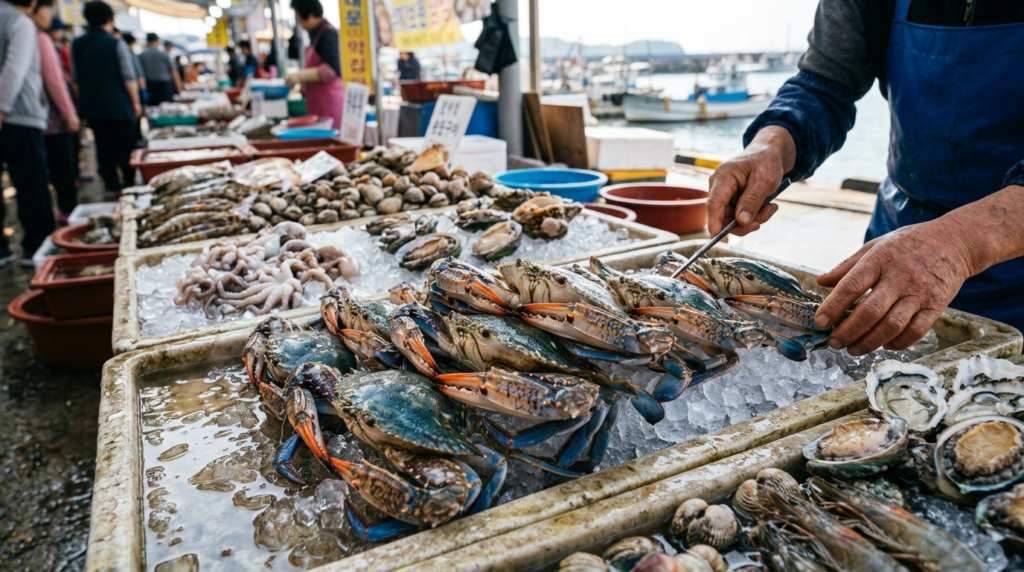
Fresh West Sea Seafood
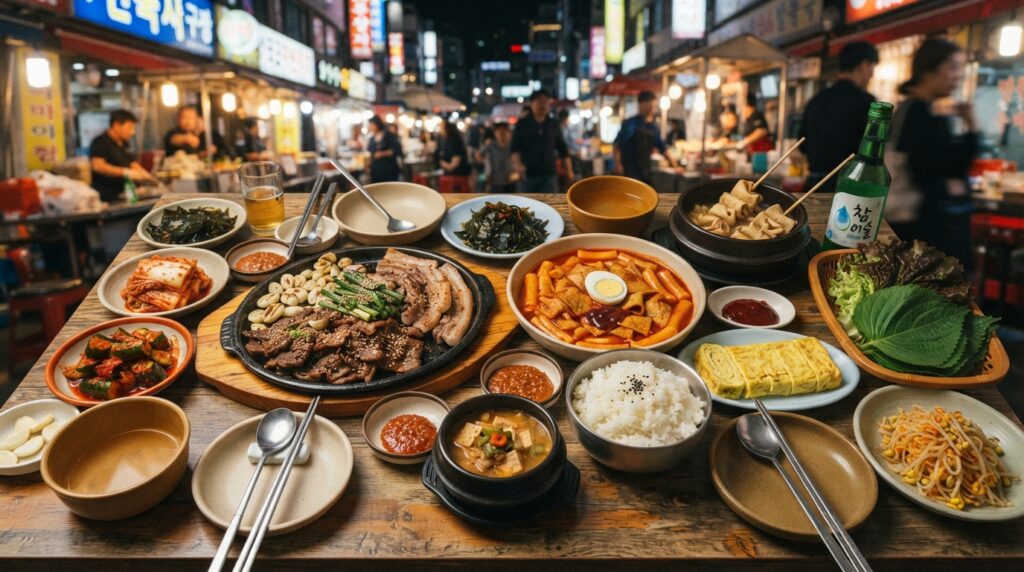
The Yellow Sea’s nutrient-rich, shallow waters make it one of Korea’s premier regions for fresh seafood, and the Daesan and broader Seosan area is no exception. Look for:
- Blue crab (kkotgae) — a regional specialty, especially prized in the fall when crabs are at their meatiest
- Flatfish (gwangeo) — commonly served as sashimi in coastal restaurants
- Shellfish and clams — harvested from the area’s extensive tidal flats, often used in stews and grilled dishes
Chungcheong-Style Comfort Food
Beyond seafood, Chungcheongnam-do is known for hearty, unpretentious home-style cooking. Dishes built around locally grown vegetables, doenjang (fermented soybean paste), and simple grilled or stewed proteins reflect the region’s agricultural roots and pair naturally with the coastal seafood on offer.
Where to Eat
Given Daesan’s limited dedicated tourist infrastructure, the best strategy is to eat near the port area for casual, fresh seafood spots frequented by local workers and fishermen, or to head into central Seosan for a wider range of restaurants with more consistent English-friendly service and menu variety.
How to Get to Daesan, South Korea (Practical Travel Guide)
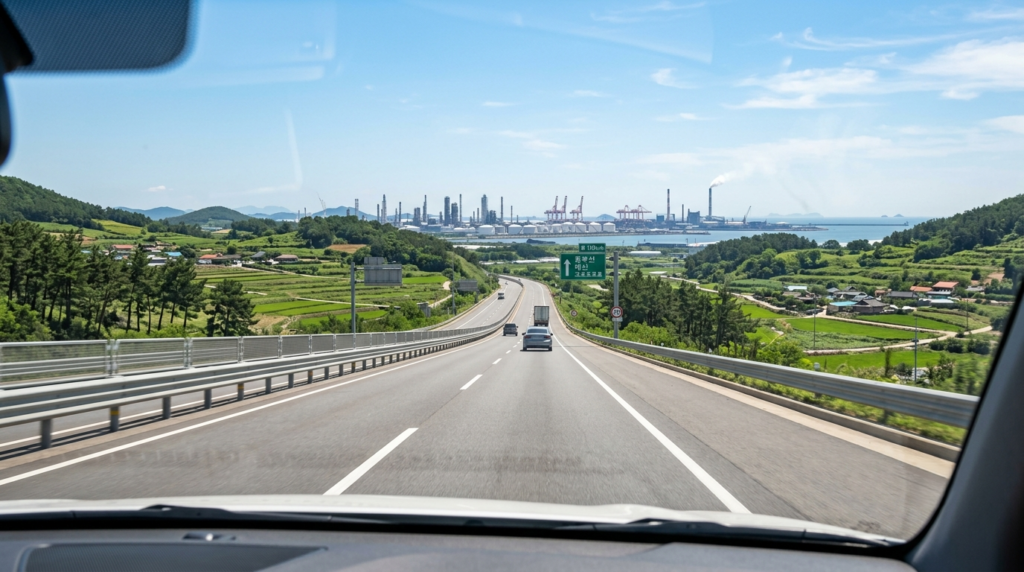
From Seoul
Daesan is roughly a 2 to 2.5-hour drive from Seoul, depending on traffic and starting point, via the Seohaean Expressway. For those without a car, intercity buses run from Seoul’s major bus terminals to Seosan, with a local transfer required to reach Daesan itself.
From Incheon Airport
Incheon International Airport is the most convenient entry point for international travelers. From there, options include:
- Renting a car and driving directly (approximately 2 hours)
- Taking an airport limousine bus or intercity bus to Seosan, followed by a local bus or taxi to Daesan
Getting Around Locally
Public transit within Daesan itself is limited, reflecting its identity as an industrial zone rather than a tourist hub. Local buses connect Daesan to central Seosan, but schedules can be infrequent, and routes are generally designed around commuter and worker traffic rather than tourist destinations. Taxis are available but less abundant than in larger cities, so it’s worth confirming return transport in advance rather than assuming one will be readily available on the spot. For these reasons, a rental car is strongly recommended for travelers who want to comfortably combine a Daesan visit with nearby attractions like Haemieupseong Fortress, Ganworam Hermitage, or Taean’s beaches — having your own vehicle also makes it far easier to time a stop at the coastline for sunset without being tied to a bus schedule. The Seosan Bus Terminal serves as the main regional transit hub connecting Daesan to the rest of Chungcheongnam-do and beyond, and is a useful fallback point for travelers relying on public transport.
Daesan vs. Other Korean Port Towns — How It Compares
Daesan vs. Incheon
Incheon offers vastly more developed tourist infrastructure, an international airport, and easy access to Seoul — making it a far more convenient stop for first-time visitors. Daesan, by contrast, rewards travelers specifically seeking an off-the-beaten-path, low-tourist-density experience.
Daesan vs. Yeosu
Yeosu has successfully layered tourism onto its industrial identity, with a well-known night skyline, cable car, and waterfront attractions built around its port and refining operations. Daesan has not developed this kind of dedicated tourism layer, making it a more “undiscovered” experience — appealing for travelers who prioritize authenticity over polish, but requiring more self-directed planning.
What Makes Daesan Distinct
Daesan’s defining characteristic is its unfiltered duality: an enormous industrial engine operating essentially side-by-side with quiet tidal flats, small fishing traditions, and easy access to some of Chungcheongnam-do’s best-preserved cultural sites. It’s less a destination unto itself and more a distinctive waypoint within a richer regional journey.
Tips for Visiting Daesan (Expert Insights)
- Best time of day for photography: Late afternoon into sunset offers the most dramatic lighting for capturing the port’s industrial silhouette against the Yellow Sea.
- Navigation: Download offline maps and a translation app before arriving, as English signage is limited outside major tourist zones.
- Itinerary pairing: Combine Daesan with Seosan’s Haemieupseong Fortress and the Yonghyeon-ri Rock-Carved Buddha for a well-rounded day that balances industrial curiosity with cultural and historical depth.
- Safety: Exercise standard caution near active industrial and port facilities — these are working sites, not designed for casual tourist access, so stick to public viewing areas and coastal paths.
- Timing: Plan around low tide if visiting Ganworam Hermitage, since the path to the hermitage is only accessible when the tide recedes.
Frequently Asked Questions About Daesan, South Korea
Is Daesan a tourist destination?
Not in the traditional sense. Daesan is primarily an industrial port town, but it offers worthwhile detours — coastal views, fresh seafood, and proximity to notable cultural sites in Seosan — that make it a reasonable stop for travelers exploring Chungcheongnam-do.
What is Daesan, South Korea known for?
Daesan is best known for its large petrochemical and refining complex, which produces a significant share of South Korea’s petrochemical output. It’s also home to one of the country’s major cargo ports along the Yellow Sea.
How far is Daesan from Seoul?
Daesan is approximately 2 to 2.5 hours from Seoul by car via the Seohaean Expressway, with bus options available through Seosan.
Can you visit the Daesan Industrial Complex?
The industrial complex itself is a working facility and not generally open for casual tourist visits. Visitors can, however, view the port and surrounding coastline from public areas nearby.
What’s the closest airport to Daesan?
Incheon International Airport is the most practical airport for international travelers, roughly two hours away by car.
Daesan, South Korea, isn’t going to compete with Jeju’s beaches or Seoul’s skyline for a spot on most travel itineraries — and that’s precisely what makes it worth understanding. It’s a rare example of a town shaped almost entirely by industrial necessity that still holds onto genuine coastal character: working fishing boats alongside massive tankers, quiet tidal flats within view of refinery stacks, and some of Chungcheongnam-do’s richest cultural sites just a short drive away.
For the right traveler — someone road-tripping the west coast, chasing a distinctive sunset photo, or simply curious about the machinery behind Korea’s economy — Daesan offers a perspective on the country that few tourist guides bother to cover. Pair it with a stop at Haemieupseong Fortress, the Seosan rock-carved Buddha, or the beaches of Taean, and what starts as a curiosity about an industrial port town becomes a genuinely memorable detour through one of Korea’s most underrated regions.
Looking to round out your Chungcheongnam-do itinerary? Explore our guides to Buddhist temples in Korea, the best sunset locations across South Korea, and essential packing tips for your trip.