The bell rings at 8:10 AM. Rows of students bow in unison as their teacher enters the room. Desks are arranged in perfect lines, uniforms are pressed, and a quiet hum of discipline fills the air before the first lesson even begins. If you’ve watched a Korean drama set in high school, this scene probably looks familiar. But how much of it is real, and how much is dramatized for television? Classrooms in Korea are shaped by a unique blend of Confucian tradition, modern educational reform, and intense academic ambition.
For fans of Korean dramas, exchange students, educators, or anyone simply curious about South Korea’s culture, understanding what happens inside these classrooms offers a genuine window into the values that shape Korean society. This article goes beyond drama tropes to explore the real structure, culture, and evolution of Korean classrooms — backed by cultural context and documented educational practices.
By the end of this guide, you’ll understand not just what Korean classrooms look like, but why they function the way they do.
What Do Classrooms in Korea Actually Look Like?

Physical Layout and Classroom Design
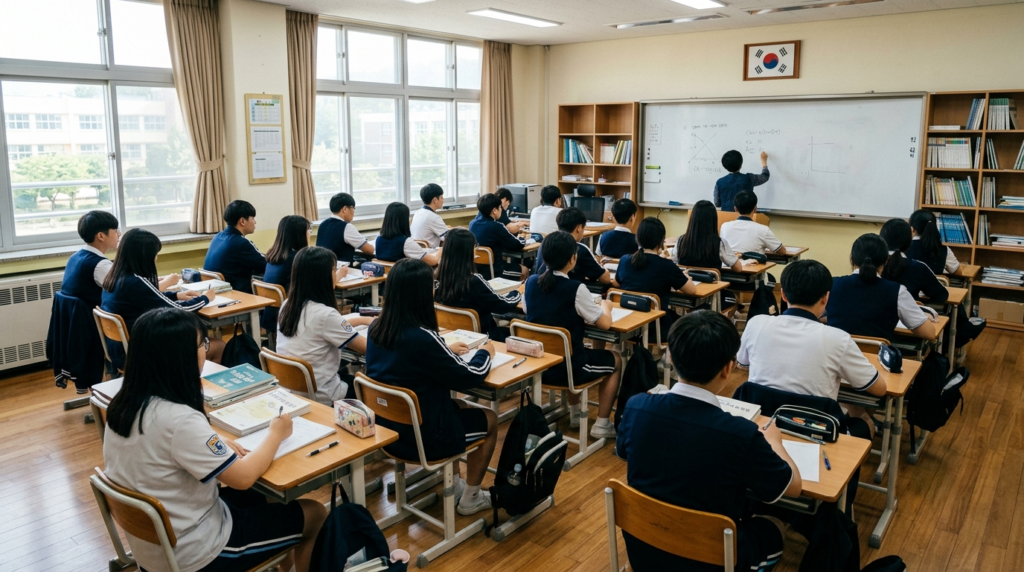
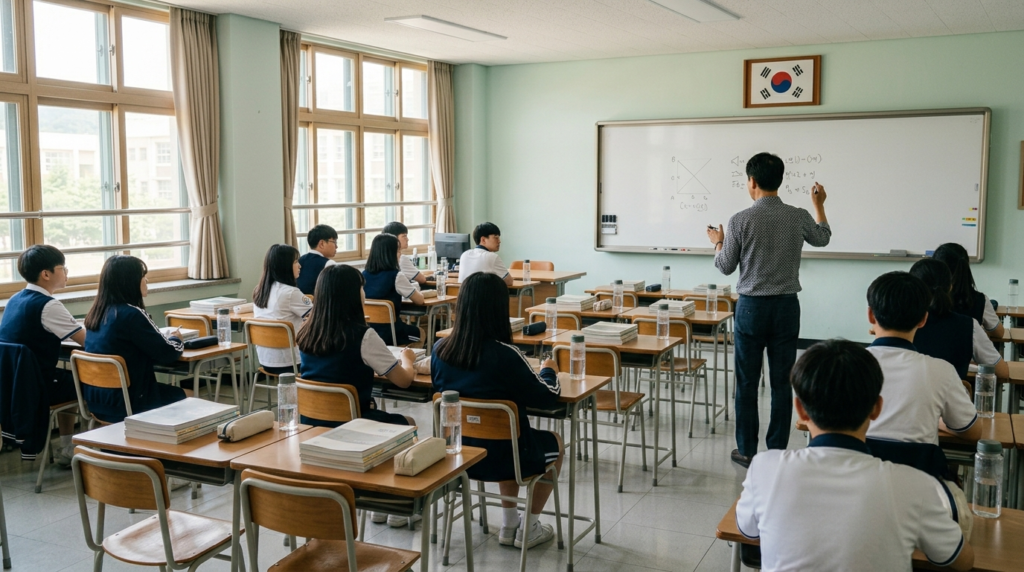
Korean classrooms are typically compact, efficient spaces designed to maximize both order and focus. Desks are arranged in straight rows facing a central whiteboard or digital smartboard, with the teacher’s desk positioned at the front. Unlike some Western classrooms that favor group clusters or circular seating for collaborative learning, Korean classrooms have traditionally prioritized a lecture-style format that supports direct instruction.
Walls are often decorated with academic schedules, class rules, and student achievements rather than casual decor. Cleanliness is taken seriously — floors are swept, desks aligned, and personal belongings kept tidy, reflecting a broader cultural emphasis on discipline and shared responsibility.
Class Sizes and Student-Teacher Ratios
Class sizes in Korean public schools have decreased significantly over the past two decades due to demographic shifts and policy reforms. While classrooms in the 1980s and 1990s often held 40-50 students, modern classrooms typically average 20-25 students per class in urban areas, with rural schools sometimes having even smaller ratios due to population decline.
This reduction has allowed for more individualized attention, though academic pressure remains high regardless of class size.
School Uniforms and Dress Codes
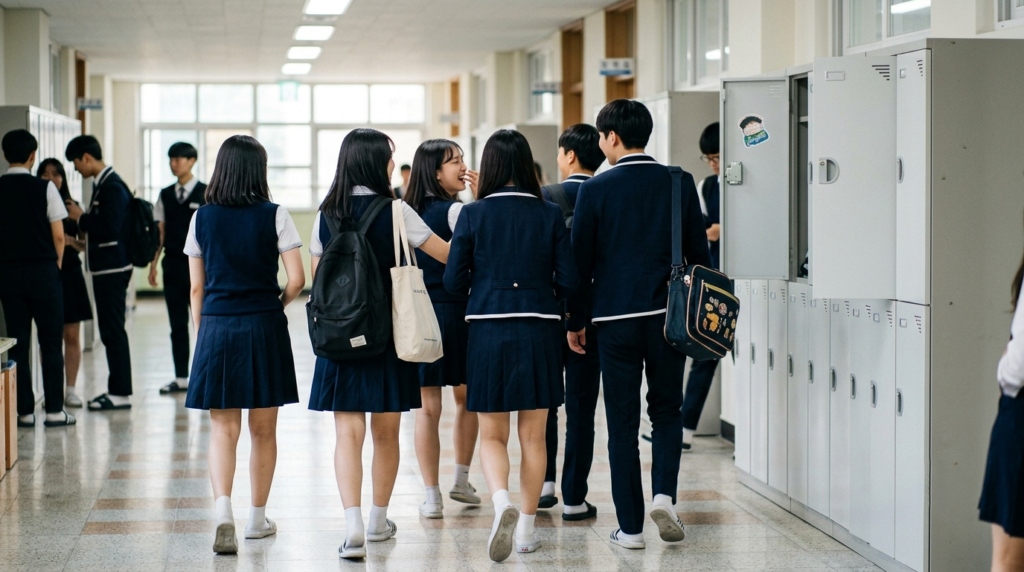
Uniforms are a defining feature of Korean secondary education. Middle and high school students wear standardized uniforms that vary by school but often include blazers, pleated skirts or trousers, and specific seasonal variations. Uniforms serve a dual purpose: they minimize socioeconomic visibility among students and reinforce a sense of institutional identity and discipline.
Dress code enforcement varies by school, but most institutions maintain strict guidelines regarding hair length, accessories, and shoe styles — rules that have occasionally sparked national conversations about student rights and individuality.
A Typical Day Inside a Korean Classroom
Morning Routines and Self-Study Periods (Jayuhaksup)
The Korean school day often begins earlier than in many other countries, with students arriving by 8 AM for a self-study period known as jayuhaksup. This time is used for reviewing material, completing homework, or quiet study before formal classes begin. It reflects a broader cultural belief that consistent, disciplined study habits — not just classroom instruction — are essential to academic success.
Class Structure and Subject Rotation
Korean students typically remain in one homeroom classroom while subject teachers rotate in and out, a structure common in secondary education worldwide. A standard day includes six to seven 50-minute periods covering core subjects like Korean language, mathematics, English, science, and social studies, along with electives such as music, art, or physical education.
Short 10-minute breaks between periods allow students to socialize, use restrooms, or prepare for the next subject — often the only unstructured time during the school day.
Lunchtime Culture and Classroom Cleaning Duties
Lunch is typically served in a shared cafeteria or, in some schools, delivered directly to classrooms. Meals are balanced and nutritionally structured, often including rice, soup, kimchi, and a protein dish.
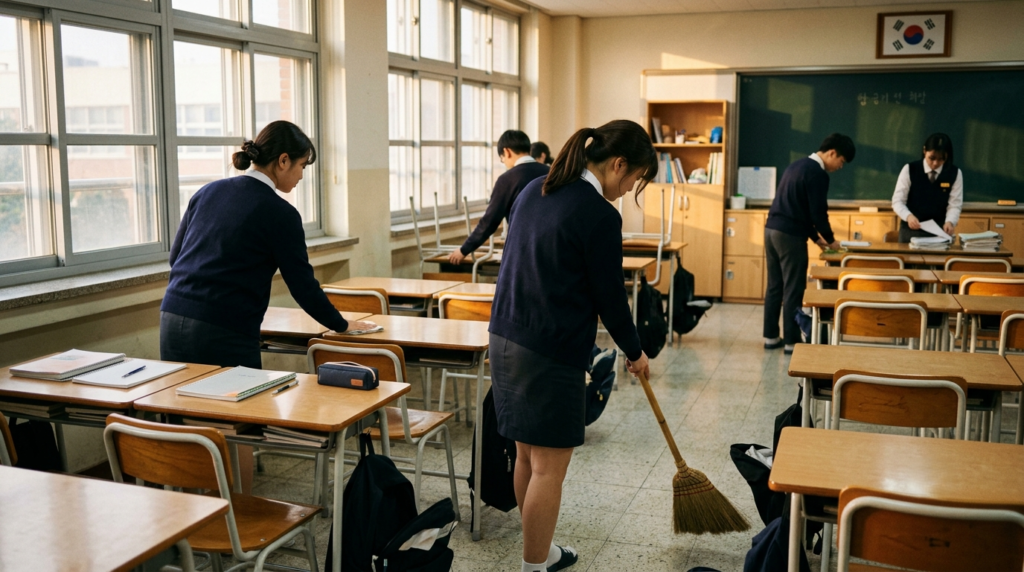
One detail that frequently surprises international observers — and one that K-dramas depict fairly accurately — is that Korean students clean their own classrooms. Rather than relying solely on janitorial staff, students take turns sweeping floors, wiping desks, and organizing shared spaces. This practice, rooted in values of collective responsibility and respect for shared environments, is a hallmark of Korean classroom culture rarely seen in Western education systems.
The Role of Teachers and Student-Teacher Relationships
Confucian Values and Respect for Educators
Korean classroom culture is deeply influenced by Confucian philosophy, which places significant emphasis on respect for authority, elders, and educators. Teachers are traditionally regarded as figures of high social respect, and this is reflected in classroom etiquette — students often bow when teachers enter, use formal language when addressing instructors, and are expected to demonstrate deference during lessons.
Discipline Styles: Then vs. Now
Historically, Korean classrooms employed stricter disciplinary methods, including corporal punishment, which was officially banned in public schools in 2011. Since then, discipline has shifted toward counseling-based approaches, demerit systems, and parent-teacher communication. However, the cultural expectation of respect and obedience toward teachers remains strong, even as enforcement methods have modernized.
How Teacher Authority Is Portrayed in K-Dramas vs. Reality
K-dramas often exaggerate teacher strictness for narrative tension — showing intimidating disciplinarians or, conversely, unusually lenient mentors. In reality, most Korean teachers today operate within a more balanced framework that blends traditional respect with contemporary pedagogical training, emphasizing both academic rigor and student wellbeing.
Academic Pressure and the Culture of Competition
The Importance of Suneung (College Entrance Exam)
No discussion of Korean classrooms is complete without addressing the Suneung — the College Scholastic Ability Test that shapes nearly every aspect of secondary education in Korea. Held once a year, this single exam carries immense weight in determining university admission, and by extension, many students’ future career trajectories.
The cultural significance of Suneung day is remarkable: flights are rerouted to avoid noise during listening exams, businesses open later to reduce traffic, and younger students often gather outside exam centers to cheer on seniors. This national event reflects just how central academic achievement is to Korean classroom culture, influencing everything from daily study schedules to long-term student stress levels.
Hagwon (After-School Academies) and Extended Study Hours

Beyond regular classroom hours, many Korean students attend hagwon — private after-school academies specializing in subjects ranging from math and English to art and music. It’s common for students to leave public school in the afternoon only to spend several additional hours at a hagwon, often not returning home until late evening.
This extended study culture means that for many Korean students, the classroom experience doesn’t end when the school day does. Understanding this helps explain the intensity often portrayed in K-dramas depicting students studying late into the night or napping at desks during the day.
Mental Health Conversations Emerging in Korean Schools
In recent years, Korea’s Ministry of Education has acknowledged the toll that academic pressure can take on student wellbeing. Reforms have included expanded school counseling services, adjusted homework policies, and public campaigns addressing student stress and mental health. While competition remains deeply embedded in the education system, there’s a growing national conversation about balancing academic excellence with emotional wellbeing — a shift worth noting for anyone trying to understand modern Korean classroom life beyond outdated stereotypes.
Classroom Culture Beyond Academics
School Clubs (Dongari) and Extracurricular Life
Korean schools offer a wide range of student clubs, known as dongari, covering interests from traditional music and dance to robotics, debate, and sports. These clubs provide a valuable social outlet within an otherwise academically intense schedule and are often featured prominently in coming-of-age K-dramas as spaces where friendships and storylines develop.
Friendship Dynamics and Social Hierarchy
Social relationships in Korean classrooms are often shaped by age hierarchy, a reflection of Confucian values extending beyond teacher-student dynamics into peer relationships. Seniority — even by a single year — can influence how students address one another, with formal language used toward older classmates. Close friend groups, often called chingu, play a central role in students’ daily emotional support systems.
Festivals, School Trips, and Special Events

Korean schools host various cultural events throughout the year, including sports days (undonghoe), school festivals (chukje), and multi-day field trips. These events offer a break from academic routine and are frequently depicted in dramas as pivotal moments for character development and social bonding.
How Korean Classrooms Have Evolved Over Time
Traditional Rote Learning vs. Modern Teaching Methods
Korean education has historically relied on rote memorization and lecture-based instruction, particularly for standardized testing preparation. However, recent curriculum reforms have introduced more project-based learning, critical thinking exercises, and student-centered teaching methods, particularly in elementary and early secondary education.
Technology Integration (Smart Classrooms, Digital Learning Tools)

Korea, known globally for its technological infrastructure, has increasingly integrated digital tools into classrooms. Smart boards, tablet-based learning modules, and online supplementary resources are now common in many schools, reflecting the country’s broader emphasis on innovation in education.
Recent Reforms in Korea’s Education Ministry
Ongoing policy changes have aimed to reduce excessive academic pressure, diversify college admission criteria beyond a single exam score, and promote holistic student development. These reforms signal a gradual cultural shift, even as traditional values around discipline and achievement remain influential.
Classrooms in Korea vs. Classrooms in the West
| Aspect | Korean Classrooms | Western Classrooms (General) |
|---|---|---|
| Seating Structure | Rows, teacher-facing | Often flexible/group-based |
| Discipline Style | Respect-based, hierarchical | Varies, often more informal |
| Academic Pressure | High-stakes single exam (Suneung) | Continuous assessment models |
| Classroom Duties | Students clean classrooms | Typically janitorial staff |
| Teacher Address | Formal, respect-driven | Often more casual |
| After-School Study | Common (hagwon) | Less common/structured |
This comparison highlights how cultural values directly shape educational structure, offering valuable context for international readers, exchange students, or those simply curious about the differences they’ve noticed in Korean media.
What K-Dramas Get Right (and Wrong) About Korean Classrooms
Korean dramas have done much to introduce global audiences to school life in Korea, and many of the details are grounded in reality — cleaning duties, uniform culture, respect toward teachers, and academic pressure are all accurately represented. However, dramas often amplify certain elements for storytelling purposes, such as exaggerated bullying storylines, unusually strict or lenient teachers, and heightened romantic dynamics rarely reflective of typical classroom life.
Understanding this distinction allows viewers to appreciate the cultural authenticity in these portrayals while recognizing where creative liberties have been taken.
Tips for Foreign Students or Exchange Visitors in Korean Schools
For those planning to study in Korea, understanding classroom etiquette in advance can ease the transition:
- Greet teachers with a slight bow and use formal titles when addressing them
- Observe seating and hierarchy customs, particularly with older classmates
- Participate in classroom cleaning duties as an expected part of daily routine
- Be prepared for longer school days, especially if attending hagwon after regular classes
- Respect uniform and dress code policies, even if they differ from your home country’s norms
These small adjustments can significantly improve the experience of adapting to Korean classroom culture.
Frequently Asked Questions
What are Korean classrooms like compared to American classrooms?
Korean classrooms tend to be more structured, with row-based seating, formal teacher-student dynamics, and a stronger emphasis on collective responsibilities like classroom cleaning, compared to the more flexible and informal setups common in many American schools.
Do Korean students really clean their own classrooms?
Yes. Students typically take turns sweeping, wiping desks, and maintaining shared spaces as part of daily routine, reflecting cultural values around discipline and communal responsibility.
What time does school start and end in Korea?
Most Korean schools begin around 8 AM and end mid-to-late afternoon, though many students continue to hagwon academies afterward, often not finishing their day until evening.
Is Korea’s education system stressful for students?
Academic pressure is significant, largely due to the importance placed on the Suneung college entrance exam and competitive university admissions, though recent reforms aim to address student wellbeing.
Can foreign students study in Korean public schools?
Yes, international students can enroll in Korean public schools, often through exchange programs or direct enrollment, though language proficiency requirements may apply depending on the school.
What is Suneung and why is it so important?
Suneung is Korea’s national college entrance exam, held annually, and plays a central role in determining university admissions, making it one of the most significant academic milestones for Korean students.
Classrooms in Korea offer a fascinating glimpse into a culture that deeply values discipline, respect, and academic achievement. From the daily rituals of self-study periods and classroom cleaning duties to the high-stakes pressure of Suneung, Korean education reflects broader societal values rooted in Confucian tradition and modern ambition.
While K-dramas offer an entertaining introduction to this world, understanding the real structure and culture behind Korean classrooms provides far richer insight — whether you’re a curious fan, a prospective exchange student, or an educator interested in comparative learning systems.
To continue exploring Korea’s education landscape, check out our related guides on school times in South Korea, top universities in Korea, and student life at institutions like Handong Global University and Myongji University.