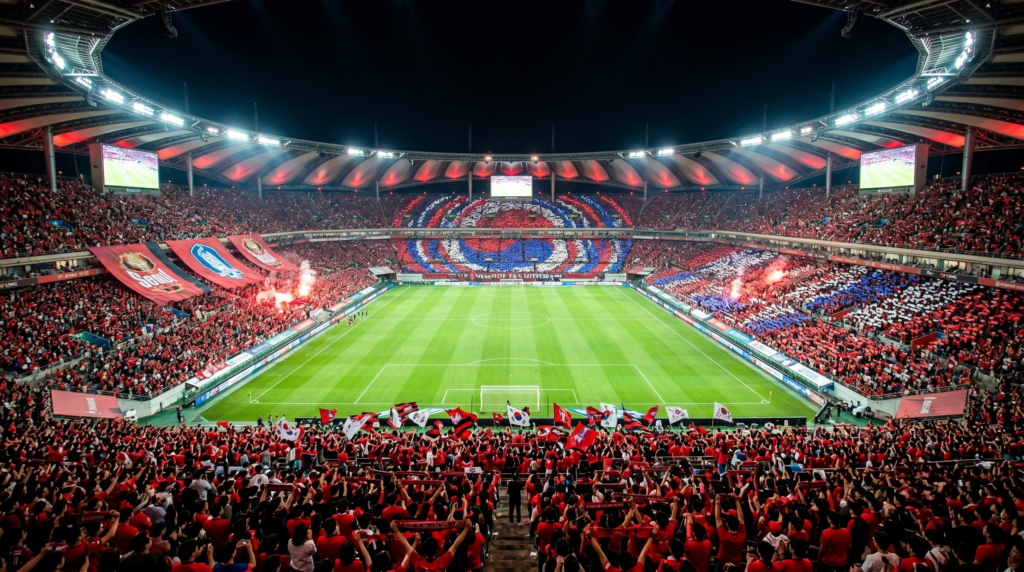
Picture this: it is the summer of 2002, and the streets of Seoul have erupted into a sea of red. Inside the gleaming Seoul World Cup Stadium, tens of thousands of fans are on their feet, voices hoarse, hearts pounding, as South Korea’s national football team does the unthinkable — advancing deep into the FIFA World Cup on home soil. That electric moment captured something essential about this country: South Korea does not just watch sports; it lives and breathes them. The stadiums in South Korea are not merely concrete and steel structures — they are cultural monuments, emotional landmarks, and living testaments to a nation’s passion for competition, community, and spectacle.
From the grandeur of the Seoul Olympic Stadium, built to welcome the world in 1988, to the modern dome of Gocheok Sky Dome humming with KBO energy on a summer evening, South Korea’s sporting venues offer an experience unlike anything else in Asia. And in a country where K-pop concerts fill 70,000-seat arenas and K-drama directors choose stadium backdrops for their most dramatic scenes, these venues carry a cultural weight that goes far beyond the final score.
Whether you are a dedicated football supporter, a baseball enthusiast eager to experience the legendary KBO atmosphere, or a K-culture fan tracing the footsteps of your favorite artists and dramas, this guide is your definitive companion. Read on to discover the most iconic stadiums in South Korea — their history, their architecture, their cultural significance, and everything you need to plan an unforgettable visit.
Why Stadiums in South Korea Are Unlike Any Other in Asia
A Nation Built on Sports Passion
To understand South Korea’s stadiums, you first need to understand the country’s deeply rooted sports culture. Sports are not a pastime in Korea — they are a national identity. Two events, in particular, reshaped the country’s sporting infrastructure beyond recognition: the 1988 Seoul Summer Olympics and the 2002 FIFA World Cup, co-hosted with Japan.
The 1988 Olympics announced South Korea’s arrival on the global stage, prompting a wave of investment in world-class athletic facilities across Seoul. Fourteen years later, the 2002 World Cup pushed that infrastructure even further, with ten brand-new, purpose-built stadiums constructed across the country in cities including Seoul, Busan, Incheon, Daejeon, and Suwon. The legacy of those two events is still visible today in the form of some of the most architecturally striking and well-maintained sports venues in all of Asia.
Beyond football, Korean baseball (KBO League) commands a massive and deeply passionate following. The KBO is consistently one of the most attended baseball leagues in the world, and the atmosphere inside a Korean baseball stadium on a match night — with synchronized chants, cheerleaders, and the smell of chimaek (chicken and beer) in the air — is an experience that has earned global admiration and genuine bucket-list status among sports travelers.
Where Sports Culture Meets K-Culture
What truly sets stadiums in South Korea apart from their counterparts elsewhere in Asia is the seamless fusion of sports culture and broader Korean pop culture. These venues double as premier entertainment destinations that host some of the world’s biggest K-pop concerts. Seoul World Cup Stadium and Seoul Olympic Stadium have both welcomed global superstars including BTS and BLACKPINK for sold-out stadium tours that drew international fans from every corner of the globe.
Korean stadiums have also found their way into the visual language of K-dramas and Korean cinema. Directors frequently use the dramatic scale of these venues as backdrops for emotionally charged scenes, turning them into pilgrimage sites for dedicated fans of the Hallyu wave. The Red Devils — South Korea’s legendary football supporter group — have made fan culture itself a cultural export, with their organized, colorful, and passionate support style drawing admiration worldwide.
In South Korea, a stadium visit is never just about the sport. It is a full cultural immersion.
The Most Iconic Football Stadiums in South Korea
Seoul World Cup Stadium — The Crown Jewel
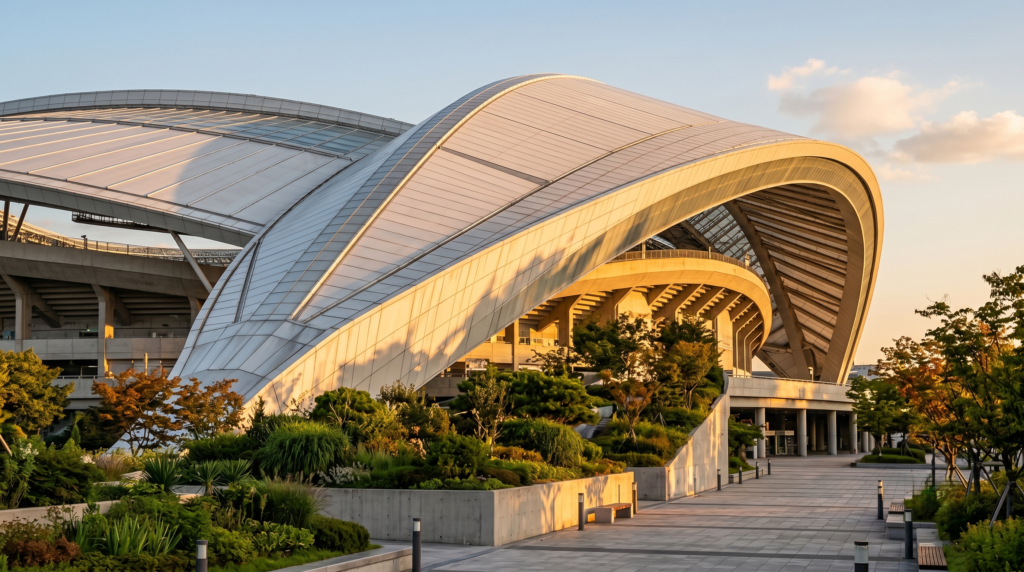
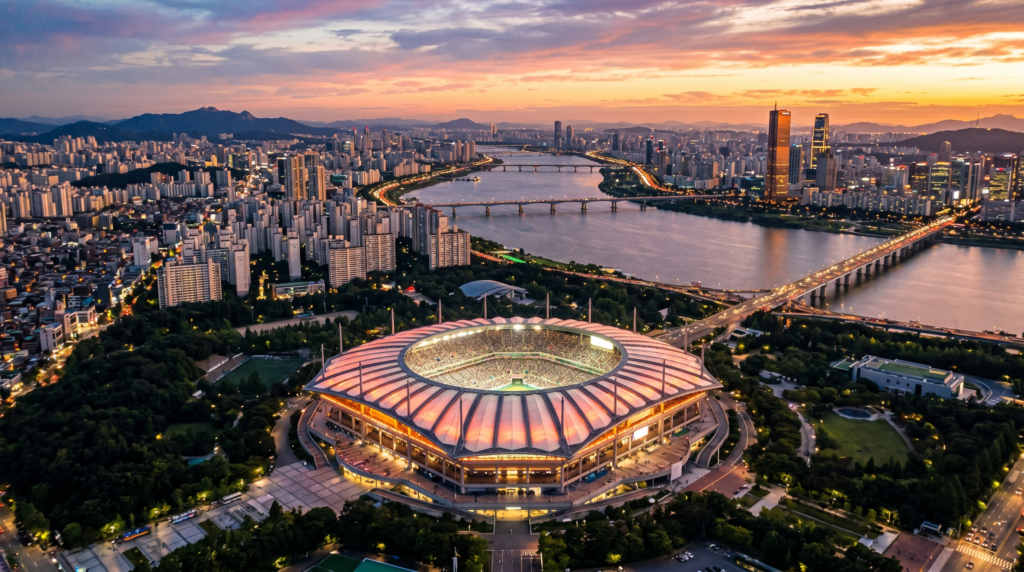
There is no more iconic entry on any list of football stadiums in South Korea than the Seoul World Cup Stadium, locally known as Sangam Stadium. Located in the Mapo district of Seoul, this magnificent venue was purpose-built for the 2002 FIFA World Cup and remains the largest football-specific stadium in all of Asia.
With a seating capacity of 66,704, the stadium’s design is immediately striking. Its roof structure is inspired by the traditional Korean kite known as the yeon, while its curved lines draw from the shape of a joseon, an ancient Korean vessel. This architectural storytelling makes the stadium not just a sports venue but a cultural artifact in its own right.
The stadium hosted seven matches during the 2002 World Cup, including the famous semi-final between South Korea and Germany. Today, it serves as the home ground of FC Seoul, one of the most successful clubs in K-League history, and regularly hosts international fixtures, large-scale K-pop concerts, and public cultural events.
Visitor Tips:
- Take subway Line 6 to World Cup Stadium Station (Exit 1) for direct access
- Arrive 30–45 minutes early on match days to soak in the pre-match atmosphere
- The surrounding Haneul Park and Nanji Han River Park make the area ideal for a full-day outing
- Stadium tours are available on non-match days — check the FC Seoul official website for schedules
Busan Asiad Main Stadium
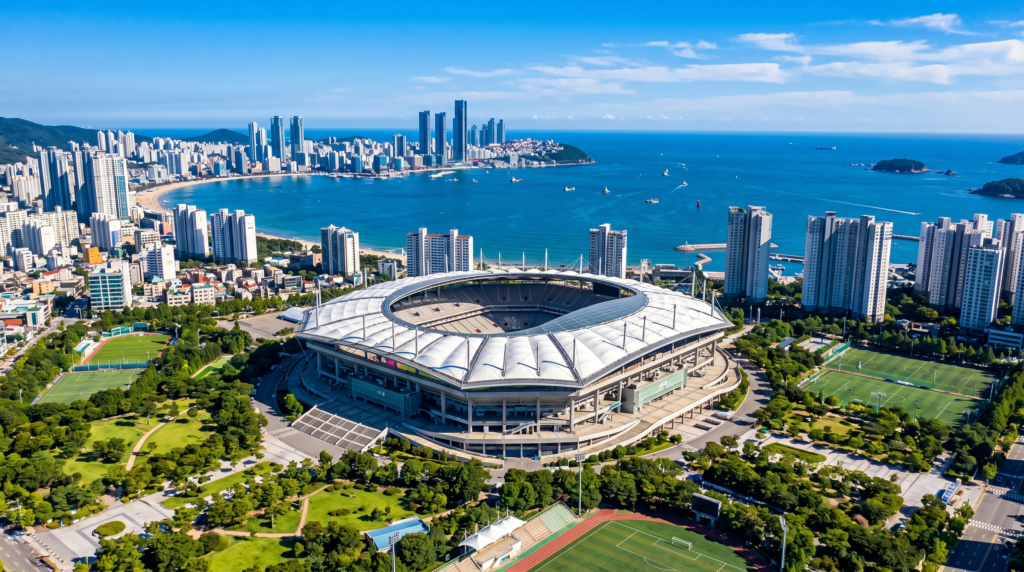
South Korea’s second-largest city is home to one of its most impressive sporting venues. The Busan Asiad Main Stadium, constructed for the 2002 Asian Games, sits within the Busan Asiad Main Park complex and has a seating capacity of approximately 53,789.
The stadium’s flowing, wave-like roof design is a nod to Busan’s identity as a coastal city, and its architecture has made it one of the most visually distinctive multi-use stadiums in East Asia. It currently serves as the home of Busan IPark FC in the K-League and hosts major athletics events and international competitions.
For travelers exploring Busan, combining a stadium visit with nearby attractions such as Haeundae Beach and Gamcheon Culture Village makes for an excellent full-day itinerary.
Incheon Football Stadium
Located in South Korea’s third-largest city and home to one of the world’s busiest international airports, the Incheon Football Stadium offers a more intimate but equally passionate football experience. With a capacity of around 20,000, the stadium is the home of Incheon United FC and delivers a vibrant atmosphere during K-League matches.
Its proximity to Incheon International Airport makes it a uniquely convenient stop for sports travelers transiting through Korea, and the broader Incheon area — with its rich history, Chinatown, and waterfront districts — provides plenty of complementary experiences for visitors.
Other Notable Football Stadiums
South Korea’s 2002 World Cup legacy extends well beyond Seoul and Busan. Several other stadiums deserve recognition:
Suwon World Cup Stadium (Big Bird Stadium): Named for its striking bird-wing roof design, this 43,959-capacity venue in Suwon is home to Suwon Samsung Bluewings and remains one of the most architecturally celebrated stadiums from the 2002 tournament.
Daejeon World Cup Stadium: A 41,000-capacity venue that served the 2002 World Cup and continues to host K-League and international football in the central Korean city of Daejeon.
Jeonju World Cup Stadium: Beloved by football purists for its passionate local fanbase, this 42,477-seat venue in Jeonju is home to Jeonbuk Hyundai Motors FC — one of the most dominant clubs in Asian football history.
Must-Visit Baseball Stadiums in South Korea
If football infrastructure was transformed by the World Cup, Korean baseball stadiums have evolved through decades of grassroots passion and growing commercial investment. The KBO League — Korea’s top professional baseball competition — averages some of the highest per-team attendance figures of any baseball league in the world, and the in-stadium experience is widely regarded as one of the most entertaining in global sport.
Jamsil Baseball Stadium — Heart of Korean Baseball
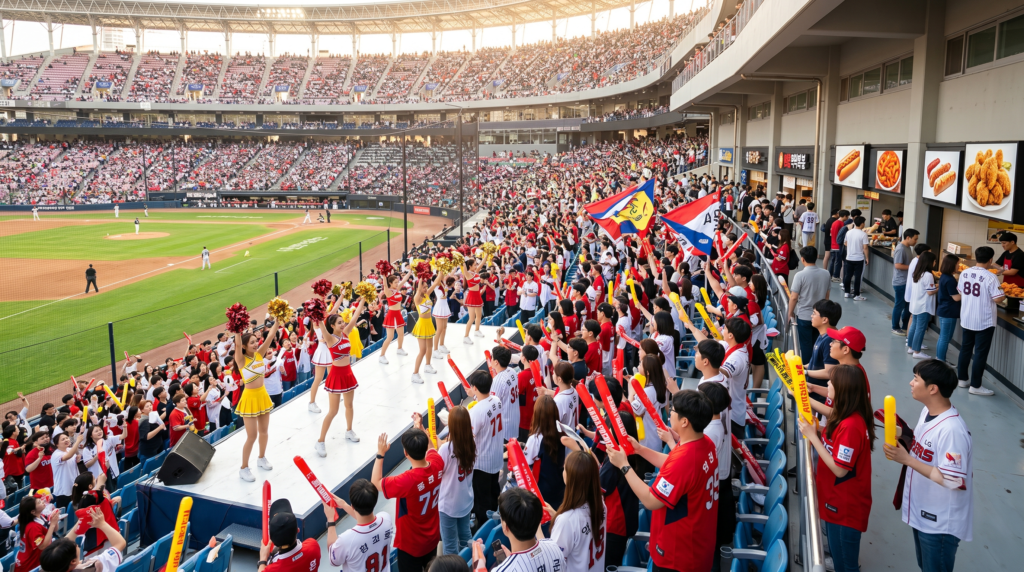
For anyone seeking to understand the soul of Korean baseball, Jamsil Baseball Stadium in Seoul is the place to start. Located within the expansive Jamsil Sports Complex in the Songpa district of Seoul, this stadium has been the spiritual home of Korean baseball since it opened in 1982.
With a capacity of approximately 25,000 and serving as the shared home of two of Korea’s most storied franchises — the LG Twins and the Doosan Bears — Jamsil consistently draws enormous, boisterous crowds throughout the KBO season (March to October).
What makes Jamsil truly special, however, is not the baseball itself — it is everything around it. Korean baseball stadiums are legendary for their food and fan culture. At Jamsil, you will find vendors selling chimaek (the iconic combination of fried chicken and beer), dried squid, rice cakes, and kimbap both inside the stadium and in the sprawling plaza outside. Fan sections are organized, loud, and choreographed, with dedicated cheerleaders leading synchronized chants for every at-bat. Visiting Jamsil for a Twins-Bears derby is an experience that leaves virtually every first-time visitor converted to the cause of KBO baseball.
Visitor Tips:
- Take subway Line 2 or Line 9 to Sports Complex Station
- Buy tickets in advance via Interpark or the team’s official website — derby games sell out fast
- Arrive hungry — the food experience is a major part of the visit
Gocheok Sky Dome — Korea’s First Dome Stadium
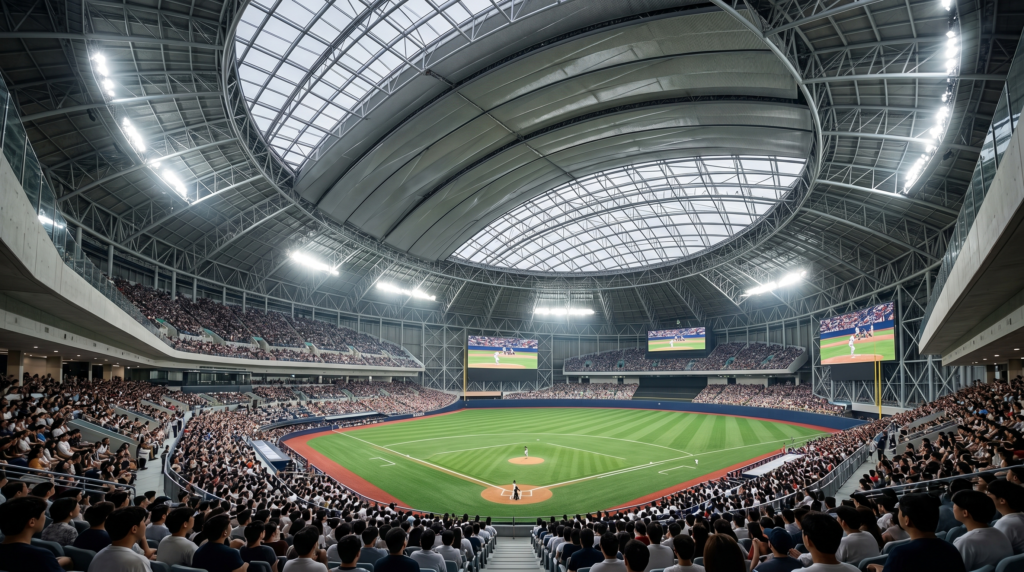
Opened in 2015 in the Guro district of Seoul, Gocheok Sky Dome represents a new era for Korean baseball infrastructure. It is South Korea’s first and only fully enclosed dome stadium, with a fixed roof that makes it entirely weatherproof and usable year-round — a genuine innovation for a league that has historically battled weather disruptions.
Home to the Kiwoom Heroes, the Sky Dome seats approximately 16,800 spectators in a compact, atmosphere-rich environment. The fully enclosed design means crowd noise is amplified dramatically, giving even regular-season games an intensity that rivals playoff atmospheres in open-air venues.
Beyond baseball, Gocheok Sky Dome has positioned itself as a versatile entertainment complex, hosting concerts, esports events, and corporate functions throughout the year.
Sajik Baseball Stadium, Busan
No guide to Korean baseball stadiums would be complete without a mention of Sajik Baseball Stadium in Busan, home of the Lotte Giants — arguably the most passionately supported franchise in all of Korean baseball.
The Giants’ fanbase in Busan is the stuff of legend. Despite the team’s trophy drought, Lotte supporters pack Sajik with a devotion and noise level that is genuinely unmatched anywhere in Korean sport. The stadium, with a capacity of around 24,000, sits in a lively district of Busan with good transport links and excellent surrounding food options.
For sports travelers visiting Busan, catching a Lotte Giants home game at Sajik is an unmissable cultural experience — even for those with no prior interest in baseball.
Historic and Multi-Purpose Stadiums Worth Knowing
Seoul Olympic Stadium — A Monument to 1988
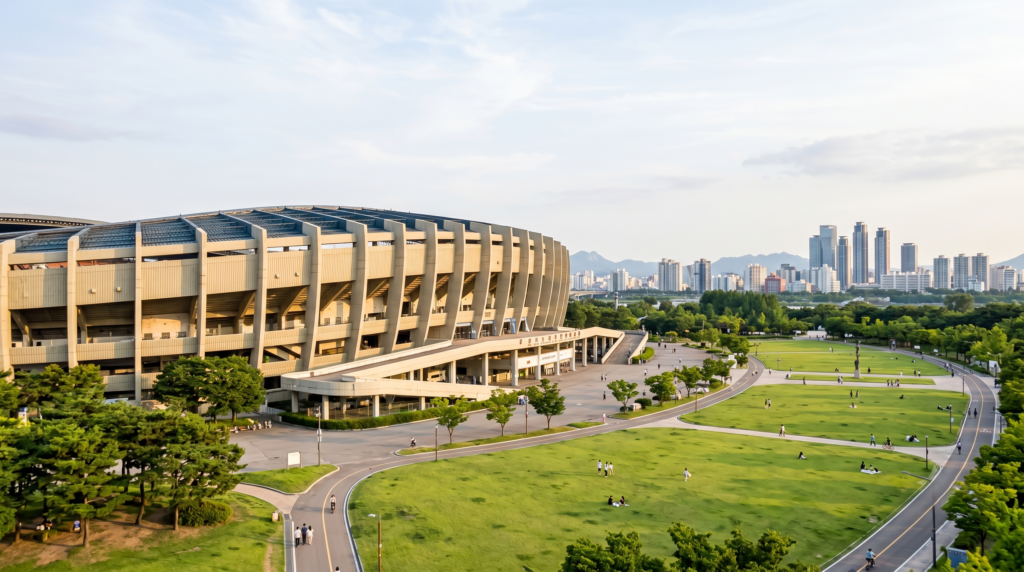
Long before the 2002 World Cup redefined South Korean football infrastructure, the Seoul Olympic Stadium announced this country’s arrival as a global sporting power. Built as the centerpiece of the 1988 Seoul Summer Olympics, this magnificent venue sits at the heart of the Olympic Park in the Songpa district of Seoul — one of the city’s most beautiful and expansive public spaces.
With a seating capacity of approximately 69,950, the Seoul Olympic Stadium is the largest stadium in South Korea by capacity and remains one of the most significant sporting landmarks in all of Asia. Its design — sweeping and monumental, framed by wide plazas and green parkland — was intended to project confidence and ambition, and it has lost none of its visual power in the decades since.
Today, the stadium serves a rich variety of purposes: major athletics competitions, international rugby matches, large-scale public events, and — increasingly — K-pop concerts and cultural festivals. The surrounding Olympic Park is one of Seoul’s most visited green spaces, featuring sculptures, walking paths, a velodrome, and several smaller event venues.
Visitor Tips:
- Take subway Line 5 or Line 9 to Olympic Park Station or Mongchontoseong Station
- The park itself is free to enter and worth several hours of exploration
- Check the Seoul Olympic Stadium official calendar for upcoming events
Munhak Stadium, Incheon
The Munhak Stadium (officially Incheon Munhak Stadium) in Incheon carries a dual Olympic legacy: it was built for the 2002 FIFA World Cup and later served as a key venue for the 2014 Incheon Asian Games. With a capacity of approximately 50,256, it is one of the larger multi-use venues outside Seoul and serves as the home ground for Incheon United FC for larger fixtures.
Its location within the broader Munhak Sports Complex — which includes a baseball stadium and indoor sports facilities — makes it a hub of sporting activity in the Incheon region.
Stadiums in South Korea as K-Culture Hotspots
K-Pop Concerts and Fan Events
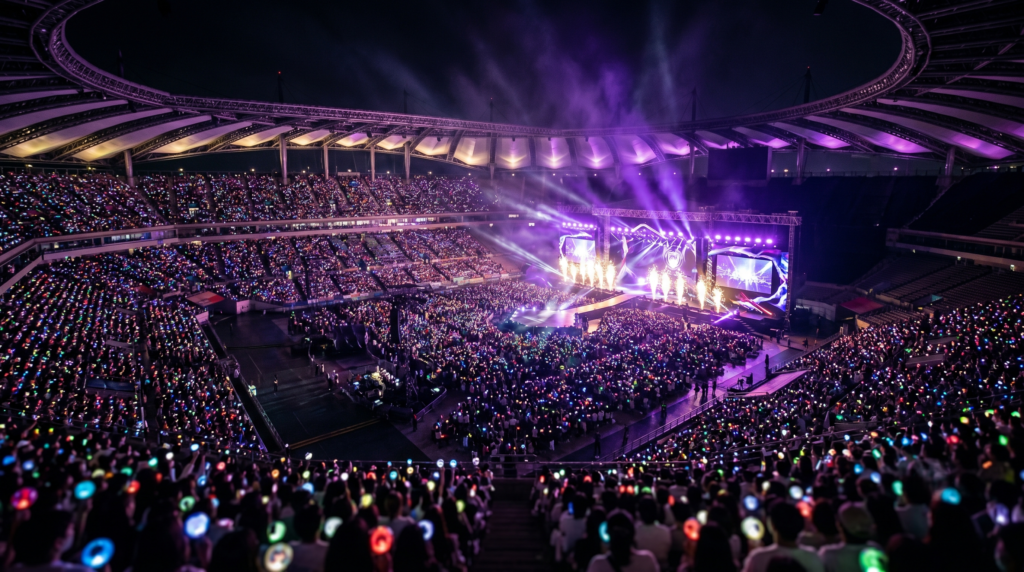
One of the most fascinating dimensions of stadiums in South Korea is their dual identity as world-class sports venues and premier K-pop entertainment destinations. In a country where the music industry generates billions in annual revenue and commands a global fanbase, stadium-scale concerts have become a defining feature of the Korean cultural calendar — and the country’s largest venues have risen to meet that demand magnificently.
Seoul World Cup Stadium and Seoul Olympic Stadium are the two venues most synonymous with landmark K-pop concert experiences. Both have hosted some of the most attended and most discussed concerts in modern music history. BTS’s “Love Yourself” and “Speak Yourself” stadium tours sold out Seoul Olympic Stadium across multiple consecutive nights, drawing fans from Japan, the United States, Europe, and Southeast Asia who traveled specifically to experience the concerts on Korean soil. BLACKPINK’s “Born Pink” world tour similarly transformed Seoul World Cup Stadium into an international media moment watched by millions online.
What makes attending a K-pop concert at a Korean stadium uniquely special — beyond the performance itself — is the surrounding fan culture ecosystem that develops around these events. In the days leading up to major concerts, the plazas outside venues like the Olympic Stadium fill with fan pop-up stalls, birthday advertisements for artists on digital billboards, fan-organized food trucks gifting free meals to fellow attendees, and meticulously organized lightstick-waving sections coordinated through fan café communities. For international visitors, this pre-concert culture is often as memorable as the show itself.
Tips for Attending K-Pop Concerts at Korean Stadiums:
- Tickets sell out within minutes of release — use Interpark, YES24, or Melon Ticket and have your payment details ready in advance
- International fans can use Weverse Shop for some artist tours, which offers English-language ticket purchasing
- Arrive at least two hours early to explore merchandise booths and fan events in the surrounding plaza
- Many stadiums offer designated areas for foreign fans — check the official fan café or Weverse community for guidance
- Hotels near Sports Complex Station (for Jamsil-area venues) and World Cup Stadium Station book up months in advance around major concert dates — plan accordingly
Beyond BTS and BLACKPINK, virtually every major K-pop act holds milestone concerts at Korean stadiums. Groups including EXO, TWICE, Stray Kids, aespa, and NewJeans have all used these venues for landmark domestic performances, making South Korean stadiums a permanent fixture on the global concert touring map.
K-Drama and Film Connections
South Korea’s stadiums have a presence on screen that extends their cultural reach far beyond the boundaries of sport and live music. Korean directors and drama producers have long recognized the dramatic potential of stadium environments — the vast scale, the raw emotion of crowd energy, the symbolic weight of competition — and have woven these venues into some of Korean cinema and television’s most memorable visual moments.
Jamsil Baseball Stadium is perhaps the most frequently appearing stadium in Korean popular media. Its status as the home of two beloved Seoul franchises and its location within the culturally rich Songpa district have made it a natural filming location for dramas exploring themes of love, ambition, and everyday Korean life. The 2012 romantic drama I Hear Your Voice, along with numerous variety show segments and music video productions, have used Jamsil as a backdrop, cementing its place in the visual vocabulary of Hallyu content.
Seoul Olympic Stadium and the broader Olympic Park complex have served as filming locations for multiple high-profile Korean productions over the years, its wide plazas and monumental architecture lending themselves naturally to scenes requiring emotional scale and visual grandeur.
For K-drama tourism enthusiasts — a rapidly growing subset of the broader Korean cultural tourism market — stadium locations offer a rewarding layer of connection to beloved content. Standing on the same ground where a beloved drama scene was filmed carries genuine emotional resonance for dedicated fans, and several Korean tourism platforms now offer dedicated Hallyu filming location maps that include stadium sites.
Beyond dramas, Korean stadiums have appeared in iconic K-pop music videos that have accumulated hundreds of millions of YouTube views, further embedding these venues in the global visual imagination of Korean pop culture. The stadium as a symbol of aspiration, collective energy, and emotional release has become a recurring motif in Korean artistic expression across multiple media.
Planning Your Stadium Visit in South Korea — Practical Guide
Best Time to Visit
Timing your stadium visit strategically can significantly enhance the experience. South Korea’s two major professional sports seasons run in complementary windows that together cover most of the calendar year, meaning there is almost always live sport to experience regardless of when you visit.
Korean Baseball (KBO League) runs from late March through October, with the postseason extending into November in most years. The summer months of June through August represent peak KBO atmosphere — warm evenings, outdoor stadium energy, and the full chimaek food experience in season. Weekend games, particularly those involving fierce local rivalries like the LG Twins versus Doosan Bears at Jamsil, consistently sell out and offer the most electrifying crowd atmosphere.
Korean Football (K-League) follows a similar spring-to-autumn schedule, running from February or March through November or December. The K-League season overlaps significantly with the KBO season, meaning sports travelers visiting Korea in the summer months can potentially attend both a baseball and a football match within the same trip — an itinerary that is warmly recommended for any serious sports traveler.
For those primarily interested in K-pop concerts, the summer months are again peak season, with many major artists scheduling their domestic stadium tours between May and August. However, large-scale concerts occur throughout the year, and checking platforms like Interpark and Weverse for upcoming event schedules before finalizing travel dates is always advisable.
International football, athletics championships, and special events can occur at any point in the calendar year, so checking individual stadium event calendars before your visit is always worthwhile.
How to Buy Tickets
Purchasing tickets for sporting events and concerts in South Korea as a foreign visitor is more straightforward than many travelers expect, provided you prepare the right tools in advance.
For KBO Baseball:
- Tving Ticket (formerly KBO’s official platform) and individual team websites are the primary sources
- Interpark Ticket (interpark.com) handles a wide range of sporting events and is navigable with translation tools
- Physical ticket booths at stadium gates are available on match days for most regular-season games, though popular fixtures sell out in advance
For K-League Football:
- Individual club websites and Naver Sports are the main ticketing channels
- Most stadiums offer walk-up ticket sales on match days for non-sellout fixtures
- International fixtures and cup finals typically require advance booking through official channels
For K-Pop Concerts:
- Interpark Ticket, YES24, and Melon Ticket are the three dominant platforms
- Weverse Shop is essential for HYBE artist concerts (BTS, SEVENTEEN, NewJeans, and others)
- Fan community platforms often share ticketing tips and alerts for re-sale or returned tickets
Practical Tip for Foreign Visitors: Some Korean ticketing platforms require a Korean mobile phone number for verification. Using a local SIM card or eSIM (available at Incheon Airport on arrival) solves this problem and is strongly recommended for any traveler planning to purchase event tickets independently during their stay.
Getting There and Around
One of South Korea’s greatest advantages as a travel destination is the quality and coverage of its public transportation network, and virtually every major stadium in the country is accessible directly by subway — a genuine convenience that many international stadiums cannot match.
Seoul Stadiums:
- Seoul World Cup Stadium: Line 6, World Cup Stadium Station (Exit 1) — approximately 2 minutes on foot
- Seoul Olympic Stadium / Jamsil Baseball Stadium: Line 2 or Line 9, Sports Complex Station (Exit 6) — approximately 5 minutes on foot
- Gocheok Sky Dome: Line 1 or Line 2, Guro Digital Complex Station, then a short bus or taxi ride
Busan Stadiums:
- Sajik Baseball Stadium: Busan Metro Line 3, Sajik Station (Exit 5) — approximately 10 minutes on foot
- Busan Asiad Main Stadium: Busan Metro Line 3, Sports Complex Station — the broader Asiad complex is well signposted from the station
Incheon Stadiums:
- Incheon Football Stadium / Munhak Stadium: Incheon Metro Line 1, Munhak Sports Complex Station
Navigation Apps:
- KakaoMap and Naver Map are the two essential navigation tools for getting around South Korea and both offer English-language interfaces
- Kakao T is the dominant ride-hailing app and is extremely useful for stadium-to-hotel journeys after evening events when subway services may be winding down
What to Eat and Experience Inside

The food culture inside Korean stadiums deserves its own dedicated discussion because it is, without exaggeration, one of the most enjoyable aspects of the entire stadium experience — and a meaningful expression of Korean food culture in a communal setting.
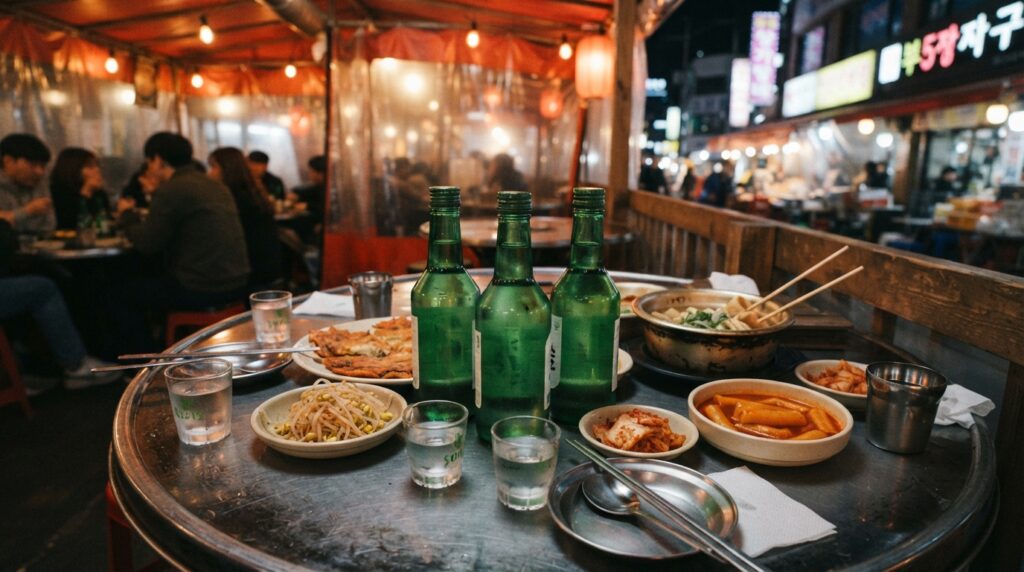
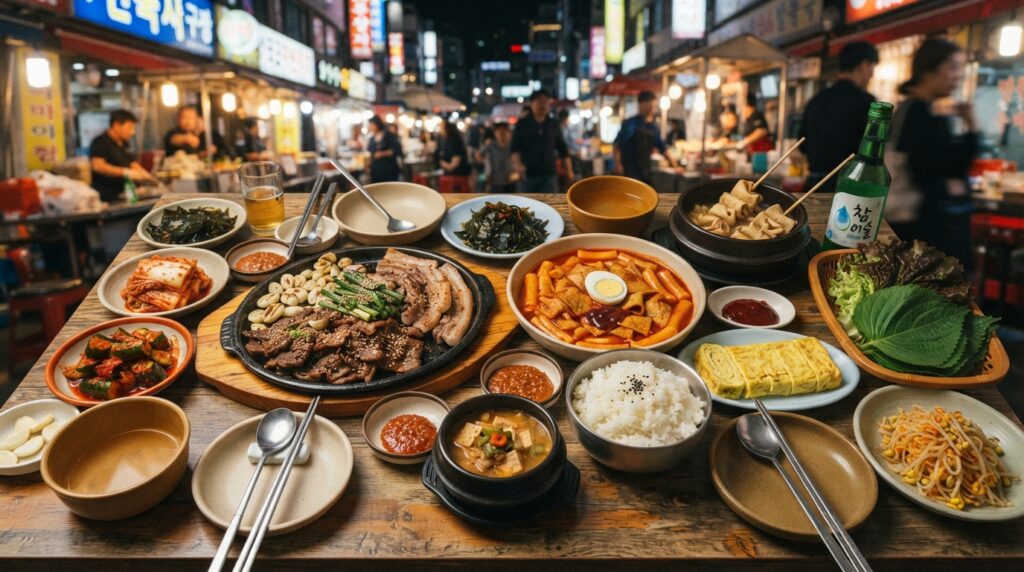
Chimaek — the beloved combination of crispy fried chicken and cold beer — is the undisputed king of Korean stadium food. Most major stadiums have dedicated chimaek vendors both inside the venue and in the surrounding plazas, and sharing a chimaek spread with a group of friends while watching a summer baseball game is a quintessentially Korean experience that every visitor should have at least once.
Beyond chimaek, Korean stadium food menus typically include:
- Kimbap — seaweed rice rolls, available in multiple varieties and ideal for eating in the stands
- Tteokbokki — spicy rice cakes, sold at virtually every stadium food stall
- Dried squid (ojingeo) — a classic Korean snack food that pairs perfectly with beer and is deeply associated with the baseball stadium experience
- Ramen and instant noodles — available at stadium convenience kiosks and a surprisingly beloved stadium snack
- Corn dogs and hot dogs — Korean-style corn dogs with varied fillings have become a modern stadium staple
Inside Korean baseball stadiums, it is common and perfectly accepted practice to bring your own food and drinks into the stands for most regular-season games — a freedom that international visitors often find surprising and delightful. Check individual stadium policies before packing a picnic, as rules can vary by venue and event type.
The fan ritual experience is equally worth preparing for. Korean baseball games feature dedicated cheerleading squads stationed in the stands who lead organized chants, dance routines, and motivational sequences throughout the game. Each batter has their own personalized chant, and the synchronized participation of thousands of fans creates an atmosphere that is simultaneously thrilling and deeply communal. First-time visitors are encouraged to sit in the home team’s cheering section for the full experience — the cheerleaders are welcoming to foreign fans and the energy is infectious from the very first inning.
Upcoming and Modern Stadium Developments in South Korea
South Korea’s commitment to world-class sporting infrastructure shows no signs of slowing. Several significant stadium development projects are currently in planning or early construction phases that will shape the next chapter of Korean sports venues.
The most discussed project is the New Seoul Football Stadium, a planned replacement or supplementary home ground for FC Seoul that has been the subject of considerable debate and planning in recent years. The project reflects growing demand for a modern, purpose-built football experience in the capital that can compete with the best club stadiums in Europe and Asia.
South Korea’s government has also signaled sustained investment in smart stadium technology — integrating high-speed 5G connectivity, app-based services, cashless payment systems, and enhanced fan experience technology into both existing and new venues. Several KBO stadiums have already undergone significant renovations in recent years with these upgrades in mind, and the broader trajectory of Korean stadium development is firmly oriented toward the fusion of elite sports infrastructure with cutting-edge digital experience.
Sustainability is an increasingly prominent consideration in Korean stadium planning. New projects are expected to incorporate green building standards, solar energy integration, and reduced-carbon operational models that align with South Korea’s broader national sustainability commitments.
South Korea is also widely discussed as a potential host nation for future major international sporting events, including bids related to the 2036 Summer Olympics and various FIFA and AFC tournament hosting opportunities. Should any of these bids succeed, a further wave of stadium investment would follow — continuing a legacy of sporting infrastructure development that stretches back to 1988.
Frequently Asked Questions About Stadiums in South Korea
Q1: What is the largest stadium in South Korea? Seoul Olympic Stadium holds the title of the largest stadium in South Korea by total seating capacity, accommodating approximately 69,950 spectators. It was built for the 1988 Seoul Summer Olympics and remains one of the most historically significant sporting venues in all of Asia.
Q2: Which stadium hosted the most matches during the 2002 FIFA World Cup? Seoul World Cup Stadium hosted the greatest number of matches in South Korea during the 2002 FIFA World Cup, including the high-profile semi-final between South Korea and Germany. It remains the largest football-specific stadium in Asia.
Q3: Can tourists visit Korean stadiums on non-match days? Yes, several major Korean stadiums offer guided tours or open their facilities to visitors on non-event days. Seoul World Cup Stadium, in particular, has a well-organized visitor experience that includes access to the pitch-side area and stadium museum. It is advisable to check individual stadium websites for current tour availability and booking requirements.
Q4: Are Korean stadiums used for K-pop concerts? Absolutely. Seoul World Cup Stadium and Seoul Olympic Stadium are two of the most prominent K-pop concert venues in the world, regularly hosting stadium-scale tours by South Korea’s biggest acts. Gocheok Sky Dome also hosts concerts throughout the year, particularly during periods when baseball is not in season.
Q5: What is the most famous baseball stadium in South Korea? Jamsil Baseball Stadium in Seoul is widely regarded as the most iconic baseball venue in South Korea. As the shared home of the LG Twins and Doosan Bears and a stage for decades of KBO history, it holds a special place in the hearts of Korean baseball fans and is a must-visit for any sports traveler.
Q6: How do I get to Seoul World Cup Stadium by subway? Seoul World Cup Stadium is directly accessible via Seoul Metro Line 6. Alight at World Cup Stadium Station and use Exit 1 for the most direct route to the stadium entrance. The journey from central Seoul typically takes between 20 and 35 minutes depending on your starting point.
South Korea’s stadiums are far more than venues for sport. They are living monuments to national pride, architectural ambition, and cultural energy — places where history has been made, where music has moved millions, and where the everyday passions of Korean life find their most spectacular collective expression.
From the iconic sweep of Seoul World Cup Stadium and the Olympic grandeur of the 1988 Games to the electric intimacy of a summer night at Jamsil Baseball Stadium or the year-round buzz of Gocheok Sky Dome, the stadiums in South Korea offer a range of experiences that can genuinely enrich any visit to this remarkable country. Add the K-pop concerts, the Hallyu filming locations, the unforgettable stadium food culture, and the warmth of Korean fan communities, and you have a dimension of Korean travel that remains chronically underappreciated in mainstream tourism.
Whether you are planning your first trip to Seoul or returning as a seasoned Korea traveler looking for deeper cultural experiences, putting at least one stadium visit on your itinerary is a decision you will not regret. Book your KBO tickets, check the concert calendar, lace up your comfortable shoes, and get ready to discover South Korea the way its people love it most — together, loudly, and with great food in hand.
Enjoyed this guide? Explore more on our blog: Korean Sports Culture, Top Things to Do in Seoul, and The Ultimate K-Drama Filming Locations Travel Guide.