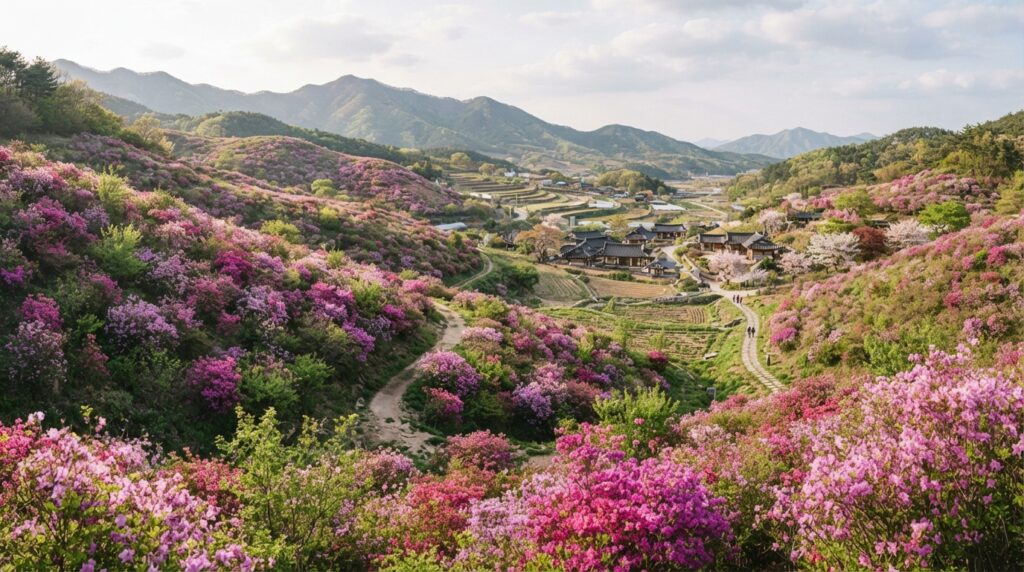
Imagine stepping off a KTX train into a city where centuries-old hanok rooftiles curve against a modern skyline, where the air carries the scent of freshly made bibimbap, and where a world-class university campus sits just minutes from one of Korea’s most beloved cultural treasures. That city is Jeonju — and at its academic heart stands Jeonbuk National University Korea, one of the most compelling study abroad destinations on the Korean peninsula.
While Seoul’s SKY universities dominate global headlines, a growing number of international students are discovering that Jeonbuk National University Korea — also known as JBNU or Chonbuk National University — offers something genuinely rare: exceptional academic quality combined with an authentic, deeply rooted Korean cultural experience that no big-city campus can replicate.
Whether you are a prospective student researching Korean universities, a K-drama enthusiast dreaming of living in a real Korean cultural setting, or a global scholar seeking affordable postgraduate research opportunities in Asia, this guide is written for you. From admissions and scholarships to campus life, cultural integration, and practical tips for living in Jeonju, everything you need to make an informed decision is right here.
What Is Jeonbuk National University Korea?

A Brief History and Academic Legacy
Jeonbuk National University was established in 1947, making it one of South Korea’s oldest and most historically significant national universities. Founded just two years after Korea’s liberation from Japanese colonial rule, the university was built with a clear national mission: to cultivate educated citizens who would contribute to the rebuilding and development of the Korean nation.
Over the decades, JBNU grew from a modest regional institution into a comprehensive research university with ten colleges, multiple graduate schools, and a robust international academic network. Today, it is officially recognized by the Korean government as one of the country’s leading national universities and holds a respected position within Korea’s higher education landscape.
In 2022, JBNU merged with Jeonbuk University of Education, further expanding its academic scope and reinforcing its standing as the premier public university in the Jeolla region.
Location — Why Jeonju Matters
Jeonbuk National University is located in Jeonju, the capital city of North Jeolla Province (Jeollabuk-do) in the southwestern region of South Korea. For international students, this location is far more than a geographic detail — it is one of the most compelling reasons to choose JBNU over universities in Seoul or Busan.
Jeonju holds a unique place in Korean cultural identity. It is the birthplace of the Joseon Dynasty, the ancestral home of the Yi royal family, and the city widely regarded as the cultural and culinary soul of Korea. UNESCO designated Jeonju a Creative City of Gastronomy, recognizing its extraordinary food culture and culinary heritage.
For K-drama fans, Jeonju is especially meaningful. The city’s iconic Hanok Village — a preserved neighborhood of over 700 traditional Korean houses — has served as a filming location for numerous Korean dramas and films, making it a living, breathing piece of the hallyu world that fans love. Living and studying here means immersing yourself in the real Korea, not just the version seen through a screen.
Practically speaking, Jeonju is well connected. The KTX high-speed rail links Jeonju to Seoul in approximately one hour and fifty minutes, making weekend trips to the capital both easy and affordable.
University Ranking and Reputation
Jeonbuk National University consistently ranks among the top national universities in South Korea. It has appeared in the QS World University Rankings and is particularly recognized for its strengths in agriculture and life sciences, engineering, veterinary medicine, and the humanities.
JBNU is a member of the prestigious Innovative University Group (IUG) in Korea and maintains active research partnerships with universities across Asia, Europe, North America, and beyond. For international students, this means access to a globally connected academic environment while studying in one of Korea’s most culturally rich cities.
Academic Programs at Jeonbuk National University Korea
Undergraduate Programs for International Students
JBNU offers a wide range of undergraduate programs across its colleges, including the College of Engineering, College of Agriculture, Life Science and Environmental Sciences, College of Medicine, College of Law, College of Education, College of Arts, and College of Social Sciences, among others.
International students can apply as degree-seeking undergraduates or through exchange and visiting student programs. While many programs are conducted in Korean, the university has been expanding its English-medium instruction (EMI) courses in recent years, particularly within science, technology, and business-related departments.
Double-degree programs and exchange agreements with partner universities in countries including the United States, Japan, China, Germany, and across Southeast Asia give international students the flexibility to integrate JBNU credits into broader academic pathways.
Graduate and Research Programs
For graduate-level international students, JBNU is especially attractive. The university offers Master’s and PhD programs across virtually all academic disciplines, with numerous research institutes dedicated to areas such as agricultural biotechnology, materials science, food science, Korean studies, and renewable energy.
Research-focused international students benefit from collaboration with world-class Korean faculty, access to well-equipped laboratories, and funding opportunities linked to Korea’s government-backed research initiatives. Several graduate programs actively recruit international researchers, and English-medium supervision is available in many departments.
Korean Language Programs
For students who arrive without Korean language proficiency, JBNU’s Korean Language Education Center offers structured language programs designed specifically for foreign students. These range from beginner to advanced levels and are available as standalone courses or as a preparatory step before entering degree programs.
Gaining Korean language skills during your studies at JBNU is both practically valuable and culturally enriching. Speaking Korean opens doors to deeper relationships with local students, improves daily life in Jeonju, and significantly enhances employment prospects in Korea after graduation. A minimum TOPIK Level 2 is generally recommended for students entering Korean-medium degree programs.
Admissions Guide for International Students
Eligibility and Entry Requirements
To apply to Jeonbuk National University Korea as an international student, you must meet the following general requirements:
For undergraduate admission, applicants must hold a high school diploma or equivalent qualification from their home country. For graduate programs, a recognized bachelor’s degree is required for Master’s applicants, and a Master’s degree for PhD applicants.
Language proficiency requirements vary by program. Korean-medium programs typically require TOPIK Level 3 or above, while English-medium programs may require IELTS or TOEFL scores. Specific requirements differ by department, so verifying with the International Affairs Office before applying is strongly advised.
Standard required documents include authenticated academic transcripts, a valid passport copy, letters of recommendation (usually two), a personal statement or study plan, a health certificate, and in some cases, a portfolio or research proposal for graduate applicants.
How to Apply — Step-by-Step
Applying to JBNU as an international student follows a clear process:
Step 1: Visit the official JBNU International Affairs website and download the most current application guidelines for your intended program and intake semester.
Step 2: Prepare all required documents. Have official transcripts authenticated by the relevant authorities in your home country. Apostille certification is typically required for documents from countries party to the Hague Convention.
Step 3: Complete the online application through JBNU’s admissions portal. Ensure all fields are filled accurately and all files are uploaded in the correct format.
Step 4: Pay the application fee as directed by the admissions office.
Step 5: Submit your application before the deadline. JBNU typically offers two intakes — Spring semester (March start, with applications usually due in October–November) and Fall semester (September start, with applications usually due in April–May). Always verify current deadlines directly with the university, as these may change.
Step 6: Await your admission decision. Successful applicants will receive an official Letter of Admission (LOA), which is required for your student visa application.
Admission for Exchange and Visiting Students
JBNU maintains exchange agreements with over 400 universities worldwide. If your home university has a partnership with JBNU, you may be eligible to spend one or two semesters at the Jeonju campus as an exchange student, paying tuition at your home institution.
Visiting students and those enrolled in short-term or summer programs can also experience JBNU’s campus and Jeonju’s cultural richness without committing to a full degree. These programs are an excellent entry point for K-drama enthusiasts and Korean culture lovers who want to experience student life in Korea firsthand.
Scholarships and Tuition Fees
Tuition Fees for International Students
One of Jeonbuk National University Korea’s most significant advantages over private Korean universities is its affordability. As a national university, JBNU’s tuition fees are substantially lower than those at private institutions such as Yonsei, Korea University, or Sungkyunkwan University.
Annual tuition for international undergraduate students at JBNU generally ranges from approximately 3,000,000 KRW to 6,000,000 KRW (roughly USD 2,300 to USD 4,600), depending on the college and program. Humanities and social sciences programs tend to fall at the lower end, while medicine, engineering, and science programs are at the higher end.
Living expenses in Jeonju are also considerably lower than in Seoul. Monthly costs including accommodation, food, transportation, and personal expenses typically range from 400,000 KRW to 700,000 KRW, making Jeonju one of the most budget-friendly cities in Korea for international students.
Scholarships Available at Jeonbuk National University
Korean Government Scholarship Program (KGSP / GKS): The Global Korea Scholarship, administered by the National Institute for International Education (NIIED), is the most prestigious funding opportunity for international students in Korea. KGSP covers full tuition, a monthly living stipend, round-trip airfare, and Korean language training. JBNU is an eligible host university for KGSP recipients.
JBNU International Student Scholarships: The university itself offers several merit-based and need-based scholarship programs for enrolled international students. These include tuition reduction scholarships for high-achieving students and support grants for students demonstrating financial need. Scholarship availability and amounts vary by academic year, so prospective students should contact the International Affairs Office for the most current information.
Departmental and Research Scholarships: Graduate students, particularly those pursuing research-based Master’s or PhD programs, may be eligible for funding through their supervising professor’s research grants. This is a common and reliable funding pathway for international postgraduate researchers at Korean national universities.
Part-Time Work and Funding Options
International students holding a D-2 student visa in Korea are permitted to work part-time, subject to restrictions. Generally, students may work up to 20 hours per week during the semester and full-time during official vacation periods, provided they obtain permission from the university and the relevant immigration office.
On-campus opportunities such as tutoring, research assistance, and administrative support roles are available to eligible international students. Off-campus work in Jeonju’s growing tourism and hospitality sector is also an option, particularly for students with Korean language proficiency.
Campus Life at Jeonbuk National University Korea

Campus Facilities and Infrastructure
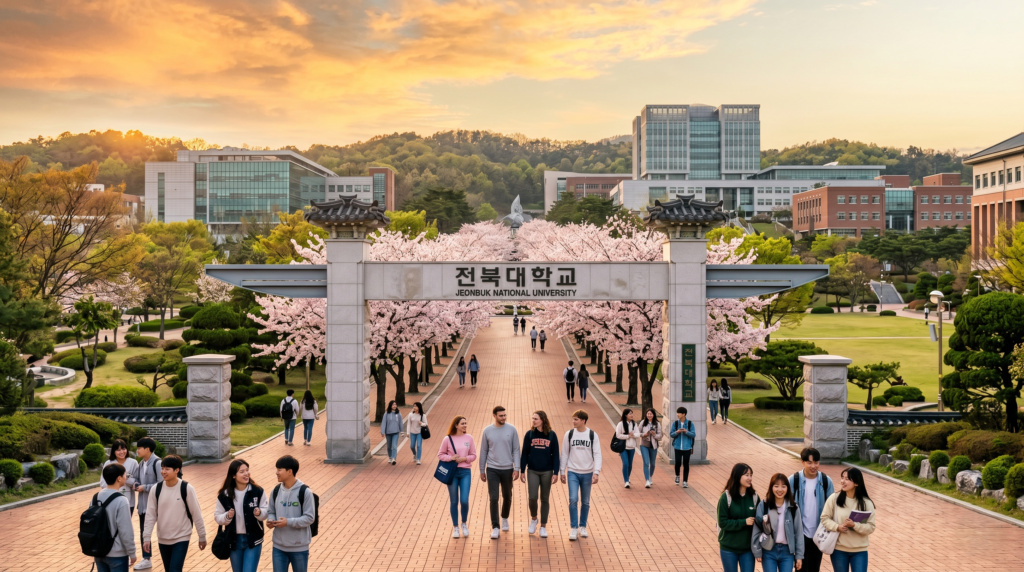
Jeonbuk National University’s main campus in Jeonju is one of the largest university campuses in South Korea, spanning approximately 4.3 square kilometers. For international students accustomed to compact urban campuses, the sheer scale of JBNU is immediately impressive — wide tree-lined pathways, expansive green spaces, and a full ecosystem of academic, residential, and recreational facilities all contained within a single cohesive environment.
Academic facilities include state-of-the-art lecture halls, specialized research laboratories, a central library housing millions of volumes and extensive digital resources, and multiple college-specific buildings equipped with modern learning technology. The university has invested significantly in smart campus infrastructure in recent years, with high-speed internet connectivity, digital learning platforms, and AI-assisted research tools available to all enrolled students.
Beyond academics, JBNU’s campus offers a comprehensive range of student amenities: a large indoor sports complex, outdoor athletic fields, a swimming pool, student cafeterias serving both Korean and international cuisine at affordable prices, convenience stores, banking facilities, a health center, and multiple student lounges and collaborative workspace areas. For international students arriving from countries with smaller or less self-contained university campuses, JBNU’s infrastructure often exceeds expectations.
Student Housing and Accommodation

On-campus dormitory accommodation is available for international students at JBNU and is strongly recommended, particularly for those arriving in Korea for the first time. Living on campus places you within walking distance of all academic buildings, connects you immediately with both Korean and international student communities, and removes the stress of navigating an unfamiliar city while settling into university life.
JBNU operates several dormitory buildings with varying room types, including single, double, and shared rooms. Dormitory fees are reasonable by Korean standards, typically ranging from approximately 300,000 KRW to 600,000 KRW per month depending on room type and facilities. Dormitory applications are usually processed alongside or shortly after admission, and international students are generally given priority placement.
For students who prefer or require off-campus housing, Jeonju offers a range of affordable options. Neighborhoods surrounding the university are well served by local buses and are home to numerous goshiwon (small private rooms with shared facilities), one-room apartments (woollums), and shared housing arrangements popular among university students. Monthly rent for a basic one-room near campus typically falls between 250,000 KRW and 450,000 KRW, considerably cheaper than equivalent accommodation in Seoul.
When securing off-campus housing, international students should be aware of Korea’s jeonse and wolse rental systems. Wolse (monthly rent) is the more practical option for short-term international residents. Reaching out to JBNU’s International Affairs Office or connecting with existing international student communities before arrival can help enormously in finding safe and suitable accommodation.
Clubs, Societies, and Student Life

Student life at JBNU extends far beyond the classroom, and for international students, involvement in campus clubs and societies is one of the most effective ways to build genuine friendships, improve Korean language skills, and experience Korean university culture authentically.
JBNU hosts a wide array of student clubs spanning academic interests, sports, performing arts, cultural exchange, and hobby communities. International students are warmly welcomed and actively encouraged to join. The university’s International Student Association organizes regular events including cultural festivals, group excursions to Jeonju Hanok Village and surrounding attractions, cooking sessions featuring traditional Korean foods, and seasonal celebrations tied to major Korean holidays such as Chuseok and Seollal.
For fans of Korean popular culture, JBNU’s campus is home to active K-pop dance clubs, film appreciation societies, and informal communities of students who bond over shared enthusiasm for Korean dramas, music, and entertainment. These communities offer international students who arrived as hallyu fans a natural and welcoming social entry point into Korean student life — making the transition from fan of Korean culture to active participant in it feel entirely natural.
The university also operates a Buddy Program pairing incoming international students with Korean student volunteers who assist with orientation, campus navigation, administrative procedures, and social integration during the critical early weeks of arrival.
Living in Jeonju as an International Student
Jeonju’s Culture, Food, and Lifestyle

If Seoul is Korea’s beating heart, Jeonju is its soul — and for international students seeking an authentic, unhurried Korean experience, the difference is profound.
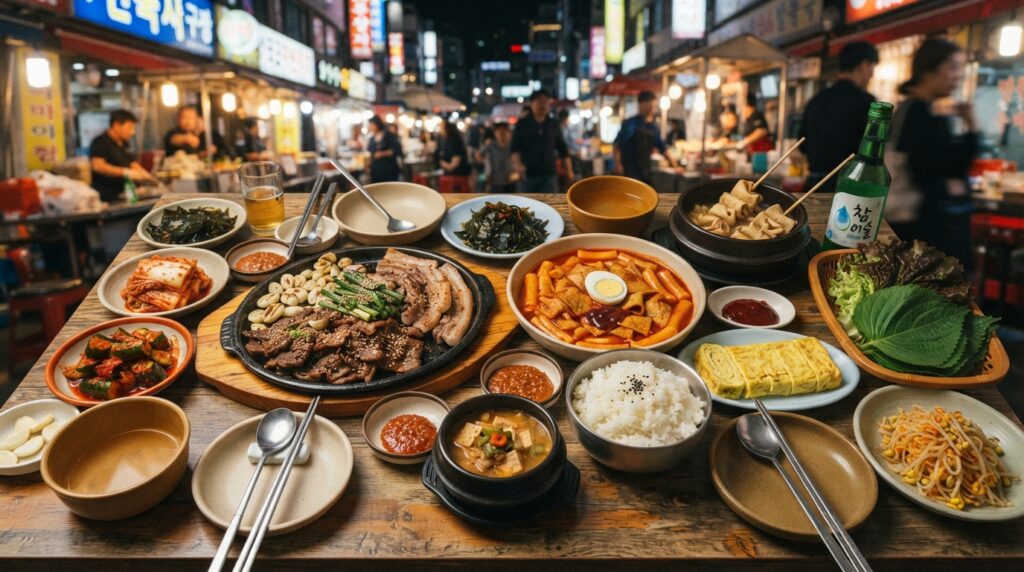
Jeonju moves at a different pace from Korea’s mega-cities. Streets are walkable, neighborhoods are livable, and the city’s deep pride in its cultural heritage creates an atmosphere that feels both distinctly Korean and uniquely welcoming. As a UNESCO Creative City of Gastronomy, Jeonju takes food seriously in a way that few cities in the world can match. The city is the birthplace of Jeonju bibimbap, widely considered the definitive version of Korea’s most iconic dish, and its street food culture — centered around the alleyways of Hanok Village — is a daily source of delight for residents and visitors alike.
For international students, eating well in Jeonju is both easy and affordable. Campus cafeterias serve hot Korean meals for as little as 3,000 to 5,000 KRW. The surrounding neighborhoods offer an endless variety of local restaurants, pojangmacha (street food tents), and cafes. Weekend visits to Hanok Village introduce students to traditional Korean snacks, makgeolli (Korean rice wine), and the convivial food culture that defines Jeonju’s social life.
Beyond food, Jeonju offers rich cultural programming throughout the year. The Jeonju International Film Festival (JIFF), held annually in late April and early May, is one of Korea’s most prestigious film events and draws filmmakers, artists, and cinephiles from across the world. Seasonal festivals celebrating Korean traditional arts, paper crafts (hanji), and music provide international students with recurring opportunities to engage with living Korean cultural traditions.
The overall lifestyle in Jeonju is one of balance — academically serious during the week, culturally rich on weekends, and always grounded in the kind of genuine Korean hospitality (jeong) that international visitors consistently describe as one of the most memorable aspects of their time in Korea.
K-Drama Connections to Jeonju and the Region

For the significant portion of JBNU’s international student community drawn to Korea through K-drama and hallyu, Jeonju and the surrounding North Jeolla Province offer an experience that Seoul simply cannot replicate.
Jeonju Hanok Village, located just a short bus ride from campus, has served as a filming backdrop for numerous Korean productions. Its traditional architecture, stone-paved alleyways, and lantern-lit evenings create the kind of visually rich, emotionally resonant atmosphere that Korean drama cinematography has made globally famous. Walking through the village as a student resident — not a tourist — carries a special kind of meaning for those who first fell in love with Korea through a screen.
The broader North Jeolla region has also featured in various Korean dramas and films celebrating rural Korean life, traditional culture, and historical settings. The region’s natural landscapes — from the dramatic rock formations of Maisan Provincial Park to the coastal beauty of Byeonsanbando National Park — regularly appear in Korean visual media and are easily accessible for JBNU students on day trips or weekend excursions.
Studying at JBNU places international students at the center of a living cultural landscape that is simultaneously a real academic environment and a deeply cinematic Korean world.
Getting Around — Transport and Travel Tips

Navigating daily life in Jeonju as an international student is straightforward once you understand the city’s transport options.
Within Jeonju, the local bus network is the primary mode of public transport. Bus routes connect the JBNU campus to Jeonju Hanok Village, the city center, the KTX station, and most residential neighborhoods. Fares are affordable — typically around 1,200 to 1,500 KRW per journey — and the Kakao Maps app (available in English) makes route planning simple even for new arrivals.
Cycling is also popular among JBNU students, and the city’s relatively flat terrain and dedicated cycling paths make it a practical and enjoyable way to explore. Many students purchase second-hand bicycles affordably through campus notice boards or online Korean marketplaces such as Danggeun Market (Karrot).
For travel beyond Jeonju, the city’s KTX station connects to Seoul’s Yongsan and Suseo stations in under two hours, making weekend trips to the capital easily manageable. Buses to Busan, Gwangju, and other major Korean cities depart regularly from Jeonju’s Express Bus Terminal. The region’s proximity to some of Korea’s most scenic national parks and coastal areas means that students with a spirit of exploration will never run short of weekend destinations.
International Student Support at Jeonbuk National University
International Affairs Office and Student Services

JBNU’s International Affairs Office (IAO) serves as the central hub for all matters related to international student welfare, administration, and academic support. From the moment an international student receives their Letter of Admission, the IAO provides guidance on visa applications, pre-arrival preparation, airport pickup arrangements, and orientation scheduling.
Upon arrival, new international students participate in a structured orientation program covering campus facilities, academic regulations, Korean immigration procedures, health insurance registration, and cultural adjustment resources. Administrative support is available in English for core international student procedures, and staff within the IAO are experienced in assisting students from diverse linguistic and cultural backgrounds.
Academic advising services help international students navigate course selection, credit transfer, and academic progression requirements. For students experiencing academic difficulties, tutorial support and peer mentoring programs are available through college-level student support centers.
JBNU also operates a campus health center providing basic medical services, and all international students enrolled in degree programs are required to register for the Korean National Health Insurance (NHIS), which significantly reduces the cost of medical care during their stay in Korea.
Korean Culture Integration Programs
One of JBNU’s genuine strengths as a destination for international students is its commitment to cultural integration programming. The university recognizes that academic success and personal wellbeing are deeply connected to how comfortably international students adapt to Korean life, and it has developed a range of programs specifically designed to bridge that gap.
Structured cultural programs available to international students include traditional Korean craft workshops, temple stay experiences at nearby Buddhist temples, hanok village guided tours, Korean cooking classes featuring Jeonju’s signature dishes, and taekwondo introduction sessions. These are not one-off events but recurring programs woven into the academic calendar, ensuring that students across all intake years have equal access.
Language exchange programs — commonly known as tandem or language buddy programs — pair international students with Korean peers for regular conversational practice. These partnerships frequently evolve into genuine friendships, providing international students with authentic insights into Korean student life, campus culture, and social norms that no orientation handbook can fully convey.
Seasonal campus events tied to major Korean cultural celebrations — including Chuseok harvest festivals, Lunar New Year activities, and spring cherry blossom events on campus — give international students natural opportunities to participate in Korean traditions alongside their Korean classmates.
Alumni Network and Career Prospects
JBNU’s alumni network spans Korean government, industry, academia, and the arts, and the university’s career center provides enrolled students with access to job fairs, career counseling, internship placement support, and professional development workshops.
For international graduates considering building a career in Korea, the post-graduation landscape is increasingly favorable. Korea’s growing need for internationally educated professionals across sectors including technology, education, healthcare, and global business has created real opportunities for foreign graduates of Korean universities. JBNU’s strong relationships with regional industry partners in North Jeolla Province — particularly in agriculture, biotechnology, and manufacturing — provide practical internship and employment pathways.
International graduates who wish to remain in Korea after completing their degree may apply for the D-10 Job Seeker Visa, which permits a stay of up to one year while actively seeking employment. JBNU’s career center can assist graduating international students in understanding this pathway and preparing competitive applications for Korean employers.
Jeonbuk National University Korea vs. Other Korean Universities
For international students comparing Korean university options, the following overview provides useful context for positioning JBNU within the broader landscape.
| Feature | JBNU | SKY Universities (Seoul, Yonsei, Korea) | Other National Universities |
|---|---|---|---|
| Annual Tuition | Lower (USD 2,300–4,600) | Higher (USD 5,000–10,000+) | Moderate |
| Location | Jeonju — cultural city | Seoul — major metro | Varies |
| Cultural Experience | Deeply authentic Korean | Urban, cosmopolitan | Varies |
| K-Drama Connection | Very High | High | Moderate |
| Campus Size | Very Large | Large | Varies |
| International Support | Growing, dedicated | Well-established | Varies |
| Cost of Living | Low | High | Moderate |
| Research Opportunities | Strong, especially in sciences | Extensive | Moderate to Strong |
| English-Medium Programs | Expanding | More extensive | Limited |
The ideal JBNU student is someone who values cultural depth alongside academic quality, prefers a livable city environment over a high-pressure metropolitan setting, and wants to experience Korea beyond the Seoul bubble. If your vision of studying in Korea includes walking through a real hanok village on a Tuesday afternoon, sharing homemade kimchi with a Korean classmate, and attending a traditional music performance on a Friday evening — all while pursuing a credible academic qualification — JBNU is likely your best match.
Practical Tips Before You Enroll
Visa Application for Studying in Korea
International students accepted to a degree program at JBNU will need to apply for a D-2 Student Visa at the Korean embassy or consulate in their home country. The key documents required for a D-2 visa application typically include your JBNU Letter of Admission, a completed visa application form, a valid passport, passport-sized photographs, proof of financial ability to support your studies and living expenses, and your academic transcripts.
Processing times vary by country but generally range from one to four weeks. It is advisable to begin your visa application as soon as you receive your Letter of Admission to avoid any delays that could affect your enrollment. Upon arrival in Korea, students must register with the local immigration office within 90 days to complete their alien registration process and receive an Alien Registration Card (ARC), which functions as your official ID document in Korea.
What to Pack and Prepare
Jeonju experiences all four seasons distinctly. Summers (June–August) are hot and humid, with temperatures regularly exceeding 30°C. Winters (December–February) are cold and dry, with temperatures dropping below freezing and occasional snowfall. Spring and autumn are mild and exceptionally beautiful — cherry blossoms in April and golden foliage in October make these arguably the finest seasons to experience Jeonju.
Pack clothing appropriate for all seasons, but be aware that Korean fashion retail is excellent and affordable, so supplementing your wardrobe after arrival is easy and enjoyable. Essential items to bring include sufficient quantities of any prescription medications (with documentation), your academic certificates and personal documents in both original and authenticated copy form, a universal power adapter (Korea uses Type C/F plugs, 220V), and any comfort items from home that will ease the initial adjustment period.
In terms of digital preparation, download these apps before or immediately upon arrival: Naver Maps (more accurate than Google Maps for Korean addresses), KakaoTalk (Korea’s primary messaging platform — virtually everyone uses it), Papago (Naver’s Korean translation app), and the Kakao T app for booking taxis. These tools will make daily life significantly smoother from day one.
Cultural Etiquette for International Students
Navigating Korean academic and social culture respectfully goes a long way toward building positive relationships on and off campus. A few key cultural points are worth understanding before you arrive.
Korean classroom culture places high value on respect for professors. Arriving on time, listening attentively, and addressing faculty with appropriate honorifics (교수님, gyosunim) are baseline expectations. Actively participating in class is appreciated, but open disagreement with a professor in front of the group is generally avoided — questions and concerns are more appropriately raised after class or during office hours.
Socially, age and seniority play an important role in Korean interpersonal dynamics. The concept of sunbae (senior) and hoobae (junior) structures relationships within university life, and understanding this hierarchy — without feeling constrained by it — helps international students integrate more comfortably. Korean students are typically warm and curious toward international peers, and showing genuine interest in Korean culture, language, and food is one of the fastest ways to build lasting friendships.
Shared meals are central to Korean social life, and the dining culture at JBNU — whether in the cafeteria, a local restaurant, or a student’s home — is an important space for relationship building. Accepting food invitations, trying unfamiliar dishes with an open attitude, and participating in the communal aspects of Korean meal culture will consistently open social doors throughout your time at JBNU.
Frequently Asked Questions
Is Jeonbuk National University good for international students?
Yes. JBNU has a dedicated International Affairs Office, structured cultural integration programs, on-campus dormitories with international student priority placement, and a growing range of English-medium courses. Its location in Jeonju — a culturally rich, affordable, and welcoming city — makes it particularly well suited to international students seeking an authentic Korean experience alongside quality academic study.
What is Jeonbuk National University Korea ranked?
JBNU consistently ranks among the top national universities in South Korea and has appeared in QS World University Rankings. It is especially recognized for its strengths in agricultural sciences, veterinary medicine, engineering, and Korean studies. Rankings vary by subject area and year, so checking the most current QS or Times Higher Education data is recommended.
Does Jeonbuk National University offer programs in English?
Yes, and the number of English-medium instruction (EMI) courses is expanding. Graduate programs in particular offer increasing English-language supervision and coursework options. Prospective students should confirm English-medium availability directly with their target department, as provision varies by college.
How much does it cost to study at Jeonbuk National University?
Annual tuition for international students generally ranges from approximately 3,000,000 KRW to 6,000,000 KRW (roughly USD 2,300 to USD 4,600), depending on the program. Combined with Jeonju’s low cost of living, JBNU represents one of the most affordable quality higher education options in South Korea.
Is Jeonju a good city for international students?
Absolutely. Jeonju offers a high quality of life at a low cost, a deeply rich cultural environment, excellent food, strong community spirit, and easy access to the rest of Korea via KTX. It is widely regarded by international students as one of the most livable and culturally rewarding cities in Korea — especially for those drawn to authentic Korean culture beyond Seoul.
What scholarships are available at Jeonbuk National University Korea?
Key scholarships include the Korean Government Scholarship Program (KGSP/GKS), JBNU’s own institutional scholarships for international students, and departmental research funding for graduate students. Eligibility and availability vary, and applicants are advised to contact JBNU’s International Affairs Office and the NIIED website for the most current scholarship information.
How do I apply to Jeonbuk National University as a foreign student?
Applications are submitted through JBNU’s official online admissions portal. Required documents include authenticated transcripts, a valid passport, recommendation letters, a personal statement, and relevant language proficiency scores. JBNU accepts applications for both Spring (March) and Fall (September) intakes, with deadlines typically falling several months prior to each semester start date.
Jeonbuk National University Korea offers something increasingly rare in the world of international higher education: a genuine convergence of academic excellence, cultural authenticity, and everyday affordability. Nestled in the heart of Jeonju — Korea’s undisputed cultural capital — JBNU gives international students the chance to pursue a credible, research-active university education while living inside one of the most historically and culturally significant cities on the Korean peninsula.
For K-drama fans, Korean culture enthusiasts, and global scholars alike, the appeal of JBNU goes well beyond rankings and tuition tables. It lies in the experience of walking to class past centuries-old hanok rooftiles, sharing a bowl of the world’s finest bibimbap with new Korean friends, attending a traditional music performance in the same city where the Joseon Dynasty was born, and building a life — however temporarily — in a place that feels unmistakably, beautifully, authentically Korean.
If you are researching where to study in Korea, JBNU deserves serious consideration. Visit the official Jeonbuk National University international admissions page to explore current programs, scholarship opportunities, and application deadlines — and take the first step toward one of the most rewarding study abroad experiences Korea has to offer.