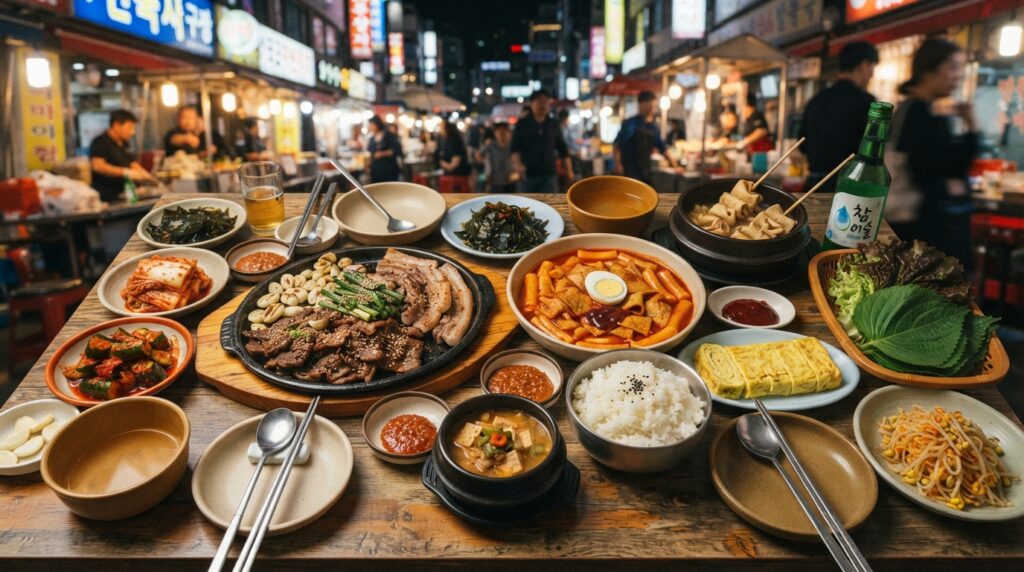
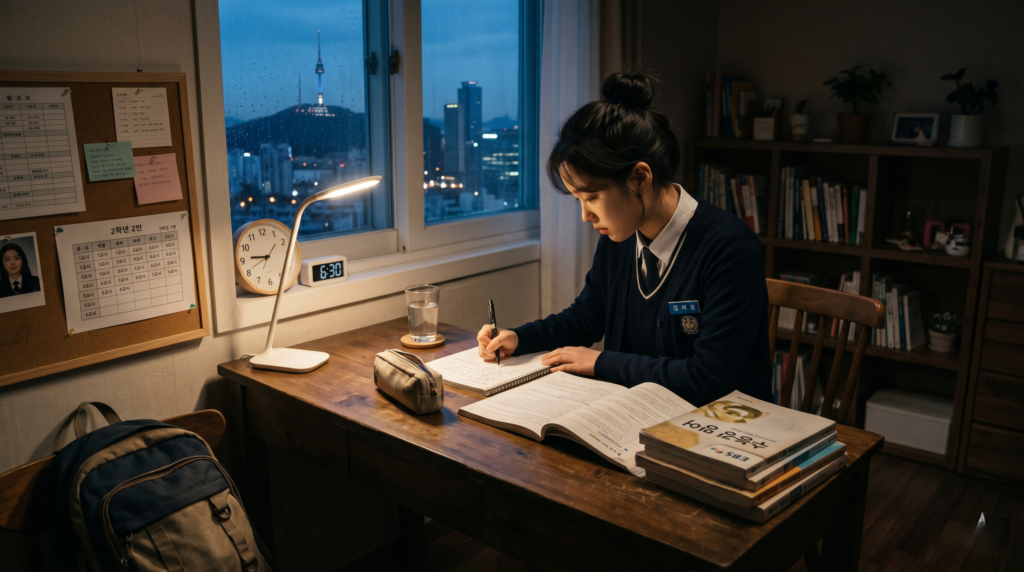
While most teenagers around the world are still fast asleep, millions of Korean students are already dressed in their uniforms, backpacks loaded, heading out the door before the sun has fully risen. And when their international peers are winding down for the evening, many of these same students are still bent over their desks — in classrooms, hagwons, or late-night study cafés — with hours left to go. If you have ever wondered about school times in South Korea and what a Korean student’s day truly looks like beyond the polished scenes of your favorite K-drama, you are in exactly the right place.
South Korea consistently ranks among the top nations in global education performance, regularly scoring near the top in PISA (Programme for International Student Assessment) results. But behind those impressive numbers lies a daily reality that is as fascinating as it is demanding. Understanding Korean school schedules is not just an academic exercise — it is a window into one of the most education-driven cultures on the planet, one that has shaped generations of students, inspired countless K-drama storylines, and sparked international debate about the true cost of academic excellence.
In this complete guide, we will walk you through everything — from what time Korean elementary schoolers start their day, to the grueling schedules of high school students preparing for the all-important Suneung exam. Whether you are a K-drama fan curious about what life is really like for those uniformed students on screen, a parent researching global education systems, or simply someone fascinated by Korean culture, this article has you covered.
Understanding the South Korean School System Before We Look at the Clock
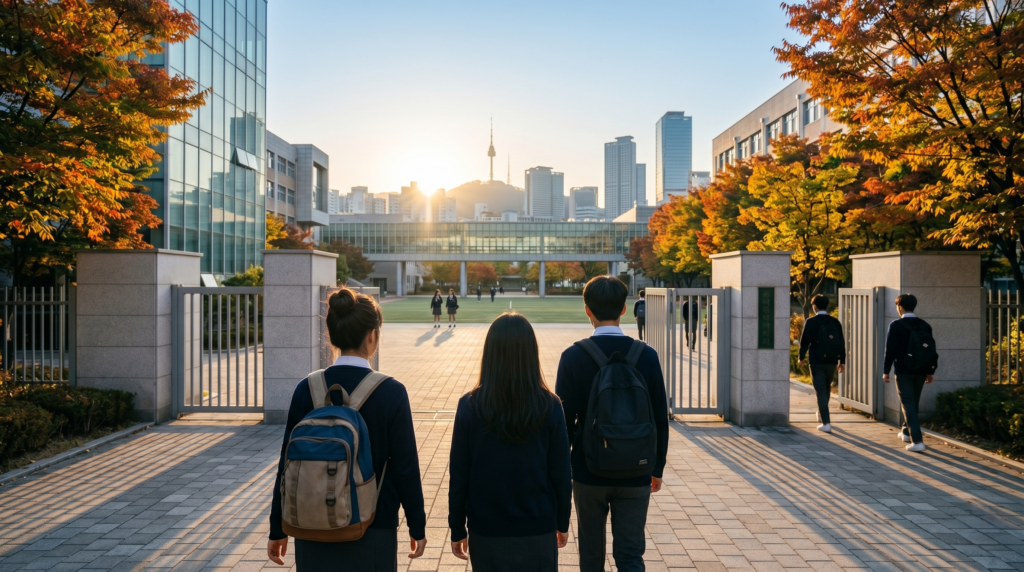
Before diving into the specific hours, it helps to understand the structure that shapes those hours. South Korea’s education system is organized into three core levels, each with its own rhythm, expectations, and time commitments.
The Three Tiers of Schooling
Elementary School (초등학교 / Chodeung Hakgyo) covers Grades 1 through 6, enrolling children from approximately age 6 to 12. This is the most relaxed tier in terms of academic pressure, with a curriculum that balances foundational subjects with creative activities, physical education, and moral education.
Middle School (중학교 / Junghakgyo) spans Grades 7 through 9, covering ages 12 to 15. This is a transitional period where academic expectations begin to rise noticeably. Students start encountering more complex subjects, and many begin attending private tutoring academies — known as hagwons — for the first time.
High School (고등학교 / Godeung Hakgyo) covers Grades 10 through 12, ages 15 to 18. This is where Korean student life transforms dramatically. The pressure of university entrance exams dominates every aspect of the schedule, and school times extend far beyond what most international students would recognize as a normal academic day.
Why School Structure Matters for Understanding School Times
South Korea operates a compulsory education system through the end of middle school. High school is not legally compulsory, yet enrollment rates consistently exceed 95%, according to data from the Korean Ministry of Education. This near-universal high school attendance is driven by a deeply ingrained cultural belief: that academic credentials, particularly university placement, determine life outcomes.
At the center of this belief is the Suneung (수능) — the College Scholastic Ability Test — a single-day national exam taken in November of a student’s final high school year. The Suneung’s results carry enormous weight in determining which university a student can attend, which in turn influences career prospects, social status, and even marriage prospects in some traditional circles. This singular pressure point is the reason Korean school times — especially at the high school level — are among the longest and most intense in the world.
According to the OECD, South Korean students average more learning hours per year than students in almost any other developed nation. Understanding that context makes the schedule breakdowns below not just informative, but genuinely eye-opening.
School Times in South Korea — What Time Does the School Day Actually Start and End?
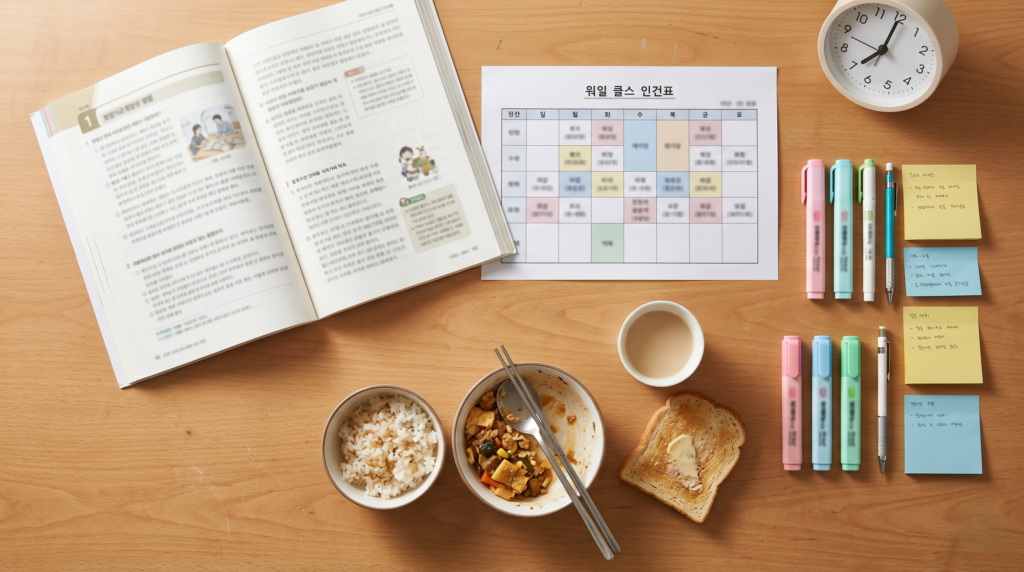
This is the heart of what most readers are searching for, so let us break it down clearly and honestly, level by level.
Elementary School Hours
For South Korea’s youngest students, the school day is comparatively manageable. Most elementary schools begin between 8:00 AM and 9:00 AM, with the exact start time varying by school and district. Classes typically conclude between 1:00 PM and 3:00 PM, depending on the grade level — younger students in Grades 1 and 2 often finish earlier than their older elementary peers.
The curriculum at this level includes Korean language, mathematics, science, social studies, moral education, arts, music, and physical education. The tone is relatively nurturing, and after-school hours, while sometimes supplemented with extracurricular activities or introductory hagwon sessions, are far less structured than at higher levels.
For many elementary students, afternoons are spent at a 돌봄 교실 (Dolbom Gyosil) — a school-based after-care program designed to support working parents — or at beginner-level English or art academies. It is the calmest chapter of a Korean student’s academic journey, and it does not last long.
Middle School Hours
The shift into middle school brings a noticeable change in the structure and length of the school day. Most middle schools in South Korea operate from approximately 7:30 AM to 8:30 AM start times, with the school day ending around 4:00 PM to 5:00 PM.
However, the official end of the school day is only the beginning for many students. A growing number of middle schoolers begin attending hagwons after school, often for two to three subjects per week. Evening study can extend the academic day to 8:00 PM or 9:00 PM for students enrolled in multiple academies.
Middle school also introduces students to club activities, student council participation, and competitive preparation for high school entrance. In Korea’s major cities — Seoul, Busan, Daegu — the competition for spots in prestigious high schools adds academic pressure to the middle school years that would be unrecognizable in most Western contexts.
High School Hours — The Intense Reality
Here is where Korean school times truly diverge from global norms, and where the stories you may have heard begin to make complete sense.
A typical Korean high school day begins between 7:00 AM and 7:30 AM. Regular instruction continues through the afternoon, with classes officially ending around 4:00 PM to 5:00 PM. But for the vast majority of high school students — particularly in their second and third years — the day is nowhere near finished.
Most high schools implement a program called 야간자율학습 (Yagan Jasup), which translates loosely as “evening self-directed study.” Despite the word “self-directed,” this is typically a structured, school-supervised study session that runs from approximately 5:00 PM to 9:00 PM or 10:00 PM. Attendance, while officially voluntary in many schools, is strongly encouraged — and in practice, socially and institutionally expected.
Add to this the hours spent at hagwons after Yagan Jasup ends, and many Korean high school students are not returning home until 11:00 PM or midnight. They will wake up again at 6:00 AM or earlier the next morning, and the cycle repeats.
Total daily study-related hours for a Korean high school student: 15 to 16 hours.
Here is a clear summary of school times across all three levels:
| School Level | Start Time | Official End Time | With Evening Study |
|---|---|---|---|
| Elementary | 8:00–9:00 AM | 1:00–3:00 PM | 3:00–6:00 PM (optional) |
| Middle School | 7:30–8:30 AM | 4:00–5:00 PM | Up to 8:00–9:00 PM |
| High School | 7:00–7:30 AM | 4:00–5:00 PM | Up to 10:00 PM–midnight |
A Minute-by-Minute Look at a Korean Student’s Daily School Schedule
Numbers on a table tell part of the story. But to truly understand school times in South Korea, it helps to walk through a day in the life of a Korean high school student — the experience that defines the national conversation about education culture.
Morning Routine — Before the Bell Rings
Most Korean high school students set their alarms for 6:00 AM to 6:30 AM. After a quick breakfast — often prepared by a parent, sometimes skipped entirely due to time constraints — students dress in their school uniforms and begin their commute.
South Korea has excellent public transportation, and many students rely on buses or the subway to reach school. The morning commute is itself a study session for many — textbooks open on the subway, vocabulary flashcards in hand, earphones playing recorded lectures.
By 7:00 AM to 7:30 AM, students are in their homeroom classrooms. Morning homeroom typically lasts 10 to 15 minutes and includes attendance, school announcements, and teacher guidance. In many schools, students are expected to engage in brief self-study even before the first official period begins.
Class Periods and Structure
A standard Korean school day consists of six to eight class periods, each lasting 45 to 50 minutes, with short breaks of 5 to 10 minutes between them. Core subjects dominate the schedule: Korean language, mathematics, and English are considered the “Big Three” and receive the most instructional time, especially as students approach the Suneung.
Additional subjects include science (physics, chemistry, biology, earth science), social studies, Korean history, a second foreign language (commonly Chinese, Japanese, or German), moral education, and physical education. Physical education, despite its importance for student wellbeing, is often one of the first subjects to be deprioritized as exam pressure mounts in the third year of high school.
One uniquely Korean element of the school day is 도덕 (Dodeok) — Moral Education — a subject that addresses ethics, citizenship, and national identity. It reflects the Confucian values that continue to underpin South Korean social structure and educational philosophy.
Lunch Break — A Cultural Ritual
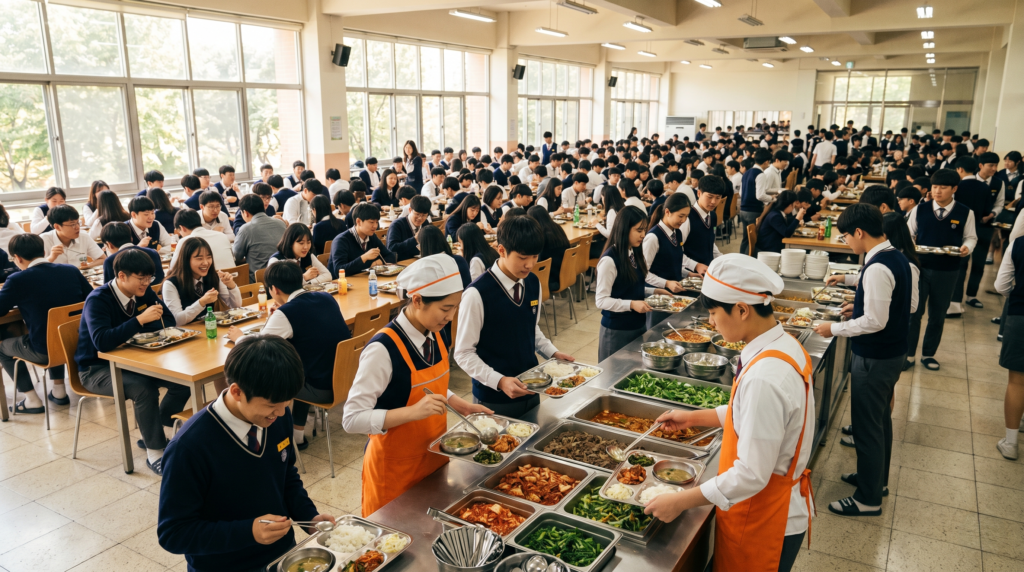
The lunch break in a Korean school typically lasts 30 to 50 minutes and is one of the most socially significant parts of the day. Most Korean schools operate a centralized cafeteria system called 급식 (Geupsik), where nutritionally balanced hot meals are prepared on-site and served to all students.
Korean school lunches are legendary for their quality compared to many other countries. A typical meal includes rice, soup (often a hearty doenjang jjigae or kimchi jjigae), two to three side dishes (banchan), and kimchi. The meals are nutritionally regulated by the government, and schools employ licensed nutritionists to oversee menus.
What surprises many international observers is that students are responsible for serving and cleaning up their own meals. Rotating groups of students set tables, serve food, and clean the cafeteria — a practice rooted in communal responsibility and often depicted in K-dramas with great authenticity.
Afternoon Classes and Homeroom
After lunch, students return to afternoon instruction for another three to four periods. The post-lunch hours are widely acknowledged as the hardest to get through — students are fighting the natural post-meal energy dip while being expected to absorb complex material.
One of the most distinctive features of Korean school culture that happens in the afternoon is 청소시간 (Cheongso Sigan) — cleaning time. Every day, typically at the end of the official school day, students are assigned cleaning duties. They sweep floors, wipe down desks, clean windows, and tidy hallways. There are no janitors responsible for daily classroom cleaning; that responsibility belongs to the students themselves. This practice teaches collective ownership and discipline, and it is one of those authentic cultural details that K-drama fans often recognize as genuinely Korean.
After School Isn’t Over — The World of Hagwons (학원)
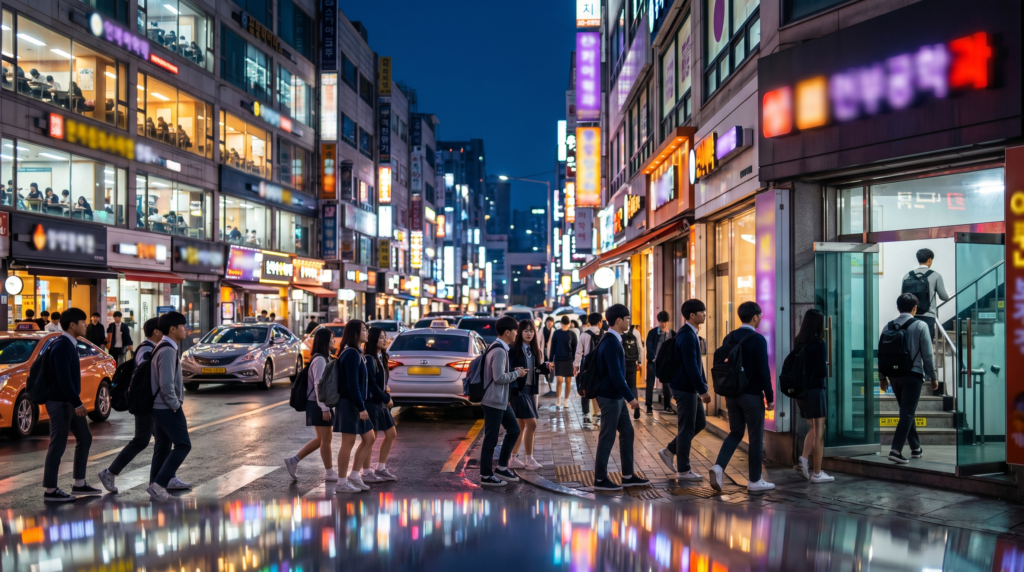
If the official school day sounds intense, what comes after school for most Korean students is equally — if not more — demanding. To truly understand school times in South Korea, you cannot ignore the hagwon system. It is not a footnote to the Korean school day; for millions of students, it is an essential second shift.
What Is a Hagwon?
A hagwon (학원) is a private, for-profit tutoring academy where students receive supplementary instruction outside of regular school hours. Hagwons exist for virtually every subject imaginable — mathematics, English, science, Korean language arts, history — but also extend into music, art, coding, taekwondo, swimming, and even speech and debate.
South Korea is home to more than 100,000 registered hagwons, according to data from the Korean Educational Development Institute. In densely populated urban areas like Seoul’s Gangnam district — famously immortalized in PSY’s global hit and equally famous among Korean parents as the epicenter of elite private education — entire city blocks are lined with hagwon buildings, each one housing dozens of academies across multiple floors.
The hagwon industry in South Korea generates billions of dollars annually and represents one of the most striking examples of how deeply education investment is embedded in Korean family values. For many parents, enrolling their child in multiple hagwons is not considered excessive — it is considered responsible parenting.
Typical Hagwon Schedule
Most hagwons operate in the after-school window, typically running sessions from 5:00 PM through to 10:00 PM. A student enrolled in three hagwons per week — which is entirely common — might attend an English academy on Monday and Wednesday evenings, a mathematics academy on Tuesday and Thursday, and a science academy on Friday. Each session typically runs 1.5 to 2 hours.
Recognizing the physical and psychological toll of late-night study on minors, the South Korean government introduced regulations mandating that hagwons must cease operations by 10:00 PM. However, enforcement of this curfew has historically been inconsistent, and reports of hagwons operating past midnight — particularly during exam season — are not uncommon.
For third-year high school students (the equivalent of 12th grade) in the months leading up to the Suneung, hagwon attendance can become almost round-the-clock. Some students attend early-morning sessions before school, regular school, Yagan Jasup in the evening, and then a late hagwon session — creating a daily routine that leaves fewer than six hours for sleep.
The Financial and Emotional Cost
The hagwon system carries a significant financial burden for Korean families. According to Statistics Korea, the average Korean household spends a substantial portion of household income on private education (사교육비 / Sagyo-yukbi). Families with children in high school typically spend the most, with some urban families in Seoul allocating the equivalent of several hundred to over a thousand US dollars per month on hagwon fees alone.
This creates a troubling social divide. Wealthier families in cities like Seoul and Busan can afford to enroll their children in multiple premium hagwons, giving them a measurable academic advantage. Students from lower-income households or rural areas face a structural disadvantage that critics argue undermines the very meritocracy the Korean education system claims to uphold.
The emotional toll is equally significant. South Korea has consistently recorded some of the highest student stress levels among OECD nations. Surveys of Korean teenagers regularly cite academic pressure as the leading source of stress, surpassing family problems, social relationships, and concerns about physical appearance. Sleep deprivation is endemic — studies have found that many Korean high school students sleep fewer than six hours per night on school days, far below the eight to ten hours recommended by pediatric health organizations.
Expert Insight: The OECD’s Education at a Glance report has repeatedly highlighted South Korea as a nation where high academic achievement coexists with notably low student well-being scores — a paradox that Korean educators, policymakers, and parents continue to grapple with.
How the College Entrance Exam (수능) Reshapes School Times in South Korea
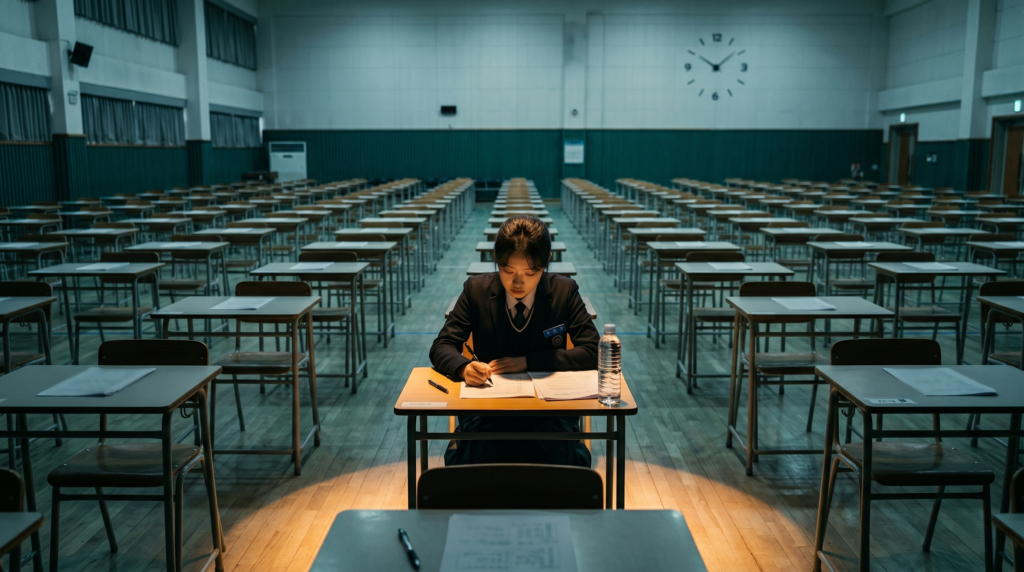
No discussion of Korean school times is complete without examining the gravitational force that warps the entire academic calendar: the Suneung (수능), formally known as the College Scholastic Ability Test (CSAT).
What Is the Suneung?
Held every year on a Thursday in mid-November, the Suneung is a single, high-stakes examination that tests students across Korean language, mathematics, English, a choice of social or science electives, a second foreign language, and vocational education. The exam lasts approximately eight hours, broken into timed sections throughout the day.
The Suneung is not merely a school event — it is a national occasion. On exam day, the South Korean government reschedules military training exercises to minimize noise disturbances. Flights are grounded or rerouted during the English listening comprehension section to prevent audio interference. Police officers are stationed near exam centers to escort late-arriving students. Employees at companies across the country are asked to arrive at work an hour later so that traffic is reduced, allowing exam-takers unobstructed passage to their testing centers.
Parents and younger siblings — and sometimes entire neighborhoods — gather outside exam halls to pray, bow, and offer encouragement. Buddhist temples and Christian churches hold special all-night prayer sessions for students in the weeks leading up to exam day. The national anxiety surrounding the Suneung is unlike anything seen in most other education systems worldwide.
How 12th Graders’ Schedules Intensify
For students in their final year of high school — referred to as 고3 (Go-Sam), meaning “third-year high schooler” — the months preceding the November Suneung represent the most intense period of their academic lives.
School start times remain fixed at 7:00 AM to 7:30 AM, but self-study sessions extend longer and become far more structured. Many schools require Go-Sam students to participate in weekend study programs. 독서실 (Dokseosil) — private self-study rooms available for hourly rental — become second homes for many students. These quiet, cubicle-style study spaces operate 24 hours a day in many urban areas, and it is not unusual to find students studying there past midnight, particularly in the weeks before the exam.
Some students, in the most extreme cases, essentially live at school or study facilities during the final push. Schools may provide dinner in the cafeteria to accommodate students staying for extended Yagan Jasup sessions. The social life of a Go-Sam student is, for all practical purposes, suspended until after November.
The Cultural Weight on Students
The pressure is not merely academic — it is deeply personal and social. In Korean culture, university prestige carries enormous weight in determining social identity, career trajectory, and even romantic prospects. The top three universities — Seoul National University (SNU), Yonsei University, and Korea University, collectively known as SKY universities — are the aspirational targets for the country’s highest-achieving students, and competition for places is fierce.
This cultural weight means that the stress of the Suneung extends beyond the individual student into the entire family system. Parents adjust their work schedules, restrict household noise, and modify family routines to support their child’s study. Siblings are asked to be quiet. Televisions go unwatched. The family’s emotional climate during Go-Sam year is often described by Korean adults as one of the most stressful periods of their lives — and they were not even the ones taking the exam.
To its credit, the South Korean government has expanded mental health support within schools in recent years. School counselors (전문상담교사) are now required in schools above a certain size, and the Ministry of Education has launched national campaigns encouraging students to seek help for stress and anxiety. But many experts argue that these support systems are treating symptoms rather than addressing the structural causes.
K-Drama School Life vs. Real School Times in South Korea
For millions of international fans, K-dramas have been the primary window into Korean school culture. Series like True Beauty, School 2015, Reply 1988, Extraordinary You, and Boys Over Flowers have painted vivid, emotionally resonant pictures of Korean student life. But how accurately do they reflect the real experience?
What K-Dramas Get Right
To their credit, K-dramas do capture several authentic elements of Korean school life with impressive accuracy.
Uniform culture is depicted faithfully — Korean students at both middle and high school level wear standardized uniforms, and the specific design often identifies which school they attend. The hierarchy of school years, the formality of addressing older students with honorifics, and the social dynamics of classroom seating are all authentically rendered.
Exam pressure is a recurring dramatic theme. Characters visibly stressed about upcoming exams, the social consequences of poor academic performance, and the weight of parental expectations all reflect real cultural truths. The scenes of students studying late into the night, surrounded by textbooks and energy drinks, are not exaggerated for dramatic effect — they are documentary-accurate.
School cafeteria culture — the lunch scenes, the seating politics, the communal meal experience — is another area where dramas tend to be genuine. The rotating food service duties, the quality of school meals, and the social significance of who you sit with at lunch are all real features of Korean school life.
Club activities and school events such as sports days (체육대회 / Cheyuk Daehoe) and school festivals (축제 / Chukje) are also authentically portrayed. These events are genuine highlights in an otherwise intense academic calendar, and the joy and release they represent for students is real.
What K-Dramas Glamorize or Miss
Where K-dramas fall short is in portraying the sheer relentlessness of a Korean student’s schedule. A drama heroine like Lim Ju-gyeong in True Beauty manages to maintain a complex social life, a romantic storyline, multiple friendships, and a secret online persona — all while ostensibly attending a Korean high school. In reality, the average Korean high school student has virtually no free time on weekdays.
The 10 PM hagwon exit, the 6 AM alarm, the weekend study sessions, the sleep deprivation, and the psychological weight of Suneung preparation are rarely shown in full. Dramas compress or skip the grinding daily reality because, frankly, it does not make for entertaining television. But for viewers trying to understand what Korean student life is actually like, this omission is significant.
Romance, too, is dramatically amplified. While teenage relationships certainly exist in Korean schools, the extensive time and emotional energy devoted to romantic storylines in dramas would be essentially impossible to sustain alongside a real Korean student’s schedule.
🎬 K-Drama Reality Check: In True Beauty, the lead character spends considerable time after school in casual social settings. In reality, her schedule would likely include two to three hagwon sessions per week, Yagan Jasup until 9 PM, and weekend self-study — leaving almost no time for the leisurely after-school hangouts the drama depicts.
The gap between K-drama fantasy and Korean student reality is not a criticism of the dramas — it is simply a reminder that they are works of fiction, crafted for entertainment. But for fans who want to truly appreciate and respect Korean student culture, understanding the real school times in South Korea adds a layer of depth and empathy that makes the dramas even more meaningful.
How School Times in South Korea Compare to Other Countries
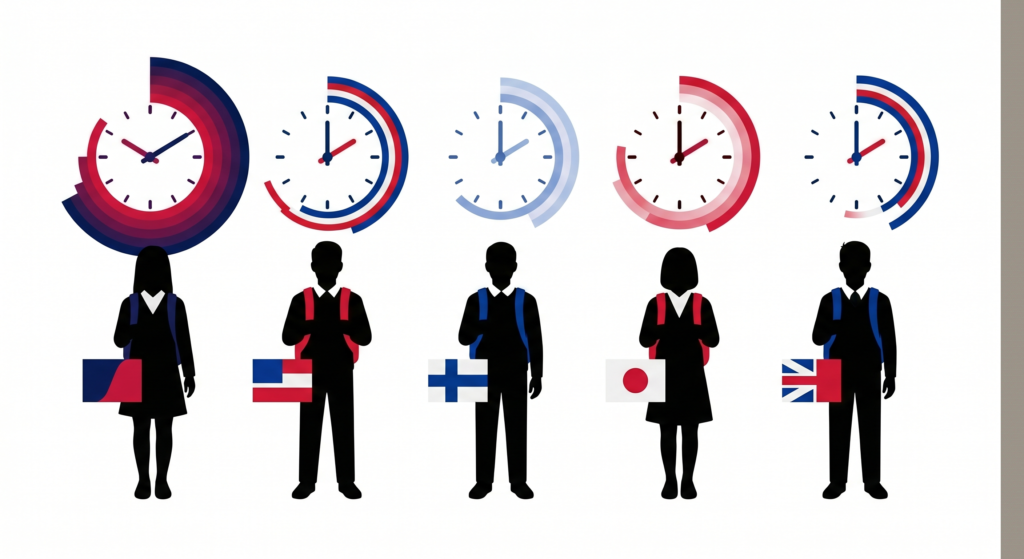
One of the most striking ways to appreciate the intensity of South Korea’s school culture is to place it in global context. When Korean school times are compared with those in other developed nations, the contrast is stark.
| Country | Avg. School Start | Avg. School End | Evening Study | Total Daily Hours |
|---|---|---|---|---|
| South Korea | 7:00–7:30 AM | 4:00–5:00 PM | Until 10 PM–midnight | 14–16 hours |
| Japan | 8:00–8:30 AM | 3:30–6:00 PM | Some hagwon equivalent | 8–10 hours |
| China | 7:30–8:00 AM | 5:00–6:00 PM | Common in urban areas | 10–12 hours |
| USA | 7:30–8:30 AM | 2:30–3:30 PM | Mostly optional | 6–7 hours |
| Finland | 9:00–9:30 AM | 1:00–2:00 PM | Rare | 4–6 hours |
| UK | 8:30–9:00 AM | 3:00–3:30 PM | Mostly optional | 6–7 hours |
| Germany | 8:00–8:30 AM | 1:00–3:00 PM | Some tutoring | 5–7 hours |
The comparison is illuminating. Finland — consistently ranked among the world’s top education systems — sends students to school later, finishes earlier, assigns less homework, and produces graduates who score highly on international assessments with a fraction of the study hours Korean students invest.
This comparison has fueled an ongoing global debate: is South Korea’s academic performance achieved because of its extreme school hours, or in spite of the human cost they carry? Korean education scholars and international researchers continue to study this question, and the answers are nuanced. South Korea’s high PISA scores in mathematics, science, and reading are real and impressive. But so are its rankings in student stress, unhappiness, and youth suicide rates — data points that do not appear in the same headlines as the academic achievements.
It is also worth noting that countries like Japan and China operate educational cultures with some similarities to South Korea’s — including private tutoring industries and significant after-school study expectations. The difference is largely one of degree: Korea’s system sits at the extreme end even within East Asia’s already demanding educational landscape.
Is South Korea Changing Its School Times? Latest Education Reforms
Awareness of the costs of South Korea’s intensive school schedule has grown steadily, both within the country and internationally. In response, the South Korean government and educational authorities have introduced a series of reforms over the past two decades — with mixed results.
Government Pushback Against Long Hours
Saturday schooling, once a universal feature of Korean education, was phased out through a gradual reform process completed in the early 2000s. Korean students now have a standard five-day school week, a change that was welcomed by students and families alike — though many schools quietly maintained semi-mandatory Saturday programs through alternative scheduling.
The hagwon curfew regulation — requiring all private academies to close by 10:00 PM — was introduced specifically to address the health and sleep impact of late-night study on minors. Enforcement has improved in recent years, with local education offices conducting regular inspections. However, the pressure driving students to hagwons has not diminished, meaning that families and students have simply adapted their scheduling rather than reducing overall study hours.
Research on delayed school start times — modeled on studies from the United States and Europe showing that adolescents’ circadian rhythms make early morning learning biologically suboptimal — has gained traction in Korean policy circles. Several pilot programs in Korean cities have experimented with starting high school at 9:00 AM rather than 7:30 AM, with promising early results in student alertness and well-being. National implementation, however, remains a work in progress.
The Free Semester Program (자유학기제)
One of the most significant structural reforms in recent Korean education is the Free Semester Program (Jayu Hakgije), introduced nationally for middle school students in 2016. Under this program, students in one designated semester are freed from formal examinations and standardized testing. Instead, they engage in career exploration activities, project-based learning, arts, sports, and community engagement.
The Free Semester completely transforms the school schedule for that period. Students arrive at normal times but spend afternoons in workshops, field trips, and self-directed projects rather than exam preparation. The intent is to give Korean students a brief but meaningful experience of learning without the weight of high-stakes assessment.
Reception has been broadly positive among students and many educators. However, critics note that once the Free Semester ends, the academic pressure resumes with equal or greater intensity as students work to make up perceived lost ground before high school.
Student Mental Health Initiatives
Perhaps the most culturally significant shift in Korean education policy over the past decade has been the growing acknowledgment of student mental health as a legitimate policy concern. For generations, the prevailing cultural attitude was that academic hardship was a necessary and character-building rite of passage. That attitude is changing.
The Korean Ministry of Education has significantly expanded the school counselor program, making it mandatory for schools above a certain enrollment size to employ licensed school counselors. Mental health screening programs, anonymous counseling hotlines, and peer support programs have been introduced at both middle and high school levels.
Youth mental health data from the Korean Ministry of Health and Welfare reflects a sobering picture that has accelerated these reforms. Korean adolescents report elevated rates of depression and anxiety compared to their peers in other developed nations, and academic stress is consistently identified as the primary contributing factor. The government’s response, while still evolving, represents a meaningful acknowledgment that a school system optimized purely for academic output at the expense of student well-being is not, in the long run, serving its students well.
Frequently Asked Questions About School Times in South Korea
What time does school start in South Korea?
Most Korean schools begin between 7:00 AM and 8:30 AM, depending on the level. Elementary schools typically start between 8:00 and 9:00 AM, middle schools between 7:30 and 8:30 AM, and high schools as early as 7:00 to 7:30 AM.
What time does school end in South Korea?
Regular classes typically end between 4:00 PM and 5:00 PM across all levels. However, high school students often remain at school for evening self-study sessions (Yagan Jasup) until 9:00 PM or 10:00 PM, and many then attend hagwons until the government-mandated 10:00 PM closing time.
Do Korean students go to school on Saturdays?
Mandatory Saturday schooling was officially abolished in the early 2000s. However, some schools — particularly competitive high schools — maintain optional or semi-mandatory Saturday programs, and many students attend hagwons on Saturdays regardless.
How many hours a day do Korean students study?
Elementary students typically engage in four to six hours of school-related activity per day. Middle school students average eight to ten hours when including hagwons. High school students, especially in their final year, routinely spend 15 to 16 hours per day in study-related activity.
What is Yagan Jasup and is it mandatory?
Yagan Jasup (야간자율학습) is an evening self-study program conducted at school, typically running from 5:00 PM to 9:00 or 10:00 PM. While officially designated as voluntary in most schools, social and institutional expectations mean that the vast majority of high school students participate. Opting out is technically possible but practically uncommon.
Is the intense school schedule shown in K-dramas accurate?
K-dramas accurately capture elements like uniform culture, exam pressure, cafeteria life, and the social dynamics of Korean schools. However, they consistently underrepresent the true length and exhaustion of a Korean student’s daily schedule. The after-school social lives depicted in many dramas would be largely impossible to maintain alongside a realistic Korean high school schedule.
Final Thoughts — The Reality Behind School Times in South Korea
School times in South Korea are not simply a scheduling matter — they are a reflection of a nation’s values, ambitions, anxieties, and evolving sense of what education is truly for. The Korean education system has delivered remarkable outcomes by many measurable standards: high literacy rates, world-class PISA scores, a highly skilled workforce, and a culture that genuinely reveres learning and intellectual achievement.
But those outcomes come with a human cost that South Korea itself is increasingly unwilling to ignore. The students who navigate these extraordinarily long days are not statistics or study machines — they are teenagers with dreams, friendships, creative passions, and emotional needs. The best K-dramas understand this, which is why their school-set stories resonate so deeply with audiences around the world. Behind every uniformed student rushing to homeroom at 7:00 AM is a full human story, one that deserves to be understood with both admiration and empathy.
If you have followed Korean culture through dramas, music, or film, understanding the real school times in South Korea gives you something invaluable: a deeper, more honest appreciation for the world these young people actually inhabit. It makes the exam-stress storylines hit differently. It makes the rare free afternoon in a drama feel genuinely precious. And it makes the resilience, warmth, and humor of Korean students — qualities that shine through even in the most pressure-filled environments — all the more remarkable.
South Korea is actively reimagining its education system, searching for a balance between the academic excellence it has achieved and the well-being its students deserve. That is a journey worth watching — and one that says something important not just about Korea, but about what we ask of young people everywhere.
Enjoyed this deep dive into Korean school culture? Explore our related articles on Korean student life in dramas versus reality, the Suneung exam experience, and how Korean university culture shapes adult life in South Korea