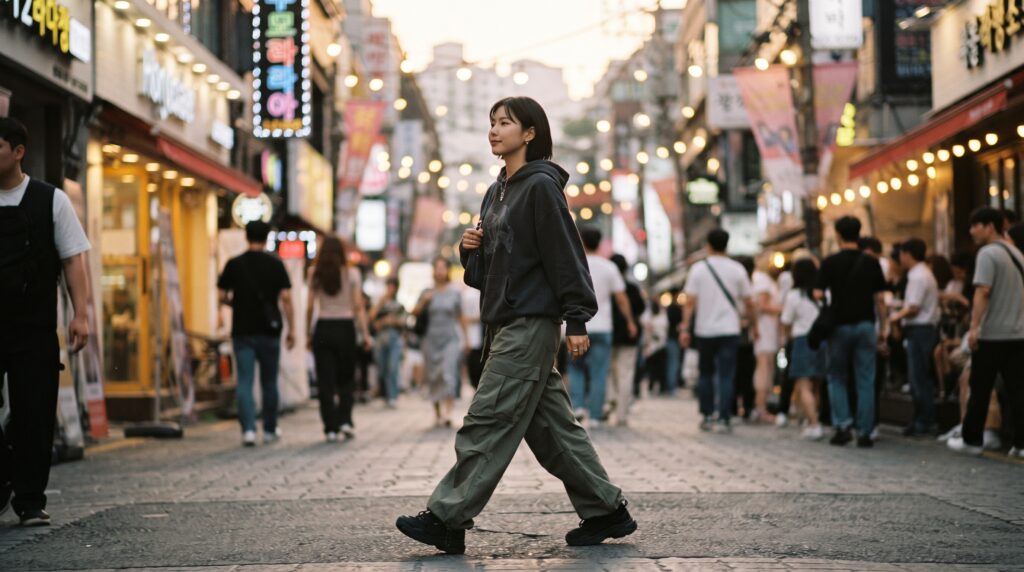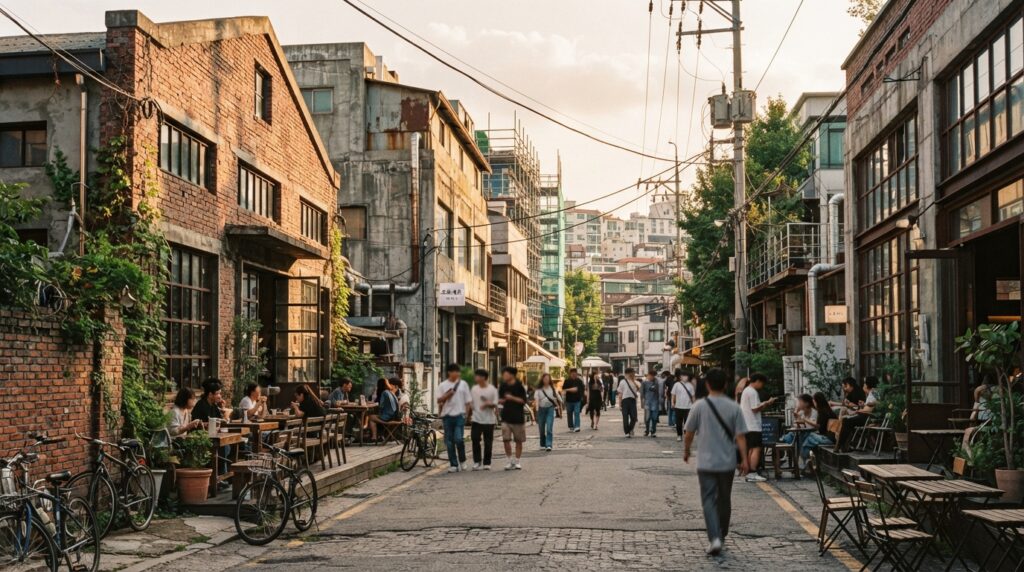
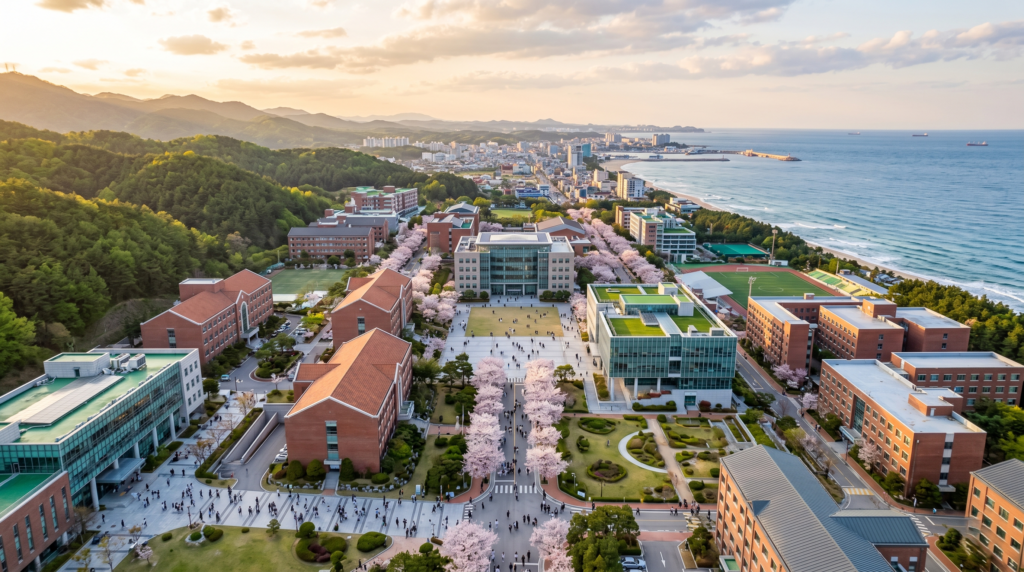
Imagine landing in Pohang, South Korea — a coastal industrial city far from the neon-lit avenues of Seoul — and discovering a university campus where students from over 60 countries study side by side, debate ethics in English, and graduate ready to lead organizations across four continents. This is not the Korea most people picture when they think of K-dramas, SKY university pressure, or the relentless gaokao-style grind of East Asian academia. This is Handong Global University Korea — and it is unlike anything else on the Korean higher education landscape.
While most international students and K-culture enthusiasts fixate on Seoul’s prestigious universities, Handong has been quietly building something rare: a campus culture rooted in values, global citizenship, and interdisciplinary thinking. Whether you are a prospective student researching your options, a parent evaluating Korean universities, or simply someone fascinated by how Korean academic culture is evolving beyond the SKY Castle stereotype, this article is for you.
By the time you finish reading, you will have a complete, honest, and deeply informed picture of what Handong Global University Korea truly offers — and whether it might be the most underrated university decision you have never seriously considered.
What Is Handong Global University Korea? A Quick Overview
Location, Size, and Identity
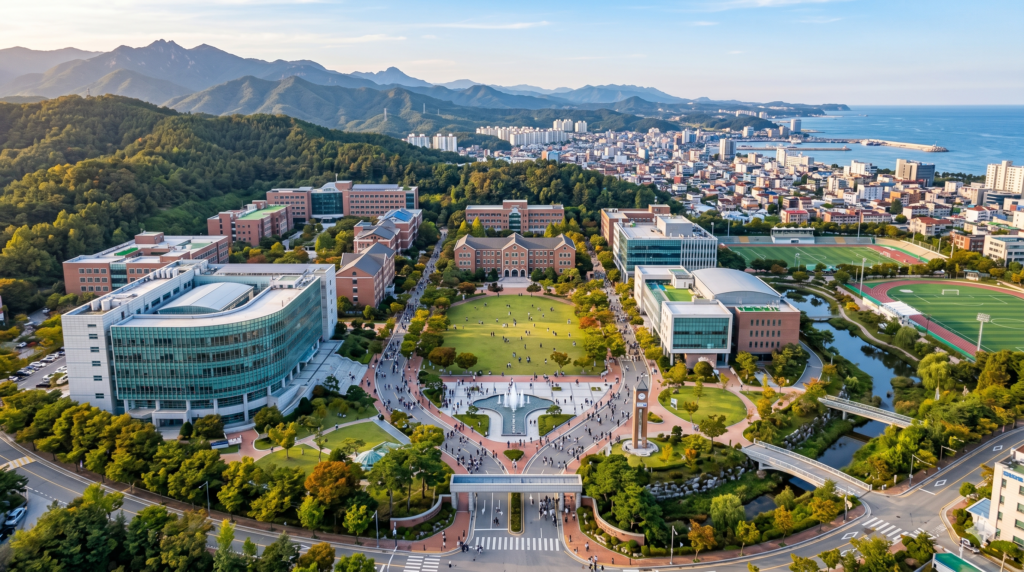
Handong Global University is a private Christian university located in Pohang, North Gyeongsang Province, on the eastern coast of South Korea. Founded in 1995, it sits just a short distance from the coastline of the East Sea — a world away from the congested academic corridors of Seoul’s Gangnam district.
The university enrolls approximately 4,000 to 5,000 students, maintaining an intentionally close-knit academic community. The student-to-faculty ratio is notably lower than many of Korea’s larger state universities, which means students receive more direct mentorship, more face time with professors, and a more personalized academic journey.
Among students and Korean academic observers, Handong has quietly earned the reputation of being “Korea’s hidden gem campus.” It does not chase the brand recognition of Yonsei or KAIST, but its graduates consistently surface in meaningful roles — in international law, development economics, NGO leadership, engineering, and public service — often citing their Handong experience as the defining turning point of their professional lives.
The Mission Behind the Name
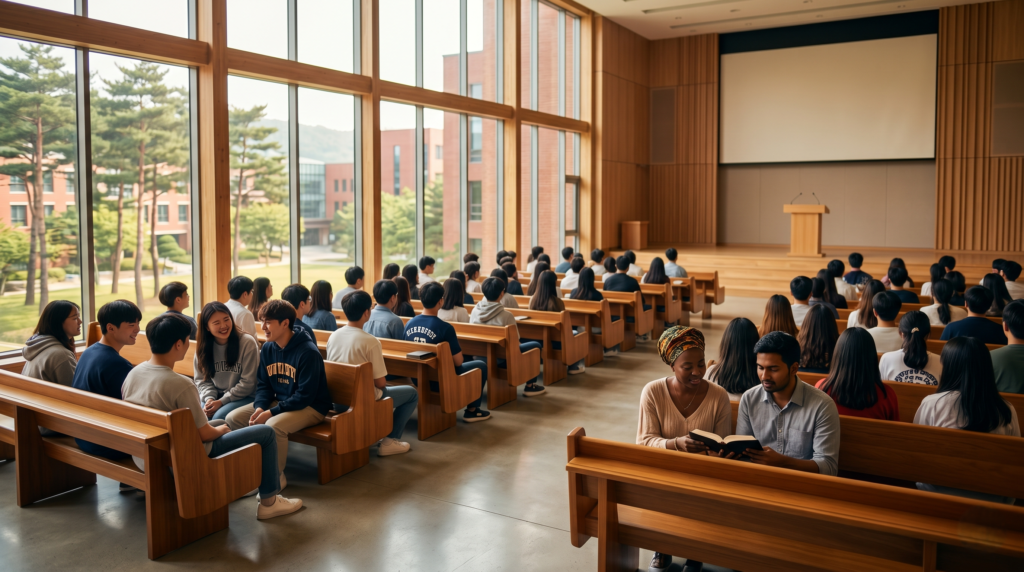
Handong Global University was founded on a remarkably simple but powerful question: “What would you have me do, Lord?”
That founding ethos, articulated by its first president Dr. Young-Gil Kim — a former aerospace engineer and KAIST professor — was not merely philosophical posturing. It became the architectural blueprint for everything the university built: its curriculum design, its community standards, its admissions philosophy, and its vision for what a Korean university could be.
Unlike the secular academic pressure-cooker model that dominates much of Korean higher education, Handong was deliberately designed to integrate faith, ethics, and intellectual rigor into a unified educational experience. Students are not just trained to pass exams or optimize their résumés. They are challenged to ask harder questions: What kind of leader do I want to be? What responsibility do I carry toward the world?
This is a meaningful distinction in a country where the mental health toll of academic hyper-competition has become a national conversation — and where a growing number of young Koreans are actively seeking alternatives to the SKY-or-nothing university culture.
Academic Programs and Departments at Handong Global University
Undergraduate Programs Worth Knowing
Handong offers a broad and thoughtfully structured range of undergraduate programs organized across several schools and divisions. Its flagship departments include:
- School of Law — feeding directly into the renowned Handong International Law School
- School of Engineering — with concentrations in electrical, mechanical, and computer engineering
- School of Computer Science and Electrical Engineering — increasingly relevant in Korea’s tech economy
- School of Global Business and Entrepreneurship — designed with international market exposure in mind
- Division of Interpretation and Translation — one of the more distinctive offerings, producing multilingual professionals for global institutions
What sets these programs apart is not just their subject matter but their structural philosophy. Handong employs an interdisciplinary model that encourages — and in many cases requires — students to cross departmental lines. An engineering student might take a course in ethics and public policy. A law student might complete a module on technology and society. This cross-pollination of disciplines is rare in Korea’s traditionally siloed university system and produces graduates with unusually broad professional competencies.
A significant number of courses are taught entirely in English, making Handong one of the most accessible Korean universities for international students who have not yet achieved advanced Korean language proficiency.
Graduate and Professional Schools
At the postgraduate level, Handong’s crown jewel is undoubtedly the Handong International Law School (HILLS) — one of Korea’s most respected professional law schools. HILLS attracts both Korean and international students seeking rigorous legal training with a strong grounding in international law, human rights, and justice frameworks.
Beyond law, Handong offers:
- Graduate School of Global Development and Entrepreneurship — focused on sustainable development, social enterprise, and global policy
- Graduate School of Theology — for students pursuing advanced theological study and ministry formation
- General Graduate Programs in engineering, business, and the social sciences
The graduate programs consistently attract students from developing nations across Africa, Southeast Asia, and Central Asia — many on scholarship — which further deepens the university’s international character.
What Makes the Curriculum Different?

Three elements define the Handong academic experience in ways that distinguish it sharply from most Korean universities:
First, Problem-Based Learning (PBL). Rather than relying solely on lecture-and-exam cycles, Handong integrates real-world problem-solving into its coursework from the very first year. Students work in teams to tackle actual challenges — engineering problems, legal case studies, business scenarios — developing collaboration and critical thinking skills that translate directly into professional competence.
Second, ethical leadership as a core academic value. Handong does not treat ethics as an elective or an extracurricular concern. It is woven into the fabric of academic life. Students regularly engage with questions of justice, responsibility, and global citizenship — not as abstract philosophical exercises, but as practical frameworks for the careers they are preparing to enter.
Third, real-world integration from Year 1. Internship pipelines, community service projects, and international fieldwork opportunities are built into many programs, ensuring that students are not simply accumulating academic credentials but developing actual professional experience before they graduate.
Campus Life at Handong Global University Korea
A Community Unlike Any Other Korean Campus
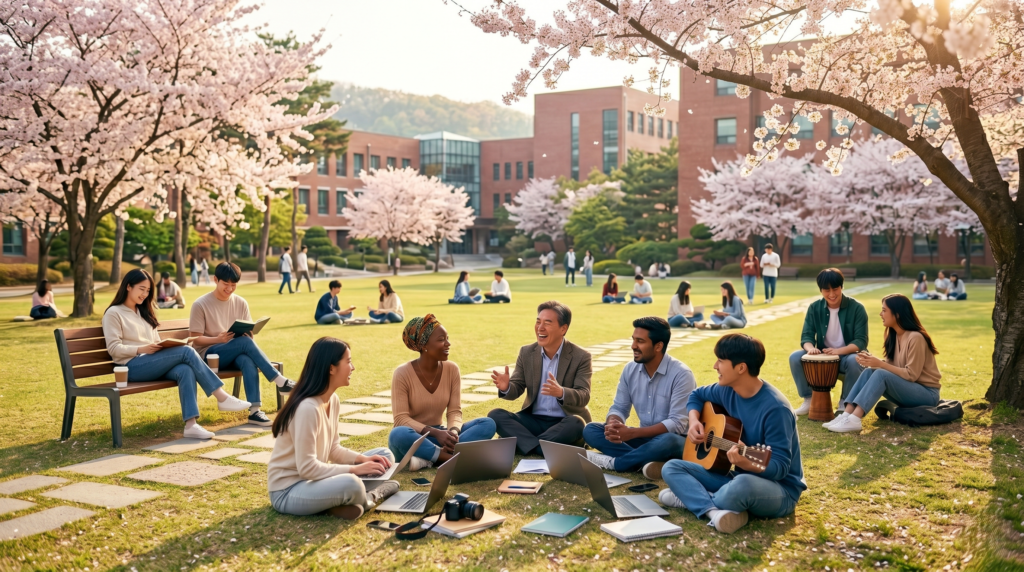
Step onto the Handong campus and the first thing most visitors notice is the atmosphere — something noticeably warmer and more intentional than the transactional social energy of larger Korean universities.
Handong operates as a primarily residential university, meaning the majority of students live on campus throughout their academic careers. This creates a density of community interaction that is rare in Korean higher education, where commuter culture often fragments student social life.
Chapel attendance is part of the weekly rhythm at Handong, though the culture around it is more communal than coercive. Students gather not only for spiritual reflection but for what many describe as one of the most consistent social anchors of their university experience — a shared space that cuts across departments, years, and nationalities.
Student life beyond the classroom includes a rich calendar of cultural festivals, academic competitions, community service initiatives, and inter-faith dialogue events. For a campus of its size, the breadth of student activity is impressive — and reflects the university’s genuine investment in forming whole persons, not just credentialed graduates.
International Student Experience
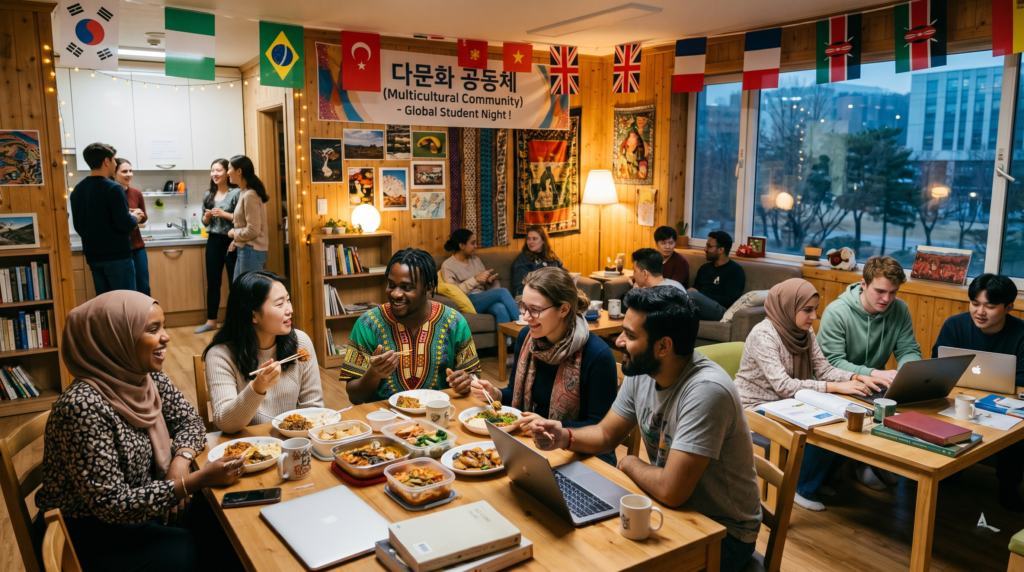
Handong Global University is genuinely, substantively international — not in the tokenistic sense that many Korean universities claim, but in the lived daily reality of its campus culture.
With students representing more than 60 countries, the social fabric of Handong is authentically multicultural. English functions as a real medium of daily interaction — in study groups, dormitory conversations, club activities, and faculty-student mentoring relationships. This is a significant differentiator in a country where, outside of a few elite universities in Seoul, English-medium campus life remains relatively uncommon.
For international students, Handong provides:
- Structured buddy programs pairing incoming international students with experienced Korean and international peers
- Culture Night events celebrating the diversity of the student body through food, performance, and storytelling
- Global dormitory communities where intentional cross-cultural living is the norm rather than the exception
- Korean language courses integrated into academic schedules to support linguistic integration without overwhelming academic demands
The result is an international student experience that feels genuinely supported rather than administratively managed.
The Pohang Setting — Underrated or Underestimated?
Let us be honest: Pohang is not Seoul. It does not have the nightlife of Hongdae, the shopping of Myeongdong, or the cultural density of the capital. For students who came to Korea specifically for the Seoul experience, the Pohang location will feel like a trade-off.
But here is what the Pohang setting actually offers — and why many Handong graduates describe it as one of the best things about their experience:
Focus. Without the relentless pull of Seoul’s urban distractions, students at Handong tend to invest more deeply in campus community, academic work, and personal development. The focus this enables is something many alumni only fully appreciate in retrospect.
Affordability. The cost of living in Pohang is significantly lower than Seoul. Accommodation, food, transportation, and daily expenses are all substantially cheaper — a meaningful advantage for international students managing tuition and living costs simultaneously.
Natural environment. Pohang offers access to coastline, mountains, and open space that Seoul simply cannot provide. The East Sea beaches near campus are a genuine quality-of-life asset, particularly during Korea’s warmer months.
POSTECH proximity. Handong shares the Pohang academic ecosystem with POSTECH (Pohang University of Science and Technology) — one of Korea’s premier science and engineering institutions. This proximity creates informal academic cross-pollination and expands the intellectual community available to Handong students.
Handong Global University’s Global Partnerships and Rankings
International Academic Partnerships
Handong has cultivated an extensive network of international academic partnerships that expands significantly beyond what its enrollment size might suggest. Partner universities span North America, Europe, Africa, Southeast Asia, and the Middle East, enabling exchange programs, dual-degree arrangements, and collaborative research initiatives.
Particularly notable is Handong’s engagement with institutions and organizations focused on international development, peacebuilding, and justice — reflecting the university’s mission-driven approach to global engagement. Graduates regularly move into roles with the United Nations, international NGOs, government ministries, and multilateral development banks — pipelines that are actively cultivated through Handong’s institutional relationships.
Rankings and Recognition
In conventional Korean university rankings dominated by research output and corporate recruitment metrics, Handong occupies a niche position — not because of academic weakness, but because its institutional priorities do not always align with the metrics those rankings measure.
Within Christian higher education globally, Handong is widely recognized as one of Asia’s most distinctive and mission-consistent universities. Its law school, HILLS, carries particular recognition within Korean legal academic circles.
What may be more telling than rankings is the professional trajectory of Handong alumni — a disproportionate number of whom end up in internationally significant roles in law, development, diplomacy, and social enterprise. This outcome pattern speaks to the quality of formation Handong provides, even when it does not translate neatly into a QS World University ranking position.
Expert Insight: Academic observers who study alternative models of Korean higher education frequently cite Handong as evidence that values-integrated education and rigorous academic training are not mutually exclusive — and may in fact be mutually reinforcing.
Why Handong Global University Korea Appeals to International Students
Admission Requirements for International Applicants
Applying to Handong as an international student is a relatively straightforward process compared to some of Korea’s more bureaucratically complex university admissions systems.
Key requirements typically include:
- Academic transcripts from previous institutions (high school for undergraduate; undergraduate for graduate applicants)
- Language proficiency scores — TOEFL, IELTS, or equivalent for English-track programs; TOPIK scores for Korean-language tracks
- Personal statement or essay — with Handong placing particular emphasis on motivation, values alignment, and global perspective
- Letters of recommendation from academic or professional references
- Application through the International Admissions Office, with deadlines typically falling in spring and autumn cycles
Scholarship Opportunities
Handong actively supports international student enrollment through several scholarship programs. The Global Leadership Scholarship is among the most significant, covering partial to full tuition for recipients who demonstrate both academic merit and alignment with Handong’s leadership mission. Need-based grants and country-specific scholarships are also available, with particular support historically directed toward students from developing nations in Africa, Asia, and Latin America.
Cost of Studying at Handong vs. Other Korean Universities
One of the most practically compelling arguments for considering Handong is the cost advantage relative to Seoul-based universities and the broader Korean higher education market.
| Expense Category | Handong (Pohang) | Average Seoul University |
|---|---|---|
| Annual Tuition | ₩6–8 million KRW | ₩8–12 million KRW |
| Monthly Accommodation | ₩200,000–400,000 KRW | ₩500,000–900,000 KRW |
| Monthly Living Expenses | ₩400,000–600,000 KRW | ₩700,000–1,200,000 KRW |
| Total Estimated Annual Cost | ₩10–14 million KRW | ₩18–28 million KRW |
Note: Figures are approximate and subject to change. Always verify current rates with the university’s official admissions office.
The savings are substantial — and when combined with scholarship support, Handong becomes one of the most financially accessible quality university options in South Korea for international students.
Support Systems for Foreign Students
Handong’s international student support infrastructure goes meaningfully beyond administrative processing. The International Student Services Office provides ongoing advising, document support, and cultural orientation. Korean language instruction is integrated into academic schedules. Perhaps most distinctively, Handong’s residential and community culture means that international students are embedded in a living support network from day one — rather than navigating a large, impersonal campus largely on their own.
Handong Global University and Korean Culture — A Unique Connection
How Campus Culture Reflects Korea’s Changing Values
To understand why Handong Global University Korea matters beyond its academic programs, you need to understand the cultural moment South Korea is currently navigating.
For decades, Korean society has operated under an educational philosophy that can be summarized in three brutal words: rank, compete, survive. The pressure begins in elementary school, intensifies through the notoriously grueling 수능 (Suneung) college entrance exam, and culminates in a university admissions race where a student’s entire perceived worth can hinge on whether they secured a seat at Seoul National University, Korea University, or Yonsei — collectively known as the SKY universities.
The psychological cost of this system has been well documented. South Korea consistently records some of the highest youth stress and burnout rates among OECD nations. Korean dramas like SKY Castle, Crash Course in Romance, and Reply 1988 have explored this pressure with both sharp satire and genuine emotional empathy — resonating with millions precisely because the anxiety they depict is so universally recognized.
Into this cultural landscape, Handong Global University arrives as something genuinely countercultural. It does not reject academic excellence — its curriculum is rigorous and its graduates are competitive. But it reframes the purpose of that excellence. At Handong, academic achievement is not the destination. It is the vehicle for something larger: ethical leadership, global service, and meaningful contribution to a world that needs more than technically proficient professionals.
This reframing reflects a shift quietly occurring across Korean youth culture. A growing segment of young Koreans — particularly those with international exposure, faith backgrounds, or social entrepreneurship interests — are actively questioning the SKY-or-nothing narrative. They are looking for university experiences that develop their whole identity, not just their professional credentials. Handong speaks directly to that emerging hunger.
Has Handong Appeared in Korean Media or Drama Culture?
While Handong Global University has not served as a primary filming location for mainstream Korean dramas in the way that Yonsei’s iconic ginkgo tree path has become a visual shorthand for romantic university life, its cultural presence is felt in more subtle and arguably more substantive ways.
Handong has been featured in Korean Christian media, documentary journalism, and educational reform discussions as a model of alternative higher education. Korean public broadcasting has profiled the university’s development model and its international student community on multiple occasions, framing it as evidence that Korean universities can pursue global competitiveness without sacrificing institutional values.
More broadly, Handong fits naturally into the Hallyu (Korean Wave) soft power narrative that increasingly positions Korea not just as an exporter of entertainment but as a model of education, innovation, and social development. As international audiences grow more curious about real Korean life beyond the drama screen — asking questions about what Korean universities are actually like, what young Koreans value, and how Korean society is evolving — campuses like Handong offer a compelling and authentic story.
For bloggers, content creators, and cultural journalists working in the Korean culture space, Handong represents exactly the kind of nuanced, beneath-the-surface story that differentiates thoughtful cultural coverage from surface-level K-drama recaps. It is the Korea that exists between the episodes — complex, values-driven, and quietly remarkable.
Honest Pros and Cons of Attending Handong Global University Korea
No article serving genuine reader needs should present a university as flawlessly perfect. Handong Global University Korea is an exceptional institution for the right student — but it is not the right fit for every student. Here is a candid, balanced assessment:
| ✅ Pros | ❌ Cons |
|---|---|
| Authentically international campus community with 60+ nationalities | Located in Pohang — limited access to Seoul’s urban culture and nightlife |
| Strong values-based education that develops ethical, whole-person leadership | Community lifestyle guidelines may feel restrictive for some students |
| Significantly more affordable than Seoul universities — tuition and living costs | Smaller alumni network compared to SKY universities in Korean corporate sectors |
| English-friendly academic environment across multiple programs | Limited global name recognition outside Christian and international development circles |
| Deep mentorship culture with accessible, invested faculty | Niche institutional identity — less appealing to students seeking a secular campus experience |
| Genuine problem-based learning that builds real professional skills | Pohang’s job market is limited — students seeking part-time Seoul-based opportunities will face logistical challenges |
| Scholarship support specifically targeting international students from developing nations | Some mainstream Korean employers still prioritize SKY university brand names in initial hiring screens |
Who Is Handong Genuinely Right For?
Based on the profile of students who thrive at Handong, this university is likely an excellent fit if you are:
- An international student seeking a genuinely multicultural Korean university experience without the overwhelming scale of a Seoul mega-campus
- A student motivated by purpose-driven education — interested in international development, law, social enterprise, or ethical leadership
- A prospective student from a faith background who wants academic rigor without having to leave their values at the campus gate
- A Korean student who feels suffocated by the SKY pressure culture and is looking for a community that measures success differently
- A graduate student seeking specialized training in international law, development policy, or global business in an internationally engaged academic environment
Conversely, if your primary goals are maximizing Samsung or LG recruitment prospects through brand-name university recognition, or immersing yourself in Seoul’s cultural and social scene, Handong may not be your optimal choice — and intellectual honesty requires saying so.
Frequently Asked Questions About Handong Global University Korea
The following FAQ section is structured to address the most common questions real students and families ask when researching Handong — and is optimized for Google’s FAQ rich results.
Q1: Is Handong Global University Korea a good university?
Yes — particularly for students who are seeking a values-integrated, internationally diverse, and academically rigorous environment. Handong consistently produces graduates who go on to leadership roles in international law, NGO management, development economics, engineering, and public service. Its academic programs are recognized within Korean higher education, and its law school (HILLS) carries specific prestige in Korean and international legal circles. The more important question is not whether Handong is “good” in the abstract, but whether it aligns with your specific educational goals — and for the right student, it is an exceptional institution.
Q2: Is Handong Global University taught in English?
Many programs at Handong are offered in English or in bilingual formats, particularly in the areas of global business, international law, computer science, and engineering. The campus culture also makes English a genuine daily language of interaction, given the high proportion of international students from non-Korean speaking countries. Students on Korean-language tracks will naturally engage more in Korean, but Handong is among the most English-accessible university environments in Korea outside of Seoul’s international campuses.
Q3: How do I apply to Handong Global University as an international student?
International applications are processed through Handong’s dedicated International Admissions Office. The general process involves submitting academic transcripts, language proficiency scores (TOEFL/IELTS for English-track programs or TOPIK for Korean-track programs), a personal statement, and letters of recommendation. Application cycles typically run twice annually — spring and autumn intakes. It is strongly recommended to visit the official Handong admissions website for the most current deadlines, document requirements, and program-specific instructions, as these details are updated regularly.
Q4: Is Handong University only for Christians?
No. While Handong Global University was founded on Christian values and integrates faith into its institutional culture — through Chapel, ethics-based curriculum, and community standards — students of all religious backgrounds and beliefs are welcome to apply and study. Many non-Christian students from across Asia, Africa, and the Middle East choose Handong specifically for its academic programs, international community, and values-driven environment. The university does not require religious conversion or confession as a condition of enrollment or academic participation.
Q5: What is Handong Global University known for?
Handong Global University is best known for several distinctive qualities: its interdisciplinary, problem-based learning curriculum; its authentically international student community representing 60+ countries; the Handong International Law School (HILLS), which is among Korea’s recognized professional law programs; its ethical leadership formation model that integrates values into academic life; and its track record of producing graduates who enter international development, law, technology, and public service careers at a rate disproportionate to its enrollment size. It is also increasingly known as a compelling counter-narrative to Korea’s hyper-competitive SKY university culture.
Q6: What scholarships are available at Handong Global University for international students?
Handong offers several scholarship pathways for international students, with the Global Leadership Scholarship being the most prominent — covering partial to full tuition based on academic merit and values alignment. Additional need-based grants and regionally targeted scholarships are available, with historical emphasis on supporting students from developing nations in Africa, Southeast Asia, and Central Asia. Scholarship availability and amounts vary by academic year and program, so direct inquiry with the International Admissions Office is recommended for the most accurate current information.
Q7: How does Handong Global University compare to POSTECH?
This is a comparison that comes up frequently given that both universities are located in Pohang. POSTECH (Pohang University of Science and Technology) is one of Korea’s elite science and engineering research universities — globally ranked and research-intensive. Handong, by contrast, is a broader liberal arts and professional university with a values-integrated educational model. The two institutions serve different student profiles and educational goals. They are not competitors so much as complementary institutions that together make Pohang a more academically interesting city than its industrial reputation might suggest.
Final Thoughts — Is Handong Global University Korea Right for You?
There is a particular kind of student who discovers Handong Global University Korea and immediately understands, at an instinctive level, that this is exactly the kind of university experience they have been looking for — without necessarily having the vocabulary to describe why until they found it.
That student is not looking for the most famous name on their diploma. They are looking for a community that takes ideas seriously, takes people seriously, and takes the future seriously. They want to graduate not just with marketable skills but with a coherent sense of who they are and what they stand for. They want a campus that feels like a place, not just a credential factory.
If that description resonates with you — whether you are a prospective undergraduate, a graduate student evaluating international law programs, a parent researching Korean university options for your child, or simply someone fascinated by the evolving landscape of Korean higher education — then Handong deserves your serious attention.
Here is a summary of what makes Handong Global University Korea genuinely distinctive:
- A values-integrated academic model that produces ethically grounded, globally competent graduates
- An authentically multicultural campus community where English functions as a real daily language
- Academically rigorous programs in law, engineering, business, computer science, and global development
- A financially accessible option for international students compared to Seoul’s university ecosystem
- A residential campus culture in Pohang that prioritizes depth of community over the distraction of urban proximity
- A countercultural institutional identity that challenges Korea’s SKY-or-nothing academic narrative with a compelling alternative vision
Handong Global University Korea will not be the right choice for everyone. But for the students it is right for, it has a quiet and consistent track record of changing lives — and sending graduates into the world with something rarer than a prestigious diploma: a clear sense of purpose.
Conclusion
South Korea’s higher education story is richer and more complex than the SKY Castle narrative that dominates its international reputation. Beyond the pressure-cooker entrance exam culture and the brand-name university race, there are institutions quietly doing some of the most interesting educational work in Asia — and Handong Global University Korea is among the most compelling of them.
Whether you are charting your own academic path, researching Korean university culture for personal or professional reasons, or simply deepening your understanding of the Korea that exists beyond the drama screen, Handong offers a window into a different kind of Korean excellence — one built on purpose, community, and the conviction that how you educate a person matters as much as what you teach them.