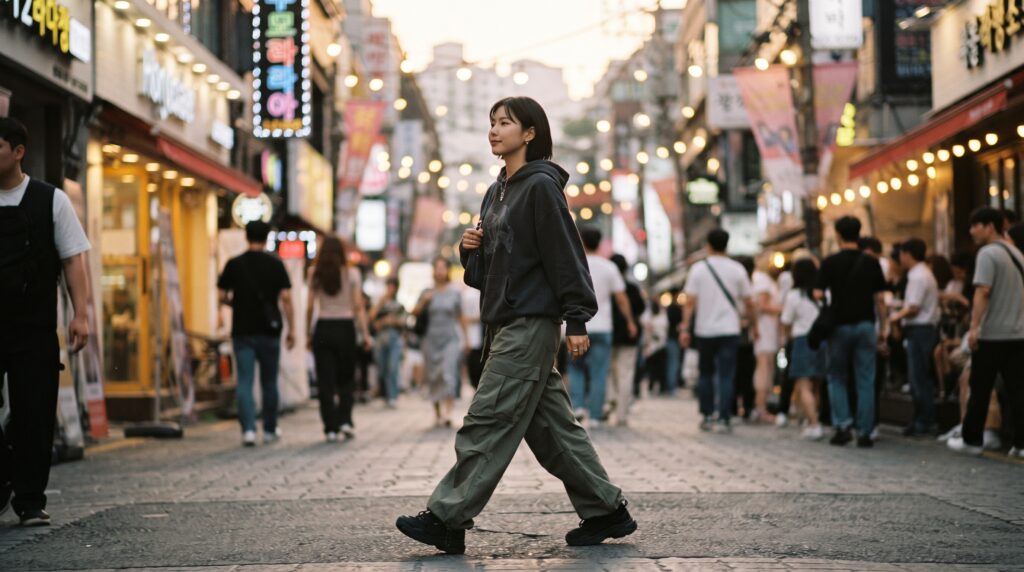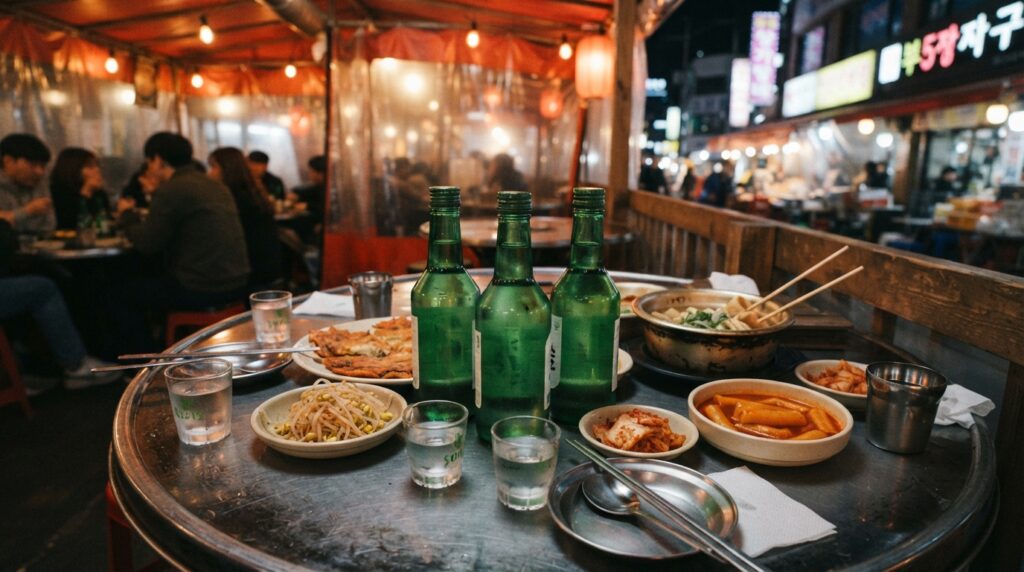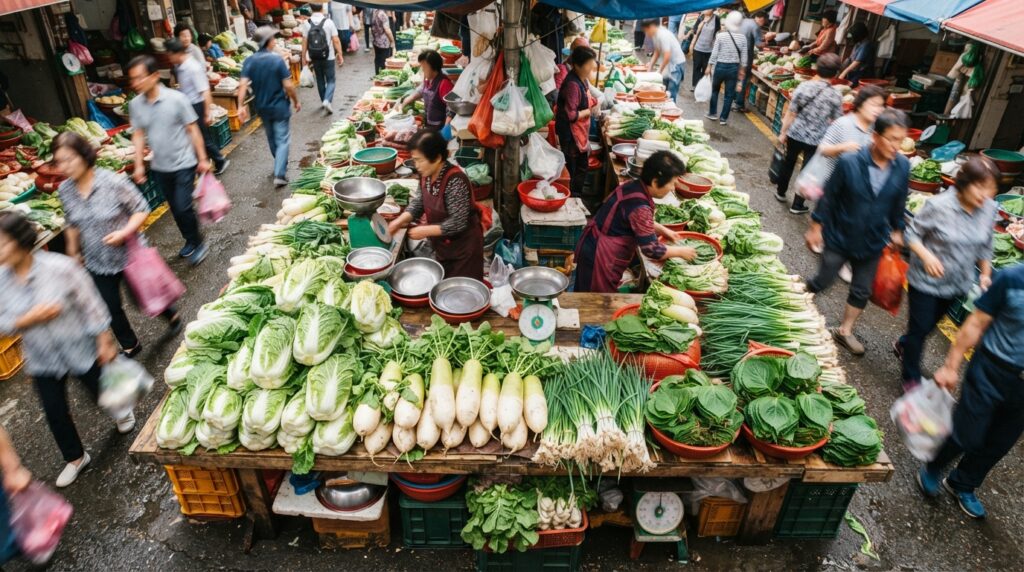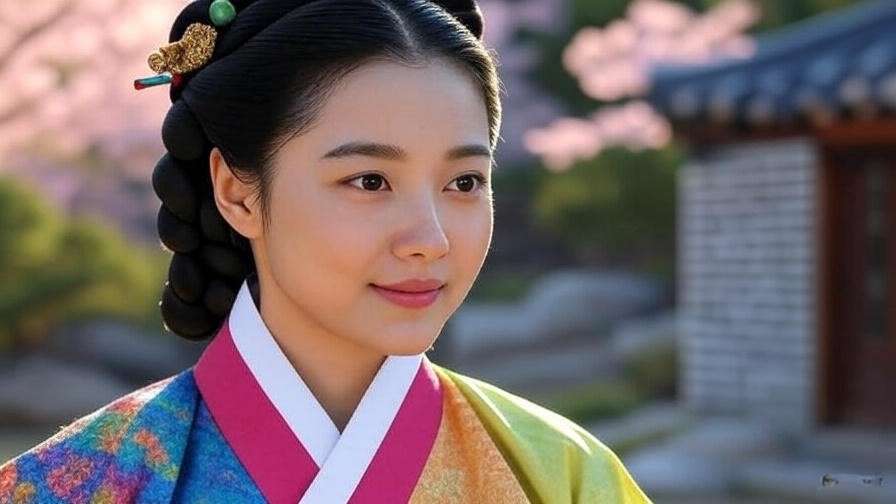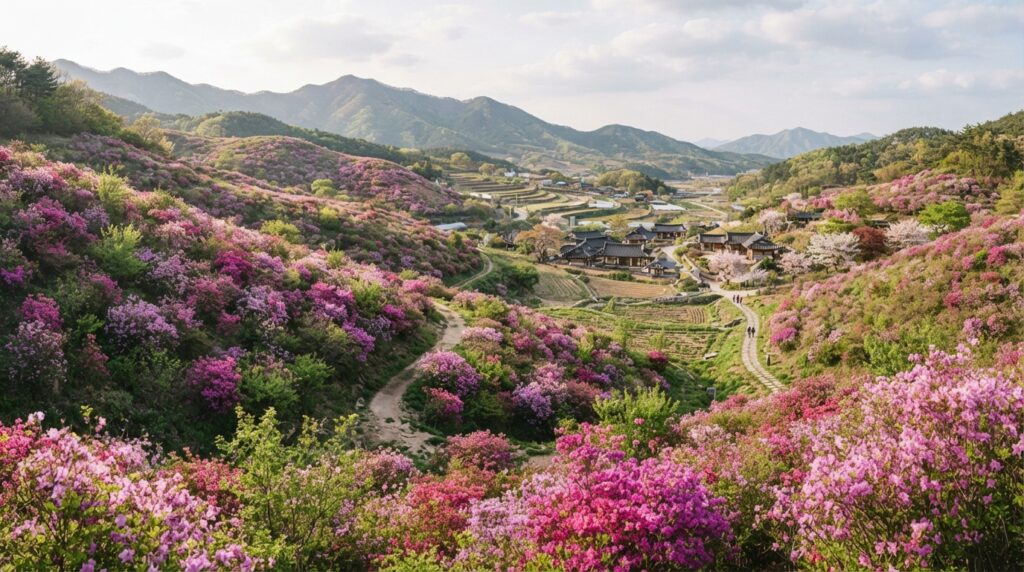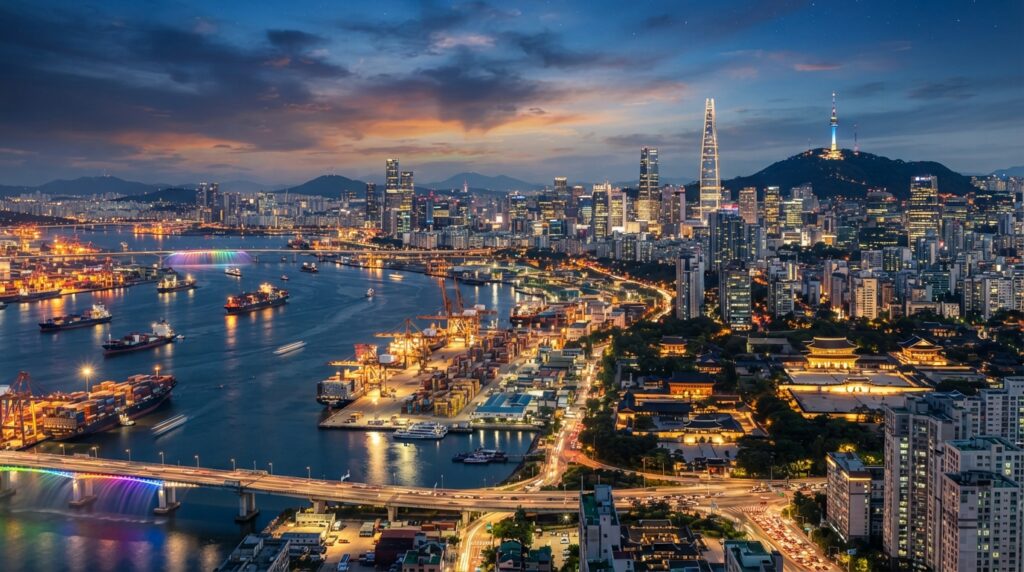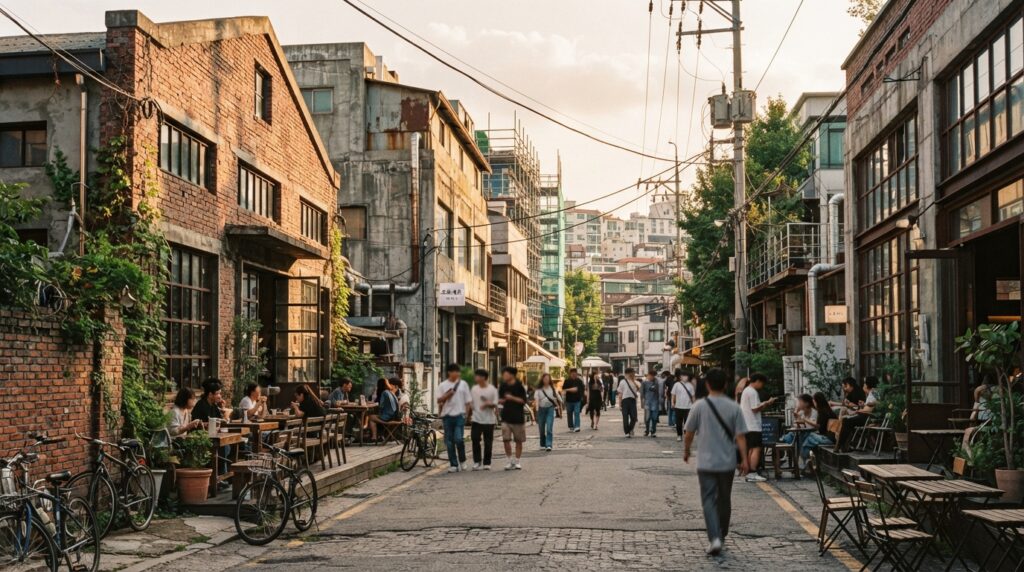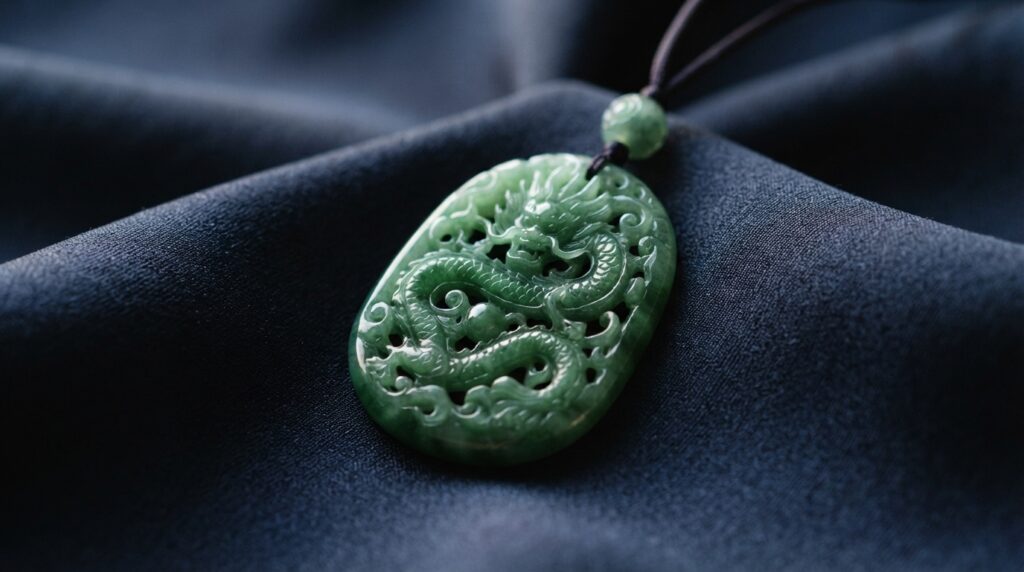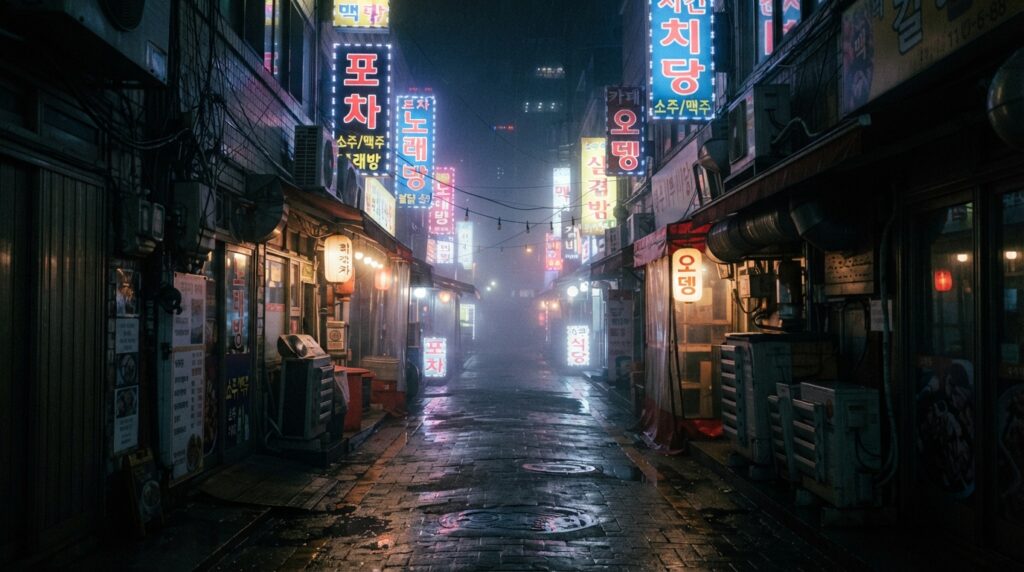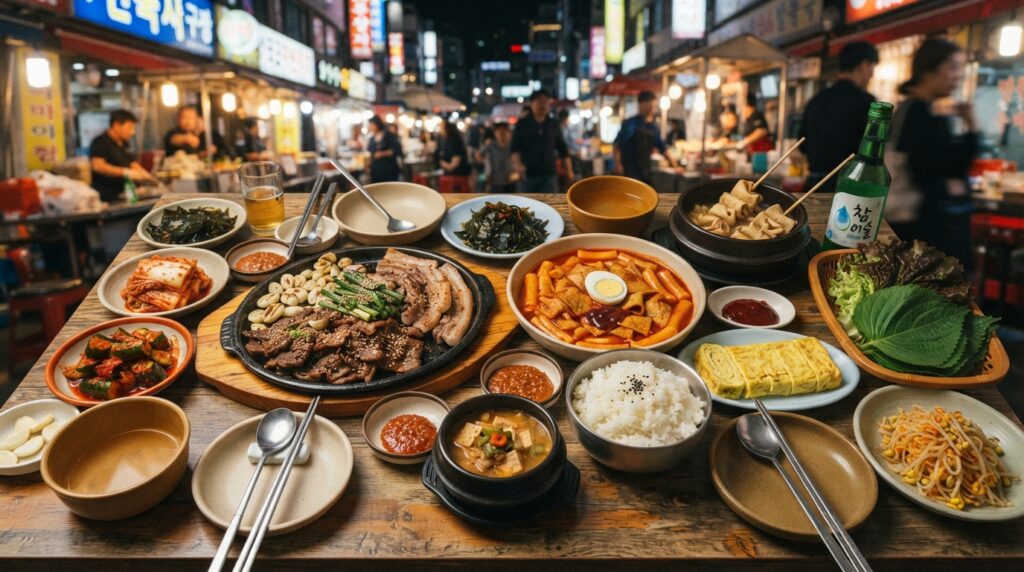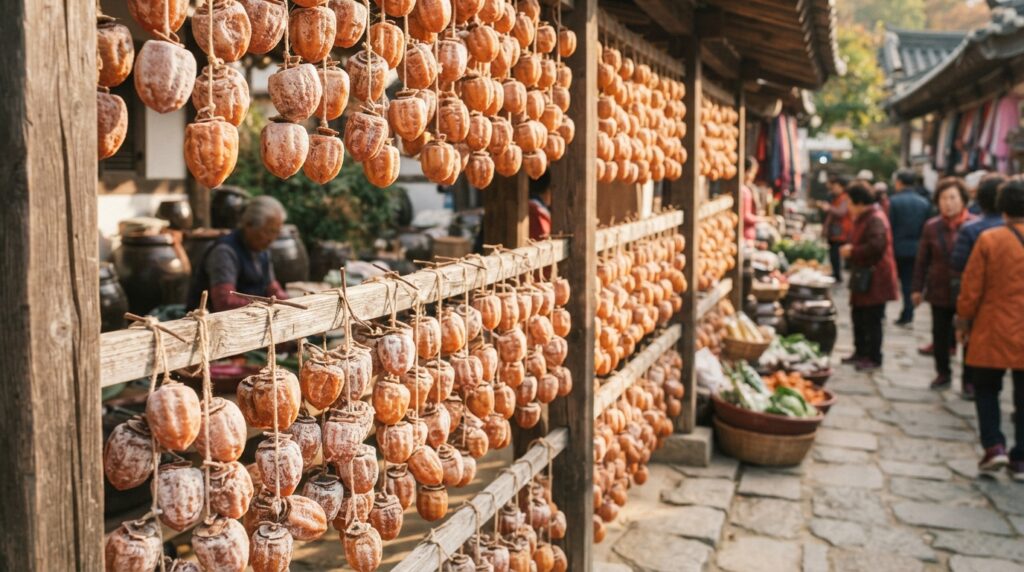
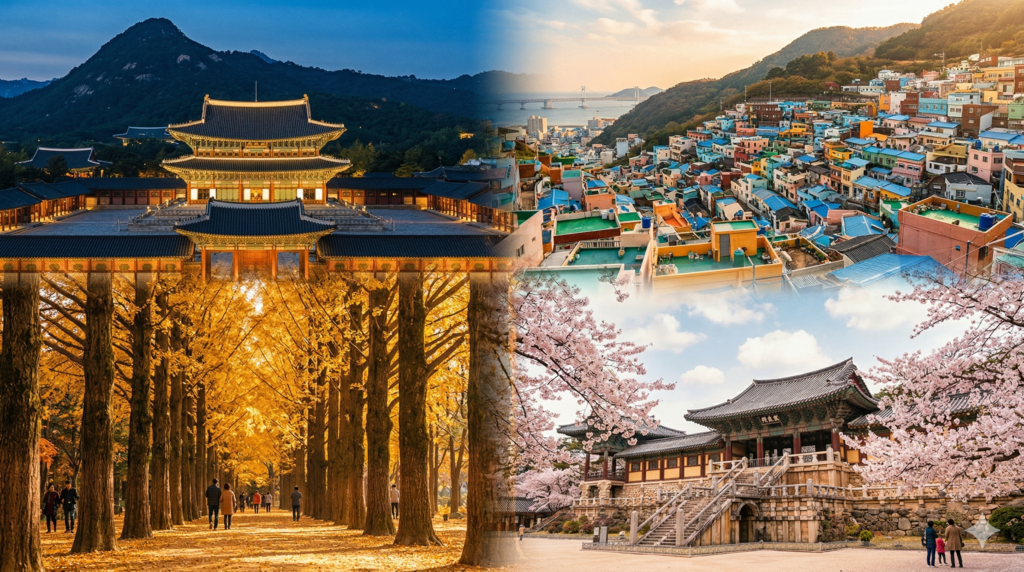
Imagine standing in the middle of a narrow, lantern-lit alley in Seoul, the scent of tteokbokki drifting from a nearby street stall, while the same city skyline you’ve watched a hundred times on screen glows around you in real life. Or picture yourself on a cliffside temple in Busan, wind in your hair, looking out over the East Sea — just like the characters in your favorite K-drama did before you. That moment, when the screen comes to life, is exactly why millions of travelers are now asking the same question: what are the best cities to visit in Korea?
Korea has exploded onto the global travel map, and not by accident. Fueled by the unstoppable Hallyu Wave — K-dramas, K-pop, Korean cinema, and Korean cuisine — travelers from every corner of the world are making South Korea their next destination. But here’s the challenge most visitors face: Korea is not a one-city country. Each region carries its own distinct soul, its own flavors, its own stories. Choosing where to go — and how to make the most of every day — can feel overwhelming, especially for first-time visitors.
That’s exactly what this guide is here to solve. Whether you’re a devoted K-drama fan hunting down iconic filming locations, a culture traveler eager to explore UNESCO heritage sites, or simply someone who wants to experience one of Asia’s most dynamic and beautiful countries, this complete travel guide breaks down the best cities to visit in Korea — city by city, experience by experience — so you can plan a trip that is truly unforgettable.
Why Korea Is One of the Most Exciting Travel Destinations Right Now
The Global Rise of Korean Culture (The Hallyu Wave)
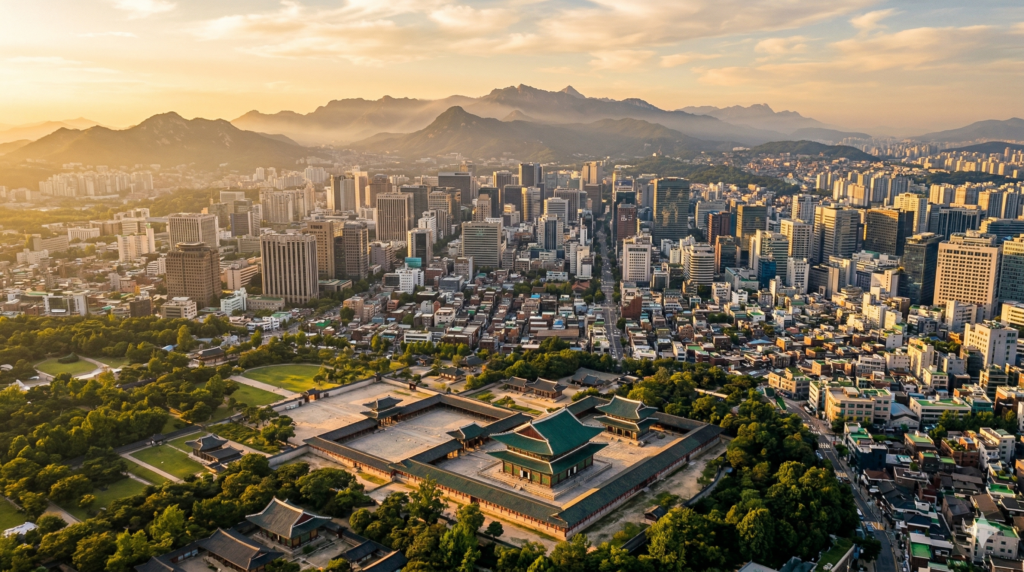
Korea’s rise as a premier travel destination didn’t happen overnight. It was built, scene by scene, song by song, over two decades of cultural export known as the Korean Wave or Hallyu (한류). What began with K-dramas quietly gaining audiences across Asia in the early 2000s has now become a full-scale global phenomenon. Shows like Crash Landing on You, Squid Game, Goblin, and Extraordinary Attorney Woo have introduced tens of millions of international viewers not just to compelling storytelling — but to Korea’s breathtaking landscapes, traditional architecture, street food culture, and deeply layered society.
According to the Korea Tourism Organization, Korea welcomed over 17 million international tourists before the pandemic, and post-2023 numbers have surged dramatically, with K-drama and K-culture cited as primary motivators for travel. This isn’t just a trend — it’s a full-scale cultural movement reshaping global tourism.
Korean cinema has added yet another layer of prestige. Parasite winning the Academy Award for Best Picture in 2020 introduced Korea’s artistic depth to audiences who had never watched a K-drama in their lives. Together, these cultural forces have made Korea one of the most talked-about, searched-for, and visited destinations in the world.
What Makes Korean Cities Unique Compared to Other Asian Destinations
What truly sets Korea apart from other Asian travel destinations is the extraordinary contrast between old and new. In a single afternoon in Seoul, you can walk through a 600-year-old royal palace, take the metro to a hyper-modern glass-and-steel district, and end the day in a centuries-old hanok village. No other country in Asia does this quite as seamlessly as Korea.
Beyond aesthetics, Korean cities are also defined by their exceptional safety, infrastructure, and hospitality. Public transport systems — particularly the Seoul Metro and KTX high-speed rail network — are world-class, making it easy to travel between cities without a car. Streets are clean, crime rates are low, and locals, while sometimes reserved, are overwhelmingly helpful to foreign visitors.
Then there is the food. Korean cuisine alone is worth the airfare. From the fiery, fermented boldness of kimchi and gochujang-based dishes to the delicate beauty of royal court cuisine, every Korean city has its own culinary identity. Travel here, and you will eat extraordinarily well — at street stalls, in humble local restaurants, and in award-winning dining establishments alike.
How We Selected the Best Cities to Visit in Korea
This guide was compiled based on a framework designed to serve travelers of all kinds — particularly those interested in Korean culture and K-drama. Each city was evaluated across five key criteria:
Cultural Richness — Depth of historical sites, traditional experiences, and authentic Korean lifestyle. K-Drama and Filming Location Significance — Documented presence as a backdrop for beloved Korean dramas and films. Accessibility for International Travelers — Ease of getting there, navigating, and finding English-language support. Unique Local Experiences — What each city offers that simply cannot be replicated anywhere else in Korea. Value Across Travel Styles — Suitability for solo travelers, couples, families, and group trips.
Every city on this list earns its place not as a checkbox on a tourist itinerary, but as a destination worthy of genuine, unhurried exploration.
Best Cities to Visit in Korea — Complete City-by-City Guide
1. Seoul — The Heartbeat of Modern Korea
Best for: First-timers, K-drama fans, foodies, nightlife lovers, urban explorers
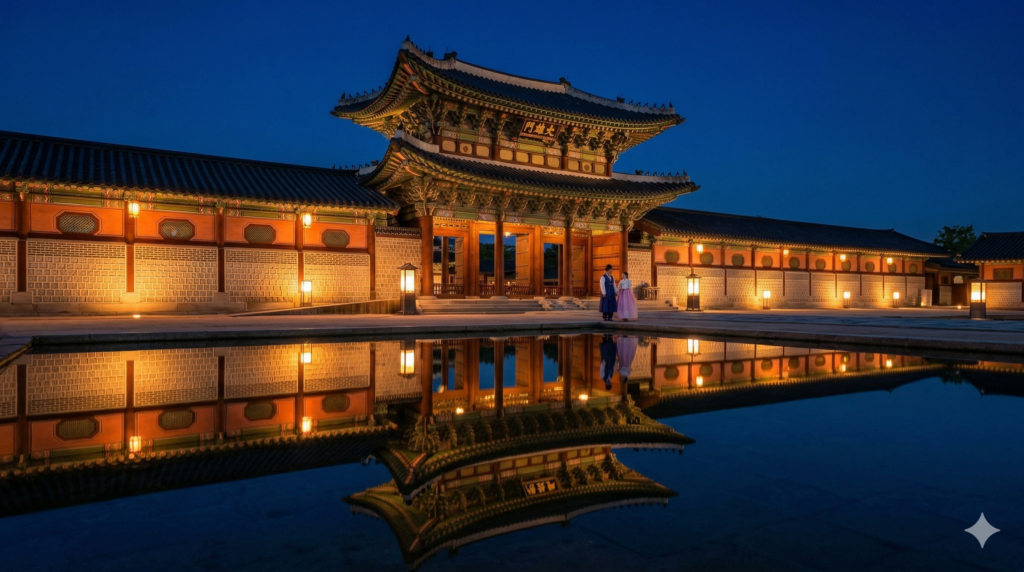
If Korea is the destination, Seoul is the undeniable starting point. Home to nearly 10 million people within the city proper and over 25 million in the greater metropolitan area, Seoul is one of the largest, most dynamic, and most visually stunning capital cities in the world. It is a place where ancient and ultra-modern don’t just coexist — they thrive together in a way that feels distinctly and proudly Korean.
Cultural Highlights
At the heart of Seoul’s historical identity stands Gyeongbokgung Palace (경복궁), the grand seat of the Joseon Dynasty, built in 1395 and lovingly restored after centuries of turbulence. Visiting at dawn, when mist settles over the courtyard and the mountains of Bukhansan rise in the background, is one of the most quietly awe-inspiring experiences in all of Asia. Rent a hanbok (traditional Korean dress) at the entrance and admission is free — a beloved tradition among both locals and travelers.
Just north of the palace lies Bukchon Hanok Village (북촌한옥마을), a preserved neighborhood of traditional Korean wooden homes tucked between the modern neighborhoods of Gyeongbokgung and Changdeokgung. Walking these stone-paved alleys early in the morning — before the tourist crowds arrive — offers a rare, meditative glimpse into old Seoul. Further south, Insadong remains the cultural and artistic soul of the city, filled with traditional tea houses, independent galleries, craft shops, and street performers.
For those seeking the pulse of contemporary Korean culture, Hongdae (홍대) is essential. The neighborhood surrounding Hongik University is the creative hub of Seoul — walls covered in murals, indie music bleeding out of basement venues, and street fashion that rivals anything in Tokyo or Paris. And no visit to Seoul is complete without experiencing Myeongdong, the beating commercial heart of K-beauty culture, where skincare brands line every storefront and sheet masks are handed out as freely as business cards.
K-Drama Connections
Seoul is, without exaggeration, one of the most filmed cities on Earth when it comes to Korean dramas. Virtually every neighborhood in the city has served as a backdrop for a beloved series at some point, but a few locations carry particular weight for drama fans.
Namsan Tower (N Seoul Tower), perched on the hill above the city and accessible by cable car, is perhaps Korea’s single most romantically iconic landmark — appearing in dozens of dramas as the destination for love confessions, breakups, and everything in between. The “love locks” covering the fence surrounding the tower were made famous globally through dramas like You Who Came from the Stars and My Love from the Star.
Dongdaemun Design Plaza (DDP), a futuristic, curved architectural marvel designed by Zaha Hadid, has appeared in numerous contemporary dramas as the symbol of modern Seoul. Bukchon and Insadong appear regularly in both historical and modern dramas. And if you’ve watched Goblin (도깨비) — one of the most beloved K-dramas ever produced — you’ll recognize locations scattered across the city, from Sinchon to various bridges over the Han River.
For a structured experience, the Korea Tourism Organization offers K-Drama Location Tours departing from central Seoul, covering the most iconic filming spots from recent hit series — a wonderful option for fans who want proper context and storytelling around each location.
Hidden Gems
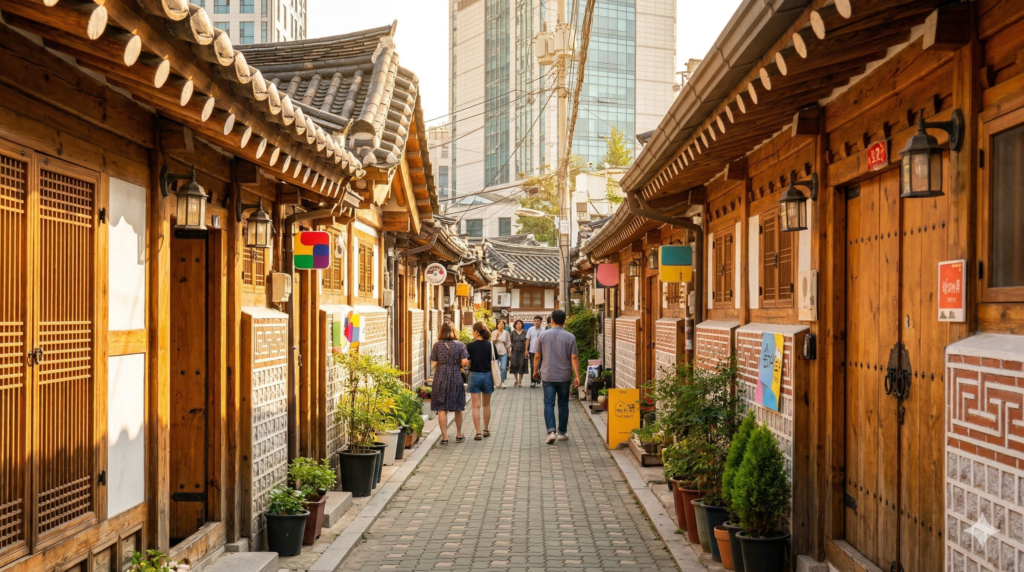
Beyond the well-worn tourist circuit, Seoul rewards the curious traveler. Ikseon-dong (익선동) is a tiny hanok alley neighborhood tucked behind Jongno-3-ga station that has quietly become the most photogenic neighborhood in Seoul — narrow lanes, beautifully restored traditional houses converted into cafés, cocktail bars, and boutique restaurants, all with far fewer crowds than Bukchon. Arrive in the late afternoon as the golden light falls across the clay-tiled rooftops and you’ll understand immediately why this neighborhood has become a favorite of Korean photographers and filmmakers alike.
Seochon Village (서촌), sitting on the western flank of Gyeongbokgung Palace, offers an older, quieter, more literary version of Seoul — this was the neighborhood of artists, poets, and scholars during the Joseon era, and it retains that reflective, unhurried energy today.
Practical Travel Information
Best time to visit Seoul: Spring (late March–May) for cherry blossoms; Autumn (September–November) for foliage and festivals.
Getting around: T-money card for seamless metro and bus travel; Kakao T app for taxis.
Where to stay: Insadong/Jongno for cultural immersion; Hongdae for nightlife and youth culture; Gangnam for luxury and modern Seoul.
Must-eat foods: Bibimbap, samgyeopsal (grilled pork belly), tteokbokki, Korean fried chicken, and bingsu (shaved ice dessert).
Recommended stay: 4–7 days minimum.
2. Busan — Where the Ocean Meets Korean Soul
Best for: Beach lovers, seafood enthusiasts, art travelers, K-drama pilgrims, architecture admirers
Korea’s second-largest city and its largest port, Busan (부산) is a city unlike anywhere else in the country — a place where dramatic coastal cliffs plunge into the East Sea, colorful hillside villages cling to impossible slopes, and the air carries salt, seafood, and the particular kind of freedom that only cities by the ocean possess. If Seoul is Korea’s brain, Busan is undeniably its beating, salt-sprayed heart.
Cultural Highlights
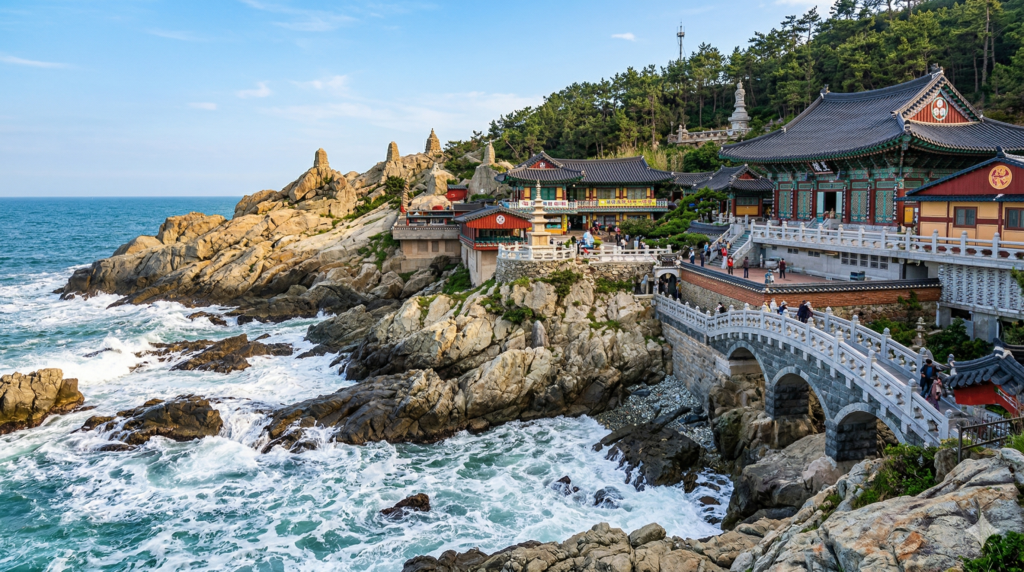
Perched dramatically on a rocky seaside cliff, Haedong Yonggungsa Temple (해동용궁사) is one of the most visually spectacular Buddhist temples in all of Korea — and one of the few in the country situated directly on the ocean. Unlike most Korean temples, which are tucked into mountain forests, Haedong Yonggungsa rises from the sea itself, waves crashing against its stone foundations, stone dragons guarding its entrance. Visiting at sunrise, when the light turns the East Sea to gold, is a genuinely transcendent experience.
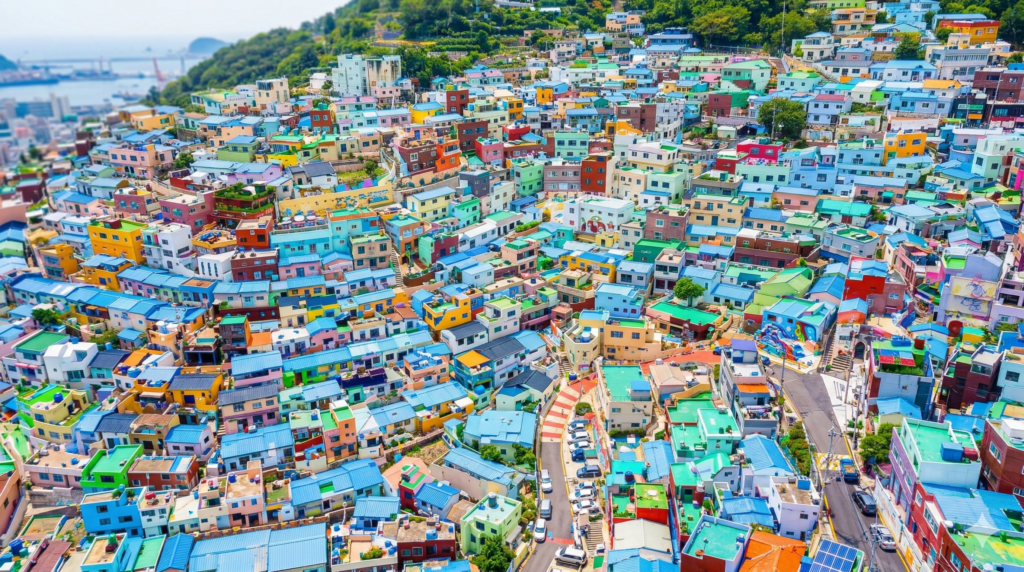
Gamcheon Culture Village (감천문화마을), often called Korea’s Santorini or Machu Picchu, is a hillside village of pastel-colored homes stacked above one another in the Saha district of Busan. Originally built as a settlement for refugees during the Korean War, the village was transformed into a vibrant open-air art destination through a community renewal project beginning in 2009. Today, it is one of the most photographed and beloved neighborhoods in the country — a maze of narrow staircase alleys, murals, sculptures, and tiny galleries that reward slow, unplanned exploration.
For a taste of Busan’s raw, working-city energy, Jagalchi Fish Market (자갈치시장) — Korea’s largest seafood market — is unmissable. Rows of market ajummas (older women) in rubber aprons and bright vests preside over tanks of live fish, octopus, abalone, and sea creatures of every description. Eating raw sea urchin or freshly sliced sashimi here, at a humble market table, surrounded by the sound of Busan dialect and seagulls, is one of the most authentically Korean experiences available to any traveler.
K-Drama Connections
Busan has a rich and deeply felt presence in Korean drama culture — not just as a filming location, but as a character in its own right. The city’s distinct dialect, its working-class pride, its coastal energy, and its resilience as a wartime refuge have all been woven into some of Korea’s most beloved and emotionally resonant dramas.
Our Blues (2022), one of the highest-rated Korean dramas in recent years, is set almost entirely in and around Jeju Island and Busan, capturing the lives, loves, and losses of ordinary coastal Koreans with extraordinary emotional depth. Reply 1997 (응답하라 1997), a generation-defining drama about teenage life in 1990s Busan, brought the city’s unique culture — its dialect, its football culture, its H.O.T. fandom — to a national audience and remains one of the most beloved dramas ever produced.
Haeundae Beach — Korea’s most famous beach — has appeared as a backdrop in countless dramas and films, most memorably in the disaster film Haeundae (2009). The beach strip, lined with luxury hotels, seafood restaurants, and beach clubs, transforms completely with the seasons — packed and electric in summer, eerily beautiful and almost empty in winter.
Hidden Gems
Beyond the famous attractions, Huinnyeoul Culture Village (흰여울문화마을) — a lesser-known coastal hillside neighborhood in the Yeongdo district — offers one of Busan’s most cinematic and undiscovered experiences. Narrow walkways run along the cliff face above the sea, past tiny homes converted into art spaces and cafés, with views that feel like they belong in a film. The neighborhood was, in fact, used as a filming location for the acclaimed Korean film Ode to My Father (국제시장).
The Oryukdo Skywalk, a glass-floored walkway extending over the sea at the southern tip of Busan, offers a completely different kind of thrill — stomach-dropping views straight down to the waves crashing on the rocks below.
Practical Travel Information
Getting there: KTX from Seoul takes approximately 2.5 hours — one of the great train journeys in Asia.
Best neighborhoods to stay: Haeundae for beach access and luxury; Nampo-dong for markets and local culture; Gwangalli for a slightly younger, hipper beach vibe.
Must-eat foods: Dwaeji gukbap (pork soup — Busan’s signature dish), milmyeon (wheat noodles in cold broth), Jagalchi market sashimi, ssiat hotteok (seed-filled sweet pancake).
Recommended stay: 2–3 days, or add a day trip to Gyeongju.
3. Gyeongju — Korea’s Open-Air Museum
Best for: History lovers, culture seekers, slow travelers, sageuk (historical drama) fans
If Seoul is where Korea races forward and Busan is where it breathes by the sea, then Gyeongju (경주) is where Korea remembers. Often called the “Museum Without Walls,” Gyeongju was the ancient capital of the Silla Kingdom (57 BC – 935 AD) — one of the longest-ruling dynasties in world history — and the city wears that heritage with quiet, unhurried pride. Everywhere you look, the past rises from the earth: grassy royal burial mounds in the middle of residential neighborhoods, thousand-year-old stone pagodas standing at street corners, and temple complexes carved into mountain granite so breathtaking they were designated UNESCO World Heritage Sites.
For travelers who have watched Korea’s sweeping historical dramas — known as sageuk (사극) — and wondered whether places that beautiful could truly exist, Gyeongju is the answer.
Cultural Highlights
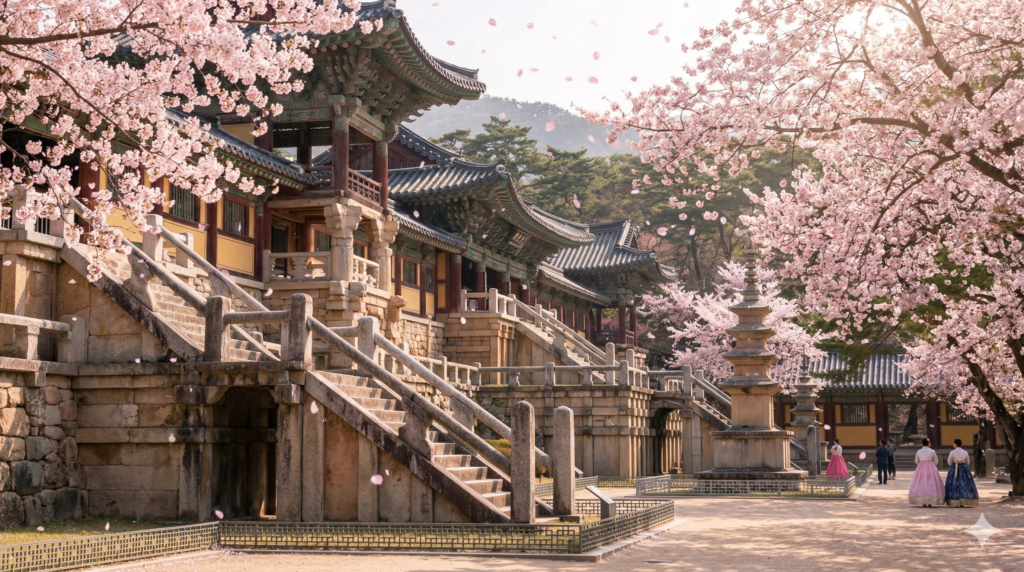
No site in Gyeongju, and arguably in all of Korea, rivals Bulguksa Temple (불국사) for sheer historical and artistic magnificence. Built in 528 AD during the Silla period and extensively expanded in the 8th century, Bulguksa is a masterpiece of Buddhist architecture — a series of stone staircases, carved bridges, pagodas, and wooden halls arranged with a mathematical precision that reflects the Silla belief in creating a physical paradise on earth. The stone staircases leading to the main gate — Cheongun-gyo (Blue Cloud Bridge) and Baegungyo (White Cloud Bridge) — are among the most photographed architectural elements in all of Korean history, and rightfully so. No photograph, however carefully composed, quite captures the feeling of standing at their base and looking upward.
A short bus ride up the mountain behind Bulguksa brings you to Seokguram Grotto (석굴암), a man-made granite cave housing a serene and perfectly proportioned seated Buddha, completed in 774 AD. The grotto was engineered with extraordinary sophistication — its dome constructed without mortar, using precisely interlocking stones that have held for over 1,200 years — and the Buddha within radiates a stillness that visitors consistently describe as one of the most moving experiences of their time in Korea. Together, Bulguksa and Seokguram form a single UNESCO World Heritage Site, and they deserve every moment of reverence that designation implies.
In the heart of the city, Tumuli Park (대릉원) is a surreal and quietly beautiful landscape — a public park filled with enormous grassy mounds, each one the royal burial tomb of a Silla king or queen. Walking among them at dusk, as the light fades and the mounds cast long shadows across the grass, produces one of the most atmospheric and contemplative experiences available to any traveler in Asia. One of the tombs — Cheonmachong — is open to visitors, displaying the extraordinary gold crowns, jade ornaments, and ceremonial objects excavated from within.
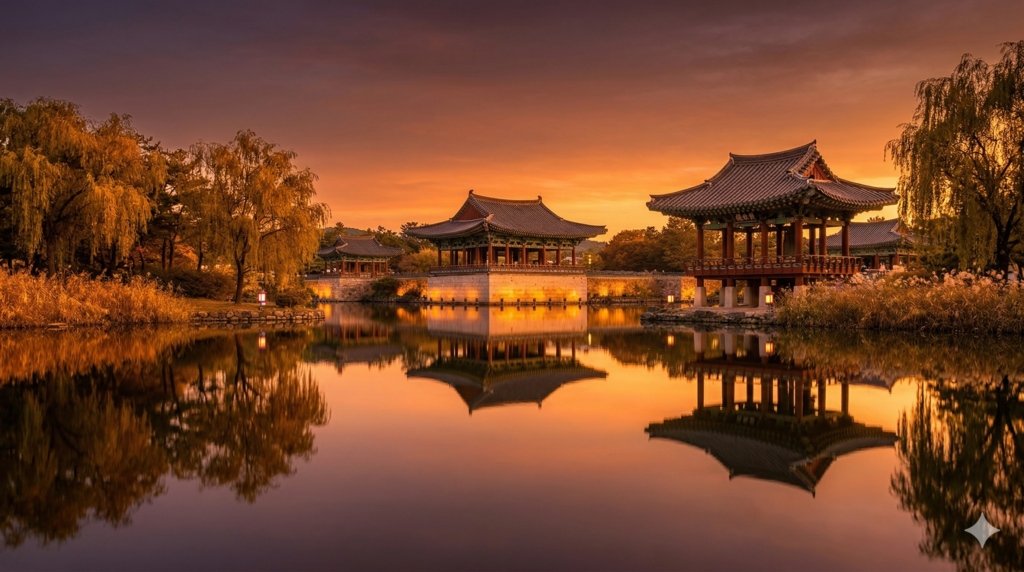
As evening falls, make your way to Anapji Pond (안압지), a royal pleasure garden built in 674 AD that the Silla court used for banquets, ceremonies, and quiet contemplation. The pond is beautiful by day, but it is genuinely magical at night — the reflection of the reconstructed Silla pavilions shimmering in the still water, surrounded by the calls of birds and the rustle of willows. It is, without exaggeration, one of the most romantic and historically evocative settings in Korea, and a mandatory stop for any traveler who finds themselves in Gyeongju after sunset.
K-Drama Connections
Gyeongju is the spiritual home of Korea’s historical drama tradition. The Silla Kingdom’s dramatic history — court intrigue, warrior culture, forbidden love, and political upheaval — has inspired some of Korea’s most ambitious and beloved sageuk productions.
The Great Queen Seondeok (선덕여왕, 2009), one of the highest-rated historical dramas in Korean television history, dramatizes the life of Queen Seondeok of Silla — Korea’s first reigning queen — and was partly filmed in and around Gyeongju’s historical sites. Hwarang: The Poet Warrior Youth (화랑, 2016), featuring a cast of Korea’s most prominent young actors, brought the elite Silla warrior class known as the Hwarang to global audiences, with Gyeongju’s landscapes serving as a natural backdrop. Even period films like The Admiral: Roaring Currents draw on the deep historical atmosphere that only cities like Gyeongju can authentically provide.
For K-drama fans, walking through Bulguksa or along the paths of Tumuli Park carries an additional layer of meaning — you are standing in the living landscape that inspired the stories you fell in love with on screen.
Why Gyeongju Is Underrated
Despite being one of the greatest historical cities in all of Asia — genuinely comparable in cultural significance to Kyoto in Japan or Luoyang in China — Gyeongju remains surprisingly overlooked by Western travelers, who often limit their Korea itinerary to Seoul and Busan alone. This is, from a traveler’s perspective, a significant missed opportunity. Gyeongju moves at a slower pace, its streets are quieter, its historical sites less crowded, and its atmosphere more contemplative — qualities that have become increasingly rare and precious in modern travel.
It is ideally positioned as a 1–2 day side trip from Busan (just 40 minutes by KTX), making it one of the most rewarding and logistically simple additions to any Korea itinerary.
Practical Travel Information
Getting there: KTX from Busan (40 min); KTX from Seoul (approximately 2 hours).
Best season: Spring for cherry blossoms along Bomun Lake; Autumn for the Gyeongju World Culture Expo and spectacular foliage.
Getting around: Bicycle rental is the most popular and rewarding way to explore — the flat city center is perfectly suited to cycling between historical sites.
Must-eat local food: Hwangnam-ppang (황남빵) — a small, traditional pastry filled with red bean paste, unique to Gyeongju and beloved across Korea.
Recommended stay: 1–2 days, ideally as part of a Busan + Gyeongju combined trip.
4. Jeonju — The Soul of Korean Tradition
Best for: Foodies, culture purists, Hanbok experience seekers, slow travelers, film lovers
There are cities you visit for their monuments, cities you visit for their landscapes, and cities you visit for their food. Jeonju (전주) is all three — but above all, it is a city you visit to understand what Korea truly is at its most traditional, most delicious, and most human core. Located in the North Jeolla Province of central-western Korea, Jeonju is widely regarded by Koreans themselves as the cultural and culinary capital of the nation — high praise in a country where regional pride runs extraordinarily deep.
Cultural Highlights
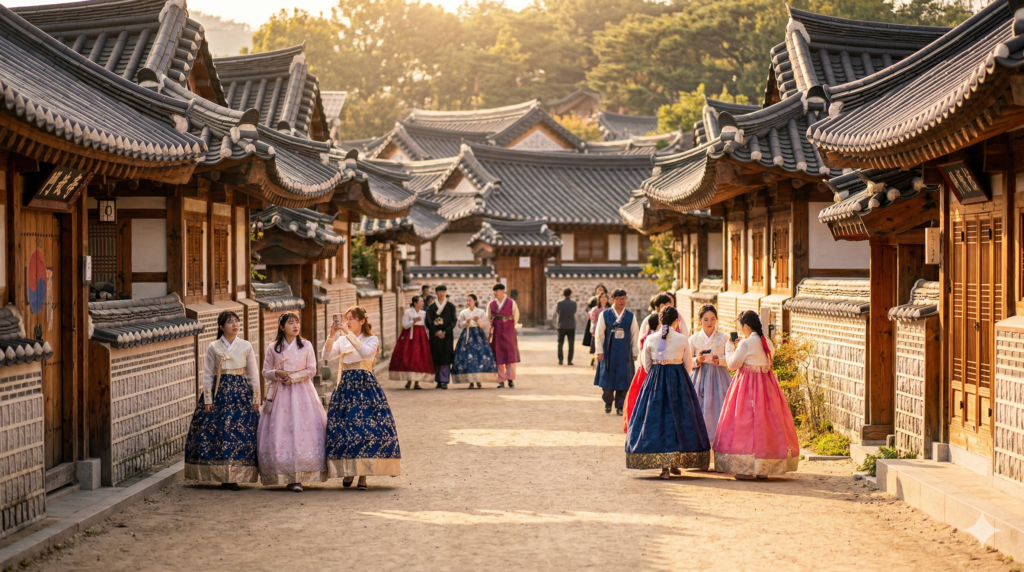
The undisputed heart of Jeonju is the Jeonju Hanok Village (전주한옥마을) — a remarkably intact neighborhood of over 700 traditional Korean hanok (한옥) wooden houses, spread across the gentle slopes of a hillside just south of the city center. Unlike many preserved historical districts in Asia, Jeonju Hanok Village is not a museum or a theme park — it is a living, breathing neighborhood where people still reside in traditional homes, where independent craftspeople still practice centuries-old techniques, and where the rhythms of Korean traditional culture play out daily in tea ceremonies, paper-making workshops, hanji (traditional Korean paper) art studios, and gochujang (red pepper paste) markets.
Walking through the village at dawn — before the day-trippers arrive from Seoul and Busan — is one of the most genuinely peaceful and beautiful experiences available to any traveler in Korea. The curved clay-tiled rooftops, the smell of wood and earth, the occasional sound of traditional music drifting from a courtyard — it is the kind of atmosphere that makes you slow down involuntarily, reach for your camera, and then put it away, choosing instead to simply be present.
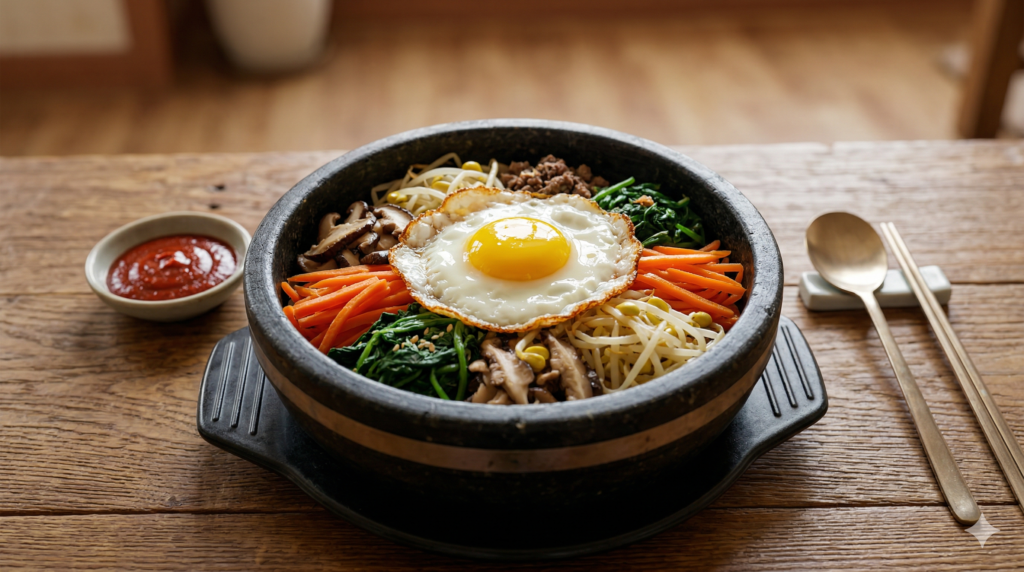
Jeonju is also the birthplace of bibimbap (비빔밥) — Korea’s most internationally recognized dish and one of the great culinary achievements of any food culture in the world. Jeonju bibimbap is categorically different from the versions served in Seoul restaurants or abroad: served in a heavy stone bowl (dolsot), layered with locally sourced namul (seasoned vegetables), a perfectly fried egg, and gochujang made from Jeonju’s prized red peppers, it arrives at the table with an almost ceremonial weight. Eating it in the city where it was born, in a traditional restaurant housed in a hanok, is a genuinely significant cultural and culinary experience.
Beyond food, Jeonju has a quietly significant place in Korean cinema culture. The Jeonju International Film Festival (JIFF), held annually each spring, is one of Korea’s most prestigious independent film festivals — a gathering of filmmakers, critics, and cinephiles from across Asia and beyond, held against the extraordinary visual backdrop of the hanok village. For travelers interested in Korean film and drama, timing a visit to coincide with JIFF adds an entirely new dimension to the Jeonju experience.
K-Drama Connections
Jeonju’s hanok village and surrounding traditional landscape have made it a natural choice for dramas seeking an authentic, unhurried vision of traditional Korean life. Period dramas and slice-of-life series alike have used Jeonju as both backdrop and inspiration.
The cultural atmosphere of Jeonju — royal cuisine, Confucian scholarship, traditional music, and artisanal craft — closely mirrors the world depicted in Jewel in the Palace (대장금, 2003), the landmark historical drama about a young woman who becomes the first female royal physician during the Joseon Dynasty. While not filmed exclusively in Jeonju, the drama’s deep engagement with Korean food culture, traditional medicine, and court life is embodied nowhere more completely than in this city.
More recently, Hometown Cha-Cha-Cha (갯마을 차차차, 2021) and similar warm, community-centered dramas have drawn aesthetic and emotional inspiration from the kind of traditional small-city Korean life that Jeonju still authentically represents.
Unique Experiences
One of the most beloved activities for visitors to Jeonju Hanok Village is the hanbok rental experience — dressing in traditional Korean clothing and walking through the ancient streets, posing before tiled rooftops and stone walls. It is an experience that is simultaneously theatrical and deeply connecting, allowing travelers to inhabit, however briefly, a version of Korean life that stretches back centuries.
For travelers seeking deeper immersion, overnight stays in a traditional hanok guesthouse (hanok stay) are available throughout the village. Sleeping on a yo (traditional floor mattress) atop heated ondol floors, waking to the sound of a courtyard fountain, and eating a traditional Korean breakfast prepared by your guesthouse host — this is, for many visitors, the single most memorable night of their entire Korea journey.
Practical Travel Information
Getting there: KTX from Seoul to Jeonju takes approximately 1.5–2 hours; express bus from Seoul’s Gangnam Express Bus Terminal takes approximately 2.5–3 hours.
Best season: Spring for the JIFF film festival and cherry blossoms; Autumn for harvest festivals and cool temperatures ideal for walking.
Must-eat foods beyond bibimbap: Kongnamul gukbap (soybean sprout rice soup — the ultimate Jeonju hangover cure), makgeolli (traditional rice wine) paired with pajeon (green onion pancakes), and Jeonju sundae (blood sausage).
Recommended stay: 1–2 days, ideal as a standalone trip from Seoul or as part of a broader southwest Korea itinerary.
5. Incheon — More Than Just an Airport
Best for: Stopover travelers, Chinatown explorers, island hoppers, fans of futuristic urban landscapes
For the vast majority of international visitors, Incheon (인천) is the gateway to Korea — the city where the plane lands, where the first Korean air hits you as the airport doors slide open, and where most travelers promptly board an airport express train to Seoul without a second glance. This is, travel experts agree, one of the most consistent mistakes made by visitors to Korea.
Incheon is a city of extraordinary and deeply underappreciated contrasts — Korea’s oldest Chinatown, one of the world’s most futuristic smart cities, an archipelago of stunning offshore islands, and a layered colonial and maritime history that gives the city a depth and complexity entirely its own.
Cultural Highlights
Incheon Chinatown (인천 차이나타운) — the only official Chinatown in Korea — sits just outside the Incheon Ferry Terminal, its ornate red gates, painted lanterns, and the smell of jjajangmyeon (black bean noodles) creating an atmosphere unlike anywhere else in the country. The neighborhood reflects the long and complex relationship between Korea and China, particularly during the late Joseon and Japanese colonial periods. The Chinese community here has been present for over 140 years, and the food — particularly the Incheon-style jjajangmyeon — is considered among the best in Korea, a dish so beloved it has its own national holiday (Jjajang Day, celebrated on April 14th).
In sharp contrast to the warmth and historicity of Chinatown, Songdo International Business District — just 40 minutes from the airport — is a city that feels transported from the near future. Built entirely on reclaimed land from the Yellow Sea and completed over the past two decades, Songdo is one of the world’s first purpose-built smart cities: sensor-embedded infrastructure, pneumatic waste disposal systems, vast Central Park canals designed to mirror New York’s Central Park, and an architectural skyline that has appeared in numerous Korean dramas seeking a futuristic or international urban setting. Walking through Songdo feels like stepping into a vision of what cities might become — simultaneously exhilarating and slightly surreal.
For a completely different kind of Incheon experience, the retro charm of Wolmido Island (월미도) — connected to the mainland by a short causeway — offers an old-fashioned Korean amusement park, fresh seafood restaurants, and a waterfront promenade that carries the nostalgic energy of a seaside resort from a previous era. It is deeply, authentically Korean in a way that is difficult to articulate but immediately felt.
K-Drama Connections
Incheon’s futuristic Songdo district has appeared in multiple Korean dramas as a stand-in for international or technologically advanced settings. My Love from the Star (별에서 온 그대, 2013) — the drama that made Kim Soo-hyun and Jun Ji-hyun global stars — used Songdo’s gleaming glass towers and wide boulevards as part of its contemporary Seoul backdrop. The international airport itself has appeared in countless drama arrival and departure scenes — that uniquely Korean drama trope of the tearful airport goodbye or the desperate last-minute reunion is, for many fans, inextricably linked with Incheon’s soaring terminal architecture.
Practical Travel Information
Getting there: Incheon is directly connected to Seoul via the AREX Airport Express (43 min to Seoul Station).
Best way to explore: One focused day is sufficient to cover Chinatown, Songdo, and Wolmido Island.
Must-eat foods: Incheon-style jjajangmyeon and tangsuyuk (sweet and sour pork) in Chinatown.
Recommended stay: 1 day — best experienced either at the beginning or end of a Korea trip, eliminating the need to return to the airport from Seoul.
6. Chuncheon — The Lake City of Romance
Best for: Couples, nature lovers, K-drama pilgrims, travelers seeking a slower pace
An hour and a half east of Seoul by ITX express train, Chuncheon (춘천) sits at the confluence of two rivers and multiple lakes in the mountainous Gangwon Province — a city of misty water, pine-forested hills, and a particular romantic quality that has made it one of the most emotionally significant travel destinations in all of Korea. For K-drama fans specifically, Chuncheon and its surroundings represent something close to sacred ground.
Cultural Highlights
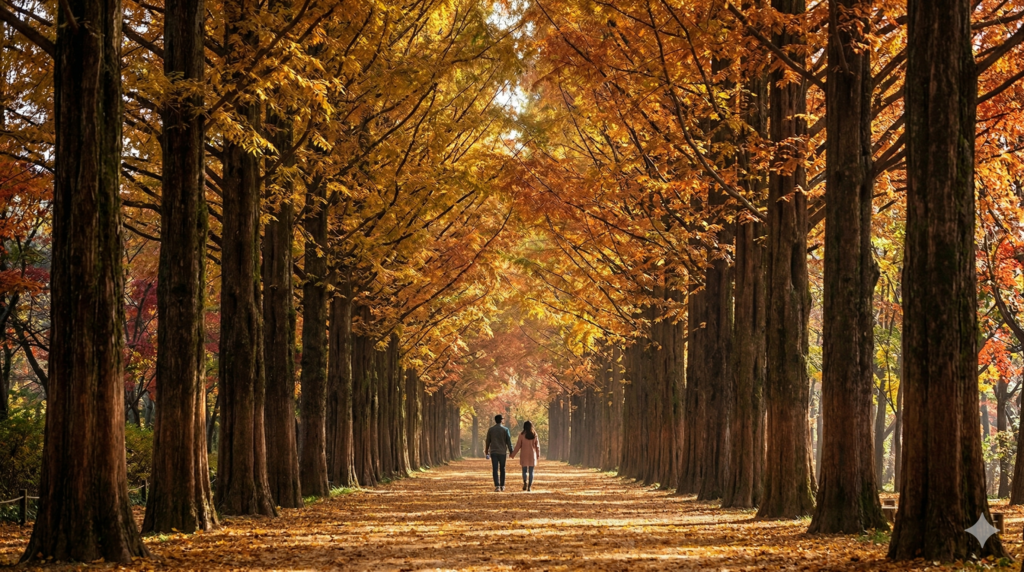
The undisputed centerpiece of Chuncheon’s appeal to international visitors is Nami Island (남이섬, Namiseom) — a small, canoe-shaped river island accessible by a short ferry ride from the Gapyeong pier. Nami Island is one of those rare places that manages to be simultaneously enormously popular and genuinely, deeply beautiful. Its famous metasequoia tree avenues — towering rows of dawn redwood trees whose canopies meet overhead to form living green tunnels in summer and skeletal, luminous corridors in winter — have been photographed millions of times and still manage to take the breath away when encountered in person. The island operates as an arts and culture space, filled with sculptures, galleries, performance spaces, children’s programs, and enough natural beauty to fill an entire day of unhurried wandering.
Beyond Nami Island, Chuncheon itself has a pleasant, livable city energy — a university town with good coffee, independent bookshops, riverside cycling paths, and the kind of relaxed local atmosphere that Seoul, for all its magnificence, cannot provide. The city is also the undisputed home of dakgalbi (닭갈비) — spicy stir-fried chicken cooked on a large iron griddle at the table, mixed with rice cakes, cabbage, sweet potatoes, and a sauce of gochujang and sesame that is, quite simply, one of the most satisfying meals available anywhere in Korea. The Chuncheon Myeongdong Dakgalbi Alley — a street lined entirely with dakgalbi restaurants — is a pilgrimage that every visitor to the city owes themselves.
K-Drama Connections
No city in Korea carries a more direct and transformative connection to the global rise of K-drama tourism than Chuncheon. Winter Sonata (겨울연가, 2002) — the drama widely credited with igniting the Korean Wave across Asia and beyond — was filmed almost entirely in and around Chuncheon and Nami Island. The story of two young lovers separated by tragedy and reunited years later, played by Bae Yong-joon and Choi Ji-woo against the snow-covered beauty of Nami Island’s tree avenues and Chuncheon’s frozen lakescapes, created a wave of tourism from Japan, China, and Southeast Asia that fundamentally changed how the world perceived Korean culture.
Over two decades later, that connection remains alive and deeply felt. Visitors from Japan, in particular, continue to make dedicated pilgrimages to Nami Island and the filming locations of Winter Sonata — a testament to the enduring emotional power of a drama that, for many, was the first Korean story they ever fell in love with.
Practical Travel Information
Getting there: ITX Cheongchun train from Seoul’s Yongsan Station (approximately 1 hour 20 minutes); direct buses from Seoul’s Dong Seoul Terminal.
Getting to Nami Island: Take a bus or taxi to Gapyeong Ferry Terminal; the ferry to Nami Island runs frequently and takes 5 minutes.
Best season: Autumn for the spectacular foliage that turns the metasequoia avenues gold and amber; Winter for the snow-covered landscapes that mirror Winter Sonata‘s iconic imagery.
Must-eat: Dakgalbi in Myeongdong Dakgalbi Alley — order the cheese dakgalbi variation for an unforgettable experience.
Recommended stay: 1–2 days from Seoul, ideal as a day trip or overnight escape.
Quick Comparison Table — Best Korean Cities at a Glance
| City | Best For | K-Drama Fame | Recommended Stay |
|---|---|---|---|
| Seoul | Everything — culture, food, drama, nightlife | ⭐⭐⭐⭐⭐ | 4–7 days |
| Busan | Coastal beauty, seafood, art, local culture | ⭐⭐⭐⭐ | 2–3 days |
| Gyeongju | Ancient history, UNESCO heritage, sageuk drama | ⭐⭐⭐ | 1–2 days |
| Jeonju | Food culture, traditional hanok, slow travel | ⭐⭐⭐ | 1–2 days |
| Incheon | Chinatown, futuristic Songdo, island hopping | ⭐⭐ | 1 day |
| Chuncheon | Romance, nature, K-drama pilgrimage, dakgalbi | ⭐⭐⭐⭐ | 1–2 days |
Insider Tips for Visiting Korea as a K-Drama Fan
How to Find Real K-Drama Filming Locations
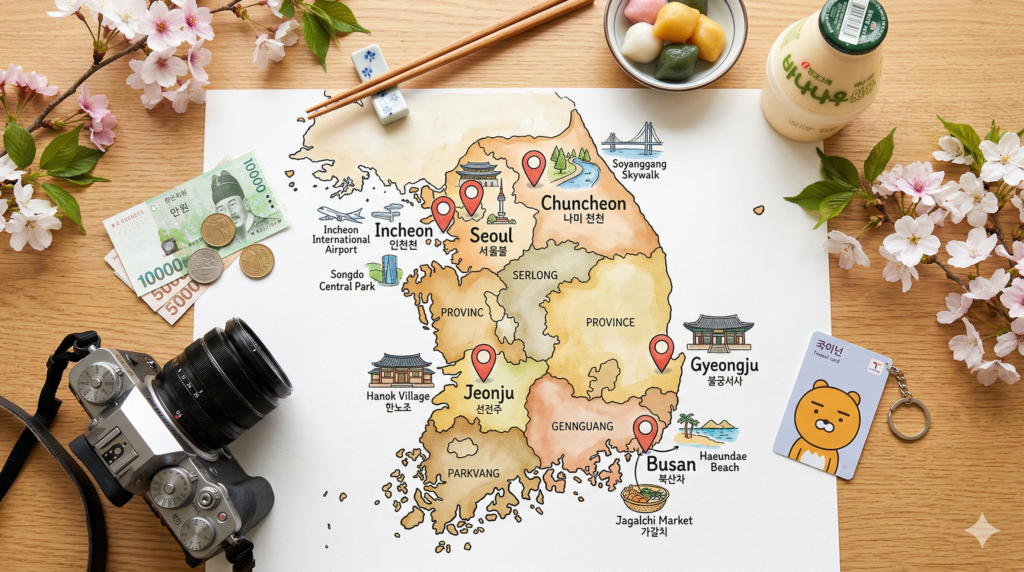
Finding the exact alley, café, rooftop, or riverside bench where your favorite drama moment was filmed is one of the great joys of traveling in Korea as a drama fan — and it is far more achievable than most visitors realize. Naver Map (네이버 지도) and KakaoMap are the two essential navigation tools in Korea, both more accurate and comprehensive than Google Maps for Korean locations. Many filming locations are tagged directly within these apps, particularly for major recent dramas.
The Korea Tourism Organization’s official website (visitkorea.or.kr) maintains a regularly updated database of K-drama and K-film filming locations across the country, organized by drama title and geographic region — an invaluable resource for planning a drama-themed itinerary. Several private tour companies in Seoul offer highly specialized K-drama location tours, including themed tours focused on specific beloved series — Goblin, Crash Landing on You, Extraordinary Attorney Woo, and others — with guides who provide behind-the-scenes context and help recreate iconic scenes.
For the most dedicated fans, the Korean Drama Location Map — a community-maintained collaborative project available online — documents thousands of filming locations across the country with photographs, GPS coordinates, and drama episode references.
Best Time of Year to Visit Korea
Korea experiences four genuinely distinct seasons, each offering a completely different — and compelling — version of the country.
Spring (late March–May) is widely considered the most beautiful time to visit. Cherry blossoms transform Seoul’s Yeouido district, Gyeongju’s Bomun Lake, and Jinhae (near Busan) into canvases of pink and white that seem lifted directly from a drama opening sequence. Temperatures are mild, skies are clear, and the country feels renewed and celebratory. This is peak travel season — book accommodation well in advance.
Summer (June–August) brings heat, humidity, and the monsoon season (jangma, typically mid-June to late July), but also Korea’s festival culture at its most vibrant. The Boryeong Mud Festival, Busan International Film Festival (held in October), and numerous local summer celebrations fill the calendar. Beach destinations like Busan and the islands off Incheon are at their most energetic.
Autumn (September–November) rivals spring for sheer visual beauty. The foliage across Korea’s mountains — Seoraksan, Jirisan, Naejangsan — turns to extraordinary shades of red, orange, and gold. Temperatures cool to perfection for walking and hiking. Gyeongju’s historical sites, Nami Island’s tree avenues, and Seoul’s palace gardens are at their atmospheric peak.
Winter (December–February) is cold and sometimes snowy — but for K-drama fans, it is perhaps the most evocative season of all. Nami Island covered in snow looks precisely like the world of Winter Sonata. Seoul’s Namsan Tower glittering in the cold air above a snow-dusted city is a sight of quiet, cinematic magnificence. Ski resorts in Gangwon Province (including those used during the 2018 PyeongChang Winter Olympics) are excellent. Winter is also low season — meaning better accommodation prices and fewer crowds at major sites.
Getting Around Between Korean Cities
Korea’s transportation infrastructure is among the finest in the world, and navigating between cities is one of the genuine pleasures of travel here.
The KTX high-speed rail network (Korea Train eXpress) is the backbone of inter-city travel — connecting Seoul to Busan in 2.5 hours, Seoul to Gyeongju in approximately 2 hours, and Seoul to Jeonju in under 2 hours. Trains are punctual, comfortable, and affordable by international standards. Purchasing tickets in advance through the KORAIL website or SRT app is strongly recommended during peak travel periods.
The T-money card — a rechargeable transit card available at any convenience store — works seamlessly across Seoul’s metro system, city buses throughout the country, and even taxis. It is the single most practical travel tool for any visitor to Korea and should be the first purchase made upon arrival.
For getting around within cities, Kakao T is Korea’s dominant ride-hailing app, operating similarly to Uber. It is reliable, affordable, and available in English — an excellent supplement to public transport for reaching destinations off the main transit lines.
Frequently Asked Questions
Q1: What is the best city to visit in Korea for first-timers?
Seoul is the unambiguous choice for first-time visitors to Korea. As the capital and cultural, economic, and creative center of the country, Seoul offers the most comprehensive introduction to everything Korea has to offer — royal palaces and ancient markets, cutting-edge fashion and street food culture, K-drama filming locations, and a public transport system so excellent it makes the city immediately accessible. A week in Seoul will leave most first-timers with a deep and genuine love for Korean culture — and an immediate desire to return and explore further.
Q2: Which Korean city is most famous for K-drama filming locations?
Seoul leads decisively, with virtually every neighborhood having served as a drama backdrop at some point. However, Busan (Our Blues, Reply 1997), Chuncheon and Nami Island (Winter Sonata), and Gyeongju (countless sageuk productions) each carry their own powerful and distinct drama legacy. For travelers whose K-drama passion runs deep, each of these cities offers a meaningful and rewarding pilgrimage experience.
Q3: How many cities can I realistically visit in 10 days in Korea?
A well-planned 10-day Korea itinerary can comfortably include: Seoul (4 days) as your base and primary destination; Busan (2–3 days) reached by KTX; Gyeongju (1–2 days) as a side trip from Busan; and either Jeonju or Chuncheon (1–2 days) depending on your interests. This itinerary covers Korea’s greatest urban, coastal, historical, and romantic highlights without feeling rushed, thanks to the efficiency of the KTX rail network.
Q4: Is Korea safe for solo female travelers?
Korea is consistently and emphatically one of the safest countries in Asia — and in the world — for solo female travelers. Violent crime rates are extremely low, public spaces are well-lit and well-monitored, and the culture of public safety is deeply ingrained. Solo female travelers from dozens of countries have documented their Korea experiences extensively online, and the consensus is overwhelming: Korea is not only safe but actively welcoming to independent women travelers. Standard urban awareness applies, as in any major city, but Korea presents no particular safety concerns.
Q5: Do I need to speak Korean to travel in Korea?
Not at all, particularly in major cities. Seoul, Busan, and other major tourist destinations have comprehensive English-language signage in metro stations, airports, and tourist areas. Most major hotels, restaurants, and tourist sites have English-speaking staff or English menus. Translation apps — particularly Papago (developed in Korea and superior to Google Translate for Korean) — handle everyday communication situations effortlessly. In smaller cities and rural areas, English proficiency decreases, but the combination of Papago, pointing, and the genuine warmth of Korean hospitality makes communication manageable and often genuinely enjoyable.
Final Verdict — Which Korean City Should You Visit First?
Korea is not a destination that can be reduced to a single city — and the beauty of planning a Korea trip is that even a modest itinerary can accommodate remarkable variety. But if you are standing at the beginning of your Korean journey, unsure of where to start, here is the expert guidance:
Visit Seoul first — always. It is the city that will introduce you to Korea most fully, most generously, and most accessibly. Give it four to five days, resist the urge to rush through its neighborhoods, and let it reveal itself at its own pace.
Add Busan for contrast and coast. The shift from Seoul to Busan — from inland capital to port city, from Han River to East Sea — is one of the great travel contrasts in Asia. Two or three days in Busan will feel like a completely different country.
Add Gyeongju if history moves you. If you have stood in the ruins of Rome or walked the temples of Kyoto and felt history physically present in the earth beneath your feet, Gyeongju will give you that feeling in a Korean context unlike anything else in the country.
Choose Jeonju for food and tradition. If Korean cuisine and traditional culture are your primary passions, Jeonju is not optional — it is essential.
Add Chuncheon for romance and renewal. If you are traveling as a couple, or if Winter Sonata shaped your relationship with Korean culture, Nami Island and Chuncheon deserve at least one unhurried day.
The truth about Korea — the truth that every traveler discovers and that no travel guide can fully convey in advance — is that the country rewards genuine curiosity. The more slowly you travel, the more Korean you eat, the more dramas you watch before and during your trip, and the more willing you are to wander without a plan, the more Korea will give you in return.
Korea is not simply a destination. It is an experience that unfolds in layers — ancient and contemporary, cinematic and deeply real, familiar from a hundred drama scenes and yet endlessly surprising when encountered in person. The best cities to visit in Korea each offer something irreplaceable: Seoul’s electric, all-encompassing energy; Busan’s coastal soul; Gyeongju’s thousand-year stillness; Jeonju’s culinary and cultural depth; Incheon’s surprising contrasts; Chuncheon’s lakeside romance.
Whether you arrive as a devoted K-drama fan or a curious first-time visitor to Asia, Korea will meet you with extraordinary food, breathtaking scenery, profound history, and a culture that is — at every level, in every city — worth knowing deeply.
The screen has shown you Korea. Now it’s time to go and live it.