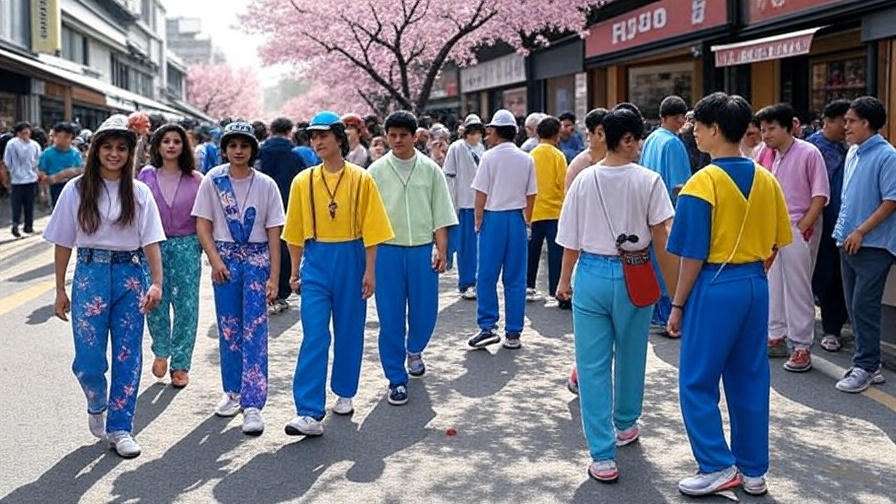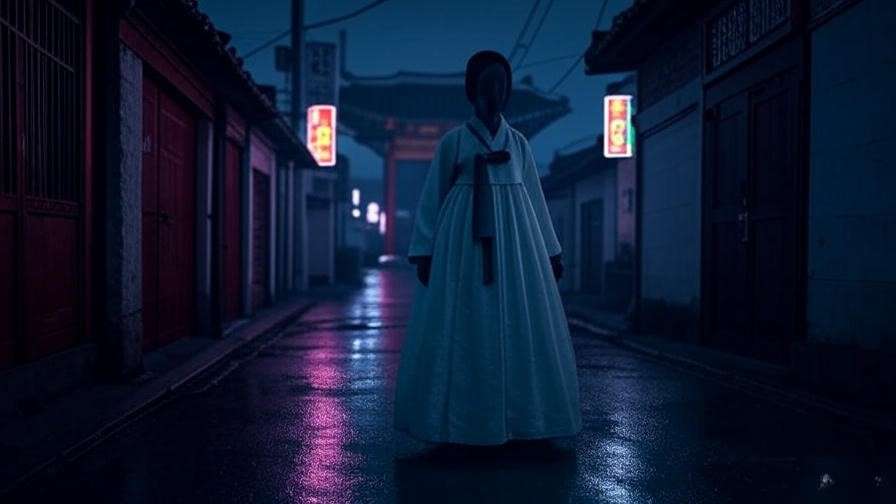
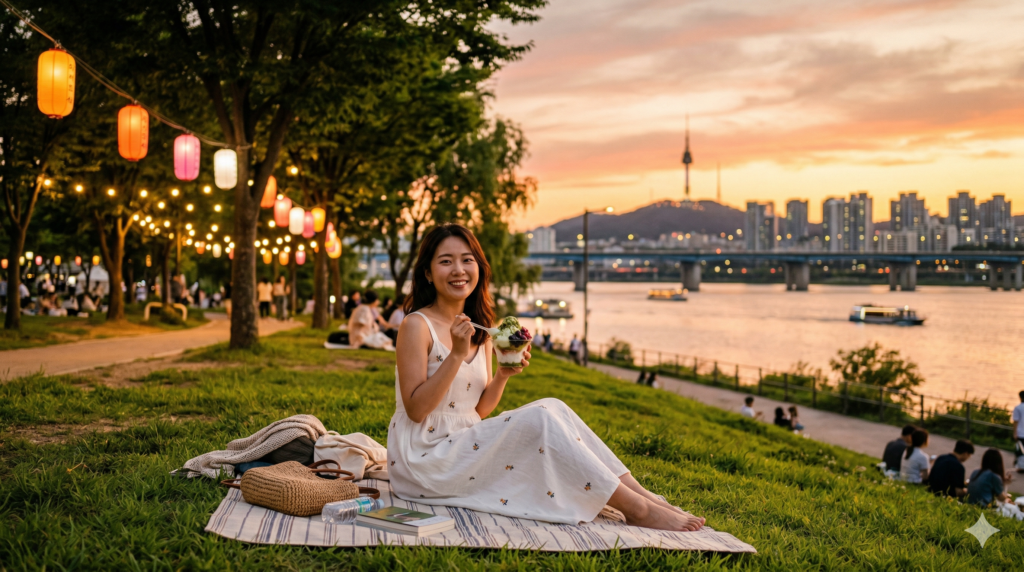
Picture this: the cherry blossoms are long gone, the air is warm and thick with humidity, and Seoul’s streets are buzzing with the kind of golden-hour energy that makes every K-drama summer scene feel achingly real. Street vendors are selling golden corn dogs and rainbow bingsu. Couples are sprawled across Han River park with convenience store ramen and cold canned beer. Somewhere in Bukchon, a narrow alley glows in the late evening light — exactly like the ones you’ve seen in Goblin or My Love from the Star. This is summer in Korea, and it is unlike anything you have ever experienced.
Whether you are a devoted K-drama fan finally making your pilgrimage to Seoul, a first-time traveler drawn in by the Korean Wave, or a culture enthusiast eager to experience Korea beyond the tourist brochures, this guide was written for you. Over the next few thousand words, you will discover the best festivals, the most iconic K-drama filming locations, the foods you absolutely cannot skip, practical packing tips, cultural etiquette, and an honest look at what Korean summer is really like — heat, monsoons, and all.
This is not a surface-level listicle. This is the only Korean summer guide you will ever need.
Why Summer in Korea Is Unlike Any Other Season
Korea is a country of four dramatically distinct seasons, and each one carries its own personality. Spring gets most of the global attention — and the Instagram posts — thanks to cherry blossoms. Autumn is beloved for its fiery foliage. But summer? Summer in Korea is raw, vibrant, communal, and deeply cinematic. It is the season that most K-dramas use as their emotional backdrop for a reason.
The Climate You Need to Know Before You Go
Let’s be honest first: Korean summers are hot and humid. From June through August, temperatures in Seoul regularly climb to 33–36°C (91–97°F), and the humidity can make it feel significantly warmer. The country also experiences jangma — the East Asian monsoon season — which typically runs from late June through mid-July, bringing heavy rainfall, overcast skies, and occasional flooding in low-lying areas.
But here’s the thing that most travel guides won’t tell you: jangma does not ruin your trip. It reshapes it. The rain usually falls in intense bursts rather than all-day downpours, leaving behind cleaner air, cooler evenings, and an atmospheric moodiness that, honestly, feels straight out of a drama scene.
The sweet spot for summer travel is late July through mid-August — after the monsoon tapers off, festivals are in full swing, and the long evenings are perfect for outdoor exploration. If you are heat-sensitive, target the first two weeks of June, when temperatures are milder and crowds are thinner.
How Koreans Embrace Summer — A Cultural Mindset
One of the most fascinating things about experiencing summer in Korea as a foreigner is witnessing how Koreans lean into the season rather than hide from it. There is no collective retreat indoors. Instead, Korean summer culture is built around community, food rituals, and making the most of long, warm evenings.
Koreans have a concept deeply embedded in their summer lifestyle: boknal (복날) — the three hottest days of the traditional lunar calendar. On these days, rather than eating cold food to cool down (as most Westerners would), Koreans eat samgyetang — a steaming hot ginseng chicken soup. The belief, rooted in traditional Korean medicine, is that you fight heat with heat to restore the body’s energy balance. It sounds counterintuitive, but sitting down to a clay pot of samgyetang on a sweltering afternoon is one of the most authentically Korean experiences you can have in summer.
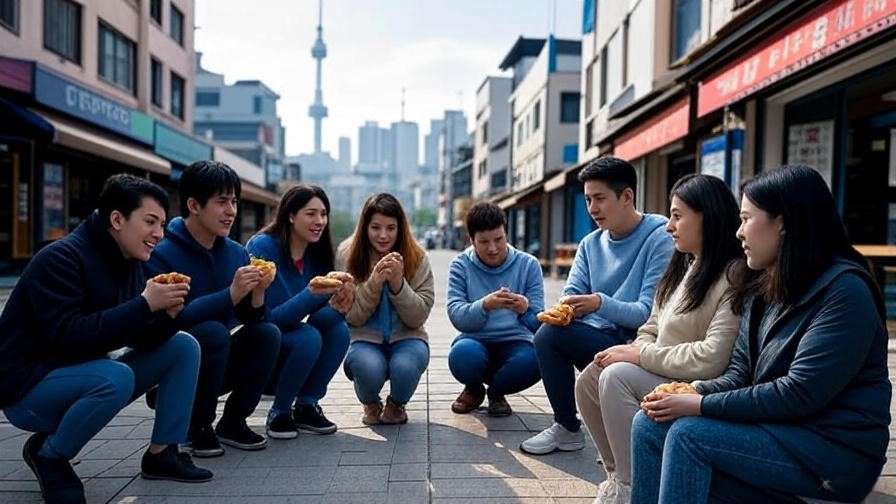
Beyond food, summer evenings in Korea belong to Han River. Locals gather in enormous numbers at Yeouido, Ttukseom, and Mangwon Han River Parks — the very same spots you have seen in countless K-dramas — to picnic, cycle, play badminton, and watch the city skyline reflect off the water. It is free, it is social, and it is one of the most joyful expressions of Korean summer culture you will witness.
Top K-Drama Filming Locations to Visit This Summer in Korea
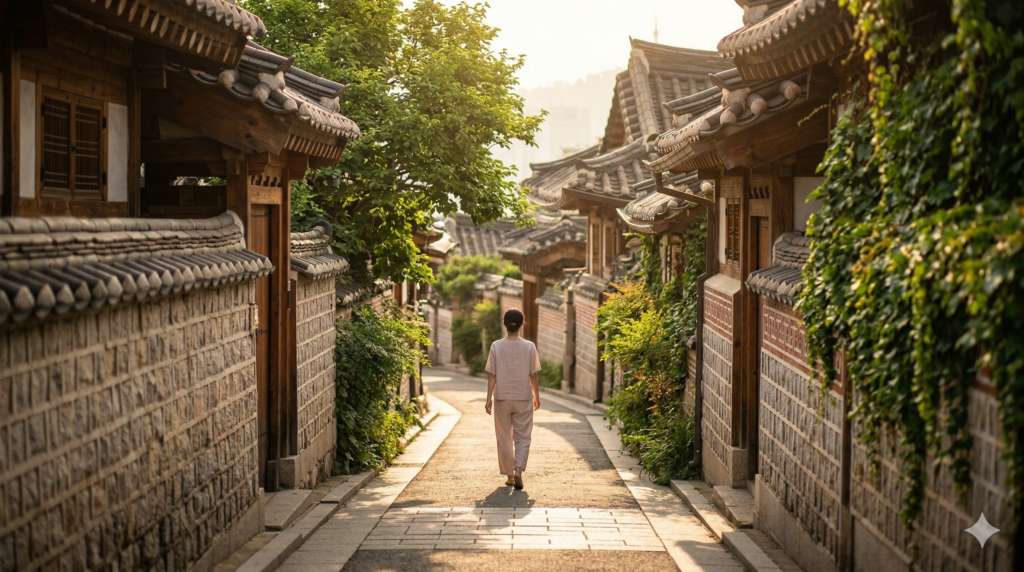
For millions of international visitors, K-dramas are the reason they first fell in love with Korea. And summer — with its long golden hours, open-air markets, and lush green landscapes — is arguably the best season to walk in the footsteps of your favorite drama characters.
Seoul’s Most Iconic Drama Spots
Bukchon Hanok Village is the crown jewel of K-drama filming locations. This beautifully preserved neighborhood of traditional hanok houses sits between Gyeongbokgung Palace and Changdeokgung Palace, and it has appeared in productions including Goblin, My Love from the Star, and Jewel in the Palace. In summer, the narrow stone alleys are framed by lush greenery, making it even more photogenic than it is in winter or spring. Pro tip: arrive before 9AM. It is significantly cooler, dramatically quieter, and infinitely more atmospheric than midday visits.
Namsan Tower (N Seoul Tower) sits at 479 meters above sea level and offers panoramic views of Seoul that have appeared in dozens of Korean productions, including Boys Over Flowers and You From Another Star. The cable car ride up is an experience in itself, and the surrounding Namsan Park is a beautiful green escape from the city heat below. The famous love locks on the fence outside the tower have become a pilgrimage for K-drama fans worldwide.
Hongdae — the vibrant university district known for street performances, indie music, and wall-to-wall cafes — provided the energetic backdrop for dramas like Itaewon Class and My Mister. In summer, Hongdae’s outdoor stages come alive every weekend with busking performances, and the surrounding streets are packed with night markets until well past midnight.
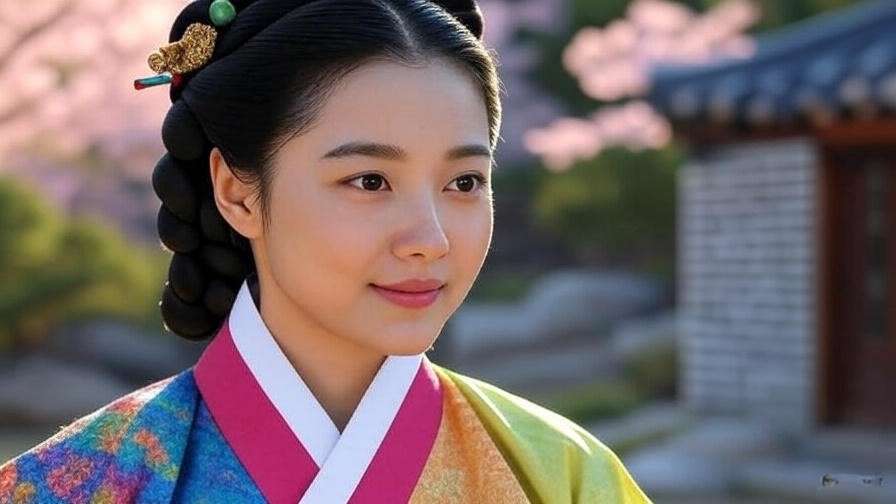
Gyeongbokgung Palace is not just a history lesson — it is a living drama set. Wearing a hanbok (traditional Korean dress) allows you free entry to the palace grounds, and dozens of K-drama and film productions have used its grand architecture as a backdrop. In summer, the palace opens for special nighttime viewing events that are nothing short of spectacular.
Outside Seoul — Hidden Drama Gems
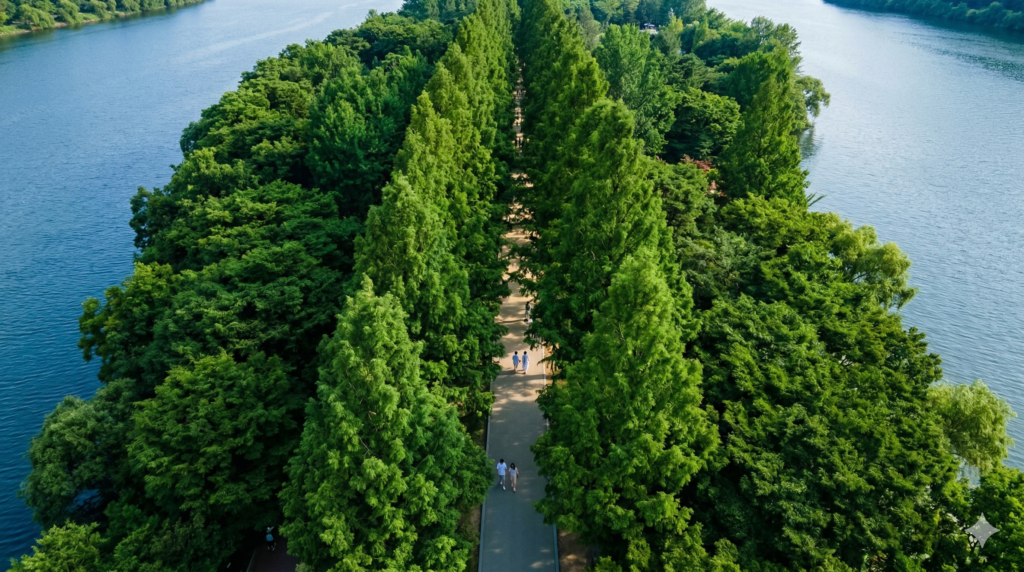
Nami Island is a small, tree-lined island in Chuncheon that became internationally famous after Winter Sonata aired in 2002 — but it is equally breathtaking in summer. The iconic tree-lined avenues are fully green and canopied, providing cool shade and romantic walking paths. The island is only a 90-minute journey from Seoul by train and ferry, making it an easy and deeply rewarding day trip.
Jeonju Hanok Village, located about two and a half hours south of Seoul by KTX, is one of Korea’s best-preserved traditional villages. Featured in dramas like The Legend of the Blue Sea and Rookie Historian Goo Hae-ryung, Jeonju is also Korea’s undisputed food capital. In summer, the village hosts outdoor cultural performances, traditional craft workshops, and street food festivals that make it well worth the journey.
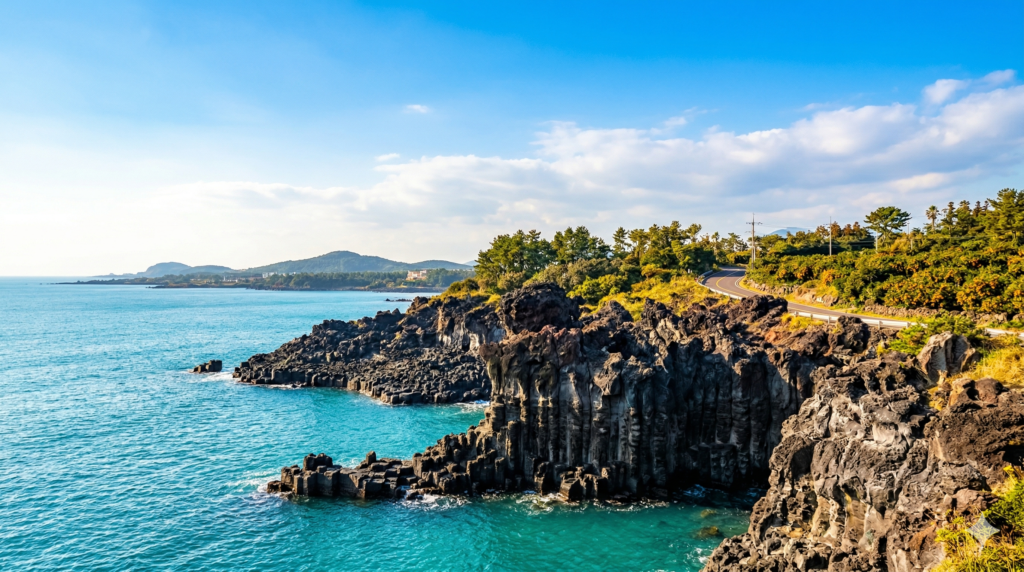
Jeju Island deserves its own article — and arguably its own guide series. Korea’s largest island, located off the southern coast, featured prominently in Crash Landing on You, Our Beloved Summer, and Welcome to Samdalri, among many others. In summer, Jeju’s volcanic landscape, black sand beaches, tangerine groves, and dramatic coastal cliffs are at their most lush and vivid. It is, without exaggeration, one of the most beautiful places in all of East Asia.
How to Plan a K-Drama Location Tour
Planning a drama location tour in Korea is easier than ever, thanks to dedicated online fan communities, the Korea Tourism Organization’s official drama map resources, and apps like Naver Maps, which has Korean-language location pins for most major filming sites.
A practical 3-day Seoul drama location itinerary might look like this:
Day 1: Gyeongbokgung Palace (morning, hanbok rental) → Bukchon Hanok Village (before lunch) → Insadong for traditional lunch → Namsan Tower (late afternoon/sunset)
Day 2: Hongdae street exploration and café hopping → Han River picnic at Yeouido (evening) → Night market in Myeongdong
Day 3: Day trip to Nami Island (full day) → Return to Seoul for pojangmacha dinner in Mapo District
Must-Experience Korean Summer Festivals & Events
Korean summers are festival-dense in the best possible way. From mud-soaked beach parties to solemn lantern ceremonies, there is a cultural event for every type of traveler.
Boryeong Mud Festival
The Boryeong Mud Festival is perhaps Korea’s most internationally famous summer event, held annually in July at Daecheon Beach in South Chungcheong Province. What began in 1998 as a marketing event for a local cosmetics company has grown into a massive outdoor festival drawing over a million visitors each year. The festival features mud wrestling, mud slides, mud pools, and live music — a gleefully chaotic celebration that captures the uninhibited spirit of Korean summer perfectly.
It is worth noting that while the festival has a party atmosphere and attracts many foreign visitors, it is also a genuine cultural celebration embraced by Koreans as a summer ritual. The mud, sourced from Boryeong’s coastal mudflats, is genuinely mineral-rich and reportedly great for your skin.
Hangang River Night Festivals
Throughout July and August, Seoul’s Han River parks host a rotating series of evening festivals, outdoor concerts, film screenings, and fireworks displays. These events are largely free, deeply local, and offer the most authentic window into how Korean city-dwellers experience summer. The Seoul International Fireworks Festival, typically held in late summer, draws massive crowds to the riverbanks and is a spectacular visual experience.
The Han River itself — Hangang in Korean — is worth understanding culturally. It is not merely a river. It is Seoul’s communal living room. The picnic culture along its banks, the convenience stores stocked specifically for river-goers, the couples cycling along its paths at midnight — all of it represents a uniquely Korean relationship with urban public space that no drama can fully capture until you experience it in person.
Jeju Haenyeo Festival
Every August, Jeju Island celebrates its legendary haenyeo — the female free-divers who have harvested seafood from the ocean for centuries without any breathing equipment. Recognized by UNESCO as an Intangible Cultural Heritage, the haenyeo tradition is one of Korea’s most extraordinary cultural exports. The annual festival includes diving demonstrations, seafood markets, and cultural exhibitions that offer a profound and moving connection to Korea’s maritime heritage.
Lotus Lantern Festival Events (Early Summer)
While the main Yeondeunghoe Lotus Lantern Festival is held in spring around Buddha’s Birthday, many Buddhist temples across Korea host summer lantern-lighting ceremonies and cultural programs through June and early July. Jogyesa Temple in central Seoul and Bongeunsa Temple in Gangnam are both accessible, welcoming to visitors, and offer meditative lantern-making workshops that provide a beautiful contrast to the energy of the city outside.
| Festival | Location | Month | Vibe |
|---|---|---|---|
| Boryeong Mud Festival | Boryeong | July | Wild & Fun |
| Hangang Fireworks | Seoul | July–August | Romantic |
| Jeju Haenyeo Festival | Jeju Island | August | Cultural & Moving |
| Lotus Lantern Events | Nationwide | June–July | Spiritual & Serene |
| Pentaport Rock Festival | Incheon | August | Music & Youth Culture |
Korean Summer Food Culture — Eat Like a Local
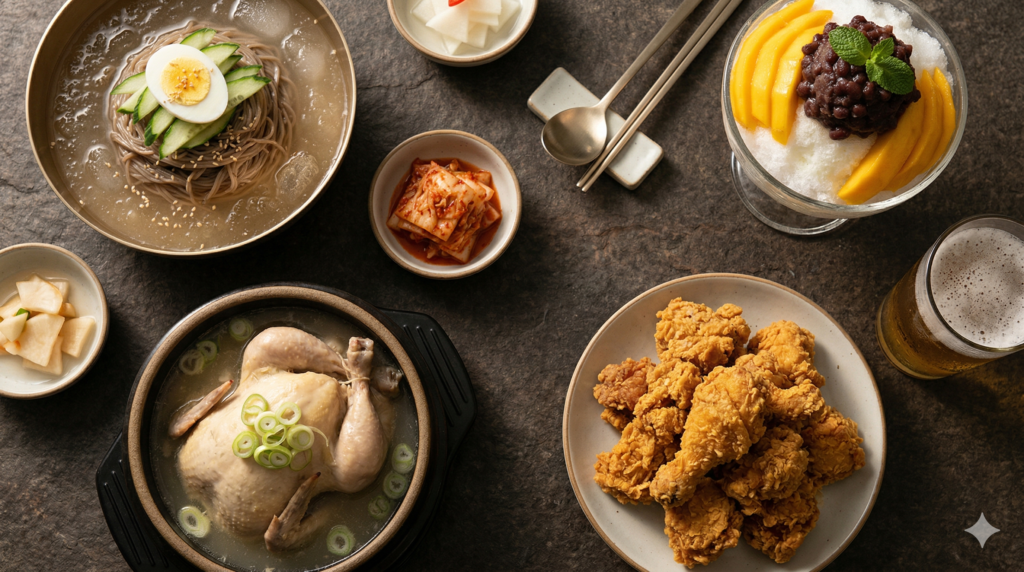
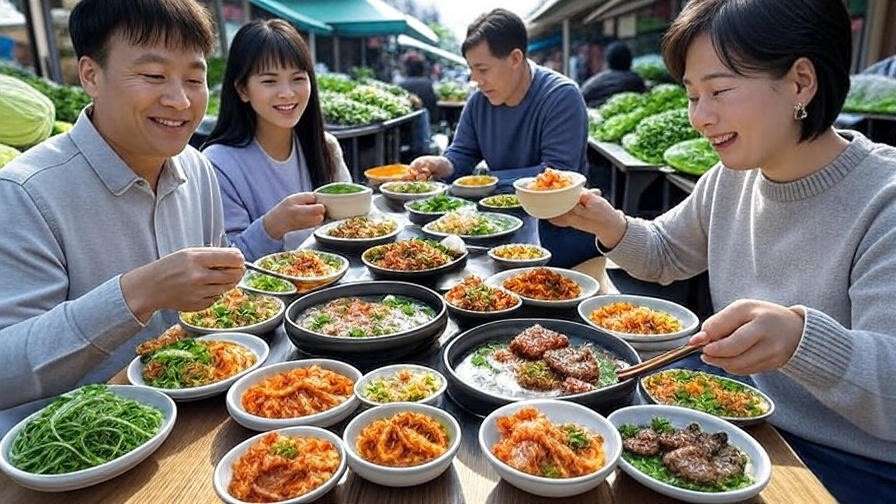
If there is one thing K-dramas have successfully marketed to the world, it is Korean food. And summer in Korea brings out a spectacular, season-specific food culture that deserves its own deep dive.
The Sacred Summer Foods Every Visitor Must Try
Naengmyeon (냉면) — cold buckwheat noodles served in an icy beef broth or with a spicy sauce — is the definitive Korean summer dish. You have almost certainly seen it in a drama: two characters sitting across from each other at a restaurant, pulling long, chewy noodles with metal chopsticks, the bowls filled with thin slices of cucumber and half a boiled egg. Naengmyeon is not just food. It is a summer ritual. Head to Ojangdong in Seoul for some of the most respected naengmyeon restaurants in the country.
Bingsu (빙수) is Korea’s answer to shaved ice, and it has evolved far beyond its humble origins into an art form. Traditional patbingsu features finely shaved ice topped with sweet red bean paste, rice cakes, and condensed milk. Modern versions — found in trendy Seoul cafes from Insadong to Gangnam — come crowned with fresh mango, matcha cream, strawberry, or even injeolmi (roasted soybean powder). Bingsu has appeared in over 40 Korean dramas, and finding the perfect bowl has become a legitimate tourism activity.
Samgyetang (삼계탕) — the ginseng chicken soup eaten on boknal, Korea’s hottest days — is the dish that most surprises first-time visitors. Why eat hot soup when it is 35°C outside? Because Korean traditional medicine (hanbang) holds that warming the body from inside helps restore energy depleted by external heat. The result is a deeply nourishing, subtly medicinal broth that feels — once you have tried it — exactly right for the season.
Chimaek (치맥) — the glorious pairing of Korean fried chicken (chikin) and cold beer (maekju) — is arguably the most iconic Korean summer evening ritual. Whether consumed at a Han River picnic, a rooftop bar in Itaewon, or a neighborhood fried chicken shop in any city across the country, chimaek is a cultural institution. My Love from the Star famously made chimaek a global phenomenon when protagonist Do Min-joon developed a craving for it. That single scene reportedly caused a surge in chicken delivery orders across Korea.
Street Food You’ll Find on Every Summer Corner
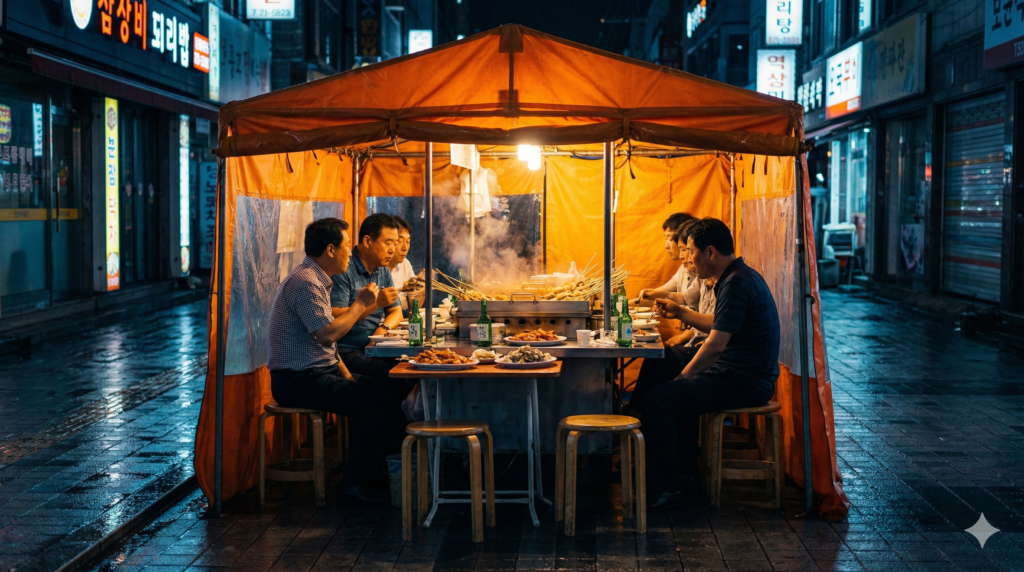
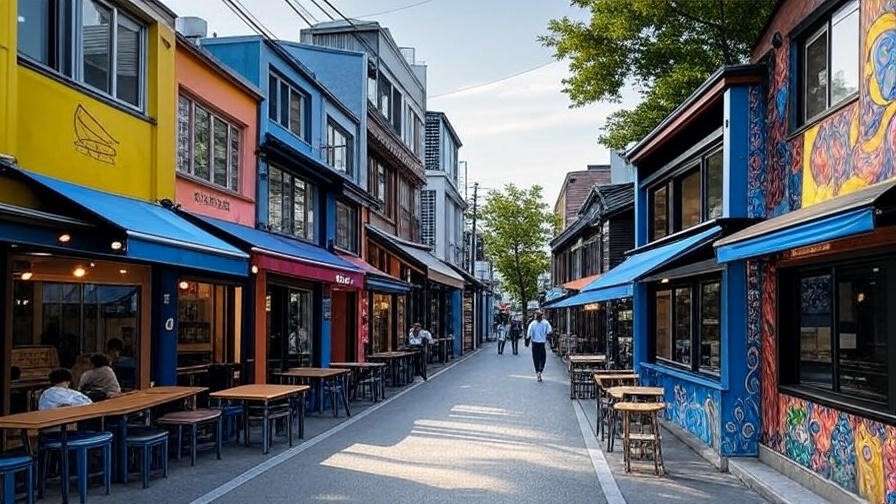
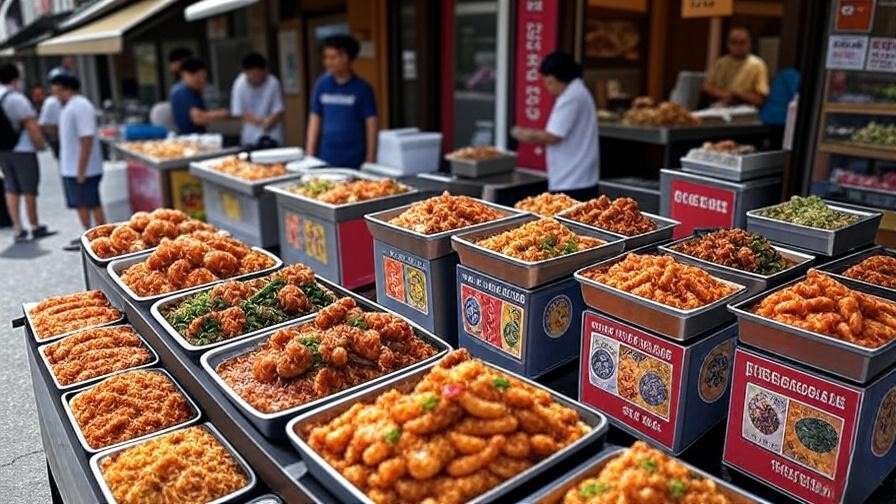
Korean summer street food is a world unto itself. In Myeongdong, Hongdae, and Insadong, food stalls operate deep into the night, offering:
- Hotteok (sweet pancakes filled with brown sugar and nuts — yes, even in summer)
- Korean corn dogs (filled with mozzarella, coated in batter or ramen noodles, rolled in sugar)
- Tteokbokki (spicy rice cakes — a year-round staple that summer eaters chase with cold drinks)
- Gyeranppang (egg bread — soft, slightly sweet, deeply comforting)
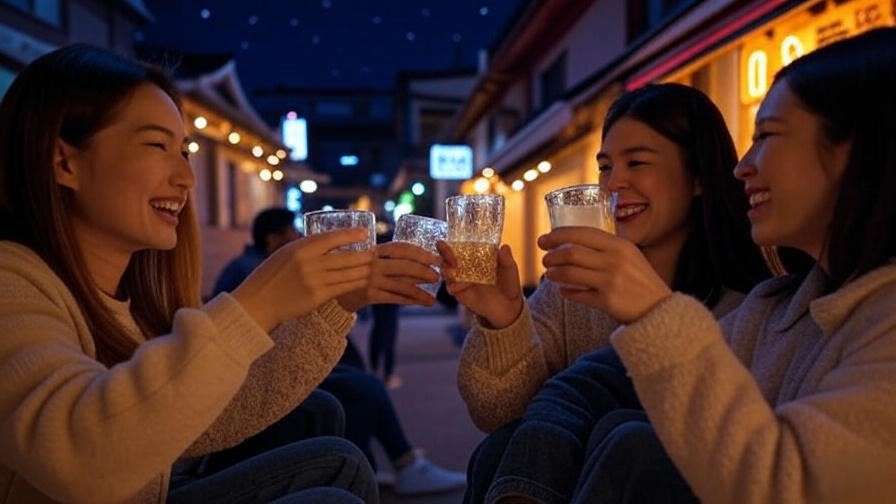
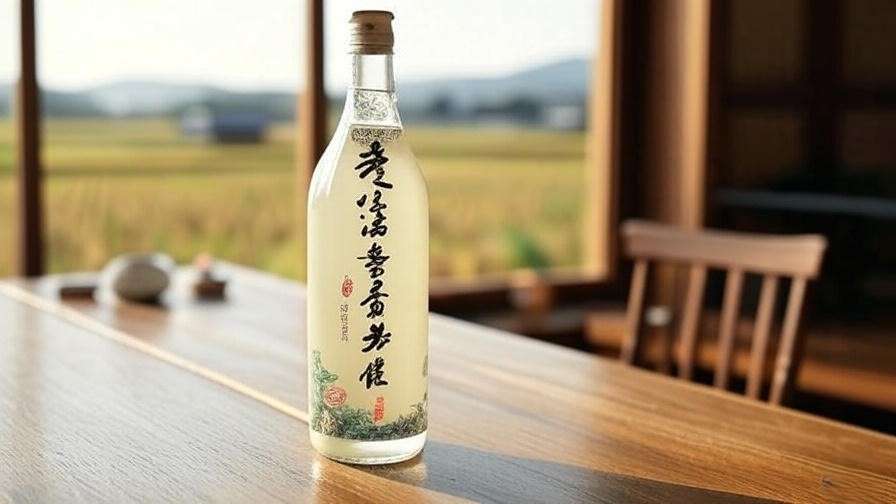
And then there are the pojangmacha — the orange-tented street stalls that appear in seemingly every Korean drama ever made. These are Korea’s informal outdoor drinking restaurants, where locals gather after work over soju, anju (drinking snacks), and conversation that stretches past midnight. Finding a real pojangmacha on a warm Korean summer evening and sitting down with a bottle of soju and a plate of odeng (fish cake skewers) is one of those travel experiences you will talk about for years.
What to Pack & Wear for Summer in Korea
Packing for a Korean summer requires a balance between practicality and style — because if there is one thing Koreans take seriously year-round, it is looking good. Fortunately, Korean summer fashion is both functional and effortlessly chic, and understanding it will help you pack smarter and blend in more naturally.
Dressing Like a K-Drama Character (Practically)
Korean summer fashion leans heavily into light, breathable fabrics — linen, cotton, and moisture-wicking blends dominate the wardrobe. Loose-fitting shirts, wide-leg trousers, and flowy midi skirts are staples you will see on every street from Hongdae to Gangnam. The color palette tends toward soft neutrals, pastels, and clean whites, occasionally punctuated by bold prints in younger fashion districts like Dongdaemun and Sinchon.
One of the most distinctly Korean summer accessories is the UV protection umbrella — and yes, it is used on sunny days, not rainy ones. Korean beauty culture places enormous value on sun protection and skin health, and shielding yourself from direct UV rays is considered both a health practice and a skincare routine. You will see men and women alike carrying sleek parasols on sunny afternoons, and far from looking out of place, it is completely normal and widely respected.
Recent K-dramas have also had a notable influence on seasonal fashion trends. Queen of Tears (2024) sparked widespread interest in understated luxury looks — clean tailoring, structured linen blazers, and minimalist accessories. Lovely Runner (2024) brought a resurgence of early 2000s-inspired casual streetwear — oversized graphic tees, vintage-wash denim, and chunky sneakers. Arriving in Korea with even a passing awareness of these trends will enrich how you engage with local fashion culture.
Sun protection in Korea goes beyond umbrellas. Korean sunscreen culture is arguably the most advanced in the world — SPF 50+ products with lightweight, non-greasy formulas are widely available in every convenience store and pharmacy. Picking up a local sunscreen (brands like Anessa, COSRX, and Beauty of Joseon are widely loved) upon arrival is both practical and an authentic introduction to Korean skincare culture.
Practical Packing List for Korea in Summer
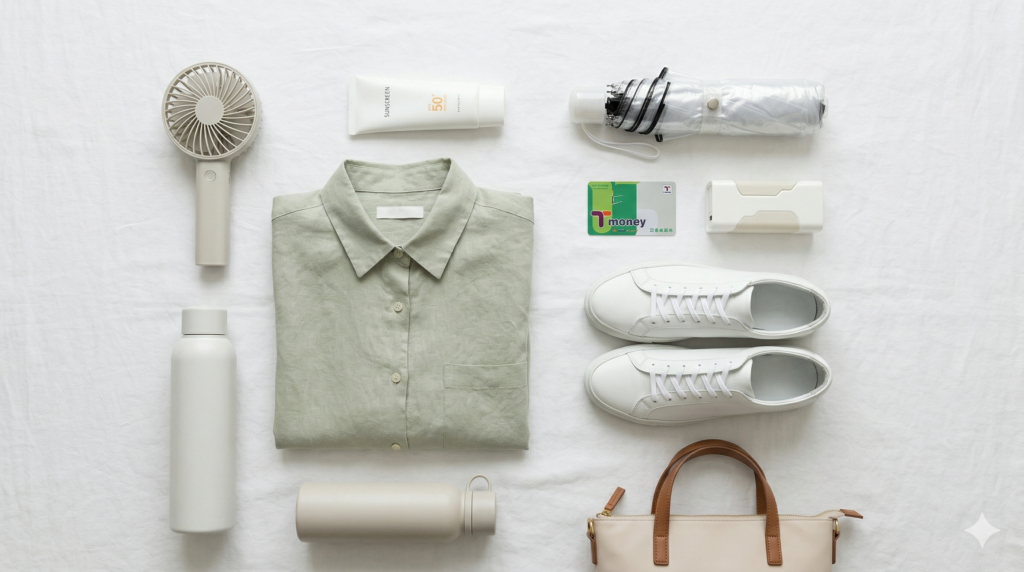
Here is a comprehensive, travel-tested packing list optimized specifically for a Korean summer trip:
Clothing:
- Lightweight linen or cotton shirts (5–7, prioritize breathable fabrics)
- One pair of smart-casual trousers or a midi skirt (for temple visits and nicer restaurants)
- Comfortable walking shoes with good arch support (you will walk 15,000+ steps daily)
- A light rain jacket or compact travel umbrella (monsoon season essential)
- One modest outfit for temple or palace visits (covered shoulders and knees)
Health & Comfort:
- High-SPF sunscreen (or buy locally — Korean options are superior)
- Portable handheld fan or battery-powered mini fan (non-negotiable in July–August)
- Cooling facial mist spray
- Insect repellent (particularly for Jeju Island and outdoor evening events)
- Oral rehydration sachets or electrolyte tablets for hot days
Technology & Navigation:
- Portable charger / power bank (essential for all-day navigation and photography)
- Korean SIM card or pocket WiFi (rent at Incheon Airport on arrival)
- T-money card loaded with transport funds (works on all Seoul subway, bus, and many taxis)
- Naver Maps app downloaded and set up before arrival (Google Maps is significantly less reliable in Korea)
Practical Extras:
- A lightweight tote bag for day trips and market shopping
- Reusable water bottle (water refill stations are widely available in Seoul)
- A small first aid kit including blister plasters — cobblestone streets are beautiful but unforgiving
Insider Tips for First-Time Visitors Experiencing Summer in Korea
The difference between a good Korea trip and an unforgettable one often comes down to the things no standard travel guide tells you. After years of following Korean culture, drama, and tourism closely, here are the insider-level insights that will genuinely transform your summer experience.
Navigating the Monsoon Season (Jangma)
Jangma — Korea’s summer monsoon — typically runs from late June through mid-July, though its timing and intensity vary year to year due to shifting climate patterns. Rather than viewing it as a travel obstacle, experienced Korea travelers learn to work around and even with the rain.
During heavy rainfall days, Korea’s indoor culture comes magnificently into its own. This is the perfect time to explore:
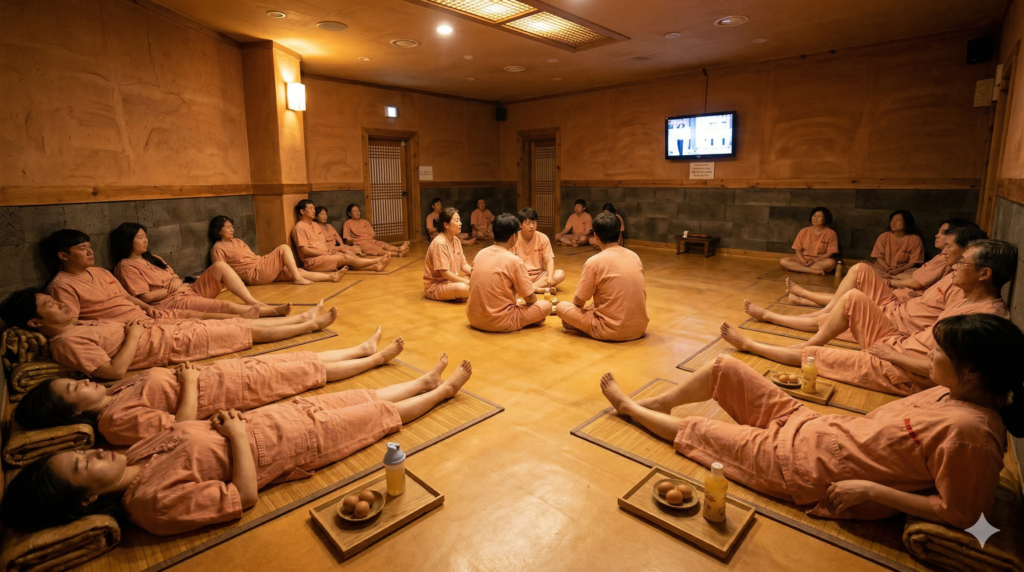
- Jimjilbang (찜질방): Korea’s legendary 24-hour jjimjilbang (sauna bathhouses) are one of the country’s most underrated cultural experiences. For roughly 10,000–15,000 KRW (approximately $7–11 USD), you gain access to hot and cold baths, sauna rooms, sleeping areas, and communal lounges where Koreans of all ages gather to rest, socialize, and eat hard-boiled eggs. It is intimate, restorative, and deeply, authentically Korean.
- K-Drama Themed Cafés: Seoul has an astonishing number of cafes dedicated to specific dramas, actors, and production companies. Rainy days are ideal for settling into one with a window seat, a matcha latte, and a long afternoon of drama-watching.
- National Museum of Korea: Free to enter and genuinely world-class, the National Museum in Yongsan is one of Asia’s finest, housing over 220,000 artifacts spanning 5,000 years of Korean history.
- COEX Mall and Starfield Library: The famous ceiling-to-floor bookshelf library inside Starfield COEX in Gangnam is one of Seoul’s most photographed interiors — and one of its best rain-day destinations.
Budget Tips for Traveling Korea in Summer
Summer is peak travel season in Korea, and prices reflect it — particularly for flights from major hubs and accommodation in central Seoul neighborhoods like Myeongdong, Hongdae, and Insadong. Here is how to travel smarter without sacrificing experience:
Book accommodation early. The best guesthouses, boutique hanok stays, and mid-range hotels in popular neighborhoods sell out months in advance for July and August. If you are planning a summer trip, aim to book accommodation at least three to four months ahead.
Embrace convenience store culture. Korean convenience stores — GS25, CU, and 7-Eleven — are genuinely extraordinary by global standards. They stock fresh kimbap, warm dumplings, noodle cups with self-heating options, fresh fruit, cold brew coffee, and a rotating menu of seasonal items. A full, satisfying convenience store meal costs roughly 5,000–8,000 KRW ($3.50–6 USD) and is a legitimate cultural experience in its own right, not a budget compromise.
Use the subway obsessively. Seoul’s subway system is one of the cleanest, safest, most efficient, and most affordable metro systems in the world. A single journey rarely exceeds 1,500 KRW (about $1.10 USD), and the system connects virtually every major tourist destination in the city. Taxis are inexpensive by Western standards but unnecessary for most daytime city travel.
Take advantage of free experiences. Some of Seoul’s most memorable summer experiences cost nothing: Han River picnics, Bukchon evening walks, Changdeokgung’s Secret Garden (small entry fee, enormous payoff), Gwanghwamun Square, and the nightly changing of the guard ceremony at Gyeongbokgung Palace are all free or low-cost.
Etiquette & Cultural Norms Tourists Often Miss
Respectful engagement with Korean culture will not only enhance your experience — it will genuinely endear you to the locals you encounter. Here are the cultural norms most first-time visitors overlook:
Subway and public transport etiquette: Priority seats (marked in pink or blue near the doors) are reserved for elderly passengers, pregnant women, and people with disabilities. Even if the seat is empty and the carriage is packed, sitting in a priority seat is considered deeply disrespectful in Korean social culture. Observe this rule without exception.
Shoes off indoors: Many traditional restaurants (hanok-style establishments with floor seating), temples, and some guesthouses require you to remove your shoes at the entrance. Wearing clean, easy-to-remove footwear is both practical and polite.
Receiving with two hands: When receiving a gift, a business card, food, or a drink from someone older than you, using both hands (or your right hand supported at the wrist by your left) is a sign of respect that Koreans notice and appreciate deeply.
Quiet in temples: Korean Buddhist temples welcome visitors warmly, but they are active places of worship. Speaking softly, avoiding photography during active ceremonies, and dressing modestly (covered shoulders and knees) are baseline expectations, not optional courtesies.
Tipping culture: Korea does not have a tipping culture. Leaving money on the table after a meal can actually cause confusion or mild offense. The price on the menu is the price you pay — and service in Korean restaurants is, by global standards, remarkably attentive without any financial incentive attached.
✅ Quick Dos and Don’ts for Summer in Korea
DO: Use two hands when receiving items from elders | Carry a portable fan | Try samgyetang on hot days | Download Naver Maps before arrival | Explore Han River parks in the evening
DON’T: Sit in subway priority seats | Tip at restaurants | Wear shoes inside traditional venues | Skip sunscreen | Assume Google Maps will guide you accurately
How K-Dramas Have Shaped the World’s Perception of Summer in Korea
It would be impossible to write a comprehensive guide to summer in Korea without acknowledging the extraordinary role that Korean dramas have played in putting the country on the global travel map. The Hallyu (Korean Wave) is not merely a pop culture trend — it is one of the most significant soft power phenomena of the 21st century, and its impact on Korean summer tourism is both measurable and profound.
The Hallyu Effect on Korean Summer Tourism
According to data from the Korea Tourism Organization (KTO) and the Korea Foundation for International Cultural Exchange (KOFICE), the Korean Wave contributes billions of dollars annually to the Korean economy through tourism, cultural exports, and consumer spending. In the years following the global success of Crash Landing on You (2019–2020), international searches for “Jeju Island travel” spiked dramatically across multiple search platforms. Similarly, the release of Our Beloved Summer (2021–2022) triggered a measurable increase in Seoul travel queries from Southeast Asian and European markets.
This is not coincidental. K-dramas are, among other things, extraordinarily effective travelogues. Their cinematography is world-class, their locations are chosen with obsessive attention to visual beauty, and their storytelling creates emotional associations between viewers and Korean places that traditional tourism advertising could never replicate. When you have cried watching a breakup scene filmed on a Jeju clifftop, that clifftop stops being a geographic location and becomes a place that holds something of your own emotional experience. That is the true power of Hallyu on Korean tourism.
Scenes That Made Fans Fall in Love with Korean Summers
Certain drama moments have become permanently embedded in the global cultural imagination as symbols of Korean summer:
The Han River date scenes — appearing in productions from Reply 1988 to Extraordinary Attorney Woo — have made the river’s cycling paths and park lawns feel like pilgrimage sites for international fans. The specific combination of convenience store snacks, a warm evening breeze, and the Seoul skyline glittering across the water has become one of Korean drama’s most enduring visual signatures.
Rooftop scenes, typically set on warm summer nights, are a staple of Korean romantic drama. From Coffee Prince to Start-Up, rooftop conversations under summer skies represent intimacy, vulnerability, and the particular magic of Korean storytelling. Many Seoul guesthouses and Airbnb stays actively market their rooftop access to drama fans for this reason.
Beach and coastal episodes — often set in Gangwon Province’s East Sea beaches or Jeju Island’s western coast — carry a specific emotional weight in Korean dramas. They represent escape, clarity, and romantic turning points. The coastal town aesthetic of Hometown Cha-Cha-Cha, set in the fictional seaside village of Gongjin (filmed primarily in Pohang’s Guryongpo), triggered a tourism surge to that specific location that the local government was genuinely unprepared for.
K-Dramas to Watch Before Your Summer Trip
Consider this your pre-trip homework — a curated viewing list that will deepen your appreciation of every location, food moment, and cultural experience you encounter during your summer in Korea:
Our Beloved Summer (2021–2022): A bittersweet, beautifully shot romance set almost entirely in Seoul, following two ex-lovers forced back into each other’s orbit. The drama’s use of Hongdae, university campuses, and quiet residential neighborhoods offers an intimate, non-touristy portrait of Seoul in warm weather. Streaming on Netflix.
Hometown Cha-Cha-Cha (2021): Set in a fictional coastal village, this warm-hearted drama captures the rhythm of small-town Korean summer life with extraordinary tenderness. If you are planning to explore Korea beyond Seoul, this drama will make you want to find every quiet seaside town the country has to offer. Streaming on Netflix.
Crash Landing on You (2019–2020): The drama that arguably did more for Korean tourism than any government campaign in history. Its Jeju Island sequences — cliffs, tangerine farms, turquoise coastlines — are breathtaking in summer. Streaming on Netflix.
Reply 1988 (2015–2016): Set in a Seoul alley neighborhood in the late 1980s, this deeply nostalgic drama captures Korean community life across all seasons but reaches its emotional peak during summer episodes that center on neighborhood gatherings, shared meals, and the specific ache of growing up. Streaming on Netflix.
Weightlifting Fairy Kim Bok-joo (2016–2017): A joyful, energetic coming-of-age story set on a university campus, filled with the particular youthful energy that Korean summers seem designed to contain. Perfect pre-trip viewing for younger travelers. Streaming on Disney+.
Lovely Runner (2024): One of the most celebrated recent dramas, featuring time-travel romance with gorgeous summer cinematography across Seoul. Its fashion and aesthetic heavily influenced 2024 Korean summer style trends. Streaming on Viki.
Frequently Asked Questions About Summer in Korea
Is summer a good time to visit Korea?
Yes — with clear-eyed expectations. Korean summer offers the country’s most vibrant festival calendar, its most beautiful green landscapes, and the most immersive experience of Korean outdoor and food culture. The trade-offs are real: the heat and humidity are intense, the monsoon season requires flexible planning, and peak-season crowds at major attractions can be significant. If you prepare properly, embrace rather than resist the season’s rhythms, and approach the heat with the same pragmatic cheerfulness that Koreans do, summer is an extraordinary time to experience Korea.
How hot does it get in Korea during summer?
Seoul typically experiences temperatures between 25–35°C (77–95°F) during July and August, with humidity levels that can make it feel significantly warmer. Coastal areas like Busan and Jeju tend to catch sea breezes that offer mild relief. Mountain regions — Seoraksan National Park, Jirisan — are noticeably cooler and make excellent day trips or overnight escapes during the hottest weeks.
What is the rainy season in Korea?
Korea’s monsoon season, called jangma (장마), typically runs from late June through mid-July, though in recent years climate variability has shifted its timing and intensity. Rainfall during jangma tends to come in heavy but relatively brief bursts rather than sustained all-day rain, though prolonged rainy periods do occur. Carrying a compact umbrella or a light rain jacket throughout your summer trip is simply good practice.
What do Koreans do in summer to stay cool?
Koreans have developed a wonderfully comprehensive arsenal of summer coping strategies: eating bingsu and naengmyeon, seeking shade in air-conditioned cafes and shopping malls, gathering at Han River parks in the evening when temperatures drop, visiting jimjilbang for cool-water baths, and carrying portable fans and UV umbrellas as standard accessories. The collective attitude toward summer heat in Korea is less “suffer through it” and more “build your life around it” — a mindset that foreign visitors do well to adopt.
Which K-dramas are set in summer in Korea?
Many of Korea’s most celebrated dramas feature prominent summer storylines and visuals. Top recommendations include Our Beloved Summer, Hometown Cha-Cha-Cha, Weightlifting Fairy Kim Bok-joo, Lovely Runner, Crash Landing on You (Jeju sequences), and Reply 1988. For a summer beach aesthetic specifically, Summer Strike (2022) and Warm and Cozy (2015) are both set almost entirely in coastal Korean summer settings.
What are the best areas to stay in Seoul during summer?
- Myeongdong: Best for first-time visitors and shoppers. Central location, excellent subway access, surrounded by street food stalls that operate late into the night.
- Hongdae: Best for younger travelers, K-pop fans, and those who want to experience Seoul’s nightlife and street performance culture. Extremely lively in summer evenings.
- Insadong / Jongno: Best for culture-focused travelers who want walkable access to palaces, Bukchon, and traditional tea houses.
- Gangnam: Best for travelers prioritizing modern Seoul, luxury shopping, and the aesthetic of Gangnam Style-era Korea. Less atmospheric than northern Seoul but highly convenient.
- Itaewon / Hanam-dong area: Best for internationally diverse dining options and a more cosmopolitan atmosphere.
Summer in Korea is not a season you merely visit. It is a season you inhabit — one that gets under your skin, fills your senses, and changes how you understand both the country and the dramas you love. It is the smell of grilling meat drifting from a street stall at 11PM. It is the cool shock of a first spoonful of bingsu on a 34-degree afternoon. It is standing on a Han River bank at dusk, watching Seoul light up across the water, and realizing that this — right here — is the scene you have watched a hundred times on screen, and it is even more beautiful in person.
Whether you arrive as a K-drama devotee, a curious traveler, or somewhere in between, Korea in summer will meet you with open arms, extraordinary food, centuries of living culture, and the kind of cinematic beauty that makes you understand, immediately and completely, why the world fell in love with this country through its stories.
Plan carefully, pack practically, eat everything, and let the season surprise you.
Which part of your Korean summer adventure are you most excited about? Drop your thoughts in the comments below — and if this guide helped you plan your trip, share it with a fellow K-drama fan who deserves their own summer in Korea.