You are three episodes into your latest K-drama obsession. The lead actress appears on screen with her porcelain skin, perfectly symmetrical features, a delicate V-shaped jawline, and eyes that seem almost impossibly large and luminous. You pause the screen. You find yourself wondering — is that real? And more importantly, could it be possible for you too? If that thought has ever crossed your mind, you are far from alone. Every year, hundreds of thousands of people from across the globe travel to South Korea specifically for plastic surgery in Korea — drawn in by the country’s world-class surgeons, comparatively affordable prices, and the undeniable influence of the Korean entertainment industry. In fact, South Korea consistently ranks among the highest in the world for cosmetic procedures per capita, making it one of the most sought-after medical tourism destinations on the planet.
But between the glossy K-drama visuals and the flood of “before and after” content online, there is a great deal that often goes unsaid.
This guide is designed to change that. Whether you are casually curious or actively considering a procedure, this article will walk you through everything — the culture, the costs, the clinics, the risks, and the realities that no one on social media is telling you. Consider this your most honest, comprehensive resource on Korean cosmetic surgery, written with your safety and informed decision-making firmly in mind.
Why Korea Became the World’s Plastic Surgery Capital
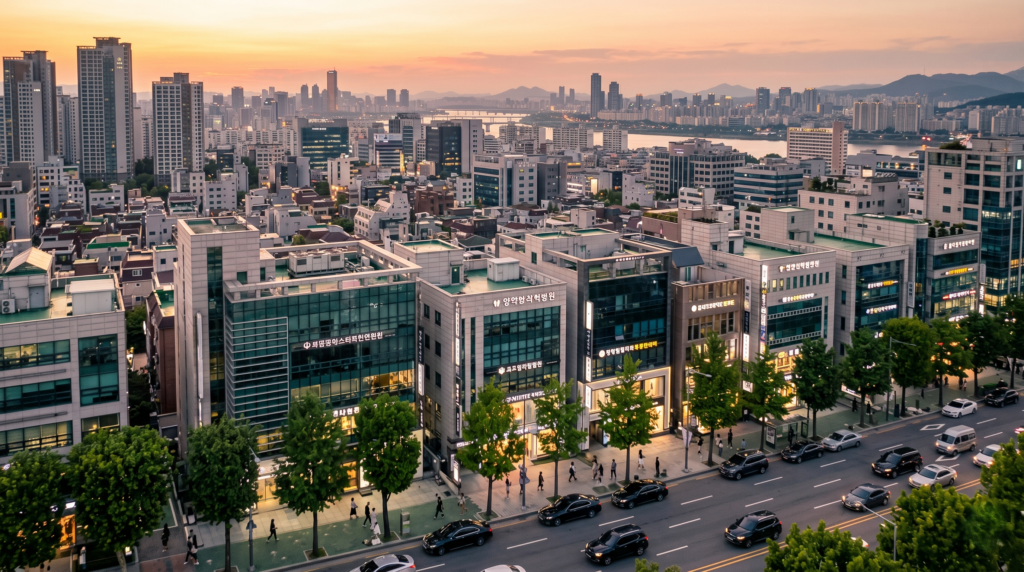
To truly understand the scale and significance of cosmetic surgery in South Korea, you have to look beyond the operating room. This is not simply a medical trend — it is a deeply cultural phenomenon with roots stretching back decades.
The Cultural Roots of Korean Beauty Standards
Korean society has long placed a significant emphasis on physical appearance, and this is not purely a modern development. Historically, a concept known as Gwansang — a traditional Korean practice of physiognomy, or reading a person’s character and fortune through their facial features — embedded the idea that one’s face carries meaningful social weight. While Gwansang is no longer practiced literally in modern Korea, the cultural residue of that belief system remains: how you look still matters enormously in Korean professional and social life.
Fast forward to the present day, and that cultural emphasis on appearance has merged powerfully with the rise of the Korean entertainment industry. The K-pop and K-drama industries have created a highly specific, heavily reinforced visual standard: large, defined eyes, a high and refined nose bridge, smooth and fair skin, and a slim, V-shaped lower face. These features appear on billboards, dominate social media feeds, and are seen on screen for hours at a time — and they have redefined beauty benchmarks not just in Korea, but globally.
For many Koreans, cosmetic procedures are not considered taboo or extreme. They are, in many circles, as normalized as getting a haircut. Parents have been known to gift their children double eyelid surgery as a high school graduation present. Job interviews in Korea can still involve a photograph on a résumé. The social and professional pressure to conform to certain beauty ideals is real, documented, and significant.
How the Korean Entertainment Industry Fuels the Trend
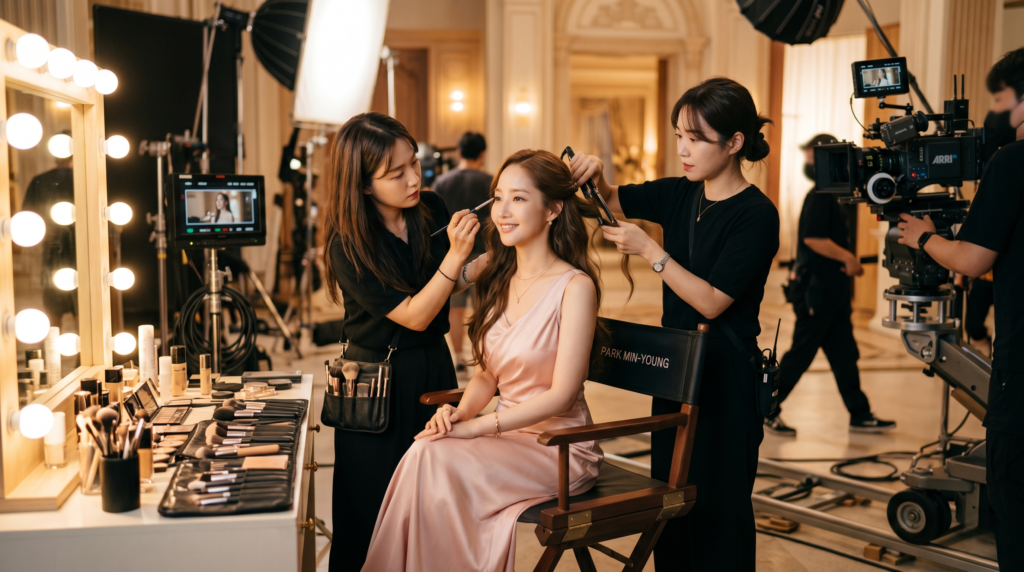
The K-drama and K-pop industries are not passive bystanders in this conversation — they are active participants. Korean entertainment agencies have, for years, been remarkably candid by global standards about the expectation that their talent will undergo cosmetic enhancements. Some agencies include appearance management — including surgery — as part of their trainee contracts.
This transparency, paradoxically, has helped normalize the conversation around cosmetic procedures in Korea. When beloved actors and idols openly discuss their surgeries, or when fans obsessively compile “pre-debut vs. now” comparisons, it removes much of the stigma that still surrounds cosmetic surgery in Western cultures.
For international K-drama fans, this creates a fascinating but sometimes complicated dynamic. The faces you admire on screen are often the product of a combination of exceptional genetics, skilled makeup artists, sophisticated lighting, digital post-production — and yes, in many cases, cosmetic procedures. Understanding this distinction matters enormously before you begin comparing your own appearance to what you see on a screen.
Korea’s Medical Infrastructure and Global Reputation
Beyond culture, there is a very practical reason why Seoul has become a global hub for cosmetic surgery: the medical infrastructure is genuinely exceptional.
Korean plastic surgeons undergo rigorous, highly competitive training. The Korean Board of Plastic and Reconstructive Surgery (KBPRS) sets strict certification standards, and the country has invested heavily in developing medical tourism as a formal industry. The South Korean government, through bodies like the Korea Health Industry Development Institute (KHIDI), actively promotes and regulates medical tourism, providing resources and oversight that many other medical tourism destinations lack.
The epicenter of all this is the Gangnam district of Seoul — specifically the neighborhood of Apgujeong, often called the “Beauty Belt.” This concentrated stretch of clinics, recovery guesthouses, and medical consultation centers handles an extraordinary volume of both domestic and international patients. Walking through Apgujeong, it is not unusual to see patients strolling the streets post-procedure, faces wrapped in bandages or cooling masks, entirely without self-consciousness. Here, cosmetic surgery is simply part of everyday life.
Most Popular Plastic Surgery Procedures in Korea
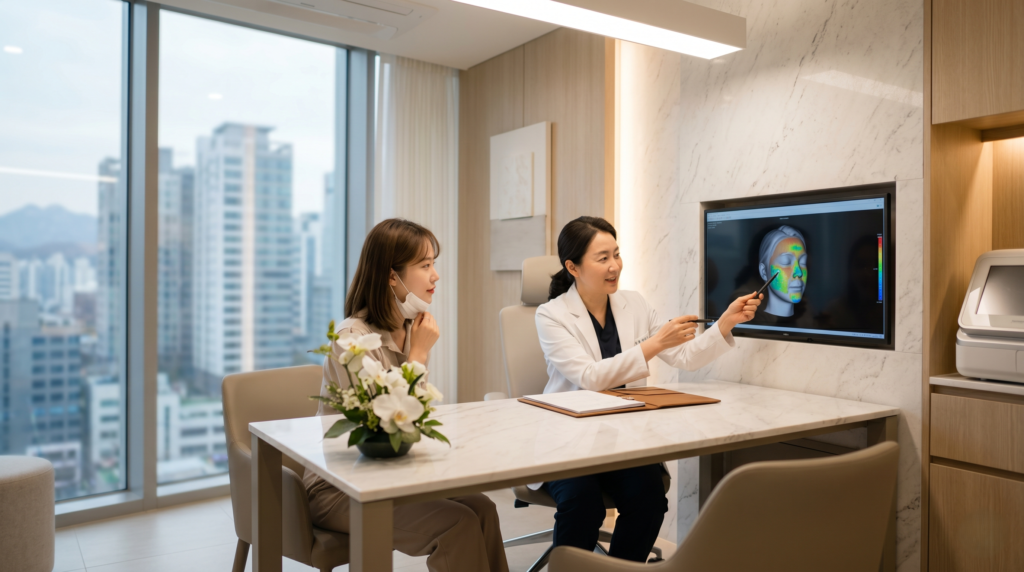
Korea has developed specific expertise in procedures that align with Korean and broader East Asian aesthetic goals. While all standard cosmetic surgeries are available, certain procedures have become synonymous with Korean plastic surgery specifically.
Double Eyelid Surgery (Blepharoplasty)
Double eyelid surgery is the single most commonly performed cosmetic procedure in South Korea — and arguably the most iconic. The surgery creates or enhances a crease in the upper eyelid, producing the appearance of larger, more defined eyes.
It is important to note what this surgery is not: it is not an attempt to make Asian eyes look Western. Rather, it is a procedure designed around East Asian aesthetic ideals of eye definition and brightness. Many Koreans naturally have a double eyelid; the surgery creates or deepens that crease for those who do not, or for those who want a more pronounced effect.
The procedure can be performed using the incisional method (more permanent, recommended for those with heavier eyelids) or the non-incisional suture method (less invasive, faster recovery). In Korea, costs typically range from approximately $1,000 to $3,000 USD, significantly lower than equivalent procedures in Western countries. Recovery is generally one to two weeks for the suture method, and two to four weeks for the incisional approach.
Rhinoplasty (Nose Reshaping)
Korean rhinoplasty, commonly known as a nose job, differs in its typical goals from Western rhinoplasty. While Western procedures often focus on reducing the size of the nose, Korean rhinoplasty more frequently aims to augment and refine — building up the bridge, refining the tip, and creating a more sculpted, elegant profile that complements East Asian facial structure.
Implants used in Korean rhinoplasty are typically made from silicone or Gore-Tex, and surgeons in Korea have developed highly specialized techniques for working with East Asian nasal anatomy. Costs in Korea generally range from $2,500 to $5,000 USD for primary rhinoplasty, compared to $7,000 to $12,000 in the United States. Recovery involves noticeable swelling for two to four weeks, with full results taking up to a year to fully settle.
V-Line Jaw Reduction Surgery
If there is one procedure that is uniquely, distinctly Korean, it is V-line jaw surgery — technically known as mandibular reduction or square jaw reduction. This procedure reshapes the lower face by shaving or restructuring the jawbone and chin to create the slim, tapered, heart-shaped facial silhouette that is ubiquitous in K-drama aesthetics.
This is a significant surgical procedure involving actual bone work, performed under general anesthesia, and carrying a longer and more demanding recovery period than soft-tissue surgeries. Patients typically experience significant swelling for four to eight weeks, with complete healing taking several months. Costs range from $5,000 to $10,000 USD in Korea.
This is not a procedure to take lightly. It requires a highly experienced, board-certified surgeon and thorough pre-surgical assessment. However, Korean surgeons have performed this procedure in far greater volume than surgeons anywhere else in the world, giving them a level of expertise that is genuinely difficult to match globally.
Facial Contouring and Cheekbone Reduction
Closely related to V-line surgery, cheekbone reduction (zygoma reduction) is another distinctly popular procedure in Korea. While high, prominent cheekbones are considered a beauty asset in many Western cultures, Korean aesthetic ideals tend to prefer a softer, flatter midface that allows the eyes and overall facial harmony to take center stage.
Cheekbone reduction involves repositioning or shaving the zygomatic arch — again, a bone-level procedure requiring a skilled surgical hand and significant recovery time. It is frequently performed in combination with V-line surgery as part of a comprehensive facial contouring package.
Non-Surgical Procedures on the Rise
It would be a significant oversight to discuss Korean cosmetic enhancements without addressing the booming world of non-surgical treatments. In Korea, procedures like botulinum toxin injections (Botox), dermal fillers, thread lifts, skin booster injections (such as Rejuran or Juvelook), and laser treatments have become almost routine maintenance for a wide demographic — from college students to professionals in their fifties.
These treatments are far more accessible, less expensive, and require little to no downtime, making them an entry point for many people who would not consider going under the knife. Many of the luminous, line-free complexions you see on K-drama stars are maintained at least in part through regular non-surgical clinic visits — not surgery alone.
Worth knowing: Not every flawless K-drama complexion is the result of surgery. A significant portion of what you see on screen is achieved through professional makeup, specialized lighting, high-definition filters in post-production, and consistent non-invasive skincare treatments. Managing expectations here is essential.
How Much Does Plastic Surgery in Korea Cost?

Cost is one of the primary reasons international patients choose Korea for cosmetic procedures. While prices vary considerably based on the clinic, surgeon, and procedure complexity, Korea consistently offers significant savings compared to equivalent standards of care in Western countries.
Cost Comparison: Korea vs. USA vs. UK
| Procedure | Korea (USD) | USA (USD) | UK (USD) |
|---|---|---|---|
| Double Eyelid Surgery | $1,000 – $3,000 | $4,000 – $6,000 | $3,500 – $5,500 |
| Rhinoplasty | $2,500 – $5,000 | $7,000 – $12,000 | $6,000 – $10,000 |
| V-Line Jaw Surgery | $5,000 – $10,000 | $15,000 – $20,000 | $12,000 – $18,000 |
| Cheekbone Reduction | $4,000 – $8,000 | $10,000 – $16,000 | $9,000 – $14,000 |
| Botox (per area) | $80 – $150 | $300 – $600 | $200 – $450 |
Note: All figures are approximate and subject to change. Always request a detailed, itemized quote directly from your chosen clinic.
Hidden Costs to Factor Into Your Budget
The procedure fee is only one component of the true cost of traveling to Korea for surgery. Before making any financial plans, make sure you account for the following:
Travel and accommodation: Round-trip flights plus two to four weeks of accommodation in Seoul can add $2,000 to $5,000 or more, depending on your country of origin and comfort level. Many patients opt for medical recovery guesthouses in Gangnam, which offer post-surgical amenities and are accustomed to international patients.
Translation and coordination services: If you do not speak Korean, you will likely need an interpreter or medical coordinator, especially for consultations and follow-up appointments. Some clinics include this service; others charge separately.
Post-operative medications and supplies: Prescription medications, wound care supplies, and compression garments are typically not included in the quoted surgical fee.
Revision surgery risk: No surgical outcome is guaranteed. If revision surgery is required, you may be looking at additional costs — either in Korea or back in your home country. Always ask your clinic about their revision policy before booking.
Travel insurance: Standard travel insurance typically excludes elective surgery complications. You will need a specialized policy that explicitly covers medical tourism and post-surgical complications.
Pro Tip: Always request a fully itemized quote in writing from any clinic you are considering. Some advertised prices exclude anesthesia fees, operating room costs, or post-operative consultations. A legitimate clinic will be fully transparent about all costs upfront.
Choosing the Right Clinic in Korea — What You Must Know
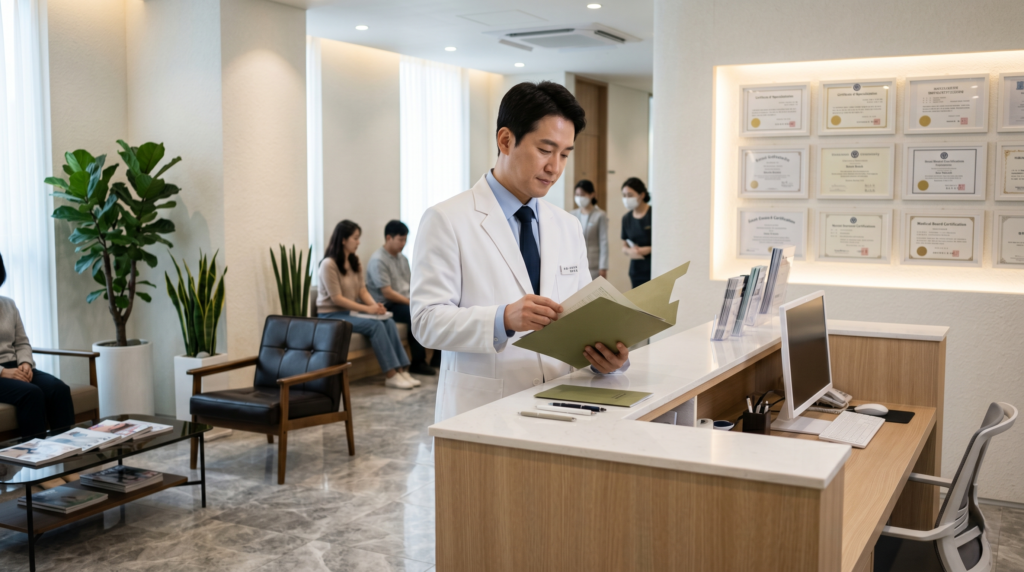
The quality of clinics in Korea varies enormously, and the consequences of choosing poorly can be severe. Due diligence here is not optional — it is essential.
Red Flags to Watch Out For
The Korean cosmetic surgery industry, particularly the segment that caters to international patients, is not without its bad actors. Be wary of any clinic that:
- Offers dramatically discounted “package deals” that seem too good to be true
- Cannot provide clear, verifiable credentials for your specific surgeon
- Applies high-pressure sales tactics or urges you to book immediately
- Cannot show you a substantial, authentic portfolio of before and after results
- Relies exclusively on social media influencer endorsements rather than verified patient reviews
- Is unwilling to schedule a pre-operative video consultation with the actual surgeon who will perform your procedure
What to Look for in a Legitimate Korean Clinic
A reputable Korean plastic surgery clinic will have several distinguishing characteristics. Your surgeon should be certified by the Korean Board of Plastic and Reconstructive Surgery (KBPRS) — do not hesitate to ask for this documentation directly. The clinic should have transparent, verifiable surgeon profiles, ideally with academic credentials, years of specialization, and published work.
Look for clinics that provide dedicated English-speaking patient coordinators — not just on the phone during the sales process, but throughout your entire care journey including pre-operative consultations, day-of surgery communication, and post-operative follow-up.
Verified patient reviews are invaluable. Seek these out on platforms like RealSelf, on English-language Naver blogs from medical tourists, and through community forums where you can engage directly with people who have first-hand experience with specific clinics. Be cautious about reviews that appear only on the clinic’s own website or social media pages.
Top Areas to Research
For international patients, the Apgujeong neighborhood within the Gangnam district of Seoul remains the benchmark. Clinics in this area have the highest concentration of board-certified specialists and the greatest volume of experience with international patients.
When beginning your research, the Korea Health Industry Development Institute (KHIDI) operates an official Medical Korea portal that lists certified medical tourism facilitators and provides guidance for international patients. This is a strong, government-backed starting point that filters out unverified providers.
The Real Risks of Plastic Surgery in Korea (That No One Talks About)
No honest guide to Korean cosmetic surgery would be complete without a direct, unflinching conversation about risk. The glossy before-and-after photos that populate clinic websites and social media feeds tell one side of the story. The full picture is more nuanced — and for your safety, you need to understand it completely before making any decisions.
Medical Risks and Complications
Cosmetic surgery, regardless of where it is performed, carries inherent medical risks. These include infection, excessive bleeding, adverse reactions to anesthesia, abnormal scarring, asymmetry, nerve damage, and unsatisfactory aesthetic outcomes. These risks do not disappear simply because a procedure is performed in a world-class facility or by a highly credentialed surgeon.
Certain procedures carry elevated risk profiles that deserve specific mention:
V-line jaw surgery and cheekbone reduction are bone-level procedures performed under general anesthesia. Potential complications include nerve damage affecting facial sensation, malocclusion (misalignment of the bite), asymmetrical bone healing, and in rare but documented cases, serious infection of the surgical site. Recovery is genuinely demanding and should not be underestimated.
Rhinoplasty revision is one of the most technically challenging procedures in all of plastic surgery. If your initial rhinoplasty result is unsatisfactory, revision surgery is significantly more complex, more expensive, and carries a higher complication rate. This is why choosing an exceptionally experienced surgeon for a primary rhinoplasty is so critically important.
Double eyelid surgery, while generally considered lower-risk, can result in an unnatural-looking crease, asymmetry, lagophthalmos (inability to fully close the eye), or overcorrection that permanently alters the natural appearance of the eye in ways the patient did not intend.
A thorough pre-surgical health screening is non-negotiable. Any reputable Korean clinic will require blood work, a health history review, and in the case of bone surgeries, CT imaging before proceeding. If a clinic skips or minimizes this process, walk away.
The “Ghost Surgery” Problem in Korea
This is perhaps the most important risk-related topic in this entire article, and it is one that receives far too little attention in the glossy world of Korean medical tourism content.
“Ghost surgery” — known in Korea as 대리수술 (daeri susul) — refers to the deeply unethical and illegal practice of having a surgery performed by someone other than the surgeon the patient agreed to and paid for. Investigations and legal cases in South Korea have revealed that in some clinics, particularly those operating at high patient volumes with aggressive commercial models, patients have been sedated and operated on by unlicensed staff, medical residents, or other surgeons entirely — without their knowledge or consent.
This is not a fringe concern. It has been documented, prosecuted, and taken seriously enough that the South Korean government enacted significant legislative reforms following high-profile cases, including the tragic death of a patient in 2016 that brought the issue to national attention. The Korean Medical Service Act was subsequently revised to include stricter requirements for surgical transparency and patient protections.
To protect yourself from ghost surgery:
- Demand a face-to-face or video consultation with the specific surgeon who will perform your procedure — not a coordinator, not a different doctor
- Ask the clinic directly about their policy on surgical delegation and ensure your surgical consent form names your surgeon explicitly
- Request confirmation on the day of surgery that your named surgeon is present and will be performing the procedure personally
- Choose clinics with strong international patient reputations and verifiable reviews that specifically name and praise the operating surgeon
- Avoid clinics that rotate surgeons based on scheduling without full patient disclosure
This is not meant to alarm you away from Korea entirely — the majority of reputable, well-established clinics operate with full integrity. But awareness of this issue is essential, and taking the protective steps above costs you nothing while potentially protecting your safety entirely.
Psychological and Emotional Considerations
The conversation around cosmetic surgery and mental health is one that the Korean medical community itself is increasingly engaging with — and it is one that international patients must take seriously.
Body dysmorphic disorder (BDD) is a mental health condition in which a person becomes preoccupied with perceived flaws in their appearance to a degree that causes significant distress and functional impairment. Research consistently shows that cosmetic surgery does not resolve BDD and can in fact worsen it. If your desire for surgery is driven by persistent, consuming dissatisfaction with your appearance that extends well beyond a specific feature you would like to enhance, speaking with a mental health professional before pursuing any procedure is strongly advised.
Beyond clinical BDD, there is a broader emotional consideration for anyone who has been significantly influenced by K-drama beauty standards: are you pursuing this for yourself, or in pursuit of a filtered, professionally produced, digitally enhanced image of someone else? The distinction matters enormously for long-term satisfaction with any cosmetic outcome.
It is also worth noting that even in Korea, the cultural dialogue around surgery and appearance pressure is evolving. A growing number of Korean celebrities, influencers, and public figures are speaking openly about the psychological toll of extreme beauty standards, and a quiet but meaningful body positivity movement is gaining ground on Korean social media. The country is, in some ways, beginning to reckon with the pressures it has both experienced and exported.
What the K-Drama Industry Doesn’t Tell You About Beauty Standards

This section may be the most valuable thing you read in this entire article — particularly if part of your interest in Korean cosmetic surgery has been shaped by what you have seen on screen.
The Gap Between On-Screen and Reality
The faces you see in K-dramas are the product of an extraordinary convergence of resources, all working together to produce an idealized visual result. Understanding what goes into that final image is essential context for anyone comparing their own appearance to what they see on screen.
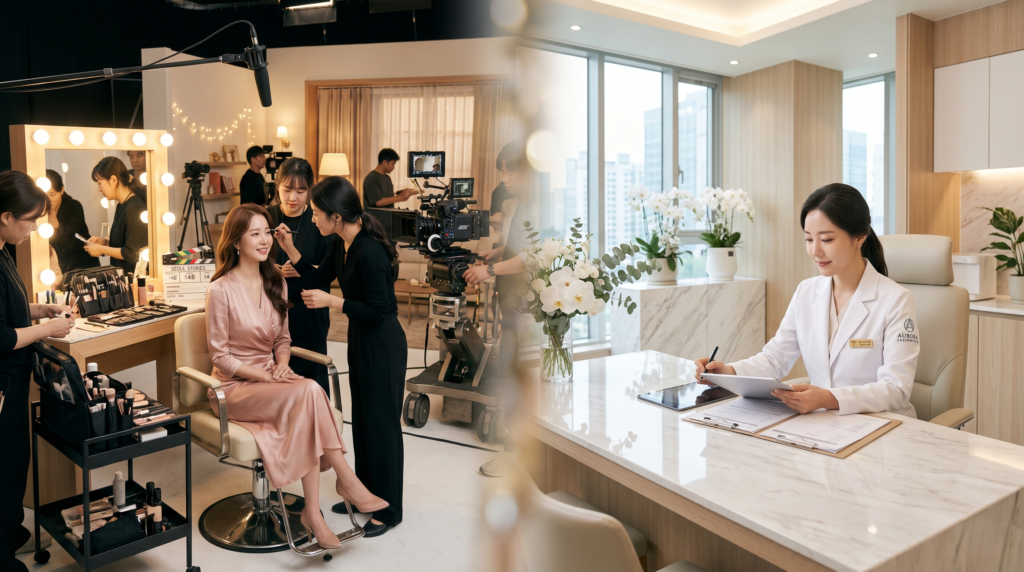
Professional makeup artistry at the level employed in Korean drama production is a specialized skill set. K-drama makeup artists are masters of contouring, color correction, and application techniques that can visually restructure a face — slimming a jaw, brightening and enlarging the appearance of eyes, and creating the illusion of a higher nose bridge — entirely without surgery.
Lighting design in professional film and television production is deliberately engineered to flatter. Soft, diffused lighting eliminates texture, reduces the visibility of pores and fine lines, and creates a luminosity that simply does not exist in ordinary ambient light.
Post-production digital enhancement is now standard practice across the Korean entertainment industry. Skin smoothing, feature refinement, and color grading happen at the editing stage of virtually every K-drama production. What you see in the final broadcast has been processed through multiple layers of digital enhancement that no cosmetic procedure can replicate in real life.
Filters and editing on personal social media add yet another layer of unreality. Even when your favorite K-drama star posts a “casual” selfie, the likelihood that it has been processed through a skin-smoothing, feature-enhancing filter is extremely high. The Korean beauty app Snow, for example, has built-in AI-powered face editing that automatically slims the jaw, enlarges the eyes, and smooths the skin — and its use is ubiquitous.
None of this is a criticism of the Korean entertainment industry. These are tools of a visual medium, used by entertainment industries worldwide. The critical point is that you cannot surgically replicate a post-production filter, and understanding this reality is essential before making any decisions based on what you see on a screen.
The Shifting Beauty Narrative in Korea
Something genuinely interesting is happening in Korean cultural discourse around beauty right now, and it deserves acknowledgment.
A growing number of prominent Korean figures — actors, K-pop idols, content creators, and activists — are beginning to push back publicly against the rigid beauty standards that have long dominated Korean culture. The Escape the Corset movement (탈코르셋), which gained significant momentum in Korea in recent years, has seen Korean women rejecting makeup, conventional beauty rituals, and the pressures of appearance-based social evaluation.
While this movement is not without its own complexities and debates within Korean society, it represents a meaningful cultural shift. The monolithic ideal of the V-line jaw, the double eyelid, and the glass skin complexion as the singular definition of Korean beauty is being questioned from within, and alternative aesthetics are gaining visibility and legitimacy.
For international fans, this broader cultural context matters. The Korean beauty standard you have absorbed through K-dramas is, in some important ways, already being debated and renegotiated in Korea itself.
A Note for International Fans
If you have found yourself drawn to the idea of Korean cosmetic surgery primarily because of what you have seen in K-dramas, it is worth taking a step back and asking some honest questions.
Are the specific changes you are considering ones that will genuinely enhance your quality of life and self-confidence? Or are they attempts to replicate features that belong to a specific ethnicity, a specific individual, or a fictional character constructed through professional production resources?
Korean plastic surgery can be genuinely life-changing and deeply satisfying when it is pursued thoughtfully, for personal reasons, with realistic expectations, and with a full understanding of the risks and realities involved. The same procedure pursued impulsively, for external validation, or in chasing an unattainable screen image is far more likely to result in disappointment.
The best reason to consider any cosmetic procedure — in Korea or anywhere else — is because it aligns with your own authentic vision for yourself. Not a character on a screen. Not a beauty standard exported by an entertainment industry. You.
Practical Guide: If You Are Seriously Considering It

If, after reading everything above, you are still genuinely interested in pursuing a cosmetic procedure in Korea, this section is for you. Here is a realistic, step-by-step framework for approaching the process responsibly.
Step-by-Step Planning Checklist
Six to twelve months before your intended travel date:
- Begin researching specific procedures thoroughly using reputable medical sources, not just clinic marketing materials. Understand what the surgery actually involves anatomically, what the recovery genuinely entails, and what realistic outcomes look like
- Consult with a board-certified plastic surgeon in your home country. Even if you ultimately intend to have the procedure performed in Korea, a local consultation gives you an independent professional perspective on whether the procedure is appropriate for you and what your realistic candidacy looks like
- Begin building a shortlist of three to five Korean clinics based on verified patient reviews, confirmed surgeon credentials, and documented international patient experience
Three to six months before:
- Request virtual consultations with your shortlisted clinics. A reputable clinic will offer pre-operative video consultations with the specific surgeon who would perform your procedure — not just with a patient coordinator
- Compare consultation experiences critically. Note whether surgeons asked you thoughtful questions about your goals and health history, or whether the consultation felt rushed and sales-oriented
- Confirm your chosen surgeon’s KBPRS certification and ask specifically about their volume of experience with your intended procedure
- Arrange specialized travel insurance that explicitly covers elective cosmetic surgery complications and medical evacuation if necessary
One to three months before:
- Complete all pre-operative health requirements requested by your clinic, which may include blood tests, imaging, and a health history form
- Book your flights and accommodation, planning for a minimum of two to three weeks in Korea post-surgery for most soft-tissue procedures, and four to six weeks for bone surgeries
- Research and book a medical recovery guesthouse in the Apgujeong or Gangnam area if your clinic does not provide recovery accommodation directly
- Arrange for a travel companion if at all possible — having someone with you during the immediate post-operative period is strongly recommended
Immediately before and during your trip:
- Confirm your surgeon’s identity and involvement on the day of your procedure
- Do not sign any consent forms you have not read fully and understood — use your interpreter or coordinator if needed
- Follow all pre-operative instructions from your clinic regarding fasting, medications, and skincare
Visa and Medical Tourism Logistics
South Korea offers a Medical Treatment Visa (C-3-M) specifically for international patients traveling for medical purposes. This visa allows stays of up to 90 days and can be extended in cases of prolonged medical treatment. Required documentation typically includes a letter of invitation from your Korean medical institution, proof of financial means, and your passport.
For practical guidance on the medical visa application process, the official Korea Tourism Organization (KTO) and the KHIDI Medical Korea portal are authoritative, up-to-date resources. Working with a registered medical tourism facilitator — one listed on the official Medical Korea platform — can also significantly streamline the visa and logistics process.
Recovery Tips Specific to Korea
Recovery from cosmetic surgery in a foreign country presents logistical challenges that domestic patients do not face, and planning for them in advance makes an enormous difference to your experience.
Medical recovery guesthouses in the Gangnam and Apgujeong areas are a well-established industry specifically serving post-surgical international patients. These accommodations are staffed by personnel familiar with post-operative needs, equipped with appropriate bedding and facilities for recovery, and conveniently located near clinics for follow-up appointments. Booking one of these rather than a standard hotel or Airbnb is strongly recommended for the immediate post-operative period.
Diet during recovery matters more than many patients anticipate. Korean cuisine, while extraordinarily varied and generally nutritious, can include very salty, spicy, or fermented components that may exacerbate swelling in the early post-operative period. Focus on soft, mild, anti-inflammatory foods — many recovery guesthouses provide appropriate meals — and maintain excellent hydration.
Managing swelling and bruising is a major part of early recovery from most facial procedures. Cold compresses, elevation of the head during sleep, and avoiding strenuous activity are standard recommendations. Some Korean clinics offer post-operative lymphatic drainage massages that can help reduce swelling more quickly — ask your clinic whether they recommend or provide this.
Plan for a longer stay than you think you need. The instinct to book a return flight as soon as possible after surgery is understandable, but resisting it is wise. Flying too soon after surgery, particularly bone procedures, carries genuine medical risks including increased swelling and complications related to pressure changes. Your surgeon will advise you on the appropriate time to fly — treat that advice as non-negotiable.
FAQs: Plastic Surgery in Korea
Is plastic surgery in Korea safe for foreigners?
Yes, when pursued through properly certified, reputable clinics with board-certified surgeons, plastic surgery in Korea is considered safe for international patients. Korea’s medical infrastructure and surgical expertise are genuinely world-class. The key is thorough research and clinic selection — the safety gap in Korean cosmetic surgery exists primarily between reputable and disreputable clinics, not between Korea and other developed countries.
Do I need to speak Korean to get surgery there?
No. The majority of established clinics in the Gangnam and Apgujeong areas that cater to international patients employ English-speaking patient coordinators. However, ensuring robust translation support throughout your care — not just during the initial consultation — is essential. Never sign consent documents in a language you cannot read without a qualified interpreter present.
How long do I need to stay in Korea after surgery?
This varies significantly by procedure. For non-surgical treatments and minor procedures like double eyelid suture method, one to two weeks is generally sufficient. For rhinoplasty, plan for two to three weeks minimum. For bone surgeries like V-line jaw reduction or cheekbone reduction, a minimum of four to six weeks is strongly recommended before flying. Always follow your specific surgeon’s guidance on this.
Will Korean surgeons understand the look I want if I am not Korean?
Experienced Korean surgeons who regularly treat international patients are well-versed in working with diverse facial anatomies and aesthetic goals. The most important thing is communication — bring clear, realistic reference images to your consultation and be specific about your goals. A skilled surgeon will advise you honestly on what is achievable given your specific anatomy and facial structure, and should not simply agree to anything you request without clinical assessment.
What happens if something goes wrong after I return home?
This is one of the most important practical questions to resolve before your procedure. Confirm with your clinic what their policy is for patients who experience complications after returning to their home country. Many reputable clinics offer telemedicine follow-up consultations for international patients. You should also identify a board-certified plastic surgeon in your home country who is willing to provide post-operative care or manage complications if needed — ideally arrange this before you travel. This is another reason why specialized medical travel insurance is essential.
Are the results of Korean plastic surgery different from surgery performed in Western countries?
The techniques and aesthetic philosophies employed by Korean surgeons are in some cases distinct from those common in Western practice, particularly for procedures like rhinoplasty and eyelid surgery where the goals are shaped by different aesthetic ideals. Korean surgeons generally have significantly higher volumes of experience with East Asian facial anatomy. For patients of East Asian descent seeking procedures that align with Korean aesthetic goals, this expertise can be a genuine advantage. For patients of other ethnicities seeking specific results, open, detailed communication with your surgeon about your individual goals and anatomy is essential.
South Korea’s position as a global leader in cosmetic surgery is not a matter of marketing — it is a product of genuine medical excellence, deeply embedded cultural context, and decades of accumulated surgical expertise. For the right person, approaching the process with the right preparation and the right expectations, plastic surgery in Korea can be a profoundly positive experience.
But the key words there are right person, right preparation, and right expectations — and building all three requires honest information, not just inspiring before-and-after galleries.
The faces that captivate you in K-dramas are extraordinary — but they are also the product of genetics, professional artistry, post-production technology, consistent skincare, and in many cases, skilled cosmetic work performed over years. They are not a template that can or should be replicated. They are a source of inspiration that is most valuable when it leads you toward your own authentic vision for yourself, rather than someone else’s image.
If this article has given you a more grounded, informed foundation for thinking about Korean cosmetic surgery, it has done its job. Take your time. Do your research. Consult professionals. And above all, make any decision from a place of self-knowledge and genuine personal intention — not from a paused K-drama screen.