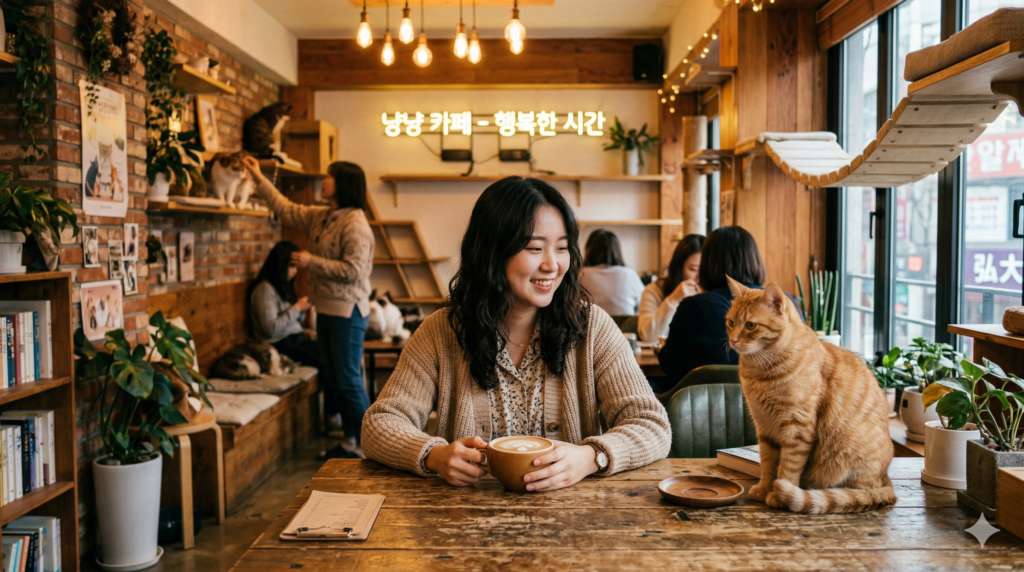
Imagine settling into a cozy wooden chair, wrapping both hands around a warm matcha latte, and feeling a soft, purring weight land gently on your lap. Outside the window, the neon-lit streets of Hongdae buzz with energy — but inside, time slows down. Welcome to the wonderfully surreal world of animal themed cafes in Seoul Korea, where coffee culture and creature comfort collide in the most delightful way imaginable. Whether you are a devoted K-drama fan who has spotted these charming spaces on screen, a solo traveler seeking a unique Seoul experience, or simply someone who cannot resist the company of adorable animals, Seoul’s animal cafe scene is something you genuinely cannot afford to miss.
Seoul is not just a city with a few novelty cafes scattered around tourist districts. It is the undisputed global capital of the animal cafe experience, offering an extraordinary range of themed spaces that go far beyond the familiar cat cafe concept. From raccoons and hedgehogs to owls, sheep, and even reptiles, the South Korean capital has transformed the simple act of drinking coffee into a full sensory, emotionally enriching encounter. And with K-drama influence spreading Korean cafe culture to every corner of the world, international visitors are arriving in Seoul with animal cafes firmly at the top of their itineraries.
This guide is your complete, expertly curated roadmap to navigating the best animal themed cafes Seoul has to offer. You will find specific cafe recommendations by neighborhood, practical visitor tips, cost breakdowns, etiquette advice, and honest insight into ethical considerations — everything you need to plan the perfect animal cafe day in Seoul.
Why Seoul is the World Capital of Animal Themed Cafes
The Rise of Cafe Culture in South Korea
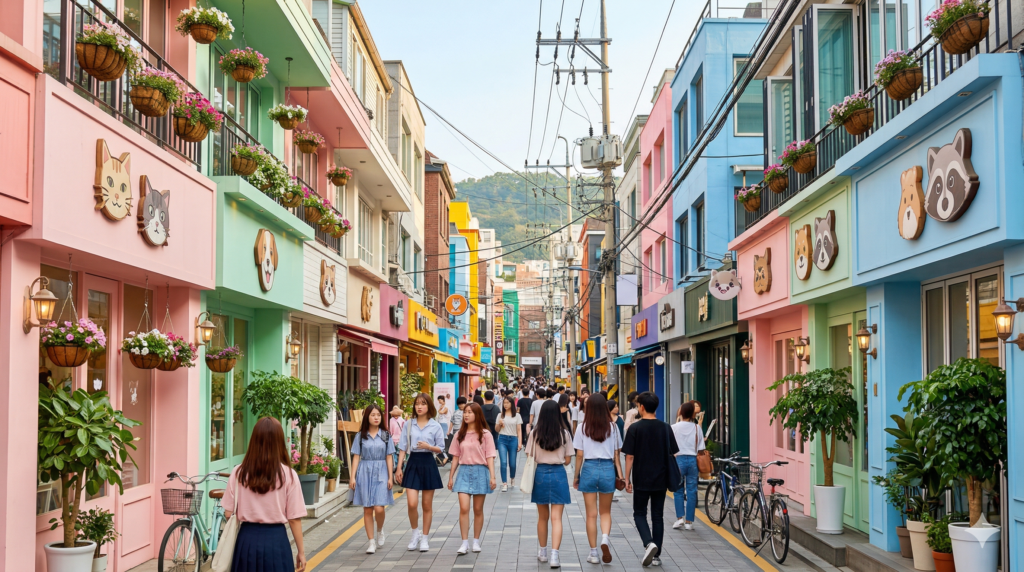
To understand why animal cafes thrive in Seoul, you first need to appreciate the extraordinary role that cafes play in Korean daily life. South Korea has one of the highest cafe densities in the world. Seoul alone is home to tens of thousands of coffee shops, and the competition for customers has driven cafe owners to innovate relentlessly. The result is a city where themed cafes — whether centered around flowers, books, board games, or living animals — are not gimmicks. They are serious, often meticulously designed businesses built to deliver a memorable experience.
Korean cafe culture, often described by locals as “카페 문화” (cafe culture), is deeply woven into social life. Cafes are where friendships are maintained, dates are had, and creative work gets done. As this culture matured, experience-driven concepts began to dominate the market, and animal cafes rose to the top as the most emotionally resonant category of all.
Why Koreans Love Animal Cafes
There is a deeply practical reason behind the popularity of animal themed cafes in Korean urban culture, and it comes down to one word: apartments. The overwhelming majority of Seoul’s population lives in high-rise apartment buildings where keeping pets — especially dogs — is either prohibited by building management or heavily restricted. For animal lovers living in these spaces, an animal cafe is not merely a fun outing. It is a genuine emotional outlet.
This connects powerfully to a broader Korean cultural trend known as “힐링” (healing) culture — the pursuit of comfort, emotional restoration, and stress relief through gentle, sensory experiences. Spending thirty minutes stroking a sleeping cat or feeding a curious rabbit has become a recognized form of self-care in modern Korean urban life.
Social media has amplified all of this dramatically. Platforms like Instagram and TikTok have turned Seoul’s most photogenic animal cafes into viral destinations, with videos of raccoons nibbling snacks or hedgehogs curling into tiny balls accumulating millions of views. K-dramas, too, have played a significant role — romantic scenes set in beautifully designed Seoul cafes have inspired international fans to seek out these spaces in real life, creating a tourism wave that shows no signs of slowing.
Types of Animal Themed Cafes in Seoul Korea
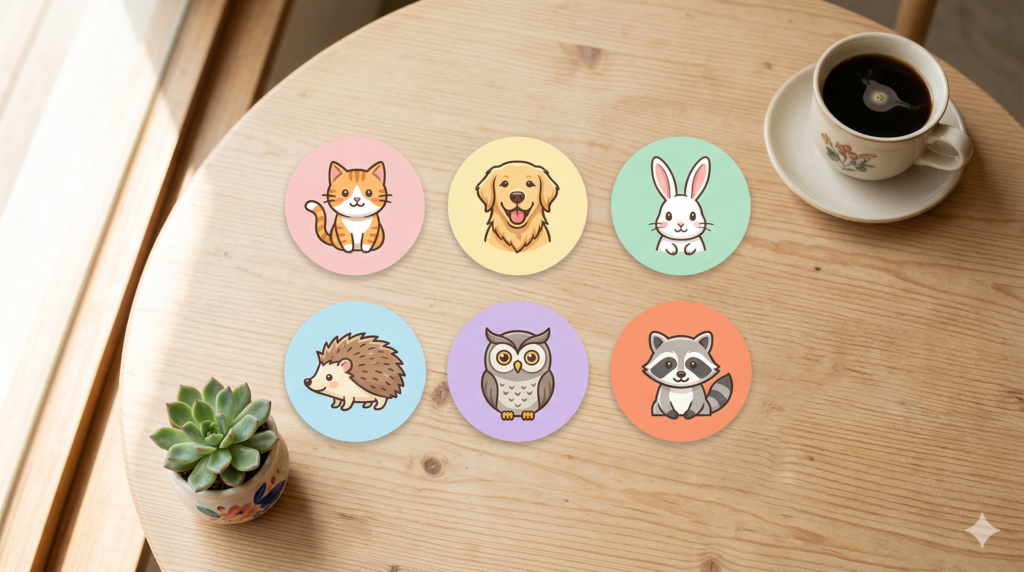
Before you begin planning your cafe crawl, it helps to understand just how diverse Seoul’s animal cafe landscape truly is. This city goes dramatically beyond the cat cafe concept that most international visitors are familiar with. Here is a quick overview of what you can expect to find:
- Cat Cafes — The original and still among the most popular, featuring resident cats of various breeds living freely throughout the space
- Dog Cafes — Spaces where friendly, socialized dogs roam and interact with guests
- Rabbit Cafes — Quieter, gentler environments featuring fluffy rabbits in open play areas
- Hedgehog Cafes — Niche but beloved, offering hands-on interaction with these prickly little creatures
- Bird and Owl Cafes — Atmospheric spaces where parrots, owls, and other birds perch nearby while you enjoy your drink
- Sheep and Farm Animal Cafes — Surprisingly common in Seoul, often featuring rooftop or garden setups
- Reptile Cafes — For the truly adventurous, featuring snakes, lizards, and other exotic animals
- Raccoon Cafes — A Seoul specialty, and one of the most unforgettable experiences the city offers
As one long-time Seoul resident and cafe enthusiast puts it: “Seoul is one of the few cities in the world where you can have breakfast with a cat, lunch near a raccoon, and dessert beside a hedgehog — all in one day.”
The Best Cat Cafes in Seoul Korea
Catfe — Hongdae
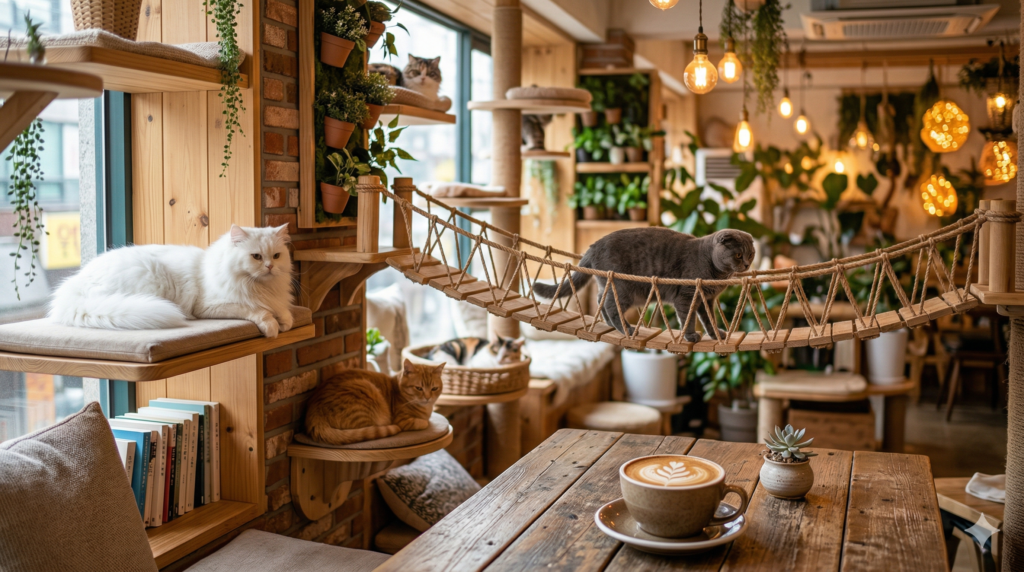
Hongdae, Seoul’s vibrant arts and university district, is home to some of the city’s most beloved cat cafes, and Catfe sits near the top of almost every recommended list. This cafe strikes a balance between indie coffee shop aesthetics and genuine feline companionship. The interior is warm and thoughtfully designed, with elevated platforms, cozy tunnels, and cushioned perches where resident cats spend their days napping, playing, and occasionally deigning to interact with guests.
The menu leans toward specialty coffee and light desserts, and the cat-themed latte art is a popular subject for social media posts. The resident cats are well-cared-for, clearly socialized, and never forced into interactions — a sign of a well-managed establishment. First-time visitors should arrive during off-peak hours, typically weekday mornings or early afternoons, to enjoy the most relaxed experience. Entry fees generally include one beverage.
Cat Forest — Sinchon and Insadong Areas
Cat Forest offers a slightly more immersive experience, designed to feel like a natural woodland environment inhabited by free-roaming cats. Multiple levels create interesting spatial dynamics — some cats prefer the elevated walkways while others patrol the ground floor, making every visit feel slightly different. The cafe is particularly popular among university students from the nearby Yonsei and Ewha campuses, giving it a lively, youthful energy.
The menu here features beautifully presented cat-themed drinks including paw print lattes and character-shaped cookies. For first-time visitors, the staff are generally helpful and some speak basic English, making it accessible for international tourists.
Nyangnyang Cat Cafe — Myeongdong Area
For tourists staying in the central Myeongdong area, Nyangnyang is an excellent and convenient choice. Its location in one of Seoul’s busiest tourist districts means it sees a higher volume of international visitors, and the staff are accustomed to guests who do not speak Korean. The cafe maintains clear hygiene standards, provides hand sanitizer stations throughout, and posts its house rules prominently in multiple languages. Photo opportunities are excellent here, with the cats frequently settling near windows where natural light creates beautiful compositions.
Dog Cafes in Seoul — Where Tails Are Always Wagging
Bau House Dog Cafe — Hongdae
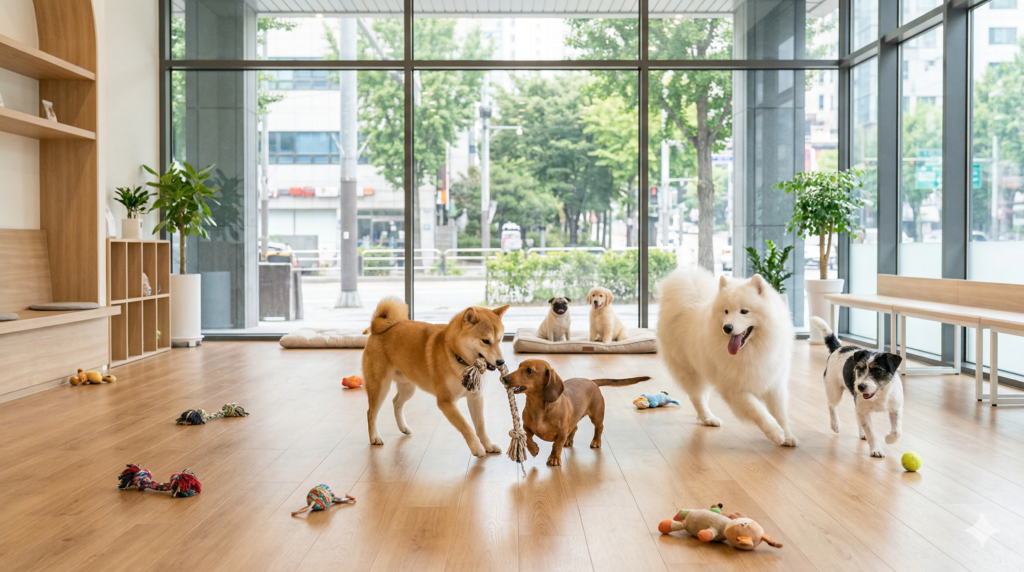
Bau House is arguably the most famous dog cafe in all of Seoul and has appeared in numerous travel guides, K-culture features, and social media compilations over the years. Located in the heart of Hongdae, this cafe houses a rotating cast of friendly, well-groomed dogs of various breeds — from small Maltese and Pomeranians to larger Shiba Inus and Golden Retrievers. The energy here is warm, joyful, and occasionally wonderfully chaotic.
Upon entry, guests are asked to remove shoes and store their belongings in lockers before entering the main dog area — a standard hygiene practice across most reputable Seoul dog cafes. The dogs are trained and socialized, and the staff monitor interactions carefully to ensure both guest and animal comfort. The menu is solid, with coffee, smoothies, and light snacks available. Entry fees typically include one drink, with the option to purchase additional treats to feed the dogs. Reservations are strongly recommended, particularly on weekends, as Bau House fills up quickly.
Thanks Nature Cafe — Hongdae
Thanks Nature Cafe is a uniquely Seoul experience that defies easy categorization. Most famous for its resident sheep — who can typically be found on the cafe’s rooftop terrace — this establishment blends elements of a dog cafe, farm cafe, and nature-themed concept into one genuinely memorable visit. The combination of an urban Hongdae location with the pastoral sight of sheep grazing quietly on a rooftop terrace has made it one of Seoul’s most-photographed venues.
The interior maintains a rustic, natural aesthetic with wooden furnishings, potted plants, and warm lighting. The menu focuses on wholesome, natural ingredients, and the desserts are reliably excellent. This cafe is ideal for couples, families with older children, and anyone looking for a slightly more unusual take on the animal cafe format.
Pup in the Cup — Itaewon and Gangnam Areas
For a more boutique, intimate dog cafe experience, the smaller establishments in Itaewon and Gangnam offer a refreshing change from the high-traffic venues of Hongdae. These cafes tend to house fewer dogs in a quieter setting, creating a more relaxed atmosphere that solo travelers and those seeking a genuine “healing” experience tend to prefer. The dogs in these spaces are often purebred and immaculately groomed, reflecting the upscale character of their neighborhoods. English-language menus and English-speaking staff are more commonly found here, making them particularly accessible for international visitors.
Unique and Unusual Animal Cafes in Seoul You Won’t Find Anywhere Else
Blind Alley Raccoon Cafe — Hongdae
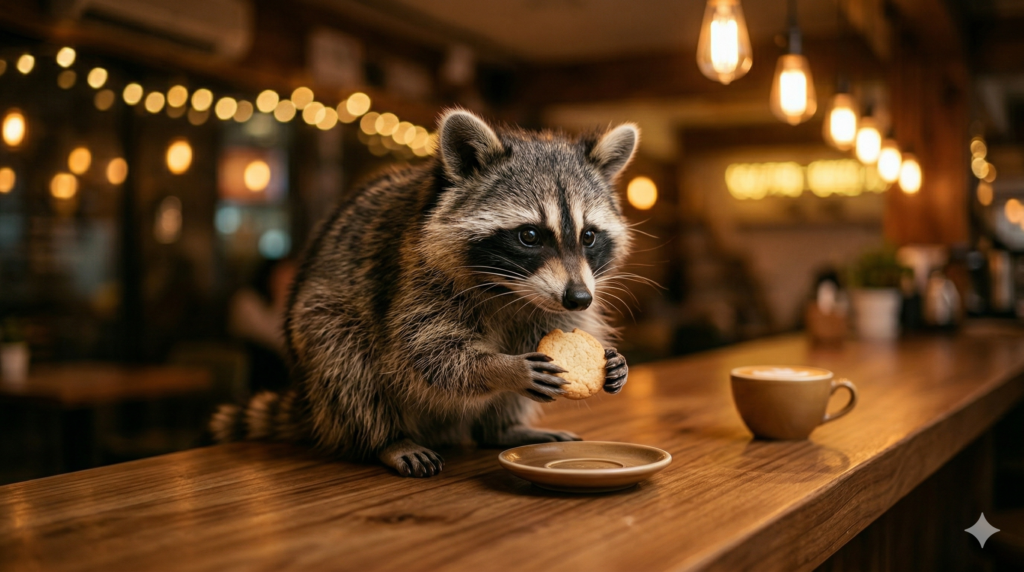
If there is one animal cafe experience in Seoul that consistently leaves visitors speechless, it is Blind Alley — the city’s most famous raccoon cafe. Located in Hongdae, this extraordinary space houses several resident raccoons who wander freely through the cafe, interact with guests, and accept snacks with their remarkably dexterous little hands. The experience is unlike anything available in most parts of the world, and the combination of the raccoons’ intelligence, curiosity, and occasional mischievousness makes for genuinely memorable interactions.
Staff provide guidance on how to interact with the raccoons safely and respectfully — sudden movements and loud noises are discouraged, and guests are advised to let the animals approach on their own terms. The raccoons are well-cared-for and clearly accustomed to human presence, though they retain enough of their natural personality to keep every visit unpredictable. The cafe also serves as a dog cafe, so guests typically enjoy the company of both raccoons and friendly dogs during a single visit. Reservations are essential here, as this is one of Seoul’s most in-demand animal cafe experiences.
Hedgehog Cafe — Sinchon
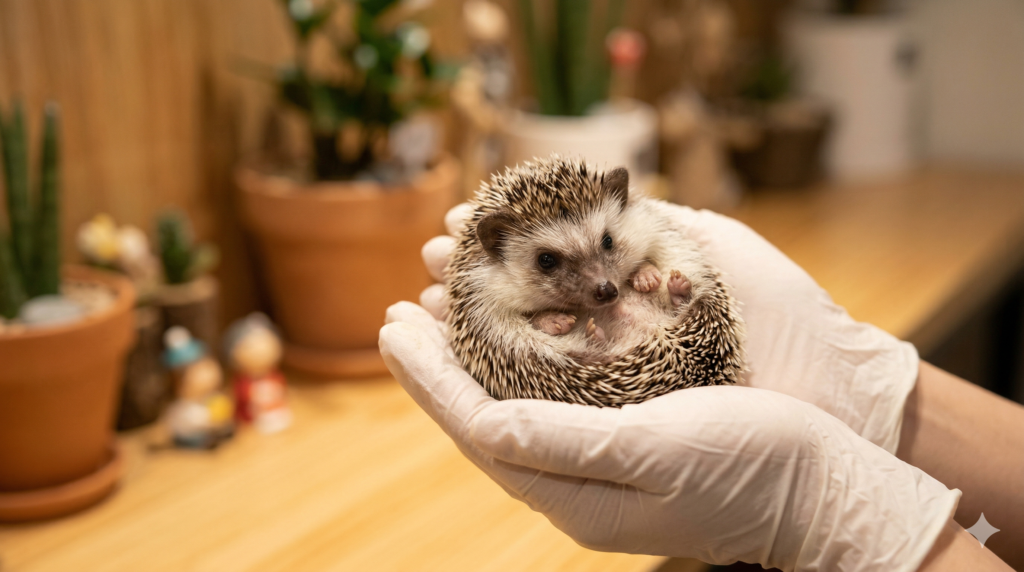
Seoul’s hedgehog cafes represent one of the quieter, more contemplative corners of the animal cafe world. The Sinchon hedgehog cafe is among the most well-known, offering visitors the chance to hold and interact with these small, spiky creatures under gentle supervision. Thick gloves are provided upon entry, as hedgehog quills — while not dangerously sharp — can be uncomfortable against bare skin, particularly when the animal curls defensively.
The key to a great hedgehog cafe experience is patience. These animals take time to feel comfortable and uncurl in a stranger’s hands, and the reward for sitting quietly and calmly is the sight of a tiny hedgehog face peering up at you with bright, curious eyes. The cafe maintains a calm, subdued atmosphere — background music is kept low and voices are kept gentle — creating an environment that genuinely earns the “healing cafe” descriptor. This is a particularly wonderful experience for travelers who want something more intimate and less crowded than the larger dog and cat cafes.
Owl Cafe Seoul — Insadong Area
For a more atmospheric and visually striking animal cafe experience, Seoul’s owl cafes offer something genuinely unique. The Insadong area hosts one of the city’s better-known owl cafe spaces, where several species of owls perch on wooden stands throughout a dimly lit, atmospheric interior. The owls — including barn owls, screech owls, and occasionally larger eagle owls — are trained to tolerate human presence and can sometimes be persuaded to step onto a gloved arm for a photograph.
It is worth approaching owl cafes with some thoughtfulness regarding animal welfare. Owls are naturally nocturnal, and a responsible owl cafe will ensure the birds have access to quiet resting spaces and are not subjected to excessive handling or flash photography. The better establishments in Seoul take these responsibilities seriously, and it is worth reading recent visitor reviews before selecting a specific venue. When managed well, an owl cafe is one of the most atmospherically distinctive experiences Seoul has to offer.
Reptile and Exotic Animal Cafes
For the truly adventurous visitor, Seoul also harbors a small number of reptile cafes where snakes, lizards, bearded dragons, and other exotic species can be observed and sometimes handled. These cafes occupy a niche corner of the market and tend to attract a specific type of curious traveler. They are not for everyone — but for those with an interest in reptiles, they offer an encounter that is virtually impossible to find in most other cities. Hygiene standards vary, so choosing a well-reviewed establishment and following all staff instructions carefully is particularly important in this category.
Animal Cafe Etiquette in Seoul — What You Must Know Before You Go
Visiting an animal cafe in Seoul is a joyful experience, but it comes with a set of responsibilities that every guest should understand before walking through the door. The best animal cafes in Seoul operate with genuine care for their resident animals, and respecting the house rules is not just courteous — it is essential to ensuring these spaces remain open, humane, and enjoyable for everyone.
General Rules Across All Animal Cafes
While specific rules vary from cafe to cafe, the following guidelines apply broadly across virtually all reputable animal themed cafes in Seoul Korea:
No flash photography. This is perhaps the most universally enforced rule. Flash photography startles animals, causes stress, and can be genuinely harmful over time — particularly for nocturnal species like owls and hedgehogs. Most cafes allow photography with natural light or standard phone cameras, and the results are often more beautiful anyway.
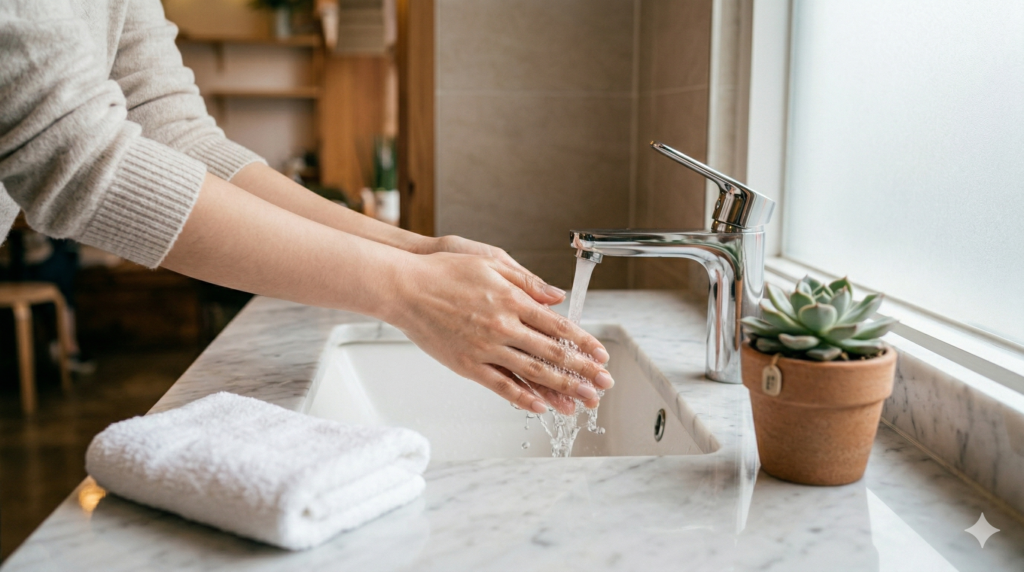
Wash your hands. Nearly every animal cafe in Seoul provides handwashing stations or hand sanitizer dispensers at the entrance and throughout the space. Use them — both before and after interacting with animals. This protects the animals from human-transmitted bacteria and protects you in return.
Never force an interaction. Animals in well-managed Seoul cafes are not props. If a cat moves away from you, if a hedgehog curls into a ball, or if a dog retreats to its resting area, respect that boundary completely. Chasing, cornering, or forcibly holding animals is strictly prohibited and will result in being asked to leave.
Respect quiet and rest zones. Most animal cafes designate specific areas where animals can retreat undisturbed. These spaces exist for the animals’ mental wellbeing and must never be entered or interfered with by guests.
Keep your voice low. Loud conversations, sudden shouts, or boisterous behavior disrupt the calm atmosphere these cafes work hard to maintain. Speaking in a gentle, measured tone is considered standard etiquette and makes for a better experience for everyone in the space.
What to Wear and Bring
Practical preparation makes a significant difference to your animal cafe experience. A few key points to keep in mind:
Avoid wearing strong perfumes or colognes before visiting. Animals have highly sensitive olfactory systems, and overwhelming scents can cause stress or avoidance behavior. This is especially true in cat cafes, where the resident felines are particularly sensitive to unfamiliar smells.
Wear comfortable, animal-friendly clothing. Dark colors are practical — animal fur is inevitable and shows most prominently on dark fabrics, though most visitors consider this a badge of honor rather than an inconvenience. Avoid dangling accessories like long necklaces or hanging earrings, which can attract unwanted nibbling from curious animals.
Do not attempt to bring outside food or snacks into the animal area. This rule exists for important health and safety reasons — human food can be harmful or even toxic to many animals, and feeding animals outside of designated feeding times disrupts their dietary management. Any treats or feeding opportunities will be organized and supervised by cafe staff.
How to Be a Responsible Animal Cafe Visitor
Responsible tourism matters enormously in the context of animal cafes. The difference between a well-run animal cafe and a poorly managed one comes down to the standards the establishment maintains — and the behavior of the visitors who frequent it.
When choosing which animal cafes to visit, prioritize establishments that demonstrate clear commitment to animal welfare. Look for spaces where the animals appear calm, healthy, and well-nourished. Resident animals should have access to clean water, appropriate rest areas, and sufficient space to move freely. Staff should be actively engaged and knowledgeable about the animals in their care.
Red flags to watch for include overcrowded enclosures, animals that appear lethargic or distressed, staff who are indifferent to rough handling by guests, or environments that smell poorly — indicating inadequate cleaning protocols. If something feels wrong during your visit, trust that instinct.
Seoul’s animal cafe industry has matured considerably in recent years, and the most reputable establishments take their duty of care seriously. Supporting these responsible businesses with your custom encourages higher standards across the entire industry.
Practical Visitor Guide — How to Plan Your Animal Cafe Day in Seoul
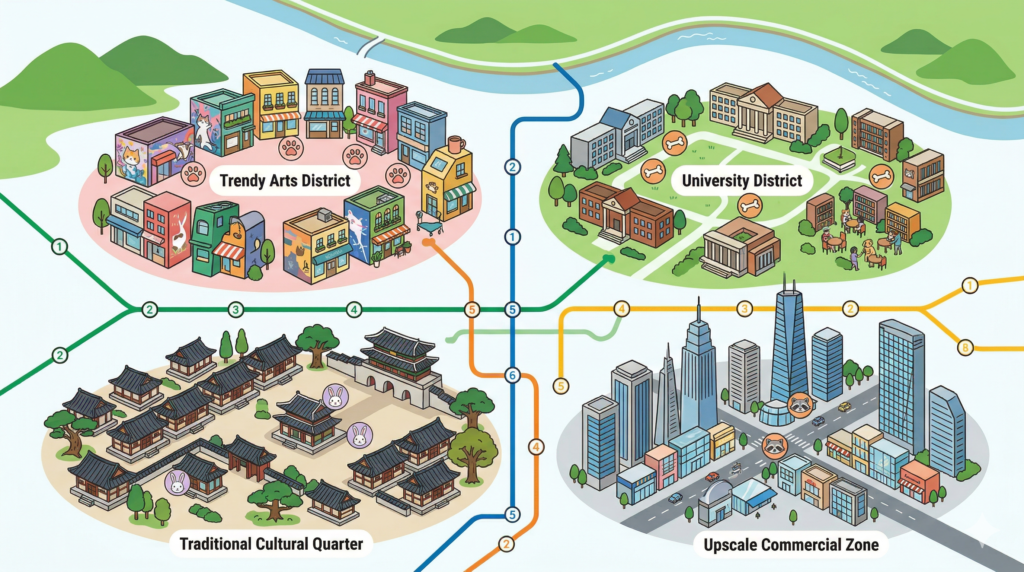
With dozens of animal cafes spread across the city, planning a well-organized animal cafe day in Seoul requires a little strategic thinking. The good news is that Seoul’s public transportation system is outstanding, and most of the city’s best animal cafes are clustered in a handful of highly accessible neighborhoods.
Best Neighborhoods for Animal Cafes in Seoul
Hongdae (홍대) is the undisputed center of Seoul’s animal cafe universe. This is where you will find the highest concentration of animal themed cafes in any single area of the city, including internationally famous names like Bau House and Blind Alley. Hongdae’s young, creative, trend-conscious demographic has made it the natural home of Seoul’s most innovative cafe concepts. The neighborhood is energetic, colorful, and endlessly walkable, making it ideal for a full-day cafe crawl.
Insadong (인사동) offers a more culturally rich backdrop for animal cafe visits. This traditional arts district, known for its galleries, craft shops, and hanok-style architecture, hosts several well-regarded animal cafes that attract both domestic tourists and international visitors. The atmosphere here is notably more relaxed than Hongdae, making it a good choice for those who prefer a quieter experience.
Sinchon (신촌) sits adjacent to Hongdae and shares much of its youthful energy, being surrounded by several major universities. Animal cafes here tend to be slightly more budget-friendly than those in trendier areas, and the hedgehog cafe scene is particularly strong. This is a solid choice for budget-conscious travelers who still want an excellent animal cafe experience.
Gangnam (강남) represents the upscale end of Seoul’s animal cafe spectrum. The cafes here tend to be more spacious, more meticulously designed, and more expensive — but the experience is often correspondingly polished. If you are looking for a premium, Instagram-perfect animal cafe experience, Gangnam’s offerings are worth the additional cost.
Itaewon (이태원) is Seoul’s most internationally oriented neighborhood, and its animal cafes reflect that cosmopolitan character. English menus and English-speaking staff are more consistently available here, making it the most accessible area for visitors who do not speak Korean. The cafes in Itaewon also tend to be slightly less crowded than those in Hongdae, offering a more relaxed visit.
How Much Does It Cost to Visit an Animal Cafe in Seoul?
Animal cafe pricing in Seoul is generally structured around an entry fee that includes one complimentary drink, with additional items available for purchase from the menu. Understanding this structure helps you budget accurately.
Entry fees at most animal themed cafes in Seoul Korea fall in the range of ₩10,000 to ₩15,000 (approximately $7–$11 USD) per person. This fee covers your entry to the animal area and one beverage — typically a coffee, tea, or soft drink — from the standard menu. Specialty drinks, desserts, and animal treats are available at additional cost and usually priced between ₩3,000 and ₩8,000.
Some cafes, particularly the more premium establishments in Gangnam or those featuring rarer animals such as raccoons or owls, charge higher entry fees in the ₩15,000 to ₩20,000 range. These prices still represent excellent value given the unique nature of the experience, particularly when compared to equivalent animal encounter attractions in Europe, North America, or Australia.
Budget travelers should note that Sinchon and Hongdae cafes tend to offer the most competitive pricing, while Gangnam venues lean toward the premium end of the spectrum.
Reservations — Do You Need One?
For the most popular animal cafes in Seoul — particularly Bau House, Blind Alley, and the major Hongdae cat cafes — advance reservations are strongly recommended, especially for weekend visits. Seoul’s animal cafe scene draws significant domestic and international traffic, and the most beloved establishments fill their time slots quickly.
Reservations for Korean cafes are typically made through one of three channels. Naver (네이버), Korea’s dominant search and booking platform, hosts reservation systems for many cafes and is the most reliable option for Korean-language bookings. KakaoTalk, South Korea’s ubiquitous messaging app, is widely used for direct cafe reservations — most cafes list a KakaoTalk ID on their social media profiles. Instagram direct messages are surprisingly effective for smaller or boutique cafes, many of which manage their reservation calendars directly through their Instagram accounts. A polite message in English will typically receive a response, though reply times can vary.
For walk-in visits, weekday mornings between 10 AM and 12 PM represent the quietest windows across most animal cafes in Seoul. Avoid Saturday and Sunday afternoons at all costs if you are sensitive to crowds — these are peak periods when popular cafes can reach full capacity within minutes of opening.
Getting There — Transportation Tips
Seoul’s subway network is one of the finest urban transit systems in the world, and it connects virtually every major animal cafe district with ease. The system is clean, punctual, and extremely affordable, with most single journeys costing between ₩1,250 and ₩1,750 depending on distance.
For Hongdae, take Line 2 to Hongik University Station (홍대입구역) — Exit 9 puts you directly into the heart of the cafe district. For Insadong, Line 3 to Anguk Station (안국역) is the most convenient option. Sinchon is served by Line 2 at Sinchon Station (신촌역), while Gangnam’s café scene is most easily accessed via Line 2 at Gangnam Station (강남역) or Line 9 at Sinnonhyeon Station.
A T-money card — the rechargeable transit card available at any convenience store or subway station — is essential for any Seoul visitor. It works on all subway lines, buses, and even some taxis, and provides a small per-journey discount compared to single-use tickets. Load it with ₩20,000 to ₩30,000 at the start of your trip and recharge as needed.
For navigation within neighborhoods, Kakao Maps is significantly more accurate and comprehensive than Google Maps for Seoul street-level navigation. Download it before your trip and use it to locate cafe addresses — Korean addresses can be complex for first-time visitors, and Kakao Maps handles them far more reliably.
Animal Cafes in Seoul as Seen in K-Dramas and Korean Pop Culture
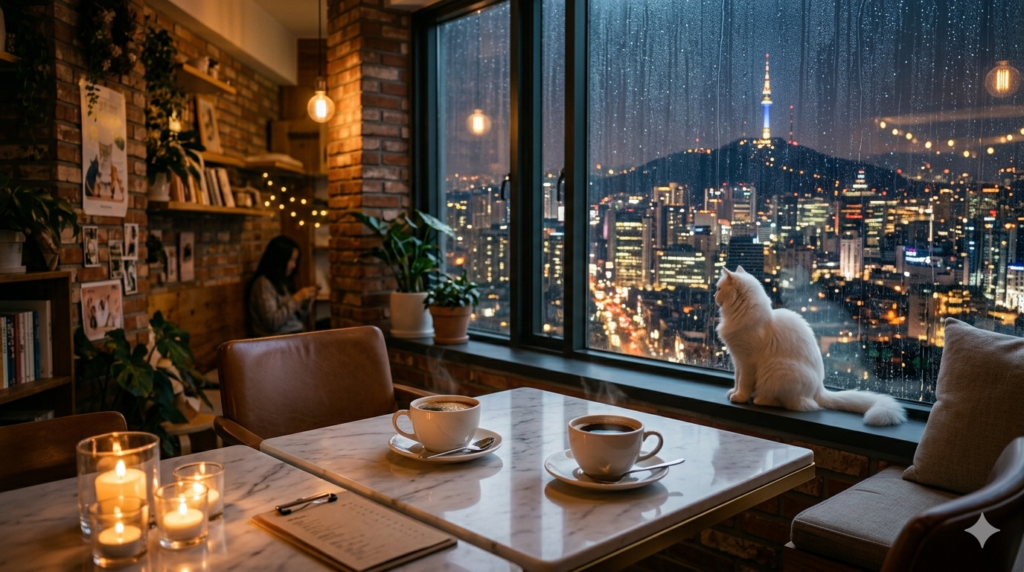
For international visitors whose love of Seoul began with K-dramas, the city’s cafe culture carries an extra layer of magic. Korean dramas have long used beautifully designed Seoul cafes as backdrops for pivotal scenes — first meetings, emotional conversations, and romantic turning points — and animal cafes have increasingly found their way into this visual vocabulary.
K-Drama Scenes Filmed in Seoul Cafes
Several beloved Korean dramas have featured cafe scenes that sparked viewer interest in Seoul’s themed cafe scene. While not all productions film in actual animal cafes — set design often recreates the aesthetic — the visual language of cozy, creature-filled Korean cafes has permeated the genre and captured the imagination of international audiences in a powerful way.
Fans of dramas like My Mister, Weightlifting Fairy Kim Bok-joo, and various romantic comedies set in Seoul frequently cite cafe scenes as among the most memorable and aspirational visuals in those productions. The combination of warm lighting, aesthetically designed interiors, and the presence of animals creates an atmosphere of comfort and intimacy that translates beautifully on screen — and even more beautifully in real life.
The Korean Wave, or Hallyu, has made this connection between drama aesthetics and real-world tourism one of the most powerful forces driving visitors to Seoul. Travel agencies now offer dedicated K-drama cafe tours that include stops at animal cafes featured in or inspired by popular productions, and these tours consistently sell out.
Why These Cafes Go Viral on Social Media
The virality of Seoul’s animal cafes on platforms like TikTok and Instagram is not accidental — it is the product of a perfect alignment between compelling visual content and an emotionally resonant subject matter. Videos featuring raccoons at Blind Alley, hedgehogs uncurling in gentle hands, or perfectly groomed Shiba Inus posing beside latte art routinely accumulate millions of views, introducing Seoul’s animal cafe culture to audiences who had never previously considered visiting South Korea.
For visitors hoping to capture their own shareable content, a few practical photography tips make a significant difference. Natural light produces the warmest, most flattering results — position yourself near windows whenever possible. Patience is the most important tool — the best animal cafe photographs happen when you wait for the animal to settle naturally rather than staging or forcing a pose. Portrait mode on modern smartphones produces beautiful results in the cozy, softly lit environments typical of Seoul cafes. And always, always respect the no-flash rule — your photographs will be better for it, and the animals will certainly appreciate it.
Are Animal Cafes in Seoul Ethical? A Balanced Perspective
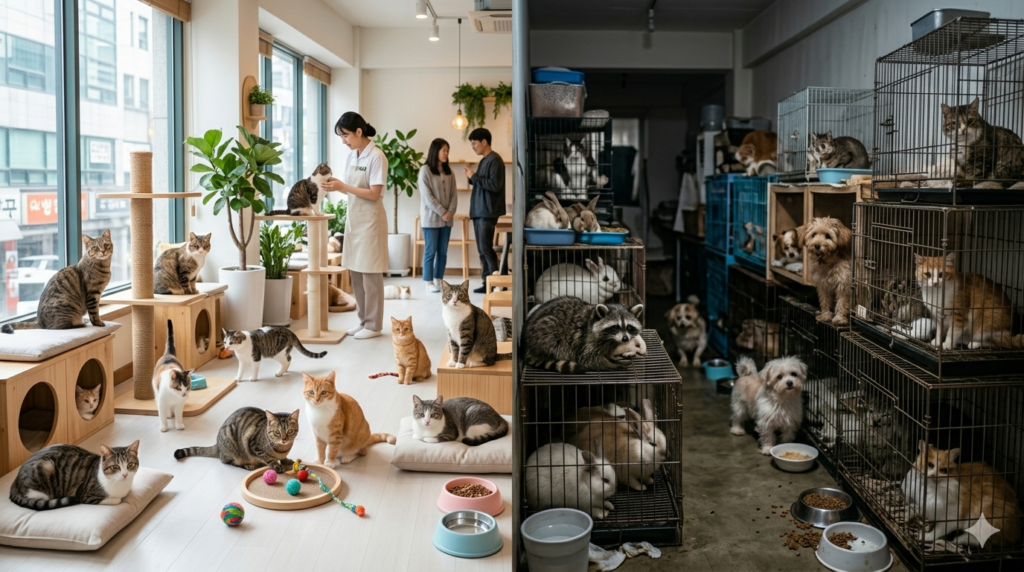
Any honest guide to animal themed cafes in Seoul Korea must engage seriously with the question of ethics. This is a topic that has grown in prominence as global awareness of animal welfare issues has increased, and it deserves a thoughtful, balanced treatment rather than a dismissive reassurance.
The reality is nuanced. Seoul’s animal cafe industry spans a wide spectrum of standards. At the better end of that spectrum, you will find establishments that treat their resident animals with genuine care — providing appropriate nutrition, veterinary oversight, social stimulation, adequate rest periods, and clean, enriched living environments. These cafes understand that the wellbeing of their animals is inseparable from the quality of the experience they offer guests, and they invest accordingly.
At the lower end of the spectrum, unfortunately, some cafes prioritize novelty over welfare — housing too many animals in too little space, allowing excessive handling, or keeping inherently unsuitable species in cafe environments. The nocturnal owl debate is a good example: while owl cafes can be managed responsibly with appropriate rest schedules and limited handling, poorly run establishments can expose these naturally solitary, nocturnal birds to levels of stimulation that cause chronic stress.
The post-pandemic period has actually seen meaningful improvement in Seoul’s animal cafe standards overall. Increased public awareness, more rigorous social media scrutiny, and growing consumer preference for ethically managed spaces have pushed many operators to raise their standards. Several well-known Seoul animal cafes have voluntarily adopted formal animal welfare guidelines and make these policies publicly visible on their websites and social media accounts.
As a visitor, your choices carry genuine influence. Spending your money at well-managed, ethical animal cafes and leaving thoughtful, honest reviews on platforms like Google and TripAdvisor actively shapes the market in a positive direction. The animal cafes of Seoul that deserve your support are the ones that treat their animals as residents deserving of dignity — not as attractions to be consumed.
Frequently Asked Questions
Q: Are animal cafes in Seoul safe for children? Most cat cafes, dog cafes, and rabbit cafes in Seoul are family-friendly and welcome children. However, parents should supervise young children closely to ensure they interact gently with the animals. Some cafes set a minimum age requirement — typically around five or six years old — so it is worth checking individual cafe policies before visiting with very young children. Hedgehog, owl, and raccoon cafes are generally better suited to older children and adults.
Q: Can I visit a cat cafe in Seoul without a reservation? Many of Seoul’s cat cafes accept walk-in visitors, particularly on weekdays during off-peak hours. However, the most popular venues — especially in Hongdae — can fill up on weekends without notice. Making a reservation whenever possible is always the safer approach, and most cafes make the process straightforward through Naver or Instagram.
Q: How long can I stay at an animal cafe in Seoul? Most animal cafes in Seoul operate on a time-slot system, with each visit lasting between 60 and 90 minutes. This structure ensures that animal interactions remain manageable and that animals are not subjected to continuous stimulation throughout the day. Some cafes allow extended stays for an additional fee, though this varies by establishment.
Q: Are Seoul animal cafes expensive? By international standards, animal themed cafes in Seoul Korea offer exceptional value. Entry fees of ₩10,000 to ₩15,000 — roughly $7 to $11 USD — including one drink represent a genuinely affordable experience, particularly given the unique nature of the encounter. Even the more premium venues rarely exceed ₩20,000 per person for entry.
Q: Which animal cafe in Seoul is best for first-time visitors? For a first visit, Bau House Dog Cafe in Hongdae or any of the well-established Hongdae cat cafes are ideal starting points. They are centrally located, well-organized, accustomed to international visitors, and consistently deliver an excellent experience. Blind Alley Raccoon Cafe is strongly recommended as a follow-up visit for those who want to experience something truly unique to Seoul.
Q: Do Seoul animal cafes have English menus? English menus are increasingly common across Seoul’s animal cafe scene, particularly in tourist-heavy areas like Hongdae, Myeongdong, and Itaewon. Even in cafes without formal English menus, most have picture menus or staff with sufficient English to assist with ordering. Translation apps like Papago or Google Translate work well for any remaining gaps.
Seoul’s animal themed cafes are far more than a quirky tourism trend — they are a genuine expression of the city’s creative spirit, its deeply held wellness culture, and its extraordinary capacity for reinventing everyday experiences into something extraordinary. From the purring warmth of a Hongdae cat cafe to the unforgettable novelty of a Blind Alley raccoon encounter, the diversity and quality of animal themed cafes in Seoul Korea is simply unmatched anywhere else in the world.
Whether you are visiting Seoul for the first time or returning for the tenth, dedicating at least one full day to exploring this side of the city will reward you with memories that outlast any museum visit or shopping trip. The combination of great coffee, beautiful design, genuine emotional warmth, and the irreplaceable magic of animal connection makes these spaces something truly special.
Plan thoughtfully, visit responsibly, choose ethical establishments, and allow yourself to be fully present in the experience. Seoul’s animals are waiting — and they are very, very good hosts.