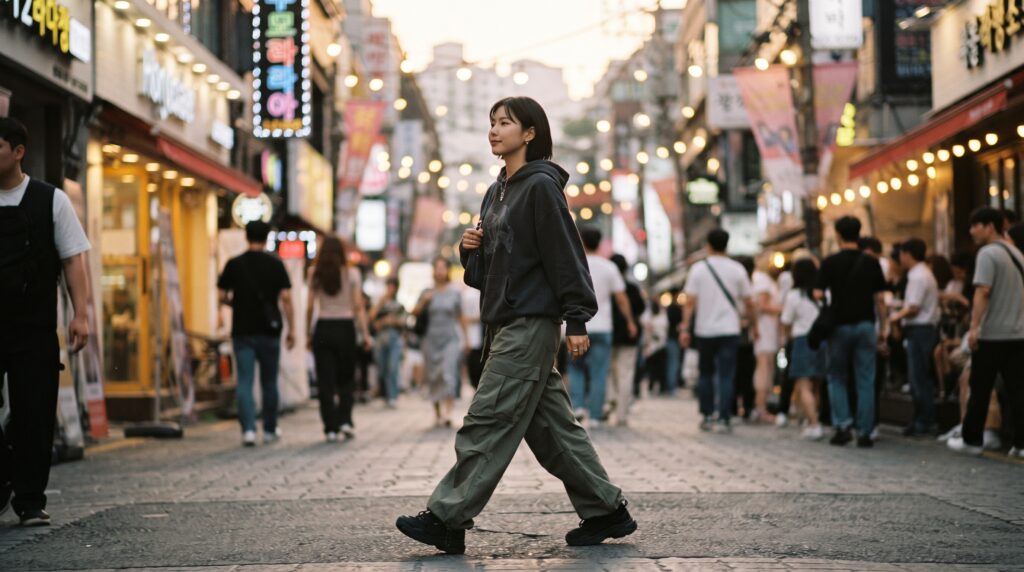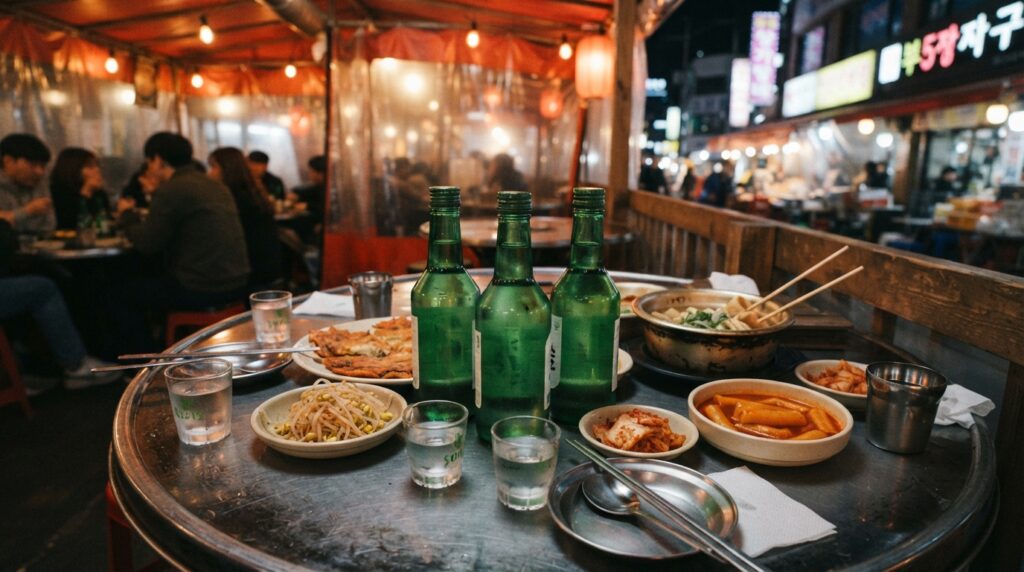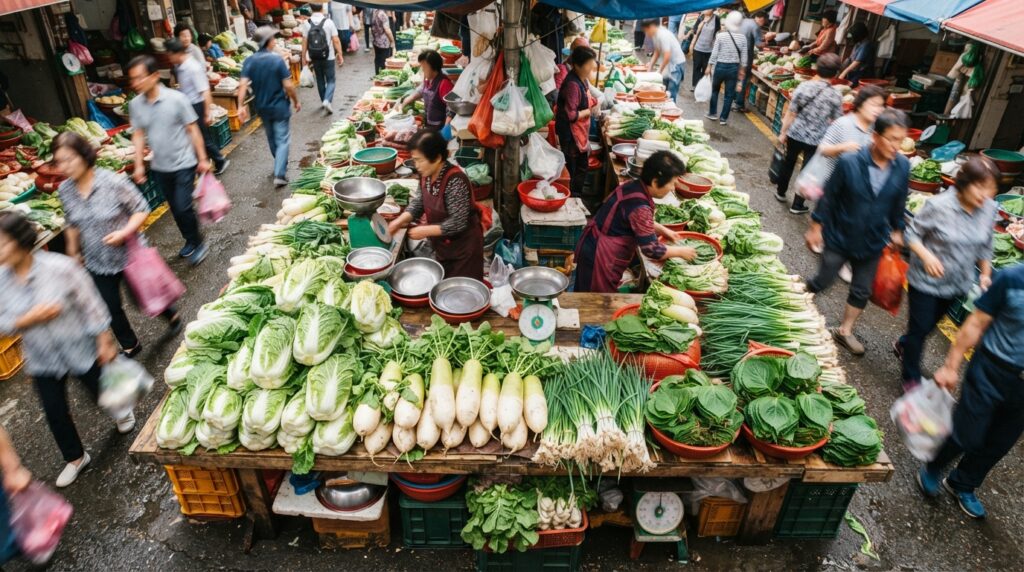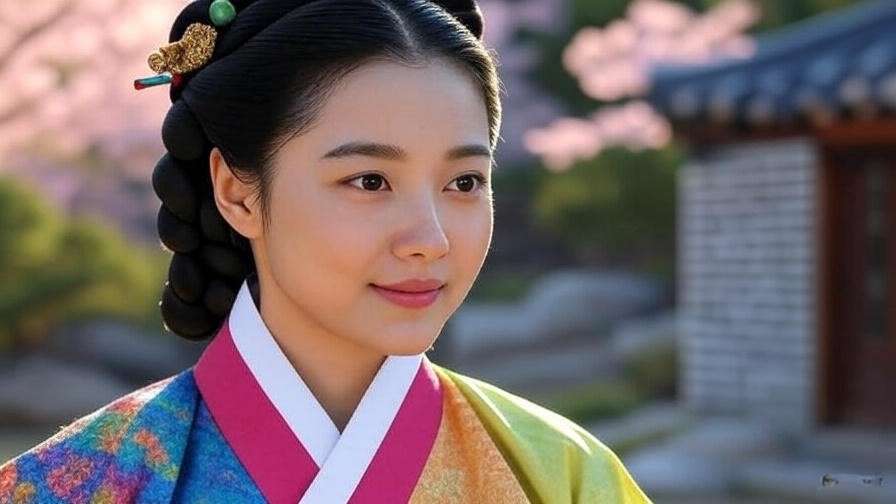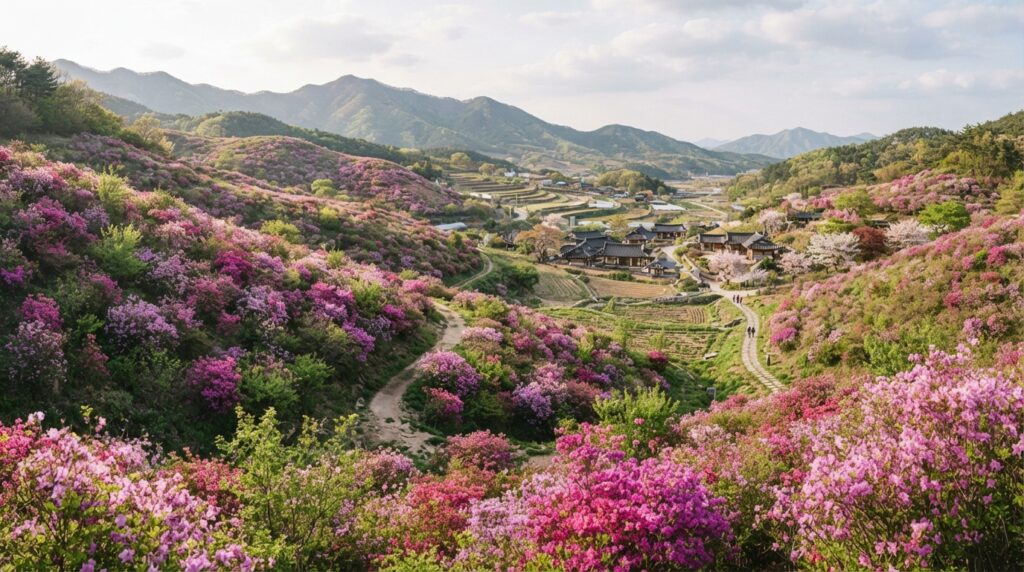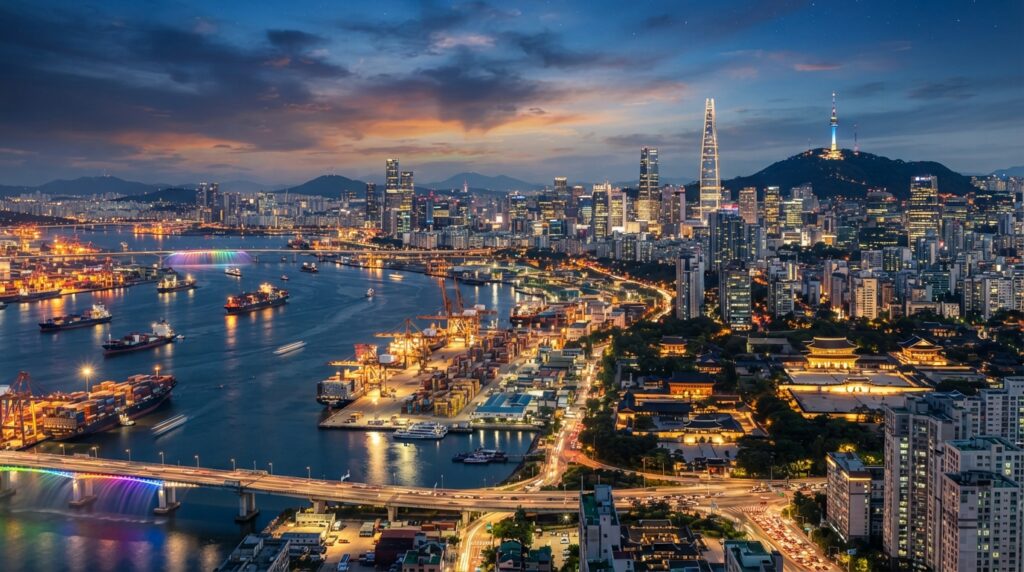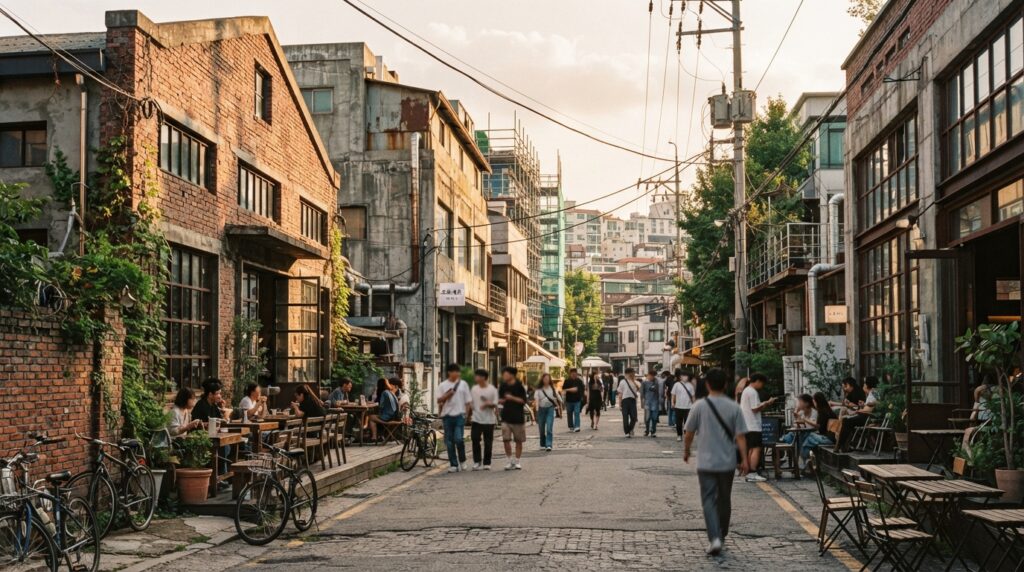
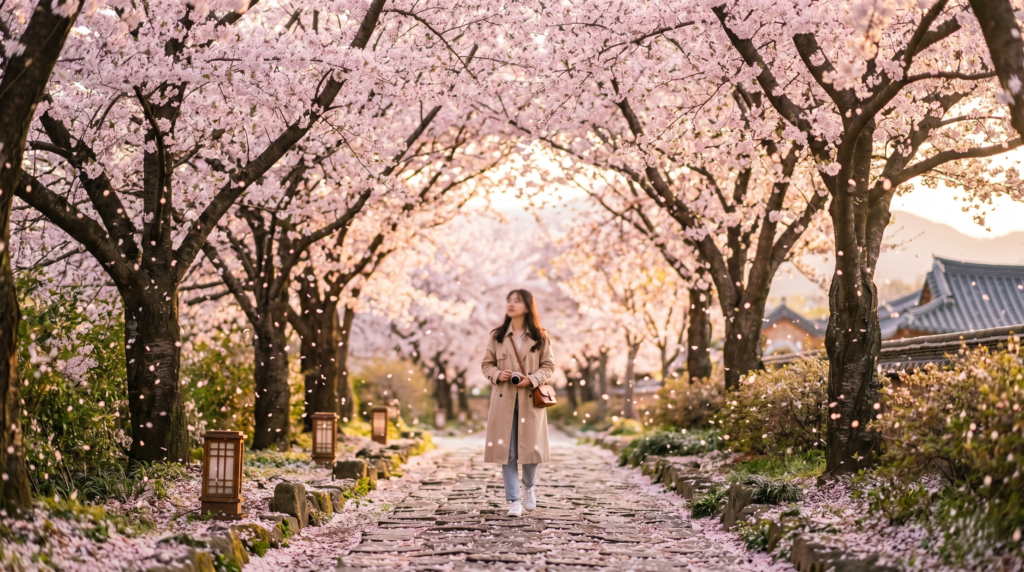
Imagine standing beneath a tunnel of cherry blossom trees, soft pink petals drifting down around you like snow, the smell of tteokbokki drifting from a nearby street stall, and a K-drama OST playing faintly from someone’s phone. This is not a scene from your favorite show — this is real life during the spring season in Korea. And it is every bit as breathtaking as it looks on screen.
Korea in spring is one of those rare travel experiences that genuinely lives up to the hype. From the iconic cherry blossom corridors of Seoul and Jinhae to the canola flower fields of Jeju Island, the Korean peninsula transforms into something almost cinematic between March and May each year. It is no coincidence that K-drama production teams schedule their most romantic outdoor scenes during this exact season.
Whether you are planning an actual trip to Korea, living vicariously through dramas, or simply trying to understand why spring holds such a special place in Korean culture — this guide covers everything. You will find the best blossom spots, the festivals worth planning your trip around, the K-drama filming locations to visit, the seasonal foods to try, and the practical tips that make the difference between a stressful trip and an unforgettable one.
By the end of this article, you will know exactly why spring in Korea deserves a top spot on your bucket list — and how to experience it like a local.
When Is Spring Season in Korea? Dates, Weather & What to Expect
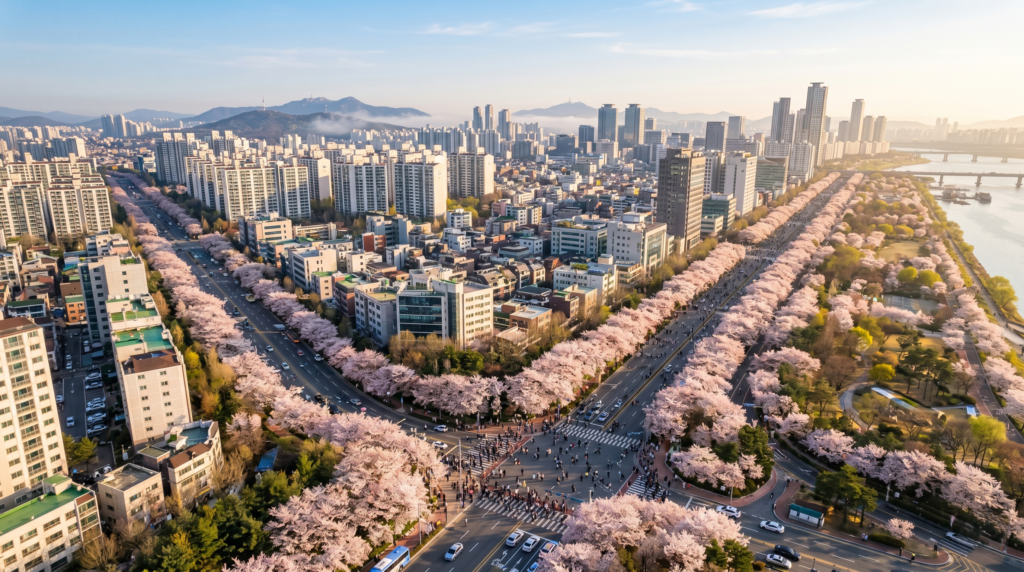
Before you pack your bags or plan your drama-location tour, it helps to understand what spring in Korea actually looks and feels like — because it varies more than most people expect.
Official Spring Months in Korea
Spring in Korea officially runs from March through May, though the character of each month is quite different.
March arrives with a chill still in the air. Morning temperatures can hover around 4–8°C (39–46°F), while afternoons warm up to 12–15°C (53–59°F). Early spring flowers like plum blossoms and forsythia begin appearing by mid-March, signaling that the season has begun. Layering is essential — a warm coat in the morning that you can shed by noon.
April is the crown jewel of Korean spring. Temperatures settle into a comfortable 10–18°C (50–64°F) range, cherry blossoms reach their peak, and the entire country seems to step outside at once. This is peak travel season, so expect crowds at popular spots.
May brings warmer, greener days with temperatures climbing to 20–24°C (68–75°F). The blossoms are gone but replaced by lush foliage, wisteria, and roses. The Lotus Lantern Festival typically falls in May, and the overall atmosphere is relaxed, festive, and gloriously sunny.
Regional Differences Across Korea
One of the most important things to understand about spring in Korea is that it does not arrive everywhere at once. The peninsula blooms from south to north, and knowing this can help you chase the perfect blossom window.
| Region | Bloom Start | Peak Week | Crowd Level |
|---|---|---|---|
| Jeju Island | Mid-March | Late March | High |
| Busan | Late March | Early April | High |
| Gwangyang | Mid-March | Late March | Moderate |
| Jinhae | Late March | Early April | Very High |
| Seoul | Late March | Early–Mid April | Very High |
| Gyeongju | Late March | Early April | Moderate |
Jeju Island leads the blooming calendar by one to two weeks compared to Seoul, making it an excellent early-spring destination for travelers who want to beat the peak-season crowds on the mainland.
Best Weeks to Visit for Peak Bloom
Cherry blossoms — called beot-kkot (벚꽃) in Korean — are famously fleeting. Peak bloom typically lasts only seven to ten days, which means timing your visit correctly is everything.
For Seoul and most of the mainland, the sweet spot is late March to mid-April, with the first week of April being the statistical peak most years. However, bloom dates shift based on winter temperatures and spring rainfall, so checking real-time forecasts closer to your visit is always wise.
The Korea Meteorological Administration (KMA) releases annual cherry blossom forecast maps that predict bloom dates by region — bookmarking their site is one of the best practical steps any spring Korea traveler can take.
Pro Tip: Set a Google alert for “Korea cherry blossom forecast” in late February. Forecasts are usually published in early March and updated weekly as conditions develop.
The Magic of Cherry Blossoms in Korea — Beyond the Pretty Pictures
Cherry blossoms are everywhere in spring Korea content — on Instagram, in travel guides, in K-drama promotional posters. But their significance runs far deeper than aesthetics.
Why Cherry Blossoms Are Culturally Significant in Korea
In Korean culture, beot-kkot carries rich symbolic meaning. Their brief, spectacular bloom followed by a rapid fall is seen as a metaphor for the beauty of transience — a concept that resonates deeply in Korean art, literature, and daily life.
Spring also coincides with the start of the Korean academic and professional calendar. Students begin new school years, companies welcome new employees, and the atmosphere across the country feels fresh with possibility and new beginnings. Cherry blossoms become the visual backdrop for all of this renewal — which is precisely why K-dramas use them so deliberately to signal hope, romance, and transformation.
There is also a deeply communal aspect to spring blossoms in Korea. Families, friends, and couples gather beneath blossom trees for flower-viewing picnics — a tradition not entirely unlike the Japanese concept of hanami, but with its own distinctly Korean character: louder, more festive, often involving soju and chimaek (fried chicken and beer).
Top Cherry Blossom Spots You Cannot Miss
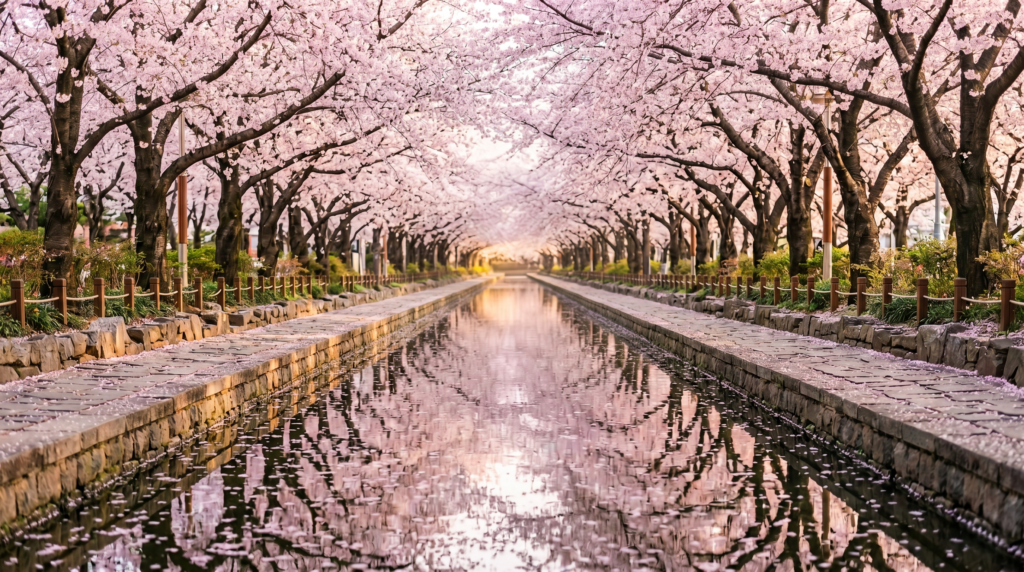
🌸 Yeouido Spring Flower Festival, Seoul Yeouido’s famous blossom boulevard — a 1.7km stretch of cherry trees along Yunjungno Road — is arguably the most iconic spring sight in the capital. The festival runs for approximately two weeks in early April, transforming this normally busy financial district into a pedestrian paradise of pink and white blossoms. Expect crowds, street food stalls, live performances, and the kind of beauty that stops you mid-sentence.
🌸 Jinhae Gunhangje Festival Located in the port city of Changwon, the Jinhae district hosts what is widely considered the largest cherry blossom festival in Asia. More than 360,000 cherry trees line the streets, canals, and hills of this naval port city, creating scenes of extraordinary beauty. The famous Gyeonghwa Station — a small railway station surrounded by blossoms — has become one of the most photographed spots in all of Korea. Book accommodation months in advance; this festival draws over a million visitors.
🌸 Gyeongju For travelers who want history with their blossoms, Gyeongju — the ancient capital of the Silla Kingdom — offers an unmatched combination of royal burial mounds, historic temples, and cherry-lined paths. Walking among blossoms framed by 1,500-year-old burial tumuli is a distinctly Korean spring experience you will not find anywhere else in the world.
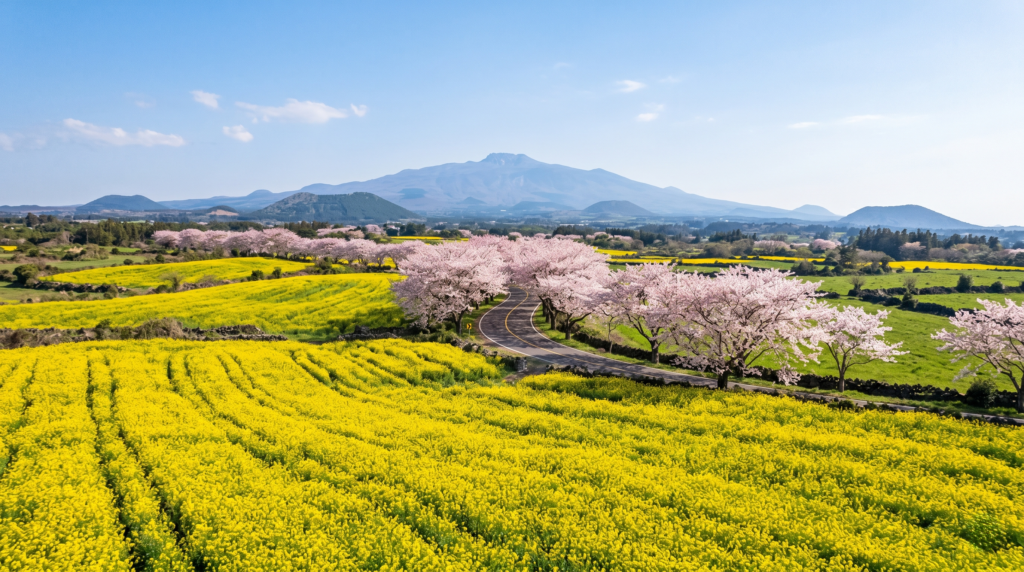
🌸 Jeju Island Jeju’s cherry blossoms bloom up to two weeks earlier than Seoul, and they are spectacular. The trees lining the road leading to Jeju International Airport are famous in their own right, but the island’s real spring magic comes from the combination of pink cherry blossoms and the bright yellow canola flower fields that bloom simultaneously — a color contrast that has made Jeju one of the most photographed spring destinations in Asia.
🌸 Namsan Mountain, Seoul Namsan’s forested slopes and the path surrounding N Seoul Tower offer some of the most romantically framed blossom views in the city. This is a genuine K-drama backdrop — and we will return to that in detail shortly.
Lesser-Known Blossom Spots the Crowds Miss
If the famous spots feel overwhelming, these quieter alternatives deliver equally stunning spring scenery:
- Ttukseom Hangang Park — blossom trees along the river with a relaxed, local picnic atmosphere
- Anyang Stream (Anyangcheon) — a beloved local walking trail lined with cherry trees, popular with Seoul residents but largely unknown to tourists
- Temple forest paths in South Gyeonggi Province — ancient temple grounds framed by natural woodland blooms
Insider Tip: Visit any popular blossom spot on a weekday morning before 9 AM. You will find empty paths, perfect light for photography, and a peaceful atmosphere that weekend afternoons simply cannot offer.
Spring Season in Korea Through the Lens of K-Dramas
For millions of international fans, the spring season in Korea was first discovered not through a travel guide but through a screen. K-dramas have done more to introduce global audiences to Korean spring culture than any tourism campaign — and with good reason.
Why K-Dramas Love Spring
Spring is the K-drama season of emotion. Production teams are acutely aware of the symbolic power of blossoms, and they schedule outdoor shoots with deliberate precision around bloom windows. A confession scene under falling cherry petals. A reunion on a blossom-lined path. A couple’s first walk in the warm spring light after a long, cold dramatic winter.
These are not random choices. Spring in K-dramas functions as a narrative shortcut for emotional turning points — the season when things change, begin, or are finally resolved. It signals hope in a way that requires no dialogue. The audience simply feels it.
Iconic K-Drama Scenes Filmed During Spring
Reply 1988 (응답하라 1988) The alley neighborhood of Ssangmun-dong feels different in spring episodes — the narrow lanes soften, the light turns golden, and the young characters seem more vulnerable and hopeful simultaneously. Spring scenes in this drama carry an aching nostalgia that perfectly captures the bittersweet feeling of youth in transition.
Goblin: The Lonely and Great God (도깨비) While the famous yellow flower fields in Goblin are actually canola fields on Jeju Island — technically a spring flower — the drama uses them to stunning visual effect in some of its most emotionally charged scenes. Those fields have since become pilgrimage sites for fans every spring.
My Love from the Star (별에서 온 그대) The rooftop spring scenes between Do Min-joon and Cheon Song-yi remain among the most replicated aesthetic references in K-drama fandom. Spring light, blossoms in the background, and that particular kind of longing that the show executes so precisely.
Crash Landing on You (사랑의 불시착) Spring serves as a symbol of reunion and survival throughout this drama. The contrast between the cold, gray palette of the earlier episodes and the warm spring tones of the later sequences is one of the show’s most effective visual storytelling tools.
Hometown Cha-Cha-Cha (갯마을 차차차) While primarily a summer and autumn drama in terms of setting, its spring-adjacent color palette and the warmth of coastal village life in bloom represent exactly the kind of gentle, community-centered spring Korea that many international fans dream of experiencing in person.
How to Visit Real K-Drama Spring Filming Locations
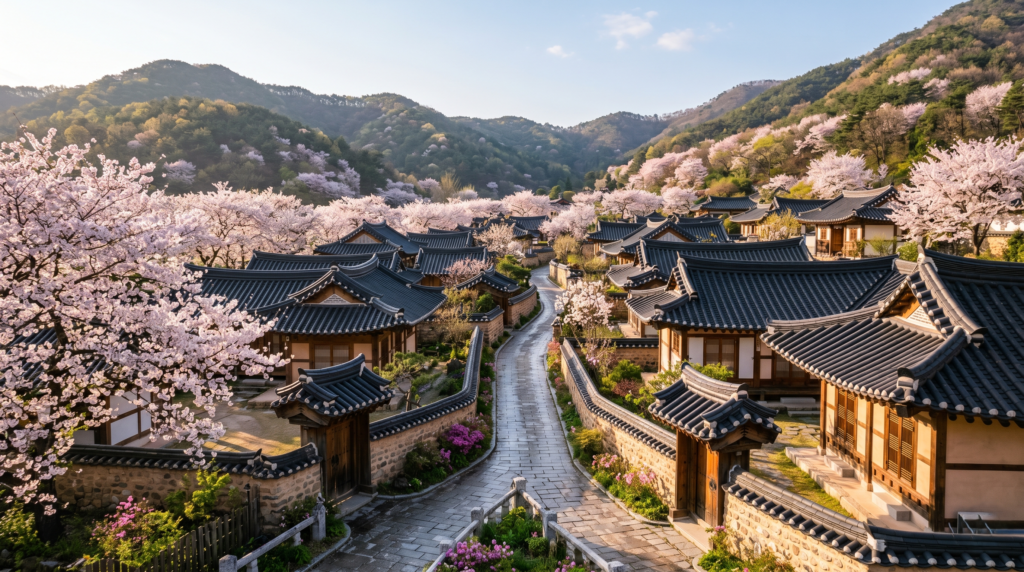
The overlap between famous spring spots and K-drama filming locations is significant — and for fans, this creates the opportunity for a genuinely meaningful travel itinerary.
Nami Island (남이섬) Best known internationally from Winter Sonata, Nami Island transforms dramatically in spring. The famous tree-lined paths that were blanketed in snow during the drama’s iconic scenes are now arched with fresh green leaves and spring blossoms. The island is a short ferry ride from Gapyeong, and many organized tours combine it with the Garden of Morning Calm and Petite France.
Bukchon Hanok Village This historic neighborhood of traditional Korean hanok houses in the heart of Seoul appears in numerous dramas. In spring, the combination of tiled rooftops, narrow stone alleys, and blossoming trees creates an atmosphere that feels genuinely timeless. Visit at dawn for the most dramatic light and the fewest crowds.
Garden of Morning Calm (아침고요수목원) This botanical garden in Gapyeong is one of Korea’s most cinematic spring destinations. Its curated flower beds, woodland paths, and traditional Korean garden aesthetics have made it a filming location for multiple dramas and a favorite of photographers.
Self-Guided K-Drama Spring Location Route:
Day 1 (Seoul): Bukchon Hanok Village (morning) → Namsan Mountain blossom walk (afternoon) → Yeouido riverside picnic at golden hour
Day 2 (Outside Seoul): Nami Island (morning ferry) → Garden of Morning Calm (afternoon) → Petite France (late afternoon)
Spring Festivals in Korea You Should Plan Your Trip Around
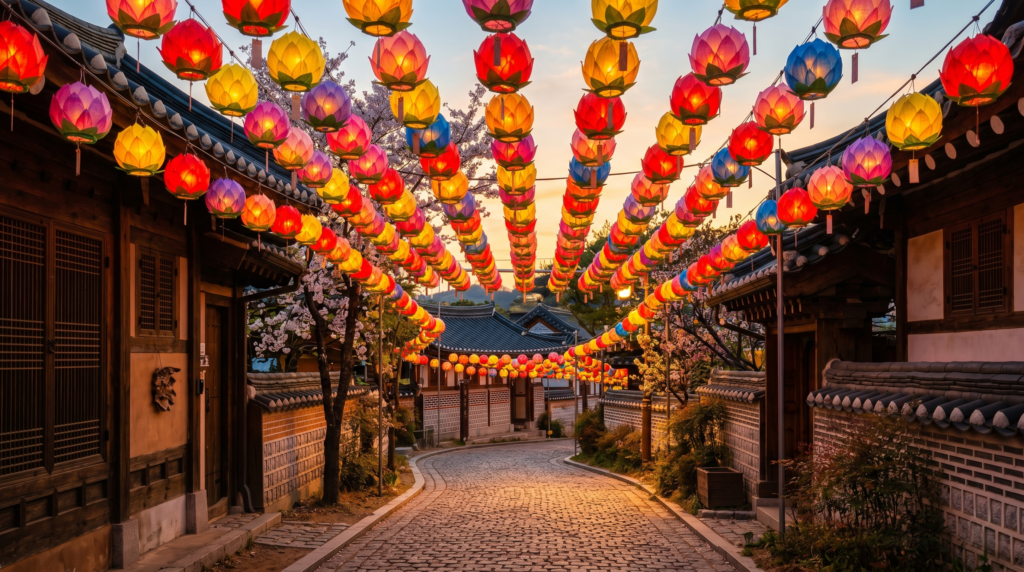
Korea does not simply observe spring — it celebrates it. The festival calendar between March and May is one of the most packed and vibrant of the entire year, offering everything from ancient lantern ceremonies to blossom-viewing parties that draw millions of visitors. Planning your trip around even one of these events will elevate your spring Korea experience significantly.
Nature & Blossom Festivals
🎉 Jinhae Gunhangje Cherry Blossom Festival (Late March – Early April | Changwon, South Gyeongsang Province)
Already introduced as a blossom destination, Jinhae’s Gunhangje Festival deserves a deeper look as a cultural event. Running for approximately ten days, it is the single largest cherry blossom festival in Asia, drawing over one million visitors annually. Beyond the blossoms themselves, the festival includes military band performances, naval vessel tours, traditional folk performances, and a fireworks display over the canal.
Getting there from Seoul is straightforward — a KTX train to Changwon or Masan, followed by a local bus or taxi to Jinhae. Plan to arrive on a weekday and stay overnight if possible, as the morning light through the blossom tunnels before the crowds arrive is genuinely extraordinary.
🎉 Yeouido Spring Flower Festival (Early April | Seoul)
Seoul’s signature spring event transforms the financial district island of Yeouido into a pedestrian festival zone for roughly two weeks. The main boulevard closes to traffic, street food vendors line the paths, and live cultural performances take place throughout the day. The Han River Park adjacent to Yeouido adds a relaxed picnic dimension to the festival — locals arrive with blankets, portable speakers, and chimaek to enjoy the blossoms at their own pace.
Entry is free, making this one of the most accessible and rewarding spring experiences in the city.
🎉 Gwangyang Maehwa Festival (Mid-March | Gwangyang, South Jeolla Province)
For travelers who want to get ahead of the cherry blossom crowds, the Gwangyang Maehwa Festival celebrates the blooming of plum blossoms (maehwa) in mid-March — two to three weeks before cherry season peaks on the mainland. Set against the scenic Seomjingang River, the festival atmosphere is quieter and more intimate than Jinhae, with traditional tea ceremonies, local food markets, and some of the most elegantly fragrant blossoms of the entire spring season.
This is a favorite among Korean domestic travelers who want an authentic, crowd-light spring experience — and it remains largely undiscovered by international tourists.
Cultural & Community Spring Events
🏮 Lotus Lantern Festival (Yeon Deung Hoe | 연등회) (Usually May, timed to Buddha’s Birthday | Nationwide, with main events in Seoul)
The Lotus Lantern Festival is one of Korea’s most magnificent cultural events and holds UNESCO Intangible Cultural Heritage status — a recognition of its profound historical and spiritual significance. Celebrated on the fourth lunar month to mark the birthday of the Buddha, the festival’s centerpiece is a stunning lantern parade through the streets of central Seoul, from Dongdaemun to Jogyesa Temple.
Thousands of hand-crafted lotus lanterns in every color illuminate the night, carried by participants in traditional dress. Temples across the country are adorned with cascading lantern installations, and many are open to visitors for lantern-making workshops, traditional performances, and communal meals.
Watching the lantern parade from the streets of Jongno on a warm May evening, surrounded by the glow of thousands of paper lanterns, is one of those experiences that reminds you why travel matters.
🎨 Insadong & Bukchon Spring Art Markets
Throughout April and May, the cultural neighborhoods of Insadong and Bukchon host open-air art markets, craft fairs, and street performances that bring a creative, community energy to spring weekends. Local artists sell handmade ceramics, illustrated prints, traditional hanji paper crafts, and seasonal food. These markets are free to browse, deeply local in character, and an excellent way to engage with Korean spring culture beyond the blossom crowds.
Spring Events for K-Drama & K-Pop Fans
Spring in Korea is also peak season for fan culture. Outdoor K-pop fan gatherings, anniversary events, and open-air concerts begin reappearing in parks and plazas as the weather warms. Hongdae — Seoul’s creative and youth-driven neighborhood — becomes a hub of street performances, pop-up fan events, and spontaneous concerts every weekend from April onward.
Seasonal K-drama themed exhibitions and pop-up cafés tied to currently airing or recently concluded dramas frequently appear in Hongdae, Sinchon, and the Gangnam district during spring. These immersive fan experiences — complete with drama props, set recreations, and themed menus — have become a beloved part of Seoul’s spring cultural calendar.
Quick Tip: Check Naver (Korea’s dominant search platform) and the Seoul Metropolitan Government’s official tourism calendar before finalizing your travel dates. Festival dates shift by one to two weeks each year based on the lunar calendar and bloom forecasts. Official confirmation usually comes in February or early March.
What to Eat During Spring Season in Korea
Korean cuisine is deeply seasonal, and spring brings with it a distinctive set of flavors, ingredients, and food traditions that reflect the renewal of the natural world. Eating seasonally in Korea is not a trend — it is a cultural practice embedded in centuries of agricultural tradition.
Seasonal Korean Foods That Define Spring
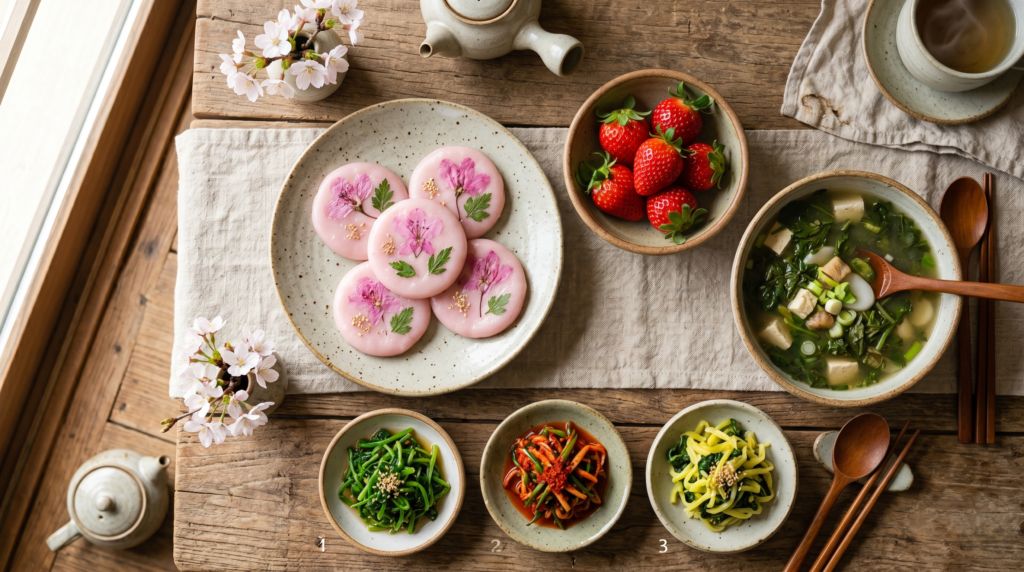
🌿 Ssukguk (쑥국) — Mugwort Soup One of the most distinctly spring flavors in Korean cuisine, ssukguk is made with fresh mugwort (ssuk) harvested in early spring. The soup has an earthy, slightly bitter, deeply cleansing flavor that Koreans associate with the renewal of the season. It is humble, comforting, and deeply traditional — the kind of dish a Korean grandmother makes to mark the arrival of warmer weather.
🍓 Strawberry Season Korean strawberries — particularly those from Nonsan in South Chungcheong Province — are celebrated as some of the finest in the world, and their peak season runs from late winter through spring. You will find them everywhere: at market stalls, in convenience stores piled high in small boxes, transformed into lattes and soft-serve ice creams, and featured on cafe menus as the signature spring ingredient. Eating a box of fresh Korean strawberries on a park bench under blossom trees is, frankly, one of life’s quietly perfect moments.
🌸 Hwajeon (화전) — Flower Rice Cakes Hwajeon are pan-fried glutinous rice cakes decorated with edible spring flowers — typically azalea petals, chrysanthemums, or rose petals. Their history stretches back to the Joseon Dynasty, when women would gather by streams on spring festival days to make flower cakes and play traditional games. Today, hwajeon appear at traditional food markets, temple food experiences, and cultural centers throughout spring — a beautiful, sweet connection to Korea’s culinary past.
🥬 Spring Namul (봄나물) Spring namul — seasoned wild greens — are among the most eagerly anticipated foods of the Korean culinary calendar. Ingredients like dureup (angelica tree shoots), gondeure (thistle), and chamnamul (wild parsley) are foraged or harvested in early spring and prepared simply: blanched, seasoned with sesame oil, garlic, and soy sauce, and served as side dishes. Their clean, verdant flavor is the taste of spring in Korea.
🍲 Doenjang Jjigae with Fresh Spring Vegetables Korea’s beloved fermented soybean paste stew takes on new character in spring when seasonal vegetables — fresh zucchini, spring onions, and young tofu — replace the heartier winter ingredients. A bowl of spring doenjang jjigae with a bowl of warm rice is the kind of simple, deeply satisfying meal that anchors the season.
Spring Street Food to Try at Festivals
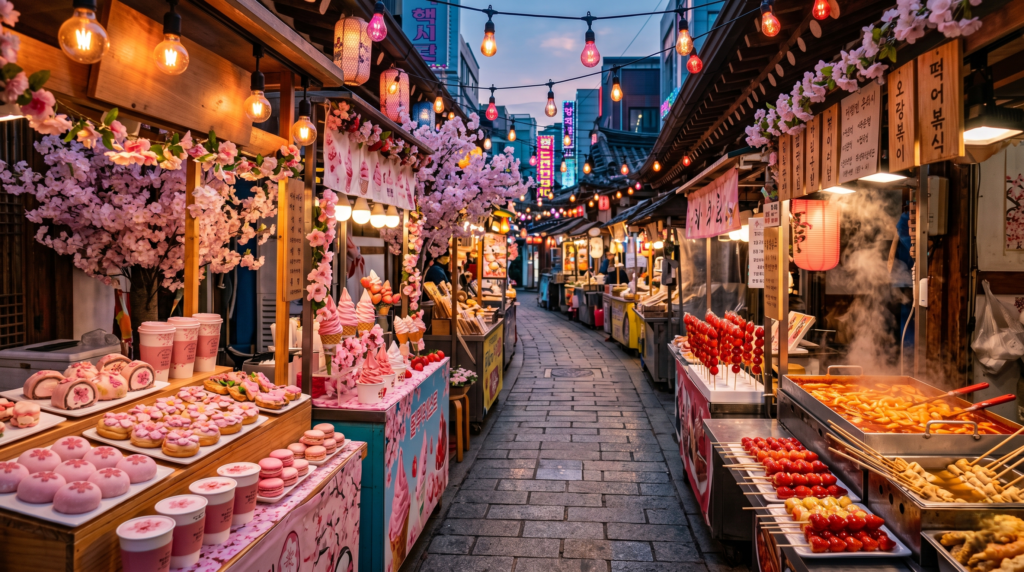
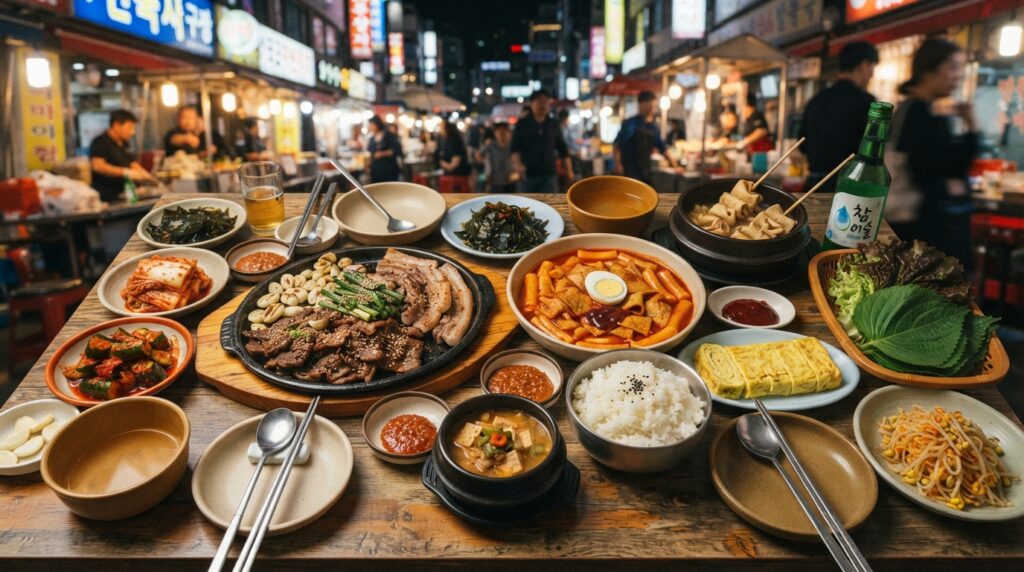
Festival streets during spring in Korea are a sensory experience in themselves. Beyond the permanent favorites — tteokbokki (spicy rice cakes), hotteok (sweet stuffed pancakes), and gimbap rolls — spring festivals introduce seasonal specialties worth seeking out:
- Cherry blossom latte — a pale pink, lightly floral espresso drink that appears at cafés and festival stalls throughout April
- Blossom soft-serve ice cream — sakura or strawberry flavored, always photogenic, always worth it
- Pink rice cake skewers — tteok dyed naturally with beet or cherry blossom extract, sold at traditional market stalls
- Strawberry tanghulu — fresh Korean strawberries coated in a hard sugar glaze, the spring evolution of the traditional Chinese-origin candy fruit skewer that has taken Korean street food culture by storm
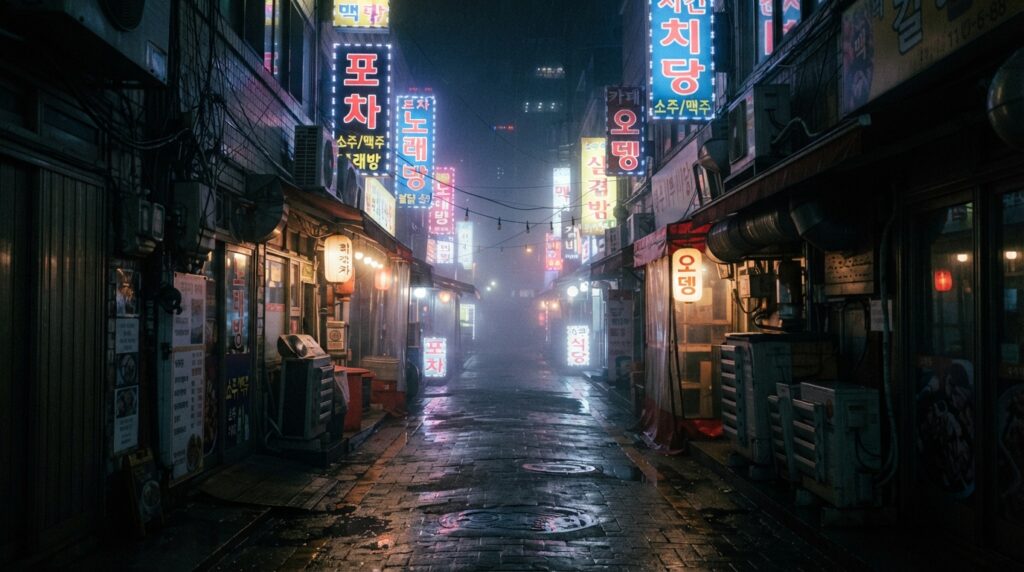
K-Drama Food Connection: The street food stall scenes that appear in so many K-dramas — two people standing under a pojangmacha tent, sharing tteokbokki in the cold evening air — are at their most atmospheric in spring, when the weather is mild enough to linger but still carries that slight chill that makes warm food feel like comfort.
Spring Food Markets & Where to Eat Like a Local
Gwangjang Market (광장시장), Seoul One of Korea’s oldest and most beloved traditional markets, Gwangjang comes alive in spring with fresh seasonal ingredients alongside its famous permanent offerings of bindaetteok (mung bean pancakes), raw beef yukhoe, and handmade noodles. The covered market keeps a pleasant temperature even on warmer spring days, and the atmosphere — busy, loud, communal, and delicious — is quintessentially Korean.
Mangwon Market (망원시장), Seoul A local favorite in the Mapo district, Mangwon Market on a spring weekend morning is one of the most genuine market experiences in Seoul. Vendors sell fresh spring vegetables, seasonal fruits, homemade banchan, and street snacks at prices that reflect local rather than tourist demand. It is the kind of market where you can spend an hour and leave with both breakfast and lunch for under 10,000 won.
Jeju’s Spring Seafood Spring brings exceptional seafood to Jeju Island, where the surrounding waters yield fresh abalone, sea urchin, and haenyeo-harvested shellfish at their seasonal best. Dining at a simple seafood restaurant near Jeju’s working fishing villages in spring — with a view of canola fields in the distance — is a meal that requires no special occasion.
What to Wear & Pack for Spring Season in Korea

Packing for spring in Korea trips up many first-time visitors. The weather is genuinely variable, and the gap between morning and afternoon temperatures can be significant enough to require a complete outfit rethink midday.
Spring Fashion in Korea — Style Tips Inspired by K-Dramas
Korean spring fashion is one of the most visually distinctive seasonal aesthetics in East Asia, and K-dramas have exported it beautifully to international audiences. The look is characterized by:
- Trench coats in camel, beige, or light grey — the single most ubiquitous spring garment on Seoul streets, worn by everyone from university students to office workers
- Light knit sweaters in pastel tones — cream, sage green, dusty pink, and sky blue dominate spring wardrobes
- Wide-leg trousers or relaxed midi skirts paired with clean white sneakers or loafers
- Layered textures — a light cotton shirt under a fine knit under a short trench coat is a perfectly functional and stylish spring outfit for Korea’s variable temperatures
The pastel, clean-lined aesthetic you see in spring K-drama wardrobes is not a costume — it genuinely reflects how style-conscious Koreans dress during the season. Leaning into this aesthetic is both practical and deeply appropriate for the setting.
Style Tip: Spring in Korea is one of the most photographed seasons on earth. Dressing in soft, neutral, or pastel tones means you will naturally complement the blossom backdrop in photos — a consideration that is not vanity but genuine visual intelligence.
Practical Packing List for Korea Spring
| Item | Why It Matters |
|---|---|
| Light jacket or trench coat | Morning and evening temperatures drop quickly |
| Layerable knit or light sweater | For temperature swings throughout the day |
| Comfortable walking shoes | Cobblestone streets in Bukchon and historic districts |
| Compact folding umbrella | Spring showers arrive without warning |
| Portable battery pack | Long days of blossom photography drain phones fast |
| Allergy medication | Hwangsa (yellow dust) season peaks in spring |
| Reusable tote bag | For market shopping and festival food |
| Sunscreen SPF 50+ | Spring UV levels in Korea are stronger than they feel |
A note on hwangsa (황사) — yellow dust: This is a genuine seasonal consideration that many first-time spring Korea visitors are not prepared for. Yellow dust — fine particulate matter carried by wind from the Gobi Desert — arrives in Korea during spring, particularly in March and April. On high-dust days, air quality can drop significantly. Check the AirKorea app or website daily, and carry a KF94 mask for poor air quality days.
Practical Travel Tips for Visiting Korea in Spring
Booking & Planning Smart
Spring is Korea’s peak domestic and international travel season. Accommodation in popular destinations — particularly Seoul, Gyeongju, and anywhere near Jinhae during the cherry blossom festival — books out weeks or even months in advance. The following practical steps will save you considerable stress:
- Book accommodation at least two to three months ahead for any travel falling between late March and late April
- Purchase your T-money card upon arrival at the airport — this rechargeable transit card works on subways, buses, and even some convenience stores across the country, and it makes navigating public transport effortless
- Use Naver Maps rather than Google Maps for navigation within Korea. Google Maps has significant limitations in Korea due to data regulations; Naver Maps provides accurate real-time transit information, walking routes, and local business details in both Korean and English
- Stay in or near central Seoul neighborhoods like Jongno, Mapo, or Yongsan for the best combination of blossom access, transit connectivity, and local atmosphere
Navigating Crowds Like a Pro
Spring crowds at popular blossom spots can be genuinely overwhelming on peak weekends. These strategies make a meaningful difference:
- Arrive early. The single most effective crowd-avoidance strategy. Most casual visitors arrive mid-morning; being on location by 7–8 AM gives you a completely different — and infinitely more peaceful — experience
- Visit major spots midweek. Weekend crowds at Yeouido and Jinhae can be ten times heavier than Tuesday or Wednesday visits during the same week
- Identify shoulder spots. For every famous blossom location, there is a quieter alternative within walking distance. Research these in advance using Korean travel blogs and the Seoul City government tourism pages
- Use the golden hours for photography. Early morning light (6–8 AM) and the blue hour just after sunset produce the most beautiful blossom photographs, and these are precisely the times when crowds are thinnest
Budget Breakdown for Spring Korea Travel
Spring is not the cheapest time to visit Korea, but it is far from the most expensive destination in East Asia. A realistic daily budget framework:
| Category | Budget Traveler | Mid-Range | Comfortable |
|---|---|---|---|
| Accommodation (per night) | ₩40,000–60,000 (guesthouse/hostel) | ₩90,000–150,000 (mid hotel) | ₩200,000+ (boutique/design hotel) |
| Food (per day) | ₩15,000–25,000 | ₩35,000–60,000 | ₩80,000+ |
| Transport (per day) | ₩5,000–8,000 (T-money) | ₩15,000–25,000 | ₩40,000+ (taxis/tours) |
| Activities | Mostly free | ₩10,000–30,000 | ₩50,000+ |
The good news for spring travelers: the majority of Korea’s best blossom experiences are completely free. Yeouido’s blossom boulevard, Namsan’s blossom walks, Hangang riverside picnics, neighborhood alley strolls in Bukchon — none of these cost a single won to enjoy. Your budget goes primarily toward food, accommodation, and transport, which means even modest budgets can access world-class spring experiences.
Why Spring Season in Korea Feels Like Living Inside a K-Drama
There is a reason that spring in Korea has captured the imagination of audiences across the world — and it goes beyond the undeniable visual beauty of the blossoms.
It is the combination of everything arriving at once. The warmth returning after a cold Korean winter. The streets filling with people who have been indoors for months. The smell of street food mixing with the faint sweetness of cherry blossoms in the air. University students in matching club jackets spread across picnic blankets in Hangang Park. An elderly couple walking slowly along a blossom path, hand in hand. A pojangmacha tent glowing orange in the early evening.
K-dramas did not invent this atmosphere — they simply recognized and captured it. When you stand in the middle of it in person, the reason it translates so perfectly to screen becomes immediately obvious: Korean spring is already cinematic. It already has the lighting, the color palette, the emotional temperature. The dramas are simply faithful to a reality that already exists.
For K-drama fans visiting Korea in spring, there is a particular kind of joy in recognizing that the feeling you associated with fiction is, in fact, completely real. The blossom tunnels are real. The street food warmth is real. The sense of collective hope and beginning that permeates Korean society in spring is genuinely, palpably real.
Whether you are walking the paths that your favorite drama characters walked, or simply sitting by the Han River with a convenience store coffee and a view of cherry blossoms reflected on the water, spring in Korea has a way of staying with you long after you leave.
Frequently Asked Questions About Spring Season in Korea
Q1: When exactly is spring in Korea?
Spring in Korea officially runs from March through May. Cherry blossoms — the season’s signature attraction — typically peak between late March and mid-April, depending on the region and annual weather conditions. Jeju Island blooms first, usually by mid-to-late March, while Seoul peaks in early April.
Q2: Which is the best city to experience spring in Korea?
It depends on what you are looking for. Seoul offers the greatest variety — blossom festivals, K-drama filming locations, cultural events, and world-class food all within a highly navigable city. Jinhae (Changwon) offers the most spectacular pure blossom experience. Jeju Island provides the earliest blooms combined with unique natural scenery. For first-time visitors, Seoul is the most practical and rewarding base.
Q3: Is spring a good time to visit Korea for first-timers?
Absolutely. Spring offers ideal weather conditions, a packed cultural calendar, and the opportunity to see Korea at its most visually stunning. The primary consideration is planning ahead — accommodation and transport book up quickly for peak bloom weekends. Book early, plan your itinerary around both major and lesser-known spots, and the spring season rewards first-time visitors exceptionally well.
Q4: Do K-dramas actually film during spring season?
Yes, and deliberately so. Korean drama production schedules frequently account for the spring bloom window when planning outdoor shoots. Scenes requiring emotional turning points, romantic developments, or new beginnings are often scheduled for April filming specifically to take advantage of the natural blossom backdrop. This is a well-documented practice within the Korean entertainment industry.
Q5: What is yellow dust and should I worry about it in spring?
Hwangsa (황사), or yellow dust, is fine particulate matter carried by seasonal winds from the Gobi Desert that arrives over the Korean peninsula primarily during March and April. On high yellow dust days, outdoor activities can be uncomfortable and air quality metrics drop significantly. It is a real consideration, but manageable — check the AirKorea app daily, carry a KF94 mask, and plan indoor activities as backup on high-dust forecast days. Many spring days are completely unaffected.
Q6: Are cherry blossom festivals in Korea free?
Most cherry blossom festivals in Korea are free to enter and attend. Yeouido Spring Flower Festival, the Jinhae Gunhangje Festival, and the majority of blossom-viewing areas charge no admission. Costs during festivals come from food, transport, and any ticketed performances or activities within festival grounds. This makes spring blossom experiences in Korea remarkably accessible regardless of budget.
Q7: How is spring in Korea different from Japan’s cherry blossom season?
Both countries celebrate cherry blossoms with genuine cultural depth, but the experiences are distinct. Korea’s festivals tend to be more boisterous and community-centered, with street food, live performances, and a festive energy that differs from Japan’s more contemplative hanami tradition. Korea’s spring also uniquely intersects with K-drama and K-pop culture, creating a fan-travel dimension that has no direct Japanese equivalent. And for international visitors, Korea’s spring often involves significantly fewer foreign tourists than Japan’s blossom season — particularly outside of Seoul — making for a more locally immersive experience.
We began this guide with an image: cherry petals falling softly, street food in the air, a K-drama melody drifting from somewhere nearby. Having traveled through everything that makes the spring season in Korea so extraordinary — the blossoms and festivals, the filming locations and cultural traditions, the seasonal foods and practical realities — that opening image should now feel not like a fantasy but like a promise.
Korea in spring is the rare destination that delivers on every dimension simultaneously. It is visually stunning without being superficial. It is culturally rich without being inaccessible. It is deeply connected to the K-drama world that so many of us have fallen in love with through a screen — while being emphatically, beautifully real in person.
Whether your spring Korea experience happens in person on a blossom-lined path in Jinhae, or through the screen of a drama that captures this season with the care and precision that Korean storytellers consistently bring to it — the feeling it leaves behind is the same. A quiet, lingering warmth. The sense that somewhere in the world, spring arrives like a revelation, every single year.
Plan early, travel thoughtfully, eat seasonally, and let Korea’s spring do the rest.
Enjoyed this guide? Explore more on our site — from the best K-drama filming locations across Korea to complete seasonal travel guides and Korean cultural deep-dives written for fans who want to go beyond the surface.