Have you ever thought about what are the rarest surname in Korea? Imagine being one of only a dozen people in the entire world who carries your family name. Not your city. Not your country. The entire world. For most of us, that thought feels almost impossible to grasp. But for a small, remarkable group of Koreans, that is their everyday reality.
When most people think of Korean surnames, three names dominate the picture almost immediately — Kim, Lee, and Park. If you have watched even a handful of K-dramas, you have almost certainly noticed that half the cast seems to share the same last name. That observation is not your imagination. It is statistics. These three surnames alone account for nearly 45% of the entire South Korean population. In a country of over 51 million people, that level of surname concentration is extraordinary by any global standard.
But here is what makes Korean name culture truly fascinating: hiding in the long shadow cast by Kim, Lee, and Park lies a collection of surnames so rare, so historically loaded, and so linguistically unusual that most Koreans themselves have never encountered them. These are the rarest surname in Korea — and each one carries centuries of history, identity, and survival within its syllables.
This article is your complete guide to those forgotten names. Whether you are a Korean culture enthusiast, a K-drama fan curious about the names you keep hearing on screen, a member of the Korean diaspora tracing your roots, or simply a lover of history and language — what you are about to discover will permanently change how you hear Korean names.
A Brief History of Korean Surnames — How They Came to Be
To truly understand why certain Korean surnames are so extraordinarily rare today, you first need to understand how Korean family names came to exist in the first place. The story is far more dramatic — and far more political — than most people expect.
The Origins of Korean Family Names
Korean surnames have roots stretching back nearly two thousand years, to the era of the Three Kingdoms period (57 BC – 668 AD), when the kingdoms of Goguryeo, Baekje, and Silla competed for dominance across the Korean peninsula. During this period, surnames were not a common social institution. They were a privilege — a marker of power, royalty, and aristocratic status.
The ruling classes and royal families of these early kingdoms were among the first to adopt hereditary surnames. The Kim clan of Silla, for instance, traces its origins directly to the kingdom’s royal lineage. These early surnames were often drawn from Chinese characters (Hanja), reflecting Korea’s deep cultural exchange with China during this formative period. The aristocratic class used surnames to distinguish their bloodlines, record genealogies, and consolidate political power.
For the vast majority of the Korean population — the farmers, laborers, and commoners who made up the backbone of society — surnames simply did not exist for most of Korean history.
The Joseon Dynasty and the Democratization of Surnames
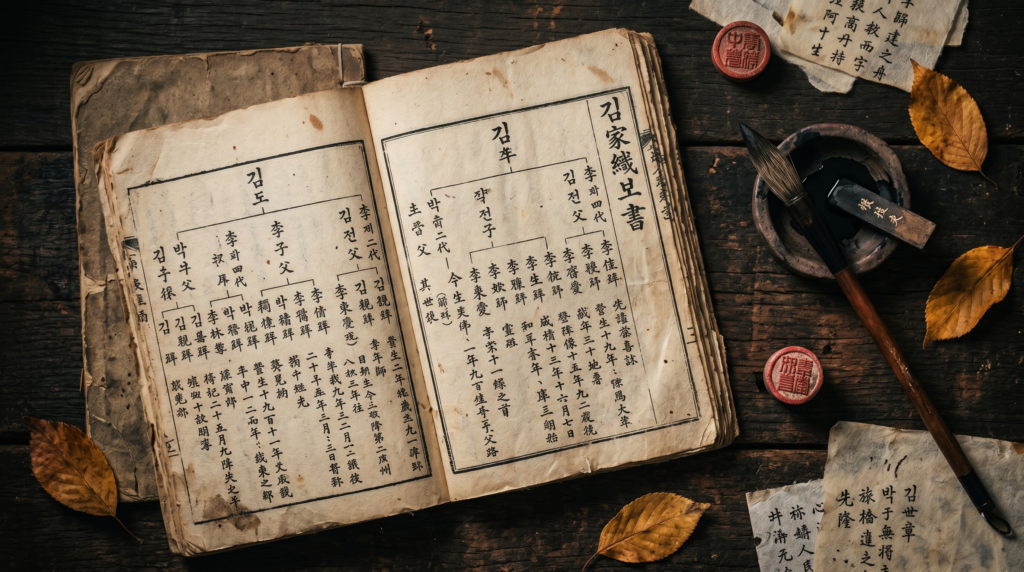
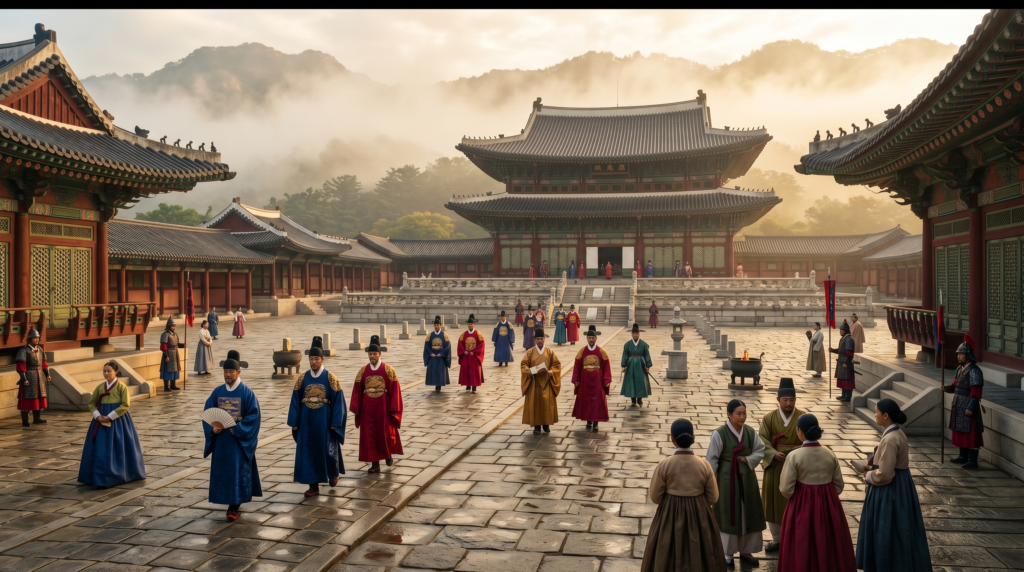
The turning point came during the Joseon Dynasty (1392–1897), one of the longest-running dynasties in world history. As Confucian ideology became the social and political foundation of Korean society, the importance of family lineage, ancestral rites, and genealogical records grew significantly. The yangban class — the educated aristocracy — maintained elaborate genealogy books called jokbo (족보), which recorded family trees stretching back generations.
Gradually, as social mobility increased and Confucian values permeated all levels of society, commoners began adopting surnames — often borrowing the names of their masters, local rulers, or prestigious clans they wished to be associated with. This is a key reason why surnames like Kim and Park became so extraordinarily common: they were the names of the most powerful royal and aristocratic clans, and countless commoners adopted them over centuries of social aspiration.
The process accelerated dramatically and irreversibly in 1909, when the Japanese colonial government introduced a mandatory civil registry system requiring all Koreans to register with a fixed family name. For millions of Koreans who still lacked official surnames at this point, this decree forced an immediate choice. Many chose the most familiar, prestigious names they knew — contributing further to the overwhelming dominance of Kim, Lee, and Park.
The “Big Three” — Understanding the Scale of Surname Concentration
The numbers are genuinely staggering. According to data from the Korean Statistical Information Service (KOSIS), the surname Kim (김) is held by approximately 10.6 million South Koreans — roughly 21% of the entire population. Lee or Yi (이) accounts for another 14%, while Park (박) covers approximately 8%. Combined, these three surnames represent nearly 45% of all South Koreans.
To put that in global perspective: South Korea has one of the smallest surname pools of any nation on Earth. The entire country operates with roughly 250 to 300 registered surnames. By comparison, China — despite sharing a similarly Confucian surname tradition — has over 4,000 surnames in common use. The United States has hundreds of thousands.
This extreme concentration at the top is precisely what makes the rare surnames at the bottom of the list so remarkable. In a country where surnames were often chosen for maximum social benefit, the families who carried unusual, obscure, or regionally isolated surnames were, in many ways, swimming against the current of history.
Understanding Bon-gwan (본관) — Why the Same Surname Isn’t the Same Family
Before diving into the rarest names, there is one more essential concept to understand: the bon-gwan (본관), or clan seat. In the Korean surname system, simply sharing a surname does not mean sharing a common ancestor. Each surname is subdivided into multiple clans, each associated with a specific geographic region of origin.
Take the surname Kim as an example. There are over 280 registered Kim clans in Korea, each with a different bon-gwan — Gimhae Kim, Gyeongju Kim, Andong Kim, and so on. These clans have distinct ancestral origins, genealogical records, and historical identities, even though they share the same surname.
For rare surnames, the bon-gwan system takes on an even more poignant significance. A rare surname with only one registered clan seat means there is a single, traceable ancestral origin — one moment in history when that name began. Understanding rare surnames through their clan seats brings us remarkably close to the people and events that shaped them.
What Makes a Surname “Rare” in Korea?
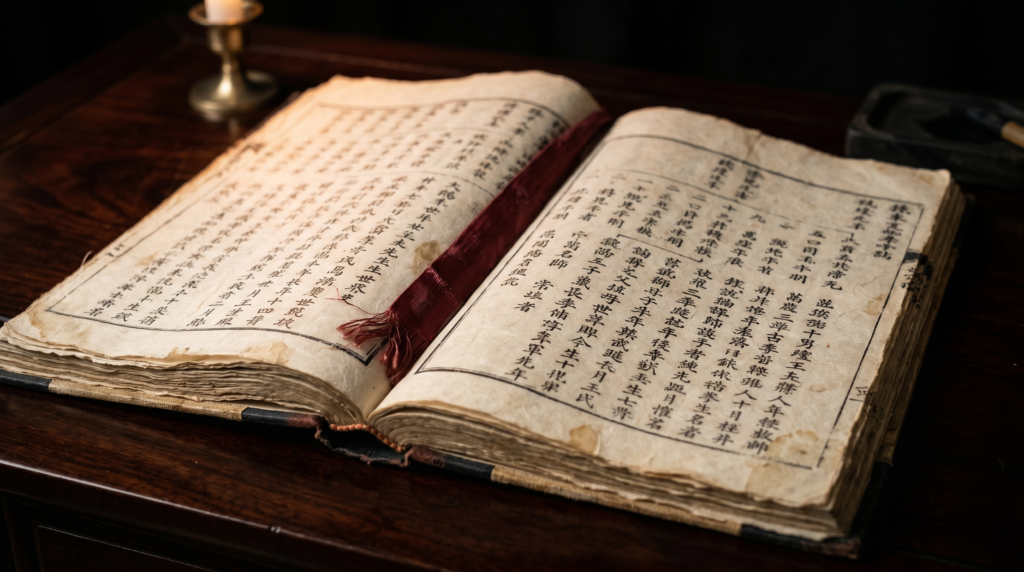
With the historical context established, we can now address the central question with precision: what exactly constitutes a “rare” surname in Korea, and how is rarity measured?
Defining Rarity — The Numbers Behind the Names
South Korea conducts a comprehensive national census every five years, and surname distribution data is meticulously tracked by the Korean Statistical Information Service (KOSIS). The most detailed surname census data currently available comes from the 2015 Population and Housing Census, which recorded surname populations across the country with remarkable granularity.
According to this data, surnames with fewer than 500 registered bearers are generally considered uncommon. Surnames with fewer than 100 people enter the territory of the genuinely rare. And at the furthest extreme — the group this article is most concerned with — there exist surnames held by fewer than 10 people in the entire country.
Some of these ultra-rare surnames are held by a single extended family. In a few extraordinary cases, the data suggests that certain surnames may be carried by fewer than five living individuals in South Korea. When you factor in the possibility that some family members may have emigrated, changed their names, or are registered in North Korea’s separate civil system, the picture of just how fragile some of these surnames are becomes deeply moving.
Why Rare Surnames Survived at All
Given the overwhelming social pressure during the Joseon era and the Japanese colonial period to adopt common, prestigious surnames, one might reasonably ask: why did any rare surnames survive? The answer reveals several fascinating threads of Korean history.
Foreign-origin surnames represent one significant category. Throughout Korean history, envoys, diplomats, merchants, and refugees from China, Japan, and occasionally Southeast Asia were granted Korean citizenship and sometimes adopted or were given unique Korean surnames that reflected their foreign origins. These names entered the Korean surname pool as single-family introductions and never spread beyond the founding lineage.
Ancient regional and tribal identities account for another group. Some rare surnames trace their origins to pre-Joseon kingdoms or tribal confederacies — names that existed before the Confucian surname system standardized everything. These names survived in isolated communities or among families fiercely proud of their ancient lineage.
Finally, clerical accidents created a surprising number of rare surnames. During the rushed mass registration of 1909, Japanese colonial administrators recorded Korean names using their own phonetic interpretations of Chinese characters. Errors, misreadings, and unusual romanizations occasionally created entirely new surname variants — rare by accident rather than by ancient design.
The Rarest Surnames in Korea — The Ultimate List
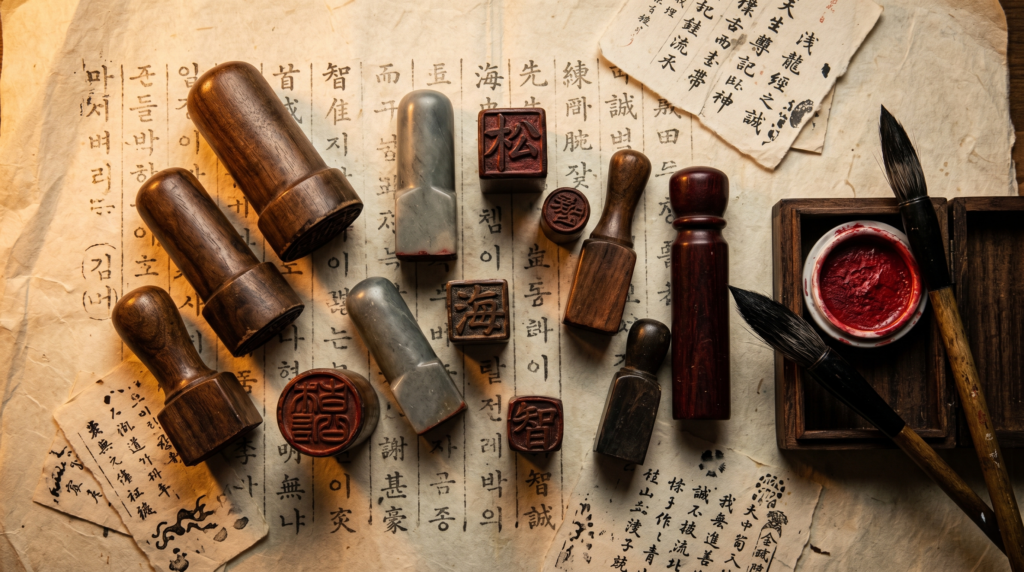
This is the section you came for. Below is a carefully researched guide to some of the most remarkable, historically significant, and numerically scarce surnames in all of Korea. Each name carries a story worth knowing.
Nawon (나원) — A Surname Carried by Fewer Than 100 People
The surname Nawon is among the most quietly extraordinary names in the Korean registry. Unlike the common surname Na (나) — itself not among the most common names but reasonably distributed — Nawon as a compound surname represents an entirely distinct clan identity with its own bon-gwan and ancestral lineage.
The Hanja characters associated with Nawon suggest a name rooted in concepts of origin and source, pointing toward an ancestral founder who was likely a figure of local significance in a specific regional community. With a population estimated at fewer than 100 registered bearers, the Nawon clan represents a family name genuinely at risk of demographic extinction within a few generations if current trends continue.
For genealogy researchers and cultural historians, names like Nawon are invaluable — they represent unbroken threads connecting modern Korea to communities and identities that predate the standardization of the Joseon-era surname system.
Eop (엽 / 업) — One of Korea’s Most Phonetically Unusual Surnames
The surname Eop stands out immediately, even to native Korean speakers, for its phonetic unusualness. In a language where surnames are overwhelmingly monosyllabic and tend to cluster around familiar consonant-vowel patterns, Eop occupies a distinctly unusual sonic space.
Linguistically, the name traces to specific Hanja characters that carry meanings related to professional accomplishment or generational work — suggesting that the original clan founder may have been identified by a skilled trade or administrative role that set the family apart in their community. The surname’s rarity today — with estimates suggesting fewer than several hundred bearers nationwide — is partly a reflection of how phonetically unfamiliar the name sounds to modern Korean ears, which may have contributed to some historical bearers choosing to alter or modify their registration.
Rare Hanja Variants — When the Same Sound Hides a Different Name
One of the most underappreciated sources of surname rarity in Korea is the Hanja variant phenomenon. Korean surnames, like all Korean words written in the traditional Sino-Korean script, are defined not just by their pronunciation but by the specific Chinese character used to write them.
This means that two people who introduce themselves with the same spoken surname may actually carry entirely different family names — because the Hanja character behind the sound is different. The romanized surname “Byeon,” for example, could correspond to several distinct Hanja characters, each associated with a different clan, a different ancestral origin, and a radically different population size.
Some of these Hanja variants are held by thousands of people. Others — using a less common character that happens to produce the same romanized sound — may be held by fewer than 50. This makes tracking true surname rarity significantly more complex than simple census counts suggest, and it means that the total number of genuinely distinct Korean family identities is almost certainly higher than the official surname count implies.
Dok (독) — A Surname With Ancient Roots
The surname Dok is one of those names that Korean cultural historians point to as evidence of a pre-Joseon identity surviving against the odds. With possible connections to early Korean tribal confederacy structures — the loose political alliances that preceded the consolidated kingdoms of the Three Kingdoms period — Dok represents a linguistic fossil: a name that crystallized before the dominant Confucian surname culture reshaped Korean identity.
By the height of the Joseon Dynasty, surnames like Dok would have faced significant pressure. Confucian social norms valorized certain types of names — those with auspicious Hanja meanings, those associated with prestigious clans, those that signaled educational and moral cultivation. A name like Dok, with its blunt phonetic simplicity and ancient non-Confucian associations, would have occupied an awkward social position.
That it survived at all is a testament to the fierce loyalty some Korean families maintained toward their ancestral identity, even at social cost.
Seo-Moon (서문) and Other Rare Two-Syllable Surnames
Perhaps no category of rare Korean surname is more immediately striking — even to casual observers — than the two-syllable surname. In a naming culture where virtually every family name is a single syllable, encountering a two-syllable surname is genuinely startling.
The surname Seo-Moon (서문), meaning roughly “west gate,” is one of the most recognized of these unusual compound surnames. Its origins likely trace to a clan whose founding ancestor was associated with a specific geographic landmark — possibly a city gate or administrative checkpoint — in a way significant enough to become the family’s permanent identifier.
Other notable rare two-syllable surnames include:
- Namgung (남궁) — meaning “southern palace,” with associations to royal court administration during the Goryeo or early Joseon period. This is perhaps the most recognized two-syllable surname in modern Korea, partly due to its appearance in historical dramas.
- Hwangbo (황보) — a surname with documented roots in the Goryeo Dynasty, carried today by only a few thousand people, making it rare in absolute terms despite being one of the more “well-known” unusual surnames.
- Dongbang (동방) — meaning “eastern direction” or “eastern room,” this surname is among the rarest of all two-syllable Korean names, with some estimates suggesting only a few hundred bearers remain.
Two-syllable surnames as a category are themselves a form of rarity — and within that rare category, some names are rarer still.
Surnames With Fewer Than 10 Bearers — The Edge of Extinction
At the absolute extreme of Korean surname rarity lie names that the KOSIS census data records with single-digit populations. These are not hypothetical or historical surnames — they are names that living people carry today, names that appear on South Korean national ID cards and family registries right now.
Among the examples documented in census research:
- There are surnames recorded with 5 or fewer registered bearers in South Korea
- Some of these names have no documented clan seat — their origins are genuinely unknown even to the families who carry them
- A small number of surnames exist in South Korean records that may no longer have any living bearers in the North, meaning the total global population of that name could be the single family represented in the South’s registry
These names sit at the intersection of history and extinction. Each generation that passes without children carrying these names forward brings them one step closer to disappearing from the human record entirely.
Rare Korean Surnames You’ve Seen in K-Dramas (Without Realizing It)
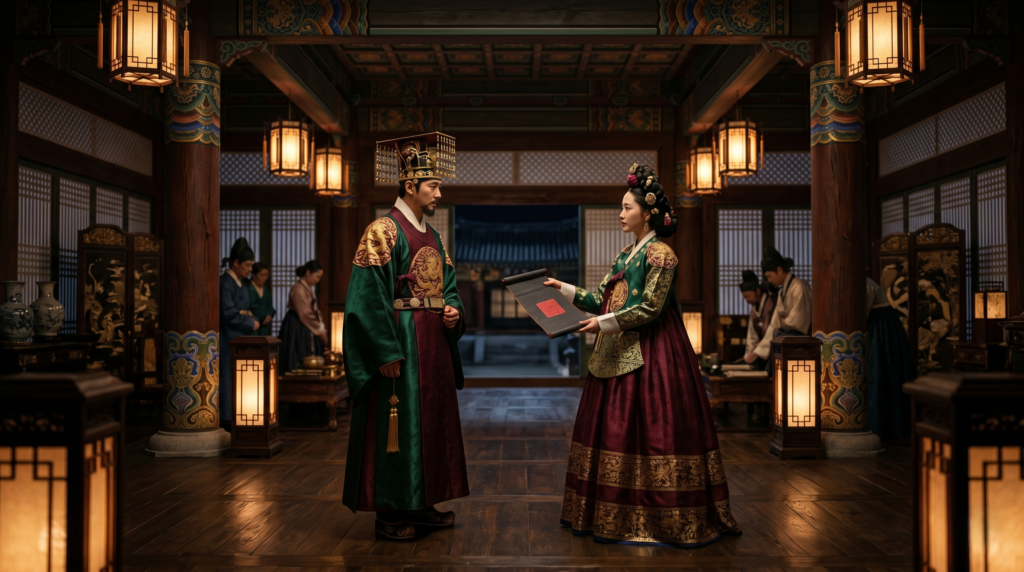
For millions of international viewers, K-dramas have become the primary gateway into Korean culture. The sweeping historical epics, the tense political thrillers, the tender romance series — they all share one underappreciated detail that rewards a closer look: the deliberate, often historically informed choice of character surnames.
If you have been paying attention, you may have already noticed that certain K-drama characters carry surnames that sound subtly different from the Kims and Lees dominating the rest of the cast. That difference is rarely accidental.
When Screenwriters Choose Unusual Surnames Deliberately
Korean drama production — particularly in the sageuk (사극) historical drama genre — involves a level of cultural and historical research that Western audiences often underestimate. Production teams on prestige historical dramas routinely consult genealogy experts, Hanja scholars, and cultural historians to ensure that character names, titles, and clan affiliations are period-appropriate and historically plausible.
Within this framework, the choice of a rare surname for a lead character carries immediate narrative weight. In Korean cultural literacy, an unusual surname signals several things to a domestic audience almost instantaneously:
- The character likely comes from a distinctive or ancient lineage
- The family may be associated with a specific regional power base outside the capital
- The surname may hint at foreign origin — a plot element frequently used to explain a character’s unusual skills, knowledge, or moral outlook
- The name marks the character as someone who exists outside the mainstream social order — a narrative device that creates immediate dramatic possibility
This is storytelling through onomastics — the use of names as character-building tools — and Korean drama writers deploy it with considerable sophistication.
The Namgung Clan — Korea’s Most Dramatically Beloved Rare Surname
Of all the rare surnames that have found their way into Korean popular culture, Namgung (남궁) stands in a category of its own. This two-syllable surname — already unusual by definition — carries an almost mythological quality in the Korean cultural imagination.
Historically, the Namgung clan traces its roots to the Goryeo Dynasty (918–1392), where clan members are documented as holding significant positions in the royal court. The name itself — combining the characters for “south” and “palace” — evokes an image of proximity to royal power, of a family whose identity was literally shaped by their relationship to the seat of governance.
In K-dramas, the Namgung surname appears with a frequency that far outstrips its tiny real-world population — a creative choice that reflects how effectively the name signals aristocratic complexity to Korean viewers. Characters named Namgung tend to arrive with elaborate backstories, moral ambiguity, and a weight of ancestral obligation that drives the narrative forward.
For international viewers encountering the name for the first time, the double-syllable sound alone creates a memorable distinction. For Korean viewers, it triggers an entire constellation of cultural associations — history, court politics, noble decline, and the burden of an uncommon identity.
Hwangbo — From Ancient Clan to Modern Screen
The surname Hwangbo (황보) offers another compelling example of how rare Korean family names find new life in popular culture. Historically documented from at least the Goryeo period, the Hwangbo clan has a traceable genealogy that has fascinated Korean historians for generations.
On screen, the name has appeared in several historical dramas precisely because it signals authenticity — when a drama set in the Goryeo or early Joseon period features a character named Hwangbo, it grounds the story in a recognizable historical reality that educated Korean viewers appreciate.
Beyond drama, the name has entered the broader Korean public consciousness through Hwangbo Hyejung, a South Korean entertainer and television personality whose rare surname made her immediately distinctive in an industry where stage names are common precisely because so many performers share identical family names. In a culture saturated with Kims and Lees, a Hwangbo stands out effortlessly.
Real-Life Celebrities With Rare Korean Surnames
The entertainment industry provides some of the most visible contemporary examples of rare Korean surnames reaching broad public awareness:
- Namgung Min (남궁민) — one of South Korea’s most acclaimed dramatic actors, whose rare two-syllable surname has become one of the most recognized in the Korean entertainment industry. His surname is so unusual that it became part of his brand identity — something virtually impossible to achieve with a surname like Kim or Park.
- Uhm (엄) — while not among the absolute rarest surnames, Uhm represents a name uncommon enough that actress Uhm Jung-hwa and actor Uhm Tae-goo are immediately identifiable by surname alone in a way that most Korean celebrities are not.
These public figures serve an important cultural function beyond their professional work: they keep rare surnames visible, pronounceable, and present in the national consciousness — a form of inadvertent preservation that genealogists and cultural historians genuinely value.
What Rare Korean Surnames Reveal About Korean History

Step back from the individual names and a larger picture emerges. The distribution of rare surnames in Korea — which names survived, which disappeared, and which cling to existence with single-digit populations — functions as a kind of historical seismograph, recording the tremors of invasion, colonization, migration, and social transformation across two thousand years.
Immigration, Cultural Exchange, and the Foreign-Origin Surnames
Korea’s geographic position — a peninsula extending from the northeastern edge of the Asian continent, bordered by China to the north and west and Japan across a narrow strait to the east — meant that throughout its history, the Korean peninsula was a crossroads of people, ideas, and identities.
Among Korea’s rare surnames, a meaningful subset traces its origins to naturalized foreign ancestors — individuals who came to Korea from China, Japan, or occasionally regions further afield, integrated into Korean society, and established family lines that carry a distinct surname to this day.
The most historically significant of these are the naturalized Chinese envoy clans. Throughout the Goryeo and Joseon dynasties, Chinese diplomatic officials, scholars, and political refugees who settled in Korea and were granted citizenship sometimes received unique surnames by royal decree — names that marked their distinctive origin while integrating them into the Korean social structure. These surnames were, by definition, single-family introductions that never expanded beyond the founding lineage. Several of Korea’s rarest surnames today trace directly to these moments of royal naturalization.
Japanese-origin surnames represent a more complicated and politically sensitive category. While the colonial period (1910–1945) is primarily remembered for the imposition of Japanese names onto Korean families, there were also pre-colonial instances of Japanese individuals integrating into Korean society — particularly during and after the Imjin War (1592–1598), when Japanese soldiers who chose to remain in Korea rather than return with the retreating armies sometimes established Korean family lines with distinctive surnames.
The Catastrophe of Japanese Colonial Rule — Surnames Lost Forever
No discussion of rare Korean surnames can avoid confronting the devastating impact of Japanese colonial rule (1910–1945) on Korean naming culture. The policies implemented during this period represent one of the most systematic attempts in modern history to erase a people’s nominal identity — and their effects on Korea’s surname landscape were profound and permanent.
The most impactful policy was Sōshi-kaimei (창씨개명), implemented in 1940, which required all Koreans to adopt Japanese-style names. While the policy was framed as voluntary, social, economic, and administrative pressures made compliance effectively mandatory for most Korean families. Government jobs, school enrollment, food rations, and basic administrative services were frequently contingent on having adopted a Japanese name.
For families carrying common surnames like Kim or Lee, the transition — while traumatic and culturally violating — was reversible. After liberation in 1945, these families could restore their Korean surnames because the names were well-documented in pre-colonial genealogical records and widely known within their communities.
For families carrying rare surnames, the situation was far more precarious. With smaller communities, less robust documentation, and sometimes no surviving elder who remembered the exact Hanja characters of the original family name, the post-liberation restoration of rare surnames was frequently incomplete or impossible. Some rare surnames that existed in pre-colonial records simply never reappeared after 1945 — casualties of a policy designed to eliminate Korean cultural identity, their disappearance so quiet that it registers only as an absence in the genealogical record.
The Korean War — Division, Displacement, and the Surnames Left Behind
The trauma of the Korean War (1950–1953) added another devastating layer to the story of rare surname survival. The war displaced millions of Koreans, shattered family registries, separated communities across the 38th parallel, and created a generation of people whose documentary connection to their own family histories was severed overnight.
For rare surnames, the war’s impact was disproportionately severe. A common surname like Kim exists in enough family branches, enough regional communities, and enough documentary records that even massive displacement cannot threaten the name’s survival. A surname carried by a single extended family concentrated in one village — the demographic reality for some of Korea’s rarest names — was catastrophically vulnerable to the war’s violence and chaos.
The division of Korea into two separate states created an additional and ongoing complication: some rare surnames may exist exclusively in North Korea today. South Korean census data captures only the South’s population, and North Korea’s surname distribution is not publicly accessible. It is entirely possible — and in some cases genealogically documented — that certain surnames counted as rare in South Korea’s registry have a larger, inaccessible population in the North, or alternatively, that surnames that appear to be extinct in South Korean records survive only across the border.
This dimension of the rare surname story carries a particularly acute emotional resonance for the tens of thousands of separated families — Koreans divided from their relatives by the war and the subsequent closure of the border — for whom a shared rare surname is one of the few remaining markers of a family identity split across an uncrossable line.
The Human Dimension — What It Feels Like to Carry a Rare Name
Beyond the historical and demographic analysis, there is a deeply human story embedded in Korea’s rare surnames. Consider the lived experience of carrying a name that almost no one shares.
In a culture where surname recognition is deeply embedded in social interaction — where knowing someone’s surname immediately triggers associations about regional origin, historical clan status, and family reputation — carrying an unrecognized surname means perpetually existing outside that web of instant social information.
For bearers of ultra-rare Korean surnames, daily life involves a particular kind of repetition: the slightly puzzled pause when they introduce themselves, the request to repeat the name, the occasional frank admission from the other person that they have never heard that surname before. In a country where most people can immediately place a surname within a known cultural framework, that moment of non-recognition is both isolating and, for those who embrace it, a quiet source of distinction.
How to Research Your Own Rare Korean Surname
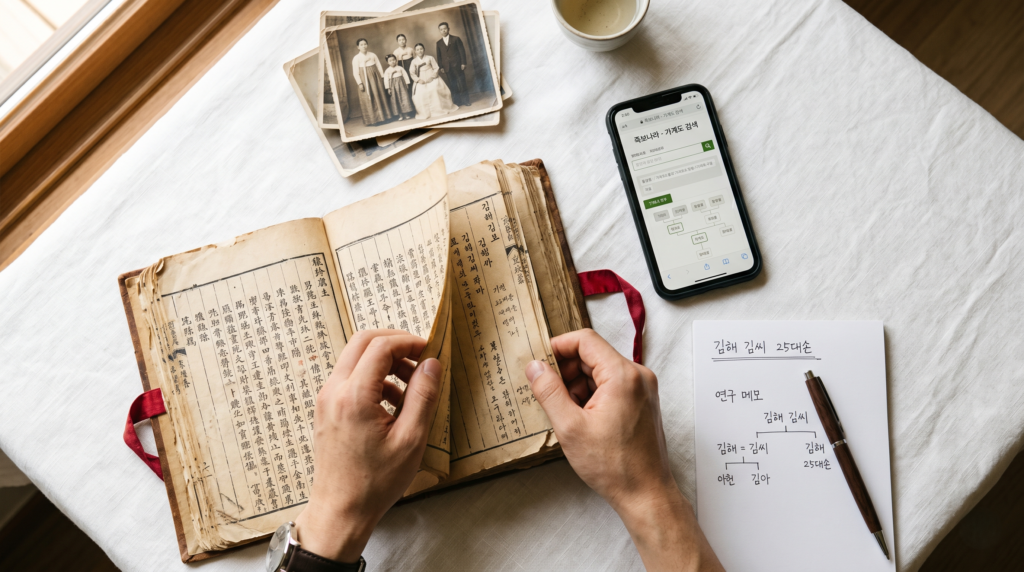
If reading this article has sparked curiosity about your own Korean surname — whether rare or common — or if you are a member of the Korean diaspora trying to trace family roots, the following resources represent the most reliable and accessible starting points for genuine genealogical research.
Essential Tools for Korean Surname and Genealogy Research
Korean Statistical Information Service (KOSIS) — kosis.kr The authoritative source for surname population data in South Korea. The KOSIS database includes surname distribution by region, population counts by clan seat (bon-gwan), and historical comparison data across census years. The site is primarily in Korean, but browser translation tools make the core data accessible to non-Korean speakers. For anyone researching whether their surname is rare, this is the essential first stop.
The National Folk Museum of Korea Maintains extensive archives related to Korean clan history, jokbo traditions, and the cultural context of Korean naming practices. The museum’s research library and online resources are particularly valuable for understanding the historical and cultural significance of specific clan seats.
Jokbo (족보) — Traditional Korean Genealogy Books For families with traceable Korean lineage, the jokbo represents the gold standard of genealogical documentation. These handwritten or printed genealogical records — maintained by clan associations and updated across generations — can trace family lines back hundreds of years with remarkable precision. Major Korean public libraries maintain jokbo collections, and some clan associations have digitized their records for online access.
뿌리를 찾아서 (Finding Our Roots) A Korean genealogy platform and cultural initiative dedicated to helping Koreans — including diaspora communities — trace their family origins. The platform offers surname lookup tools, clan seat information, and connections to clan associations that may hold relevant genealogical records.
Tips for Diaspora Koreans Tracing Rare Surnames Abroad
Researching Korean surnames from outside Korea introduces a specific set of challenges that diaspora researchers frequently encounter:
The Romanization Problem Korean surnames were romanized using multiple competing systems across different eras and countries of immigration. The surname 이 (Lee) appears in Western records as Lee, Yi, Rhee, and Li. Less common surnames face even more dramatic variation. If you are searching for records of a Korean ancestor using a romanized spelling, always search multiple spelling variants simultaneously and prioritize finding the original Hanja character, which provides the most reliable identifier.
Working With Korean Consulates Korean consulates in many countries can assist diaspora Koreans in accessing family registry records held in South Korea. The Family Relationship Register (가족관계등록부) — the modern successor to the colonial-era civil registry — contains documented surname and clan seat information for registered Korean citizens and their documented relatives. Accessing these records typically requires proof of Korean ancestry and may involve formal application procedures through the consulate.
DNA Genealogy and Korean Heritage Commercial DNA genealogy services have expanded their Korean reference populations significantly in recent years, making them more useful for Koreans tracing ethnic heritage. While DNA testing cannot identify specific surnames or clan seats, it can identify broad regional origins within the Korean peninsula and connect users with genetic relatives who may have more complete documentary records of shared ancestry.
Frequently Asked Questions About Rare Korean Surnames
Q1: What is the single rarest surname in Korea?
Definitively identifying a single “rarest” surname is complicated by the fact that KOSIS census data groups some very small populations together and North Korean surname data is not publicly available. However, based on South Korean census records, several surnames are documented with populations in the single digits — fewer than 10 registered bearers. Among surnames with documented clan histories, names like Nawon (나원) and certain rare Hanja variants of more common-sounding names are consistently cited by Korean genealogists as among the most numerically scarce. The surname with the absolute lowest registered population varies slightly between census years as births, deaths, and occasional name changes shift the numbers.
Q2: How many Korean surnames exist in total?
According to the 2015 South Korean census, approximately 5,582 surnames were recorded — a number that may surprise readers familiar with the often-cited figure of “250–300 surnames.” The discrepancy exists because the lower figure refers to surnames in common use, while the higher figure includes extremely rare Hanja variants, foreign-origin names, and surnames held by single families. In practical social terms, the vast majority of Koreans carry one of fewer than 300 surnames.
Q3: Can a Korean person legally change their surname?
Yes, but the process reflects Korea’s deep cultural investment in surname continuity. Changing one’s surname in South Korea requires approval from a family court, and applications must demonstrate compelling reasons — such as documented harm from the current surname, correction of registration errors, or specific family circumstance changes. Casual or preference-based surname changes are not generally approved. The legal framework reflects a cultural understanding that Korean surnames belong not just to the individual but to the clan lineage the individual represents.
Q4: Are two-syllable Korean surnames always rare?
Not without exception, but as a category, two-syllable surnames are significantly less common than single-syllable surnames in Korea. Names like Namgung (남궁), Hwangbo (황보), Seonwoo (선우), and Dokgo (독고) all represent two-syllable surnames with documented populations — but none approaches the scale of common single-syllable names. Within the two-syllable category, some names are more widely known (Namgung) while others are genuinely obscure (Dongbang). The two-syllable structure itself marks these names as linguistically distinctive in the Korean naming tradition.
Q5: Why do so many Koreans share the same last name?
The concentration of Korean surnames is the direct result of two historical forces working in tandem. First, the Joseon Dynasty’s Confucian social structure incentivized commoners to adopt the surnames of prestigious yangban clans — particularly Kim, Lee, and Park — as a form of social aspiration. Second, the Japanese colonial government’s 1909 civil registry mandate forced rapid surname adoption by millions of Koreans who lacked registered family names, and many chose familiar, prestigious surnames rather than creating distinctive new ones. The result was a dramatic funneling of surname diversity into a small number of extremely common names.
Q6: Do North and South Korea share the same rare surnames?
Korean surname culture is fundamentally shared across the peninsula, rooted in the same historical and cultural traditions. However, since the division of Korea in 1945 and the subsequent closure of the border, surname distribution data has developed independently in the two countries. South Korea’s KOSIS data does not capture North Korean surname populations. It is plausible that some surnames considered rare in South Korea exist in larger numbers in the North, and vice versa — particularly given the massive population displacement of the Korean War, which moved significant numbers of northern Koreans southward while leaving others permanently separated. The full picture of rare Korean surname distribution across the entire peninsula remains, for now, inaccessible.
Conclusion — A Name Is Never Just a Name
We began this journey with a striking image: being one of only a handful of people in the entire world who carries your family name. By now, it should be clear that for the bearers of Korea’s rarest surnames, that reality is not merely a demographic curiosity. It is a living connection to a history that stretches back across kingdoms and centuries, through colonization and war, through forced erasure and quiet survival.
Why These Rare Surnames Deserve to Be Remembered
Every rare Korean surname is, at its core, a story of persistence. The families who carried these names through the social pressure of the Joseon era, through the traumatic identity erasure of Japanese colonial rule, through the chaos and devastation of the Korean War, and into the relentlessly modernizing present — they preserved something irreplaceable. Not just a name, but a thread of human continuity connecting the present to a past that would otherwise be entirely silent.
In a country where Kim, Lee, and Park dominate the social landscape so completely that people with those surnames sometimes joke about their own anonymity, the bearers of names like Nawon, Dok, Seo-Moon, and Namgung occupy a uniquely singular position. Their names are their distinction. Their rarity is their history.
For the rest of us — whether Korean by heritage, Korean by cultural affinity, or simply human by curiosity — these rare names offer something genuinely valuable: a reminder that identity is fragile, that history is personal, and that the names we carry are never merely labels. They are archives. They are evidence. They are, in the truest sense, who we come from.
Korea’s rarest surnames are not footnotes to the country’s naming culture. They are its most intimate chapters — the ones written in the smallest handwriting, on the oldest pages, by hands that hoped someone, someday, would still be reading.
Have a rare surname in your own family? Share your story in the comments — we would love to hear the history behind your name.