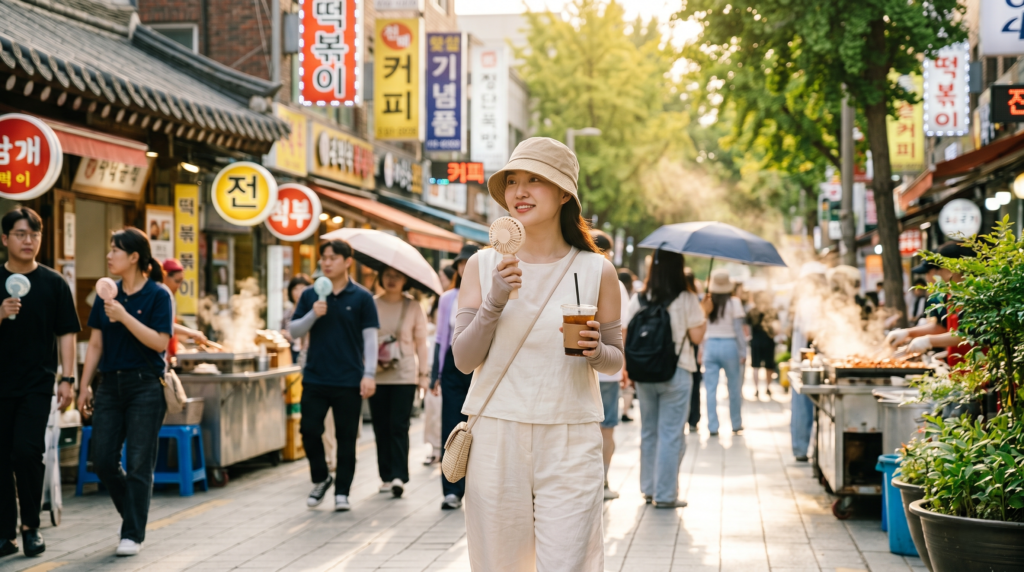
Picture this: you step out of Incheon International Airport, and within sixty seconds, the air wraps around you like a warm, wet blanket. Your sunglasses fog up. Your carefully ironed shirt clings to your back. Welcome to Korea in August. The Korea August temperature is no joke — and if you are planning a trip to South Korea during the peak summer month, knowing what you are walking into can be the difference between a miserable, sweaty slog and an unforgettable adventure through one of Asia’s most vibrant, culturally rich destinations.
August in Korea is intense. It is loud with cicadas, alive with summer festivals, drenched in the golden glow of street food stalls open past midnight, and packed with locals who have, over generations, mastered the art of surviving — and thriving — in the summer heat. Korean culture does not shy away from August. It leans into it.
This guide is built for travelers, K-drama fans planning their first Korea trip, and culture lovers who want to experience Seoul, Busan, or Jeju Island in the summer without being caught off guard. Based on verified climate data from the Korea Meteorological Administration and multiple international weather sources, local Korean lifestyle insights, and on-the-ground travel experience, this is the most comprehensive and accurate Korea August weather guide available.
By the end of this article, you will know exactly what the temperature feels like across different regions, how locals dress and why, what to pack, when to sightsee, and how to enjoy every sweaty, spectacular moment of Korea in August.
Understanding Korea August Temperature — The Big Picture
Before diving into packing lists and outfit ideas, it is important to understand what August actually feels like in South Korea — not just the numbers on a weather app, but the real, lived experience of stepping outside at noon in Seoul.
Average Temperature Range in August
South Korea sits in a temperate monsoon climate zone, which means summers are hot, humid, and occasionally dramatic. August is the peak of that drama.
Across most of the Korean peninsula, average daytime highs range from 29°C to 31°C (84°F to 88°F), while nighttime temperatures typically sit around 22–24°C (72–75°F). On particularly hot days — which do occur regularly in August — temperatures can spike to 34°C or even 35°C (93–95°F), especially in inland cities like Daegu or during urban heat peaks in Seoul.
Here is the critical distinction that many travel articles miss: the average high and the feels-like temperature are two very different things. When humidity is factored in, the heat index — what meteorologists call the apparent temperature — regularly reaches 35°C (95°F) on average August days in Seoul, and can push toward 38–40°C on the hottest afternoons. This is what makes August feel so punishing even when the thermometer reads a seemingly manageable number.
Here is an accurate regional breakdown for August based on verified climate data:
| City | Avg High | Avg Low | Avg Humidity |
|---|---|---|---|
| Seoul | 30°C / 86°F | 22°C / 72°F | 75–78% |
| Busan | 28°C / 83°F | 24°C / 75°F | ~83% |
| Jeju Island | 30°C / 86°F | 24°C / 75°F | ~76% |
| Gyeongju | 31°C / 88°F | 23°C / 73°F | ~79% |
| Daegu | 33°C / 91°F | 24°C / 75°F | ~72% |
Daegu, often called the “oven of Korea,” consistently records the highest temperatures on the peninsula in August. If you are sensitive to heat, plan your Daegu visit for a different season.
How August Compares to Other Summer Months in Korea
Korea’s summer runs from June through August, but each month has a distinct character. June is warm and relatively manageable, with temperatures hovering around 26–28°C and lower humidity. July is when things escalate — the monsoon season (Jangma, 장마) kicks in, bringing heavy, frequent rainfall and climbing humidity.
By August, the monsoon has typically wound down. Jangma generally runs from late June through late July, though it can occasionally extend into early August depending on the year. What it leaves behind is a significant parting gift: peak humidity combined with intense sunshine. There is less rain than July, but the air is thicker, the sun is more unrelenting, and the urban heat in cities like Seoul can feel suffocating during midday hours.
This is why many first-time visitors are surprised by August. They expect rain — because July was rainy — and instead get dry, blazing heat with occasional violent afternoon thunderstorms. Understanding this distinction is key to planning well.
Regional Temperature Differences Across Korea in August
South Korea may be a relatively compact country, but its geography creates meaningful temperature and weather differences across regions. Your experience of Korea’s August heat will vary significantly depending on where you go.
Seoul and the Capital Region
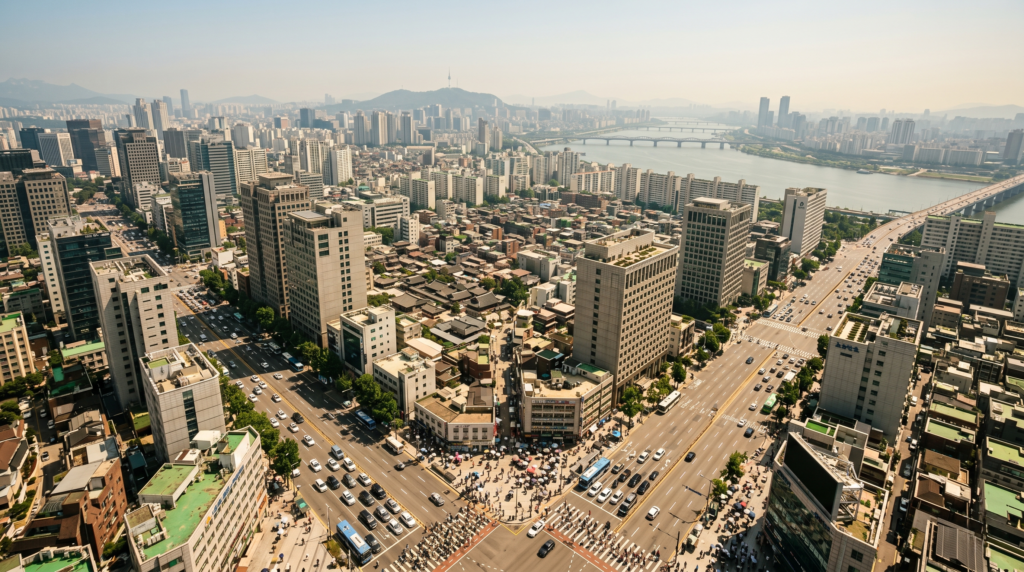
Seoul is Korea’s largest city and its cultural heartbeat, but in August, it is also a concrete furnace. The urban heat island effect — a well-documented phenomenon where densely built cities trap and radiate heat — pushes Seoul’s apparent temperature well above surrounding rural areas.
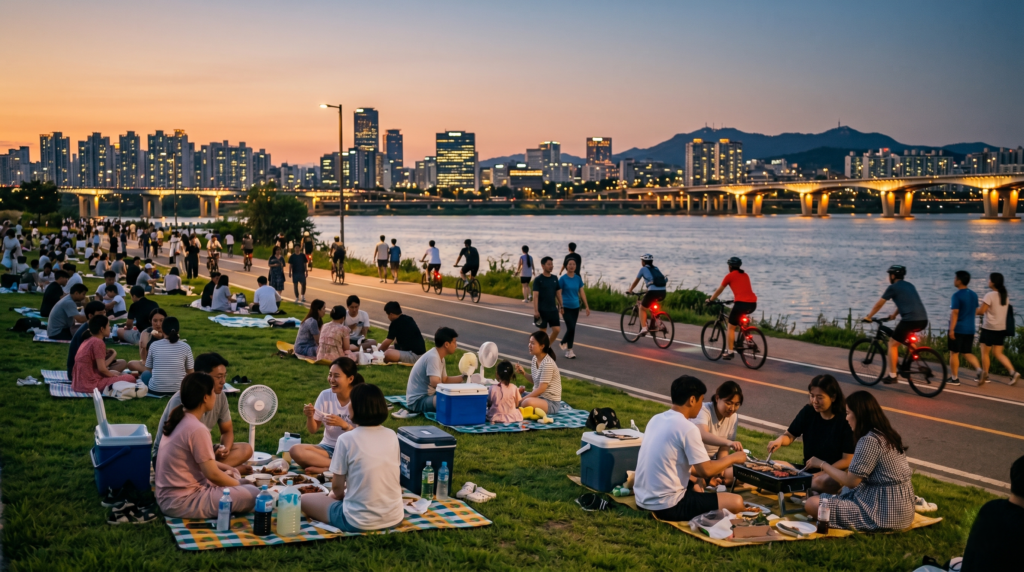
Walking through Myeongdong or Insadong at 2PM in August is not for the faint-hearted. The heat radiates from the pavement, bounces off glass buildings, and lingers in alleyways with little breeze. However, Seoul has natural relief: the Han River running through the city creates a pleasant wind corridor, and riverside parks like Yeouido and Banpo Han River Park become beloved evening gathering spots where locals picnic, cycle, and cool down after sunset.
Pro tip from locals: schedule outdoor sightseeing in Seoul for early morning (7–10AM) or the golden hour before sunset (5–7PM). Everything in between is best spent indoors — in cafés, museums, underground shopping centres, or the beautifully air-conditioned Seoul Metro system.
Busan — Where the Coast Saves You
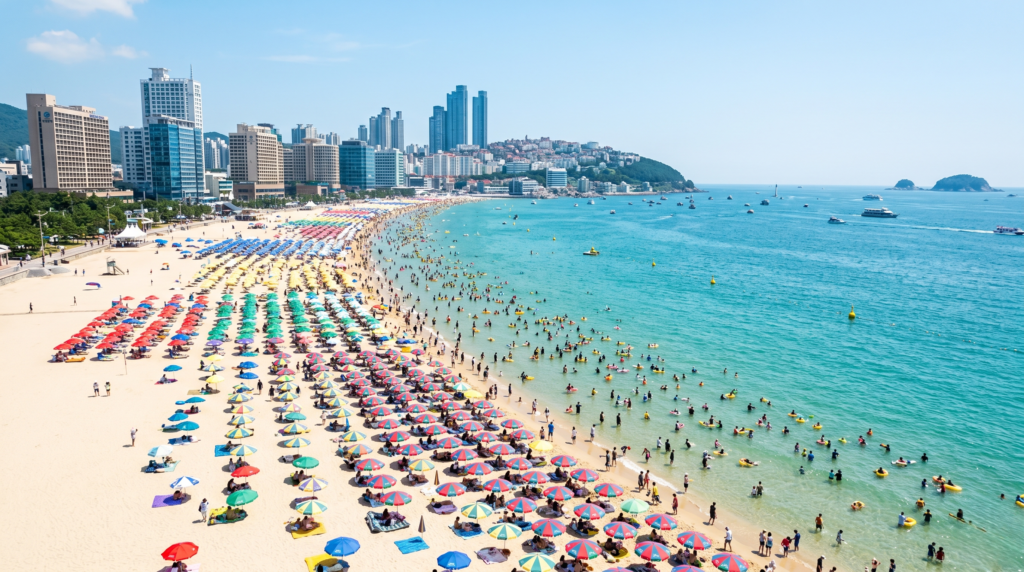
South Korea’s second city and its beach capital, Busan, benefits enormously from its coastal geography. The sea breeze coming off the Korea Strait consistently makes Busan feel more manageable than landlocked inland cities in August, even though its humidity level of around 83% is actually higher than Seoul’s. The breeze compensates significantly for this.
That said, Busan in August is still hot and its beaches — particularly the iconic Haeundae Beach and the more local-favourite Gwangalli Beach — are packed to capacity. Haeundae Beach alone draws well over 100,000 visitors per day during peak summer days, and on the most extreme August weekends, that number can spike toward a million. If you visit, go early morning to claim a spot and enjoy the cooler air before the crowds and heat descend.
Busan’s hilly terrain also means more natural shade and sea-facing streets where breezes flow more freely than in Seoul’s urban grid. For heat-sensitive travellers, Busan is arguably the most comfortable of Korea’s major cities to visit in August, despite its high humidity.
Jeju Island — Subtropical in Every Sense
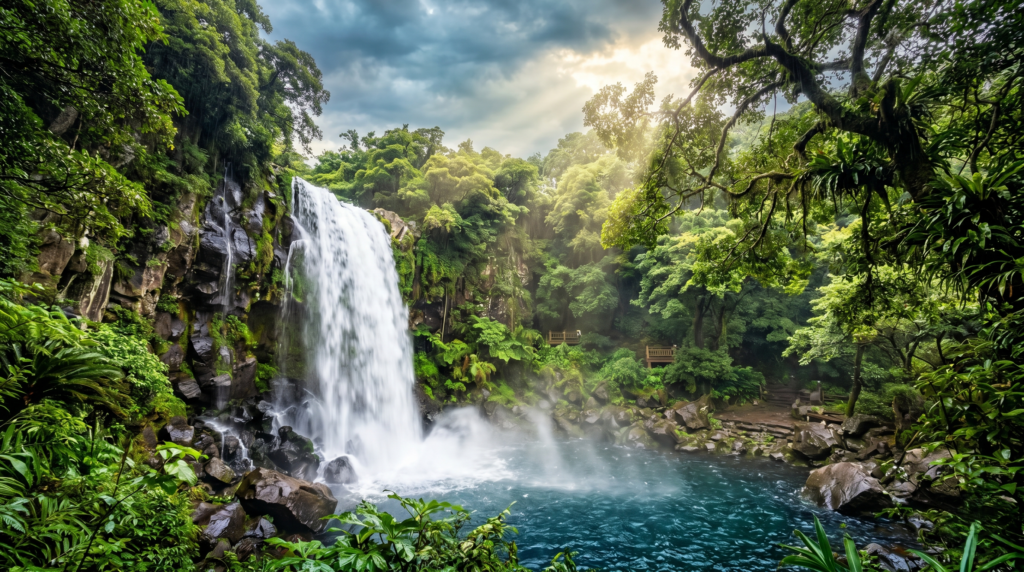
South Korea’s beloved island province, Jeju-do, sits further south than the mainland and has a subtropical climate that sets it apart from the rest of the country. In August, Jeju averages a high of around 30°C (86°F) with humidity around 76% — similar to Seoul’s average high but with a distinctly more tropical feel thanks to its southern latitude and island setting.
Importantly, August is actually Jeju’s rainiest month of the year, receiving around 260mm of precipitation — more than even the monsoon-heavy month of July. Afternoon rain showers are common and can be more sustained than the quick thunderstorms on the mainland. The lush volcanic landscape absorbs it beautifully — waterfalls like Cheonjiyeon and Jeongbang are at their most spectacular in August — but outdoor hiking plans need weather contingency built in.
Jeju’s waterfalls, beaches, and citrus groves are breathtaking in summer, but go early. The combination of summer tourism peak season and intense afternoon heat and rain means mornings on Jeju in August are golden, and afternoons are best spent in coastal cafés or exploring the island’s many lava tube cave systems, which stay naturally cool year-round.
Gyeongju and Inland Regions
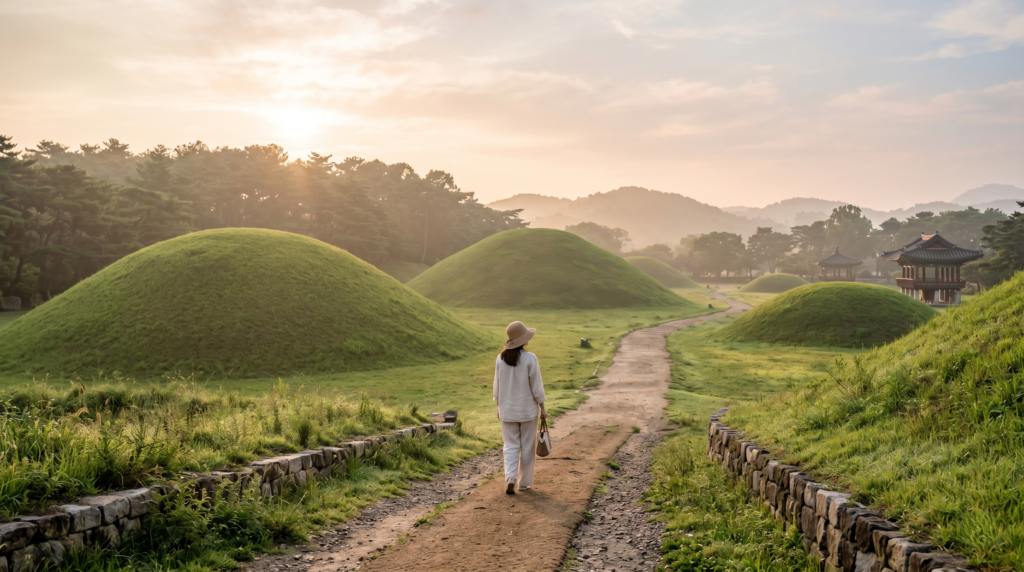
Gyeongju, Korea’s ancient capital and a UNESCO World Heritage city, sits inland and records average August highs of around 31°C (88°F) — among the highest in the country — with humidity sitting at approximately 79%. Despite what some sources suggest, Gyeongju is not significantly drier than coastal cities; it simply trades sea breeze for a more consistently hot, still atmosphere.
The outdoor heritage sites that make Gyeongju famous — the royal burial mounds of Daereungwon Tumulus Park, the fortress walls of Wolseong, and the ancient observatory of Cheomseongdae — are exposed, largely shadeless, and demanding in August heat. Serious travellers should plan to visit these sites before 10AM or after 5PM, treating the midday hours as a rest and recovery window.
Korea’s August Weather Patterns — What No One Tells You
Tourist guides give you the averages. This section gives you the reality.
Post-Monsoon Humidity and What It Actually Feels Like
Korea’s monsoon season (Jangma, 장마) typically runs from late June through late July, occasionally extending into early August in some years. When it ends, most travellers assume the weather becomes easier. In terms of rainfall, it does. In terms of comfort, August can actually feel worse.
The post-monsoon atmosphere is saturated with moisture. The ground, buildings, and air itself hold onto the humidity left behind by weeks of heavy rain. Combined with August’s intense solar radiation and an average heat index of 35°C in Seoul, this creates an oppressive atmosphere that Koreans call 찜통더위 (jjimtong deoui) — literally, “steamer heat.”
What does this mean in practice? It means you sweat immediately upon stepping outside. It means light physical activity — walking between subway stations, climbing temple steps, exploring street markets — feels significantly more taxing than it would at the same temperature in a drier climate. It means your clothes cling, your hair expands, and your energy depletes faster than expected.
Plan accordingly. Hydration is not optional in August Korea — it is a survival strategy.
Sudden Afternoon Thunderstorms
August in Korea follows a fairly predictable daily rhythm. Mornings are hot but often clear. By early afternoon, cumulus clouds begin building over the mountains and urban heat centres. By 2–4PM, there is a reasonable chance of a sudden, intense thunderstorm that drops heavy rain for 30–60 minutes before the skies clear and the sun returns, leaving the streets steaming.
These storms are rarely dangerous, but they are spectacular and surprisingly drenching if you are caught outdoors without preparation. A compact travel umbrella or a lightweight foldable rain poncho is one of the most important items in your August Korea bag — not because it rains all day, but because the rain arrives fast and without ceremony.
Many travellers duck into a nearby CU, GS25, or 7-Eleven convenience store during these downpours — a very Korean move, and a pleasant one, since these stores stock cold drinks, cooling snacks, and remarkably effective air conditioning.
Typhoon Season Awareness
August sits firmly within Korea’s typhoon season, which runs from approximately July through September. About once each year, a typhoon passes very close to or moves over Korea, causing heavy showers and strong winds — particularly in coastal and island regions.
This does not mean your trip will be ruined. Many August visitors to Korea never experience a typhoon at all. However, it is worth downloading the Korea Meteorological Administration (KMA) app (기상청) before your trip and checking forecasts regularly, particularly if you are travelling to coastal or island destinations like Busan or Jeju.
If a typhoon warning is issued during your trip: follow Korean news updates, stay indoors in a solid structure, avoid rivers and coastal areas, and check with your accommodation and transport providers for service updates. Korean infrastructure handles typhoons with well-practised efficiency — public announcements are clear and guidance is reliable.
What to Wear in Korea in August — Dress Like a Local
This is where your Korea trip can go from uncomfortable to genuinely enjoyable, and where Korea’s unique relationship with summer fashion becomes incredibly practical.
How Koreans Actually Dress in Summer Heat
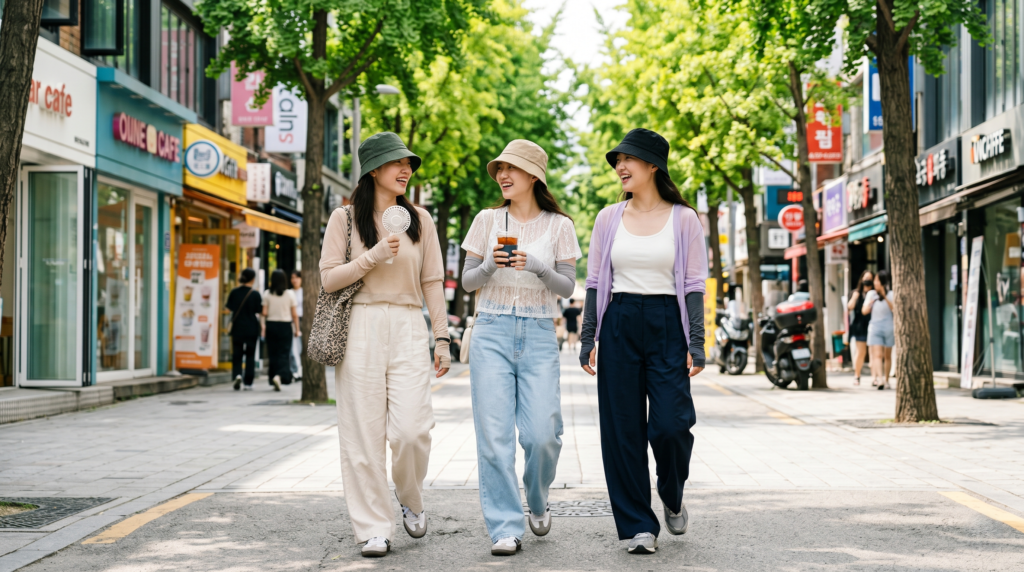
Here is one of the most important cultural insights for any August visitor to Korea: Koreans cover up in summer, not down.
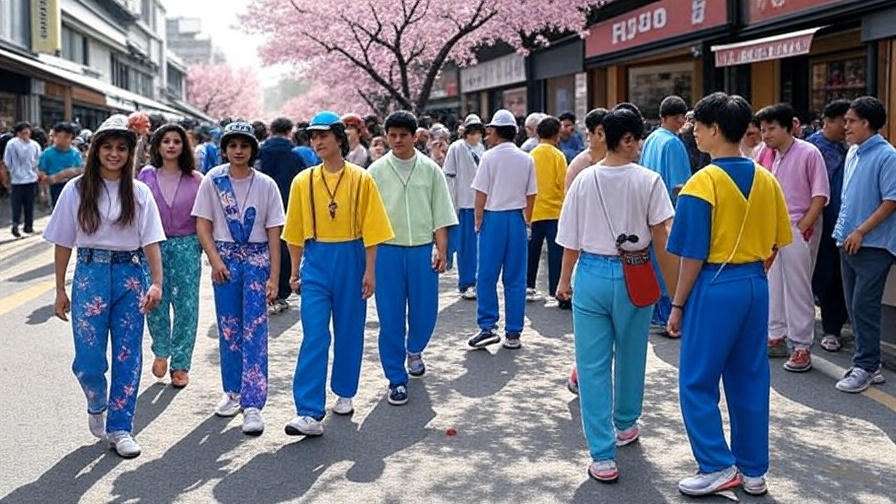
While Western beach culture celebrates exposed skin as the natural response to heat, Korean summer fashion — shaped by centuries of Confucian modesty norms, a booming skincare culture, and intense awareness of UV damage — trends in the opposite direction. Walk the streets of Hongdae, Sinchon, or Gangnam in August and you will see Korean women in long linen trousers, sheer long-sleeved tops, UV-protective arm sleeves, and light cardigans. Korean men favour loose linen shirts worn open over breathable t-shirts, wide-leg trousers, and bucket hats.
The philosophy behind this is both practical and proven: covering the body in light-coloured, breathable fabric reflects UV rays and helps regulate sweat evaporation, actually cooling the body more efficiently than bare skin in direct sunlight. It also protects against the very real risk of sunburn, which in Korea’s August UV index — often rated at 8–10, classified as “Very High” by the WHO — can happen within 15–20 minutes of unprotected sun exposure.
Beyond practicality, there is a strong cultural dimension. Korea’s beauty standards place significant value on protected, healthy skin, and sun damage is taken seriously. You will find entire sections of Korean pharmacies and Olive Young stores dedicated to UV-protective clothing, SPF-infused arm sleeves, and facial sun shields. These are not fringe products — they are mainstream summer essentials.
Essential Summer Wardrobe Items, Korean Style
Building an August Korea wardrobe around local fashion principles will keep you cooler, more culturally appropriate, and honestly, more stylish. Here is what to prioritise:
Fabrics: Choose linen, bamboo cotton, tencel, or moisture-wicking performance blends. These fabrics breathe, wick sweat, and dry quickly. Avoid polyester unless it is specifically moisture-wicking sportswear.
Tops: Loose-fit, light-coloured tops in breathable fabrics. Sleeveless is fine for casual settings, but carry a light layer for entering temples, palaces, or more traditional indoor spaces.
Bottoms: Wide-leg linen trousers are experiencing a massive moment in Korean street fashion and are genuinely the most comfortable option in August heat. Flowy midi skirts in breathable fabrics are another excellent choice. Save your jeans for autumn.
Layers: A sheer, light cardigan or long-sleeved cover-up is essential not just for cultural modesty but for surviving Korean air conditioning, which is notoriously aggressive. Korean restaurants, cinemas, and shopping centres often cool their interiors to around 18–20°C in August — going from 30°C outside to that indoors can feel like walking into a refrigerator. Always have a layer.
UV Arm Sleeves: These slip-on sleeves, covering from wrist to shoulder, are ubiquitous among Koreans in August. You will see them on cyclists, hikers, shoppers, and commuters. They are inexpensive — available at Daiso for under 3,000 won — effective, and completely normalised in Korean culture. Pack a pair or buy them on arrival.
Footwear: Comfort rules in August. Breathable leather sandals or mesh sneakers work for most situations. Avoid thick-soled boots, heavy trainers, or flip-flops for long walking days — Korea’s historic districts feature uneven cobblestone streets that demand supportive footwear.
Headwear: Bucket hats, wide-brimmed sun hats, and visors are all standard Korean summer accessories and are entirely appropriate for any outdoor setting. They are also extremely practical.
What NOT to Wear in Korea in August
Avoid these common tourist mistakes:
- Heavy denim: Jeans in high humidity are a recipe for misery. Leave them at home or save them for air-conditioned evenings out.
- Dark synthetic fabrics: Black polyester in direct August sun absorbs heat aggressively and does not breathe.
- Tight-fitting clothing: Anything that traps heat or restricts airflow will feel unbearable by midday.
- Flip-flops for sightseeing: Comfortable for the beach, but inadequate support for 20,000-step sightseeing days on cobblestone streets.
- Heavy backpacks against your back: Opt for a crossbody bag or a ventilated hiking pack to allow airflow.
K-Drama Inspired Summer Outfit Ideas
For K-drama fans who want their Korea trip wardrobe to feel as cinematic as a summer rom-com, the good news is that authentic Korean summer fashion is exactly what you have been seeing on screen. Recent dramas set during summer in Seoul consistently feature the aesthetic that defines Korean summer style.
Think linen co-ord sets in ivory, sage, or dusty blue, oversized button-down shirts tied at the waist over wide-leg shorts, flowy floral midi skirts paired with simple white tees, and minimalist sandals with crossbody bags. These are not just drama wardrobe choices — they are what you will see on every stylish Korean in Hongdae or Hannam-dong in August.
Korean fashion brands like Musinsa Standard, Ader Error, and 8seconds carry summer collections that are both affordable and perfectly adapted to the climate. Picking up a piece or two during your trip is a great way to dress locally, stay cool, and bring home something genuinely wearable.
Essential Packing List for Korea in August
A well-packed bag can transform your August Korea experience from an exhausting battle against the heat into a comfortable, well-prepared adventure.
Clothing Checklist
Pack light, pack breathable, and pack with layering in mind. Here is a practical clothing list for a 7–10 day August Korea trip:
- Breathable tops (×6–7): Light-coloured linen, bamboo cotton, or moisture-wicking tops. Mix sleeveless and short-sleeve options.
- Light long-sleeve layer (×2): Sheer or linen long-sleeved shirts for sun protection outdoors and warmth in aggressively air-conditioned indoor spaces.
- Wide-leg linen or cotton trousers (×2–3): The single most practical August Korea wardrobe item. Loose, breathable, and stylish.
- Flowy skirt or shorts (×1–2): For casual beach or market days.
- Light cardigan or sheer kimono wrap (×1): Non-negotiable for Korean indoor environments.
- UV-protective arm sleeves (×2 pairs): Buy in Korea at Daiso or any convenience store.
- Comfortable walking sandals (×1): Leather or synthetic with arch support — not flip-flops.
- Breathable mesh sneakers or lightweight trainers (×1): For cobblestone streets, temple visits, and longer sightseeing days.
- Compact foldable sun hat or bucket hat (×1): Protects your face and neck during outdoor sightseeing.
- Swimwear (×1–2): Essential if visiting Busan beaches, Jeju Island, or rooftop pool hotels in Seoul.
Skincare and Sun Protection — The Korean Summer Essentials
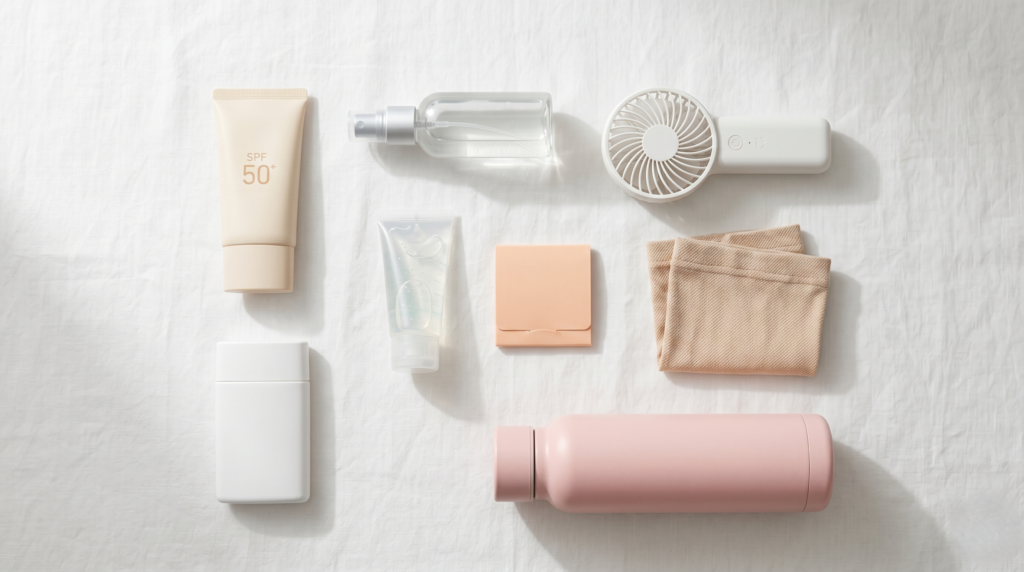
Skincare is not vanity in August Korea — it is practical self-preservation. Korea’s August UV index regularly reaches 8–10, classified as “Very High,” meaning unprotected skin can begin to burn in as little as 15–20 minutes of direct sun exposure.
- SPF 50+ broad-spectrum sunscreen: Apply 20 minutes before going outside and reapply every two hours. Korean pharmacy staples like Beauty of Joseon Relief Sun, Anessa Perfect UV Sunscreen, and Isntree Hyaluronic Acid Watery Sun Gel are widely available and highly rated.
- Facial mist spray: A quick spritz of chilled facial mist provides instant cooling and refreshes throughout the day. Available at Olive Young for around 5,000–8,000 won.
- Lightweight moisturiser: A light, water-based moisturiser keeps skin balanced through the constant indoor-outdoor humidity shifts.
- Lip balm with SPF: Often forgotten, but lips are highly vulnerable to August UV exposure.
- Soothing after-sun gel: Korean aloe vera gels like Nature Republic Aloe Vera 92% Gel are inexpensive and heavenly after a long day in the sun. Keep one in the fridge at your accommodation.
- Blotting papers: A Korean beauty staple — thin papers that absorb excess oil and sweat without disturbing sunscreen. A must-have for August.
Tech and Practical Items
- Portable hand fan (손풍기, sonjunggi): Battery-operated portable fans are one of the most iconic Korean summer accessories. Available at Daiso for under 5,000 won. Buy one immediately upon arrival.
- Portable battery pack: August heat means constant navigation, weather app checking, and camera use — all draining your phone faster than usual. A 10,000–20,000 mAh power bank is essential.
- Compact travel umbrella or packable rain poncho: August afternoon storms arrive fast. A compact, windproof umbrella fits in any bag.
- Reusable insulated water bottle: Staying hydrated in August Korea is genuinely important. Carry a large bottle and refill regularly — Korea has excellent drinking water infrastructure, with dispensers in many public spaces and subway stations.
- KMA Weather App: Download the Korea Meteorological Administration app before your trip for real-time weather updates, typhoon alerts, and UV index information.
- Cooling towel or microfibre towel: Wet, wring out, and drape around your neck for instant temperature reduction.
- Electrolyte packets or tablets: Mix into your water bottle to replace minerals lost through heavy sweating. Available at Korean pharmacies (약국, yakguk) and convenience stores.
Best and Worst Times to Sightsee in Korea in August
Timing your outdoor activities intelligently is the single most impactful thing you can do to improve your August Korea experience.
The Golden Hours for Outdoor Sightseeing
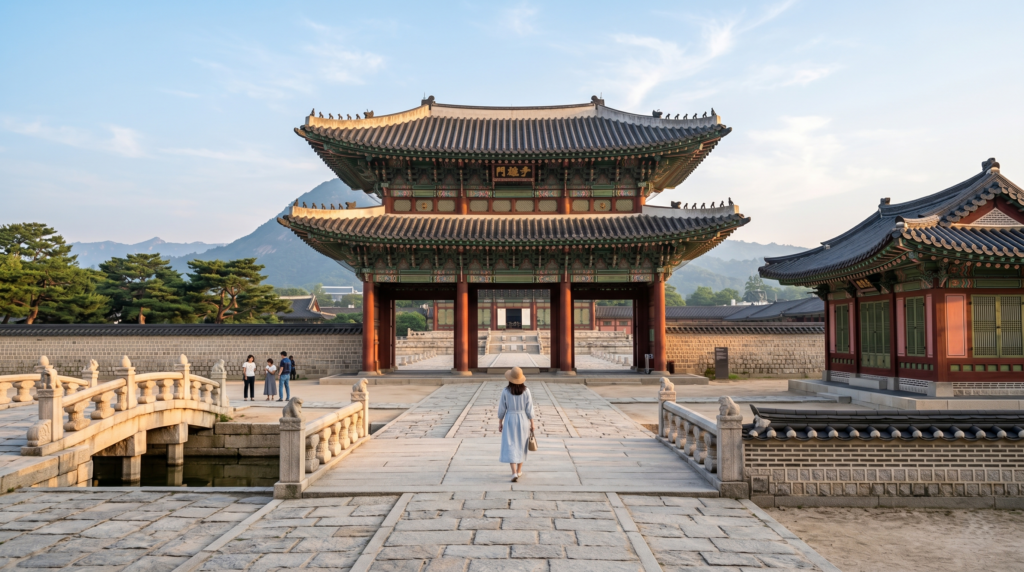
Early morning (6:30AM – 10:00AM) is consistently the best window for outdoor sightseeing in August Korea. The temperature is at its daily low, the light is beautiful and soft, popular attractions have smaller crowds, and the air — while still warm — has not yet reached its oppressive midday peak.
Using this window for visits to Gyeongbokgung Palace, Changdeokgung Palace, Bukchon Hanok Village, N Seoul Tower, or Gyeongju’s outdoor heritage sites will give you a dramatically more comfortable and enjoyable experience than attempting the same sites at noon.
Late afternoon and evening (5:00PM – 9:00PM) is Korea’s second golden window in August. As the sun descends, temperatures drop meaningfully, the light turns golden and gorgeous, and Korean cities come alive in a way that is distinctly, beautifully summer. Street food vendors set up, Han River parks fill with picnickers, rooftop bars open their best tables, and the energy of a Korean summer evening is something genuinely special.
Korea’s culture of evening activity is not accidental — it is a long-standing adaptation to summer heat. Embrace it. Some of the best August experiences in Korea happen after 6PM: Dongdaemun Night Market, evening cruises on the Han River, and the simple pleasure of eating cold naengmyeon at an outdoor restaurant table as the city cools around you.
Use Peak Heat Hours Wisely
The window between 11:00AM and 3:00PM represents the most intense heat of the day in August Korea. Spending this window outdoors — especially without shade, water, or rest — is not only uncomfortable but can be genuinely risky for children, elderly travellers, or anyone with heat sensitivity.
Use these hours for:
- Underground Seoul: The city’s massive underground shopping arcades — COEX Mall in Gangnam with its famous Starfield Library, Lotte Underground Mall, Goto Mall at Express Bus Terminal — are air-conditioned, fascinating, and genuinely enjoyable.
- Indoor cultural attractions: The National Museum of Korea, National Folk Museum, Seoul Museum of History, and War Memorial of Korea are all world-class, heavily air-conditioned, and free or low-cost to enter.
- Korean cinema: Watching a film at a Korean multiplex — CGV, Lotte Cinema, or Megabox — is a genuine cultural experience. Korean cinema culture is warm and communal, with enormous screens, reclining seats, and snack options far beyond popcorn.
- Café culture: Korea’s café culture is among the most developed in the world. August is peak season for iced coffee drinks and seasonal menus. Spending midday in a beautifully designed Korean café is not killing time — it is participating in a genuine Korean cultural ritual.
- Jjimjilbang (찜질방): Korea’s iconic public bathhouses offer hot baths, cold pools, and communal rest areas. Alternating between hot and cold treatments can leave you feeling remarkably refreshed. Many are open 24 hours and charge between 10,000–15,000 won for full access.
Korea August Temperature vs. Other Popular Asian Destinations
For travellers debating between Korea and other Asian destinations in August, context helps. How does Korea’s summer heat compare to regional alternatives?
| Destination | Avg High (August) | Humidity | Rainfall Risk | Typhoon Risk |
|---|---|---|---|---|
| Seoul, Korea | 30°C / 86°F | 75–78% | Medium | Medium |
| Tokyo, Japan | 32°C / 90°F | ~78–80% | Medium-High | Medium |
| Bangkok, Thailand | 34°C / 93°F | ~85%+ | High | Low |
| Hanoi, Vietnam | 33°C / 91°F | ~80% | High | Low-Medium |
| Taipei, Taiwan | 34°C / 93°F | ~78%+ | Medium-High | Medium-High |
| Singapore | 31°C / 88°F | ~85%+ | Medium | None |
Korea’s August heat is actually among the more moderate in the region in terms of average temperature, though its humidity remains significant. Tokyo and Bangkok both record higher average temperatures and comparable or higher humidity levels. Vietnam’s August is dominated by heavy monsoon rainfall. What makes Korea stand out as an August destination despite the heat is the density of world-class indoor cultural experiences, the exceptional public transport system, and the unique summer festivals that make August one of the most vibrant months to visit.
Korea’s Unique Summer Festivals in August
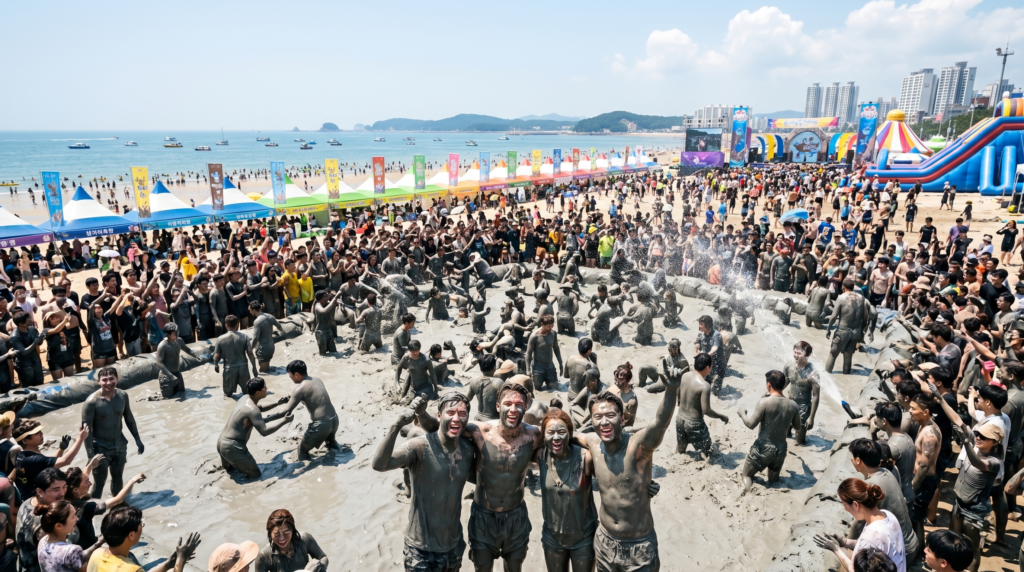
August is one of Korea’s most festival-rich months:
- Boryeong Mud Festival (보령 머드 축제): This internationally famous festival runs from late July through early August at Daecheon Beach in Boryeong, South Chungcheong Province. Visitors play in mineral-rich mud pools on the beach in an atmosphere that is cooling, chaotic, and genuinely fun. It is one of Korea’s most beloved summer events and attracts over two million visitors annually.
- Busan Sea Festival: Centred around Haeundae Beach, this multi-week summer celebration features concerts, fireworks, beach events, and water activities. The combination of sea breeze and festival atmosphere makes Busan particularly appealing in August.
- Waterbomb Festival: A massive outdoor water gun and music festival held in Seoul and Busan, hugely popular with younger crowds seeking relief from the heat.
- Jeju Haenyeo Cultural Festival: Celebrating Jeju’s famous female divers (haenyeo), this event offers a glimpse into one of Korea’s most unique and UNESCO-recognised cultural traditions.
Local Tips From Koreans on Surviving August Heat
No guide to Korea in August is complete without the wisdom that Korean locals actually live by. These are not tourist tips — they are genuine daily habits of people who navigate Korean summers year after year.
Tip 1 — Always Carry a Small Towel (수건, sugeon)
Every Korean has one in their bag in August. A small hand towel for wiping sweat is considered as basic as carrying a phone. Pack a thin microfibre travel towel or pick up one of the character towels sold at Korean convenience stores.
Tip 2 — Live at the Convenience Store
Korea’s convenience store culture reaches its peak in August. CU, GS25, and 7-Eleven branches — found on virtually every city block — become summer lifelines. Stock up on: iced Americano canned coffee, banana milk or Milkis, cooling gel patches (냉각패치, applied to the back of the neck or forehead for instant relief), and an extraordinary range of ice cream bars including the legendary Melona melon bar and Samanco fish-shaped red bean ice cream sandwich.
Tip 3 — Use the Subway as a Cool-Down Network
Seoul’s metro system is one of the finest in the world and is aggressively air-conditioned throughout August. Many locals strategically plan their routes to include longer subway segments not just for transport, but for the relief of cool underground air. Follow their lead — the subway is faster, cheaper, and infinitely cooler than surface transport in August.
Tip 4 — Look for the 냉방중 Sign
This Korean phrase — pronounced naengbang-jung and meaning “Air Conditioning in Operation” — appears in the windows of shops, cafés, and restaurants throughout August. It is an open invitation to step inside and cool down.
Tip 5 — Eat Your Way Cool with Korean Summer Foods
Korea has a magnificent tradition of summer cooling foods that are genuinely worth seeking out:
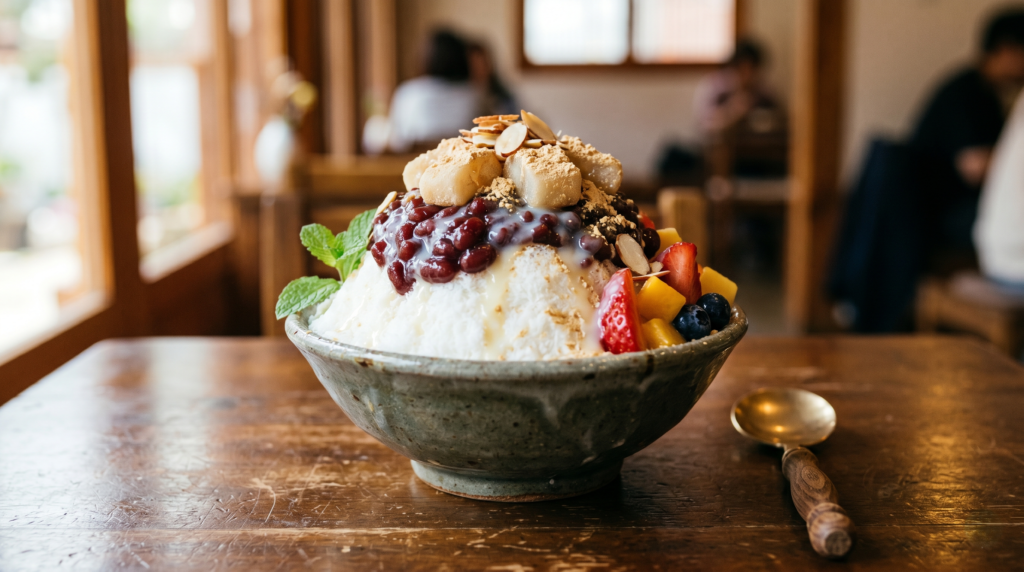
- Patbingsu (팥빙수): Shaved ice dessert topped with sweetened red beans, condensed milk, rice cakes, and fruit. One of Korea’s most beloved summer rituals — every café has their own signature version.
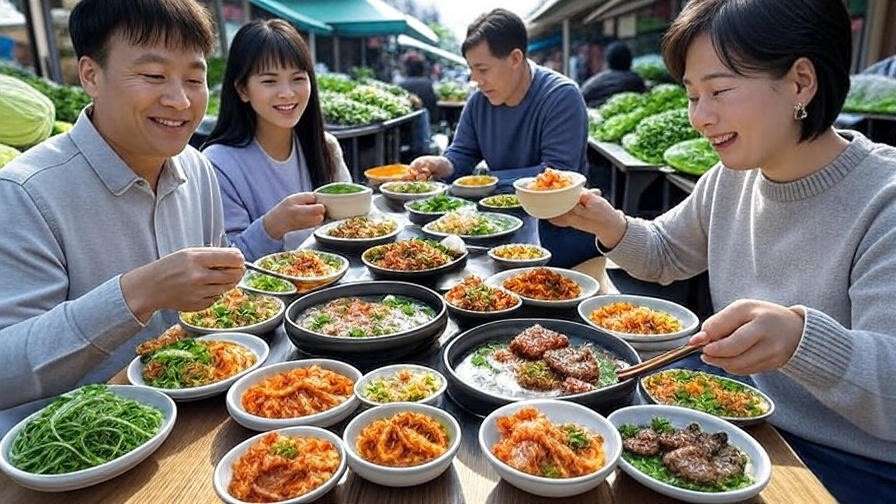
- Naengmyeon (냉면): Chewy buckwheat noodles served in an icy cold broth — either tangy mul naengmyeon or spicy bibim naengmyeon. A Korean summer lunch classic.
- Kongguksu (콩국수): Cold noodles in chilled, creamy soybean broth — nutty, refreshing, and completely unique to Korea.
- Watermelon (수박, subak): Consumed in enormous quantities in Korea in August. The Korean tradition of eating watermelon on a summer evening beside the Han River is one of those simple, perfect moments that stays with you long after the trip ends.
Tip 6 — Dress for the Indoor-Outdoor Temperature Swing Perhaps the most practically important tip of all. Korean air conditioning is extraordinarily cold by international standards — stepping from 30°C outdoor heat into a Korean department store or cinema can mean a 10–12°C temperature drop in seconds. Without a layer, this transition — repeated multiple times throughout a sightseeing day — can leave you chilled, uncomfortable, and vulnerable to the summer colds that afflict many August visitors. Always have a layer accessible. Always.
Frequently Asked Questions About Korea August Temperature
Q1: What is the average temperature in Korea in August?
South Korea’s average August daytime high ranges from 28°C to 31°C (83°F to 88°F) depending on the city, with nighttime lows of around 22–24°C (72–75°F). However, the feels-like temperature — accounting for humidity — regularly reaches 35°C (95°F) or above during peak afternoon hours, particularly in urban areas. On the hottest days, temperatures can spike to 34–35°C (93–95°F), especially in inland cities like Daegu.
Q2: Is August a good time to visit Korea?
Yes — with preparation. August is hot and humid, but it is also one of Korea’s most vibrant and festive months. Summer festivals, beach culture, Han River evening gatherings, night markets, and the unique atmosphere of a Korean city in full summer swing make August a genuinely rewarding time to visit. The key is planning your schedule around the heat: sightsee in early morning and evening, shelter indoors during peak afternoon hours, and embrace Korean summer culture rather than fighting it.
Q3: How humid is Korea in August?
Quite humid, varying by location. Seoul averages around 75–78% relative humidity in August, Busan sits higher at approximately 83%, Jeju Island around 76%, and Gyeongju around 79%. The combination of heat and humidity creates a feels-like temperature that is substantially higher than the actual air temperature — Seoul’s average heat index in August is approximately 35°C (95°F).
Q4: Does it rain a lot in Korea in August?
Less than July, but rain is still part of the August picture. Korea’s monsoon season (Jangma) typically ends in late July, leaving August with fewer rainy days overall. However, short but intense afternoon thunderstorms are common, and August falls within typhoon season (July–September). Note that Jeju Island is an exception — August is actually its rainiest month of the year. Carrying a compact umbrella daily is strongly recommended wherever you are.
Q5: What should I pack for Korea in August?
The essentials: breathable linen or cotton clothing in light colours, UV-protective arm sleeves, SPF 50+ sunscreen, a portable hand fan, a compact umbrella, a light cardigan for indoor air conditioning, comfortable walking footwear, facial mist spray, and a large reusable water bottle. Full details are in the packing section above.
Q6: Is Korea hotter than Japan in August?
Not on average. Tokyo typically records average highs of around 32°C (90°F) with humidity of 78–80% in August — slightly warmer than Seoul’s average of 30°C (86°F). Both destinations are genuinely hot and demand similar preparation strategies. Korea’s advantage for August travel lies in its extraordinary indoor cultural scene, efficient public transport, and competitive range of summer cooling foods and experiences.
Q7: What is the coolest city in Korea to visit in August?
Busan is generally the most comfortable of Korea’s major cities in August, thanks to its coastal location and reliable sea breezes — even though its humidity is high. For meaningfully cooler temperatures, Gangwon-do Province — home to the Taebaek Mountains and destinations like Sokcho and Seoraksan National Park — offers average August highs of around 25–28°C due to its elevation, making it a popular domestic summer retreat.
Conclusion — Embrace the August Heat, Korean Style
Korea in August is not for the unprepared — but for those who arrive ready, it is an extraordinary destination that rewards every bead of sweat.
The Korea August temperature is real, it is intense, and it will challenge you in ways that a spring or autumn visit simply will not. Average highs of 28–31°C paired with humidity of 75–83% across the country create a heat index that demands respect and preparation. But those same conditions also give you something cooler months cannot: the full, immersive experience of Korean summer culture in all its vibrant, sweaty, spectacular glory.
You will eat patbingsu at midnight, cool fans whirring at your table. You will watch the Han River shimmer in late afternoon heat from a riverside café. You will duck into a 냉방중 convenience store and emerge refreshed, clutching a Melona ice cream bar, ready to face the world again. You will stand at the gates of Gyeongbokgung Palace at 8AM, when the light is golden and the crowds are thin and the ancient stones are still cool from the night, and you will understand exactly why people come to Korea in August despite everything.
Dress like a local — light, breathable, covered, and with a portable fan in hand. Plan like a local — morning and evening for outdoors, midday for indoor culture. Eat like a local — cold noodles, shaved ice, iced coffee, and watermelon beside the river.
Korea’s summer is hot, yes. It is also extraordinary.
Planning your Korea trip in August? Drop your questions in the comments below — we would love to help you plan the perfect summer itinerary. And when you are ready to go deeper, explore our guides to K-drama filming locations in Seoul, the best Korean street food by season, and the ultimate Seoul neighbourhood guide to find the corners of this city that will stay with you long after you return home.