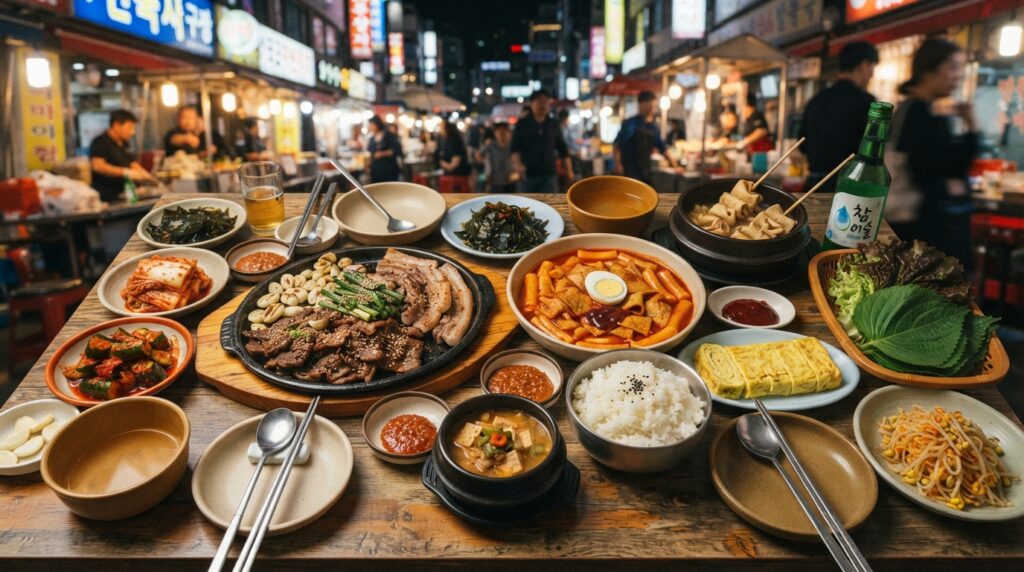
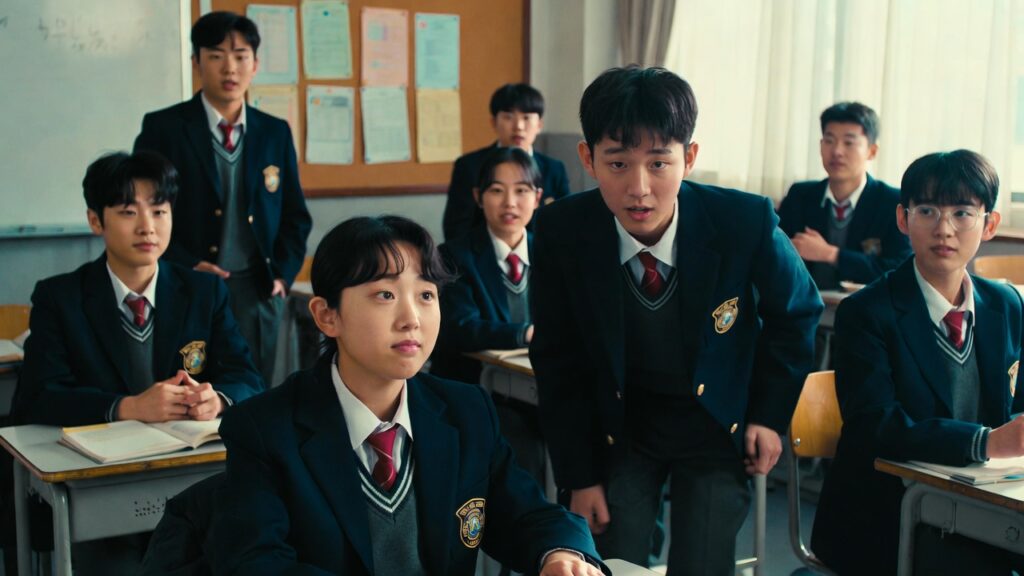
Imagine a bustling classroom where students, clad in crisp uniforms, hunch over desks late into the evening, driven by an unyielding pursuit of excellence. This scene, straight out of a gripping K-drama like School 2013, captures the intense world of South Korean middle schools—a pivotal stage where academic pressures collide with budding friendships and self-discovery. As a Korean culture specialist with over 15 years of immersion in Seoul’s educational landscape, including collaborations with the Ministry of Education and firsthand observations in urban and rural schools, I’ve witnessed how these institutions shape the nation’s youth. South Korean middle schools, known as “jung hakgyo,” serve students aged 12-15 and form the bridge between compulsory elementary education and the high-stakes high school years. They embody a blend of rigorous academics, cultural traditions, and social dynamics that often mirror the dramatic narratives in popular K-dramas.
This article delves into the structure, daily routines, and cultural underpinnings of South Korean middle schools, drawing parallels with iconic K-dramas to offer relatable insights. Whether you’re a K-drama enthusiast curious about the real-life inspirations behind shows like Reply 1988 or an expat parent navigating enrollment for your child, this comprehensive guide addresses the need for deeper understanding amid South Korea’s “education fever.” By exploring factual data from sources like the OECD and the Korean Ministry of Education, alongside drama-derived lessons on resilience and relationships, readers will gain practical knowledge to appreciate or engage with this system. We’ll uncover how Confucian values fuel academic drive while highlighting modern reforms aimed at balancing well-being with achievement.
In an era where global interest in Korean culture surges via Hallyu, grasping the nuances of South Korean middle schools provides essential context. These schools boast near-100% enrollment rates and emphasize holistic development, yet they grapple with challenges like extended study hours averaging 842 annually—below the OECD average of 909 but supplemented by private academies (hagwons) that push total learning time far higher. Through this lens, K-dramas not only entertain but educate, revealing timeless lessons on perseverance amid societal expectations.
Understanding the Structure of South Korean Middle Schools
Age Groups, Enrollment, and School Types
South Korean middle schools cater to students typically aged 12-15, marking the transition from elementary (chodeung hakgyo) to high school in the nation’s 6-3-3-4 educational ladder: six years elementary, three middle, three high, and four university. Enrollment is compulsory and nearly universal at 99.3%, reflecting the cultural premium on education rooted in Confucian ideals of self-improvement and social mobility. Schools vary by type: public institutions dominate, serving about 70% of students, while private ones offer specialized programs in arts, sciences, or foreign languages. Co-educational setups are common in urban areas like Seoul, but single-gender schools persist in some regions, fostering focused environments. Rural schools often have smaller classes, around 20 students, compared to urban averages of 25-30, with student-teacher ratios improving to about 12:1 in recent years due to government initiatives.
Special-focus schools, such as those emphasizing STEM or international curricula, prepare students for competitive high school admissions. For instance, autonomous private middle schools allow greater curriculum flexibility, appealing to families eyeing elite paths. As an expert who’s advised on international student integrations, I emphasize that school choice significantly influences future opportunities—urban students often access better resources, widening rural-urban gaps. Data from the Korean Ministry of Education shows a push toward equity, with subsidies for underprivileged areas to boost enrollment in extracurriculars.
Curriculum and Academic Focus

The middle school curriculum, revised in 2022 and fully implemented by 2025, integrates core subjects like Korean language, mathematics, science, English, social studies (including history and morals), physical education, music, and arts. This framework promotes key competencies: creativity, character development, and digital literacy, aligning with global standards while addressing local needs. Elective options, such as information technology or career education in the final semester, help students explore interests amid the shift to a high school credit system.
Hagwons play a crucial role, supplementing school hours with intensive tutoring—students often attend until 10 PM, contributing to Korea’s top OECD rankings in reading and math. However, this “education fever” (gyoyuk yeolgi) stems from cultural pressures for university entrance. A table for clarity:
| Subject | Weekly Hours (Approx.) | Focus Areas |
|---|---|---|
| Korean Language | 4-5 | Literature, Grammar, Expression |
| Mathematics | 4-5 | Algebra, Geometry, Statistics |
| Science | 3-4 | Physics, Biology, Chemistry Basics |
| English | 3-4 | Conversation, Reading, Writing |
| Social Studies | 3-4 | History, Ethics, Society |
| Physical Education | 2-3 | Sports, Health |
| Arts/Music | 2-3 | Creativity, Performance |
Grading System and Evaluations
Grading operates on a 100-point scale, with midterms, finals, and performance tasks comprising evaluations. Recent shifts toward holistic methods include portfolios and projects, reducing reliance on high-stakes tests. Yet, competition remains fierce, as middle school performance influences high school placements, foreshadowing the Suneung college exam prep.
Expert insight: A Seoul-based educator notes, “While grades drive motivation, integrating well-being metrics is key to sustainable success.” This balances academic rigor with emotional health.
Daily Life and Routines in South Korean Middle Schools
A Typical School Day
A standard day starts at 8:30 AM with morning assembly, where students pledge allegiance and hear announcements, fostering community. Classes run until 4 PM, broken into 45-50 minute periods with short breaks. Lunch, often communal and nutritious (rice, veggies, protein), lasts 40 minutes, echoing scenes in Reply 1988 where shared meals build bonds.
After-school clubs, from taekwondo to debate, extend to 6 PM, promoting teamwork. Cleaning duties (cheongso), where students mop floors, instill responsibility—a Confucian holdover emphasizing harmony. Urban students then head to hagwons, totaling 10-12 study hours daily, per OECD data.
Uniforms, Rules, and Discipline
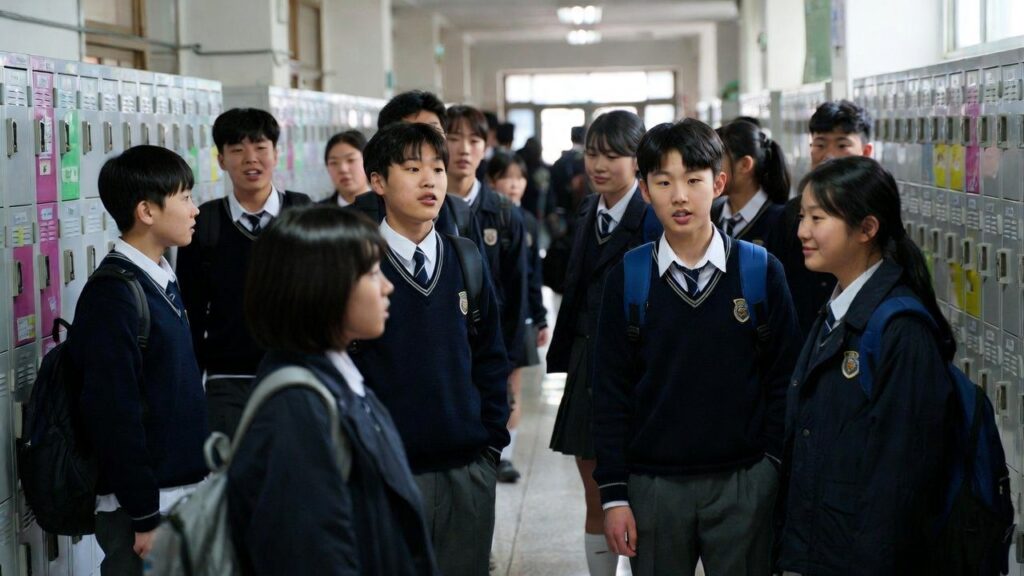
Uniforms (gyobok) vary seasonally—summer shirts, winter sweaters—and enforce modesty, with strict policies on hair length and no makeup. These promote equality but can spark rebellion, as in School 2017‘s portrayals of conformity clashes.
Discipline hinges on hierarchy: sunbae (seniors) guide hubae (juniors), and teachers command respect. Infractions like tardiness lead to points systems or counseling, prioritizing guidance over punishment.
Practical advice for international students:
- Learn basic Korean phrases for respect.
- Join clubs to integrate socially.
- Use apps like Kakao for parent-teacher communication.
Link to expat resources: Korean Ministry of Education International Guide.
Extracurricular Activities and Social Dynamics
Clubs range from sports to robotics, with annual events like sports days building camaraderie. Field trips to historical sites reinforce cultural education.
Socially, friendships thrive but bullying (wangtta) persists, addressed through anti-bullying programs. Mental health initiatives, like on-site counselors, combat stress from long hours. K-dramas like School 2013 highlight peer pressures, showing resolutions through empathy.
South Korean middle schools remain a cornerstone of the nation’s education system, blending structured academics with deep cultural values that K-dramas often dramatize for global audiences. Continuing from where we left off, let’s explore the vibrant yet demanding extracurricular and social aspects of daily life in these schools.
Extracurricular Activities and Social Dynamics
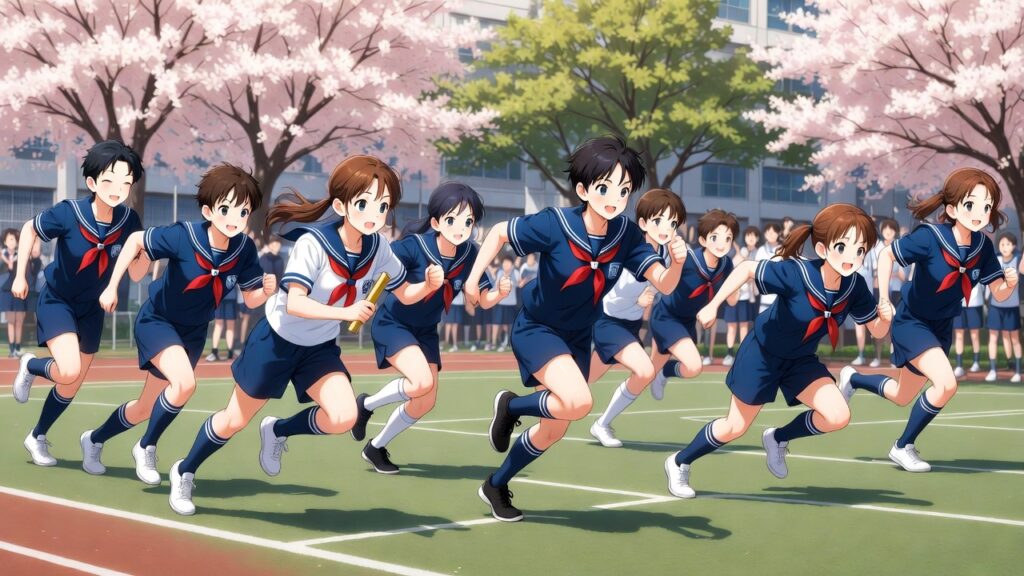
Extracurriculars form a vital part of middle school experience, offering outlets beyond the classroom. Schools organize clubs (dongari) in areas like robotics, orchestra, taekwondo, debate, or environmental projects, often meeting after regular classes or on weekends. Annual events such as athletic festivals (undonghoe) feature relay races, tug-of-war, and cheerleading performances, promoting school spirit and physical fitness. These activities help students develop teamwork and leadership skills while providing brief respites from academic intensity.
Field trips to cultural sites like Gyeongbokgung Palace or Jeju Island reinforce national history and geography lessons, aligning with the curriculum’s emphasis on patriotism and cultural heritage. In recent years, schools have expanded programs to include volunteering and career exploration, reflecting 2022 curriculum revisions that prioritize “key competencies” like creativity and global citizenship.
Socially, middle school is a formative period for peer relationships. Friendships often form through shared classes or clubs, but the hierarchical sunbae-hubae system—where seniors mentor juniors—instills respect and order. This dynamic encourages responsibility but can sometimes lead to power imbalances.
Bullying, termed wangtta, remains a concern despite government interventions. The Ministry of Education has strengthened anti-bullying policies, including mandatory counseling sessions and anonymous reporting systems. Mental health support has grown, with many schools now employing full-time counselors and implementing programs like “Wee Class” for emotional support. OECD data highlights South Korea’s ongoing efforts to address youth well-being amid high academic demands, with reforms aiming to reduce excessive pressure.
K-dramas vividly capture these elements. In School 2013 (a timeless classic often revisited), intense peer conflicts and teacher-student bonds illustrate the raw realities of classroom dynamics, while moments of reconciliation emphasize empathy and growth. Similarly, nostalgic series like Reply 1988 portray communal support through friendships forged in school, showing how shared experiences build lasting resilience.
For international students or expats, participating in clubs accelerates social integration—many report that joining a sports or arts group helps overcome language barriers and cultural differences.
Cultural Insights: Values and Challenges Reflected in Middle Schools
The Influence of Confucianism on Education
Confucian principles—filial piety (hyo), diligence (geunmyeon), respect for elders, and collective harmony—profoundly shape South Korean middle schools. Education is viewed as a path to personal and familial success, with parents investing heavily in their children’s futures. This manifests in high parental involvement, from attending school events to funding hagwons.
These values foster discipline and perseverance but contribute to “education fever” (gyoyuk yeolgi), where success is measured by academic achievement. Historical emphasis on scholar-officials (seonbi) persists, linking education to social status. Modern challenges include elevated youth stress levels; South Korea has historically ranked high in OECD surveys for student anxiety, prompting reforms like expanded counseling and reduced testing focus.
As an expert immersed in Korean society, I’ve observed how these traditions create motivated learners but require balance to prevent burnout. Government initiatives, including mental health curricula, aim to harmonize Confucian ideals with contemporary well-being priorities.
Academic Pressure and the ‘Education Fever’ Phenomenon
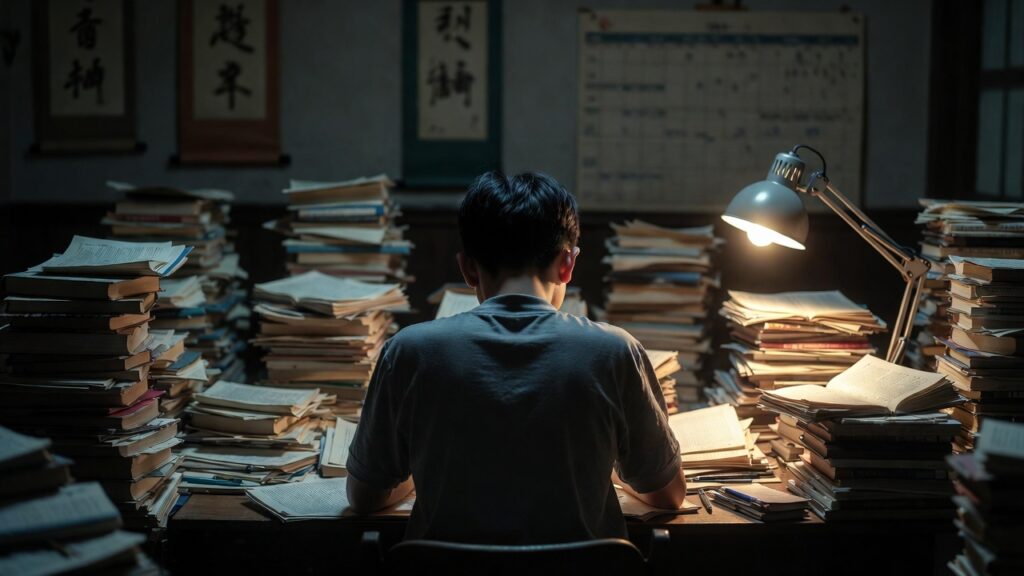
South Korea’s intense academic culture drives students toward university entrance, with middle school marking the start of serious preparation. Hagwons extend learning far beyond school hours—many students study 10+ hours daily, supplementing the official curriculum.
OECD reports indicate South Korean students’ intended instruction time is relatively shorter at the lower secondary level (around 2,525 hours total for lower secondary per recent data), but private tutoring inflates actual hours significantly. This “shadow education” system boosts performance—Korea consistently ranks high in PISA for math, science, and reading—but at a cost: sleep deprivation, with teens averaging less than the OECD norm.
The term “hell Joseon” reflects societal frustrations with inequality and pressure. Reforms since the 2022 curriculum update emphasize holistic development, incorporating career education in the final middle school semester and reducing rote memorization.
Expert perspective: Psychologists specializing in Korean youth stress the need for diversified success paths, noting government pushes for vocational education and creativity-focused assessments.
Gender Roles and Inclusivity in Modern Middle Schools
Traditional gender norms have evolved rapidly. Co-ed schools predominate in urban areas, promoting mixed interactions, while single-gender options remain for focused environments. Recent policies advance inclusivity, with anti-discrimination guidelines addressing LGBTQ+ awareness and gender equality.
K-dramas like Twenty-Five Twenty-One (though high school-focused) echo middle school transitions by portraying evolving roles—girls pursuing ambitions amid societal expectations. Reforms include gender-sensitive curricula and support for diverse identities, aligning with global standards.
These shifts reflect broader societal changes, including increased female workforce participation and multicultural integration, with over 200,000 multicultural students in schools by recent counts.
Real-Life Lessons from Iconic K-Dramas Set in Middle Schools
Key Dramas and Their Portrayals
K-dramas set in or evoking middle school life provide accessible entry points to cultural realities, often exaggerating for drama while grounding in truth.
- School 2013: Depicts raw struggles with bullying, teacher dedication, and academic stress in vocational high school, but its middle-school-like intensity resonates widely. It highlights empathy amid hierarchy.
- Reply 1988: Nostalgic 1980s portrayal shows communal meals, neighborhood friendships, and family support—mirroring real cleaning duties and shared lunches.
- Sky Castle: Focuses on elite pressures and parental ambition, dramatizing hagwon culture and mental health tolls, though set in high school, it echoes middle school prep.
- Extraordinary You: Explores self-discovery and breaking norms, using a meta “manhwa” world to reflect identity struggles in rigid systems.
- School 2017: Addresses corruption, justice, and teen rebellion, blending humor with critiques of authority.
Accuracy varies—bullying is amplified for plot, but academic stress and sunbae-hubae dynamics ring true. Recent trends show fewer pure middle-school settings, with high school dominating, yet themes persist.
Spoiler warning: Scenes often resolve conflicts through heartfelt talks or dramatic confrontations, teaching viewers about communication.
Lessons on Resilience and Personal Growth
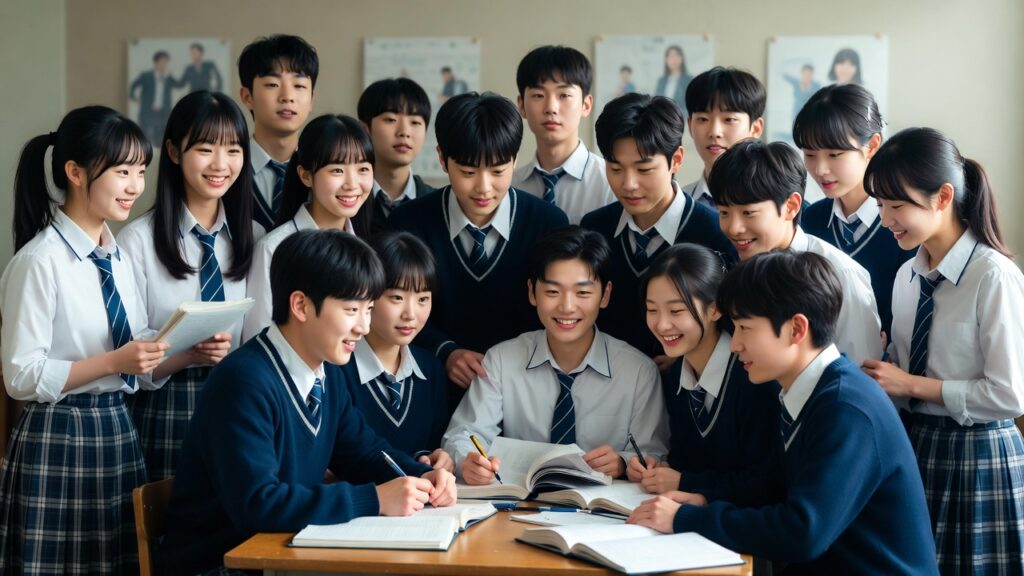
Dramas impart universal messages:
- Overcoming failure: Characters rebound from low grades or rejections, emphasizing perseverance.
- Building empathy: Peer support triumphs over isolation.
- Balancing life: Hobbies and friendships counter academic grind.
Real-world applications: Viewers report inspired study habits or cultural appreciation, with some pursuing exchanges in Korea.
How K-Dramas Shape Global Perceptions of Korean Education
Hallyu amplifies awareness—fans worldwide learn about uniforms, hagwons, and values through these stories. Surveys show dramas motivate tourism, language study, or relocation. They humanize the system, countering stereotypes of robotic achievement with emotional depth.
Comparisons and Global Perspectives
South Korean Middle Schools vs. Western Systems
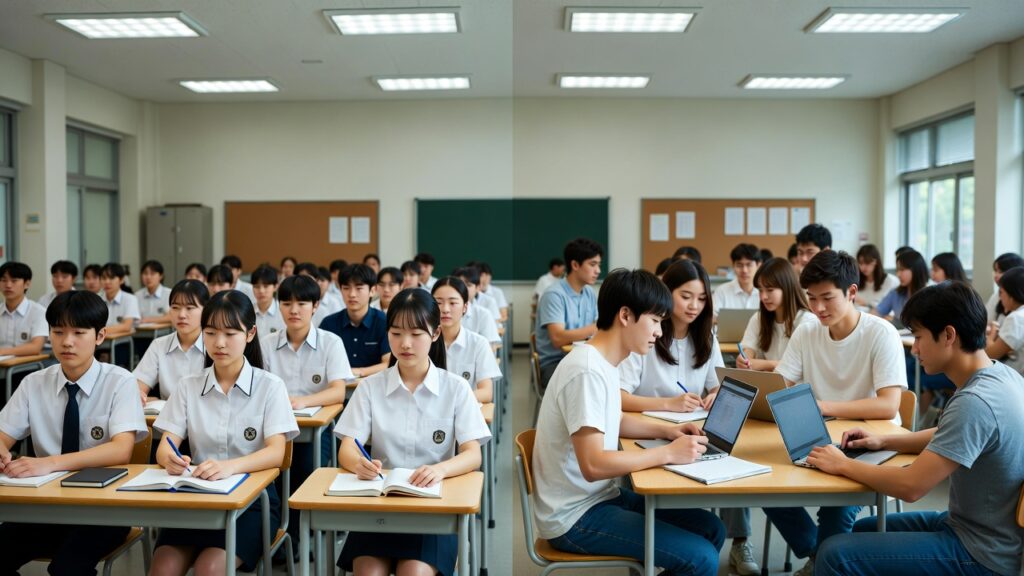
| Aspect | South Korea | U.S./U.K. (Typical) |
|---|---|---|
| School Hours | 8:30 AM–4 PM + hagwons | 8 AM–3 PM, less after-school study |
| Testing Emphasis | Frequent exams, holistic shifts | Varied, more project-based |
| Extracurriculars | School clubs + private academies | Wide school sports/arts |
| Study Time (Annual) | High via tutoring | Lower overall |
| Outcomes | Top PISA ranks, high stress | Varied performance, emphasis on well-being |
Advice for Parents and Expats
Enrolling foreign children requires documents like visas and health checks; international schools offer English curricula. Public schools provide immersion—language support grows for multicultural students.
Frequently Asked Questions About South Korean Middle Schools
What age do students attend middle school in South Korea? Typically ages 12-15 (grades 7-9), following six years of elementary school.
How accurate are K-dramas in depicting school life? They capture emotional truths like pressure and friendships but exaggerate conflicts for entertainment—real life includes more routine and support systems.
What is a typical school day like? Classes from ~8:30 AM to 4 PM, with breaks, lunch, and cleaning duties; many continue at hagwons.
Do all students wear uniforms? Yes, from middle school onward—gyobok with seasonal variations and strict appearance rules.
How competitive is the system? Highly so, with hagwons common, but reforms promote balance and diverse paths.
What support exists for mental health? Counselors, anti-bullying programs, and well-being curricula are expanding.
Can international students enroll? Yes, in public or international schools; language programs aid integration.
How has the curriculum changed recently? 2022 revisions (fully implemented by 2025) emphasize competencies, career education, and reduced testing pressure.
South Korean middle schools embody a unique fusion of tradition, rigor, and evolving reform, where Confucian diligence meets modern well-being efforts. Through K-dramas, we glimpse authentic lessons on resilience, relationships, and growth amid pressure.
This guide equips K-drama fans, parents, educators, and travelers with nuanced insights—beyond surface portrayals—to appreciate or navigate this world. Watch the recommended series, reflect on parallels in your life, and share your thoughts below. Subscribe for more deep dives into Korean culture and drama!