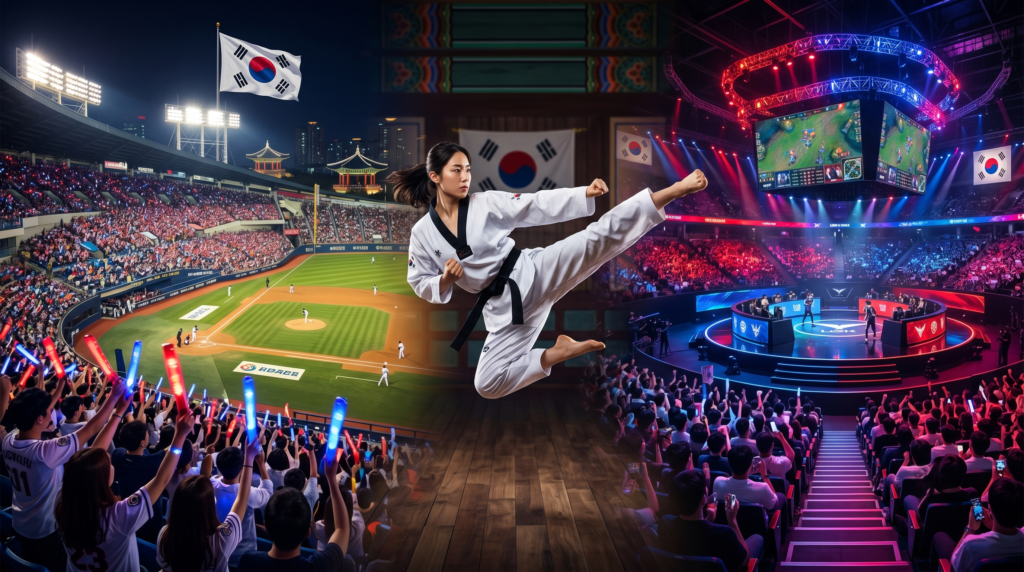
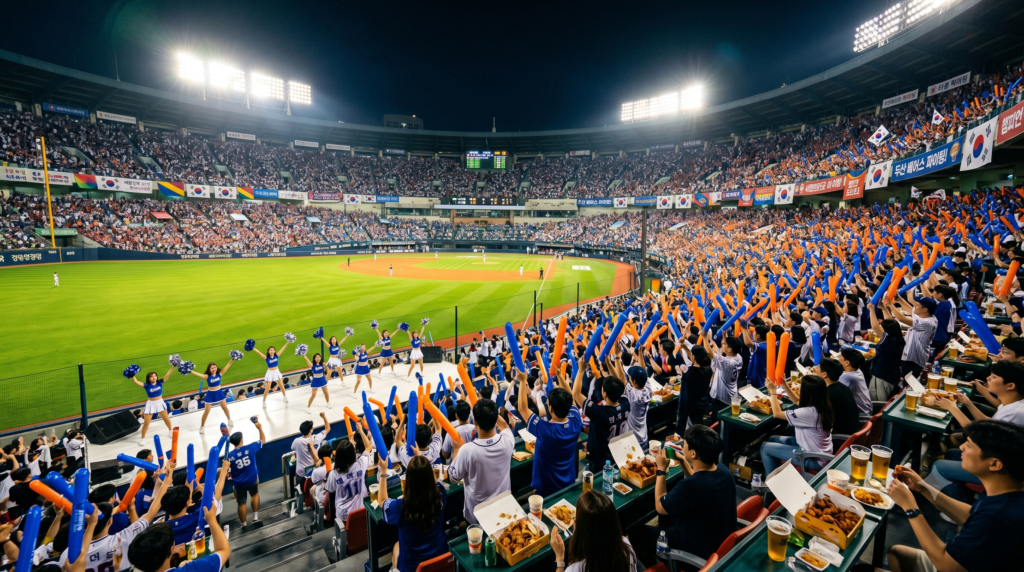
It’s a Friday night in Seoul, and Jamsil Baseball Stadium is shaking. Fifty thousand fans move in perfect unison — thundersticks clapping, team songs echoing across the Han River, cheerleaders orchestrating waves of synchronized energy that make an NFL crowd look subdued by comparison. The smell of chimaek — fried chicken and cold beer — drifts through the stands. This is not just a game. This is a cultural ritual. And if you want to truly understand Korea, you need to understand its sports. Especially, the most popular sports in Korea.
The most popular sports in Korea tell a story that no history book quite captures — a story of national resilience, cultural pride, ancient tradition colliding with digital-age ambition, and a people who bring the same fierce intensity to a baseball diamond or an esports arena that they bring to everything else in life. Korea is a country that doesn’t just play sports. It lives them.
Whether you’re a K-culture enthusiast, a travel planner preparing for a trip to Seoul, or simply curious about what makes Korean society tick, this guide covers everything you need to know — from the packed stadiums of the KBO League to the ancient sand rings of ssireum wrestling, from taekwondo dojangs to the glowing screens of a PC bang at midnight.
A Brief History of Sports Culture in Korea
Sports as a Symbol of National Pride
To understand why Koreans are so passionate about sports, you first need to understand the weight of history they carry into every competition.
The 20th century was extraordinarily turbulent for Korea. Decades of Japanese colonial rule (1910–1945), followed by the devastating Korean War (1950–1953), left deep scars on the national psyche. In this context, sports became far more than entertainment. Every Korean victory on an international stage was a statement — proof of survival, capability, and identity in the face of erasure.
This emotional relationship between national identity and athletic performance reached its defining moment in 1988, when Seoul hosted the Summer Olympic Games. For Korea, the Seoul Olympics were not simply a sporting event — they were a declaration to the world that the country had risen from the ashes of war and poverty to stand confidently among the world’s leading nations. Korea finished fourth in the overall medal tally, a performance that stunned international observers and ignited a lasting culture of elite athletic development that continues to produce world-class competitors across dozens of disciplines.
The Rise of Modern Sports Infrastructure
Following the 1988 Olympics, South Korea invested heavily in sports infrastructure in a way few countries have matched. Government-backed sports academies, university scholarship programs, and a deeply competitive school sports culture created a pipeline of elite athletes that feeds professional leagues and Olympic teams to this day.
Corporate Korea also played a decisive role. Major conglomerates — Samsung, Hyundai, LG, Lotte, and SK — sponsor professional sports teams and leagues, injecting significant financial resources into the ecosystem. Many Korean professional sports teams are named after their corporate parent, a reflection of just how tightly sport, business, and national identity are interwoven in Korean society.
The result is a sports culture that is simultaneously deeply traditional and aggressively modern — and endlessly fascinating to explore.
The Most Popular Sports in Korea Today — Ranked and Explained
1. Baseball (야구, Yagu) — Korea’s Unofficial National Sport
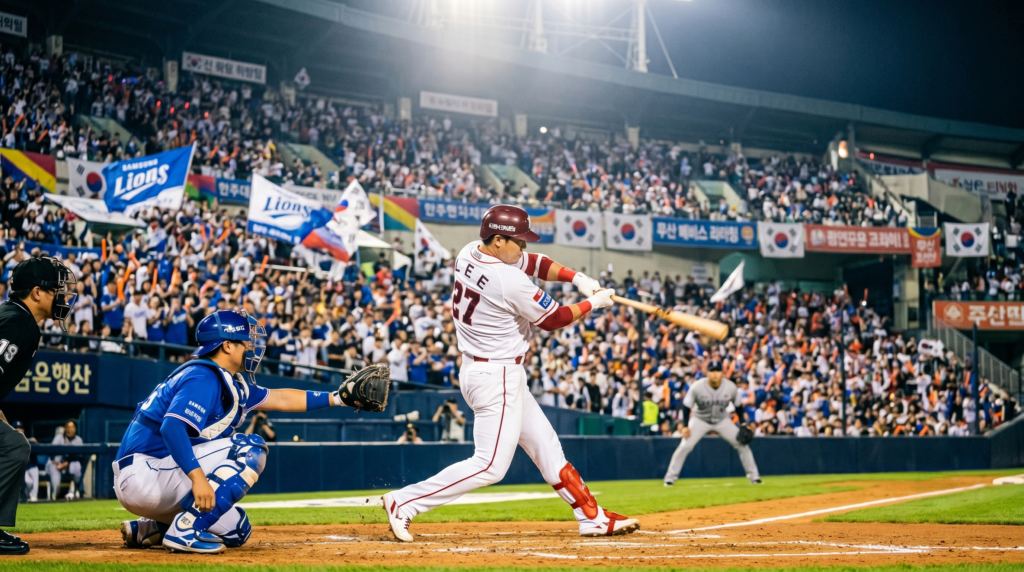
Walk through any Korean city on a warm evening and you will quickly understand the place baseball holds in this country’s heart. Flags of KBO teams hang from apartment balconies. Sports bars fill with fans watching weeknight games with the same intensity Americans reserve for playoff football. Children practice batting form in school courtyards. Baseball, introduced to Korea in the early 20th century during a period of sweeping cultural exchange, has become so thoroughly absorbed into Korean identity that many Koreans simply consider it their own.
The Korea Baseball Organization (KBO) League, founded in 1982 with just six teams, now comprises ten franchises spread across the country, from the Doosan Bears and LG Twins of Seoul to the Samsung Lions of Daegu and the Lotte Giants of Busan. Annual attendance regularly surpasses eight million spectators, making the KBO one of the best-attended baseball leagues in the world outside Major League Baseball in North America.
What makes Korean baseball culture truly distinctive, however, is not the sport itself but the atmosphere surrounding it. Korean baseball stadiums are theatrical experiences unlike anything found in American or Japanese baseball. Each team has its own elaborate cheer culture, complete with team-specific songs for every player in the lineup, synchronized dance routines led by professional cheerleaders, and crowd choreography that transforms an entire section of 10,000 fans into a single living organism. First-time visitors to a KBO game frequently describe it as the most fun they have ever had at a sporting event — regardless of whether they understand the game itself.
Korean baseball has also made its mark on the global stage. Pitcher Park Chan-ho became the first Korean player in MLB history when he signed with the Los Angeles Dodgers in 1994. Ryu Hyun-jin went on to become one of the most effective pitchers in the National League during his time with the Dodgers and Toronto Blue Jays. Today, Kim Ha-seong of the San Diego Padres represents a new generation of Korean talent competing at the highest level of the sport, inspiring millions of young Korean fans who now follow MLB alongside the KBO.
2. Football / Soccer (축구, Chukgu) — The Global Game with Korean Passion
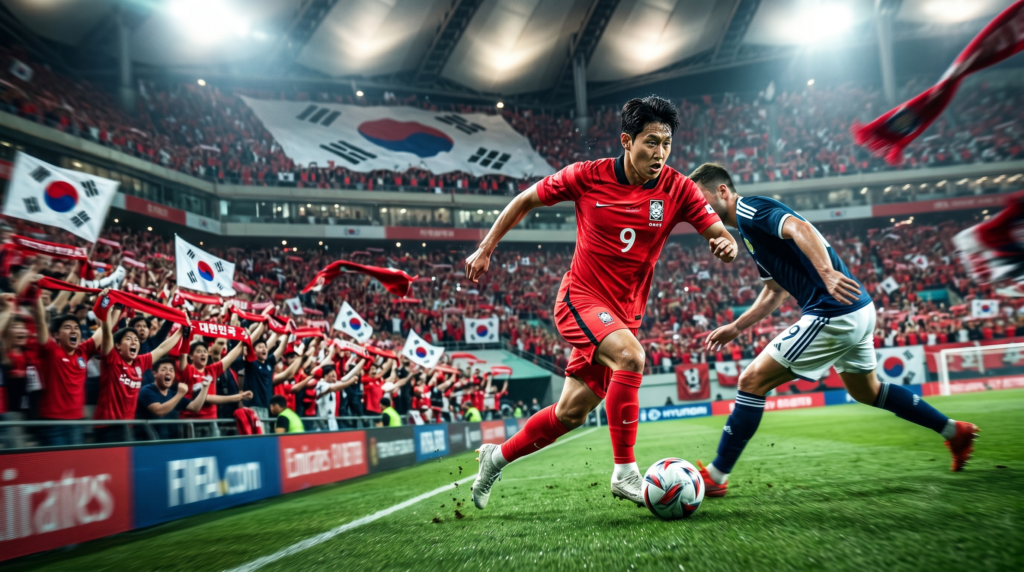
If baseball owns Korea’s summer evenings, football owns its heart on the world stage. The Korea Republic national football team — affectionately known as the Taeguk Warriors — has qualified for every FIFA World Cup since 1986, a streak that reflects the nation’s sustained commitment to the sport at the elite level.
The K League, founded in 1983, holds the distinction of being one of the oldest professional football leagues in Asia. Though domestic league attendance has fluctuated over the decades, the sport’s popularity among Korean fans has never been in question — particularly when the national team is involved.
No moment better illustrates the depth of Korean football passion than the 2002 FIFA World Cup, co-hosted by South Korea and Japan. Against all expectations, the Korean national team — coached by Dutchman Guus Hiddink and powered by the electrifying play of players like Park Ji-sung, Ahn Jung-hwan, and Lee Young-pyo — advanced all the way to the semi-finals, becoming the first Asian team ever to reach that stage of the tournament. The streets of Seoul transformed into a sea of red as millions of fans gathered in public squares, wearing red T-shirts that earned them the legendary nickname “the Red Devils.” It remains one of the greatest collective sporting experiences in Korean history, a moment of national euphoria that older Koreans recall with unmistakable emotion.
Today, the global phenomenon of Son Heung-min has brought Korean football to an entirely new level of international visibility. The Tottenham Hotspur and South Korean national team captain is widely regarded as one of the best players in the world, a two-footed forward of extraordinary technical quality and relentless work ethic who consistently ranks among the Premier League’s top scorers. In Korea, Son is not merely a footballer — he is a national treasure, a figure whose performances abroad are followed with the same anxious pride that Americans might reserve for a moon landing.
The rising generation is equally exciting. Lee Kang-in, the creative midfielder who starred for Paris Saint-Germain before moving to another top European club, represents the continued upward trajectory of Korean football talent on the world stage.
3. Taekwondo (태권도) — Korea’s Gift to the World
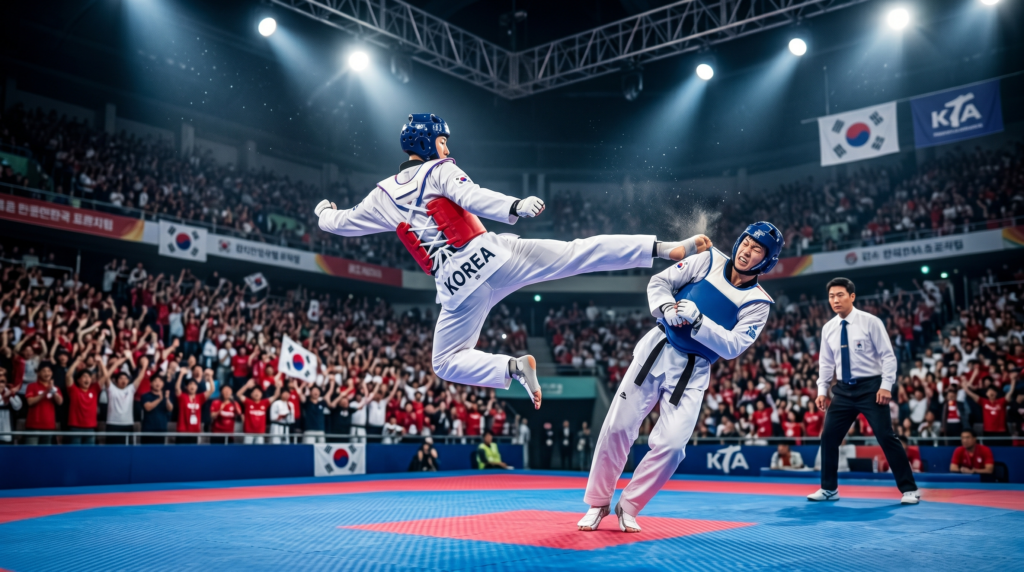
Of all the sports Korea has given the world, none carries more cultural and philosophical weight than taekwondo. This dynamic striking martial art — characterized by its emphasis on high, spinning kicks and rapid footwork — traces its roots to ancient Korean fighting traditions, particularly Taekkyon, a fluid kicking art depicted in Goguryeo Kingdom murals dating back over 1,500 years.
Modern taekwondo was systematized and formalized in the mid-20th century, with the Korea Taekwondo Association established in 1959 and the World Taekwondo Federation (now simply World Taekwondo) founded in 1973. Its inclusion as a demonstration sport at the 1988 Seoul Olympics and as a full medal sport at the 2000 Sydney Olympics cemented its status as a truly global martial art.
Today, taekwondo is practiced in over 210 countries by an estimated 80 to 100 million people, making it one of the most widely practiced martial arts on the planet. In Korea itself, it is taught in schools, practiced in neighborhood dojangs (training halls) by children and adults alike, and embedded in mandatory military training for Korean soldiers.
What distinguishes taekwondo from being simply a sport is the philosophical framework that underpins it. The five tenets of taekwondo — courtesy, integrity, perseverance, self-control, and indomitable spirit — are not merely decorative principles. They are actively taught alongside physical technique, shaping the character of practitioners in ways that extend far beyond the training hall. For many Koreans, taekwondo is not something you do — it is something you embody.
On the international stage, taekwondo functions as one of Korea’s most effective tools of cultural diplomacy. Taekwondo demonstration teams travel the world, performing extraordinary displays of athletic artistry that introduce global audiences to Korean culture in the most visceral, immediate way imaginable.
4. Esports (e스포츠) — Where Korea Leads the World
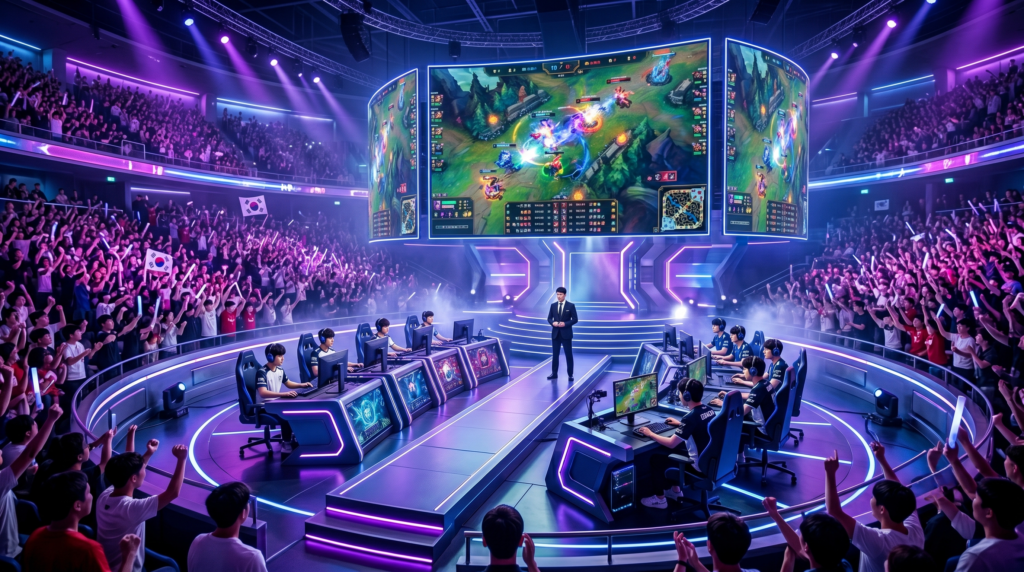
No conversation about the most popular sports in Korea is complete without esports — and Korea’s relationship with competitive gaming is unlike anything found elsewhere on earth.
The story begins in the late 1990s, when the South Korean government, responding to the economic devastation of the Asian financial crisis, invested in broadband internet infrastructure as part of a national recovery strategy. The result was the world’s fastest, cheapest internet — and an unexpected cultural phenomenon. PC bangs (인터넷 카페), internet cafes where Koreans could play online games for a small hourly fee, began appearing on every street corner. Blizzard Entertainment’s real-time strategy game StarCraft: Brood War became the game of choice, and an entire competitive ecosystem formed around it with breathtaking speed.
By the early 2000s, professional StarCraft players were household names in Korea. Their matches were broadcast on dedicated cable television channels — OGN and MBC Game — drawing millions of viewers. Players like Lim Yo-hwan (known as “SlayerS_BoxeR“) became genuine celebrities with fan clubs, endorsement deals, and devoted followings that rivaled K-pop stars.
Today, the landscape has evolved dramatically. League of Legends Champions Korea (LCK) is the premier esports league in the country, producing teams that have dominated international competition for over a decade. Korean players and coaches are so sought after globally that they are hired by teams across North America, Europe, and China to provide a competitive edge — a phenomenon sometimes called the “Korean export” of esports expertise.
The South Korean government officially recognizes esports as a legitimate sport. Professional esports players receive formal licensing, teams operate in purpose-built arenas, and the Korean Esports Association (KeSPA) governs the industry with the same institutional seriousness applied to traditional sports federations.
For younger Koreans especially, esports is not a niche hobby — it is mainstream sports culture, as natural and celebrated as cheering for a baseball team or watching the national football squad.
5. Basketball (농구, Nonggu) — Fast-Paced and Fan-Favorite
Basketball arrived in Korea in the early 20th century and has maintained a devoted following ever since. The Korean Basketball League (KBL), established in 1997, provides professional-level competition across ten teams and operates primarily during the winter months, when baseball and football are in the off-season — a scheduling arrangement that has helped basketball carve out a loyal seasonal audience.
Korean basketball has produced international talent capable of competing at the highest level. Ha Seung-jin made history in 2004 when he was selected in the first round of the NBA Draft by the Portland Trail Blazers, becoming one of the first Korean-born players to compete in the league and inspiring a generation of Korean basketball hopefuls.
The KBL experience itself offers fans something distinct from American basketball culture — games are fast-paced, fan sections are organized and vocal, and the league benefits from strong corporate sponsorship that keeps production values high. While basketball does not challenge baseball or football for top popularity honors in Korea, its passionate fanbase and strong viewership numbers make it an undeniable pillar of Korean sports culture.
6. Golf (골프, Golpeu) — A Surprising National Obsession

If you mention Korean golf to anyone who follows the sport internationally, the immediate response is almost always some version of quiet awe. South Korea’s dominance in professional golf — particularly women’s golf — is one of the most statistically remarkable phenomena in the history of the sport.
The catalyst was a single moment in 1998. Pak Se-ri, a 20-year-old Korean golfer competing in her first full season on the LPGA Tour, won the U.S. Women’s Open in a sudden-death playoff, becoming only the second player in history to win two major championships in the same rookie season. The timing was extraordinary — Korea was in the depths of the Asian financial crisis, and Pak’s victory arrived as a desperately needed source of national uplift.
The young Korean girls who watched Pak Se-ri win that championship became known as the “Pak Se-ri Kids,” and they went on to transform professional women’s golf. Players like Annika Sörenstam have acknowledged that the surge of Korean talent that followed Pak’s breakthrough fundamentally changed the competitive landscape of the LPGA Tour. At various points in the 2000s and 2010s, Korean players held the majority of the top rankings on the women’s tour simultaneously — a level of national dominance in a global individual sport with almost no parallel in sporting history.
Golf in Korea is also a fascinating cultural study beyond professional competition. In a society where business relationships are cultivated on the golf course, the sport carries significant aspirational and social status. The uniquely Korean innovation of screen golf — indoor golf simulators (스크린 골프) where players hit real balls into high-definition projected courses — has made the sport accessible in densely urban Korea, where land for golf courses is scarce and expensive. Screen golf cafes are now found throughout Korean cities, frequented by businesspeople and students alike.
7. Ssireum (씨름) — Korea’s Ancient Wrestling Tradition
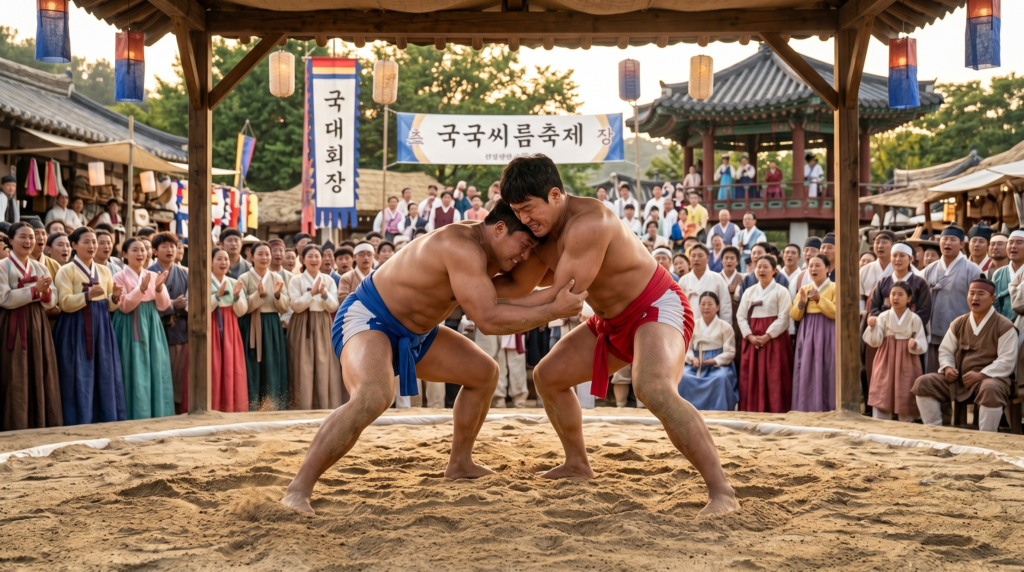
Long before baseball stadiums and esports arenas existed, Koreans gathered around a very different kind of competition. In open fields, at village festivals, and along riverbanks, men stepped into a circular ring of sand and tested their strength, technique, and will against one another in ssireum — Korea’s indigenous form of wrestling that dates back more than 1,500 years.
Archaeological evidence places ssireum firmly in Korea’s ancient past. Murals discovered in Goguryeo Kingdom tombs, painted between the 3rd and 7th centuries AD, depict two wrestlers locked in combat in postures immediately recognizable to anyone who has watched the modern sport. Ssireum appears in historical records across every major Korean dynasty — practiced at royal courts, celebrated at harvest festivals, and used as a method of physical conditioning for soldiers.
The rules of ssireum are elegantly simple. Two competitors crouch in a sand ring (모래판), each gripping a cloth belt (satba) tied around their opponent’s waist and thigh. The objective is equally simple: force any part of your opponent’s body above the knee to touch the ground. No strikes, no chokes — pure leverage, balance, and explosive power. Bouts are brief and decisive, which historically made ssireum perfect entertainment for festival crowds who could watch dozens of matches across an afternoon.
The champion of a traditional ssireum tournament earned the title of Cheonha Jangsa — meaning “the strongest person under heaven” — and was awarded a bull, the most valuable agricultural prize a farming society could bestow. This tradition of presenting a bull to the champion continues at major modern ssireum competitions, serving as a living thread connecting contemporary Korea to its agrarian past.
In 2018, UNESCO inscribed ssireum on its Representative List of the Intangible Cultural Heritage of Humanity — a recognition shared simultaneously by both South Korea and North Korea in a rare moment of joint cultural acknowledgment. The inscription reflects something genuine: ssireum is not merely a sport but a piece of shared Korean identity that transcends the peninsula’s political division.
Modern efforts to revive and sustain ssireum have met with mixed but earnest results. Television broadcasts of major competitions draw respectable viewership, particularly among older Koreans for whom ssireum carries powerful nostalgic associations with village life and national tradition. Younger Koreans are being reintroduced to ssireum through school programs and cultural festivals, and several municipalities have invested in dedicated ssireum training centers to ensure the tradition survives into the next generation.
Sports That Are Growing Fast in Korea
Volleyball — Riding a Wave of New Fans
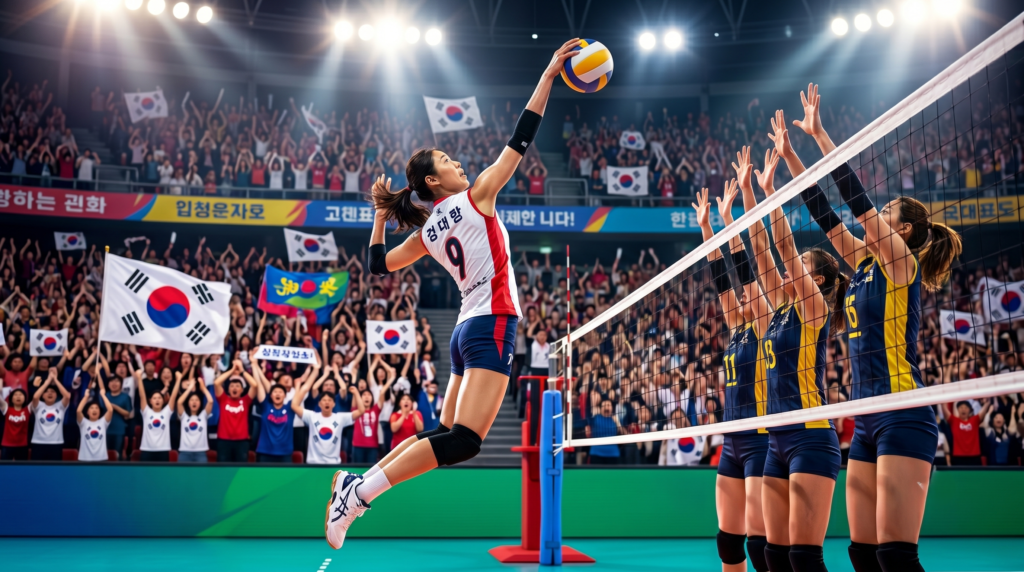
Korean volleyball has experienced a remarkable surge in popularity over the past two decades, driven largely by the emergence of elite players who captured national attention and transformed the sport’s public profile.
The V-League — Korea’s professional volleyball competition, comprising both men’s and women’s divisions — has seen steadily growing television ratings and arena attendance. The women’s division in particular has become appointment viewing for millions of Korean sports fans, a development attributable in significant part to Kim Yeon-koung, widely regarded as one of the greatest female volleyball players in history.
Kim’s career arc is the kind of story Korean sports culture celebrates most deeply. Rising through Korea’s intensely competitive youth volleyball system, she became the undisputed face of the national team and went on to play professionally in Turkey, Japan, China, and the United States, earning recognition as the best player in the world at the peak of her powers. Her performances at multiple Olympic Games — particularly the 2012 London Olympics, where Korea reached the semi-finals — galvanized Korean public interest in volleyball in a way that sustained the sport’s growth long after individual tournaments concluded.
Korean volleyball culture also benefits from its complementary scheduling alongside basketball in the winter months, giving indoor sports fans a rich calendar of live sporting events during the colder half of the year. As younger Korean athletes continue to develop through elite training academies and university programs, volleyball’s trajectory in the country remains strongly upward.
Archery — Korea’s Olympic Superpower
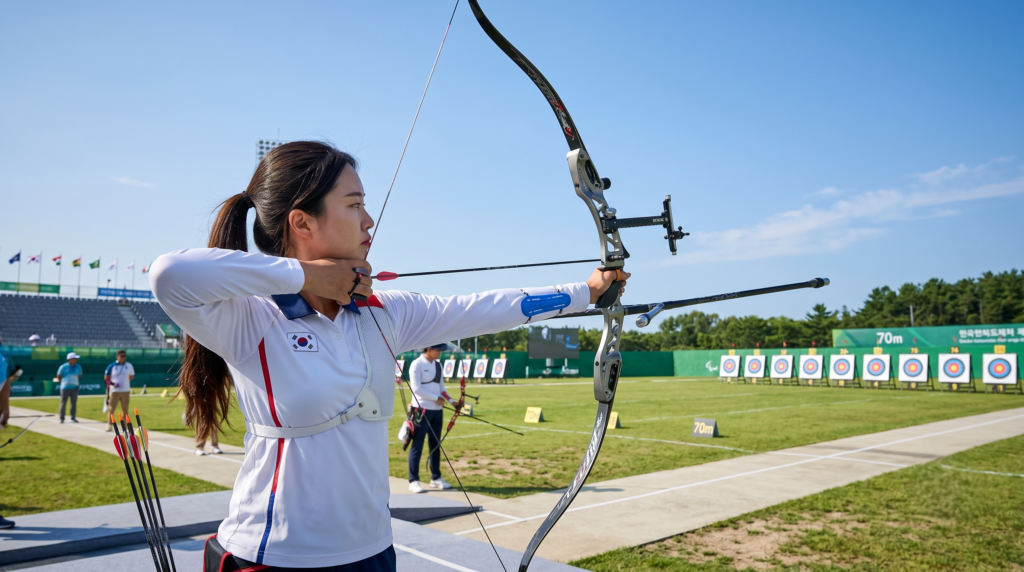
If Korea’s dominance in women’s golf is remarkable, its performance in Olympic archery is simply without precedent in the history of the modern Games.
Since South Korean archer Seo Hyang-soon won the country’s first Olympic gold medal in the sport at the 1984 Los Angeles Olympics, Korea has accumulated a staggering Olympic archery record. The Korean women’s team has won the Olympic team gold medal at every single Summer Games since the team competition was introduced in 1988 — an unbroken streak of excellence spanning four decades and representing one of the longest sustained dynasties in Olympic sports history. Korean archers have also won the vast majority of individual gold medals in the sport, with names like Kim Soo-nyung, Park Sung-hyun, and An San becoming legends of the Olympic movement.
This dominance is not accidental. It reflects a training methodology that Korean archery coaches have developed and refined over decades — an approach so effective that Korean archery technique and coaching philosophy have been adopted by national programs around the world, even by countries competing directly against Korea for medals.
Archery in Korea also carries historical and cultural depth. Traditional Korean archery, known as Gungdo (국궁), is practiced with a distinctively curved horn bow and involves a meditative, ceremonial dimension that differs significantly from the sport archery seen at the Olympics. Gungdo clubs operate throughout Korea, offering practitioners a form of discipline and mindfulness rooted in the Confucian values of patience, precision, and self-cultivation. The coexistence of ancient Gungdo and world-beating Olympic archery within the same culture illustrates the broader duality that defines Korean sports — simultaneously honoring its past while dominating its present.
Swimming and Track — Emerging Olympic Ambitions
Korea’s Olympic history has been built primarily on martial arts, archery, and team sports, but individual aquatic and athletic disciplines have begun producing moments of transcendent achievement that signal growing ambitions on the Olympic stage.
The defining figure in Korean swimming history is Park Tae-hwan, who announced himself to the world at the 2008 Beijing Olympics by winning gold in the 400-meter freestyle — Korea’s first-ever Olympic swimming gold medal — and adding a silver in the 200-meter freestyle. Park’s victories triggered a nationwide investment in competitive swimming, with aquatic centers built or upgraded across the country and youth development programs expanding significantly.
While Korean athletics in track and field events is still developing relative to traditional powerhouses, the infrastructure investment of recent decades is beginning to yield results across multiple disciplines. The combination of government funding, corporate sponsorship, and the fiercely competitive spirit that defines Korean athletic culture suggests that Korea’s presence in individual Olympic events will only grow stronger in the years ahead.
Korean Sports Culture — What Makes It Unique?
The Fan Experience — More Than Just Watching a Game
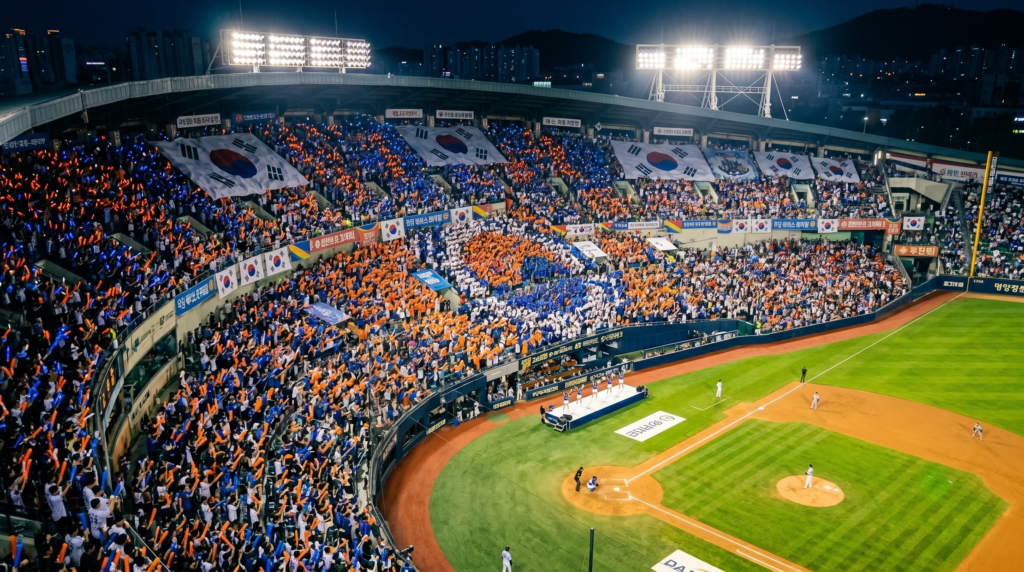
Attend a sporting event almost anywhere in the world and you will encounter fans cheering, booing, and celebrating. Attend a sporting event in Korea and you will encounter something qualitatively different — a form of collective participation that blurs the line between audience and performance.
Korean sports fan culture, most fully developed in baseball but present across multiple sports, is characterized by extraordinary levels of organization and coordination. Korean fan sections do not simply cheer spontaneously — they rehearse. Each baseball team has a designated cheer section leader, and fans arrive knowing the team songs, the player-specific chants, and the choreographed responses to different game situations. The result is a stadium experience of remarkable theatrical power, where tens of thousands of people function as a single, synchronized entity.
The physical props of Korean sports fandom are equally distinctive. Thundersticks — inflatable plastic bats that fans bang together to create a wall of percussive sound — were invented in Korea and have since spread to sporting events worldwide. Light sticks, team scarves, and elaborate coordinated costume themes for special games add layers of visual spectacle that transform Korean stadiums into something approaching a live concert production.
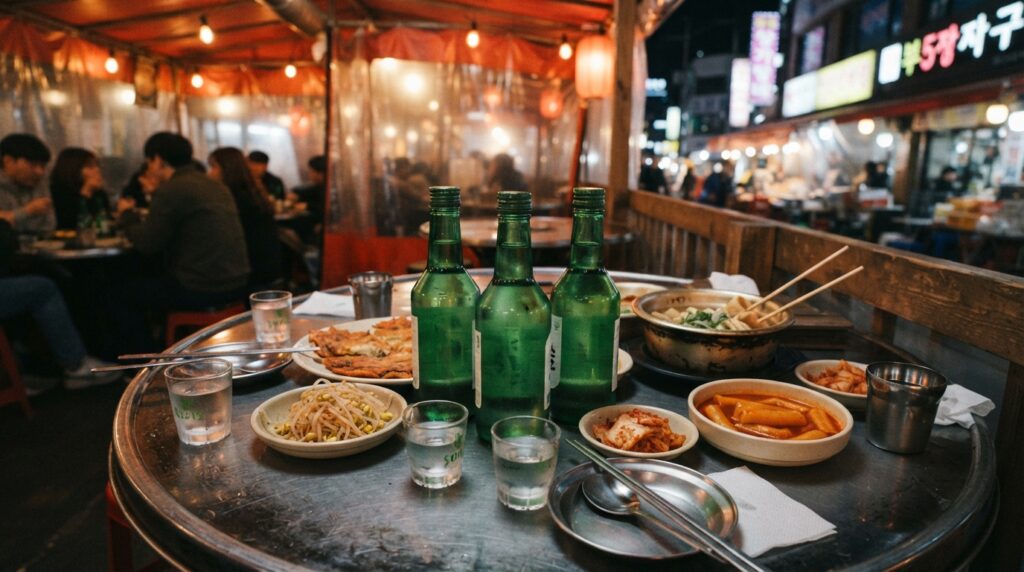
Food culture is inseparable from the Korean sports experience. The beloved combination of chimaek — fried chicken (치킨) and cold beer (맥주) — is the quintessential Korean sports viewing food, consumed equally in stadium seats and at home in front of a television. Convenience stores near stadiums do brisk business in kimbap, tteokbokki, and other Korean snacks that have become as associated with sports viewing as hot dogs are with American baseball.
Sports and Korean Identity
In Korea, sporting achievement on the international stage is experienced as a collective event in a way that is difficult to convey to those who have not witnessed it firsthand. When a Korean athlete wins an Olympic gold medal, when the national football team advances in the World Cup, when a Korean player wins a major golf championship — the reaction is not merely enthusiastic. It is cathartic, national, and profound.
This intensity reflects history. A country that spent much of the 20th century fighting for survival and recognition finds in international athletic success a form of validation that resonates at a deep cultural level. Every Son Heung-min goal in the Premier League, every Korean archery gold at the Olympics, every KBO player making an impact in Major League Baseball carries a symbolic freight that extends far beyond the sports pages.
Social media has amplified this phenomenon dramatically. Korean fans are among the most active and organized sports communities on platforms like X (formerly Twitter), Instagram, and KakaoTalk, mobilizing rapidly to celebrate victories, support athletes under pressure, and project Korean sports culture to global audiences. The global spread of K-pop and K-drama has created a large international audience already sympathetic to Korean culture, and Korean sports increasingly benefits from that goodwill — drawing international fans who arrive through K-drama and stay for the baseball.
Sports in K-Dramas and Pop Culture
Korea’s pop culture output has long recognized the dramatic potential of the country’s sports culture. Sports-themed K-dramas have explored the pressures, sacrifices, and triumphs of athletic life with the same emotional intelligence that Korean television brings to every genre.
Hot Stove League (2019–2020) offered a brilliantly crafted behind-the-scenes look at the management of a fictional Korean baseball team, earning some of the highest ratings of its broadcast season by appealing equally to baseball fans and viewers with no prior interest in the sport. Dream (2023) brought the world of homeless World Cup football to Korean screens with a mix of comedy and genuine emotional depth. Volleyball, martial arts, and even esports have received the K-drama treatment, reflecting a pop culture that pays close, affectionate attention to its own sporting life.
This cross-pollination between Korean sports and Korean pop culture creates a virtuous cycle — K-drama fans discover Korean sports through the stories told about them, while sports fans find their passions reflected and celebrated on screen. For international audiences approaching Korean culture through the gateway of K-drama, these sports narratives offer a natural and compelling bridge to deeper cultural understanding.
Frequently Asked Questions
What is the most popular sport in Korea? Baseball is widely regarded as the most popular spectator sport in South Korea. The KBO League draws millions of fans to stadiums each season, and baseball culture — from fan chants to stadium food — is deeply embedded in everyday Korean life. Football runs a close second in terms of national passion, particularly when the national team competes internationally.
Is football popular in South Korea? Very much so. Football has a massive and passionate following in Korea, fueled by the historic 2002 FIFA World Cup semi-final run, decades of strong national team performances, and the global success of players like Son Heung-min and Lee Kang-in. The K League provides domestic professional competition, while millions of Korean fans also follow European leagues closely.
Is taekwondo the national sport of Korea? Yes. Taekwondo is officially designated as the national sport of South Korea. It has been a full Olympic medal sport since the 2000 Sydney Games and is practiced by an estimated 80 to 100 million people across more than 210 countries, making it one of the most globally widespread martial arts in existence.
Why is Korea so dominant in esports? Korea’s esports dominance traces back to a unique combination of factors: government investment in broadband infrastructure in the late 1990s, the explosive popularity of StarCraft in PC bangs, a fiercely competitive training culture, and institutional support through official government recognition of esports as a legitimate sport. This foundation, built over more than two decades, has produced a depth of talent and expertise in competitive gaming that no other country has yet replicated.
What traditional sports are still practiced in Korea? Ssireum (traditional Korean wrestling) and Gungdo (traditional Korean archery) are both actively practiced and culturally celebrated. Ssireum received UNESCO Intangible Cultural Heritage recognition in 2018, while Gungdo is practiced in clubs throughout Korea as a meditative and historically rooted discipline. Both represent important living connections to Korea’s pre-modern cultural heritage.
Is golf really popular in Korea? Exceptionally so. Golf is deeply embedded in Korean business and social culture, and South Korea produces a disproportionately high number of world-class professional golfers — particularly in women’s golf, where Korean players have dominated the global LPGA Tour for decades. The innovation of screen golf (indoor simulator cafes) has also made the sport widely accessible in Korea’s densely urban environment.
How does Korean fan culture differ from other countries? Korean sports fan culture is distinguished by its extraordinary level of organization and collective coordination. Fans rehearse team chants and choreographed routines, arrive with coordinated props, and participate in a stadium experience that functions more like a theatrical performance than a typical sports crowd. This culture is most fully developed in baseball but is present across multiple Korean sports.
From the ancient sand rings where ssireum wrestlers have competed for fifteen centuries to the glowing arenas where Korean esports athletes are celebrated as national heroes, the most popular sports in Korea form a tapestry that is as culturally rich and historically layered as any aspect of Korean society.
What unites every sport on this list — baseball and football, taekwondo and golf, archery and volleyball, traditional wrestling and digital competition — is the intensity of Korean engagement with them. Korea does not do sports casually. It does them with the full force of a culture that has learned, through hard historical experience, that excellence is earned through discipline, collective effort, and an indomitable refusal to accept limitations.
For anyone seeking to understand Korea more deeply, sports offer one of the most direct and joyful entry points available. Watch a KBO game in Jamsil on a summer evening. Visit a taekwondo dojang in a Seoul neighborhood. Follow the Korean national team through a World Cup qualifying campaign. Step inside an esports arena on tournament night. In each of these experiences, you will find something that no guidebook fully captures — the living, breathing spirit of a remarkable culture that brings its whole heart to everything it does.
Which Korean sport would you most want to experience in person? Whether your answer is the theatrical pageantry of Korean baseball, the timeless discipline of taekwondo, or the electric atmosphere of a live esports final, Korea has a seat waiting for you — and the fans around you will make sure you never feel like a stranger.
Enjoyed this guide to Korean sports culture? Explore more of our articles on Korean traditions, K-drama recommendations, and travel guides to discover everything this extraordinary culture has to offer.