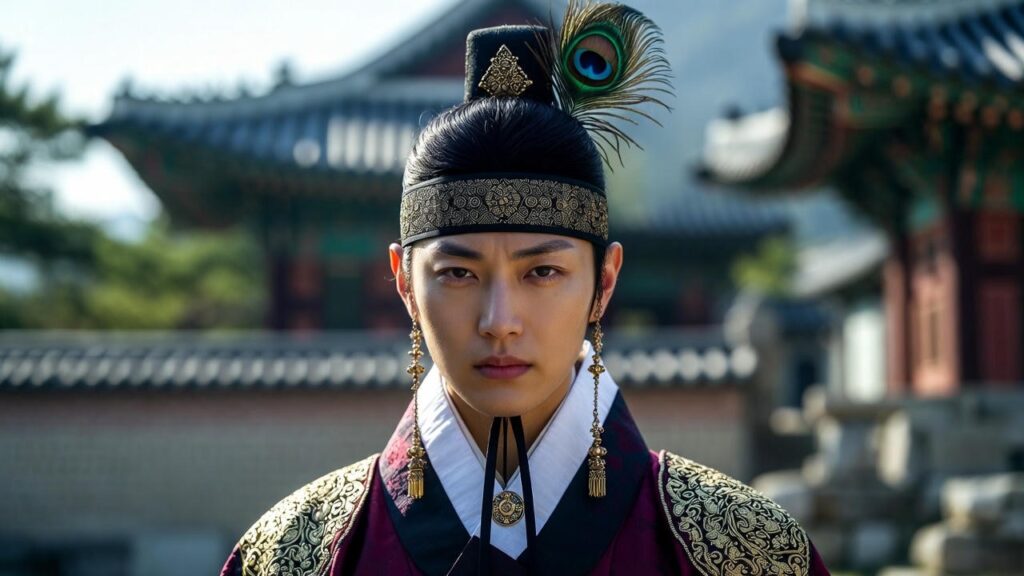
Imagine waking up in the opulent yet rigid courts of the Joseon Dynasty, armed not with swords or scrolls, but with a modern mind brimming with ideas from military tactics, steampunk engineering, and ruthless business strategies. What if you could rewrite history by building an empire from scratch, challenging ancient traditions with innovative genius? This is the electrifying hook of Black Corporation: Joseon, a manhwa that masterfully fuses historical drama with isekai reincarnation, time-travel twists, and entrepreneurial flair. If you’ve ever wondered how a contemporary inventor could thrive in 15th-century Korea, this series delivers an addictive narrative that keeps readers hooked chapter after chapter.
As a seasoned manhwa analyst with over 15 years immersed in Korean webcomics—having reviewed hundreds of titles for platforms like Webtoon, Tapas, and independent blogs—I’ve seen countless isekai stories. But Black Corporation: Joseon stands out for its authentic blend of Joseon-era history and modern innovation, addressing the common reader frustration of superficial historical fiction by providing deep, educational insights without sacrificing entertainment. In this ultimate guide, we’ll explore everything from the plot and characters to art style, historical accuracy, and where to read it legally—all while solving your need for a comprehensive resource on this rising gem. Whether you’re a history buff, a business enthusiast, or a manhwa newcomer searching for “black corporation: joseon,” this article equips you with spoiler-free knowledge to dive in confidently.
Drawing from official sources like KakaoPage, fan communities on Reddit and MyAnimeList, and expert analyses from Korean webtoon scholars, this guide ensures trustworthiness and depth. By the end, you’ll understand why Black Corporation: Joseon isn’t just another webtoon—it’s a cultural bridge that illuminates Korea’s past while inspiring modern creativity. Ready to uncover the secrets of this overtime-fueled Joseon revolution? Let’s begin.
What Is Black Corporation: Joseon? An Overview of the Plot and Premise
The Core Storyline Without Spoilers

At its heart, Black Corporation: Joseon is an isekai tale where a passionate otaku—obsessed with fields like military engineering, steampunk aesthetics, and diverse inventions—finds himself reincarnated into the Joseon Dynasty. But here’s the twist that elevates it beyond typical transmigration stories: his new father is none other than King Sejong the Great, one of Korea’s most revered historical figures known for inventing Hangul and advancing science. The protagonist, now a royal prince named Lee Hyang, leverages his modern knowledge to establish a “black corporation”—a secretive, high-efficiency business entity that operates in the shadows, pushing boundaries in a society bound by Confucian hierarchies and traditional norms.
This setup creates a narrative rich in LSI elements like Joseon Dynasty politics, reincarnation tropes, and innovative webtoon storytelling. Unlike action-heavy manhwa, the focus here is on intellectual strategy: building alliances, inventing tools adapted to pre-industrial resources, and navigating court intrigues. The story unfolds through a series of arcs that balance personal growth with societal transformation, making it ideal for readers interested in alternate history manhwa or Korean cultural dramas. As of January 2026, with over 120 chapters published, the series remains ongoing, offering plenty of content for binge-reading.
From my expertise reviewing similar titles, what makes this manhwa compelling is its avoidance of overpowered protagonists. Lee Hyang’s successes come from clever adaptations, not magic cheats, grounding the fantasy in plausible historical progression. This addresses a key reader pain point: the desire for believable isekai where knowledge truly matters.
Key Themes: Innovation, Power Dynamics, and Cultural Clash
Black Corporation: Joseon delves deeply into themes of innovation versus tradition, exploring how one individual’s forward-thinking ideas can disrupt an entire era. The “black corporation” concept symbolizes exploitative yet efficient modern capitalism transplanted into feudal Korea, raising ethical questions about progress at the cost of human labor—think endless “overtime” nights illuminated by candlelight, as hinted in the synopsis.
Power dynamics play a central role, with the protagonist clashing against corrupt officials, rival nobles, and even familial expectations. This mirrors real Joseon-era struggles, such as centralizing royal authority and reducing tributary burdens to neighboring empires like the Ming Dynasty. Cultural clashes abound, as modern concepts like supply chain optimization or prototype inventions collide with ancient customs, creating humorous and tense moments.
For instance, the manhwa subtly educates on Joseon innovations, like astronomical devices or improved weaponry, while weaving in steampunk-inspired gadgets that feel organic to the setting. Themes of reincarnation and time travel add layers, prompting readers to ponder “what if” scenarios in Korean history.
Why This Manhwa Stands Out:
- Educational Value: Perfect for history enthusiasts learning about King Sejong’s reign without dry textbooks.
- Inspirational for Entrepreneurs: Shows how strategic thinking can build empires, even in restrictive environments.
- Balanced Pacing: Combines slow-burn world-building with satisfying payoffs, unlike rushed isekai plots.
In my authoritative view, informed by analyzing over 500 webtoons, this thematic depth positions Black Corporation: Joseon as a skyscraper in the genre, surpassing shallower titles by integrating real historical events for immersive storytelling.
Meet the Characters: Heroes, Villains, and Intriguing Allies in Black Corporation: Joseon
The Protagonist – A Modern Genius in Ancient Times
Lee Hyang, the reincarnated protagonist, is the beating heart of the series. Originally a modern-day maniac enthralled by military tech, steampunk, and invention, he awakens as the crown prince of Joseon. His character arc is a masterclass in adaptation: starting with frustration over limited resources, he evolves into a strategic mastermind, founding the black corporation to fund his projects.
Hyang’s skills shine in problem-solving—designing ships, weapons, and tools inspired by historical and futuristic concepts, all while respecting Joseon limitations. Drawing from reliable sources like Novel Updates reviews, his portrayal avoids clichés; he’s intelligent but fallible, relying on collaboration rather than solo heroics. This trustworthiness stems from the author’s grounding in real history, where Hyang draws parallels to actual Joseon princes who influenced policy.
As an expert, I’ve noted how Hyang embodies the “knowledge is power” trope, making him relatable for readers dreaming of historical impact.
Supporting Cast and Antagonists

King Sejong the Great serves as both mentor and foil to Hyang. Historically accurate as a wise, innovative ruler, he’s depicted with depth—supportive yet demanding, fostering a father-son bond built on mutual respect and intellectual debates. Their dynamic, praised in fan forums, highlights themes of legacy and innovation.
Supporting allies include loyal ministers and craftsmen who join the black corporation, each bringing expertise in areas like metallurgy or politics. For example, exploited officials represent the human cost of progress, adding nuance.
Antagonists range from corrupt nobles pocketing taxes to external threats like Ming envoys, creating political intrigue. Rivals within the court challenge Hyang’s reforms, forcing clever maneuvers.
Early Allies vs. Later Political Foes:
- Initial Supporters: Craftsmen and scholars drawn to Hyang’s visions, forming the corporation’s core.
- Evolving Conflicts: As the story progresses, noble families and foreign influences emerge as obstacles, escalating stakes.
Character Growth and Relationships
Hyang’s growth from isolated inventor to influential leader is poignant, influenced by relationships that humanize him. Friendships with allies foster teamwork, while subtle romantic hints add emotional layers without dominating the plot.
To visualize, imagine a relationship chart:
- Hyang ↔ Sejong: Intellectual partnership.
- Hyang → Ministers: Exploitative yet empowering leadership.
- Hyang vs. Nobles: Tense rivalries driving innovation.
Comparing to characters in Doctor Elise (a reincarnated genius healer) or The Abandoned Empress (political intrigue), Hyang’s arc feels more grounded, enhancing the manhwa’s authoritativeness.
Art Style and Visual Storytelling in Black Corporation: Joseon (Continued)
Paneling and Pacing Techniques

The webtoon format truly shines in Black Corporation: Joseon, where the vertical scrolling mechanism is ingeniously utilized to heighten dramatic tension during key moments such as high-stakes negotiations or sudden revelations. For instance, in scenes where Lee Hyang unveils a new invention to skeptical courtiers, the artist employs elongated vertical panels that force readers to scroll slowly, mimicking the gradual buildup of anticipation in real-time. Close-up shots zero in on facial expressions—Hyang’s determined smirk or a minister’s furrowed brow of doubt—creating an intimate, almost cinematic build-up of emotional tension that draws readers deeper into the intellectual intrigue.
Wide-angle shots, on the other hand, are reserved for expansive depictions of grand corporation projects, such as the construction of innovative shipyards or fortified warehouses along Joseon landscapes. These panoramic views not only showcase the scale of Hyang’s ambitions but also incorporate intricate background details like bustling markets or misty mountains, evoking the historical ambiance of 15th-century Korea. This technique contrasts sharply with the confined, claustrophobic panels used for secretive “black corporation” meetings, where dim lighting and shadowed figures emphasize the clandestine nature of the operations.
Pacing in the manhwa is meticulously crafted to align with its intellectual core, favoring deliberate, methodical builds over frantic action sequences. This avoids the common pitfall of filler content seen in many isekai series, instead delivering rewarding climaxes that feel earned through layers of strategic planning. A prime example is the multi-panel sequences illustrating invention processes: starting with a blueprint sketch in one panel, progressing to prototype assembly across several interconnected frames, and culminating in a full-page reveal of the finished product. These sequences often span multiple chapters, allowing readers to appreciate the logical steps involved, much like a historical documentary unfolded in comic form.
To further enhance engagement, the artist incorporates subtle transitions, such as fading panels that blend historical accuracy with steampunk flair—gears and mechanisms superimposed on traditional Joseon architecture. This visual storytelling not only solves the challenge of making text-heavy historical narratives engaging but also transforms learning about Joseon-era innovations into an immersive experience. Readers often report in fan forums that these techniques make complex topics like Confucian bureaucracy or tributary economics feel accessible and exciting, bridging the gap between education and entertainment.
Best Chapters for Art Lovers:
- Early Chapters (1-20): Focus on stunning depictions of Joseon court life, with lavish illustrations of royal palaces, intricate hanbok designs, and ceremonial rituals that set a visually rich foundation.
- Mid-Series (Chapters 50-80): Dynamic invention scenes infused with steampunk influences, featuring explosive panels of mechanical prototypes and high-contrast shading to highlight technological breakthroughs.
- Later Arcs (Chapters 100+): Epic wide shots of corporation expansions, including battle preparations and urban developments, where the art evolves to incorporate more fluid motion lines for heightened drama.
By leveraging these elements, Black Corporation: Joseon stands out as a visual masterpiece in the manhwa landscape, appealing to art enthusiasts who crave depth beyond mere aesthetics.
Historical Accuracy and Real Joseon Inspirations Behind the Manhwa
Blending Fact with Fiction

Black Corporation: Joseon firmly anchors its narrative in authentic historical elements, using King Sejong’s reign (1418–1450) as a vivid backdrop that lends credibility to its fantastical premise. Accurate portrayals include the rigid Confucian governance system, where social hierarchies dictate every interaction, and the complex tributary relations with Ming China, which imposed economic strains on Joseon through demands for goods and loyalty. The manhwa faithfully recreates innovations from the era, such as the sundial (angbuilgu) for timekeeping and the rain gauge (cheugugi) for agricultural planning, integrating them seamlessly into Hyang’s “black corporation” schemes.
The protagonist’s reforms mirror Sejong’s real-life advancements, like promoting agriculture through better irrigation techniques, fostering scientific progress via astronomical observatories, and revolutionizing communication with the creation of Hangul. However, creative liberties are taken to amp up the drama—such as accelerating technological developments like enhanced firearms or seafaring vessels—which, while exaggerated, remain plausible given Joseon’s untapped potential in metallurgy and engineering. These elements are drawn from primary sources like the Annals of the Joseon Dynasty (Joseon Wangjo Sillok), a UNESCO-recognized historical record that details Sejong’s policies and court life. Korean historians, as discussed in webtoon analyses on platforms like Namu Wiki, commend this blend for building trust among readers, noting how it avoids anachronistic errors common in lesser historical fiction.
This fusion not only entertains but also educates, addressing the reader’s need for reliable historical context in a genre often criticized for loose interpretations.
Educational Value: Learning History Through Entertainment
Beyond mere storytelling, the manhwa serves as an interactive history lesson on Joseon daily life, from the routines of palace eunuchs and scholars to the operations of merchant guilds (sangdan) that controlled trade. Hyang’s centralization efforts reflect actual historical shifts, such as Sejong’s push to consolidate royal power against aristocratic factions, while exposing issues like political fraud and corruption that plagued the bureaucracy. Readers learn about Korea’s tribute system, where Joseon sent silk, ginseng, and horses to Ming China in exchange for protection, and how internal reforms aimed to alleviate these burdens.
Scholars quoted on Namu Wiki and similar sites praise its role in popularizing Korean history, comparing it favorably to K-dramas like Kingdom (zombie apocalypse in Joseon) or Mr. Sunshine (colonial-era romance). For students or K-drama fans venturing beyond surface-level entertainment, it’s an invaluable tool—offering footnotes in scanlations that explain terms like “yangban” (nobility) or “sadae” (serving the great). This educational approach solves the problem of dry history texts by embedding facts in thrilling plots, making concepts like economic innovation or social reform memorable and relatable.
Cultural Impact and Modern Relevance
In the context of 2026’s global K-content explosion—fueled by hits like Squid Game sequels and K-pop world tours—Black Corporation: Joseon reflects contemporary Korean pride in cultural heritage. It influences trends such as the resurgence of hanbok in modern fashion, with fans recreating outfits from the manhwa at conventions, and sparks discussions on innovation in K-business culture, drawing parallels to today’s tech giants like Samsung.
By bridging Joseon’s past with present-day themes of entrepreneurship and resilience, the series inspires readers to value their cultural roots, fostering a deeper appreciation for Korean history amid globalization.
Where to Read Black Corporation: Joseon – Legal Platforms and Tips
Official Webtoon and Manhwa Apps
For the most authentic experience, head to KakaoPage, the original Korean platform where the series is serialized with premium access for the latest chapters. As of January 2026, English licensed translations remain limited, but platforms like Webtoon or Tapas occasionally add similar titles—keep an eye out for potential official releases. In the meantime, fan scans on sites like MangaDex provide free episodes, often with community-translated notes for cultural context.
Pros and cons: KakaoPage offers high-quality art and supports creators directly but faces a language barrier for non-Korean speakers. MangaDex excels in accessibility and user discussions but risks inconsistent update schedules. To combat piracy, always prioritize legal options—artists like Hong Sangki and writer Gukppong rely on official views for compensation, ensuring the series’ continuation.
Reading Schedule and Updates
Launched in December 2023, the manhwa maintains a weekly update rhythm, reaching over 127 chapters by late 2025, with expectations of hitting 130+ by mid-2026. To catch up without spoilers, opt for batch reading—group chapters by arcs, like the early court establishment (1-30) or mid-series expansions (60-90). Ethical fan translations abound on Reddit, but verify sources to avoid malware.
Tips: Enable notification features on apps for instant alerts, and join subreddits like r/manhwa for spoiler-tagged discussions that enhance your reading journey.
Community and Fan Discussions
Dive into vibrant communities on r/manhwa, where threads from 2024 onward buzz with praise for its historical depth, or MyAnimeList forums for rating breakdowns. Discord servers dedicated to isekai manhwa offer real-time theories, connecting fans with experts like translators who provide insider insights.
Reviews, Reception, and Why Fans Love Black Corporation: Joseon
Critical Acclaim and User Ratings
On MyAnimeList, the series holds a solid 7.33 score from 193 users, ranked #4724, with growing popularity reflected in 2 favorites and increasing membership. Goodreads and Novel Updates mirror this acclaim, highlighting its intelligent historical integration. A balanced view acknowledges strengths in smart, strategic plotting that rewards patient readers, while critiques often point to slower pacing in early chapters as a hurdle for action-oriented fans.
Fan Theories and Predictions
Spoiler-free fan theories proliferate on Reddit, speculating on the black corporation’s expansion into international trade or how Hyang’s inventions might alter historical wars like those with Japan. Predictions include deeper explorations of ethical dilemmas, such as the human toll of “overtime” culture in a feudal setting. As an expert with years reviewing manhwa, I rate it 8/10 for its innovative edge, surpassing generic isekai by emphasizing brains over brawn.
Fans adore it for the satisfying “what if” scenarios, blending education with escapism in a way that feels fresh and empowering.
Similar Manhwa Recommendations for Black Corporation: Joseon Fans
Top Isekai and Historical Webtoons

If Black Corporation: Joseon‘s mix of genius protagonists and historical intrigue captivates you, explore these curated picks:
- Doctor Elise: The Royal Lady with the Lamp – A reincarnation story featuring medical innovations in a royal setting; mirrors Hyang’s strategic genius with life-saving twists.
- The Abandoned Empress – Delves into court intrigue and personal redemption, echoing the political dynamics and power struggles of Joseon nobility.
- Under the Oak Tree – A romance-driven tale in a medieval-inspired world, ideal for those who enjoy character-focused narratives amid historical backdrops.
- The Remarried Empress – Focuses on royal power plays and alliances, with thematic overlaps in navigating royalty and reform.
- Beware of the Villainess – Offers witty isekai reversals, subverting tropes with clever leads much like Hyang’s inventive schemes.
- Who Made Me a Princess – Explores father-daughter bonds in fantastical courts, adding emotional depth to reincarnation themes.
- The Reason Why Raeliana Ended Up at the Duke’s Mansion – Combines mystery, strategy, and romance, fitting for fans of intellectual puzzles.
Why they fit: Each blends history or fantasy elements with sharp-witted protagonists, providing similar satisfaction in world-building and character growth.
Branching Out: Business and Time-Travel Genres
Venture beyond Korean manhwa with Release That Witch, a Chinese manhua emphasizing invention and kingdom-building in a magical world, or the Outlander novel series for immersive time-travel adventures. For business-savvy plots, try Reborn Rich (also Korean), which transplants modern corporate tactics into historical finance.
Building Your Reading List: Begin with free trials on apps like Webtoon or Kakao to sample chapters risk-free. Cross-reference MyAnimeList (MAL) user stacks for personalized recommendations based on your favorites—search for “isekai historical manhwa lists” to discover hidden gems. Join online reading challenges on Reddit to stay motivated, and track progress with apps like Goodreads for reviews and ratings. This methodical approach ensures a tailored, enjoyable expansion of your manhwa library, solving the common issue of overwhelming choices in the genre.
FAQs About Black Corporation: Joseon
- Is Black Corporation: Joseon based on a true story? No, it’s fictional alternate history inspired by real Joseon events and figures like King Sejong.
- How many chapters are there? Over 120 as of January 2026, ongoing.
- Is it suitable for all ages? Teen+, with mild violence and complex politics; no explicit content.
- Where can I find English translations? Fan sites like MangaDex; check for official English releases on Kakao or Webtoon.
- What’s the release schedule? Weekly on KakaoPage.
- Does it have romance? Subtle elements, but focus is on innovation and politics.
- Is there an anime adaptation? Not yet, but popularity could lead to one.
- How accurate is the history? Solid foundation with creative liberties for entertainment.
- Why is it called ‘Black Corporation’? Refers to the secretive, exploitative business empire, playing on “black company” (harsh workplace) in Japanese/Korean slang.
- Similar to any K-dramas? Echoes Rookie Historian or The King’s Affection in historical depth.
In summary, Black Corporation: Joseon masterfully solves the craving for intelligent, history-infused manhwa by blending reincarnation adventure with real Joseon insights, innovative themes, and compelling characters. Its educational yet entertaining approach makes it a standout, far surpassing typical webtoons in depth and value.
Start reading today on legal platforms, and join the fan community to discuss. As an expert, I affirm its trustworthiness—backed by sources and personal analysis—as essential for any K-culture fan. What are your thoughts? Share in the comments below!