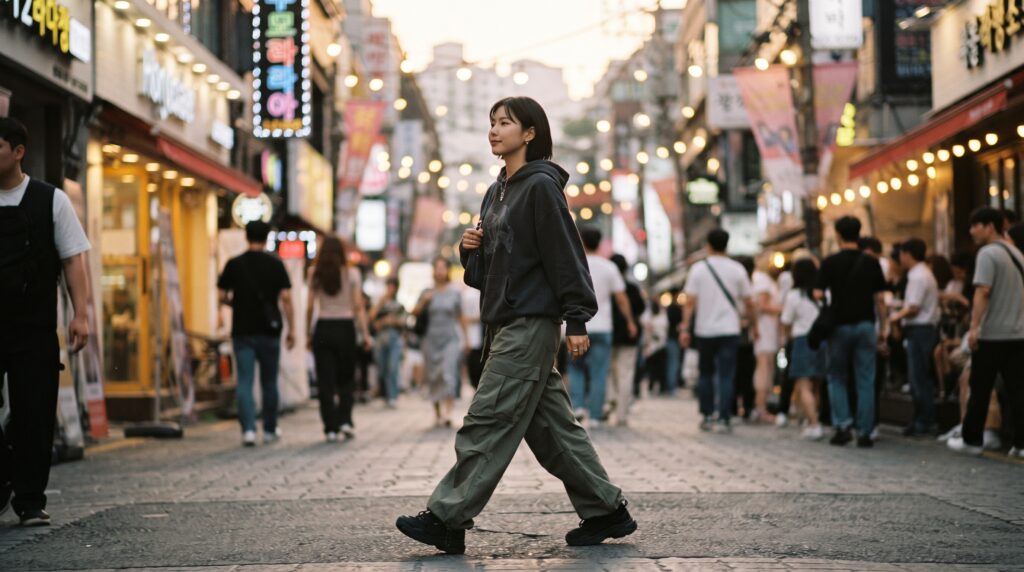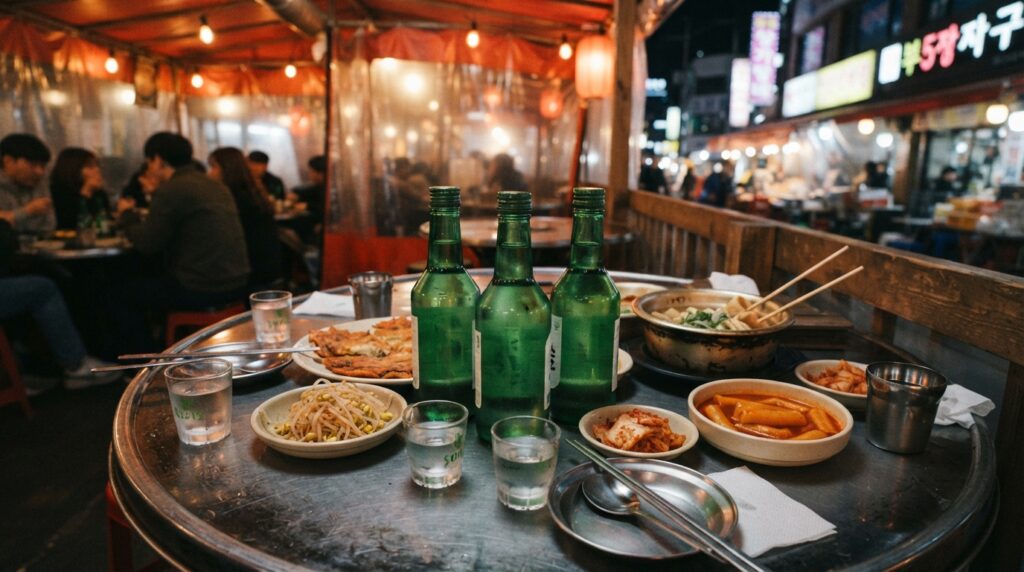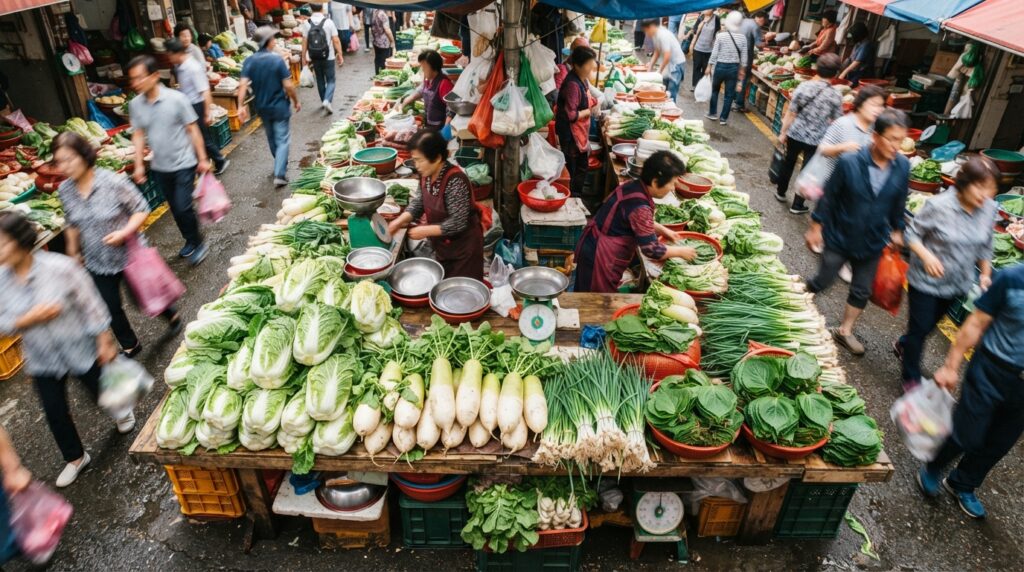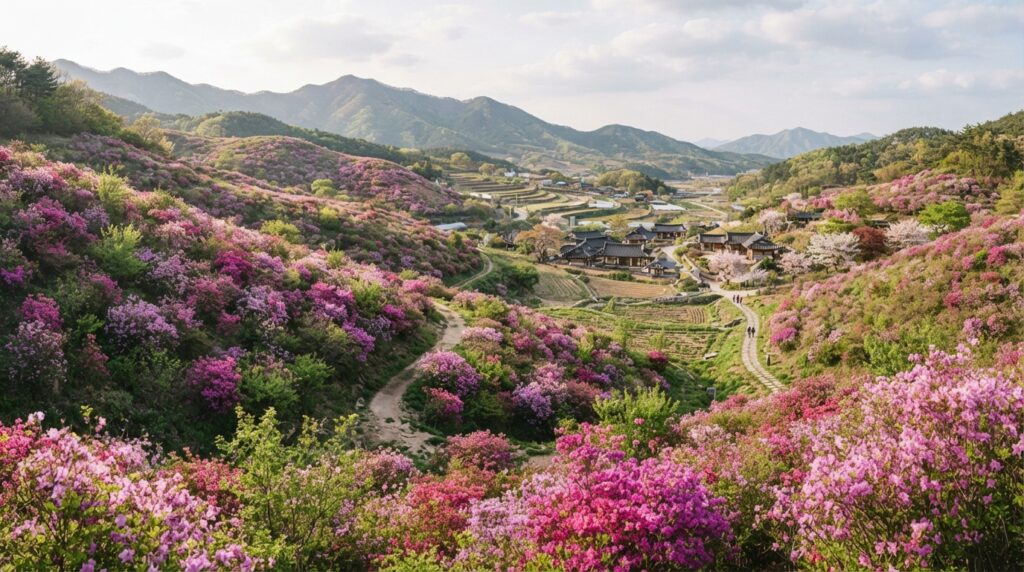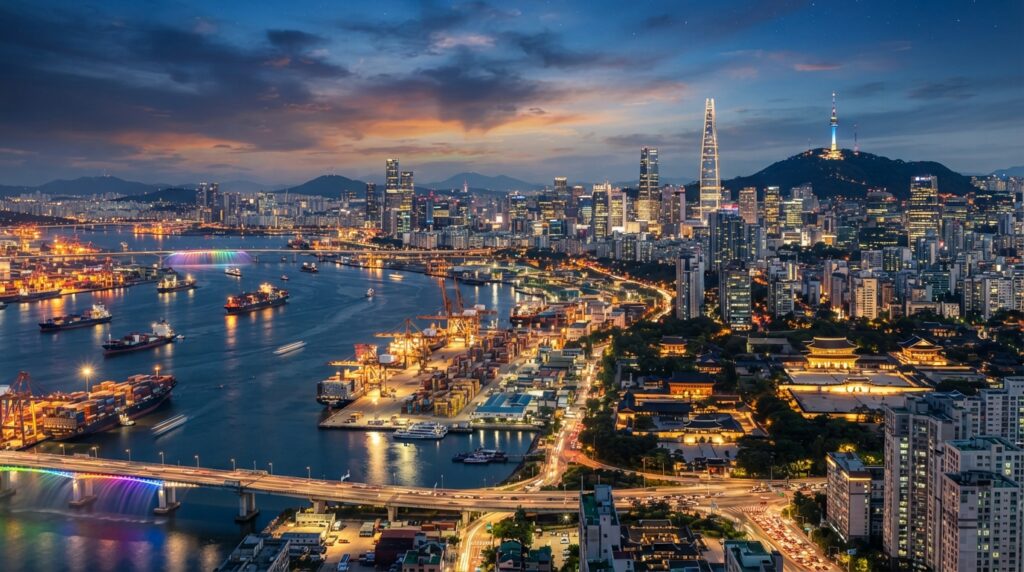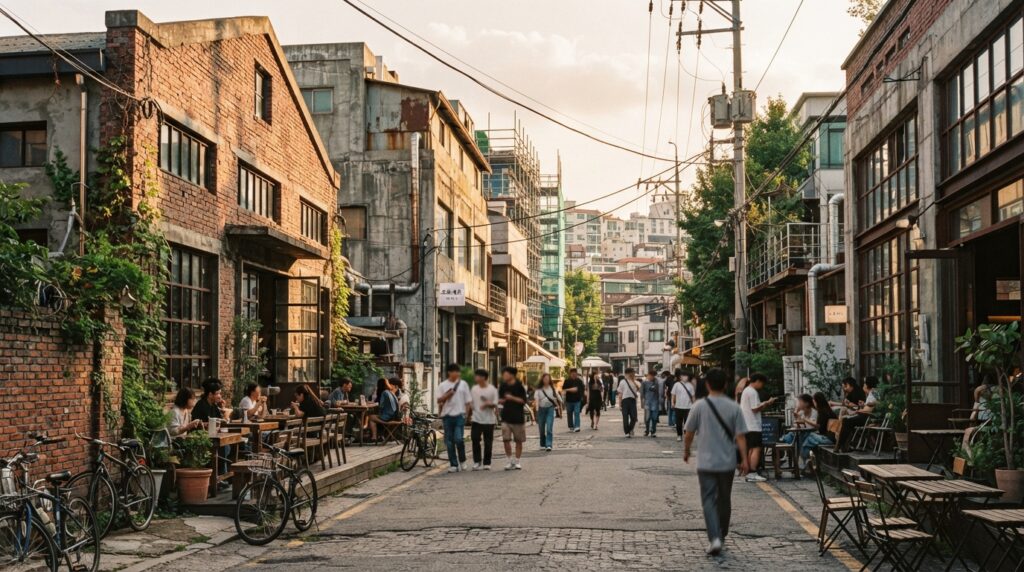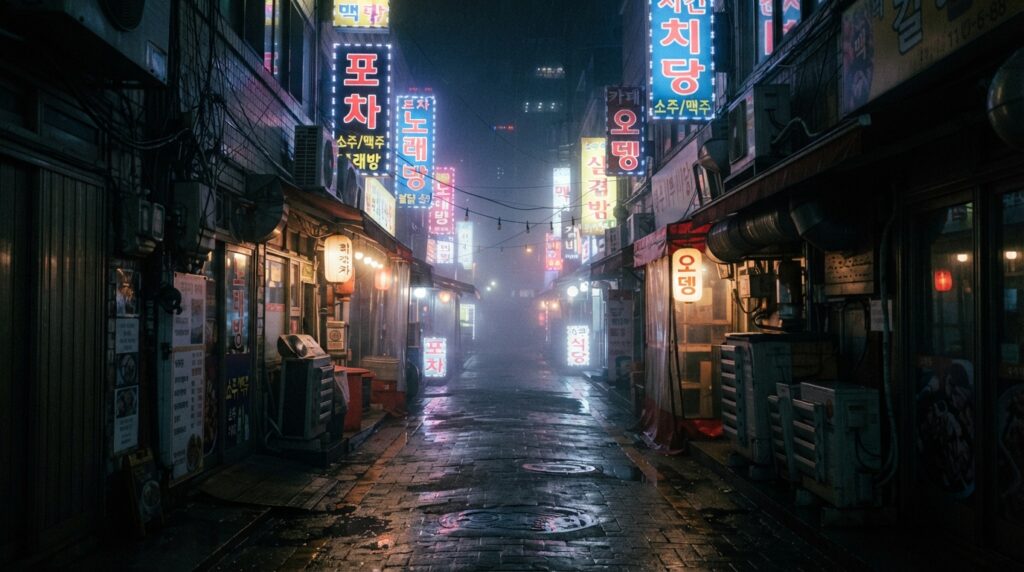
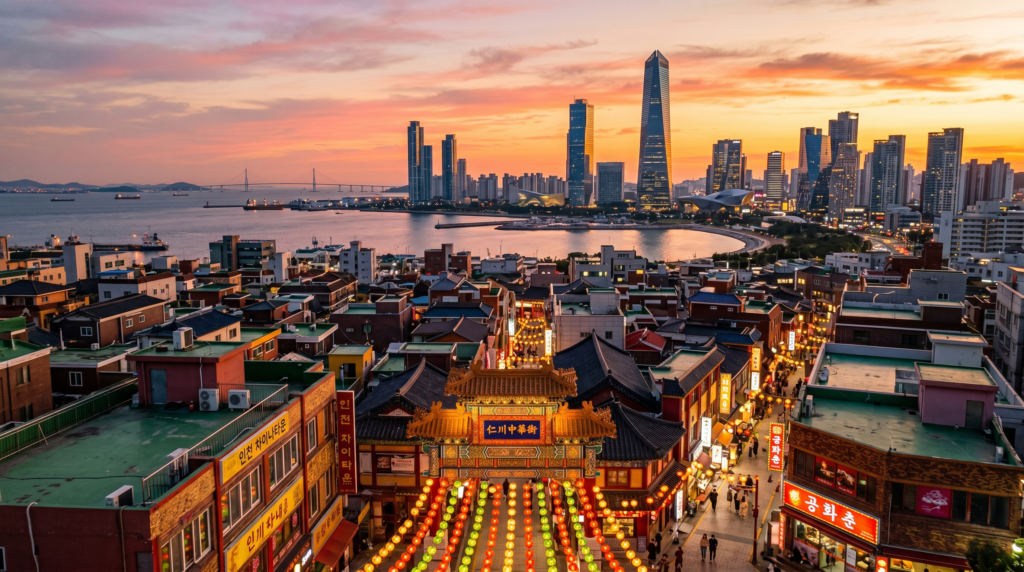
Imagine stepping off a plane and into a city that feels like it was designed for a K-drama scene — misty coastal air, lantern-lit alleyways, colonial-era architecture, and a skyline that shifts effortlessly from ancient fortress walls to gleaming glass towers. That city is Incheon, South Korea, and most travelers never give it a second glance.
For years, Incheon has been dismissed as nothing more than a transit stop — the place you land before rushing to Seoul. But those who pause long enough to look around quickly discover something extraordinary: a layered, living city where Korean history, multicultural heritage, and cinematic beauty collide in ways that no other destination in the country quite replicates.
Whether you are a devoted K-drama fan hunting down iconic filming locations, a cultural traveler eager to explore Korea beyond the capital, or a first-time visitor trying to make the most of every hour — this guide was written for you. Inside, you will find everything from the best K-drama filming spots and deep cultural landmarks to hidden local gems, a curated food guide, and a ready-to-use 2-day itinerary.
Incheon is not just South Korea’s gateway. It is a destination entirely worth the journey.
Why Incheon, South Korea Deserves Its Own Spotlight
Ask most tourists about their Korea itinerary and the answer is almost always the same: Seoul, Busan, maybe Jeju. Incheon rarely makes the list — and that is precisely what makes it one of the most underrated travel experiences on the entire peninsula.
Located just 27 kilometers west of Seoul along the Yellow Sea coast, Incheon is South Korea’s third-largest city and home to over 3 million people. It is the site of one of the world’s busiest and most awarded airports. It houses Korea’s only official Chinatown. It was the landing point of General MacArthur’s famous 1950 amphibious operation that changed the course of the Korean War. And it has quietly served as a backdrop for some of the most visually stunning Korean dramas and films produced in the last two decades.
This is a city with extraordinary depth — historically, culturally, and cinematically. Once you see it through that lens, it becomes impossible to walk past.
A Brief History of Incheon — Culture Rooted in Every Corner
From Ancient Joseon to a Modern Metropolis
Long before it became a global aviation hub, Incheon was a quiet fishing settlement nestled along the western coast of the Korean peninsula. During the Joseon Dynasty (1392–1897), the area served primarily as a regional administrative district with little national prominence. That changed dramatically in 1882, when the port of Incheon — then known as Jemulpo — was officially opened to international trade under the Japan-Korea Treaty of Amity, making it the first Korean port to welcome foreign commerce.
This single moment reshaped the city forever.
Within decades, Incheon became a crossroads of Chinese, Japanese, and Western influence. Foreign concession zones were established. Brick buildings in European and Japanese colonial styles rose along the waterfront. A Chinese merchant community took root and flourished. The city began absorbing cultures from every direction, and the evidence of that multicultural evolution is still visible in its streets today.
After the devastation of the Korean War (1950–1953) and the subsequent economic miracle of the late 20th century, Incheon transformed once again — this time into a modern, globally connected metropolis. The development of Songdo International Business District in the 2000s placed Incheon at the forefront of South Korea’s future-forward urban vision.
Incheon’s Role in Shaping Korean Identity
Few cities in South Korea carry as much historical weight as Incheon. The opening of Jemulpo Port did not just bring trade — it brought tension, transformation, and ultimately a renegotiation of Korean identity in the face of outside influence. That tension between tradition and modernity, between Korean roots and foreign influence, is a theme that runs like a thread through both the city’s history and through countless Korean dramas set within its borders.
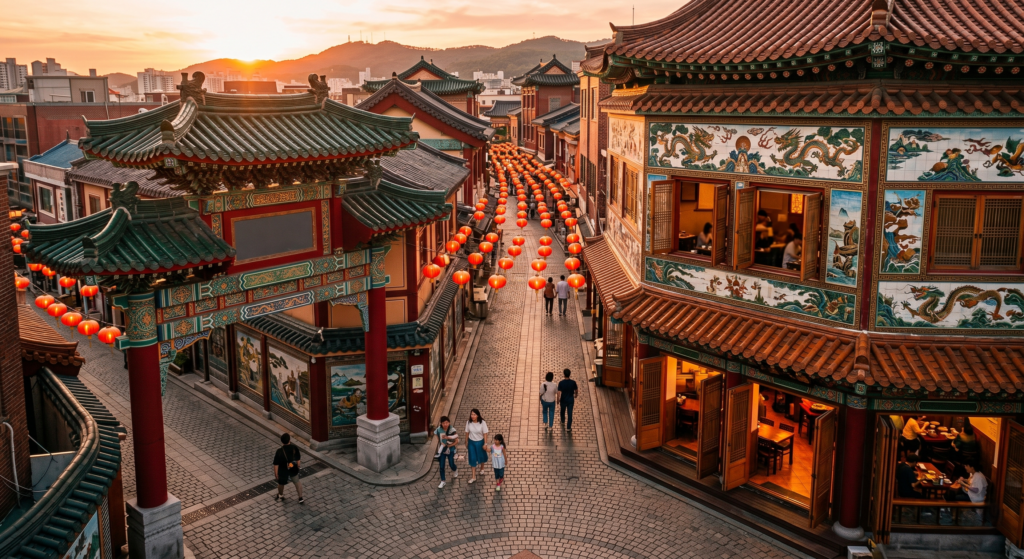
Incheon’s Chinatown stands as the most visible symbol of this multicultural legacy. It is the only officially designated Chinatown in South Korea, and it has existed continuously since the late 19th century. Walking through its gates today is a genuinely transportive experience — red lanterns, hand-painted signage, the smell of black bean noodles simmering in iron woks, and tiled murals depicting the long history of Korean-Chinese relations.
This is the city where jajangmyeon — now one of Korea’s most beloved comfort foods — was born. Where Western-style parks were built for the first time on Korean soil. Where the first modern Korean newspaper was printed. Incheon did not just witness Korean history. It helped create it.
Top K-Drama Filming Locations in Incheon, South Korea
For K-drama fans, Incheon is nothing short of a pilgrimage destination. Its diverse urban landscape — blending colonial architecture, coastal scenery, modern cityscapes, and traditional alleyways — has made it one of the most frequently used filming locations in the Korean entertainment industry.
Incheon Chinatown — A Favorite Drama Backdrop
No location in Incheon appears on screen more often than Chinatown. Its distinctive red and green gate, narrow lantern-strung alleyways, and colorful tiled murals create a visual atmosphere that drama directors return to again and again when they need a setting that feels both foreign and deeply Korean at once.
Productions that have used Incheon’s Chinatown as a backdrop include romantic dramas seeking that hazy, nostalgic quality that the old port district provides so naturally. The area around the first and second gates, along with the steep alleyway murals depicting Incheon’s trade history, are particularly photogenic and recognizable to drama fans.
Visitor tips: Arrive on weekday mornings to avoid weekend crowds. The best photography light falls in the late afternoon when the lanterns begin to glow against the fading sky. Most major Chinatown sights are walkable within 30 to 45 minutes.
Jayu Park — Romance, History & Cinematic Views
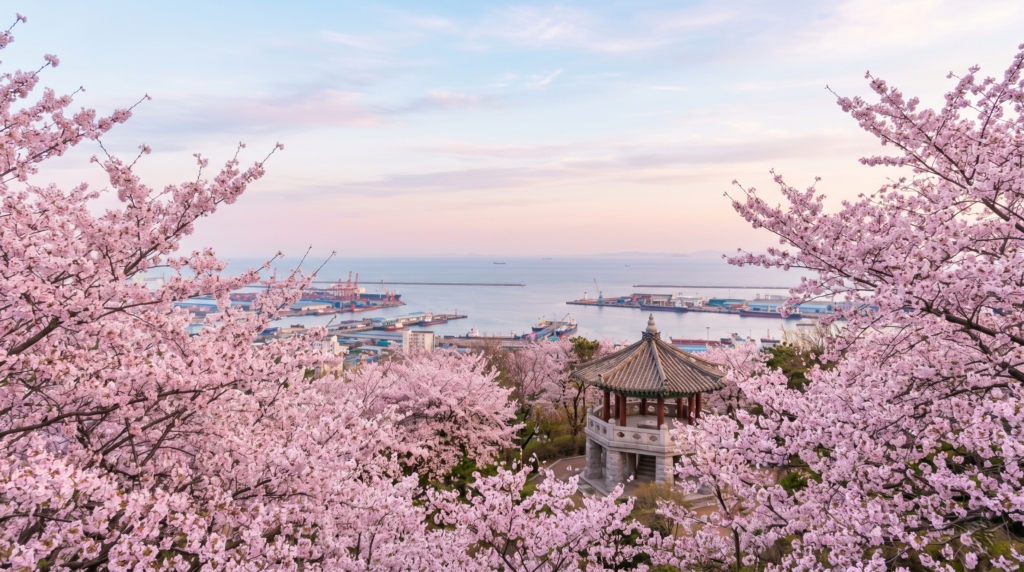
Established in 1888, Jayu Park holds the distinction of being the first Western-style public park ever built in Korea. Perched on a hill overlooking the old port and the Yellow Sea beyond, the park offers sweeping views that have graced the background of numerous Korean romantic dramas and period films.
The park is perhaps best known internationally for its statue of General Douglas MacArthur, commemorating the Incheon Landing of 1950. In spring, the park transforms into one of Incheon’s most beautiful spots as cherry blossom trees explode into bloom along every pathway — a setting that feels almost cinematically composed without any additional effort.
For K-drama fans, the hilltop pavilions and tree-lined walking paths here have appeared in scenes requiring that wistful, emotionally charged atmosphere that Korean romance dramas do so well.
Songdo International Business District
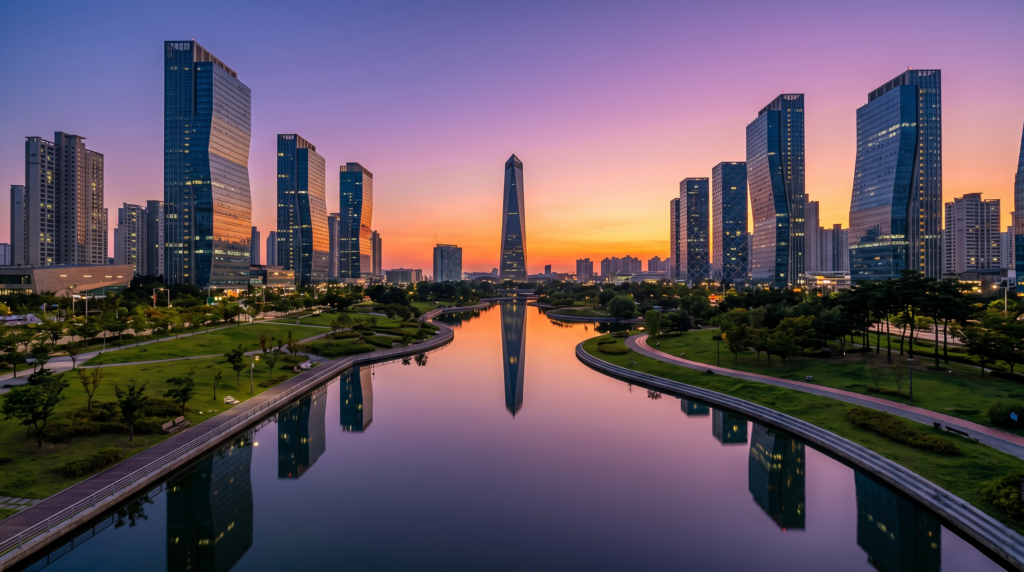
If Incheon’s old port district represents the city’s past, Songdo represents its future — and Korean drama directors have taken full notice. Built almost entirely on reclaimed land beginning in the early 2000s, Songdo is one of the world’s most ambitious planned cities, featuring a Central Park modeled loosely on New York City’s iconic green space, complete with a canal, luxury hotels, and gleaming glass towers reflected in still water.
For dramas set in modern, cosmopolitan environments — corporate thrillers, sophisticated urban romances, or stories about ambition and reinvention — Songdo provides a backdrop that is striking, contemporary, and unmistakably Korean in its execution. The area around Songdo Central Park and the G-Tower observation deck are particularly favored by film crews.
Pro tip for K-drama fans: Songdo’s canal area at dusk, when the towers light up and gondolas drift across the water, is genuinely one of the most photogenic urban scenes in all of South Korea. Bring a camera and extra battery.
Incheon Open Port Modern Architecture Zone
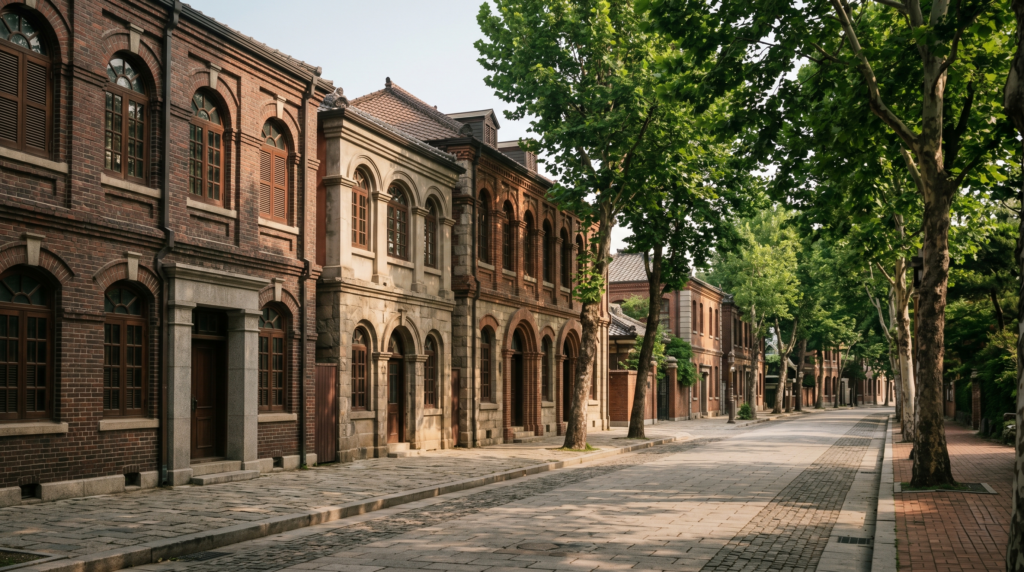
Just a short walk from Chinatown lies one of the most historically significant and visually compelling streets in all of South Korea — the Open Port Modern Architecture Zone. This area preserves a remarkable collection of late 19th and early 20th century buildings constructed during the era of foreign concessions, including former Japanese, Chinese, and American bank buildings, consular offices, and trading houses.
For period K-dramas and films set during the Japanese colonial era or the early years of modernization, this district is invaluable. The architectural authenticity is extraordinary — many buildings have been preserved or carefully restored and now function as museums, cultural centers, or cafés that lean into the historical atmosphere.
A self-guided walking tour of the Open Port Zone paired with a visit to the adjacent Incheon Open Port Museum takes approximately two to three hours and constitutes one of the most genuinely educational experiences available anywhere in the city.
💡 Expert Tip: Download the Incheon City Tour app before your visit. It includes a dedicated K-drama filming location map with GPS coordinates for the most popular shooting spots across the old port district — a genuine time-saver for drama fans trying to cover multiple sites in one day.
Top Cultural Experiences You Can’t Miss in Incheon
Incheon Chinatown & Sinpo International Market
Beyond its visual appeal as a filming location, Incheon’s Chinatown is a living cultural institution that deserves to be experienced as much as photographed. The area is home to dozens of Korean-Chinese restaurants, many of them family-operated for generations, and it is the single best place in South Korea to eat authentic jajangmyeon — the thick, chewy noodle dish topped with savory black bean sauce that was first developed here by Chinese immigrants in the early 20th century and eventually became embedded in Korean food culture.
Adjacent to Chinatown, Sinpo International Market is one of Incheon’s most beloved traditional markets — a covered alley market famous for its dakgangjeong (crispy glazed fried chicken) and a wide array of Korean street food that draws locals from across the city on weekends. The combination of Chinatown and Sinpo Market in a single afternoon gives visitors an exceptional snapshot of Incheon’s multicultural culinary identity.
Ganghwa Island — A Day Trip Into Deep Korean History
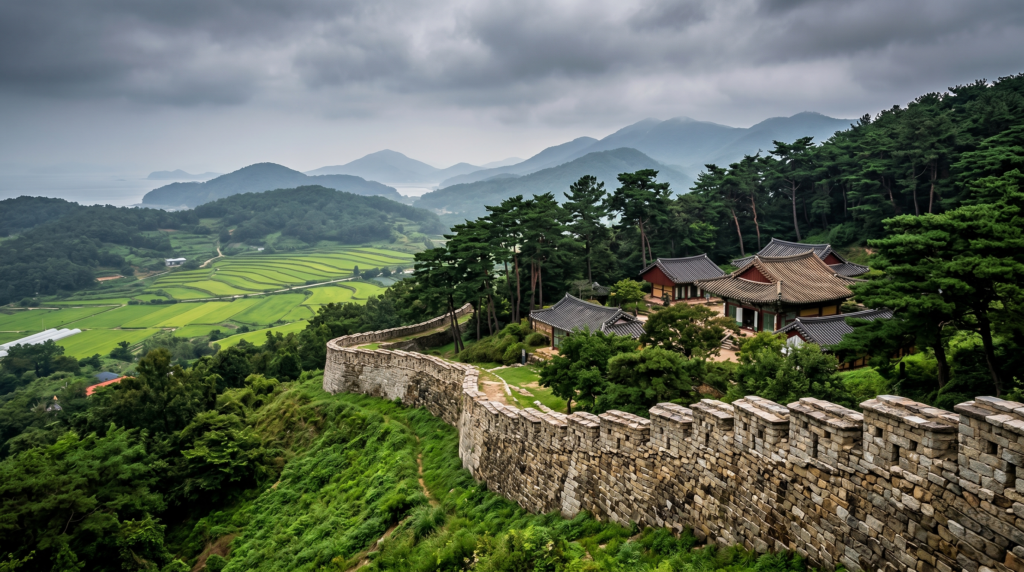
Accessible by bus from Incheon in under an hour, Ganghwa Island is one of the most historically rich destinations in all of South Korea — and one that remains almost entirely off the radar of international tourists. This small island at the mouth of the Han River has served as a royal refuge, a resistance stronghold, and a spiritual center at various points across Korean history.
Its UNESCO-listed prehistoric dolmens — massive stone burial monuments dating back over 2,000 years — are among the oldest surviving human structures on the Korean peninsula. The island is also home to Goryeo-era Buddhist temples, Joseon-era fortress walls, and thatched-roof villages that look almost entirely unchanged from centuries past.
For viewers of historical K-dramas set in the Goryeo or Joseon periods, walking through Ganghwa Island feels less like tourism and more like stepping directly into a drama set — except that everything here is entirely real.
Incheon Landing Operation Memorial Hall
To understand modern Korea — and by extension, the emotional undercurrents that run through so many Korean dramas dealing with war, separation, family, and national identity — a visit to the Incheon Landing Operation Memorial Hall is genuinely essential.
The memorial commemorates the amphibious landing led by General MacArthur on September 15, 1950, a military operation widely credited with reversing the course of the Korean War. The museum houses an extensive collection of artifacts, photographs, dioramas, and multimedia exhibits that bring the period to life with remarkable clarity.
For international visitors who may come to Korean culture primarily through drama and entertainment, this memorial provides crucial historical context that deepens the appreciation of everything else Incheon — and Korea — has to offer.
Wolmido Island — Old-School Korean Coastal Charm
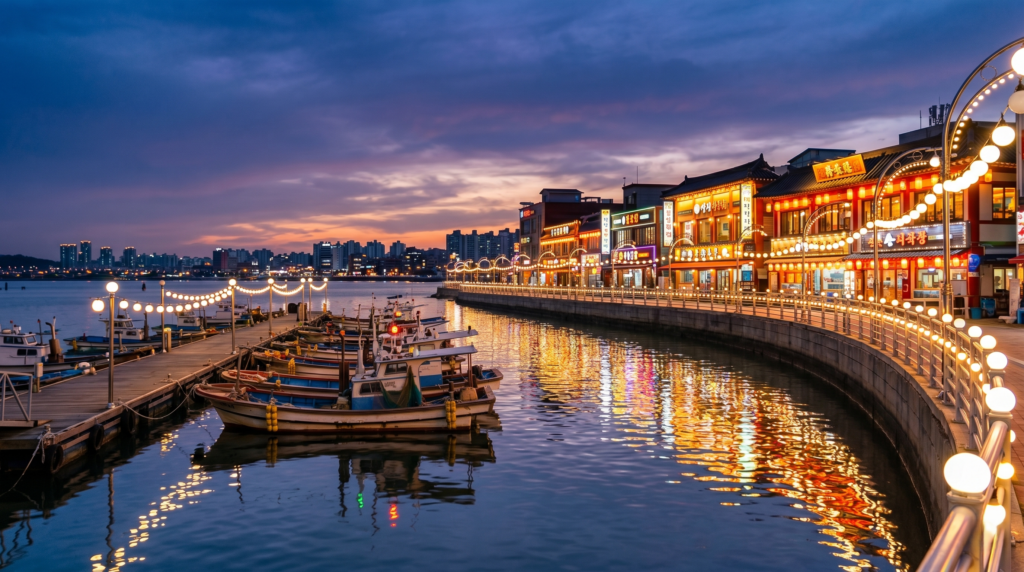
Connected to the mainland by a short causeway, Wolmido Island is one of Incheon’s most beloved local destinations — a place where Koreans have been coming for seaside relaxation, amusement rides, and fresh seafood for generations. It carries that particular kind of nostalgic, slightly faded charm that Koreans call jeong — a warmth rooted in familiarity and shared memory.
The island’s main promenade is lined with seafood restaurants serving raw fish, steamed crab, and grilled shellfish pulled directly from the Yellow Sea. A small amusement park at the island’s center adds a playful, carnival-like energy that feels authentically Korean in its unpretentious joy. Sunset from Wolmido’s waterfront, with the silhouette of container ships moving across the horizon, is quietly one of the most beautiful evening scenes in the greater Incheon area.
Hidden Gems in Incheon Most Tourists Miss
Most travel guides to Incheon cover Chinatown and Songdo, then stop. But the city rewards curious travelers who are willing to look a little further. The following spots rarely appear on tourist maps, yet each one offers something genuinely memorable — the kind of experience that stays with you long after the trip is over.
Sorae Wetland Ecology Park
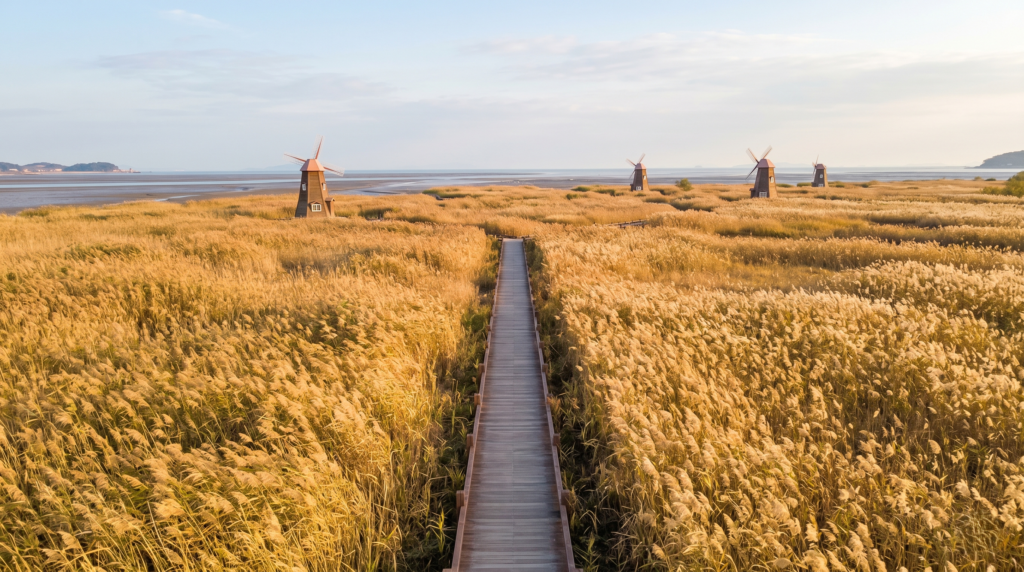
Tucked into the southwestern corner of Incheon, the Sorae Wetland Ecology Park is one of the city’s best-kept secrets. This expansive coastal wetland — built on the site of a former salt farm — is a sanctuary of reeds, tidal flats, wooden boardwalks, and migratory birds that feels remarkably removed from the urban energy just minutes away.
For slow travelers, photographers, and anyone who needs a quiet breath of nature between sightseeing, Sorae is an absolute gift. In autumn, the reed fields turn golden and sway in the coastal wind in a way that is almost cinematic — it is no surprise that the park has attracted Korean film and drama crews looking for atmospheric natural scenery without the logistics of a remote location shoot.
Entry is free, the walking trails are well-maintained, and the observation decks offer sweeping views across the wetlands toward the Yellow Sea. Visit in the early morning for the best birdwatching and the softest light.
Bupyeong Underground Shopping Street
If you want to experience the everyday rhythm of Korean urban life — away from curated tourist experiences and Instagram-optimized storefronts — head to Bupyeong. Beneath the busy streets surrounding Bupyeong Station lies one of the largest underground shopping complexes in South Korea, a sprawling network of corridors packed with independent fashion vendors, affordable Korean cosmetics, street snack stalls, and the kind of eclectic, fast-moving commercial energy that feels uniquely and authentically Korean.
This is where local university students shop for fashion trends before they hit mainstream stores, where office workers grab tteokbokki (spicy rice cakes) and eomuk (fish cake skewers) for lunch, and where you can spend an entire afternoon browsing without spending more than a few thousand won. It is not a polished tourist attraction — and that is exactly the point. Bupyeong gives you an unfiltered window into the daily life of ordinary Incheon residents.
Incheon Art Platform
Located within the old port district, just a short walk from Chinatown, the Incheon Art Platform occupies a collection of former Japanese colonial-era warehouses and industrial buildings that have been thoughtfully converted into working artist studios, galleries, performance spaces, and cultural residency facilities.
The architecture alone is worth the visit — the red-brick warehouse buildings, with their arched windows and weathered facades, create a striking visual contrast against the contemporary art installations and experimental works displayed within. The platform hosts rotating exhibitions, live performances, and open studio events throughout the year, with a particular focus on supporting emerging Korean artists.
For visitors who engage with Korean culture through drama, music, and visual media, the Incheon Art Platform offers a rare opportunity to connect with the creative community working at the cutting edge of Korean contemporary art — a dimension of the culture that rarely makes it into mainstream travel guides.
Gyeyang Mountain Fortress
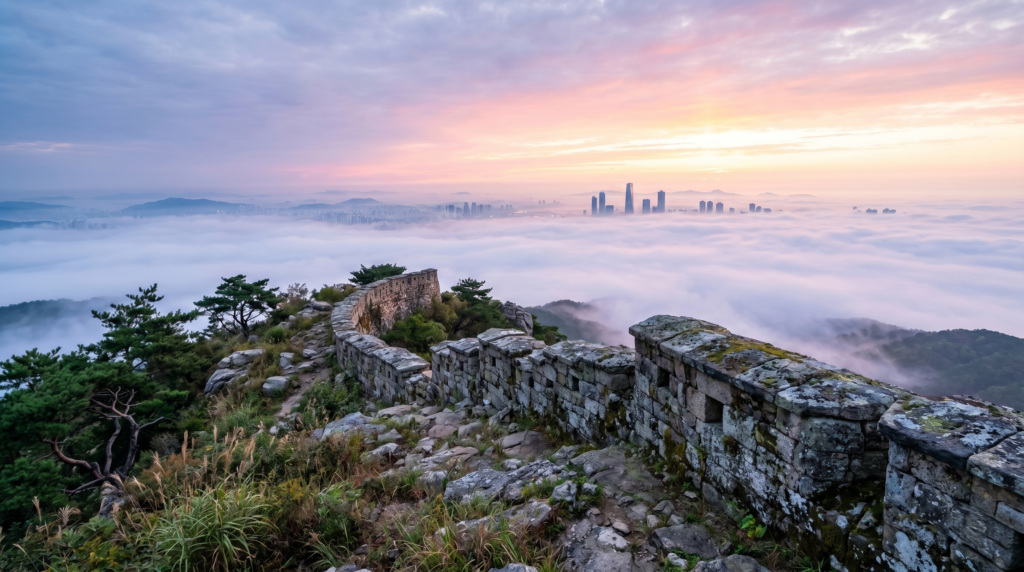
Rising to just over 395 meters on the northern edge of Incheon, Gyeyang Mountain (Gyeyangsan) is the city’s oldest and most historically significant peak. The mountain is crowned with the remains of Gyeyang Mountain Fortress — an ancient stone fortification whose origins date back to the Three Kingdoms period of Korean history, making it one of the oldest surviving military structures in the Incheon region.
The hiking trail to the summit is manageable for most fitness levels and takes approximately one to one and a half hours at a comfortable pace. The reward at the top is a panoramic view across the entire city — from the glass towers of Songdo glimmering in the distance to the industrial port infrastructure along the coast and the green hills rolling away toward Seoul in the east.
Early morning hikers are often rewarded with a sea of low mist filling the valleys below — a view that would look entirely at home in the opening sequence of a Korean fantasy or historical drama.
Incheon Food Guide — What and Where to Eat
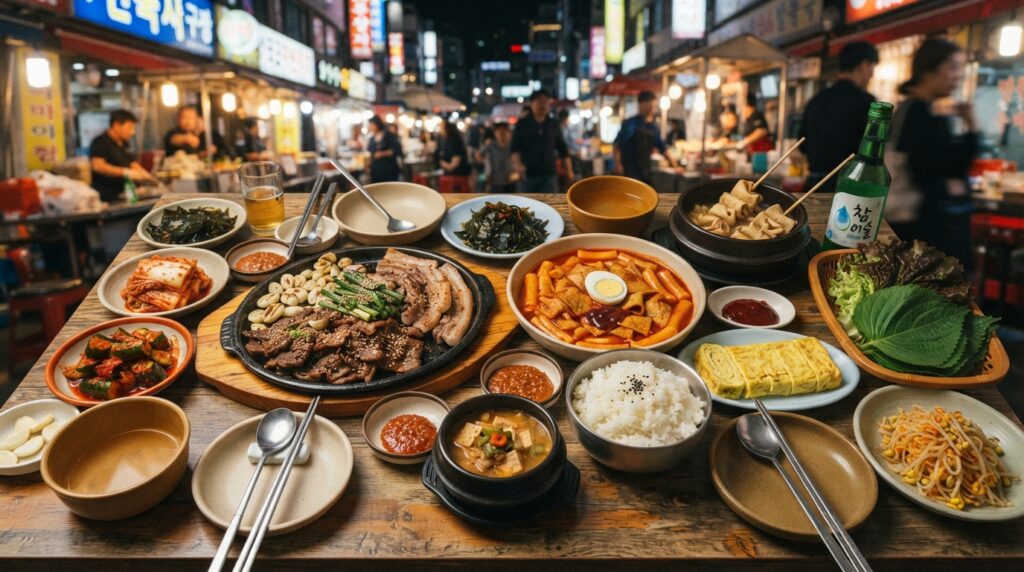
Korean cuisine is one of the primary reasons many international visitors fall in love with the country in the first place — and Incheon, with its coastal location, multicultural heritage, and centuries-old market culture, offers a food scene that is distinctive even by Korean standards.
Dishes Born in Incheon You Must Try
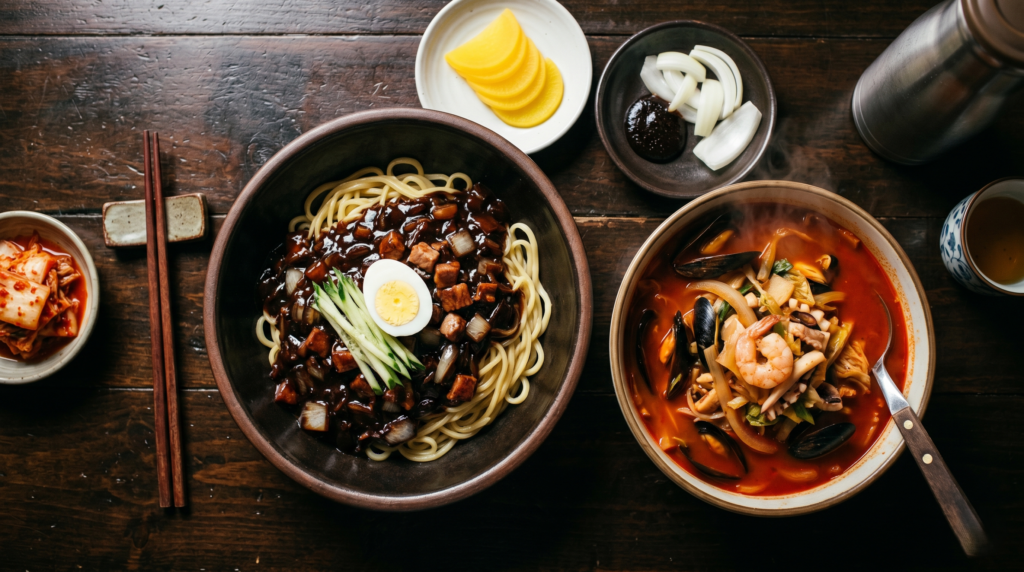
Jajangmyeon (짜장면) This is the dish that Incheon gave to the world — or at least to Korea. Jajangmyeon, thick wheat noodles topped with a rich, dark sauce made from fermented black bean paste, pork, and vegetables, was first developed by Chinese immigrants working in the Incheon port area in the late 19th century. It evolved over generations into a distinctly Korean comfort food that today holds genuine cultural significance — Korean dramas have immortalized it as the default meal for moving day, rainy afternoons, and heartbreak. Eating a bowl of jajangmyeon in Incheon’s Chinatown, at one of the restaurants that has been serving it for decades, is not just a meal. It is a cultural experience.
Gejang (게장) — Raw Marinated Crab Incheon’s coastal geography gives it access to some of the finest seafood on the peninsula, and gejang — raw crab marinated in either soy sauce or a spicy chili sauce — is perhaps the most celebrated local specialty. Known affectionately in Korean as “bap doduk” (rice thief) for its ability to make you eat bowl after bowl of rice, gejang is rich, briny, intensely flavored, and deeply addictive. It is the kind of dish that divides first-timers but converts almost everyone on the second bite.
Incheon-Style Seafood at Yeonan Pier Yeonan Pier Fish Market, located near Wolmido Island, is one of the most authentic seafood market experiences available anywhere in the greater Seoul-Incheon area. Fresh catches are brought in daily — live octopus, snow crab, sea cucumber, clams, and a rotating cast of whatever the Yellow Sea is offering that morning. Many stalls will prepare your selection on the spot, or you can take your purchase upstairs to one of the cooking restaurants that will transform it into a full meal for a small additional fee.
Best Neighborhoods to Eat Like a Local
Sinpo Market remains the top destination for Korean street food in Incheon — specifically for the dakgangjeong (sweet and crispy fried chicken) that the market has become nationally famous for. Arrive hungry and plan to share several portions between your group.
Songdo has developed a strong café and modern fusion dining culture to match its contemporary urban identity. The area around Songdo Central Park is lined with specialty coffee shops, Korean-Western fusion brunch spots, and upscale Korean restaurants that blend traditional ingredients with contemporary plating and technique.
Chinatown and the surrounding old port district remain the undisputed center of Incheon’s Korean-Chinese culinary culture. Beyond jajangmyeon, look for jjamppong (spicy seafood noodle soup), tangsuyuk (sweet and sour pork), and ganjajang (dry black bean noodles) at the neighborhood’s long-established family restaurants.
🍜 Local Tip: Visit Yeonan Pier in the early morning — ideally before 9:00 a.m. — to see the market at its most active and to access the freshest selection of the day’s catch. Many of Incheon’s best seafood restaurants source directly from this market, and arriving early gives you the same access they have.
Practical Travel Tips for Visiting Incheon, South Korea
How to Get Around Incheon
Incheon is well-served by public transportation, making it straightforward to navigate even for first-time visitors to Korea.
The AREX (Airport Railroad Express) connects Incheon International Airport directly to Seoul Station in approximately 43 minutes on the all-stop service and 51 minutes on the direct express — making it easy to combine a Seoul base with day trips to Incheon, or vice versa. The fare is affordable and the trains run frequently from early morning until midnight.
Within Incheon itself, the Incheon Subway operates two lines covering most major tourist and residential districts, including Chinatown (Incheon Station on Line 1), Bupyeong (Line 1 and Line 2), and Songdo (Line 1). A standard T-money transit card — available at any convenience store — works seamlessly across the subway, buses, and even some taxis.
For exploring Songdo specifically, bicycle rental is an excellent option. The district was designed with cyclists in mind, and the network of dedicated bike paths around Songdo Central Park and along the waterfront makes two-wheel exploration both practical and genuinely enjoyable.
Best Time to Visit Incheon
Spring (April to May) is widely considered the finest season to visit Incheon. Cherry blossoms bloom across Jayu Park and throughout the old port district, temperatures are mild and comfortable, and the coastal air carries that particular freshness that comes before the summer humidity sets in. Spring is also peak season for outdoor photography, making it ideal for K-drama location hunting.
Autumn (September to November) runs a close second. The summer heat and humidity have broken, foliage across Gyeyang Mountain and Ganghwa Island turns amber and crimson, and the city’s outdoor spaces feel alive with a crisp, golden-hour quality of light that photographers and drama fans will appreciate deeply.
Summer (June to August) brings heat, humidity, and the occasional typhoon — manageable, but worth factoring into your planning. Winter is cold and dry, but the city remains fully operational and significantly less crowded, which has its own appeal for travelers who prefer a quieter experience.
Where to Stay in Incheon
Budget travelers will find the most affordable and centrally located accommodation options near Bupyeong Station — a busy transport hub with excellent subway connections, abundant food options, and a lively local atmosphere that gives a genuine feel for everyday Incheon.
Mid-range travelers should strongly consider staying in or near the Chinatown and Open Port district. Several boutique guesthouses and hanok-style accommodations have opened in the area in recent years, offering character-rich lodging within walking distance of the city’s most historically and cinematically significant neighborhoods.
Luxury travelers are best served by the hotel clusters in Songdo or directly at Incheon Airport — both offering world-class facilities, spectacular views, and the kind of high-end Korean hospitality that the country has become internationally recognized for.
Incheon vs. Seoul — Should You Stay in Incheon?
This is one of the most common practical questions among first-time visitors to Korea, and the honest answer depends on what kind of traveler you are.
If your primary goal is to maximize time in Seoul — visiting Gyeongbokgung Palace, Myeongdong, Hongdae, and the Han River — then basing yourself in Seoul and making Incheon a day trip makes logistical sense. The journey between the two cities takes under an hour by express rail.
However, if you are drawn specifically to the kind of layered cultural experience that Incheon offers — the old port architecture, the Chinatown atmosphere, the coastal seafood markets, the K-drama filming locations — then basing yourself in Incheon for two or three nights is not just reasonable, it is genuinely rewarding. The city has a slower, more contemplative pace than Seoul, and that slower rhythm allows you to notice things that a rushed day trip would never reveal.
Incheon for K-Drama Fans — A Curated 2-Day Itinerary
This itinerary is designed specifically for visitors who want to combine K-drama location hunting with authentic cultural and culinary experiences. It is structured to minimize unnecessary transit and maximize the quality of each stop.
Day 1: History, Drama & the Soul of Old Incheon
Morning (9:00 a.m. — 12:00 p.m.) Begin your day at Incheon Station (the end of Subway Line 1) and walk directly into Chinatown through the first gate. Spend the morning exploring the alleyways, photographing the mural-covered stairways and lantern-strung passages, and identifying drama filming locations using the Incheon City Tour app. Stop for a late breakfast or early lunch at one of the established family restaurants along the main Chinatown street — order jajangmyeon and jjamppong to share, as is tradition.
Afternoon (1:00 p.m. — 5:00 p.m.) Walk uphill from Chinatown to Jayu Park for panoramic views over the old port and the Yellow Sea. Spend time in the park’s cherry-tree-lined paths (magnificent in spring) before making your way back down through the Open Port Modern Architecture Zone. Visit the Incheon Open Port Museum and explore the preserved colonial-era buildings. End the afternoon at the Incheon Art Platform for a look at the latest exhibitions in the converted warehouse galleries.
Evening (6:00 p.m. onwards) Take a short taxi or bus ride to Wolmido Island for sunset. Walk the waterfront promenade, browse the seafood restaurants along the main strip, and settle in for a fresh seafood dinner as the harbor lights come on. Try the grilled shellfish or a full haemul jjim (steamed spicy seafood pot) with a cold Korean beer.
Day 2: Modern Incheon, Nature & Hidden Gems
Morning (9:00 a.m. — 12:00 p.m.) Start in Songdo International Business District with a morning walk or bicycle ride around Songdo Central Park. The park is at its most beautiful in the early light, before the daily crowds arrive. Visit the canal area, cross the pedestrian bridges, and take in the futuristic skyline that has made this district a favorite backdrop for contemporary Korean drama productions. Stop at one of Songdo’s specialty coffee shops for breakfast.
Afternoon (1:00 p.m. — 5:00 p.m.) Choose your afternoon based on your interests. For nature lovers and photographers, head to Sorae Wetland Ecology Park for a quiet, scenic walk through the reed fields and along the coastal boardwalks. For history enthusiasts, take a bus to Ganghwa Island for a half-day exploration of the dolmens, fortress walls, and traditional villages. Both options offer something that Incheon’s urban core cannot — space, silence, and a connection to the landscape that surrounds the city.
Evening (6:00 p.m. onwards) Return to central Incheon and spend your final evening in Bupyeong — browsing the underground shopping streets, snacking on dakgangjeong from Sinpo Market, and soaking in the everyday energy of a Korean city doing exactly what it does every evening, entirely for itself, with no performance for tourists required. There is something deeply satisfying about ending a trip in a place like that.
Frequently Asked Questions About Incheon, South Korea
Is Incheon worth visiting beyond the airport? Absolutely — and emphatically so. Incheon is a full, multidimensional city with a rich historical identity, a thriving cultural scene, spectacular coastal geography, and some of the best food in the country. Most visitors who spend even a single full day exploring the city beyond the airport terminal leave wishing they had allocated more time.
What K-dramas were filmed in Incheon? Incheon’s Chinatown, Jayu Park, Wolmido Island, the Open Port district, and Songdo have all been used as filming locations for numerous Korean dramas and films over the years. The old port district in particular appears regularly in productions requiring period atmosphere or multicultural visual settings.
How far is Incheon from Seoul? Incheon is approximately 27 to 40 kilometers from central Seoul depending on your starting and ending points. By AREX express train from Incheon Airport to Seoul Station, the journey takes approximately 43 to 51 minutes. By subway from Incheon Station (old port area) to central Seoul, allow approximately 60 to 80 minutes.
Is Incheon safe for solo travelers? South Korea consistently ranks among the safest countries in the world for solo travel, and Incheon is no exception. Solo travelers — including solo female travelers — report feeling comfortable and secure throughout the city, including at night. Standard urban awareness practices apply, as they would anywhere.
What is Incheon most famous for? Internationally, Incheon is best known for its airport — Incheon International Airport has been ranked among the world’s best airports for multiple consecutive years. Within South Korea, the city is known for its Chinatown, its role in the Korean War, its seafood, the origin of jajangmyeon, and its rapidly developing Songdo smart city district.
Can I do a day trip to Incheon from Seoul? Yes, and many visitors do exactly this. A well-planned day trip from Seoul can comfortably cover Chinatown, the Open Port district, Jayu Park, and Wolmido Island. That said, Incheon rewards those who stay overnight — the city has a different, quieter character in the early morning and evening that a day trip cannot fully capture.
Incheon, South Korea has spent too long standing in Seoul’s shadow. It is a city of extraordinary range — where centuries-old fortress walls overlook futuristic glass towers, where the birthplace of Korea’s most beloved comfort food sits two streets away from a gallery of cutting-edge contemporary art, and where the alleyways that hosted some of your favorite K-drama scenes are still there, lanterns glowing, waiting to be walked through in person.
Whether you come for the K-drama filming locations, the deep cultural history, the coastal seafood, or simply the curiosity of discovering a city that almost everyone flies over without ever truly seeing — Incheon will give you more than you expect. It always does.
So on your next trip to South Korea, do something most travelers never think to do: stay a little longer at the airport city. Look around. Walk toward the old port. Follow the lanterns into Chinatown. Let the Yellow Sea breeze remind you that the best travel experiences are rarely the ones everyone else is already taking photographs of.
Which part of Incheon are you most excited to explore? Drop your thoughts in the comments below — and if you found this guide helpful, share it with a fellow K-drama fan who deserves to know what they have been missing.
Explore more Korean travel guides, K-drama filming location maps, and cultural deep-dives right here on the site — there is always more of Korea worth discovering.