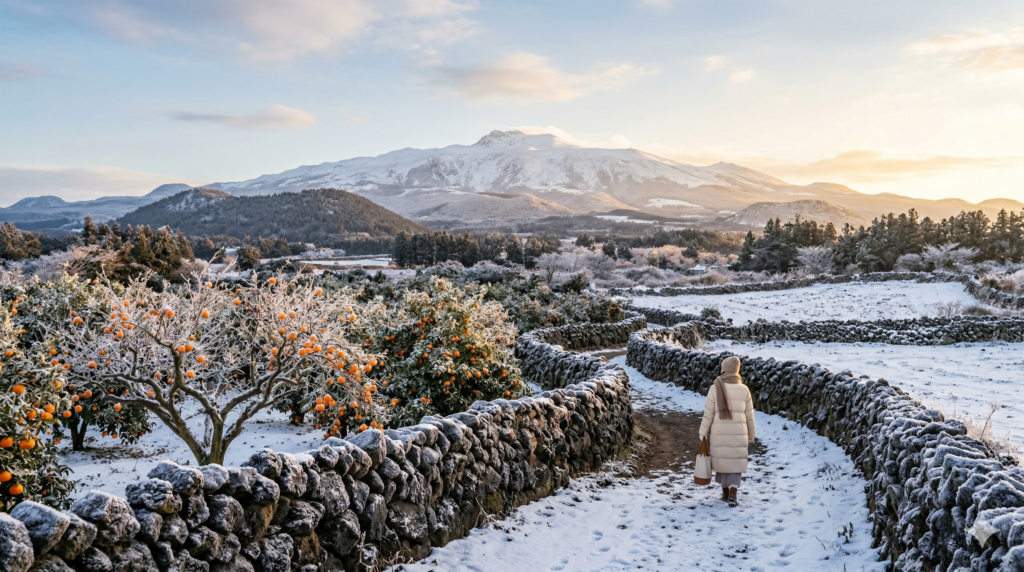
Close your eyes for a moment and picture this: a volcanic mountain draped in white snow, tangerine groves glowing amber against a frost-kissed sky, and the sound of crashing waves against jet-black lava cliffs — with almost no one else around. This is Jeju Island in winter, and it is one of the most underrated travel experiences in all of Asia.
Most travelers flock to Jeju Island in summer, chasing beaches and sunshine. But here is the truth that seasoned Korea travelers already know — winter transforms Jeju into something far more dramatic, far more intimate, and surprisingly far more rewarding. Prices drop. Crowds disappear. And the island reveals a quieter, more cinematic version of itself that feels lifted straight from a Korean drama set.
Speaking of K-dramas — if you have ever watched a scene where characters brood against misty cliffs or wander through snow-dusted fields in silence, there is a good chance it was filmed right here. Jeju in winter has that rare quality: it looks like art.
This guide is designed to give you everything you need to plan a confident, unforgettable winter trip to Jeju Island — from realistic weather expectations and packing tips to the best activities, food, itineraries, and insider knowledge that most travel blogs simply do not cover.
Whether you are a first-time visitor to Korea or a returning traveler ready to see Jeju through a completely different lens, you are in the right place. Let us dive in.
Why Visit Jeju Island in Winter? (The Case for the Off-Season)
 Before we get into logistics, let us address the most important question: why would you choose to visit Jeju in the colder months when tropical-style summer is available?
The answer is simple — because winter Jeju is a fundamentally different destination, and in many ways, a better one.
Fewer Crowds, Lower Prices
Jeju Island welcomes over 15 million visitors annually, the majority of whom arrive between June and August. In winter, that number drops sharply, which means you get to experience one of Korea’s most beloved destinations the way it was meant to be experienced — peacefully.
Hotel rates in Jeju during winter (particularly January and February) can fall anywhere from 30 to 50 percent below peak season prices. Flights from Seoul’s Gimpo Airport, one of the world’s busiest domestic routes, also become significantly cheaper. For budget-conscious travelers and those who value quality over quantity of experiences, this alone makes winter the smart season to visit.
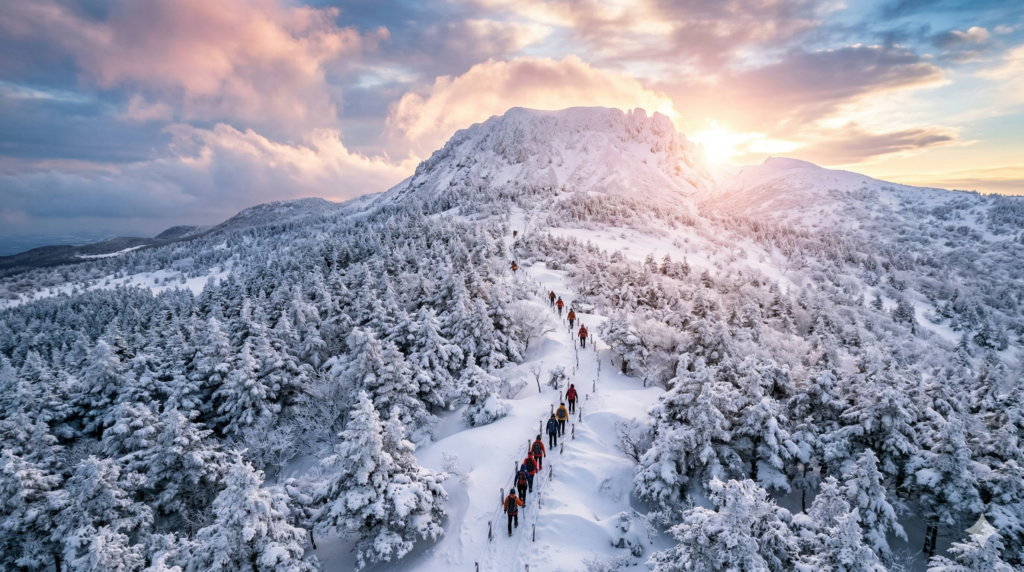
Hallasan National Park — which sees brutal queues in summer — becomes a place of genuine solitude in winter. You can hike to the crater at your own pace, breathing in cold, clean mountain air, surrounded by snow-covered trees and dramatic silence.
A Completely Different Side of Jeju
Jeju in summer is lush and tropical. Jeju in winter is something else entirely — stark, cinematic, and deeply atmospheric. The volcanic landscape takes on a monochromatic beauty when dusted with snow. The coastal cliffs look more dramatic under grey winter skies. The sea appears a deeper shade of blue.
Winter also unlocks seasonal experiences that simply do not exist in warmer months. Camellia blossoms — Jeju’s signature winter flower — begin blooming from late November and peak through February, painting the island in deep crimson. Hallabong citrus and tangerine harvests are in full swing from November through January, meaning you can pick fruit straight from the tree. Warming foods like haemul ttukbaegi (seafood hotpot) and gogi guksu (Jeju pork noodle soup) taste infinitely better when the temperature outside is hovering around five degrees.
The K-Drama Winter Aesthetic
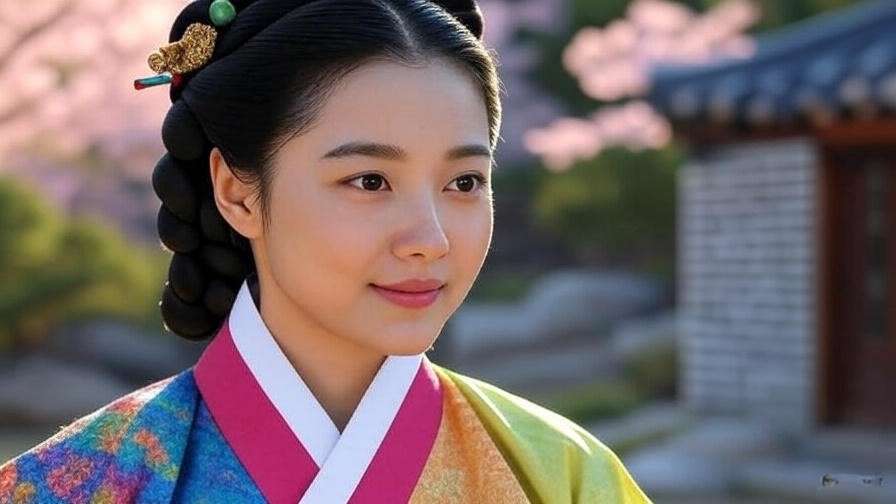
For readers of this blog who love Korean dramas, this point needs no further explanation — but let us say it plainly anyway. Jeju Island in winter looks like a K-drama. The misty mornings over Seongsan Ilchulbong, the frost-covered stone walls lining rural roads, the haenyeo (women divers) emerging from icy waters in their white suits — it is visually stunning in a way that summer simply cannot replicate.
Several popular Korean dramas have used Jeju’s winter landscape as a backdrop, including Warm and Cozy, partially set on the island, and numerous others that have used its cliffs, fields, and traditional villages for emotional, wintry scenes. For the culture traveler, visiting Jeju in winter is not just tourism — it is stepping inside a living drama set.
Jeju Island Winter Weather — What to Realistically Expect
One of the biggest concerns travelers have about Jeju in winter is the weather. Let us address this honestly and practically.
Month-by-Month Winter Breakdown
Jeju’s winter runs roughly from December through February, and each month has its own character.
December is the gateway to winter on the island. Average temperatures range from 5°C to 10°C (41°F to 50°F). Rainfall is moderate, and snow is relatively rare at lower elevations, though Hallasan’s peak will often see its first snowfall of the season. Crowds are low except around the Christmas and New Year period, when domestic Korean tourists take short holidays to the island. December is arguably the most comfortable winter month — cool but not bitterly cold, and still lively with seasonal events.
January is the coldest month in Jeju. Temperatures can dip to 2°C (35°F) at night and rarely exceed 7°C (44°F) during the day. Wind chill near the coast makes it feel colder. However, January also brings the best chance of seeing Hallasan blanketed in snow — a sight that is genuinely breathtaking. Crowd levels hit their annual low, and this is the month to visit if your priority is complete solitude and the lowest prices of the year.
February begins the slow transition toward spring. Temperatures start to recover slightly, averaging between 3°C and 9°C (37°F to 48°F). The camellia blossoms are at their absolute peak, and the first hints of spring wildflowers begin to appear by late February. Lunar New Year (Seollal) falls in late January or February, which can briefly bring more domestic visitors to the island — plan accordingly.
Jeju vs. Mainland Korea in Winter
For international travelers who may be comparing Jeju to visiting Seoul or Busan in winter, this is important context: Jeju is significantly milder than mainland Korea in winter.
While Seoul regularly sees temperatures plunging to -10°C or colder in January, Jeju rarely drops below 0°C at sea level. This is due to its maritime location in the Korea Strait, which moderates temperatures year-round. For travelers who want to experience Korea in winter without the brutal cold of the mainland, Jeju is genuinely the best option.
That said, Jeju is known for wind. The island sits exposed in open water, and coastal areas can experience sharp gusts that make temperatures feel lower than they are. This is particularly true on the northern and western coasts. Always factor wind chill into your planning.
What to Pack for Jeju in Winter
Packing smart for Jeju in winter is about layering rather than bringing the heaviest coat you own. Here is a practical checklist:
- Base layers: Thermal underlayers for both top and bottom are essential, especially if you plan to hike Hallasan or spend time outdoors
- Mid layer: A fleece or down jacket that can be worn alone on milder days or under a heavier coat when temperatures drop
- Outer layer: A wind-resistant and waterproof shell or jacket — this is the most important item for Jeju specifically, given the coastal wind
- Footwear: Waterproof hiking shoes or boots with good grip. Jeju’s lava rock trails become slippery when wet or frosty, and standard sneakers are genuinely inadequate
- Accessories: Gloves, a warm hat, and a scarf are essential for outdoor activities and coastal walks
- Extras: Hand warmers (available at all Korean convenience stores), sunscreen (winter sun can still burn, especially on Hallasan), and a reusable water bottle
Top Things to Do in Jeju Island in Winter
This is the heart of the guide, and where Jeju in winter truly earns its place as a world-class destination. The following activities are not just “things to do in bad weather” — they are genuinely among the best experiences the island offers, and winter makes each one more special.
Hike Hallasan in the Snow
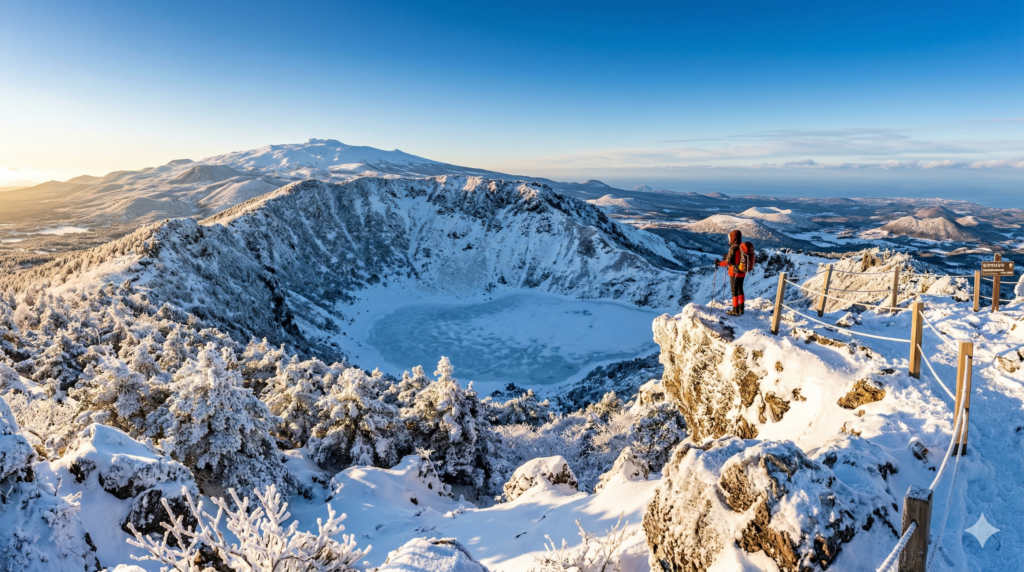
Hallasan, standing at 1,947 metres, is the highest mountain in South Korea and the defining feature of Jeju Island’s landscape. In winter, it becomes one of the most spectacular hiking destinations in all of East Asia.
Snow typically settles on the upper slopes from December and can last through February or even into early March in heavy years. Hiking through the snow-covered forest trails toward the summit crater lake (Baengnokdam) is a genuinely moving experience — the kind that travel writers reach for superlatives to describe and still fall short.
There are several trails, but for winter hiking, two are most practical:
Eorimok Trail is the most popular winter route — it is shorter (4.7km one way), well-maintained, and reaches a high enough elevation to experience full snow coverage without requiring advanced hiking fitness. This trail is suitable for most travelers with a moderate level of fitness.
Gwaneumsa Trail is longer (8.7km one way) and more challenging, but rewards experienced hikers with the most dramatic scenery on the mountain, including a final push through snow-laden forest to the crater rim. This trail is not recommended for beginners in winter conditions.
Important practical notes: Hallasan trails have strict closing times in winter that are earlier than in other seasons — entry is typically cut off by midday on some trails to ensure all hikers descend before dark. Check the Korea National Park Service website before your visit. Permits for the summit are required and must be booked in advance.
Expert Tip: Start your hike before 7AM on clear days to catch the sunrise breaking over the snow line and illuminating the crater in golden light. This is one of the most photographed natural moments in Korea — and in winter, you may have it almost entirely to yourself.
Visit the Famous Camellia Blossoms
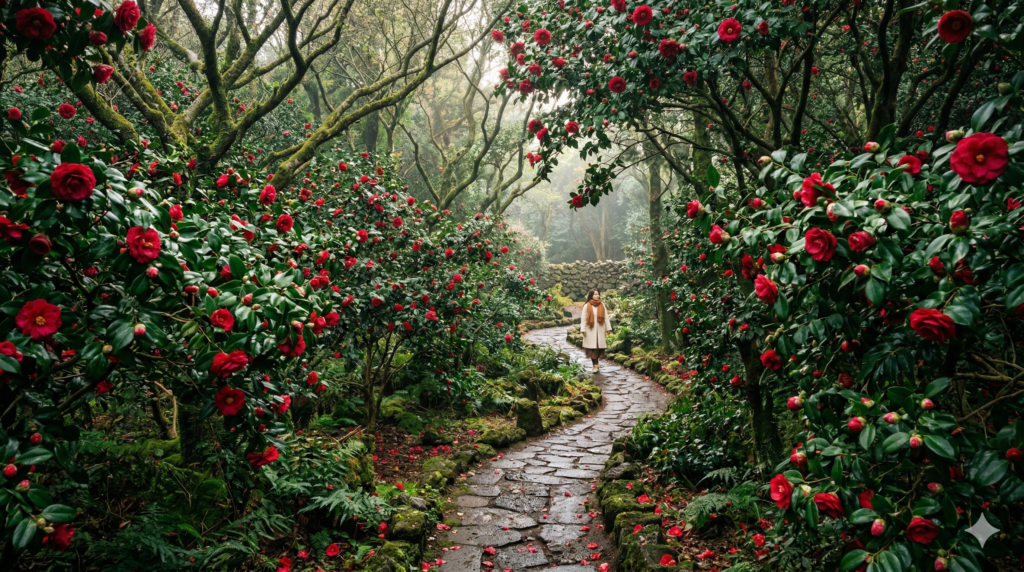
While most of the world associates winter flowers with plum blossoms in Japan or snowdrops in Europe, Jeju Island has its own spectacular winter bloom: the camellia (dongbaek in Korean). These deep crimson flowers bloom against dark, glossy leaves from late November through February, and they are nothing short of stunning.
The camellia holds deep cultural meaning in Korea — it symbolises admiration and longing, themes that resonate deeply with K-drama fans. Scenes of characters walking through camellia forests have appeared in several Korean dramas, making this a pilgrimage destination for culture travelers.
Best spots to see camellias in Jeju:
Camellia Hill in Seogwipo is the most famous dedicated camellia garden on the island, with over 500 varieties of camellia from around the world. It is beautifully maintained, photograph-friendly, and offers a cultural exhibition on the flower’s significance in Korean art and literature.
Hueree Natural Park (also in Seogwipo) offers a more expansive, natural setting with thousands of camellia trees alongside other winter-blooming plants. On a misty morning, walking through Hueree feels like wandering through a scene from a period K-drama.
Entry to both parks is ticketed, and winter weekdays are the quietest time to visit.
Explore Manjang Cave — A UNESCO World Heritage Site
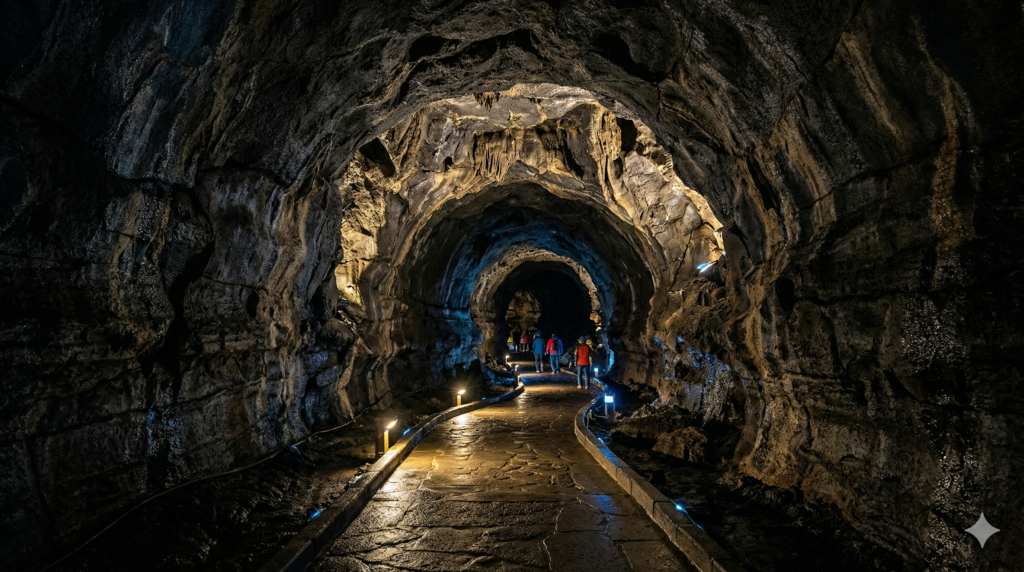
When the weather outside is at its coldest or most windy, Manjang Cave offers one of Jeju’s most extraordinary indoor (or rather, underground) experiences.
Manjang Cave is part of Jeju’s UNESCO World Heritage-listed lava tube system — one of the longest in the world at over 13 kilometres, with approximately one kilometre open to visitors. Formed by volcanic activity hundreds of thousands of years ago, the cave maintains a consistent internal temperature of around 11°C to 12°C year-round, which means it actually feels warmer than the outside air in January and February.
Walking through the illuminated cave, past lava columns, tube-in-tube formations, and the famous lava turtle sculpture, is a genuinely awe-inspiring experience. The geological scale of what you are seeing — a river of ancient lava frozen in time — is difficult to fully process.
Practical details: Manjang Cave is located on the eastern side of the island near Gimnyeong. Entry costs ₩4,000 for adults. Wear shoes with good grip — the cave floor can be uneven and slightly slippery. A light jacket is recommended even if you are well-dressed, as the cave air feels damp.
Soak in a Volcanic Hot Spring
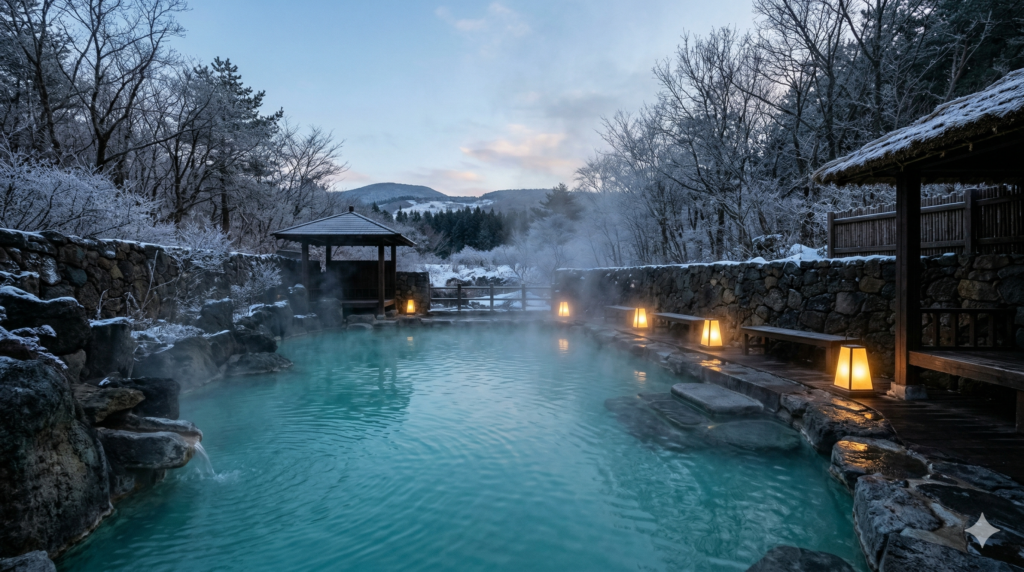
If there is one activity that is made for Jeju Island in winter, it is soaking in a geothermal hot spring (oncheon). Jeju’s volcanic geology produces naturally mineral-rich hot spring water, and sinking into a steaming outdoor bath while cold air swirls around you is one of the most distinctly Korean pleasures imaginable.
This is also a perfect gateway into Korean jjimjilbang (sauna and bathhouse) culture for travelers who have not yet experienced it. Jjimjilbangs are communal wellness spaces that include hot baths, dry saunas, cold plunge pools, and communal rest areas — often open 24 hours, making them a budget-friendly overnight option as well.
Recommended hot spring experiences in Jeju:
Seogwipo Healing Hot Spring Park (Chilsimni Spa) is one of the most well-regarded hot spring facilities on the island, featuring outdoor pools with views over the surrounding landscape. The combination of cold winter air and hot volcanic water here is genuinely restorative.
Yeomiji Botanical Garden is not a hot spring itself, but nearby facilities and the garden’s warm greenhouses offer a wonderful winter contrast — an explosion of tropical colour and warmth on a cold Jeju day.
Discover Jeju’s Coastal Cliffs Without the Crowds
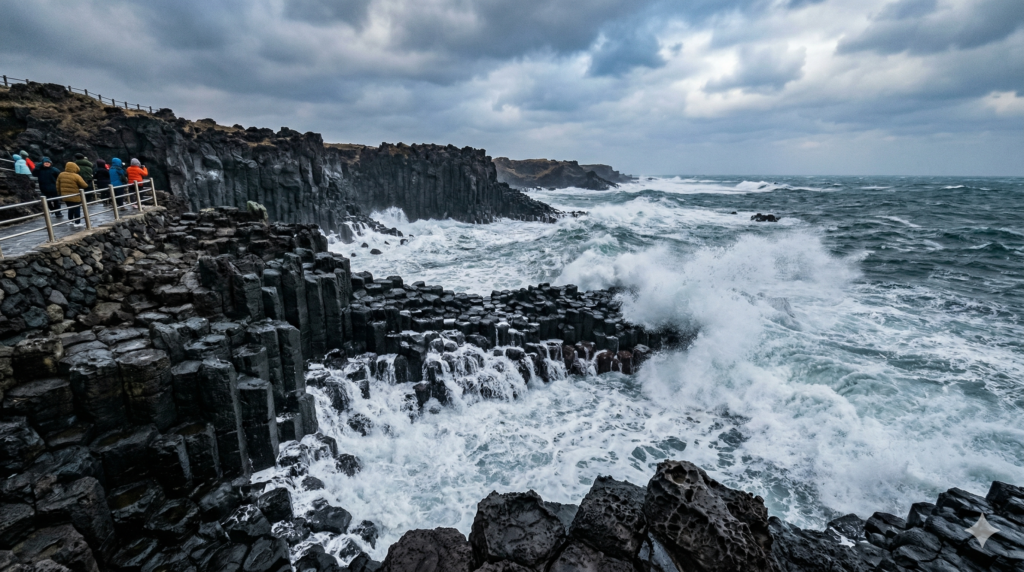
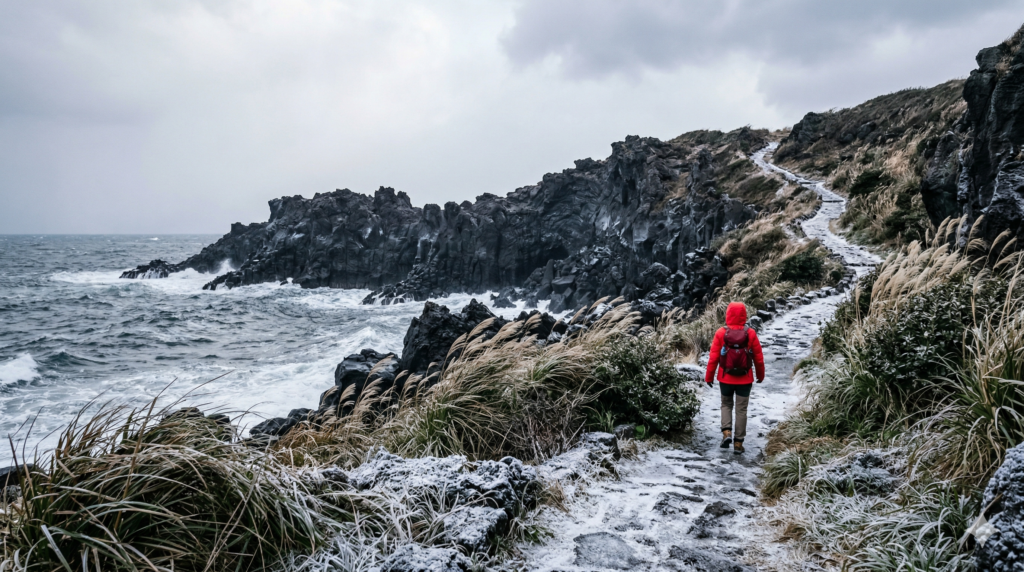
Jeju’s coastline is dramatic in any season, but winter strips away the tourist noise and reveals its rawest, most cinematic form. The combination of dark basalt rock, crashing winter swells, and brooding skies creates a landscape that feels ancient and untouched — exactly the kind of scenery that has made Jeju a favourite filming location for Korean directors and photographers alike.
Jusangjeolli Cliffs, located on the southwestern coast near Seogwipo, are among the most visually striking natural formations in Korea. Perfectly hexagonal basalt columns — formed when lava met the sea and cooled rapidly — rise from the water like the pipes of a colossal organ. In summer, tour buses line the entrance. In winter, you can stand at the railing with the sea wind in your face and have the entire view almost entirely to yourself. Sunrise and sunset here in winter produce extraordinary light conditions that no summer photograph can replicate.
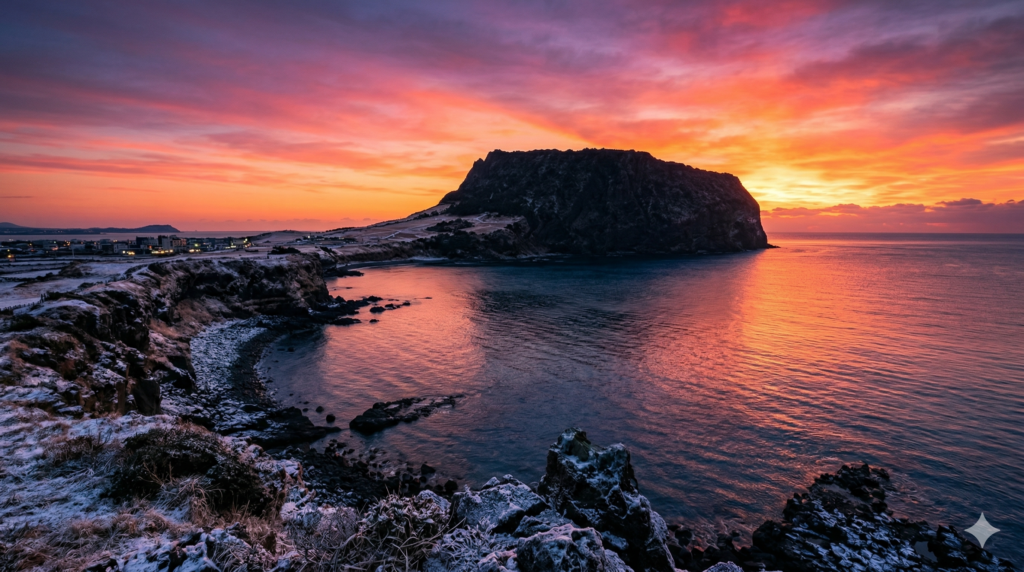
Seongsan Ilchulbong — the iconic tuff cone rising from the eastern tip of Jeju — is arguably the single most photographed landmark on the island. Known in English as Sunrise Peak, it earns its name most honestly in winter, when the sky is clear and cold, and the sun crests the horizon in shades of deep orange and pink over the sea. The hike to the rim takes approximately 20 to 30 minutes along well-maintained steps, and the view from the top — looking down into the ancient crater on one side and out across the ocean on the other — is one of the defining travel moments Korea has to offer.
Practical tip: Arrive at Seongsan Ilchulbong at least 30 minutes before official sunrise time. In winter this is typically around 7:30AM to 7:45AM depending on the month. Dress in your warmest layers — the wind at the rim can be fierce — but the reward is entirely worth it.
Haenyeo Cultural Experience near Seongsan is another coastal highlight that carries deep cultural weight. Jeju’s haenyeo — the legendary female free-divers who harvest seafood from the ocean floor without breathing equipment — have been practicing their craft for centuries and are now recognised by UNESCO as an Intangible Cultural Heritage of Humanity. In winter, watching haenyeo emerge from icy water carrying abalone and sea urchin is a humbling, unforgettable experience. Dedicated demonstration centres near Seongsan offer scheduled shows with cultural commentary, typically running two to three times daily. This is not a tourist gimmick — it is a living tradition, and approaching it with genuine curiosity and respect will make the experience far more meaningful.
Experience a Jeju Tangerine Farm in Harvest Season
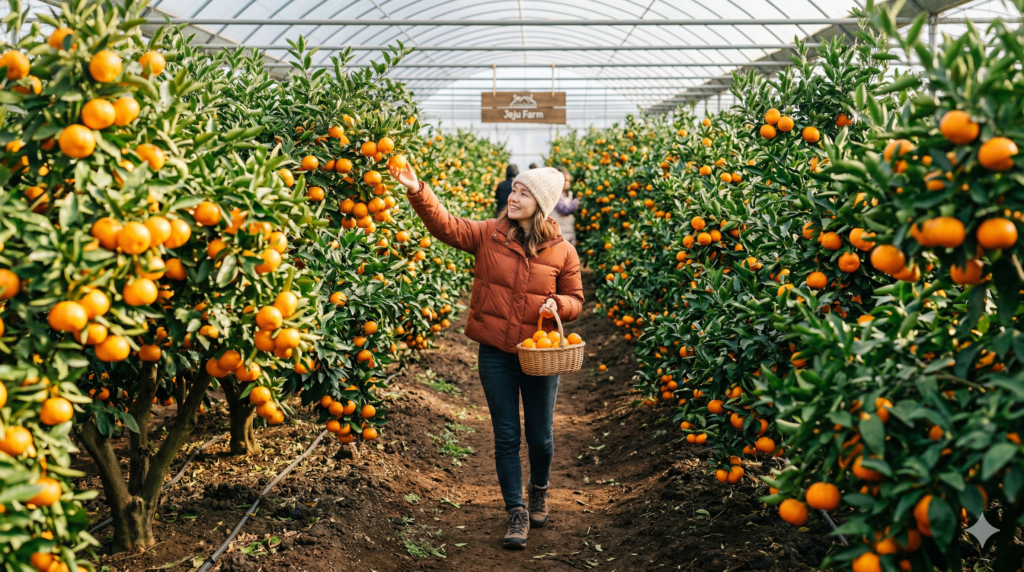
Few things connect a traveler to the identity of a place quite like eating something grown directly from its soil — and in Jeju in winter, that experience comes in the form of tangerines.
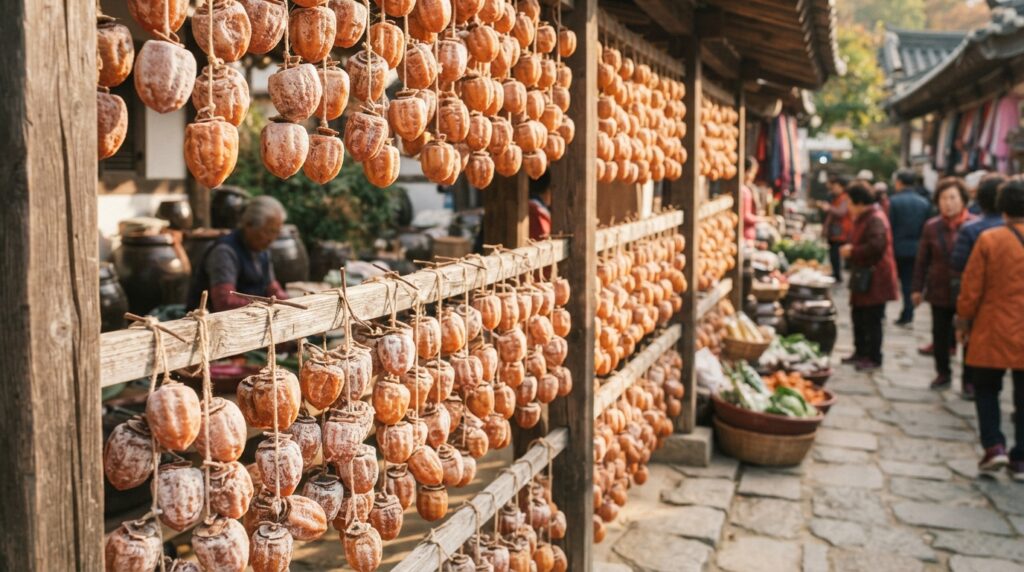
Jeju Island is Korea’s citrus capital. The combination of volcanic soil, mild maritime climate, and centuries of agricultural tradition has produced a tangerine culture that is deeply woven into the island’s identity. You will see tangerine groves everywhere — lining rural roads, climbing hillsides, filling the shelves of every market and convenience store. In late autumn and early winter, the trees are laden with bright orange fruit, and the entire island carries a faint citrus fragrance that is immediately, indelibly Jeju.
Tangerine picking experiences (귤 따기 체험) are available at numerous farms across the island throughout November and January. For a modest fee — typically ₩10,000 to ₩15,000 per person — you can enter a working greenhouse grove, pick as many tangerines as you can eat on the spot, and take home a bag of fresh fruit. For families, couples, and solo travelers alike, it is one of the most joyful and genuinely local things you can do in Jeju.
Beyond regular tangerines, look out for hallabong — a large, sweet citrus variety unique to Jeju that resembles a bumpy, elongated orange. Named after Hallasan Mountain (whose silhouette the fruit’s distinctive bump is said to resemble), hallabong season peaks in January and February and is considered by many Koreans to be the finest citrus fruit in the country. You can find it at Dongmun Traditional Market and roadside farm stalls throughout the island.
Farm booking tip: Many tangerine farms in the Seogwipo area accept walk-in visitors during harvest season, but booking ahead via Naver or Kakao Map is recommended for the more popular operations, particularly on weekends.
Where to Stay in Jeju in Winter — By Travel Style
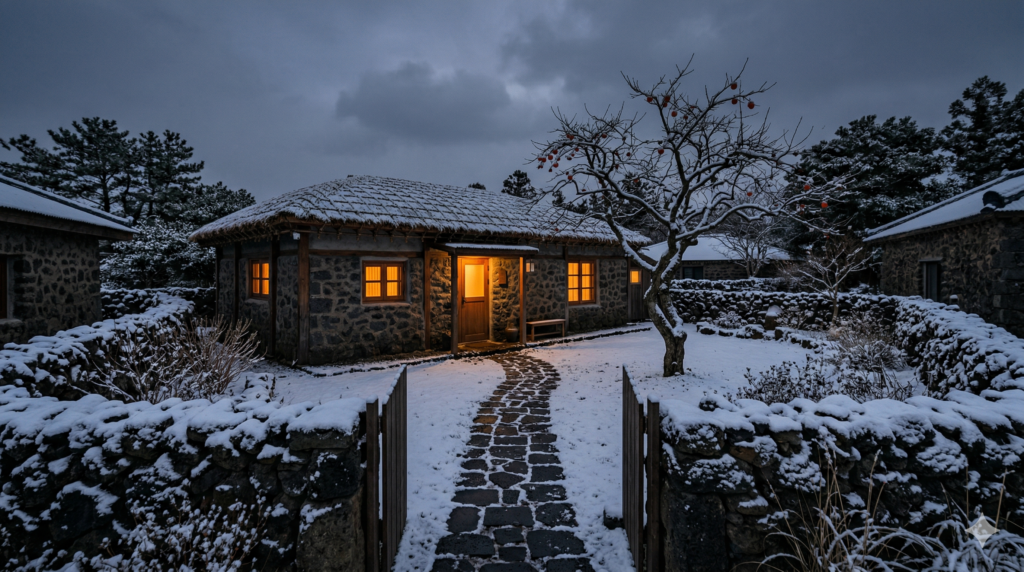
Choosing the right accommodation in Jeju can meaningfully shape your experience of the island. Fortunately, winter’s low season means you have more options at better prices than at any other time of year.
Luxury Picks (With Winter Deals)
For travelers seeking a premium experience, Jeju in winter offers an opportunity to access five-star resorts at genuinely reduced rates.
Shinhwa World Resort on the western coast is Jeju’s most expansive luxury resort complex, featuring multiple hotels (including a Marriott and a Shangri-La), a theme park, casino, and spa facilities — all largely empty in the depths of winter. January rates here can be significantly below summer pricing, making it an accessible luxury option for those who want to indulge.
Lotte Hotel Jeju in Seogwipo offers elegant rooms with ocean views, indoor pools, and a full spa — the kind of property that becomes a destination in itself on a cold, windy January day when you simply want to retreat into warmth and comfort. Winter packages occasionally include complimentary breakfast and spa access — always check the hotel’s official site alongside booking platforms for the best deal.
Cozy Boutique Guesthouses for Culture Travelers
For readers of this blog who travel for cultural immersion rather than resort amenities, Jeju’s boutique guesthouse scene is where the real magic happens.
The Jeju Olle trail network — a system of coastal walking paths that circumnavigate the island — has inspired a culture of small, characterful guesthouses along its route. Many of these are designed with genuine aesthetic care: stone walls, warm wooden interiors, local artwork, and hosts who are passionate about sharing Jeju’s culture with their guests.
Areas to focus your search include the Seogwipo old town area, which has a relaxed, slightly bohemian atmosphere well-suited to slow winter travel, and the Aewol and Handam coastal areas north of Jeju City, which have developed a strong café and arts culture in recent years. Searching on Korean platforms like Naver Hotel or Yeogi Eottae (translated roughly as “How about here?”) will surface options that international booking platforms frequently miss, often at lower prices.
For the most immersive cultural experience, look specifically for Jeju-style stone house guesthouses (doldam guesthouse) — traditional Jeju homes built from dark volcanic stone with low walls and narrow courtyards. Staying in one of these, especially on a quiet winter evening with a tangerine sitting on the windowsill, is about as authentically Jeju as it gets.
Budget-Friendly Options
Jeju has a healthy hostel and budget guesthouse scene, concentrated primarily in Jeju City near the airport. Expect to pay between ₩30,000 and ₩55,000 per night for a clean, well-located private room in winter — excellent value by any international standard.
Booking platforms to use: Booking.com and Airbnb carry solid Jeju inventory, but for the most comprehensive results — particularly for Korean-operated guesthouses and pensions — use Naver Hotel or the Yeogi Eottae app. Both are available in English and often list properties with lower rates than international platforms due to direct partnerships with local hosts.
What to Eat in Jeju During Winter — A Seasonal Food Guide
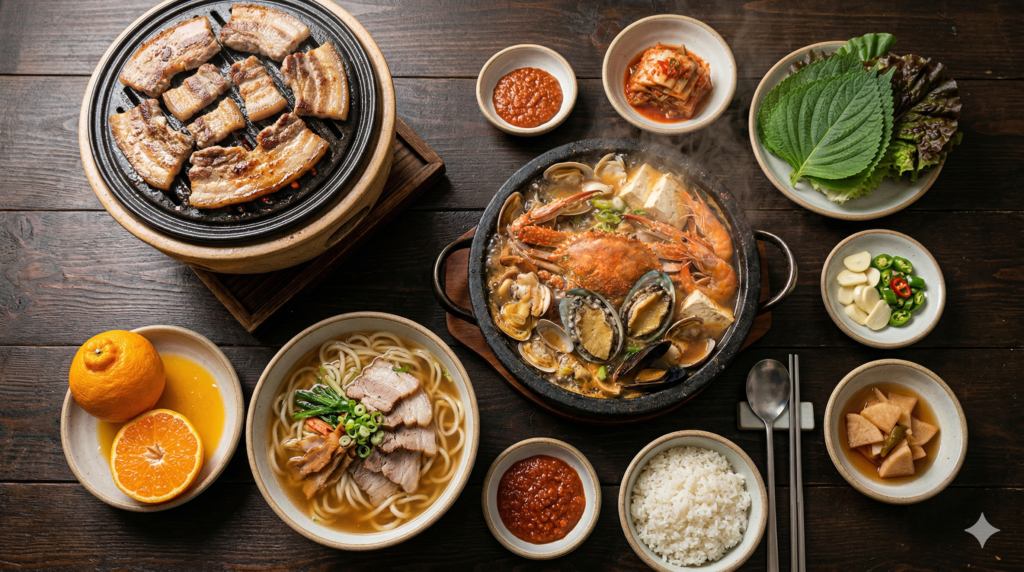
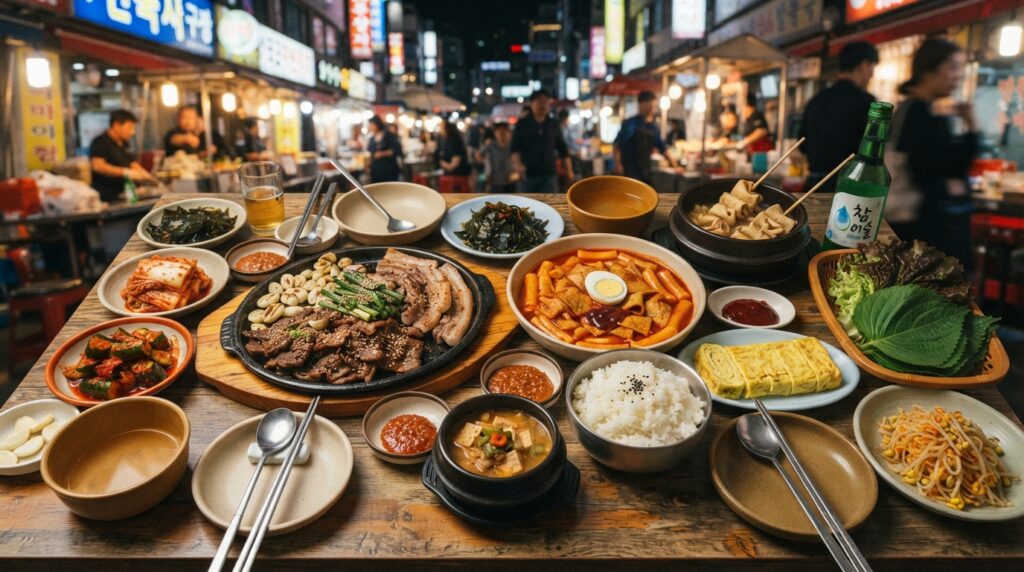
Food is never just food in Korea — it is culture, history, and community on a plate. In Jeju, the culinary tradition is distinct from mainland Korea, shaped by the island’s volcanic geography, maritime lifestyle, and fierce independent spirit. Winter is, arguably, the best season to eat in Jeju. The cold air makes warming dishes taste extraordinary, seasonal ingredients are at their peak, and without the summer crowds, you can actually sit down and savour your meal.
Must-Try Winter Foods Unique to Jeju
Haemul Ttukbaegi (해물뚝배기) — Jeju’s volcanic coastline produces an extraordinary abundance of fresh seafood: abalone, sea urchin, conch, clams, and more. Haemul ttukbaegi is a rich, deeply savoury seafood hotpot served bubbling in a stone pot, packed with whatever the morning’s catch provided. On a cold Jeju day, this dish is pure restorative comfort. You will find it at small seafood restaurants along the southern coast, particularly in the Seogwipo area.
Jeju Black Pork Samgyeopsal (흑돼지 삼겹살) — Jeju’s black pig (heukdwaeji) is famous throughout Korea. Raised outdoors on Jeju’s volcanic terrain, these pigs produce pork with a distinctive flavour and texture that regular samgyeopsal simply cannot match — richer, slightly sweeter, and more deeply marbled. Grilling it yourself over charcoal at a traditional black pork restaurant in Jeju City’s Black Pork Street (Heukdwaeji Geori) is a quintessential Jeju experience. In winter, the warmth of the grill and the ritual of wrapping pork in lettuce with garlic and fermented paste feels particularly convivial.
Gogi Guksu (고기국수) — This is Jeju’s most beloved comfort food and arguably its most iconic dish: a bowl of thin wheat noodles in a clean, deeply flavoured pork bone broth, topped with slices of boiled pork, spring onion, and a scattering of toasted sesame seeds. It is subtle, warming, and utterly satisfying — the kind of dish that Jeju locals eat for breakfast on cold mornings. A bowl typically costs between ₩8,000 and ₩10,000, making it one of the best-value meals on the island. Look for restaurants with queues of locals outside — that is all the quality assurance you need.
Hallabong and Fresh Citrus (한라봉) — As mentioned earlier, Jeju’s hallabong citrus peaks in January and February. Eating a perfectly ripe hallabong — peeled slowly, the juice running down your fingers, the fragrance filling the room — is one of those small, perfect travel moments that stays with you long after you have returned home. Buy them by the bag from Dongmun Market or directly from roadside farm stalls for the freshest possible fruit.
Abalone Porridge (전복죽) — Jeju abalone (jeonbok) is considered among the finest in the world, and abalone porridge is the most traditional way to eat it. The porridge is a gentle, jade-green colour from the abalone’s viscera being stirred into the rice as it cooks, producing a subtle, oceanic depth of flavour. It is a dish with genuine cultural heritage — historically prepared for royalty and the sick alike as the ultimate nourishing food. Several restaurants near Seongsan and in Jeju City specialise exclusively in abalone dishes.
Best Winter Food Markets and Experiences
Dongmun Traditional Market is the oldest and most vibrant traditional market in Jeju City, and it is essential visiting in winter. The covered indoor sections protect you from the cold while you browse stalls piled with hallabong, dried seafood, Jeju black sesame products, local honey, and handmade crafts. The street food stalls outside offer fried savoury pancakes (jeon), grilled skewers, and hotteok (sweet filled pancakes) — all of which taste particularly wonderful when eaten standing in the cold air.
Seogwipo Maeil Olle Market (매일올레시장) is smaller, less touristic, and more authentically local than Dongmun. It operates daily and specialises in fresh produce, prepared foods, and Jeju-specific ingredients. This is where Jeju residents actually shop, and wandering through it gives you a far more honest sense of daily island life than the more polished tourist-facing markets. Try the freshly made tofu and the haemul pajeon (seafood green onion pancake) from the stalls near the entrance.
Practical Travel Tips for Jeju Island in Winter
Getting to Jeju in Winter
The vast majority of visitors arrive by air. Jeju International Airport is served by frequent domestic flights from Seoul Gimpo, Seoul Incheon, Busan, and other Korean cities. In winter, flight frequency remains high — the Gimpo–Jeju route is one of the busiest domestic air routes in the world — and fares drop considerably from summer peaks. Booking two to three weeks in advance typically secures the best prices on Korean carriers like Korean Air, Asiana, Jeju Air, and T’way Air.
For the more adventurous traveler, ferry services connect Jeju to the mainland from ports including Mokpo, Wando, and Busan. Journey times range from approximately one hour (on high-speed ferry from Mokpo) to several hours on standard ferries. Winter seas can be rougher than in calmer months, and sailings are occasionally suspended due to weather — check conditions carefully before booking and have a contingency plan.
Getting Around the Island
This point cannot be emphasised strongly enough: renting a car is by far the best way to explore Jeju in winter. The island’s most rewarding winter attractions — coastal cliffs, mountain trailheads, farm experiences, remote beaches — are spread across a large area and are poorly served by public bus routes, particularly in the off-season when some rural services run less frequently.
International travelers can rent a car with a valid international driving permit (IDP) from most major rental companies at the airport. Roads in Jeju are generally well-maintained and well-signposted in both Korean and English. Note that mountain roads near Hallasan can be icy or temporarily closed after heavy snowfall — check conditions via the Korea National Park Service app before driving into highland areas.
If driving is not an option, Kakao Taxi (the Korean equivalent of Uber, integrated into the Kakao Maps app) is reliable, affordable, and available in English. For budget travelers willing to invest more time, the public bus network (intercity buses and the Jeju Bus Information System app) can get you to major attractions with patience and planning.
Budget Breakdown for a Winter Trip
To help you plan financially, here is a realistic per-person daily budget estimate for a winter trip to Jeju (excluding international flights):
Budget traveler: ₩80,000–₩120,000 per day (hostel accommodation, local restaurants, public transport, free or low-cost attractions)
Mid-range traveler: ₩180,000–₩280,000 per day (boutique guesthouse, mix of local and mid-range restaurants, rental car shared between two people, paid attractions)
Luxury traveler: ₩500,000+ per day (five-star resort, fine dining, private transfers, premium experiences)
These figures reflect winter’s lower pricing across accommodation and activities — the same trip in summer would cost noticeably more.
Important Notices and Seasonal Closures
A few practical cautions that most travel guides overlook:
Hallasan trail access is subject to weather closures with little advance notice. Heavy snowfall, icy conditions, or high winds can result in trails being closed on the day — always check the Korea National Park Service website or app on the morning of your planned hike.
Some smaller outdoor attractions and privately operated facilities operate on reduced winter hours or close entirely during January and February. It is always worth calling ahead or checking Naver Map (which displays current business hours in real time) before making a specific attraction the centrepiece of a day’s plans.
The Lunar New Year holiday (Seollal) — which falls in late January or February — results in a brief but significant surge in domestic tourism to Jeju, as Korean families travel during the national holiday period. Accommodation prices spike for this period and book up quickly. If your travel dates coincide with Seollal, book well in advance or consider it an opportunity to experience a uniquely festive atmosphere on the island.
Jeju Island Winter Itinerary — A Perfect 4-Day Sample Plan
This itinerary is designed for a first-time winter visitor to Jeju with a rental car, a moderate budget, and an interest in both natural landscapes and cultural experiences.
Day 1: Arrival and Jeju City Exploration
Arrive at Jeju International Airport, pick up your rental car, and check into your accommodation. Keep the first afternoon gentle — Jeju City rewards slow exploration.
Begin at Yongduam Rock (Dragon Head Rock) on the northern coast near the airport: a dramatic lava formation rising from the sea that is far less crowded in winter and beautifully atmospheric in the grey afternoon light. From there, make your way to Dongmun Traditional Market for your first immersion into Jeju food culture — pick up hallabong, sample street food, and let yourself get happily lost among the stalls.
For dinner, head to Heukdwaeji Geori (Black Pork Street) in central Jeju City for your initiation into Jeju black pork samgyeopsal. This is a meal to linger over.
Day 2: East Jeju — Sunrise, Sea, and Stone
Set your alarm early. Drive to Seongsan Ilchulbong to catch sunrise from the rim — aim to be at the trailhead by 7:00AM. The hike up takes about 20 minutes and the light show that follows is worth every cold, sleepy moment.
After sunrise, drive a short distance to the nearby Haenyeo Cultural Experience Centre for a haenyeo diving demonstration — a moving, educational experience that puts Jeju’s maritime heritage in vivid human perspective.
Spend the afternoon at Manjang Cave, followed by a drive along Jeju’s northeastern coast. For dinner, return toward Seogwipo for a bowl of haemul ttukbaegi at a seafood restaurant overlooking the water.
Day 3: Hallasan and Western Jeju
This is your big day. Wake early and drive to the Eorimok Trail trailhead on Hallasan’s western slope. Begin hiking by 7:30AM to reach the snow zone as morning light filters through the forest. Allow three to four hours for the return hike at a comfortable pace.
After descending, warm up with a late lunch of gogi guksu in a nearby village restaurant. In the afternoon, drive to Camellia Hill in Seogwipo for a completely different kind of beauty — the crimson flowers against dark green foliage are a striking contrast to the morning’s white mountain.
If energy allows, finish the day with a soak at Seogwipo Healing Hot Spring before dinner. You will have earned it.
Day 4: South Coast and Departure
On your final morning, drive the southern coastal road to Jusangjeolli Cliffs for the dramatic hexagonal basalt formations in morning light. Walk the short coastal path and take your time — this is one of Jeju’s finest views and on a winter weekday morning, it is almost entirely yours.
If time permits before your flight, stop at Seogwipo Maeil Olle Market for a final browse and a last bowl of something warming. Pick up a bag of hallabong for the journey home. Return your rental car and depart with the quiet, settled feeling of a trip that delivered more than you expected.
Frequently Asked Questions About Jeju Island in Winter
Is Jeju Island worth visiting in winter? Absolutely — and for many experienced travelers, winter is the preferred season. Lower prices, minimal crowds, dramatic natural scenery, unique seasonal foods, and the island’s famous camellia blossoms make winter an exceptional time to visit. The trade-off is cooler temperatures and the occasional windy day, both of which are manageable with proper preparation.
Does it snow in Jeju in winter? Snow at sea level is relatively rare but does occur, particularly in January and February. Hallasan Mountain, however, reliably receives significant snowfall from December onward, making it one of the most accessible places in Korea to experience proper winter mountain scenery.
What is the coldest month in Jeju? January is the coldest month, with average temperatures ranging from approximately 2°C to 7°C (35°F to 44°F) at sea level. Wind chill near the coast can make it feel colder. Even at its coldest, Jeju remains significantly milder than Seoul or other parts of mainland Korea in winter.
Is Jeju Island crowded in winter? No — winter is Jeju’s quietest season by a significant margin. Except for the brief Lunar New Year holiday period and the Christmas and New Year week in late December, crowds are minimal. This is one of the strongest arguments for choosing winter travel.
What should I wear to Jeju in winter? A layered approach works best: thermal base layers, a warm mid-layer fleece or down jacket, and a wind-resistant waterproof outer shell. Waterproof shoes with good grip are essential for hiking. Gloves, a hat, and a scarf are strongly recommended for outdoor activities and coastal walks.
Are the beaches open in Jeju in winter? Beaches are technically accessible year-round, but swimming is not advisable due to cold water temperatures. However, walking along Jeju’s beaches in winter — with the dramatic scenery, strong surf, and solitude — is a genuinely beautiful experience that many visitors find more memorable than a crowded summer beach day.
Final Thoughts — Why Winter Might Be the Best Time to Visit Jeju
There is a particular kind of travel experience that only the off-season can provide — a sense of genuineness, of connection with a place as it actually is rather than as it performs for crowds. Jeju Island in winter offers exactly this.
The snow on Hallasan. The camellias burning red against dark stone walls. A bowl of gogi guksu warming your hands in a quiet restaurant where the owner smiles and tops up your side dishes without being asked. The haenyeo rising from the sea. The cliffs and the wind and the extraordinary, cinematic light.
Winter does not diminish Jeju — it distils it. It removes the noise and leaves only the essence of what makes this island so special and so deeply beloved by everyone who gives it a chance.
If you have been waiting for the right time to visit Jeju, winter is your answer.