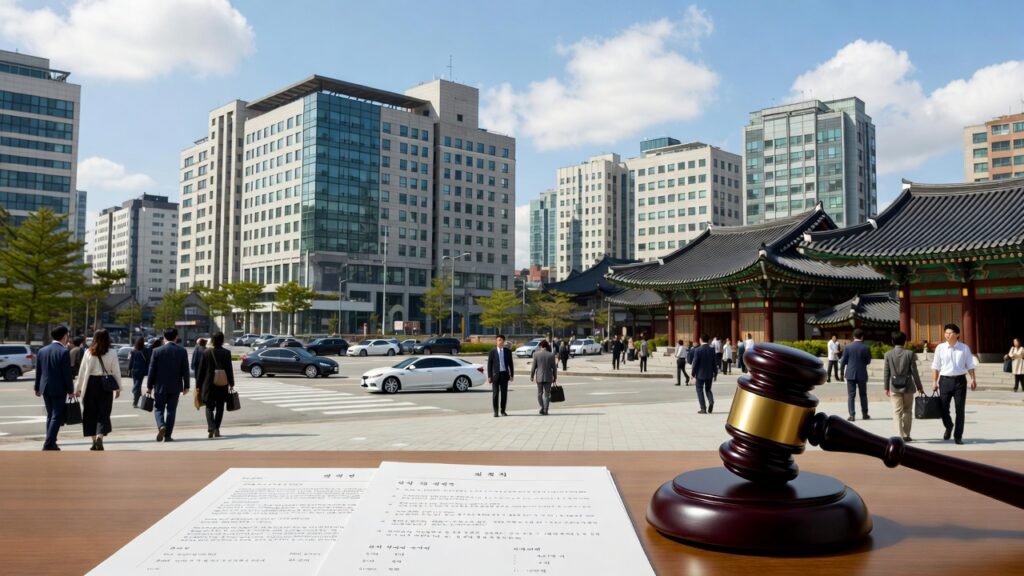
In the gripping finale of Sky Castle, a high-stakes inheritance battle tears apart a seemingly perfect family, exposing the raw tensions of wealth, legacy, and legal rights—echoing the real-world dramas that unfold in Korean courtrooms daily. If you’ve binge-watched K-Dramas like this and wondered how much of the heartbreak over marriages, divorces, and estates is rooted in actual law, you’re not alone. Korean family relations law, governed primarily by Book 4 of the Civil Code, shapes these pivotal life moments, blending ancient Confucian values with modern reforms for gender equality and child welfare. As a legal expert with over 15 years specializing in East Asian family law, including contributions to journals like the Journal of Korean Law and cultural analyses in publications such as Korea JoongAng Daily, I’ve witnessed how these laws evolve to reflect societal shifts. This guide demystifies Korean family relations law, using beloved K-Dramas as lenses to illustrate real inheritance, marriage, and divorce rules, helping fans, expats, and families navigate or simply appreciate the cultural depth behind the screen.
Whether you’re an international spouse contemplating a move to Korea, a K-Drama enthusiast debunking myths, or someone researching cross-cultural family dynamics, understanding these laws can prevent costly misunderstandings—like assuming Western-style common-law marriages apply here. We’ll explore historical foundations, key procedures, recent 2026 updates like the “Goo Hara Act,” and how series like The Heirs and Marriage Contract mirror (or dramatize) legal realities. By the end, you’ll gain actionable insights, backed by authoritative sources such as the Korean Ministry of Justice and the Constitutional Court, to bridge entertainment with practical knowledge.
The Foundations of Korean Family Relations Law
Korean family relations law isn’t just a set of rules—it’s a living framework that has adapted from rigid patriarchal traditions to promote equality and individual rights. At its core, it governs relationships within families, ensuring stability while addressing modern challenges like low birth rates and diverse family structures.
Historical Context and Evolution
Korean family law traces its roots to Confucian principles emphasizing filial piety (hyo) and hierarchical family structures, where the eldest son held primacy in inheritance. The modern era began with the 1958 enactment of the Civil Code, heavily influenced by Japanese colonial law and Western models. Post-Korean War reforms in the 1960s focused on rebuilding society, but significant changes came in the late 20th century.
The 1990 revision introduced more egalitarian measures, but the landmark 2005 amendments abolished the hoju system—a patriarchal family registry that listed individuals under a male household head. This shift promoted gender equality, allowing women to head families and children to take maternal surnames. Further progress included the 2008 gender equality amendments, which equalized inheritance rights and strengthened protections against domestic violence.
By 2026, reforms continue to accelerate. The Constitutional Court in 2024 declared parts of the legal reserve inheritance system unconstitutional, reducing mandatory shares for siblings and emphasizing testamentary freedom. Additionally, the “Goo Hara Act,” effective January 1, 2026, allows courts to disqualify neglectful parents from inheriting from their children, named after the late K-pop star whose case highlighted abandonment issues. These changes reflect Korea’s demographic shifts, including an aging population and rising single-person households, prompting discussions on the Life Partnership Act for non-traditional families.
Expert Insight: As Professor Hyunah Yang from Seoul National University notes in her analysis of family law reforms, “These evolutions mark a departure from Confucian rigidity toward a rights-based approach, balancing tradition with global human rights standards.” For expats tracing Korean ancestry, these historical layers can complicate genealogy research—start with the Family Relations Registration Act for official records.
Key Principles in the Korean Civil Code
Book 4 of the Korean Civil Code, titled “Relatives,” outlines fundamental principles: mutual consent in family matters, equality between spouses, and prioritization of child welfare. Unlike some Western systems, Korean law views marriage as a civil contract requiring registration, not religious ceremonies. Core tenets include:
- Equality and Consent: Spouses have equal rights to property and decisions, a post-2005 emphasis.
- Child-Centric Approach: The “best interests of the child” standard guides custody and support, aligned with international conventions like the Hague Convention on Child Abduction.
- Filial Obligations: While softened, duties like elder care remain, enforceable via courts.
Compared to U.S. law, Korea’s system is more centralized, with family courts handling most disputes through mediation first. LSI terms like “Korean Civil Code family provisions,” “spousal equality in Korea,” and “child custody principles” highlight these foundations.
Cultural Influences on Legal Practices
Despite legal modernization, cultural norms like hyo influence interpretations. Courts often consider family harmony in rulings, leading to mediated settlements over adversarial trials. For instance, inheritance disputes may favor reconciliation to preserve familial bonds.
In practice, chaebol (conglomerate) families—often dramatized in K-Dramas—navigate these laws with added complexity due to corporate assets. A tip for foreigners: When marrying a Korean national, understand how cultural expectations of extended family involvement can intersect with legal rights, potentially affecting visa or property claims.
| Major Milestones in Korean Family Law |
|---|
| 1958: Enactment of Civil Code, establishing basic family rules. |
| 1990: Introduction of egalitarian measures in divorce and inheritance. |
| 2005: Abolition of hoju system; equal inheritance for sons and daughters. |
| 2008: Gender equality amendments; strengthened domestic violence protections. |
| 2011: Joint custody options in divorce. |
| 2024: Constitutional ruling on inheritance reserves. |
| 2026: “Goo Hara Act” enforcement; kinship exemption abolition. |
Marriage Laws in Korea: From Vows to Legal Bonds
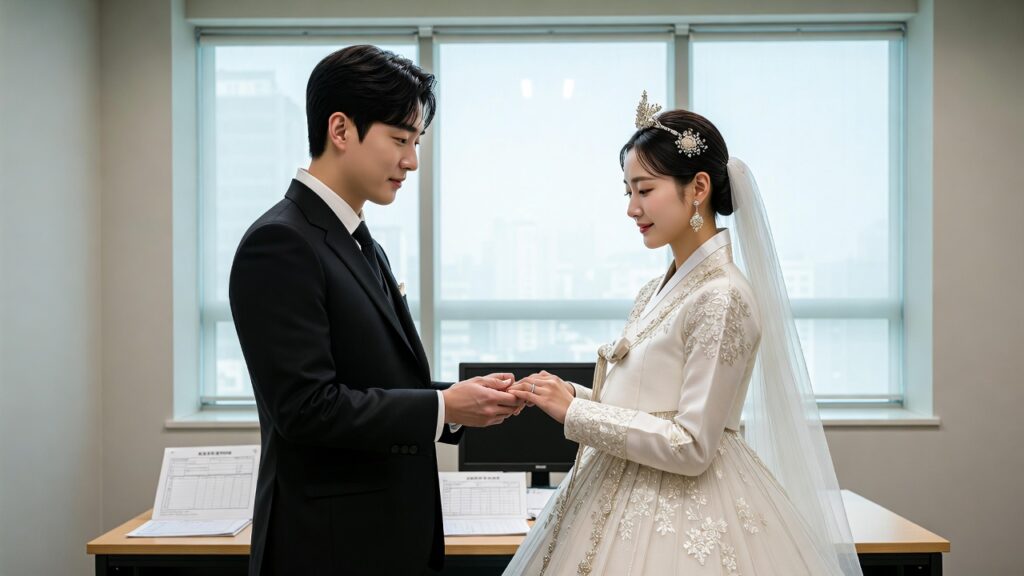
Marriage in Korea is straightforward legally but rich in cultural nuance. It’s not about lavish weddings (though K-Dramas love those)—it’s about official registration, ensuring rights and obligations are clear.
Requirements and Registration Process
To marry in Korea, parties must be at least 18 (with parental consent for minors aged 16-18, though rare). No residency requirement exists for foreigners, but international marriages need additional documentation like apostilled certificates.
The process: Submit a marriage registration form (honin sin-go) at a local district office (gu-cheong). It’s quick—no mandatory waiting period or blood tests. Once registered, the marriage is legal nationwide.
For international couples, implications include spousal visas (F-6) and potential dual citizenship for children. Statistics from the Korean Statistical Information Service show international marriages rising to over 20,000 annually by 2025, driven by globalization.
Real-Life Tip: Here’s a step-by-step checklist for valid marriages:
- Gather IDs, birth certificates, and affidavits of eligibility.
- Translate non-Korean documents.
- Register at the local office within three months of intent.
- Update family registry (hojeok) post-marriage.
- For U.S. citizens, report to the embassy for consular records.
Avoid pitfalls like assuming a wedding ceremony suffices—without registration, it’s not legal.
Common Law Marriages and Cohabitation Rights
Korea does not recognize common-law marriages; cohabitation alone grants no spousal rights. However, de facto unions may entitle partners to property division if proven as a “quasi-marriage” in court, based on shared life and finances.
Recent discussions on the Life Partnership Act aim to extend protections to unmarried couples, including LGBTQ+ pairs, though same-sex marriage remains unrecognized as of 2026. This gap highlights ongoing reforms for diverse families.
Prenuptial Agreements and Property Division
By default, Korea follows a separate property regime—each spouse retains pre-marital assets—but marital property is divided equitably upon dissolution. Prenups (honjeon gyeyak) can override this, specifying asset distribution, but must be notarized and fair.
K-Drama Example: In The Heirs, class disparities fuel prenup debates, reflecting real chaebol families’ use of agreements to protect conglomerates. Expert Insight: Data from the Seoul Family Court shows prenups in 15% of high-asset marriages by 2025, up from 5% a decade ago.
Divorce in Korea: Procedures, Grounds, and Aftermath

Divorce rates in Korea hover around 2.1 per 1,000 people in 2025, influenced by economic pressures and changing gender roles. The process emphasizes mediation to preserve family ties.
Grounds for Divorce Under Korean Law
Korea allows both no-fault (mutual consent) and fault-based divorces (e.g., adultery, abuse, abandonment). All cases start with mandatory mediation at family courts.
Recent updates: The 2025 pension division reform ensures equal splits based on marriage duration, addressing homemaker disadvantages. Types include uncontested (hyeop-ui ihon), mediated (jojeong ihon), and litigated (simpan ihon).
Statistics: Over 60% of divorces are consensual, per Ministry of Justice reports.
Child Custody and Support Obligations
Custody follows the “best interests” standard, post-2011 reforms allowing joint custody. Factors include parental fitness, child’s wishes (if over 13), and stability.
Support is calculated via guidelines considering income and needs. For international cases, Korea adheres to the Hague Convention, preventing abduction.
Real-Life Application: Parents should document involvement; courts favor continuity. Warning: Ignoring mediation can prolong proceedings up to a year.
Alimony and Asset Division
Alimony (wijaryo) is awarded based on fault, marriage length, and disparity—typically short-term. Assets are divided equitably, not equally, considering contributions.
K-Drama Example: Marriage Contract portrays custody struggles realistically, showing mediation’s role in emotional resolutions.
Flowchart of Divorce Process:
- Step 1: File petition (mutual or unilateral).
- Step 2: Mandatory mediation (1-3 months).
- Step 3: Trial if unresolved (6-12 months).
- Step 4: Appeal option; finalize with registration.
Common pitfalls: Underestimating emotional toll—seek counseling alongside legal advice.
Inheritance and Succession Rules: Who Gets What?

Inheritance in Korea follows a structured, equitable approach under the Civil Code, emphasizing family support while allowing greater personal choice through wills. Recent reforms, including the “Goo Hara Act” effective January 1, 2026, mark a significant shift toward fairness by addressing cases of neglect or abuse.
Intestate Succession Under Korean Law
When someone dies without a will (intestate), Korean law prioritizes heirs in a clear order to ensure dependents are provided for. The primary heirs are:
- Spouse and lineal descendants (children, grandchildren): They share equally, with the spouse often receiving an additional share for household contributions.
- If no descendants: Parents (lineal ascendants) inherit.
- If no parents: Siblings or their descendants.
- Further relatives (e.g., uncles/aunts) only in rare cases.
Key change from past practices: The 2005 reforms eliminated male-preference primogeniture, ensuring daughters inherit equally with sons—a major step toward gender equality.
As of 2026, the “Goo Hara Act” (amending Civil Code provisions on inheritance disqualification) allows courts to revoke or limit inheritance rights of parents who seriously neglected, abandoned, abused, or committed grave crimes against the deceased during their minority. This law, inspired by the late K-pop star Goo Hara’s case where her estranged mother claimed a share despite long-term abandonment, applies to lineal ascendants and promotes accountability. Courts assess evidence of failed parental duties, with decisions aimed at preventing emotional and financial injustice.
Statistics from the Korean Supreme Court indicate rising disputes over parental neglect, making this reform timely amid demographic changes like increasing single-child families.
Wills, Trusts, and Forced Heirship
Korean law strongly supports testamentary freedom, but includes “forced heirship” (legal reserve of inheritance) to protect close family. Reserved portions include:
- For children: 50% of what they would receive intestate.
- For spouse/parents: Similar protections in certain scenarios.
Wills can be holographic (handwritten, dated, signed), notarial, or secret. Holographic wills require no witnesses but must meet strict formalities to avoid challenges.
Trusts are less common but possible under the Trust Act for asset management, often used by high-net-worth families to control distributions (e.g., for minors or business succession).
Tax Implications: Inheritance tax applies progressively—10% on amounts up to KRW 100 million, rising to 50% over KRW 3 billion (with deductions for spouse/child). The 2026 “Goo Hara Act” indirectly affects taxes by altering eligible heirs.
K-Drama Example: In Graceful Family, intricate inheritance schemes involving corporate stakes highlight real tensions, but dramas often exaggerate disinheritance ease—courts rarely allow complete exclusion of reserved heirs without strong justification.
Tips for Drafting Wills in Korea:
- Consult a notary or attorney for validity.
- Specify guardians for minors.
- Update after major life events (e.g., divorce, new child).
- For expats: Consider dual-country implications via private international law.
| Comparison: Korean vs. Common Western Inheritance Laws |
|---|
| Aspect |
| Intestate Priority |
| Forced Heirship |
| Disinheritance Grounds |
| Tax Rates |
Disputes and Family Courts
Most inheritance conflicts go to family courts, emphasizing mediation to preserve relationships. Common issues include challenging reserved portions, proving neglect under the new act, or contesting wills for undue influence.
Family mediation centers offer low-cost, confidential resolutions—over 70% of cases settle here. Litigation, if needed, can take 1-2 years.
Expert Insight: The 2024 Constitutional Court ruling on inheritance reserves further expanded testamentary freedom by reducing mandatory sibling shares, aligning law with modern individualism.
How K-Dramas Mirror (and Misrepresent) Korean Family Laws

K-Dramas excel at dramatizing family conflicts, often drawing from real legal tensions while amplifying for entertainment.
Accurate Portrayals in Popular Series
Many series reflect genuine issues:
- Reply 1988: Depicts community property in marriages and filial duties realistically, showing how everyday assets are shared.
- Vincenzo: Explores corporate inheritance loopholes in chaebol families, mirroring real disputes over shares and control.
These portrayals educate viewers on mediation’s role and gender equality post-reforms.
Common Tropes and Legal Inaccuracies
Dramas frequently bend rules for plot:
- Forced marriages in Boys Over Flowers ignore mandatory consent—illegal under Civil Code.
- Instant disinheritance or dramatic courtroom twists overstate ease; real cases prioritize evidence and reserved rights.
Critique: While entertaining, these can mislead viewers about processes, like assuming adultery automatically voids inheritance (it may influence but not always).
Expert Insight: Script consultants often balance fiction with law for authenticity, as seen in legal-themed shows consulting Seoul Family Court experts.
Why K-Dramas Use Legal Themes
Korean family relations law provides rich material for dramatic storytelling because it directly engages with deep-seated societal tensions that resonate across generations. Themes like chaebol (family-run conglomerates) wealth gaps highlight stark class divides, where inheritance battles symbolize broader economic inequality. Gender roles appear in portrayals of traditional expectations clashing with modern equality reforms, such as women’s increasing independence post-divorce or in property rights. Elder care obligations reflect Korea’s rapidly aging population and low birth rates, creating emotional stakes around filial piety (hyo) versus individual freedom.
These elements fuel conflict: a family torn by unequal inheritance mirrors real disputes over assets in a society where family wealth often ties to corporate control. Divorce scenes explore custody fights amid changing gender norms, while marriage plots delve into prenups and social pressures. K-Dramas use these legal frameworks to critique systemic issues—education hyper-competition leading to family breakdowns in Sky Castle, or corporate succession exposing power imbalances.
Series like Sky Castle (2018–2019) critique inheritance/family pressure through intense parental ambition and estate disputes, sparking public discourse on reforms like the “Goo Hara Act.” This 2026 law (effective January 1, 2026) allows courts to revoke or limit inheritance rights of parents who seriously neglected, abandoned, abused, or committed grave crimes against their children during minority—prompted by the late K-pop star Goo Hara’s 2019 case, where her estranged mother claimed assets despite long absence. It promotes accountability, aligning with dramas’ themes of unjust parental claims.
Top K-Dramas for Legal Insights
- Sky Castle (inheritance/family pressure): Portrays high-stakes education and legacy battles, reflecting real inheritance disputes and societal pressures on success.
- The Heirs (class/prenups): Explores wealth disparities and prenuptial tensions in elite families, mirroring chaebol use of agreements to safeguard assets.
- Marriage Contract (divorce/custody): Depicts realistic mediation and emotional custody struggles, highlighting child welfare priorities.
- Graceful Family (succession disputes): Focuses on corporate inheritance intrigue, echoing chaebol loopholes and family court mediations.
Viewer Prompts: How do these series reflect real changes like the “Goo Hara Act”? In Sky Castle, parental neglect for ambition parallels grounds for disqualification under the new law—does the drama’s critique foreshadow such reforms? Compare Graceful Family‘s disinheritance plots to actual reserved portions and court challenges.
Recent Reforms and Future Trends in Korean Family Law
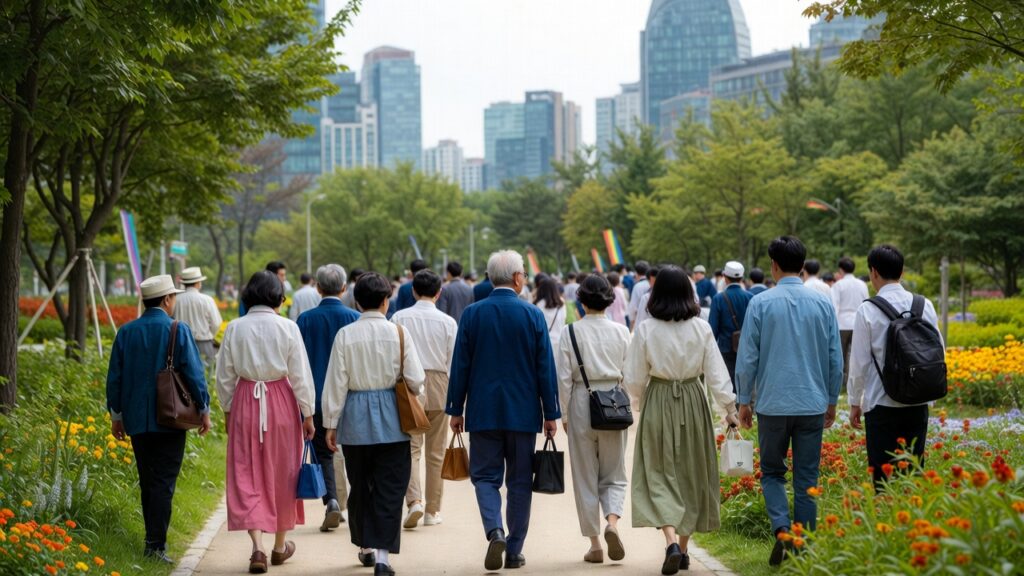
Korean family law continues evolving to address modern realities, from gender equality to demographic crises, with 2026 marking key implementations.
Gender Equality and LGBTQ+ Developments
Post-2005 abolition of the patriarchal hoju (family head) system and 2008 amendments strengthened spousal equality, domestic violence protections, and inheritance rights. As of January 2026, same-sex marriage remains unrecognized, with public support around 31% (per 2025 Hankook Research poll, down from prior years). However, judicial progress includes the Supreme Court’s July 2024 upholding of spousal health insurance benefits for same-sex couples, and the 2025 census allowing same-sex partners to be listed as “spouse” or “unmarried cohabitant” for the first time—symbolic inclusion in statistics.
Pushes for anti-discrimination laws and the Life Partnership Act (proposals for non-marital unions, including same-sex and opposite-sex caregiving pairs) gain traction amid court rulings on partner benefits, though conservative opposition persists. These reflect gradual shifts toward inclusivity for diverse families.
Impact of Demographic Shifts
Korea’s world’s-lowest birth rates (ongoing crisis, with slight 2025 upticks from policies) intensify child support emphasis, while an aging population bolsters elder care obligations under Civil Code filial duties. 2026 pension reforms (National Pension Act amendments, effective January 1) indirectly affect family finances: contribution rates rise gradually from 9% to 13% by 2033, income replacement increases to 43% in 2026 (from 41.5%), and credits expand for childbirth/military service—aiming to delay fund depletion and support families amid low fertility.
Advice for Expats and Global Families
International marriages/divorces demand dual compliance—e.g., Hague Convention on child abduction for custody. Register marriages promptly at local offices for visa/property rights (F-6 spousal visas). Seek bilingual legal counsel familiar with Korean Civil Code and home-country laws to navigate inheritance, asset division, or cross-border disputes. For ancestry research, use the Family Relations Registration Act records.
Timeline of Key Reforms:
- 2005: Abolish hoju system; equal inheritance for daughters.
- 2011: Introduce joint custody options in divorce.
- 2024: Constitutional adjustments to inheritance reserves; Supreme Court affirms same-sex partner insurance rights.
- 2026: “Goo Hara Act” enforcement (neglectful parents’ inheritance disqualification); pension contribution/replacement rate increases; related social policies expand childcare/parental leave.
Predictions: Greater inclusivity for diverse families as low birth rates and aging demographics force adaptations—potentially advancing Life Partnership Act debates and anti-discrimination measures, though cultural resistance remains.
Frequently Asked Questions (FAQs)
What is the minimum age for marriage in Korea? 18 (16-17 with parental consent, though uncommon).
Can foreigners inherit property in Korea? Yes, with restrictions on agricultural land; report to tax authorities.
How accurate are K-Dramas in depicting divorce proceedings? Moderately—mediation emphasis is real, but timelines/emotions are compressed.
What happens if there’s no will in a Korean family? Intestate succession applies: spouse/children first, equally.
Does Korea recognize same-sex marriage or partnerships? No marriage; partnership proposals pending, some court-recognized benefits.
How does the “Goo Hara Act” change inheritance? Allows disqualification of neglectful/abusive parents from inheriting.
What about child support in international divorces? Follows Hague Convention; courts prioritize child’s best interests.
Can prenups override default property rules? Yes, if fair and notarized.
Korean family relations law masterfully balances Confucian traditions with modern equality, child protection, and fairness—evident in reforms like the 2026 “Goo Hara Act.” K-Dramas offer compelling windows into these dynamics, blending entertainment with cultural commentary on marriage, divorce, and inheritance.
While dramas heighten drama, real laws provide stability through mediation and equity. For personal matters—international marriages, estates, or disputes—consult qualified professionals, as this guide offers general insights only.
As K-Dramas evolve alongside society, they illuminate the laws shaping Korean families. Stay engaged with both for deeper appreciation—explore related articles like “Korean Adoption Laws Explained” on this site.
Sources: Korean Ministry of Justice, Civil Code (Book 4), Supreme Court reports, Constitutional Court decisions, Statistics Korea (2023-2025 data), academic analyses (e.g., Seoul National University).