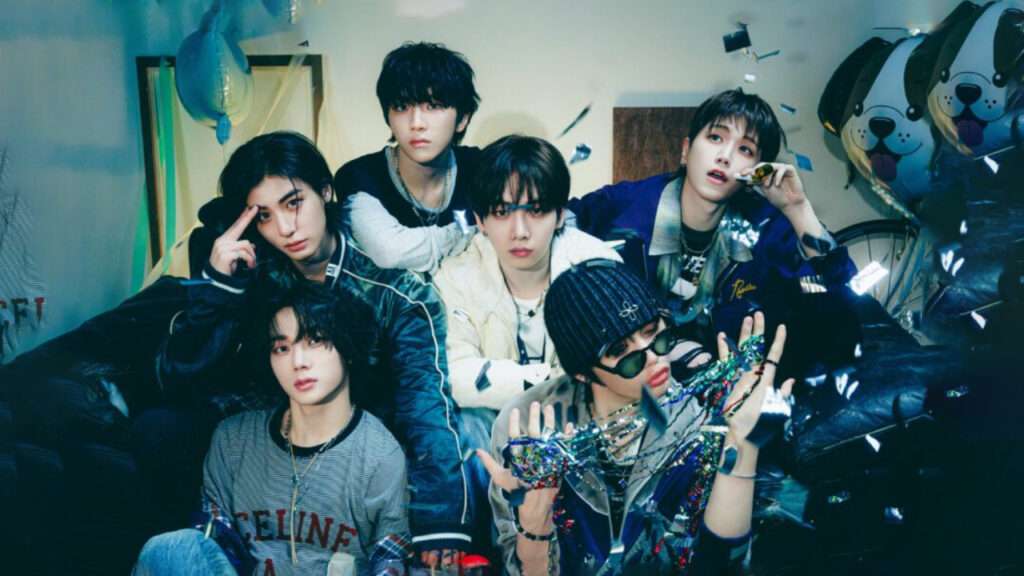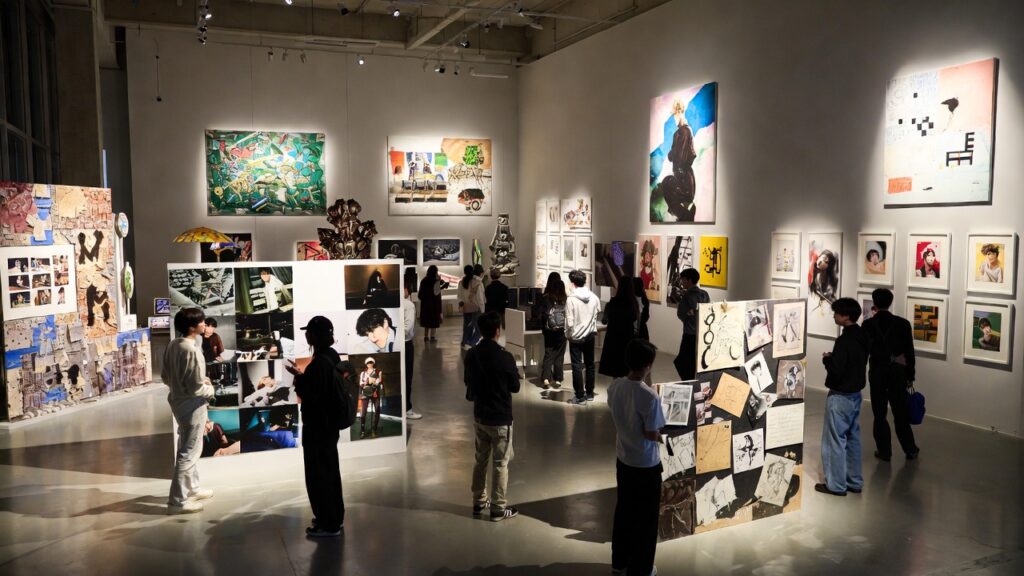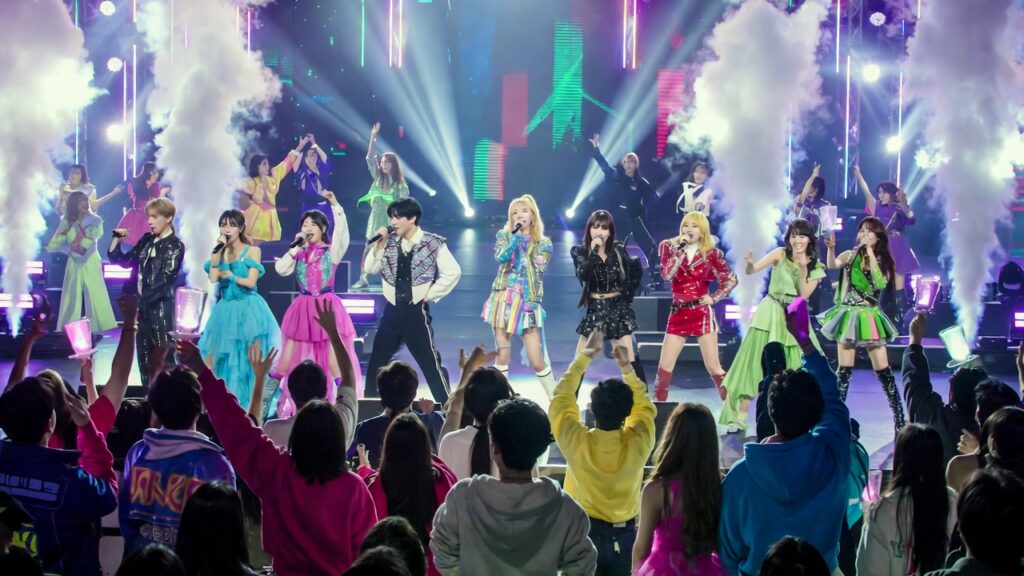
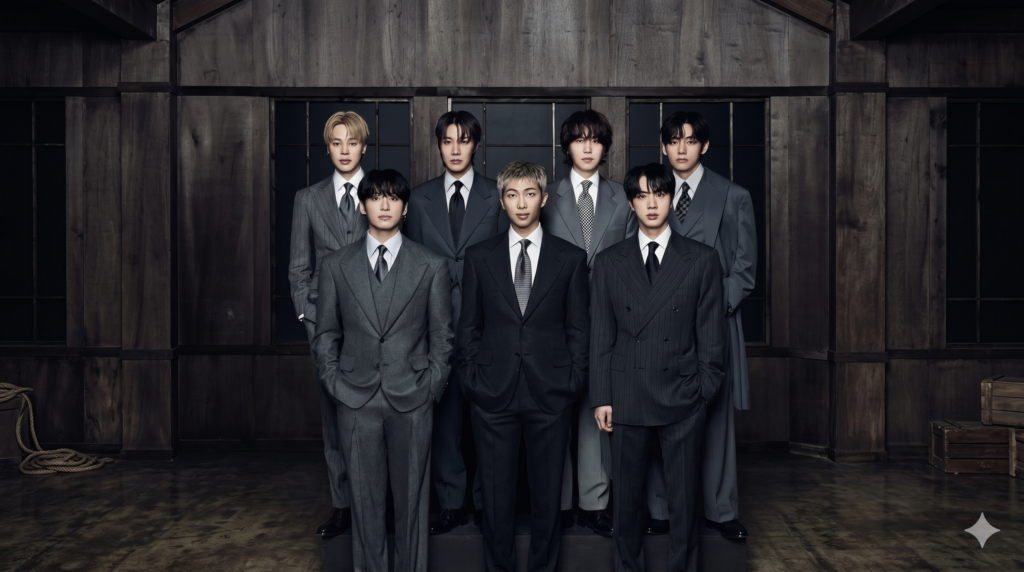
Imagine standing in the heart of Seoul on a crisp March evening. The ancient stone gates of Gwanghwamun Square glow under a cascade of lights. Around you, 260,000 people — many in red-and-white hanbok-inspired outfits, many in tears — are waiting for the same moment. Then, seven figures walk onto a stage shaped like a picture frame, and the crowd erupts into something that sounds less like a cheer and more like a collective exhale. Four years of waiting. Four years of solo chapters, military uniforms, and unanswered questions about whether the world’s biggest K-pop group would ever truly come back together. The BTS comeback in 2026 didn’t just answer that question — it redefined what a cultural return could look like.
This is not just a story about a new album. It is a story about identity, resilience, Korean cultural pride, and the unbreakable bond between seven artists and a global fanbase that refused to move on. Whether you are a devoted ARMY member who has been counting down the days, a K-culture enthusiast curious about what all the noise is about, or a casual fan trying to catch up — this guide covers everything you need to know about BTS’s Arirang album, their record-shattering world tour, their Netflix documentary, and what this historic moment means for K-pop in 2026 and beyond.
The Long Wait Is Over — How the BTS Comeback in 2026 Came to Be
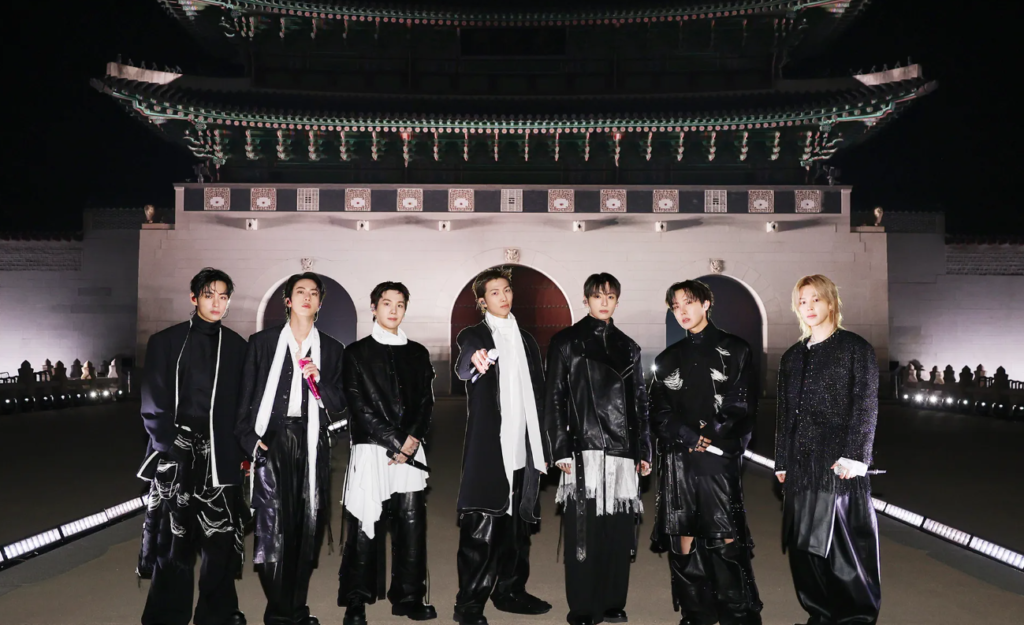
Military Service and the Four-Year Hiatus
To fully appreciate the magnitude of the BTS comeback in 2026, you have to understand what came before it. On June 14, 2022, BTS announced a temporary suspension of group activities to focus on individual projects. What followed was a structured, staggered period of mandatory military service — a legal requirement for all able-bodied South Korean men. Beginning in December 2022, the members enlisted one by one, with the final members completing their service by June 2025.
For ARMY, it was a quiet 그리움 — a Korean word for longing with no direct English translation. The group had built one of the most passionate fandoms in music history, and suddenly, the seven-member unit that had defined a generation of K-pop was dispersed across military bases.
But BTS didn’t disappear. Each member pursued solo releases, personal growth, and artistic exploration. RM released introspective albums that leaned into Korean identity. Jimin and Jungkook delivered global solo hits. Suga embarked on a solo world tour. ARMY, loyal as ever, kept streaming, kept charting decade-old BTS songs, and kept waiting. The hiatus, it turned out, did not cool the fandom’s devotion — it intensified it.
The Announcement That Shook the K-pop World
The moment all seven members were discharged from military service in June 2025, they reunited on camera and made a simple but seismic announcement: a new BTS album and world tour were coming in 2026. RM told fans through Weverse in November 2025, “the music is coming out really well!! Everyone’s trying. Please look forward to it.”
Then, on January 1, 2026, Big Hit Music posted a message on their Korean-language account: “March 20th comeback confirmed.” The internet broke. Within days, ARMY had organically pushed “Run BTS” — a song released years prior — back to the number one spot on the Billboard Hot 100, simply to celebrate. A few weeks earlier, “Anpanman” from 2016 had done the same. No marketing campaign. No algorithm tricks. Just pure, organized fan devotion signaling to the world: BTS is back, and we never left.
On January 13, the world tour was officially announced. Two days later, the album title was revealed: Arirang.
Inside the ‘Arirang’ Album — A Deep Dive
What Does ‘Arirang’ Mean? The Cultural Significance
For non-Korean audiences, Arirang might sound like a simple title choice. But for Koreans — and for anyone who understands the depth of Korean cultural heritage — the word carries extraordinary weight.
Arirang is a traditional Korean folk song believed to have originated during the Joseon Dynasty (1392–1910). It exists in hundreds of regional variations across the Korean peninsula and diaspora, and is widely considered Korea’s unofficial national anthem. It carries themes of separation, longing, reunion, and perseverance — themes that, given BTS’s four-year hiatus from group activities, feel almost too perfectly aligned to be coincidental.
Big Hit Music stated that Arirang “captures BTS’ identity as a group that began in Korea.” This is a deliberate artistic statement. During BTS’s commercial peak, the group leaned into English-language pop with tracks like “Butter” and “Dynamite” — massive global hits, but ones that represented a move away from their Korean-language roots. With Arirang, BTS is making a correction. A homecoming. A reclaiming of cultural identity that resonates not only musically, but politically and socially in a global moment when Korean soft power — fueled by K-drama, K-beauty, and K-pop — has never been stronger.
The choice of this title is, in itself, an act of cultural authorship.
Track List, Production & Notable Collaborations
Arirang is a 14-track studio album that blends BTS’s signature emotional depth with some of the most ambitious production of their career. The album was written and recorded after the seven members reconvened in Los Angeles in early 2026, a deliberate effort to recapture the creative chemistry that distance and solo careers had temporarily separated.
The production roster reads like a who’s-who of contemporary music. Collaborators include Diplo, Ryan Tedder (OneRepublic), Kevin Parker (Tame Impala), JPEGMafia, Mike Will Made-It, and Artemas — a genre-spanning lineup that signals BTS’s refusal to be boxed into any single sound.
The seventh track, “Swim,” was notably highlighted in black on the official track listing reveal — an artistic choice that immediately sparked speculation and deep-dive analysis across fan communities worldwide. A behind-the-scenes documentary scene later revealed a creative tension between members RM and Suga, who pushed for more Korean-language lyrics throughout the album, and HYBE management, who expressed concern about maintaining BTS’s global commercial reach. This tension — between artistic authenticity and commercial strategy — is one of the album’s most compelling subplots, and one that Arirang ultimately resolves in favor of cultural identity.
Chart Performance & Records Broken
The numbers surrounding Arirang are not just impressive — they are historic.
On Spotify, the album received over 564,000 pre-saves in its first 24 hours, eventually surpassing 2 million pre-saves in just four days — making it BTS’s most pre-saved album ever, and the fastest album to reach number one on Spotify’s Countdown Chart, surpassing Taylor Swift’s previous record.
Upon release on March 20, 2026, Arirang achieved 110 million Spotify streams on its first day — the most first-day streams for any album in 2026. All 14 tracks filled the top 14 spots on Spotify’s Global Top 50 chart simultaneously. On Apple Music, the album broke the record for most first-day streams for a pop group’s album.
In South Korea, Arirang sold 4.2 million copies in its first week, immediately ranking as one of the best-selling albums in the country’s history. On the US Billboard 200, it debuted at #1 with 641,000 album-equivalent units — the largest opening week by units for a group since the chart began calculating units in December 2014, and BTS’s seventh US number-one album.
These are not just chart statistics. They are a referendum — delivered by millions of listeners simultaneously — on whether BTS still matters. The answer was thunderous.
Critical Reception
Beyond the fan numbers, Arirang earned the kind of critical validation that separates a great commercial release from a genuinely important artistic work.
On Metacritic, the album received “Universal Acclaim” with a weighted average score of 83 out of 100 from nine critic scores. NPR’s Sheldon Pearce described the album as a “triumphant homecoming,” writing that BTS “has never felt more connected, inwardly or to its calling.” The New York Times awarded Arirang a “Critic’s Pick” label, with Jon Caramanica noting that “Arirang doesn’t pander, and it doesn’t overwhelm” — high praise for a group operating under the weight of astronomical expectations.
Not every corner of the K-pop commentary world greeted the album with uniform praise. Some critics noted unevenness in the tracklist, and a few online communities debated whether the more experimental production choices alienated casual listeners. But even the most measured critiques acknowledged what Arirang represents: a bold, confident artistic statement from a group that could have played it safe — and chose not to.
The Comeback Live — A Historic Concert at Gwanghwamun Square
Why This Concert Was Unlike Anything Before
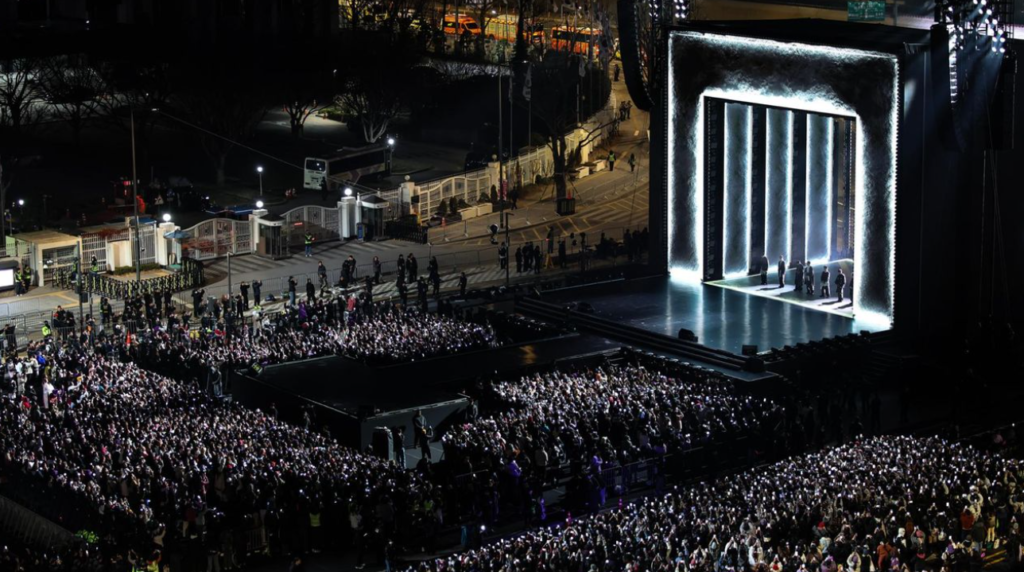
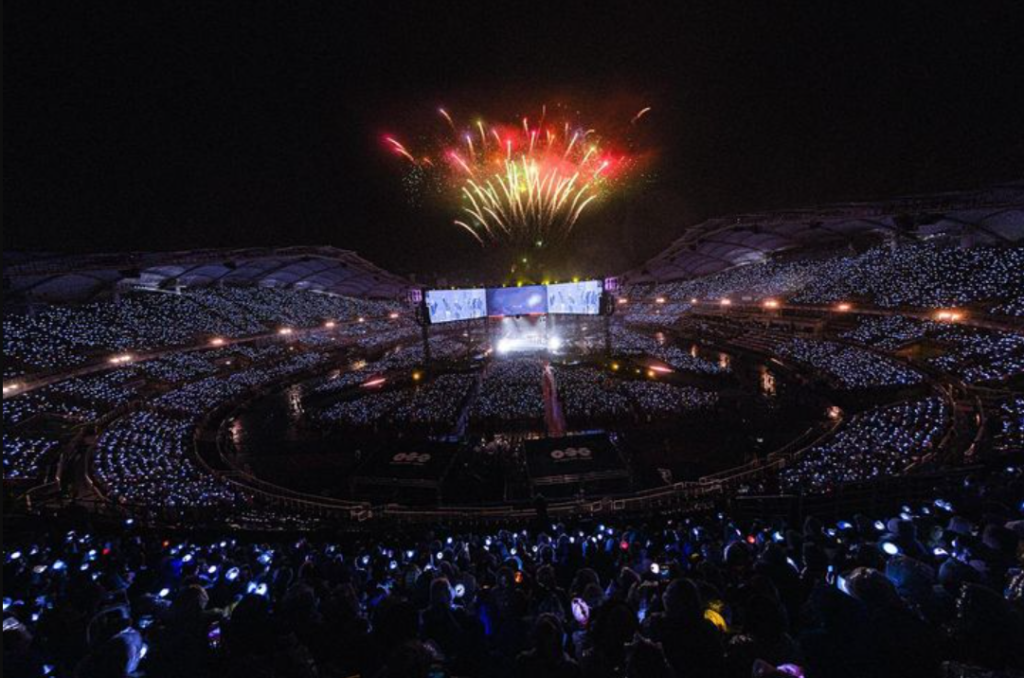
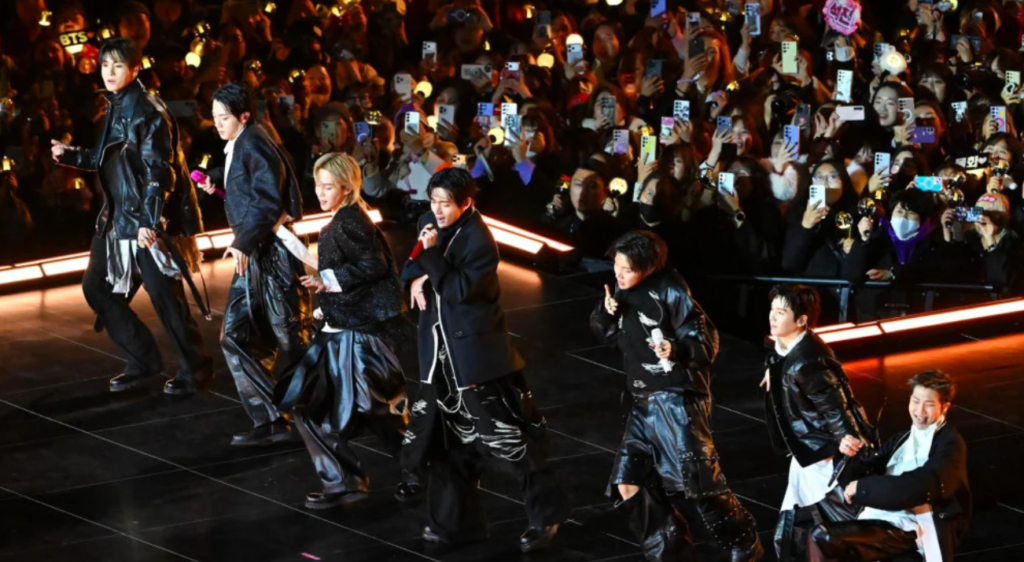
On March 21, 2026 — the day after Arirang‘s release — BTS held a free public concert at Gwanghwamun Square in central Seoul, one of the city’s most historically and culturally significant public spaces. Only 22,000 fans received the coveted “Golden Ticket” to stand within the venue itself, but the surrounding streets and public screens drew an estimated 260,000 people — making it the largest public concert in South Korean history.
The production was nothing short of cinematic. British director Hamish Hamilton — renowned for directing the Super Bowl Halftime Show and the Oscars — helmed the concert, describing the production as “among the most challenging” of his career in terms of “sheer logistical complexity.” The stage, designed by events specialists Guy Carrington and Florian Wieder, was built around the concept of a picture frame: grounding the show in BTS’s modern energy while honoring the historical gravity of the venue. “We did not want to come in and build something that felt at odds with the location,” Hamilton explained. The result was a stage that felt like it had always belonged there — as if Seoul itself was the backdrop BTS had always been building toward.
The night before the concert, a spectacular drone show lit up the Seoul skyline with imagery of the seven members. Fans slept on streets. Some had traveled from over 40 countries. By the time BTS took the stage, the emotional charge in Gwanghwamun Square had reached the kind of intensity that can only be described as collective catharsis.
The Cultural Fashion Moment — Hanbok Meets ARMY
One of the most visually striking and culturally meaningful dimensions of the comeback concert was what fans chose to wear. Social media in the weeks leading up to the event had been flooded with outfit inspiration posts centered on hanbok — traditional Korean dress — styled in BTS’s album colors of red and white.
Fans arrived at Gwanghwamun in elaborate hanbok-inspired ensembles, floor-length jackets, traditional hair clips, and accessories that married Korean heritage with ARMY identity. American fan Vivienne Ferrier, living in Korea, told CNN: “I chose the colors red and white because the album is red and white, so I wanted to celebrate what they were showing to us. This is a Korean traditional hanbok. And I just wanted to really honor that.”
BTS themselves leaned into the cultural moment, selling official merchandise that included traditional Korean accessories — hair clips, pouches, and wearables that carried the aesthetic of the Arirang album. This was not merchandising strategy alone. It was cultural curation: BTS and ARMY co-creating a moment where global pop fandom and Korean heritage intersected in public, joyfully, and on the world stage.
BTS Arirang World Tour 2026–2027 — Dates, Cities & What to Expect
Tour Overview & Scale
The Arirang World Tour is, by every measurable metric, the most ambitious concert tour in K-pop history — and one of the largest live music events of 2026 across any genre.
Officially announced on January 4, 2026, the tour spans 85+ dates across 34 cities in 23 countries, running from April 9, 2026 (Goyang, South Korea) through March 14, 2027 (Manila, Philippines). The scale rivals, and in some dimensions surpasses, the logistical footprint of Taylor Swift’s Eras Tour — and analysts are watching closely.
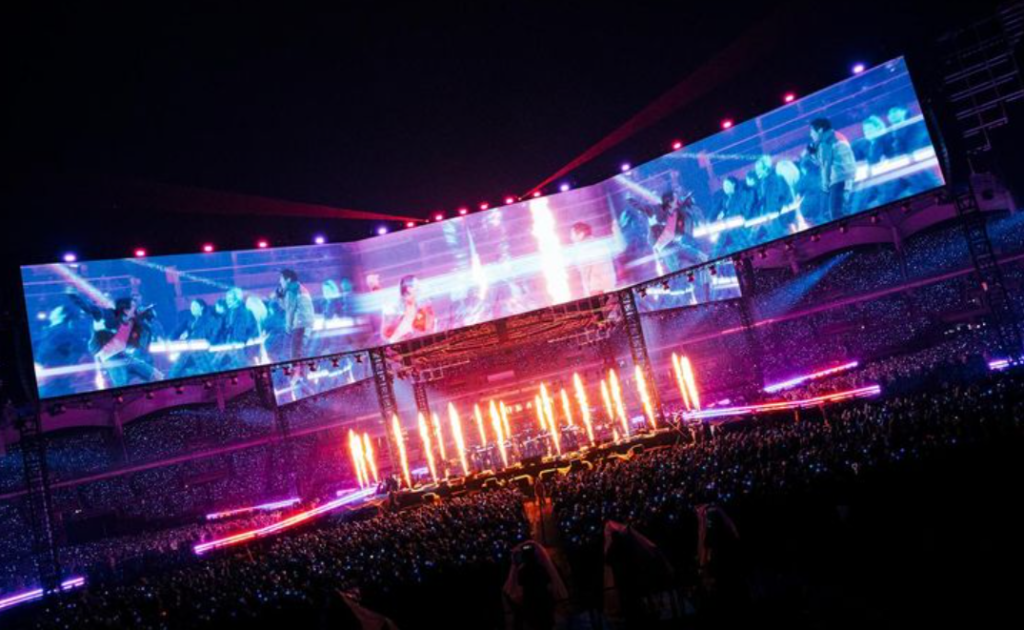
Perhaps the most talked-about element of the tour’s production is its stage design: a 360-degree in-the-round configuration that places BTS at the physical center of their audience. This is a first for any K-pop stadium tour, and it represents a philosophical as much as a practical choice — BTS, literally and symbolically, surrounded by the fans who waited for them.
Tickets across South Korea, North America, and Europe sold out within hours of both pre-sale and general sale — a feat that drew widespread media coverage and reignited conversation about the economics of live music at the top tier.
Key Tour Stops by Region
The Arirang World Tour is genuinely global in its reach:
Asia forms the emotional core of the tour, beginning in Goyang, South Korea, and including stops in Japan and the Philippines (Manila, as the tour’s finale). Additional Middle Eastern dates were announced for 2027.
North America features multiple major US cities — all of which sold out rapidly, with secondary market prices reflecting demand that outstripped even the most optimistic projections.
Europe saw similar sell-out speeds, with fans across the UK, Germany, France, and beyond snapping up tickets within the first hour of availability.
Latin America received a welcome expansion on April 8, 2026, when BTS added one additional show each in Lima, Santiago, and Buenos Aires — a direct response to overwhelming regional demand and a meaningful acknowledgment of BTS’s enormous Latin American ARMY community.
What Fans Can Expect at the Show
The 360-degree in-the-round stage fundamentally changes the concert experience. Unlike traditional stadium setups where a significant portion of the audience views the stage from behind or at extreme angles, BTS’s Arirang Tour design ensures that virtually every seat offers a near-equal sightline to the performers at center stage.
The setlist — drawn from the April 9, 2026 Goyang debut — weaves Arirang album tracks with beloved catalog entries, giving fans the Eras Tour-style retrospective experience many had hoped for. Production elements include elaborate lighting rigs, video screens that wrap 360 degrees around the stadium interior, and choreography designed specifically for the in-the-round format.
From an economic standpoint, IBK Investment & Securities analyst Kim Yu-hyuk estimates that the BTS comeback in 2026 — across album sales, touring, merchandise, and ancillary industries — will generate at least ₩2.9 trillion (approximately $1.93 billion USD), a figure that Bloomberg noted could potentially rival Taylor Swift’s $2 billion Eras Tour earnings. He described BTS’s momentum as “strong,” adding: “This comeback is expected to go beyond the performance of BTS and serve as an opportunity to expand the overall growth trajectory of the K-pop industry.”
BTS: The Return — The Netflix Documentary
What the Documentary Reveals
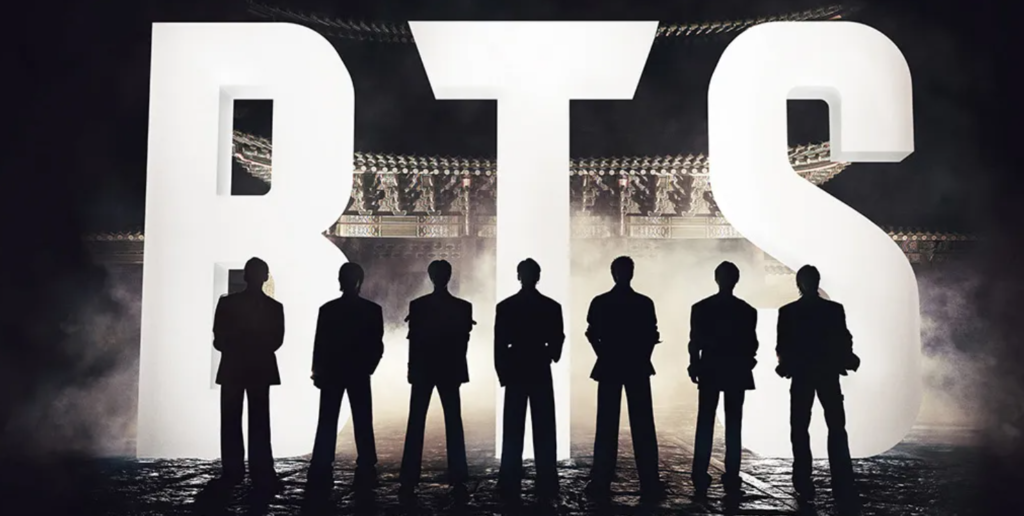
If Arirang the album is BTS’s artistic statement, then BTS: The Return — the accompanying Netflix documentary that premiered on March 27, 2026 — is the unfiltered human story behind it. And it is, in many ways, just as compelling as the music itself.
The documentary follows all seven members through the process of reuniting, reconnecting, and rebuilding the creative dynamic that four years of military service and solo careers had inevitably shifted. What viewers get is not the polished, choreographed image of BTS that the world knows from music videos and press tours. What they get is something rarer: seven men navigating the complex, sometimes uncomfortable space between who they were and who they have become.
Several scenes have already become widely discussed among fans and cultural commentators. One of the most revealing involves a creative disagreement over the use of the traditional Arirang folk melody as a sample in the album’s opening track, “Body to Body.” HYBE Chairman Bang Si-hyuk is shown encouraging the members to embrace the sample, framing it as a powerful opportunity to spread Korean culture to the world. The members are receptive — but not without friction.
In another scene, Suga and RM — the group’s primary rappers and two of its most outspoken creative voices — raise pointed concerns about the album’s balance of Korean and English lyrics. The tension is not hostile, but it is real. Management’s counterpoint centers on maintaining BTS’s global commercial footprint. The documentary does not resolve this tension neatly, because in reality, it was not neatly resolved — it was negotiated, compromised, and ultimately channeled into the music itself.
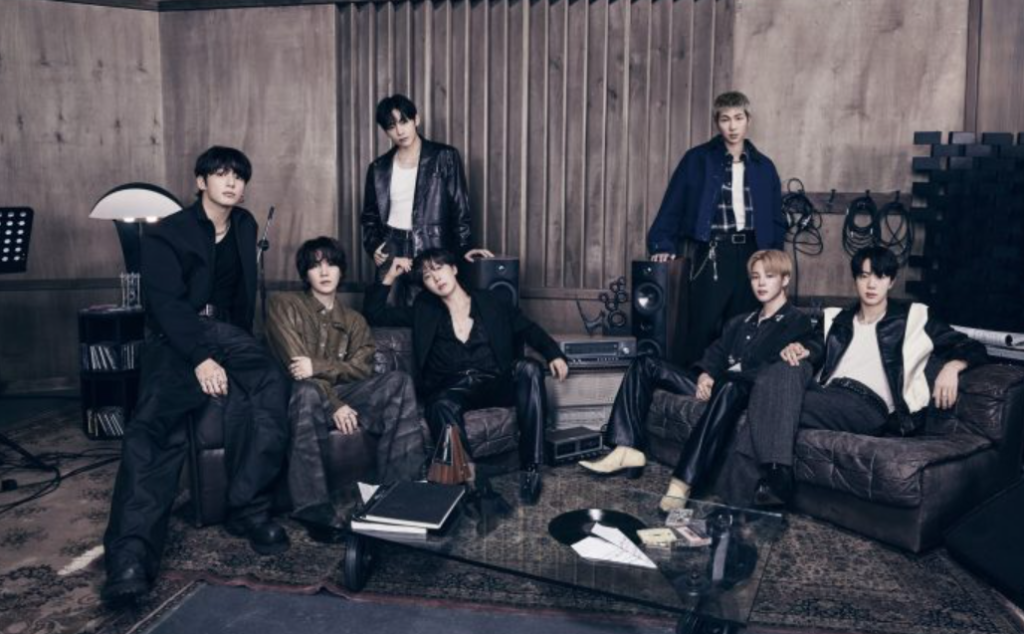
Beyond these specific creative debates, BTS: The Return is fundamentally a portrait of reunion. It captures the quiet moments — members sitting together for the first time in years, laughing over old memories, finding their rhythm again in studio sessions. It shows the pressure each member carries: the weight of representing not just themselves, but a multi-billion dollar industry, a nation’s cultural identity, and the hopes of millions of fans worldwide.
Why It Matters Beyond the Music
Documentaries about music groups are common. Honest ones are not. What makes BTS: The Return significant — both for fans and for anyone interested in the mechanics of the modern K-pop industry — is its willingness to show the seams.
For years, the K-pop industry has operated on an image of seamlessness: perfectly produced music, perfectly choreographed performances, carefully managed public personas. BTS: The Return does not dismantle this image entirely, but it complicates it in meaningful ways. Watching RM push back against management decisions, or seeing Jimin quietly process the pressure of expectations, humanizes BTS in a way that no number of fan-focused press junkets ever could.
For ARMY, the documentary deepens the parasocial connection that has always been central to BTS’s relationship with their fanbase. For the broader K-drama and Korean culture audience — the readers of blogs like yours — it functions as a fascinating window into the inner workings of the global K-pop machine: the creative negotiations, the corporate pressures, and the irreducible human element that no amount of industry infrastructure can manufacture.
BTS: The Return is, ultimately, the answer to a question fans have been asking for four years: What was it really like? The answer, it turns out, is messier, more vulnerable, and more interesting than anyone expected.
What the BTS Comeback Means for K-pop in 2026 and Beyond
Reviving Korean Cultural Identity in Global Pop
The BTS comeback in 2026 arrives at a precise cultural inflection point — one that makes its artistic choices feel less like creative decisions and more like deliberate interventions in a larger conversation about what K-pop is, and what it should be.
Over the past decade, K-pop’s global expansion has come with a quiet but significant cost: a gradual dilution of Korean cultural specificity in favor of internationally digestible sounds and aesthetics. English-language lyrics, Western production styles, and deliberately neutral cultural branding became the dominant formula for groups seeking to break into North American and European markets. BTS themselves were not immune to this trend — “Butter” and “Dynamite,” two of their biggest global hits, were sung almost entirely in English.
Arirang represents a conscious course correction. By naming their comeback album after one of the most recognizable symbols of Korean cultural heritage, by centering themes of Korean identity and belonging, and by pushing (however imperfectly) for more Korean-language content, BTS is making a statement that carries weight well beyond their own discography: Korean culture does not need to be translated to be universal.
This is significant in the context of South Korea’s broader soft power moment. The global appetite for Korean content — accelerated by the worldwide success of K-dramas like Squid Game and Crash Landing on You, the international mainstream recognition of Korean cinema following Parasite‘s Oscar sweep, and the continued global growth of K-beauty — has created an audience that is not just tolerant of Korean cultural specificity, but actively hungry for it.
BTS’s Arirang lands directly into this cultural appetite. It does not ask international listeners to overlook its Korean-ness. It asks them to embrace it. And based on the streaming numbers, critical reception, and cultural conversation the album has generated, the answer from global audiences has been a resounding yes.
The ARMY Effect — Fandom as a Cultural Force
No analysis of the BTS comeback in 2026 is complete without reckoning seriously with ARMY — one of the most organized, culturally influential, and analytically sophisticated fan communities in the history of popular music.
The pre-comeback period offered a masterclass in coordinated fan mobilization. When BTS’s return was announced, ARMY did not simply celebrate — they activated. Decade-old songs were strategically streamed back to chart positions. Pre-save campaigns were organized across time zones. Fan accounts with millions of followers coordinated album purchase strategies to maximize first-week chart performance. The result: “Run BTS” and “Anpanman” returning to Billboard’s top positions without a single dollar of promotional spending from HYBE.
This is not passive fandom. This is a fandom that understands the music industry’s metrics as well as the industry itself does — and uses that understanding as a tool of collective expression.
The implications extend beyond BTS. ARMY’s model of fan engagement has become a blueprint studied by management companies, marketing analysts, and music industry professionals worldwide. The BTS comeback in 2026 has reinvigorated conversations about the role of fandoms as active co-creators of cultural moments, rather than passive consumers of them. For the K-pop industry specifically, it has demonstrated that the fidelity of a well-cultivated fanbase can outlast even a four-year hiatus — a fact that will inform how HYBE and its competitors approach group management, military service periods, and fan communication strategies for years to come.
Is This a Stumble or a Triumph? Addressing the Controversy
Intellectual honesty demands acknowledging that the BTS comeback in 2026, despite its record-breaking commercial performance and critical acclaim, has not been universally celebrated in every corner of the K-pop community.
Some longtime fans expressed disappointment with the album’s creative direction, arguing that the heavy involvement of Western producers diluted the authenticity that the Arirang title promised. Online communities debated whether the documentary’s revelations about management-member tensions should be read as a sign of creative health or institutional dysfunction. HYBE’s stock price, notably, experienced turbulence in the weeks following the release — reflecting investor uncertainty that sat in strange contrast to the album’s cultural dominance.
There is also the broader context of a K-pop industry in transition. The landscape BTS returned to in 2026 is materially different from the one they left in 2022. New groups have emerged and claimed significant market share. The industry’s center of gravity has shifted in subtle but real ways. Even for the biggest group in the world, re-entry is not automatic.
And yet — the weight of evidence points toward triumph, not stumble. An album that debuts at number one in the world’s largest music market, sells over four million copies in its home country in a single week, earns universal critical acclaim, and anchors the largest K-pop world tour in history is not a failure by any reasonable metric. It is, at worst, a complex and imperfect success — which, for an artist operating at the intersection of commerce, culture, and identity, may be the most honest kind of success there is.
As one industry insider put it plainly: BTS is still performing for hundreds of thousands of screaming fans across five continents. Whatever the critics say, the people have voted.
Expert Insight & Industry Analysis
The BTS comeback in 2026 has attracted serious analysis from financial, cultural, and music industry experts — a testament to the group’s unique position at the intersection of entertainment and economics.
Kim Yu-hyuk, analyst at Seoul-based investment bank IBK Investment & Securities, offered perhaps the most cited projection: that BTS’s 2026 comeback would generate at least ₩2.9 trillion (approximately $1.93 billion USD) across album sales, touring, merchandise, and the broader economic halo effect of BTS-related tourism and consumer spending. For context, Bloomberg had reported as early as October 2025 that BTS planned to undertake “their largest world tour to date” — a prediction that proved accurate.
Kim framed the comeback not merely as a BTS business event, but as an industry catalyst: “This comeback is expected to go beyond the performance of BTS and serve as an opportunity to expand the overall growth trajectory of the K-pop industry.” In an era where some analysts had begun to question whether K-pop’s global growth curve was plateauing, BTS’s return has functioned as a significant market confidence signal.
The economic model being watched most closely is the comparison to Taylor Swift’s Eras Tour, which generated approximately $2 billion in direct revenue and an estimated $4–5 billion in broader economic impact across host cities. The Arirang World Tour — spanning 85+ dates across 23 countries, with a 360-degree production that requires unprecedented logistical investment — is positioned as K-pop’s first serious answer to that scale of live music economics. Whether the final numbers rival Swift’s is secondary to the fact that the conversation is happening at all, which itself represents a seismic shift in how the global music industry perceives Korean pop’s commercial ceiling.
From a cultural analysis perspective, academics and commentators studying Korean soft power have noted that the Arirang album and its accompanying cultural moment — the hanbok fashion wave, the Gwanghwamun concert, the Netflix documentary — represent a maturation of K-pop’s global influence. Where early K-pop crossover success often required a degree of cultural camouflage, BTS’s 2026 comeback demonstrates that Korean cultural specificity is now a commercial asset rather than a barrier.
FAQs — BTS Comeback in 2026
The following questions represent the most commonly searched queries related to the BTS comeback in 2026, addressing the informational needs of fans, casual listeners, and K-culture enthusiasts alike.
Q1: When did BTS make their official comeback in 2026? BTS officially returned on March 20, 2026, with the release of their sixth Korean-language studio album, Arirang. The following day, March 21, they held a landmark free public concert at Gwanghwamun Square in Seoul, attended by an estimated 260,000 fans.
Q2: What is the BTS 2026 album called, and what does the name mean? The album is titled Arirang, named after a traditional Korean folk song widely considered the country’s unofficial national anthem. The title references themes of separation, reunion, resilience, and national pride — all of which carry deep personal resonance for BTS following their four-year hiatus for mandatory military service.
Q3: How many songs are on the BTS Arirang album, and who produced it? Arirang features 14 tracks. The album was produced in collaboration with a diverse roster of international musicians including Diplo, Ryan Tedder, Kevin Parker (Tame Impala), JPEGMafia, Mike Will Made-It, and Artemas, among others. Track 7, “Swim,” was highlighted prominently in album promotional materials.
Q4: Where can I watch the BTS comeback documentary? BTS: The Return — the official documentary chronicling the making of Arirang and the group’s reunion — premiered on Netflix on March 27, 2026, and is available to stream on the platform globally.
Q5: What are the BTS world tour 2026 dates and cities? The Arirang World Tour began on April 9, 2026 in Goyang, South Korea, and runs through March 14, 2027, concluding in Manila, Philippines. It spans 85+ dates across 34 cities in 23 countries, covering Asia, North America, Europe, and Latin America. Three additional Latin American dates — in Lima, Santiago, and Buenos Aires — were added on April 8, 2026.
Q6: Did the BTS Arirang album break any records? Yes — extensively. Arirang debuted at #1 on the US Billboard 200 with 641,000 album-equivalent units (the largest opening week by units for a group since the chart’s current methodology began). It achieved 110 million Spotify streams on Day 1, sold 4.2 million copies in South Korea in its first week, and broke Apple Music’s record for most first-day streams for a pop group’s album.
Q7: Why did BTS go on hiatus before the 2026 comeback? BTS’s hiatus was primarily driven by South Korea’s mandatory military service laws, which require all able-bodied male citizens to serve a minimum of 18 months. Beginning in December 2022, the members enlisted either individually or in pairs, with all seven completing their service by June 2025. The group immediately began work on Arirang upon reuniting.
Q8: How is the Arirang World Tour stage different from previous BTS tours? The Arirang World Tour features a 360-degree in-the-round stage — placing BTS at the center of the stadium floor, surrounded on all sides by the audience. This design is a first for any K-pop stadium tour, and ensures significantly more equitable sightlines for fans throughout the venue compared to traditional end-stage configurations.
The Return That Rewrote the Rules
In the end, the story of the BTS comeback in 2026 is not simply the story of a band releasing a new album and going on tour. It is the story of seven artists choosing, at the peak of their global influence, to root themselves more deeply in who they are and where they come from — and discovering that the world was not just willing to follow them there, but hungry to.
Arirang — in its title, its themes, its creative tensions, and its record-breaking commercial performance — is a document of a group at a crossroads choosing authenticity over safety. The Arirang World Tour is the largest logistical proof that K-pop has ever produced that Korean music belongs in the biggest stadiums on every continent. The Gwanghwamun concert was a cultural event that Seoul, and K-pop, will be measuring other moments against for years. And BTS: The Return gave the world a glimpse behind the curtain honest enough to matter.
What comes next for BTS is, as always, uncertain. The K-pop industry moves fast, new groups rise constantly, and the pressure on BTS — commercial, artistic, cultural — shows no sign of diminishing. But if Arirang teaches us anything, it is that BTS’s greatest asset has never been their commercial strategy or their choreography or even their undeniable talent. It is their ability to make millions of people, in dozens of languages, across every continent, feel genuinely seen and understood.
That is not a formula. That is not an industry product. That is something rarer — and far more durable.
ARMY waited four years. Based on what Arirang delivered, they would likely agree: it was worth every single day.