

When Squid Game first hit Netflix in 2021, it didn’t just become a global sensation — it redefined what survival dramas could be. With its chilling commentary on capitalism, haunting visuals, and unforgettable characters, the series captivated millions and left viewers begging for more. Now, after the emotional rollercoaster of Season 2, the story continues — and in this Squid Game season 3 full review, we dive into what makes this new chapter worth your attention.
Does Season 3 live up to the massive hype? Are the plot twists still jaw-dropping, the characters still compelling, and the deeper messages still relevant? In this full review, we’ll break down everything you need to know — from new cast members and shocking turns to the emotional payoff and thought-provoking themes.
Whether you’re a longtime fan or considering jumping into the series, this review will help you decide: Is Season 3 truly worth watching — or just another high-stakes gamble?
Quick Summary — What is Squid Game Season 3 About?
 In Squid Game Season 3, the deadly competition returns — but this time, the stakes are higher, the rules are blurrier, and revenge is in the air. Picking up where Season 2 left off, Seong Gi-hun is no longer just a survivor. He’s on a mission to take down the shadowy organization behind the games, even if it means risking everything he has left.
Unlike the earlier seasons, which focused on reluctant players struggling to survive brutal childhood games, Season 3 flips the script. Now, we explore what happens when the hunted becomes the hunter, and the games start to unravel from within. With new contestants, disturbing challenges, and shocking betrayals, the season offers a fresh yet emotionally intense continuation of the story.
The third season deepens the mystery around the Front Man, the VIPs, and the origins of the games — while also introducing new twists that force characters to confront their darkest choices. It’s no longer just about survival — it’s about resistance.
Cast & Performances – Who Stole the Show?
One of the standout strengths of Squid Game Season 3 is its stellar cast, which once again delivers intense, emotional, and unforgettable performances. From returning faces to surprising newcomers, the acting in this season adds depth and realism to a story already heavy with psychological tension.
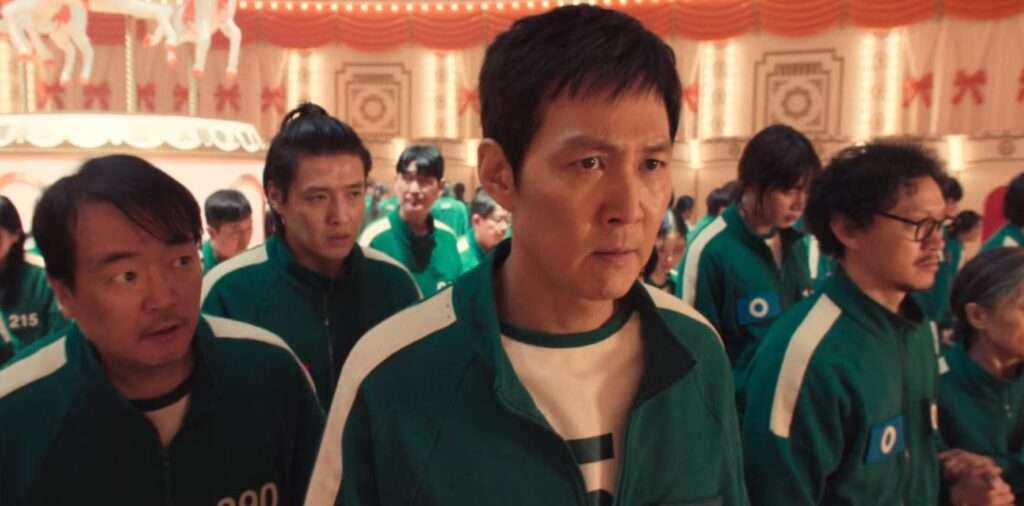 Lee Jung-jae as Seong Gi-hun
Lee Jung-jae returns with even more grit and emotional complexity. No longer just a traumatized survivor, Gi-hun is now driven by a need for justice — and his transformation is both believable and heartbreaking. His performance captures the internal conflict between vengeance and morality, keeping viewers emotionally invested from start to finish. Every glance, hesitation, and outburst feels earned and emotionally raw.
The Front Man & The VIPs
Lee Byung-hun returns as The Front Man, and he’s more intense than ever. Season 3 delves into his personal motives and inner struggles, adding layers to his cold authority figure. His quiet, intimidating presence and complex performance raise questions about loyalty, guilt, and the cost of survival.
Meanwhile, the VIPs — more calculated and disturbing than before — offer a chilling reminder of the show’s central critique: the wealthy and powerful viewing human suffering as sport
Deeper Meaning – Social Commentary Still Relevant?
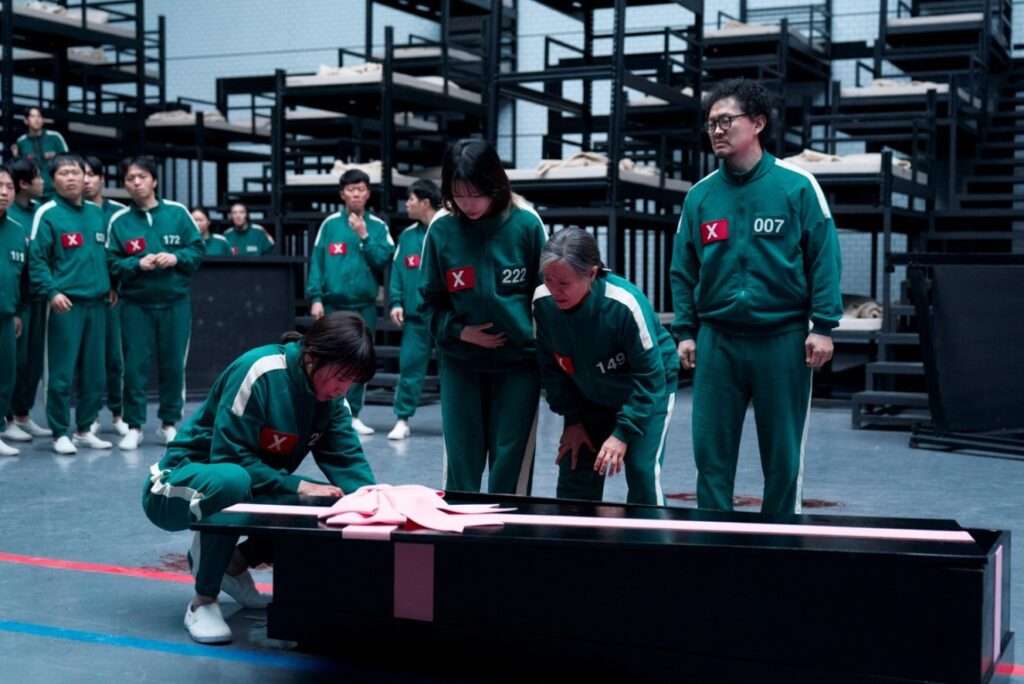 Squid Game has never just been about survival — it’s about why people are forced to survive in brutal, unfair systems. Season 3 continues to build on this core message, digging even deeper into the inequalities, power dynamics, and moral dilemmas that reflect our real world. The show remains a chilling mirror of society, asking not just “What would you do?” — but “Why are people forced to make these choices at all?”
Class Struggles and Economic Desperation
Just like in previous seasons, financial desperation is the main reason contestants return to the game. But Season 3 focuses more on how the system is designed to keep people trapped in debt, fear, and hopelessness. Characters from different backgrounds show how poverty cuts across age, gender, and profession — yet all are exploited the same way.
Season 3 subtly critiques:
- Predatory lending and financial systems
- The illusion of free will under capitalism
- The psychological cost of being poor in a profit-driven world
Exploitation as Entertainment
The VIPs are back, but this time, we get a closer look at how deeply rooted the “games” are in elite society. Season 3 shows us how human suffering is packaged, streamed, and consumed — a twisted reflection of how reality TV and online content blur the line between entertainment and exploitation.
You may find yourself asking:
Are we watching for justice — or for the thrill?
Power, Rebellion, and Control
A major theme in Season 3 is resistance. Gi-hun’s personal journey becomes a symbol of pushing back against oppressive systems. But the show makes it clear: fighting back has consequences, and even rebellion can be manipulated.
It examines:
- How the powerful use fear to maintain control
- Whether true rebellion is possible inside a rigged system
- The emotional cost of choosing to resist rather than survive quietly
Direction, Visuals & Production Quality
 If you thought the previous seasons of Squid Game looked impressive, Season 3 takes the production to a whole new level. From camera angles that capture raw emotion to set designs that feel like twisted playgrounds of doom, the show’s visual and cinematic quality continues to raise the bar — not just for K-dramas, but for global streaming series as a whole.
Direction That Balances Chaos and Clarity
Directed by Hwang Dong-hyuk, the creator of the Squid Game universe, Season 3 maintains a careful balance between psychological intensity and narrative clarity. Despite the fast-paced twists and emotional breakdowns, the storytelling never loses focus.
Key strengths of the direction include:
- Tighter pacing during high-stakes scenes
- Smooth transitions between personal moments and violent spectacles
- Nuanced handling of complex emotions like guilt, fear, and moral conflict
- Focus on silence, glances, and micro-expressions that convey more than dialogue
Visual Design That Shocks and Symbolizes
One of the most talked-about elements of Squid Game has always been its bold visual language — and Season 3 doubles down on that legacy.
Expect:
- New game arenas that are both mesmerizing and terrifying
- More contrast between childish aesthetics and violent realities
- Symbolic color usage (red, green, black) to show power and helplessness
- Claustrophobic shots that reflect mental pressure
- Wide angles to showcase isolation and surveillance
Set Design & Game Mechanics
Each game in Season 3 feels larger, smarter, and more psychologically intense than before. The sets are intricate and unsettling — think a blend of real-world realism and dystopian imagination. These aren’t just playgrounds; they’re puzzles designed to test every human flaw.
- Realistic construction that enhances immersion
- Subtle symbolism built into architecture
- Game mechanics that involve strategy, manipulation, and emotion — not just strength
Soundtrack & Audio Design
While the haunting “Pink Soldiers” theme returns, Season 3 introduces new musical scores that amplify tension and emotion. The use of silence is also strategic — in many scenes, what you don’t hear says more than the music itself.
- Eerie lullabies used ironically
- Slow, creeping sound design during decision-making moments
- Explosive audio cues during twists and eliminations
How Does Season 3 Compare to Season 1 & 2?
With the release of Squid Game Season 3, comparisons to the first two seasons are inevitable. Each chapter of the series has its own tone, style, and emotional core — but does Season 3 live up to the legacy? In many ways, yes. But it also takes bold new directions that might not appeal to everyone.
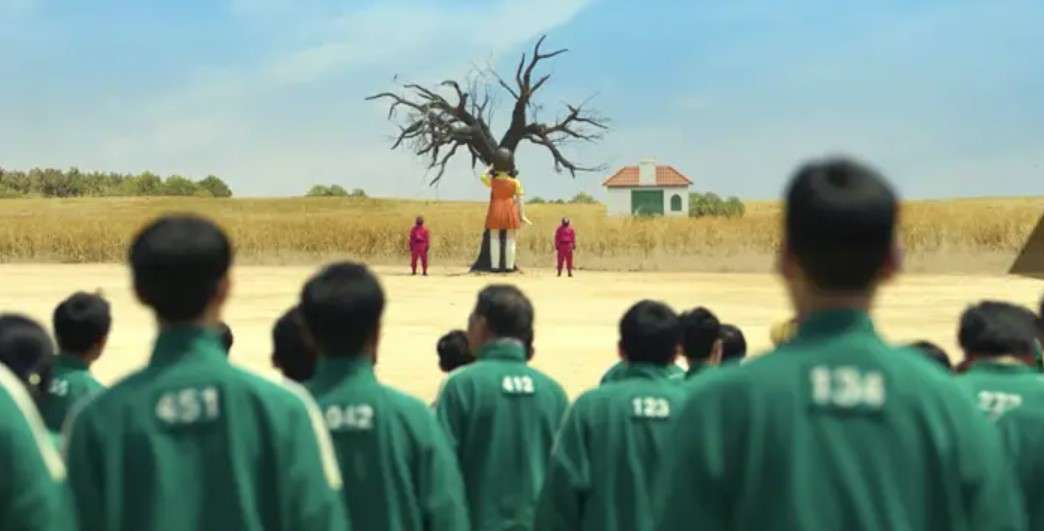 Season 1 vs. Season 2 vs. Season 3 — A Quick Breakdown
Season 1 shocked the world with its brutal simplicity — childhood games turned deadly, all wrapped in vivid visuals and raw social commentary.
Season 2 slowed things down, diving deeper into Seong Gi-hun’s trauma and peeling back the layers of the organization behind the Games.
Season 3 takes things a step further. It shifts from mere survival to something bigger: revenge, resistance, and rebellion.
This evolution makes Season 3 feel more complex, morally intense, and emotionally grounded.
Plot & Themes – From Desperation to Defiance
Each season builds on the previous one:
- Season 1 focused on the horror of poverty and the human instinct to survive.
- Season 2 examined the aftermath — what happens to a winner haunted by his choices.
- Season 3 takes a darker, bolder stance. It challenges the system, questions the purpose of the Game, and brings in ideas of justice, vengeance, and revolution.
The themes have matured. The Games may still be central, but now they serve as a backdrop to a larger ideological war.
Characters – Stronger Arcs, Bigger Risks
One of Season 3’s biggest strengths is its character development:
- Seong Gi-hun has transformed from a reluctant player into a man on a mission.
- New characters are introduced with rich, layered backgrounds, making it easy to connect or feel conflicted about their motives.
- The return of familiar faces adds emotional weight, especially as alliances are tested and old wounds resurface.
Where Season 2 sometimes dragged in its pacing, Season 3 feels more balanced — blending action, strategy, and emotion with greater impact.
Simplicity vs. Sophistication – A Double-Edged Sword
Let’s be honest — the clean, brutal simplicity of Season 1 was part of what made it legendary. Season 3, in comparison, is more layered and political. Some fans will love this deeper dive into the Game’s system and power dynamics, while others might miss the adrenaline-pumping unpredictability of Season 1.
Final Verdict – Evolution, Not Repetition
Season 3 doesn’t try to copy the success of Season 1 — it evolves it. The story is more ambitious, the message is louder, and the emotions hit harder. While it might not deliver the same gut-punch surprise as the original, it offers a richer, more thought-provoking narrative for those who’ve stuck around.
Audience Reaction & Fan Theories
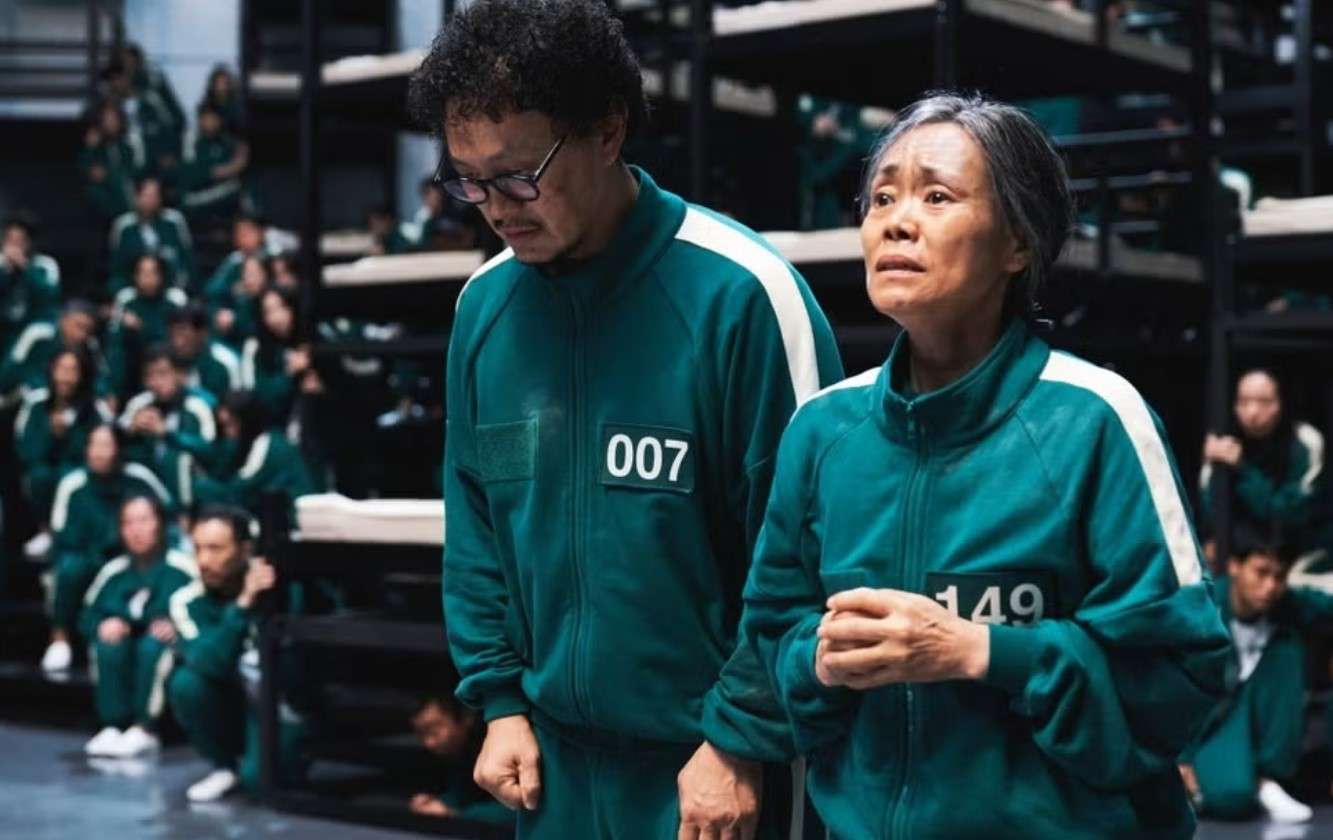 The release of Squid Game Season 3 sent shockwaves through social media, with fans from all over the world taking to platforms like X (formerly Twitter), TikTok, and Reddit to express their reactions. As expected, the season sparked passionate debates. Some praised the bold storytelling and the unexpected plot developments, while others were more divided about certain character arcs and the morally ambiguous direction the story has taken.
One of the most talked-about elements was the return of familiar faces and how their roles evolved—or twisted—beyond expectations. The final episodes especially lit a firestorm of theories. Some fans believe hidden clues in the background scenes may hint at an even deeper game controlled by a higher power. Others speculate that Gi-hun is being manipulated on a psychological level, not just physically.
The introduction of new characters also fueled a wave of speculation. Who can be trusted? What are their true motives? Is there another secret layer to the organization running the games? Many believe Season 3 was designed not to give all the answers, but to provoke more questions—questions that only a potential Season 4 might resolve.
Fan theories aside, what’s clear is this: Squid Game continues to do what it does best—keep viewers glued to their screens and questioning everything they see. And with so many theories circulating online, the hype for what comes next has only grown stronger.
To wrap up this Squid Game Season 3 full review, it’s clear that the series continues to push boundaries with its brutal social commentary, gripping performances, and masterful storytelling. While some elements may feel familiar to longtime viewers, Season 3 raises the stakes and deepens the moral complexities that made the show a global phenomenon in the first place. Whether you’re here for the emotional depth, the shocking twists, or the thrill of survival, Squid Game Season 3 delivers an experience that’s as haunting as it is unforgettable.
If you’ve been following Gi-hun’s journey or are just curious about what the hype is about, this season is a must-watch.